If an adjuster has already told you “our investigation shows you were at fault,” it can feel final. It is not. Insurers investigate quickly, and their first fault call often reflects incomplete information or a reading of the facts that favors paying less. This guide explains, in plain language, exactly how insurance companies determine fault after a crash in Fort Wayne and across Indiana — and how Indiana law lets you push back.
Key takeaways
- Adjusters weigh the crash report, statements, photos/video, damage patterns, traffic laws, and citations to assign each driver a percentage of fault.
- A police officer’s opinion of fault and any traffic ticket are strong evidence, but they do not legally decide your claim.
- Indiana is a modified comparative-fault state: you can recover only if you are not more than 50% at fault, and your recovery is reduced by your share.
- The insurer’s fault decision is not the final word — you can dispute it with additional evidence, and unresolved disputes can go to a jury.
- Most Indiana injury lawsuits must be filed within two years of the crash, so a fault dispute should not be left to drag on indefinitely.
What “fault” actually means to an insurer
To an insurance company, “fault” is shorthand for legal liability — who was negligent and to what degree. Indiana is an at-fault (tort) state, which means the driver who caused the crash, and that driver’s insurer, are generally responsible for the resulting damages. Because more than one driver can share blame, the adjuster’s real job is to assign a percentage of fault to each person involved.
That percentage matters enormously in Indiana. Under the state’s comparative-fault statute, your compensation is reduced by your share of fault, and you are barred entirely if your share is too high. So when an adjuster nudges your fault number from 20% to 55%, that is not a technicality — it can be the difference between a reduced check and nothing at all. For a deeper look at how the percentages work, see our guide to Indiana’s 51% fault rule.
The evidence insurers use to determine fault
No single item decides fault. An adjuster assembles a file and looks for a consistent story. Here is what carries the most weight and why.
1. The police / crash report
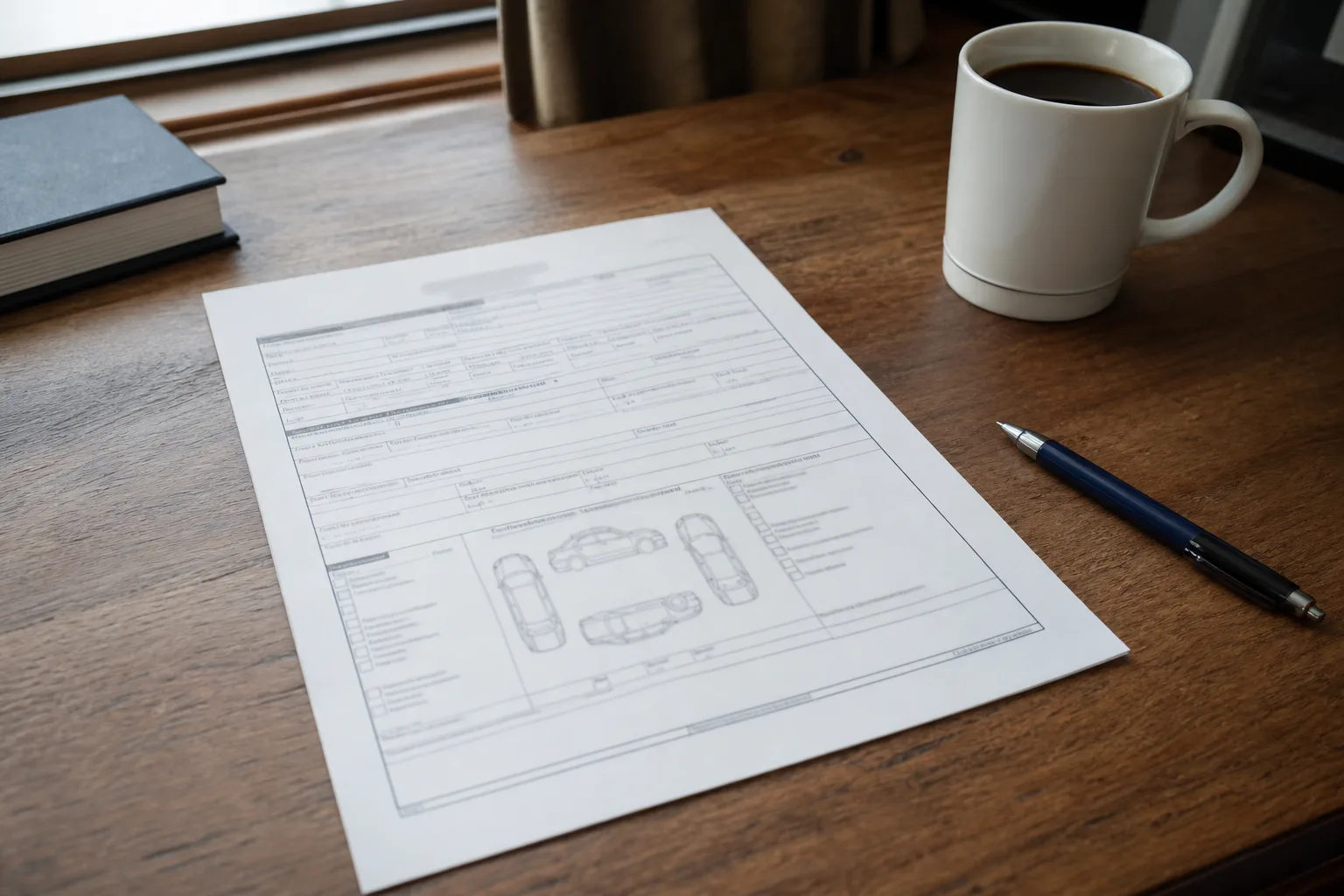
The officer’s crash report is usually the first document an adjuster pulls. It records the date, location, road and weather conditions, a diagram, driver and witness information, any citations, and often the officer’s narrative and opinion about what happened. In Indiana, crash reports are held in a central repository by the Indiana State Police, and you can typically obtain a copy for a small fee. If you have not gotten yours yet, our article on how to obtain a copy of the police report walks through the steps.
Important nuance: the officer usually did not witness the crash. The report is influential, but it is not the last word — and it can contain errors that a careful review can correct.
2. Driver and recorded statements
Adjusters listen closely to what each driver says — especially in a recorded statement. Casual phrases like “I didn’t see them” or “I’m sorry” can be treated as admissions and used to shift fault onto you. You are generally not required to give the other driver’s insurer a recorded statement, and it is worth understanding the risks first. See our guide on whether you should give a recorded statement before you agree to one.
3. Photos, dashcam, and surveillance video
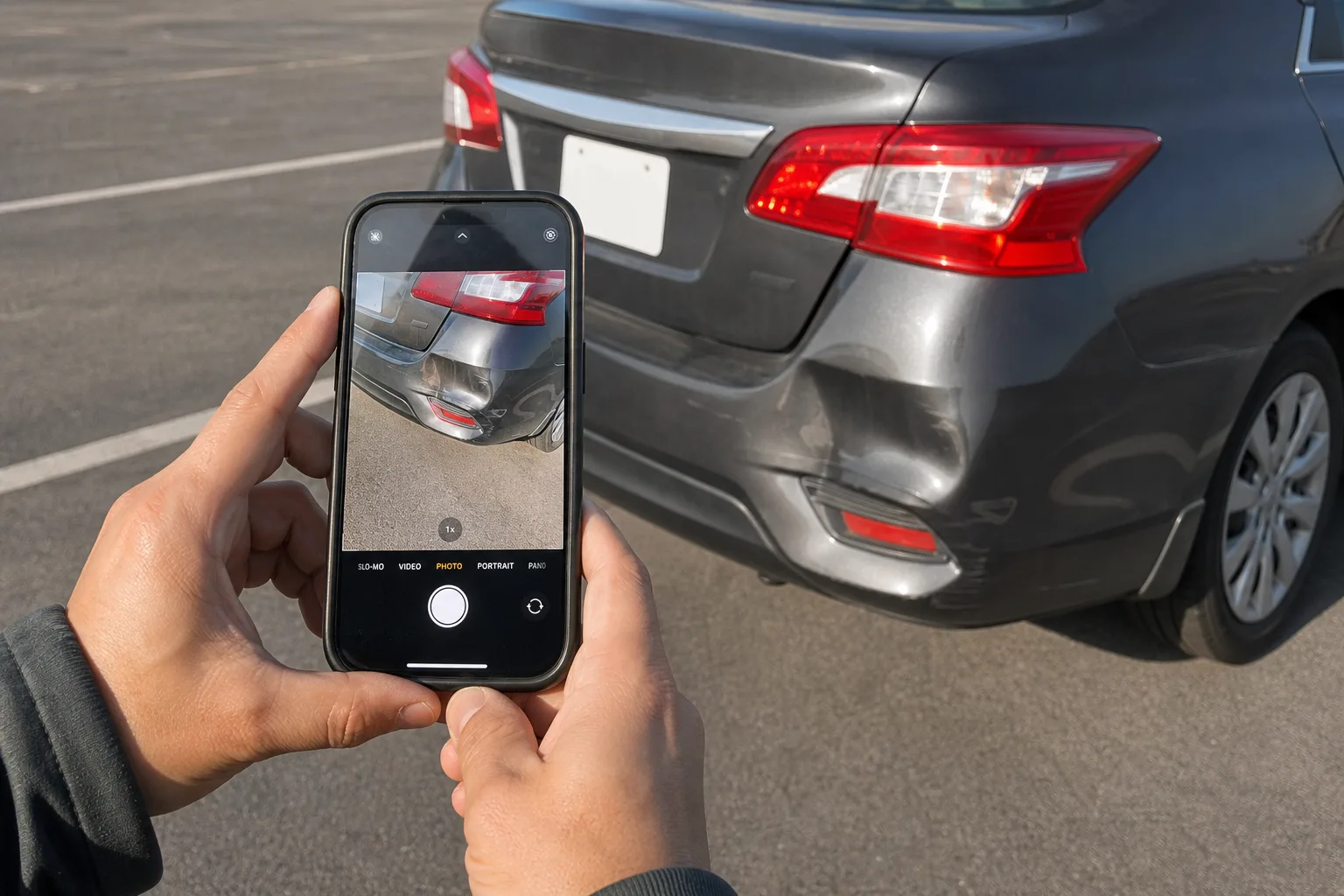
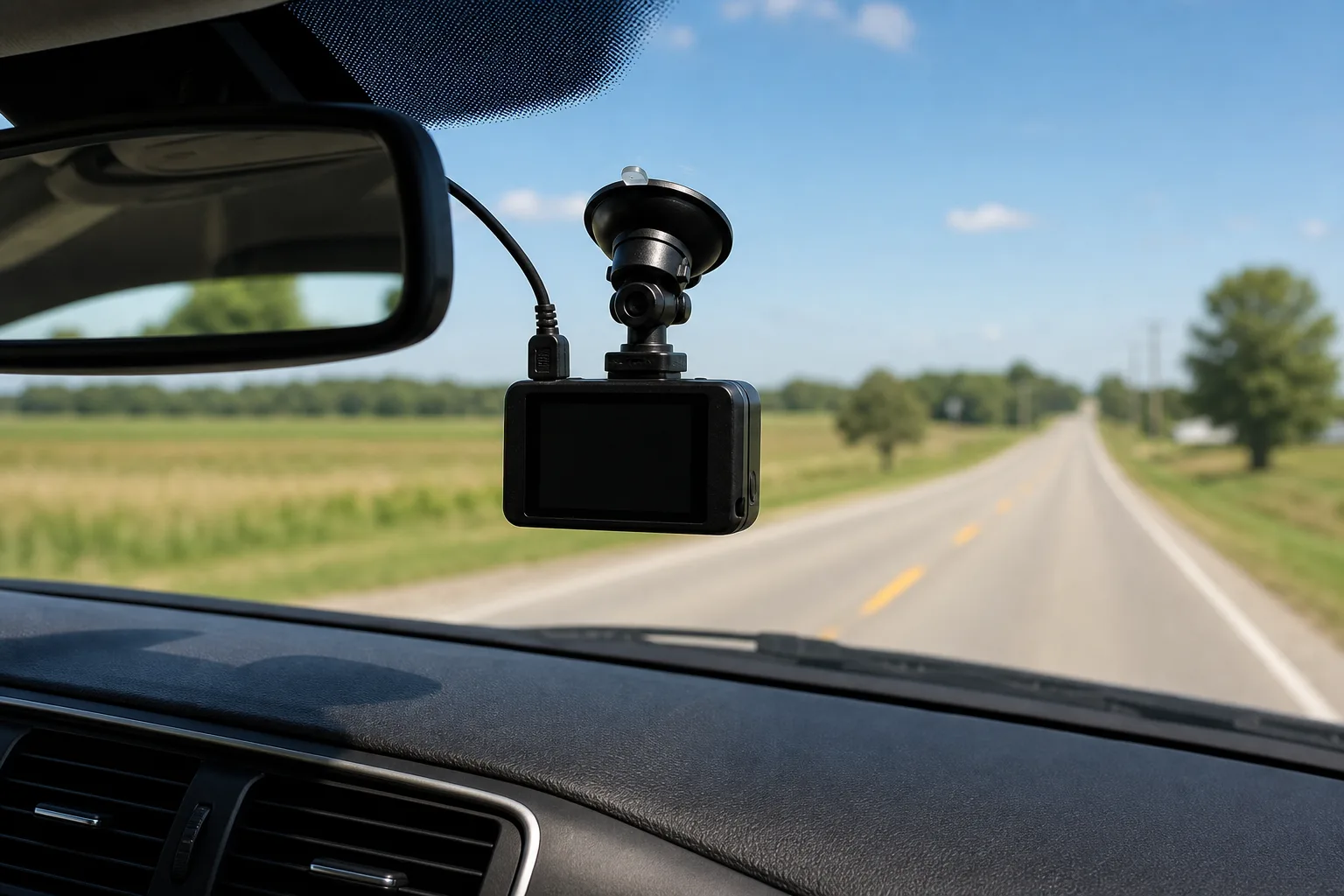
Photographs of the scene, vehicle positions, skid marks, debris, and road signs help an adjuster reconstruct the sequence of events. Dashcam footage and nearby business or traffic-camera video can be decisive — but this evidence disappears fast, so it should be preserved early. Our overview of what evidence helps prove an Indiana car accident claim explains what to gather and how.
4. Vehicle damage patterns
The location and severity of damage often tell a story. Rear-corner damage, paint transfer, crush direction, and airbag or event-data-recorder data can support or contradict a driver’s account. Adjusters and reconstruction experts use damage patterns to test whether the physical evidence matches what each driver claims.
5. Independent witness accounts
Neutral witnesses — people with no stake in the outcome — carry more weight than the drivers themselves. A bystander who saw a driver run a red light at a Fort Wayne intersection can outweigh a self-serving statement.
6. Traffic laws and citations
Adjusters compare each driver’s conduct to Indiana traffic laws (right-of-way, following distance, signaling, speed). A traffic ticket is persuasive evidence of fault, but it is not conclusive — a driver can be cited and still not be legally liable, and a driver with no ticket can still be partly at fault. If the report or a citation points at you, read what to do when the police report says you are partly at fault.
7. Accident reconstruction (bigger cases)
In serious or disputed crashes, insurers may hire an accident reconstructionist to analyze speed, angles, and timing using physical evidence and vehicle data. This is common in truck and catastrophic-injury cases, where the fault decision drives a large payout.
How the adjuster turns evidence into a fault percentage
After gathering the file, the adjuster weighs the evidence, applies the relevant traffic rules, and assigns a percentage of fault to each driver. In clear cases — a rear-end crash while you were stopped — the fault call is quick. In disputed cases, the adjuster’s number may reflect the insurer’s interest in paying less. Remember: the adjuster works for the insurance company, not for you.
| Evidence type | What the insurer is looking for | Why it can help or hurt you |
|---|---|---|
| Crash report | Officer’s narrative, diagram, citations | Strong, but not binding; errors can be corrected |
| Recorded statement | Admissions, inconsistencies | Off-hand words can be used to shift fault to you |
| Photos / video | Positions, damage, signals, timing | Objective proof — but it must be preserved early |
| Vehicle damage | Impact point, crush direction | Can confirm or contradict a driver’s story |
| Witnesses | Neutral account of the sequence | Independent witnesses often outweigh drivers |
| Traffic laws / tickets | Right-of-way, speed, signaling | Persuasive, but a ticket alone does not decide liability |
How Indiana’s comparative-fault law shapes the outcome
Indiana follows a modified comparative-fault rule. Under Indiana Code § 34-51-2-6[1], you are barred from recovering against another driver if your own fault is greater than 50%. If you are 50% or less at fault, you can recover, but your damages are reduced in proportion to your share of fault. For example, if your total damages are $100,000 and you are found 20% at fault, your recovery is reduced to $80,000.
This is why adjusters fight over a few percentage points. Pushing your fault above the 50% line lets the insurer deny the claim entirely. To estimate how fault and other factors may affect a claim’s value, you can use our Fort Wayne car accident settlement calculator as an educational starting point.

Why the insurer’s fault decision is not the final word
An insurance adjuster’s fault determination is an internal business decision — not a court order. You are entitled to disagree, and there are several ways to challenge it:
- Provide missing evidence. New photos, dashcam footage, or a witness the adjuster never contacted can change the picture.
- Correct the crash report. If the report contains a factual error, you can ask the reporting agency to amend it and provide supporting documentation.
- Dispute in writing. A clear, evidence-backed letter challenging the fault split creates a record.
- File a lawsuit. If the dispute cannot be resolved, an Indiana court — ultimately a jury — decides fault percentages, not the insurance company.
Because a jury (not the adjuster) has the final say on liability, a well-documented fault dispute has real leverage in negotiations. A Fort Wayne car accident attorney can gather evidence the insurer overlooked, deal with the adjuster directly, and, if necessary, file suit before the deadline.
The deadline that limits your ability to dispute fault
Do not let a fault dispute drift. In Indiana, most car-accident injury lawsuits must be filed within two years of the crash under Indiana Code § 34-11-2-4[2]. If you miss that window, you generally lose the right to sue — and with it, your strongest leverage over the insurer’s fault decision. Different, shorter deadlines can apply when a government vehicle or entity is involved. You can also review the Indiana State Police’s crash reports[3] resource for how official reports are maintained.

What to do if the insurer blames you
- Get the crash report and read it carefully for errors.
- Preserve your own photos, dashcam files, and witness contact information before they disappear.
- Be cautious about recorded statements to the other driver’s insurer.
- Do not accept a fault percentage just because an adjuster states it confidently.
- Track the two-year deadline and get advice well before it runs.
Frequently asked questions
Is the insurance company’s fault decision final?
No. An adjuster’s fault determination is an internal opinion by a party with a financial interest in the outcome. You can dispute it with additional evidence, and if the dispute is not resolved, an Indiana court and jury — not the insurer — decides fault.
Does a traffic ticket automatically mean that driver is at fault?
No. A citation is strong evidence, but it is not conclusive. A driver can be ticketed and still not be legally liable, and a driver who received no ticket can still share fault. Fault in a claim is decided by negligence and causation, not solely by who got a ticket.
Can both drivers be found at fault in Indiana?
Yes. Indiana’s comparative-fault system assigns a percentage of fault to each driver. You can recover only if you are not more than 50% at fault, and your recovery is reduced by your share.
Does the police report decide who pays?
No. The crash report is influential evidence that adjusters rely on heavily, but it does not legally decide liability. The officer usually did not witness the crash, and reports can contain mistakes that other evidence can correct.
Should I get a lawyer just because fault is disputed?
If the insurer is blaming you, pushing your fault percentage up, or denying the claim, a consultation can help. A lawyer can gather evidence the insurer overlooked, handle communications, and protect the two-year filing deadline.
Talk with a Fort Wayne car accident attorney
If an insurance company has blamed you for a crash and you are not sure it is right, you do not have to sort it out alone. Delventhal Law Office can review the crash report, look at the evidence, explain how Indiana’s comparative-fault rule applies to your situation, and help you decide the next step. A free consultation is a low-pressure way to understand your options and the deadlines that may apply.
This article is general information about Indiana law and is not legal advice. Reading it does not create an attorney-client relationship. For advice about your specific situation, speak with a licensed Indiana attorney.