

Low-impact crashes in Indiana are the cases insurance carriers fight hardest, because the photographs of the cars do all their work for them. The injuries are real, the medicine is well established, and the law is clear. The fight is over whether your spine knows what your bumper does not.
Why Low-Speed Crashes Still Hurt Your Body
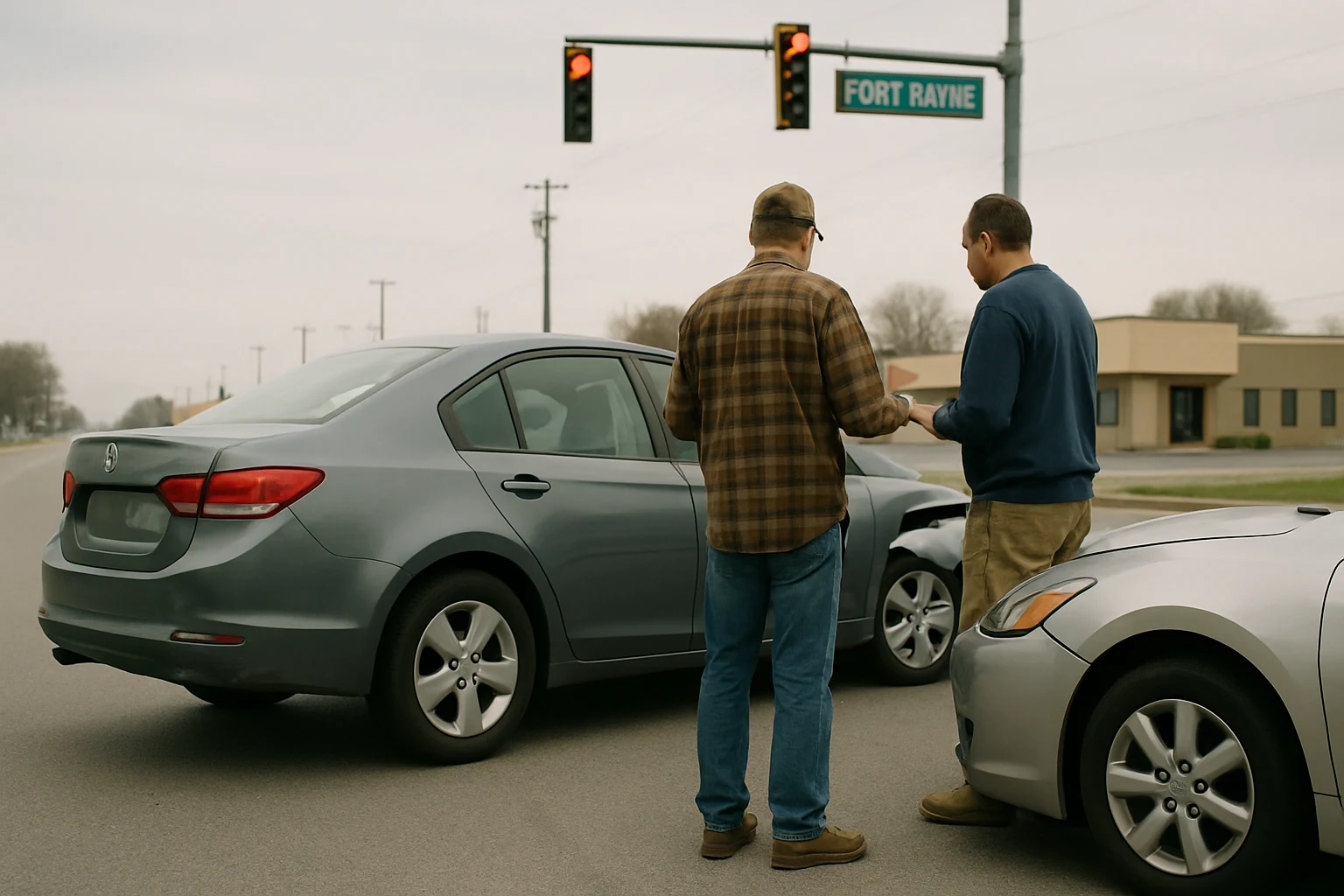
A car bumper is engineered to absorb impact and pop back. A spinal disc is not. At 10 to 15 miles per hour of closing speed, the car may show almost nothing, but the head whips forward and back through 10 to 12 inches of motion in less than a quarter of a second. The cervical spine is built for slow, controlled motion. It is not built for that. The result, well documented in peer-reviewed orthopedic and biomechanical literature, is the cluster of injuries doctors group together as "whiplash-associated disorders": muscle strain, ligament sprain, facet joint injury, disc protrusion, and concussion.
The symptoms often arrive on a delay. Inflammation builds over 24 to 72 hours. Muscle guarding tightens around the injured tissue, restricting range of motion the following day. Discs sometimes herniate in the moment of impact but only generate the radiating arm pain (cervical radiculopathy) when the inflammation pushes against a nerve root a few days later. The Centers for Disease Control and Prevention publishes guidance on motor-vehicle traumatic brain injury and on whiplash-related injury patterns that confirms the same picture: low-energy collisions can produce real and lasting injury.
The Injuries Carriers Pretend Do Not Happen
In a Fort Wayne low-impact crash claim, the medical reality lands in one of these categories. None of them require a totaled vehicle to be diagnosed.
- Cervical strain and sprain (whiplash). The most common injury in rear-end crashes. Muscle, ligament, and tendon injury in the neck, with pain that radiates into the upper back, shoulders, and head.
- Lumbar strain and sprain. Lower-back muscle and ligament injury, often missed on initial ER visits because everyone focuses on the neck.
- Cervical and lumbar disc herniation. Confirmed on MRI, often 2 to 8 weeks after the crash. Can cause radiating arm or leg pain, numbness, weakness, or loss of bowel or bladder control in severe cases.
- Concussion and mild traumatic brain injury (mTBI). Headache, fogginess, light and noise sensitivity, sleep disruption, irritability. No loss of consciousness is required. The CDC's Heads Up resources describe the diagnostic criteria.
- TMJ (jaw-joint) injury. The jaw can be thrown into hyperextension during the whip cycle, especially if the driver was talking or biting.
- Shoulder injuries. Rotator-cuff strain or tear from bracing on the steering wheel. Often diagnosed late because the neck pain masks it for the first few weeks.
None of these injuries require dramatic vehicle damage. All of them are well documented in medical literature in the context of low-speed crashes. The fight in the claim is not whether the injury is medically possible. The fight is whether the carrier can convince a jury (or you) that the photographs of the bumper outweigh the doctors' findings.
How the Carrier Builds the "It Was Just a Tap" Defense
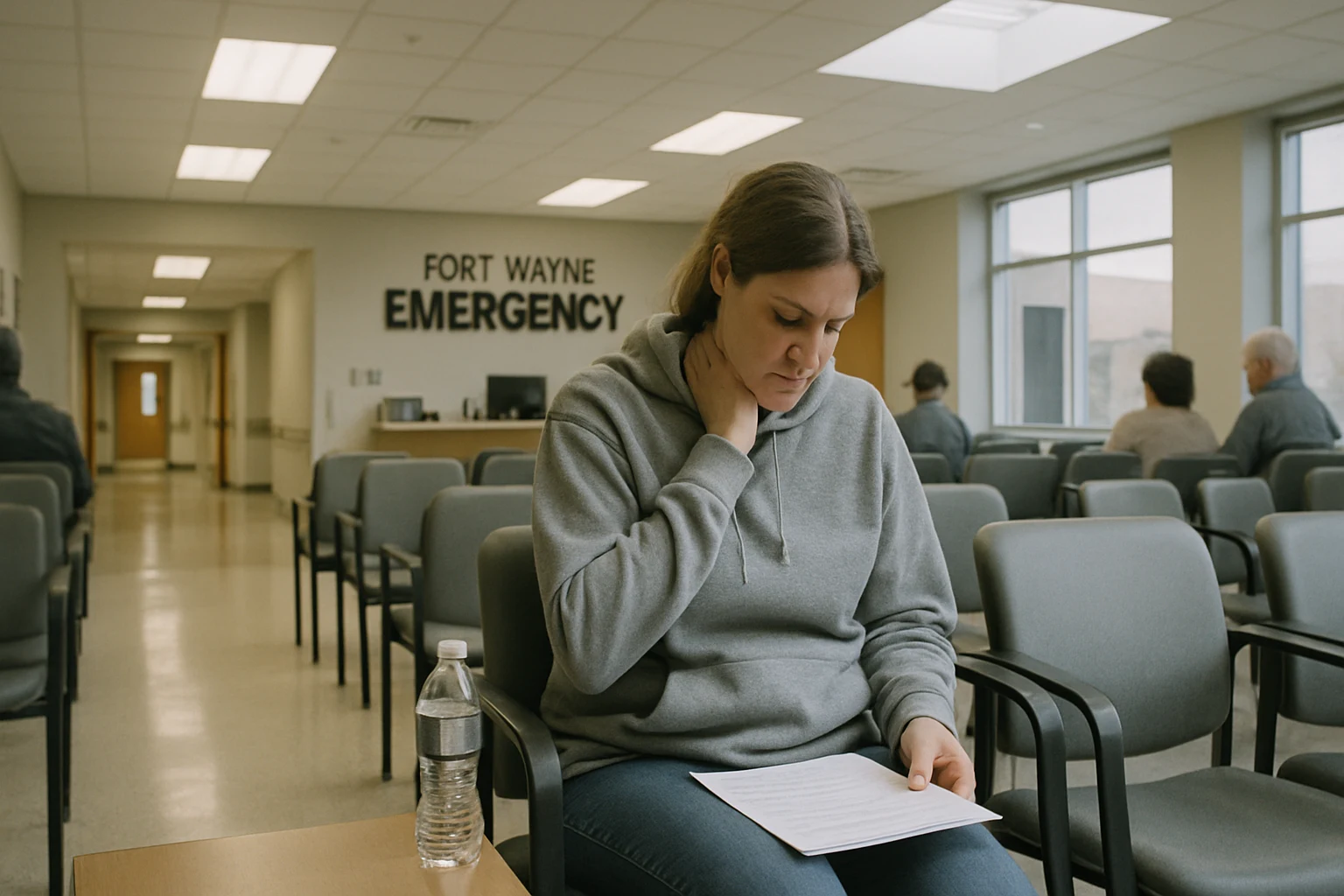
The carrier's playbook in a low-impact case is predictable, and learning it is the first step to defeating it. The defense typically rests on four pillars:
- The property-damage photographs. The carrier will produce close-ups of the undamaged bumper and argue, in front of a jury if it has to, that no reasonable person could be hurt this badly in this little crash.
- The gap in treatment. If you waited a week to see a doctor, or if you missed two physical therapy visits, the carrier will build a chart that says "if she were really hurt, she would have treated sooner and more consistently."
- The pre-existing condition. If you had any prior neck or back imaging, even decades ago, the carrier will argue your current pain is "degenerative" rather than crash-related.
- The recorded statement. If you said "I am okay, just a little sore" to the adjuster in week one, that quote will be played at trial when you are testifying about months of pain.
Every one of these is beatable, but only if the case is built early. Same-week medical care defeats the gap. A treating doctor's written causation opinion defeats the pre-existing argument. A biomechanical expert (in the cases where it is warranted) defeats the property-damage argument. And declining the recorded statement up front prevents pillar four entirely.
What Indiana Law Actually Requires

Indiana negligence law does not require any particular level of vehicle damage. It requires four elements: duty (the at-fault driver owed you a duty of reasonable care), breach (the driver did not exercise that care), causation (the breach caused your injury), and damages (you have measurable losses). A low-impact crash satisfies all four with the same evidence as a high-impact crash: the police report, the witness statements, the medical records, and the doctor's causation opinion. You can use our Indiana car accident settlement calculator to organize the factors that may affect a claim’s value; it is an educational tool, not a promise of any result.
Indiana's modified comparative fault rule under IC § 34-51-2-6[2] still applies. You recover nothing if a jury finds you 51% or more at fault, and you recover proportionally less between 1% and 50%. In a clean rear-end case, the rear driver is almost always at fault, because every Indiana driver is expected to maintain enough following distance to stop without hitting the car in front. That presumption shifts the carrier's strategy from blaming you for the crash to denying that you are hurt, which is why an experienced Fort Wayne car accident lawyer builds the medical proof early.
The filing deadline is the same as any other personal-injury case: two years from the date of the crash under IC § 34-11-2-4[1]. Property damage runs on its own two-year clock under IC § 34-11-2-7[3]. If the at-fault driver was a Fort Wayne city employee, an Allen County deputy, or an INDOT plow driver, the Indiana Tort Claims Act shortens the notice deadlines to 180 or 270 days under IC § 34-13-3-8[4] and IC § 34-13-3-6[5].
Three Things to Do This Week

If you were in a low-impact crash in Fort Wayne and your pain is real, the practical playbook is the same as in any other crash, with one extra emphasis on documentation. None of it requires hiring a lawyer first.
1. See a medical provider this week. Primary care, urgent care, or the ER if symptoms are severe (loss of consciousness, numbness, weakness, severe headache). Be specific about every symptom: neck pain, back pain, headache, dizziness, ringing in the ears, sleep disruption, mood changes, jaw pain. Underreporting at the first visit hurts the case later. Follow through on every referral.
2. Start a daily symptom journal. Date the entries. Note pain level 1-10 morning and evening, what you could not do that day (lift the kid, work a full shift, sleep through the night), and any missed work or canceled activities. This is the contemporaneous evidence that beats the carrier's "she was fine" argument.
3. Decline the recorded statement. When the at-fault driver's insurer calls, you can provide basic factual information (name, date and place of crash) but you are not required to give a recorded statement, and there is no legal benefit to doing so. Tell them politely that your attorney will be in touch. Then call one.
When the "Minor" Crash Is Actually Major

Some low-impact cases are larger than they look from the outside. Red flags that the case may be more serious than a soft-tissue strain:
- Radiating pain, numbness, or tingling into the arms or legs (suggesting nerve root or spinal cord involvement).
- Loss of consciousness, even briefly, at the time of the crash.
- Headache that does not respond to over-the-counter pain medication after three days.
- Memory or concentration changes (the partner notices it before the patient does).
- Visual disturbances, light sensitivity, or ringing in the ears.
- Loss of bowel or bladder control (this is an emergency, regardless of crash severity).
Any of these turns a "fender bender" into a case that needs prompt medical workup, including imaging, neurology referral, and (in concussion cases) a specialized rehabilitation pathway. A treating physician working at the edge of an undiagnosed mTBI or radiculopathy is not the time to be conserving your medical workup.
How Delventhal Law Office Builds Low-Impact Crash Cases

At Delventhal Law Office, every low-impact case is treated as a serious injury case from the first call. The first thirty days run on a fixed checklist: police report ordered, photographs of both vehicles obtained before any repair, the at-fault carrier and our client's own carrier put on written notice, treating providers contacted, and the underinsured-motorist position on the client's own policy confirmed. If the case involves disputed causation (the carrier's typical defense), we get a written causation opinion from the treating physician early, often a chiropractor, physical therapist, or orthopedic specialist who has seen the patient through the first weeks of recovery.
If the case turns on the "it was just a tap" defense, we are ready to bring a biomechanical or accident-reconstruction expert in. We do not do this on every case, because most do not need it. We do it when the carrier insists on the photographs-only defense, because juries respond differently when a qualified expert explains why a 10 mph rear-end collision can absolutely tear a cervical disc. Chad has been admitted to the Indiana State Bar since 2008 and has handled low-impact injury cases throughout Allen, DeKalb, Whitley, Adams, Wells, and Huntington counties.
FAQs About Indiana Low-Impact Car Crashes
Can I have a real injury if my car has no visible damage?
Yes. Vehicle damage and bodily injury are independent variables. A car with strong bumpers can sustain a 10 to 15 mph rear-end impact and show almost nothing, while the occupant's neck has been whipped through 10 to 12 inches of motion in a fraction of a second. The medical literature is clear that real cervical injuries, disc herniations, and concussions occur in low-speed crashes.
The adjuster says my injuries are "out of proportion." What does that mean?
It is a phrase the carrier uses to set up a denial based on the property-damage photographs. It is not a medical opinion. The carrier wants the photographs to do their work for them. The way to defeat it is with treating-physician causation opinions, contemporaneous medical records, and (when warranted) a qualified biomechanical or medical expert.
Should I get an MRI?
That is your treating doctor's decision, not the insurance adjuster's. If symptoms persist past four to six weeks of conservative care, or if you have radiating pain, numbness, weakness, or red-flag symptoms, MRI is often medically indicated. Delays in imaging are not always harmful medically, but they are sometimes used by carriers to argue the injury is unrelated to the crash.
How long do I have to file a claim?
Two years from the date of the crash under IC § 34-11-2-4[1]. If the at-fault driver was a government employee on duty, the Indiana Tort Claims Act notice deadlines are much shorter: 180 days for political subdivisions, 270 days for the State of Indiana. Filing an insurance claim does not stop either clock.
What if I had a pre-existing neck or back condition?
Indiana law follows the "eggshell plaintiff" rule. A defendant takes the plaintiff as they find them. If you had a degenerative disc condition that was asymptomatic before the crash and became painful and disabling after the crash, the at-fault driver is responsible for the aggravation. The carrier will fight this; the medicine usually wins when properly presented.
Is the case worth pursuing if my car damage is minor?
If your injuries are real and someone else caused them, yes. The value of an Indiana injury case depends on the medicals, lost wages, and impact on your life, not the body-shop estimate. We have settled low-impact cases involving serious cervical injuries for amounts much higher than the property-damage estimate would suggest, and many of those cases would have been refused or undervalued by a less attentive firm.
Talk to a Fort Wayne Personal Injury Attorney
If your car has minor damage but your body has real injury, the case is exactly the kind insurance carriers count on you giving up on. Delventhal Law Office handles low-impact crash cases throughout Fort Wayne, Allen County, and Indiana, and treats them with the same urgency as any other injury case. The first consultation is free and runs through Chad directly.
Call (260) 484-6655, contact us online, or schedule a free case evaluation. The two-year filing deadline under IC § 34-11-2-4[1] is already running, and the carrier is already building their defense around the photographs of your bumper.