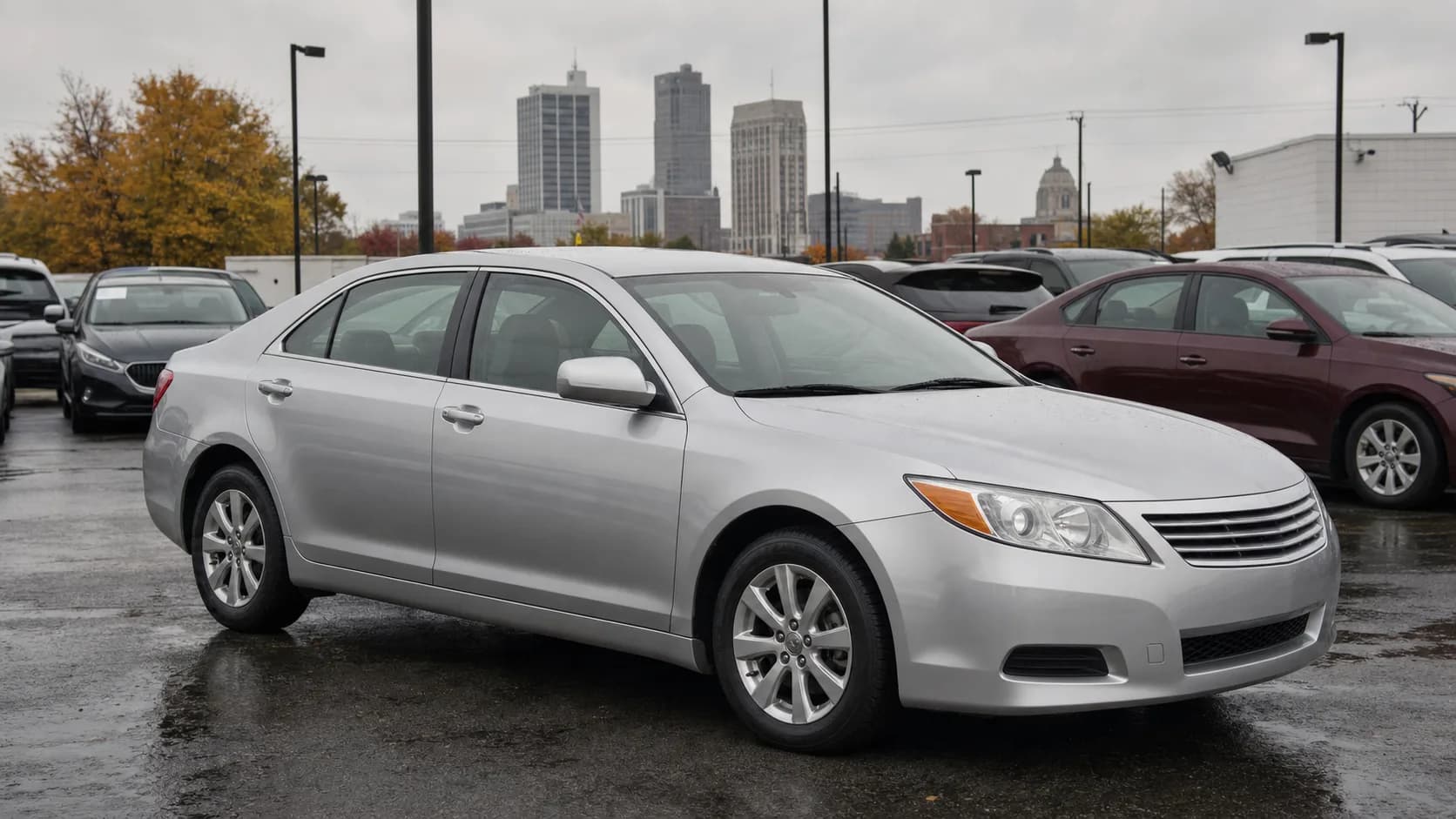
You did everything right after your Fort Wayne car accident. You reported the crash, the body shop restored the vehicle, and the paint matches. Then you go to trade it in or sell it, and the dealer knocks thousands off the price because a vehicle-history report shows a reported collision. That gap is called diminished value, and it is a real financial loss that the repair bill never covered.
This guide explains how diminished value works under Indiana law, the three types you may hear about, what you have to prove, how insurers push back, and the deadlines that apply. It is general information, not legal advice about your specific vehicle.
Key takeaways
- Indiana allows diminished-value recovery. The Indiana Court of Appeals has confirmed that an owner can recover the inherent, market-based loss in a vehicle's value even after competent repairs.
- Proof is the hard part. You typically need credible market evidence — an independent appraisal or dealer documentation — not a guess or an online estimate.
- It is usually a third-party claim. Diminished value is most often pursued against the at-fault driver's liability insurer; many first-party policies exclude it for your own vehicle.
- The deadline is generally two years. Vehicle damage is injury to personal property under Indiana law, with a two-year window to file suit.
- Diminished value is separate from injury damages. Settling or releasing your property-damage claim does not have to end an injury claim — but the release language matters, so read it carefully.
What is diminished value?
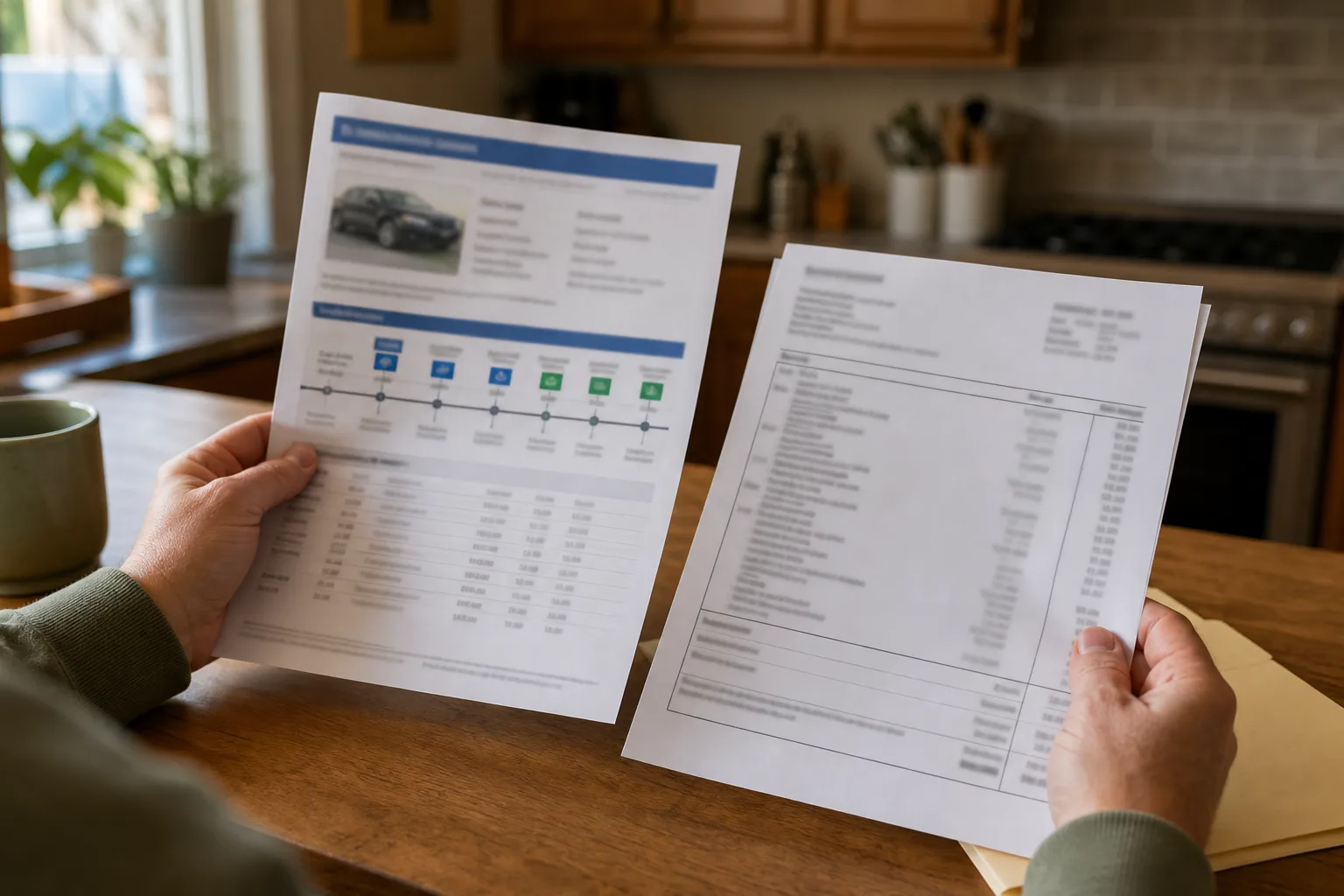
Diminished value is the difference between what your vehicle would have been worth without the accident and what it is worth after the accident, even once it has been repaired. A buyer who learns a vehicle was in a collision will usually pay less for it, and a dealer will usually offer less on a trade-in. That price gap is a loss that the repair invoice does not capture, because the repair only fixes the sheet metal — it does not erase the accident from the vehicle's history.
Indiana courts have long framed vehicle damage in terms of lost value. The measure of damages when personal property is damaged but not destroyed is the reduction in fair market value caused by the at-fault party's negligence. In the 2020 decision Shield Global Partners-G1, LLC v. Forster[1], the Indiana Court of Appeals reversed a trial court that had refused to recognize the "inherent" diminished value of a repaired pickup truck, holding that Indiana does allow recovery for that market-based loss when it is properly proven. The court relied on the long-standing rule from Wiese-GMC, Inc. v. Wells, 626 N.E.2d 595 (Ind. Ct. App. 1993), that the fundamental measure of damages for damaged-but-not-destroyed property is the reduction in fair market value. You can use our Indiana car accident settlement calculator to organize the factors that may affect a claim’s value; it is an educational tool, not a promise of any result.
The three types of diminished value
People use "diminished value" to describe three different losses. Knowing which one applies to your situation helps you gather the right proof.
| Type | What it means | When it usually matters |
|---|---|---|
| Inherent diminished value | The loss in resale value that remains after a competent, complete repair — driven purely by the vehicle's accident history and buyer "stigma." | The most common claim; applies when your car was properly fixed but is now worth less because of its reported history. |
| Repair-related diminished value | Additional loss caused by repairs that were incomplete, imperfect, or done with lower-quality parts (mismatched paint, aftermarket panels, poor frame work). | When the body shop's work itself leaves the vehicle in worse condition than a proper repair would. |
| Immediate diminished value | The difference between the pre-accident value and the value in the wrecked condition, before any repairs. | Often used as a reference point in negotiations or when a vehicle is a borderline total loss. |
Most Indiana diminished-value disputes involve inherent diminished value — the stigma that follows a repaired vehicle into the used-car market around Fort Wayne, Allen County, and beyond.
What does Indiana law require you to prove?
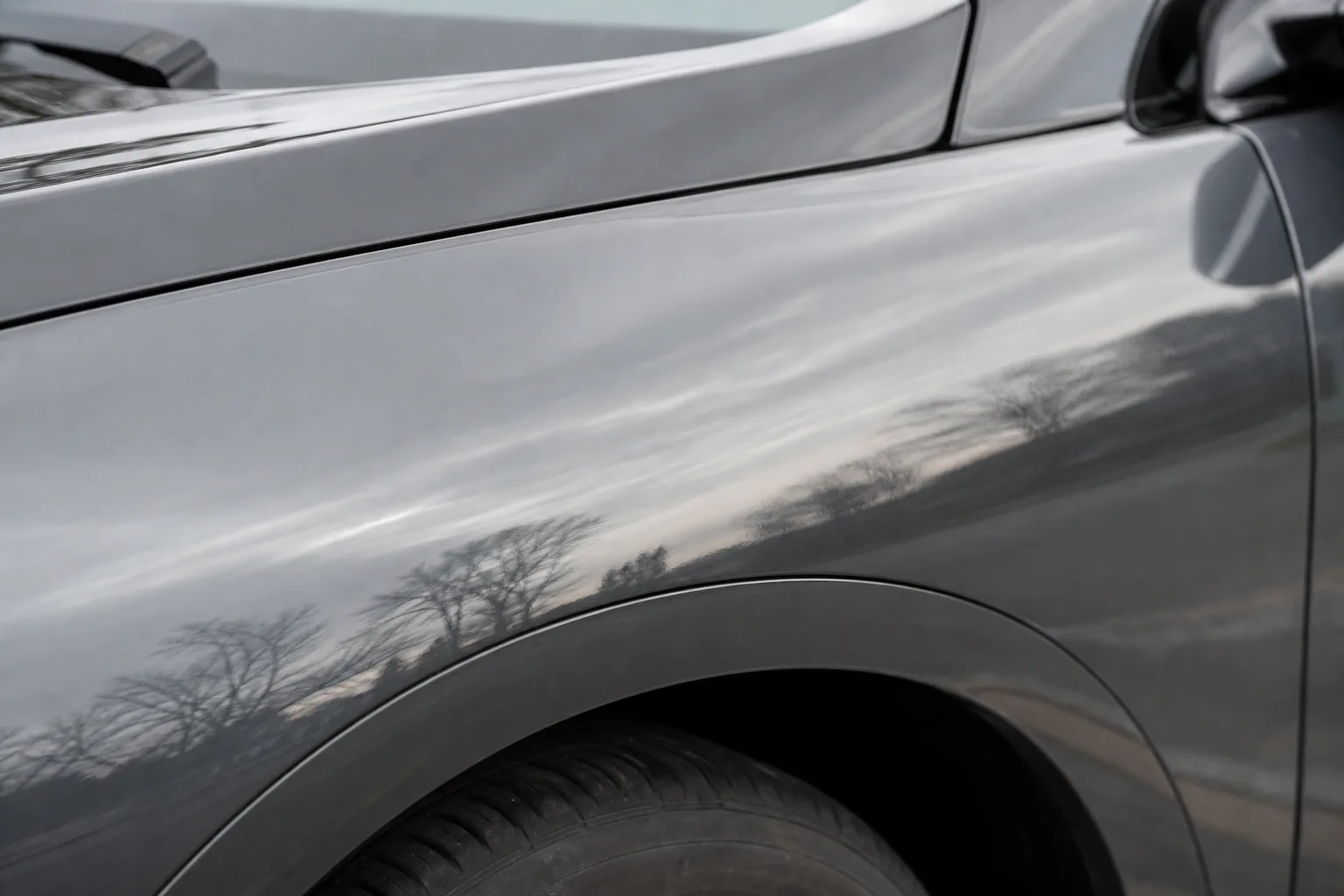
Recognizing diminished value is one thing; proving the dollar amount is another. Indiana courts focus on fair market value — what a willing buyer would pay a willing seller. To recover, you generally need credible evidence of two numbers: the vehicle's value without the accident, and its value with the accident on its record.
In Shield Global Partners, the court explained that where repairs will not fully restore the property's value, the reduction in value may be shown by a combination of the cost of repair and the difference between the fair market value before and after the accident. In practice, that means you usually cannot just point to the repair bill or a generic online calculator. You need market proof — often an independent appraisal from a qualified appraiser, supported by comparable sales and dealer documentation.
Shield itself shows what that proof can look like. The owner offered two appraisals of the repaired pickup, including one from an outside appraiser who worked from photographs, repair estimates, the vehicle-history report, service records, and the odometer reading. The trial court ruled against the owner anyway, and the Court of Appeals reversed, finding that the trial court had ignored uncontroverted evidence that the truck lost value because of the accident and repair.
Indiana also applies a modified comparative fault rule (see Indiana Code 34-51-2-6[2]) to property-damage claims. If you were partly responsible for the crash, your recovery can be reduced by your percentage of fault, and if you are found more than 50% at fault, you generally recover nothing. That is one more reason the underlying fault evidence matters, even for a "just property" claim.
Evidence that supports a diminished-value claim
The stronger your documentation, the harder it is for an insurer to dismiss the loss. Useful evidence often includes the following.
| Category | Examples |
|---|---|
| Pre-accident condition | Service records, maintenance history, photos, and mileage showing the vehicle was in good shape before the crash. |
| Repair documentation | The body shop's full estimate and final invoice, parts list (OEM vs. aftermarket), and any supplements or frame measurements. |
| Market value proof | An independent appraisal, comparable listings for similar vehicles, and guide values (such as NADA/J.D. Power or Kelley Blue Book). |
| Accident-history impact | A vehicle-history report showing the reported collision and, where possible, a written dealer statement of the reduced trade-in or resale offer. |
| Crash and fault evidence | The Indiana crash report, photos, and witness information tying the damage to the at-fault driver. |
These are the same kinds of records that help prove any auto claim. Our overview of what evidence helps prove an Indiana car accident claim walks through how to organize and preserve them.

Who pays: at-fault insurer vs. your own policy
Diminished value is almost always pursued as a third-party claim — meaning you seek it from the at-fault driver's liability insurance, because Indiana law makes a negligent driver responsible for the reduction in your vehicle's fair market value.
Pursuing it against your own insurer (a first-party claim) is harder. Many auto policies limit the insurer's obligation to the cost to repair or replace the vehicle, and some contain language that excludes diminished value for your own covered vehicle. Whether coverage exists depends on your specific policy wording, so it is worth reading the collision section and any endorsements carefully — and asking questions before you assume you are or are not covered.
| Third-party claim (at-fault driver's insurer) | First-party claim (your own insurer) | |
|---|---|---|
| Legal basis | The at-fault driver's negligence and duty to pay for lost value. | Your insurance contract's terms. |
| Typical availability | More commonly available for diminished value in Indiana. | Often limited or excluded by policy language. |
| Key hurdle | Proving fault and the amount of lost value. | Policy exclusions and coverage limits. |
If the at-fault driver had little or no coverage, your options narrow, which is one reason what happens when the at-fault driver has no insurance is worth understanding early.

How insurers dispute diminished value
Even in a state that recognizes diminished value, insurers frequently contest these claims. Common arguments include:
- "The repairs restored all the value." The adjuster argues a proper repair means no remaining loss — which the market often contradicts.
- "Your evidence is inadequate." They dismiss online estimates or the "17c" formula many insurers use internally, while also rejecting your appraisal.
- Prior damage, high mileage, or condition. They attribute the value gap to something other than this crash.
- Causation disputes. They question whether this accident, versus earlier wear or damage, caused the drop in value.
- Policy exclusions. On a first-party claim, they point to language limiting payment to repair cost.
Because low first offers are common, it helps to know how these negotiations usually unfold before you respond. Our guide on whether to accept a first settlement offer and what to do when an adjuster asks for a statement or broad release both apply here.
An illustrative calculation (example only)
The numbers below are a hypothetical illustration to show how the pieces fit together. They are not a formula, a promise, or an estimate of your claim. Every vehicle and market is different, and only credible market evidence can establish an actual figure.
| Item | Illustrative figure |
|---|---|
| Fair market value before the crash (comparable, clean-history vehicles) | $30,000 |
| Cost of repairs (paid by insurer) | $7,000 |
| Fair market value after repair (same vehicle, now with accident history) | $26,500 |
| Illustrative inherent diminished value | $3,500 |
Notice that the diminished value ($3,500) is a loss on top of the repair cost — the repair fixed the car, but the market still values it lower. An appraiser supports each number with comparable sales rather than a rule of thumb.

Deadlines, releases, and injury claims
Damage to your vehicle is treated as injury to personal property under Indiana law, which carries a two-year statute of limitations to file a lawsuit under Indiana Code 34-11-2-4[3]. A diminished-value claim is part of that property-damage claim, so the same two-year window generally applies from the date of the crash. Waiting too long can bar the claim entirely, so it is smart to confirm your deadline early — our overview of how long you have to file a claim in Indiana explains the timelines in more detail.
Two release issues matter here:
- Property-damage releases. When an insurer pays to repair your car, it may ask you to sign a release. If that document releases all claims rather than just the property-damage portion, signing it could unintentionally give up an injury claim — or a later diminished-value claim. Read exactly what you are releasing.
- Property vs. bodily injury. Diminished value is a property loss and is calculated separately from medical bills, lost wages, and pain and suffering. If you were also hurt, do not assume a quick property-damage check settles everything.
If your car was damaged badly enough that repair was not sensible, the analysis shifts to total-loss valuation instead. Our guide on what happens when your car is totaled in Indiana covers actual cash value, loans, and salvage.
What to do next
- Keep every repair document. Save the full estimate, final invoice, parts list, and photos before and after repair.
- Get an independent appraisal. A qualified appraiser can document the before-and-after fair market value with comparable sales.
- Pull a vehicle-history report. It shows how the reported accident appears to future buyers.
- Ask a dealer for a written trade-in offer. A concrete number in writing is persuasive market evidence.
- Consider a post-repair inspection. An independent shop can document whether the repair used original-manufacturer parts and restored the frame and panel measurements. That record supports a repair-related diminished value claim if the work fell short.
- Do not sign a broad release without understanding whether it also gives up injury or diminished-value claims.
- Watch the two-year deadline and consider talking with a lawyer if the insurer disputes the loss.
The Indiana Department of Insurance publishes general insurance claim tips[4] for consumers, and if you believe an insurer is handling your claim unfairly, you can file a complaint with the Indiana Department of Insurance[5].
If you would rather have someone review the numbers and the policy language, a Fort Wayne car accident attorney can look at your repair records, appraisal, and the at-fault driver's coverage together.
Frequently asked questions
Does Indiana actually recognize diminished value?
Yes. Indiana courts measure vehicle damage by the reduction in fair market value, and the Court of Appeals in Shield Global Partners-G1, LLC v. Forster confirmed that an owner can recover the inherent diminished value of a repaired vehicle when it is proven with credible market evidence.
Can I claim diminished value from my own insurance company?
Sometimes, but it is harder. Diminished value is usually pursued against the at-fault driver's liability insurer. Many first-party policies limit payment to repair or replacement cost, and some exclude diminished value for your own vehicle. Check your policy wording and endorsements.
How do I prove how much value my car lost?
Generally with market evidence, not a guess. An independent appraisal comparing the vehicle's value with and without the accident, supported by comparable sales, dealer statements, and a vehicle-history report, is the most persuasive proof. Online calculators and the insurer's internal formula are often disputed.
How long do I have to file a diminished-value claim in Indiana?
Diminished value is part of your property-damage claim, which is treated as injury to personal property under Indiana Code 34-11-2-4[6]. That carries a two-year statute of limitations, generally running from the date of the crash. Confirm your specific deadline promptly.
Can I claim diminished value if my car was totaled?
Generally, no. Diminished value is the value a repaired car loses because of its accident history. When a car is declared a total loss, the insurer pays its pre-accident actual cash value instead of repairing it, so the dispute is usually about that valuation. Our guide to what happens when your car is totaled in Indiana covers how that number is set and how to challenge it.
Is diminished value separate from my injury claim?
Yes. Diminished value is a property loss and is calculated separately from medical bills, lost wages, and pain and suffering. Be careful that a property-damage release does not also release a bodily-injury claim.
Talk with Delventhal Law Office
If your repaired vehicle is now worth less and the insurer is disputing the loss, you do not have to sort out the appraisal, policy language, and deadlines alone. Delventhal Law Office can review what happened, explain the deadlines that may apply, and help you decide the next step. A free consultation can help you understand your options after a Fort Wayne or Allen County crash.
This article is general information about Indiana law and is not legal advice. Reading it does not create an attorney-client relationship, and neither does contacting us. If you do contact us about a possible claim, Indiana Rule of Professional Conduct 1.18 requires us to keep what you tell us confidential whether or not we take the case — but please do not send documents or detailed facts until we have agreed in writing to represent you. Every situation is different; for advice about your specific vehicle and claim, speak with a qualified Indiana attorney.