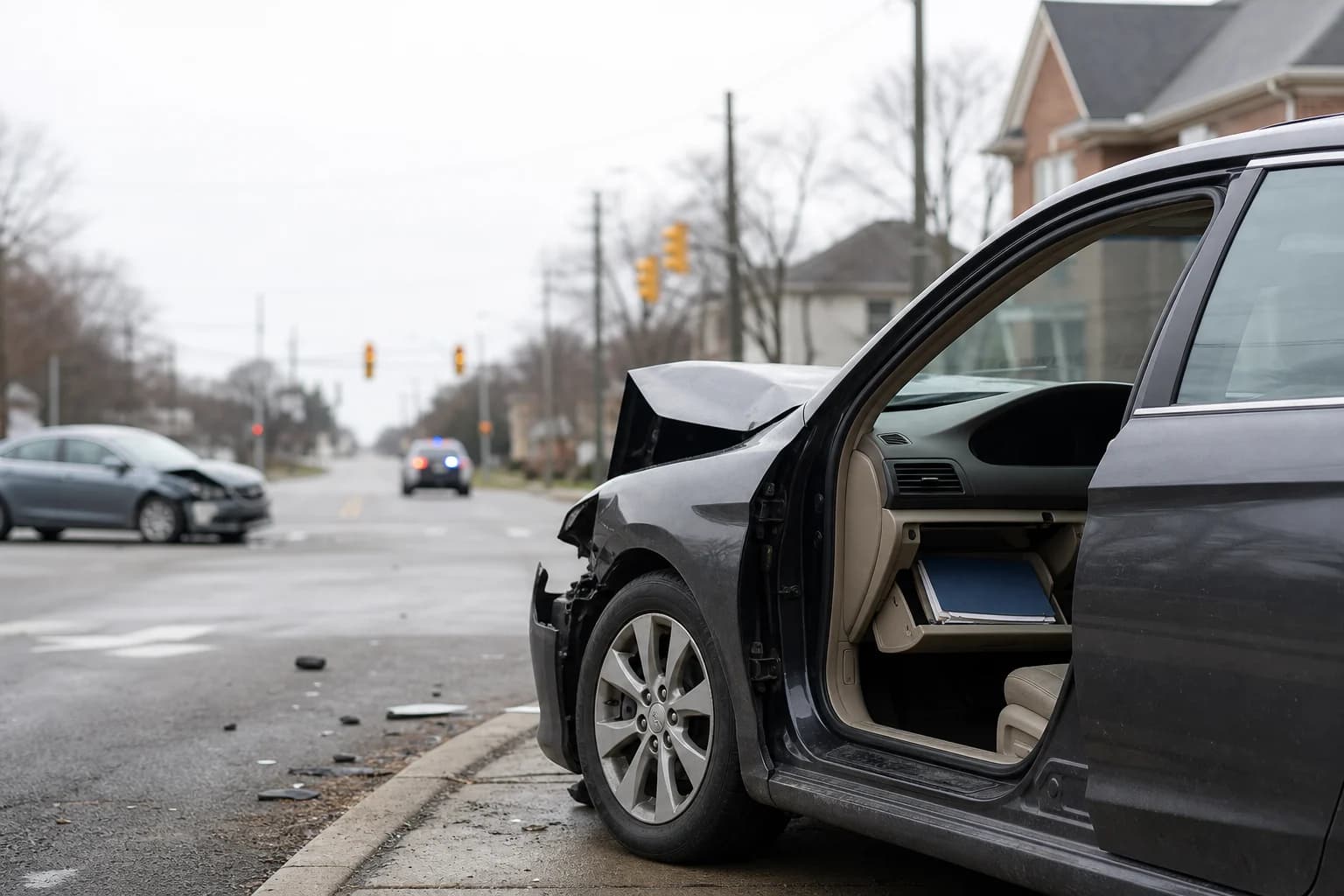
One of the most frustrating calls after a crash is the one where someone says the other driver was uninsured. It feels like the responsible person disappeared, and the injured person is left with the medical bills, missed work, vehicle damage, and pain.
If the driver has filed bankruptcy, see our guide to driver bankruptcy and an Indiana injury claim for the separate stay, discharge, and insurance questions.
But Indiana uninsured-driver cases are not over just because the at-fault driver lacked a valid liability policy. They become coverage cases. The question changes from “What policy does the other driver have?” to “What insurance, assets, or responsible parties can still be reached?”
Delventhal Law Office handles uninsured motorist claims for injured people in Fort Wayne, Allen County, and across Indiana. This guide explains the first steps, the insurance coverages to check, and the mistakes that can make an uninsured claim harder than it needs to be.
Key takeaways
- Indiana requires drivers to maintain financial responsibility, but some drivers still operate vehicles without valid insurance.
- Your own uninsured motorist coverage may apply when the at-fault driver has no valid liability coverage or in some hit-and-run situations.
- Do not rely only on what the other driver says at the scene. Insurance status should be verified through the police report, BMV/insurer information, and written claim investigation.
- Your own insurer may become your opponent in a UM claim, even though it is “your” company.
- MedPay, health insurance, workers’ compensation, employer coverage, owner coverage, umbrella policies, and third-party claims may also matter.
- Indiana’s general personal-injury statute of limitations is often two years, but policy notice duties and government/tort-claim notice rules can be much shorter.
What does “uninsured” mean after an Indiana crash?
An uninsured driver is usually a driver who caused a crash without valid liability insurance. That can happen because the driver never bought insurance, let the policy lapse, was excluded from the policy, used a vehicle without permission, or gave incorrect insurance information at the scene.
Uninsured can also come up in hit-and-run cases where the driver cannot be identified. Policy language matters here. Some policies have strict rules about physical contact, prompt reporting, notice to police, and cooperation with the insurer.
Indiana’s financial-responsibility law is found in Title 9 of the Indiana Code, including IC § 9-25-4-5[2]. Indiana’s uninsured and underinsured motorist statute is IC § 27-7-5-2[3]. Those statutes do not automatically resolve your claim, but they frame the coverage questions.
Step one: confirm whether the driver truly had no insurance
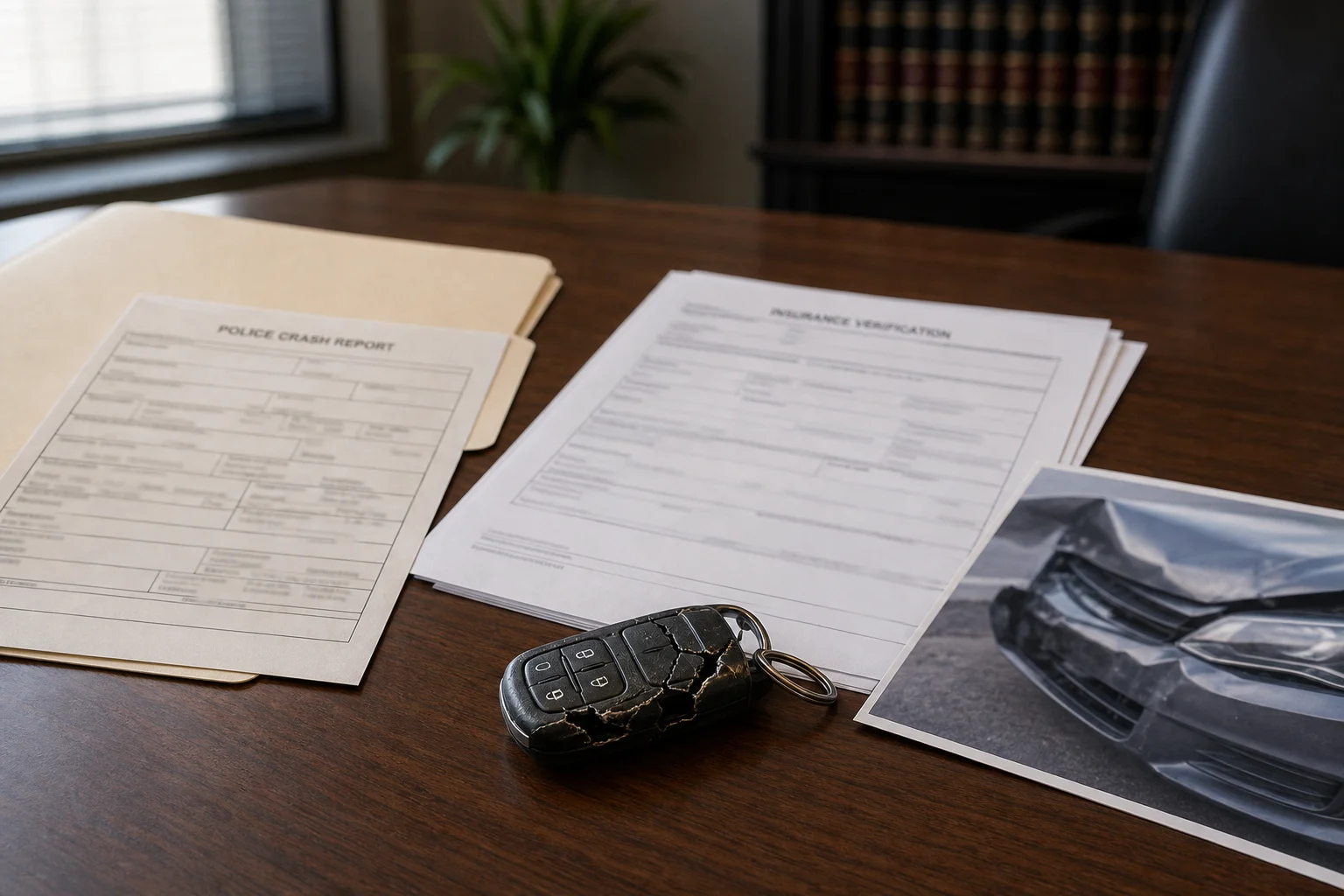
Do not stop with the statement “they did not have insurance.” At the scene, people are shaken. Drivers may not know which policy applies. A borrowed vehicle may have owner coverage. A family member’s policy may list the vehicle. A delivery or employer policy may apply. A cancellation may be disputed.
Important verification steps include:
- getting the Indiana crash report;
- checking whether the report lists an insurer, policy number, or owner separate from the driver;
- sending written notice to the listed carrier and requesting confirmation of coverage or denial;
- identifying the vehicle owner and any household policies;
- asking whether the driver was working, delivering, ridesharing, or driving for a business;
- preserving photos, witness information, dash-cam footage, and 911 details before they disappear.
If coverage is denied, ask for the denial in writing. A verbal “no coverage” from an adjuster is not the same as a policy analysis.
How uninsured motorist coverage works in Indiana
Uninsured motorist coverage, often called UM coverage, is insurance you buy to protect yourself from a driver who should have had liability insurance but did not. In a UM claim, your own insurer may step into the role of paying damages the uninsured driver legally owes, up to the available policy limits and subject to policy terms.
This can cover the same categories of injury damages that would have been pursued against the at-fault driver: medical bills, lost wages, pain, impairment, and other legally recoverable losses. The available amount depends on the policy.
UM is not the same as MedPay. MedPay is usually a no-fault medical-payment benefit under your policy. UM is a fault-based injury claim against your own carrier. That distinction matters because the UM adjuster may dispute liability, causation, treatment, prior injuries, and value.
Your own insurance company may not be on your side

It feels strange, but true: when you make a UM claim, your own insurance company can become adverse to you. It may ask for a recorded statement, medical authorizations, an examination under oath, independent medical examination, prior medical records, wage documentation, or other proof.
Some cooperation may be required by your policy. But cooperation does not mean guessing, minimizing, signing overly broad releases, or giving the carrier every possible argument. DLO’s article on recorded statements and medical releases after an Indiana accident explains why early statements and broad authorizations can hurt a claim.
If your insurer asks for a statement, ask whether it is recorded, what policy provision requires it, what topics will be covered, whether you can have counsel present, and whether you will receive a copy. In serious injury claims, talk to an attorney before the statement.
Other coverage sources to check
| Potential source | Why it may matter |
|---|---|
| Your UM coverage | The primary recovery source when the at-fault driver has no valid liability policy. |
| MedPay | Can help pay medical bills regardless of fault, depending on your policy. |
| Health insurance | May reduce collection pressure, though reimbursement/subrogation may need to be handled. |
| Vehicle owner policy | May apply if the at-fault driver borrowed the vehicle. |
| Employer or commercial policy | May apply if the driver was working or driving a business vehicle. |
| Rideshare or delivery coverage | May apply depending on app status, trip stage, and policy language. |
| Workers’ compensation | May apply if you were working when the crash happened. |
| Third-party claims | Examples include negligent entrustment, dram shop, road defect, product defect, or other responsible parties. |
If the other driver had no insurance, the coverage investigation should get wider, not narrower.
What if the crash was a hit-and-run?
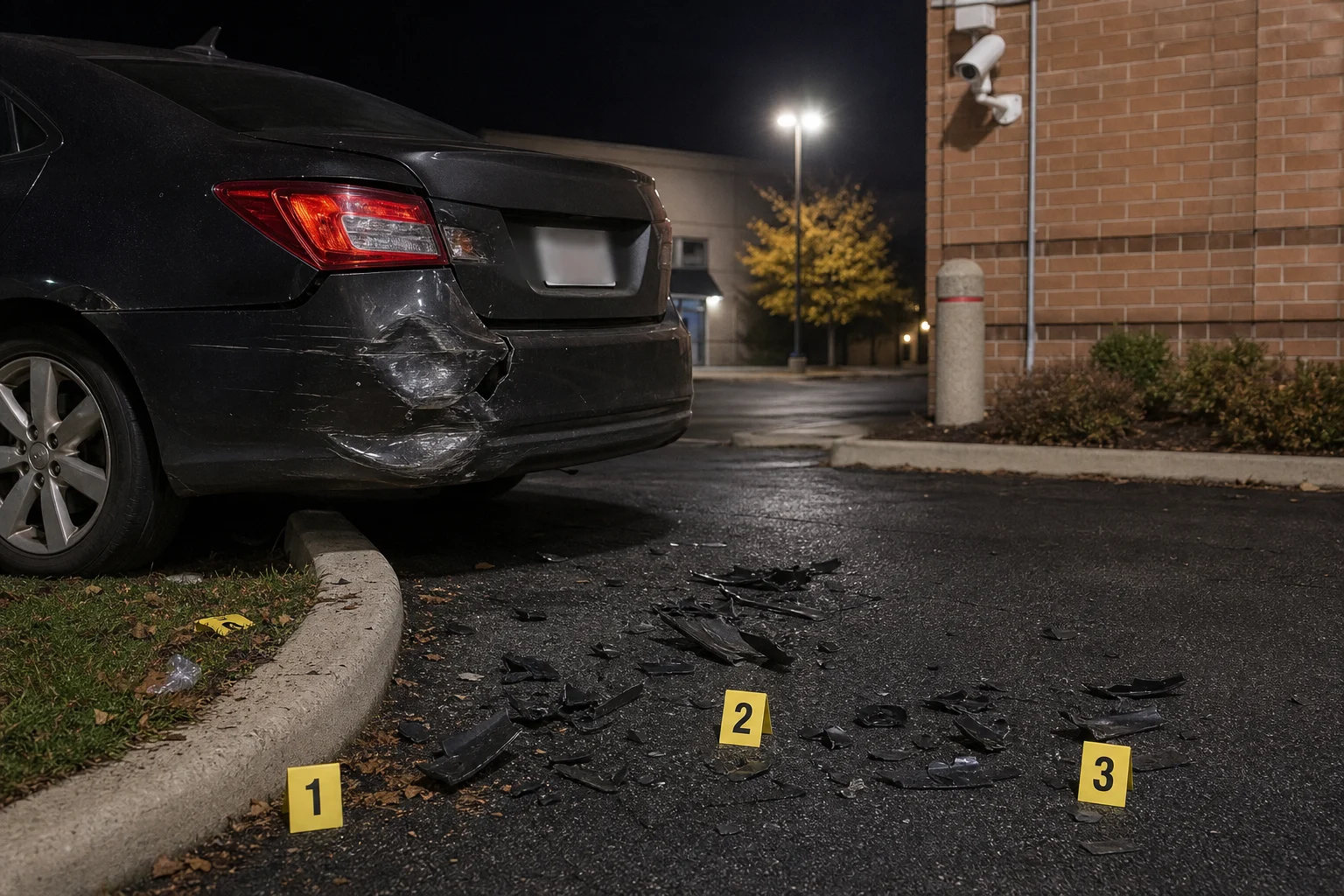
Hit-and-run crashes can qualify as uninsured motorist claims under some policies, but the details are important. Report the crash to police right away. Preserve photos, debris, vehicle damage, surveillance video, witness names, license-plate fragments, and repair estimates. Tell your insurer promptly, but avoid guessing about facts you do not know.
Fort Wayne hit-and-run cases may involve nearby business cameras, traffic cameras, doorbell video, dash cameras, parking-lot footage, and 911 calls. Evidence can disappear within days. DLO’s Fort Wayne hit-and-run accident lawyer page explains more about those cases.
Medical bills, liens, and uninsured-driver claims
The gross settlement is not the same as the net recovery. Health insurance, Medicare, Medicaid, ERISA plans, workers’ compensation, medical providers, and MedPay carriers may claim reimbursement from a settlement. In uninsured-driver cases, lien work can be just as important as negotiating with the insurer.
If medical bills are already larger than the available UM limits, strategy matters. A careful claim may involve presenting the damages, negotiating liens, coordinating health coverage, and making sure a release does not accidentally waive other rights.

Can you sue the uninsured driver personally?
Yes, in many situations you can sue the uninsured driver personally. The harder question is whether the driver has assets or income that make collection realistic. Many uninsured drivers lack collectible assets, which is why UM coverage is often more valuable than a paper judgment.
That does not mean the driver is ignored. The uninsured driver’s legal responsibility may still need to be established for UM purposes. In some cases, suit may be necessary because of a deadline, disputed liability, policy requirements, or the need to identify other parties.
Deadlines and notice requirements
Indiana’s general personal-injury limitation period is often two years under IC § 34-11-2-4[4]. But do not treat two years as your only deadline.
UM policies may require prompt notice, proof of claim, cooperation, medical documentation, consent before settlement with any party, or arbitration/lawsuit steps. Government-related claims may have shorter notice deadlines. Evidence deadlines are even shorter because video gets overwritten, vehicles get repaired, and witnesses become harder to locate.
What to do now
- Report the crash to police and get the report number.
- Get medical care and follow treatment recommendations.
- Notify your own insurer, but stay factual and avoid recorded details until you understand the claim.
- Ask for your declarations page and full UM/UIM policy language.
- Preserve photos, video, witness information, vehicle damage evidence, bills, and wage-loss proof.
- Do not sign releases, broad medical authorizations, or settlement papers without reviewing coverage and liens.
- Talk to a Fort Wayne car accident lawyer if injuries are significant, fault is disputed, or your insurer is already pushing back.
Frequently Asked Questions
What happens if the person who hit me has no insurance in Indiana?
You may have a claim through your own uninsured motorist coverage, plus possible MedPay, health insurance, workers’ compensation, vehicle-owner coverage, employer coverage, or third-party claims. The first step is confirming coverage and preserving evidence.
Does Indiana require uninsured motorist coverage?
Indiana law addresses uninsured and underinsured motorist coverage in IC § 27-7-5-2[3]. Whether you have coverage, the limits, and any rejection or selection issues must be reviewed from your policy documents.
Will my insurance rates go up if I use uninsured motorist coverage?
That depends on the insurer, policy, and facts. Do not let fear of a possible premium issue stop you from reporting a serious crash. Ask the carrier for its position in writing if this is a concern.
Can I make a UM claim if I was a passenger?
Often, yes. Possible policies may include the vehicle’s policy, your household auto policy, the driver’s household policy, or other applicable coverage. Passenger claims need a careful policy review.
What if the uninsured driver was driving someone else’s car?
The owner’s policy may still matter. Coverage can depend on permission, exclusions, household status, policy language, and whether the driver was using the vehicle for work or another covered purpose.
Should I give my insurer a recorded statement for a UM claim?
Not without understanding the purpose, scope, and policy requirement. Your policy may require cooperation, but you should not guess, minimize injuries, or answer unprepared in a serious claim.
How long do I have to bring an uninsured motorist claim?
Indiana injury claims are often subject to a two-year statute of limitations, but UM policies can create additional notice and claim requirements. Get the policy reviewed early.
Bottom line
No insurance does not automatically mean no recovery. It means the case needs a disciplined search for UM coverage, MedPay, health insurance, owner coverage, employer coverage, and other responsible parties.
If you were hurt by an uninsured driver in Fort Wayne or anywhere in Indiana, call (260) 484-6655 or start with DLO’s free case evaluation. Our Fort Wayne uninsured and underinsured accident attorneys can review the policies before the insurer controls the story.
Sources and further reading
[1] Indiana General Assembly: IC § 9-25-4-5, Financial Responsibility[2]
[2] Indiana General Assembly: IC § 27-7-5-2, Uninsured/Underinsured Motorist Coverage[3]
[3] Indiana Department of Insurance: Insurance Claim Tips[5]
[4] Indiana General Assembly: IC § 34-11-2-4, Injury to Person or Character[4]