A 26-year-old motorcyclist was in critical condition after a collision with a semi-tractor-trailer at a highway ramp terminal in Elkhart. The semi driver was not hurt.
The size difference between a motorcycle and a commercial truck can produce severe injuries. It also means the claim may involve a motor carrier, commercial insurance, federal records, and electronic evidence that can disappear under ordinary retention practices.
What happened
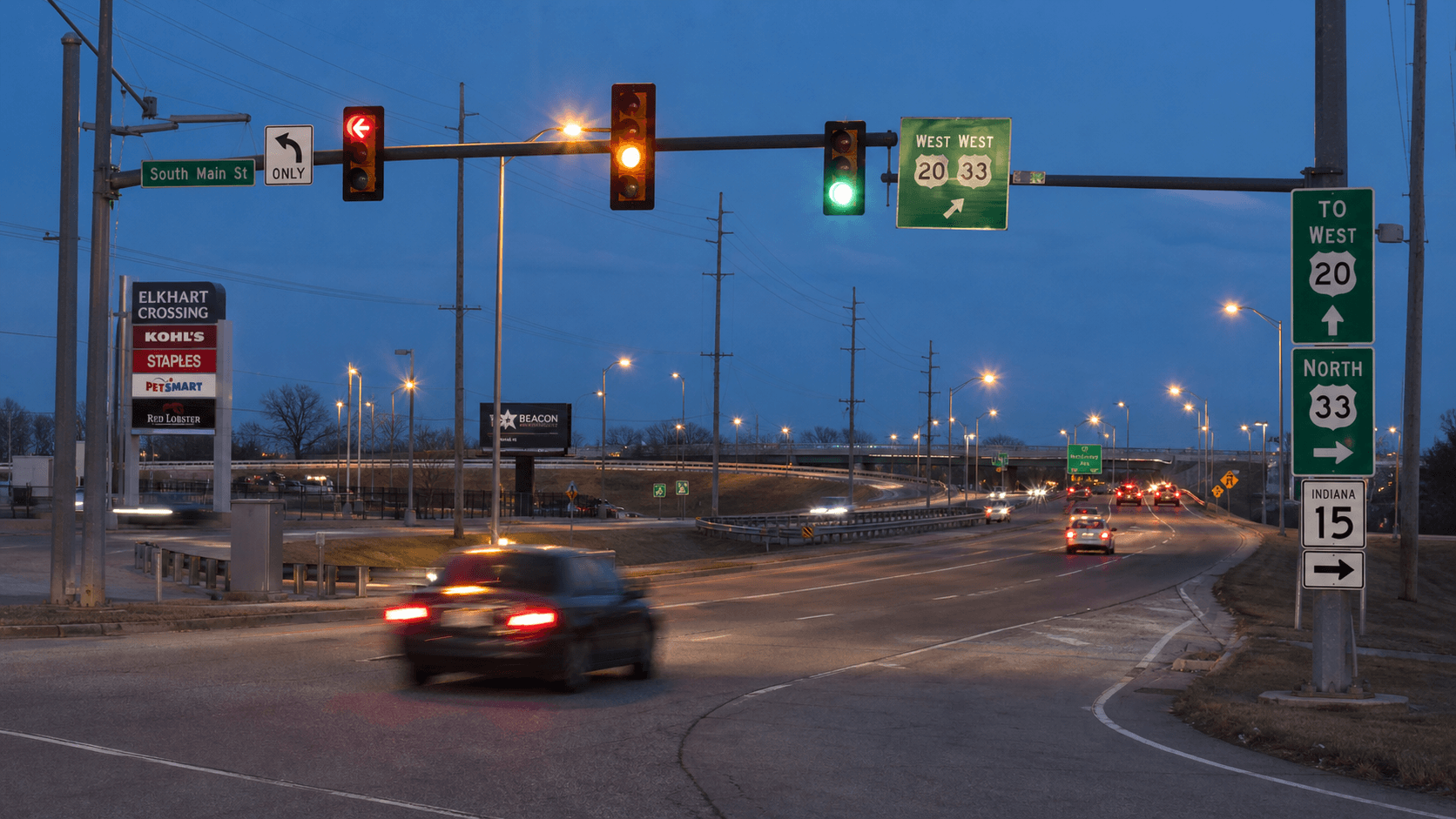
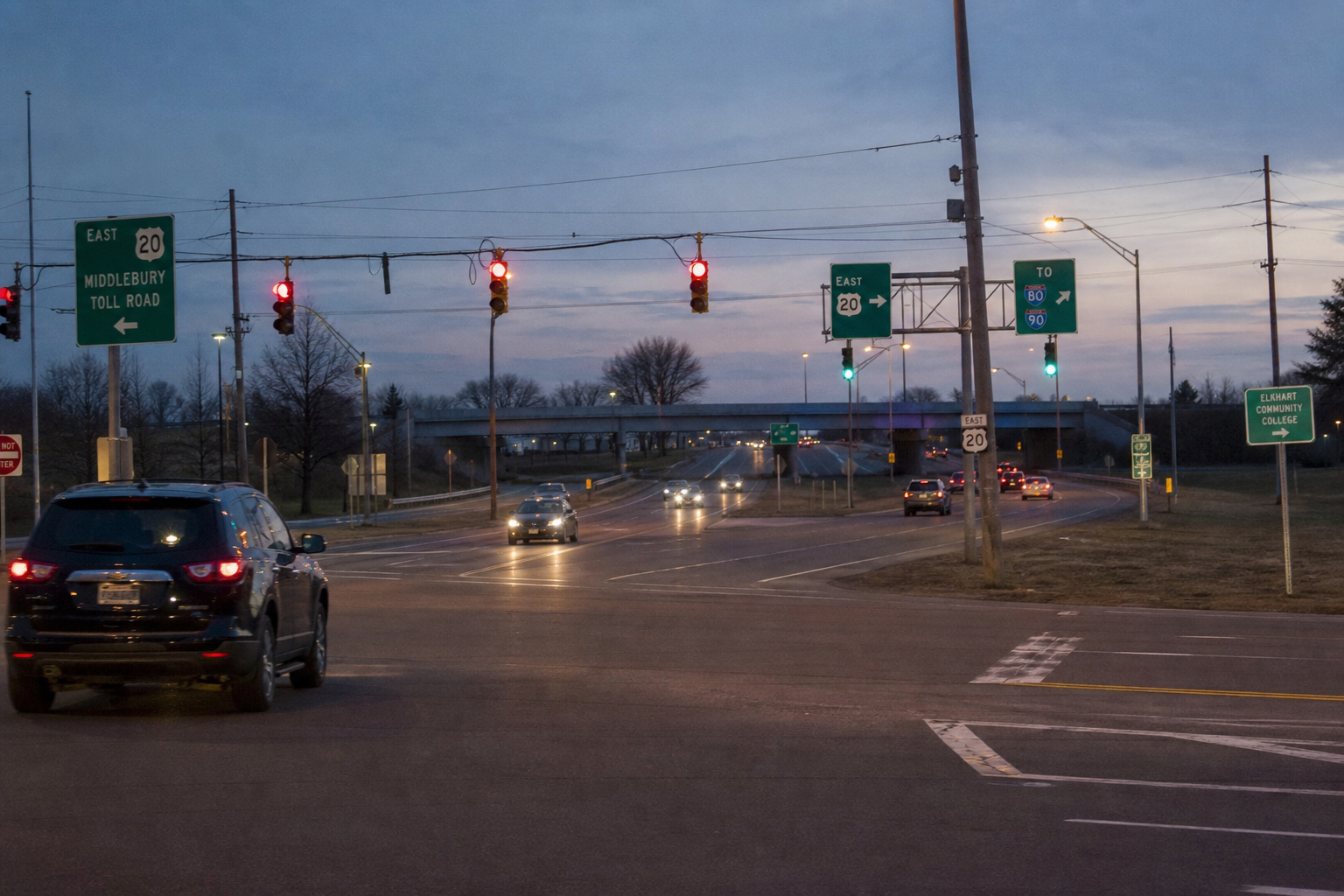
According to the Elkhart Police Department, as reported by WNDU 16[1] and ABC57[2], the crash occurred at approximately 9:00 p.m. on Thursday, August 20, 2026, at South Main Street (U.S. 33) and U.S. 20 in Elkhart.
A semi-tractor-trailer was traveling north on South Main Street and attempting to turn left onto the westbound U.S. 20 ramp. A southbound motorcycle collided with the semi. Elkhart Fire Department medics provided first aid and transported the 26-year-old motorcyclist, who had suffered serious bodily injury and was in critical condition at last report.
The 41-year-old semi driver was uninjured, remained at the scene, and cooperated with investigators. The Elkhart Police Crash Reconstruction Team was activated. No fault had been assigned, and no citations had been issued.
A left turn across oncoming traffic describes the crash geometry, but it does not establish fault. Right-of-way, speed, visibility, signal timing, and physical measurements remain open questions for investigators.
What you should do after a commercial truck crash
If you or a family member is seriously hurt in a collision involving a commercial truck, early evidence preservation matters. Motor carriers and insurers may send investigators promptly to photograph the scene, interview the driver, and secure the tractor. An injured person may need an equally careful record of the scene and vehicles.
A modern tractor's engine control module may record speed, braking, throttle, and other information from before an impact. Electronic logging device records may address hours of service. Dispatch records, GPS information, onboard camera footage, and driver qualification files may also matter. A written preservation demand can help protect records before normal retention schedules overwrite them. The firm's guide to truck black box and ECM evidence explains why timing is important.
The motor carrier's identity may matter as much as the driver's identity. Depending on the evidence, a claim may examine hiring, training, driver qualifications, hours of service, entrustment, maintenance, and corporate responsibility. You can learn more about who may be liable besides the truck driver.
The motorcycle should also be preserved until it can be inspected and documented. Damage patterns, tires, components, and the condition of the motorcycle may help reconstruction experts evaluate the point of impact and competing fault claims.
Request the crash report and later reconstruction findings, document medical care and work losses, and keep records of how the injuries affect daily life. Avoid giving the carrier's insurer a recorded statement while hospitalized or before you understand the request. This guide explains how to obtain an Indiana police crash report.

Why this Elkhart location matters
This collision occurred where one U.S. highway route meets a ramp terminal for another. Signal phases, any protected left-turn indication, sight distance, lighting, signs, and roadway-control records may help investigators understand what happened.
Road ownership and control must be established from records, not assumed. If evidence later implicates a government entity, the Indiana Tort Claims Act may require written notice within 180 days for a political subdivision or 270 days for the State. No published source cited here has raised a road-design or traffic-control problem, and nothing reported suggests that a road authority bears responsibility for this crash.
Indiana's comparative fault rule can be decisive in a motorcycle claim. Under Ind. Code § 34-51-2-6, a claimant found more than 50% at fault recovers nothing, and a recovery is reduced by the claimant's percentage of fault. In a collision involving a turning truck and an oncoming motorcycle, reconstruction evidence may be central to disputes about speed, visibility, sight lines, and point of impact. This plain-language guide explains Indiana's 51% fault rule.
A commercial motor carrier also differs from a private motorist in its regulatory obligations and available insurance. Interstate general freight carriers are subject to a federal minimum liability level of $750,000, and some carry more. A typical Indiana personal auto policy may have a $25,000 per-person state-minimum limit. Available coverage can be important when a person faces catastrophic injuries and long-term care.
Indiana personal-injury claims generally carry a two-year filing deadline under Ind. Code § 34-11-2-4. For an adult claim arising from the August 20, 2026 crash, that date would be August 20, 2028. Evidence-preservation work cannot safely wait until that deadline approaches.
How Delventhal Law Office can help
A truck case may involve a corporate defendant, commercial insurance, federal records, reconstruction evidence, and electronic data with a limited retention period. These claims are often hotly contested, and carriers and insurers may aggressively defend fault and damages.
Chad Delventhal and Delventhal Law Office represent motorcyclists and their families across northern Indiana, including Elkhart County and the U.S. 20 and U.S. 33 corridors. The firm can identify the motor carrier, send preservation demands, seek ECM and driver-log records, obtain reconstruction findings, review available coverage, and pursue responsible parties supported by the evidence. You can consult a Fort Wayne motorcycle accident attorney or request a free case evaluation. There is no attorney fee unless the firm recovers for you.
This post is based on public reporting, the investigation may be ongoing, and nothing here is legal advice or creates an attorney-client relationship.