Key takeaways
- Underride crashes are among the most dangerous semi-truck crashes because the passenger compartment may absorb the impact.
- Rear impact guards are required on many trailers and semitrailers, but the guard’s condition, height, width, attachment, and crash performance may all matter.
- Side underride crashes can happen when a car slides beneath the side of a trailer during a lane-change, turn, jackknife, nighttime, or crossing-path crash.
- Important evidence includes the truck, trailer, underride guard, lighting, reflective tape, inspection records, maintenance records, photos, ECM/ELD/GPS data, dashcam footage, and witness statements.
- Do not assume the police report answers every underride issue. These cases often require fast preservation and expert investigation.
Most people understand that a crash with a semi-truck can be serious because of the truck’s size and weight. Underride crashes add another danger: the geometry of the crash. When a passenger vehicle goes under the rear or side of a trailer, the truck’s structure may intrude into the area where people are sitting.
That is why underride cases require a different investigation than a typical rear-end or lane-change crash. The questions are not limited to who hit whom. The investigation should ask whether the trailer had required rear protection, whether the guard was strong enough and properly maintained, whether lighting and conspicuity markings were visible, whether the truck was stopped or moving unsafely, and whether company conduct made the crash more likely or more severe.
Delventhal Law Office investigates serious truck accidents in Fort Wayne and throughout Indiana. If you or a loved one was hurt in a semi-truck crash, visit our Fort Wayne truck accident attorney page or call (260) 484-6655 for a free consultation.
What is an underride truck accident?
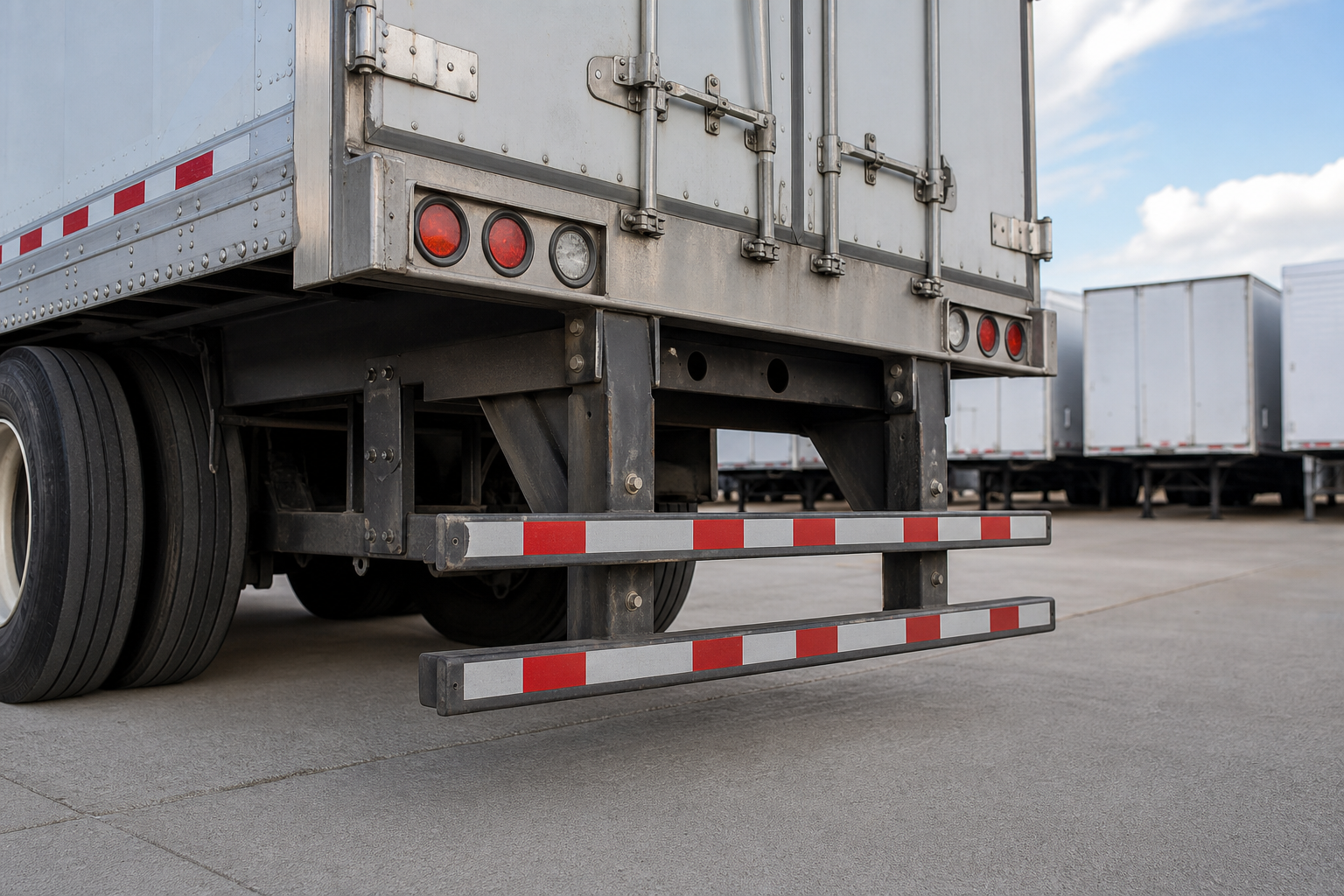
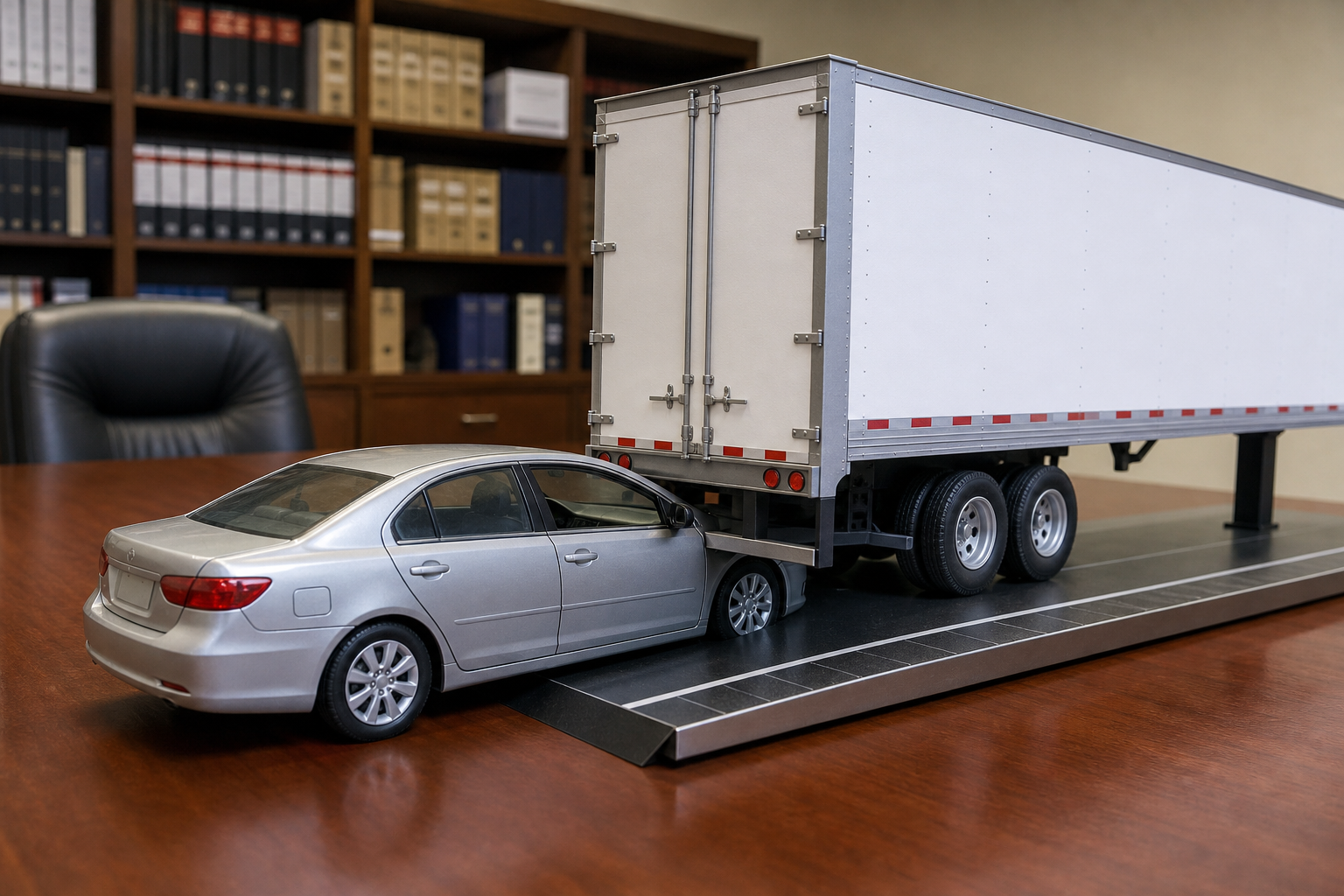
An underride crash happens when a smaller vehicle travels partly or fully under a larger truck, trailer, or semitrailer. The most familiar type is a rear underride crash, where a passenger vehicle strikes the back of a trailer and slides underneath. Side underride crashes can also happen when a vehicle goes beneath the side of a trailer.
The danger is that passenger cars are designed to absorb crash forces through bumpers, crumple zones, airbags, seat belts, and the vehicle structure. In an underride crash, those protections may not work as intended because the impact can occur above the bumper and directly into the windshield, roofline, or occupant compartment.
That is why underride cases often involve catastrophic injuries, including traumatic brain injuries, spinal cord injuries, severe facial trauma, amputations, crushing injuries, and wrongful death.
Why rear underride guards matter
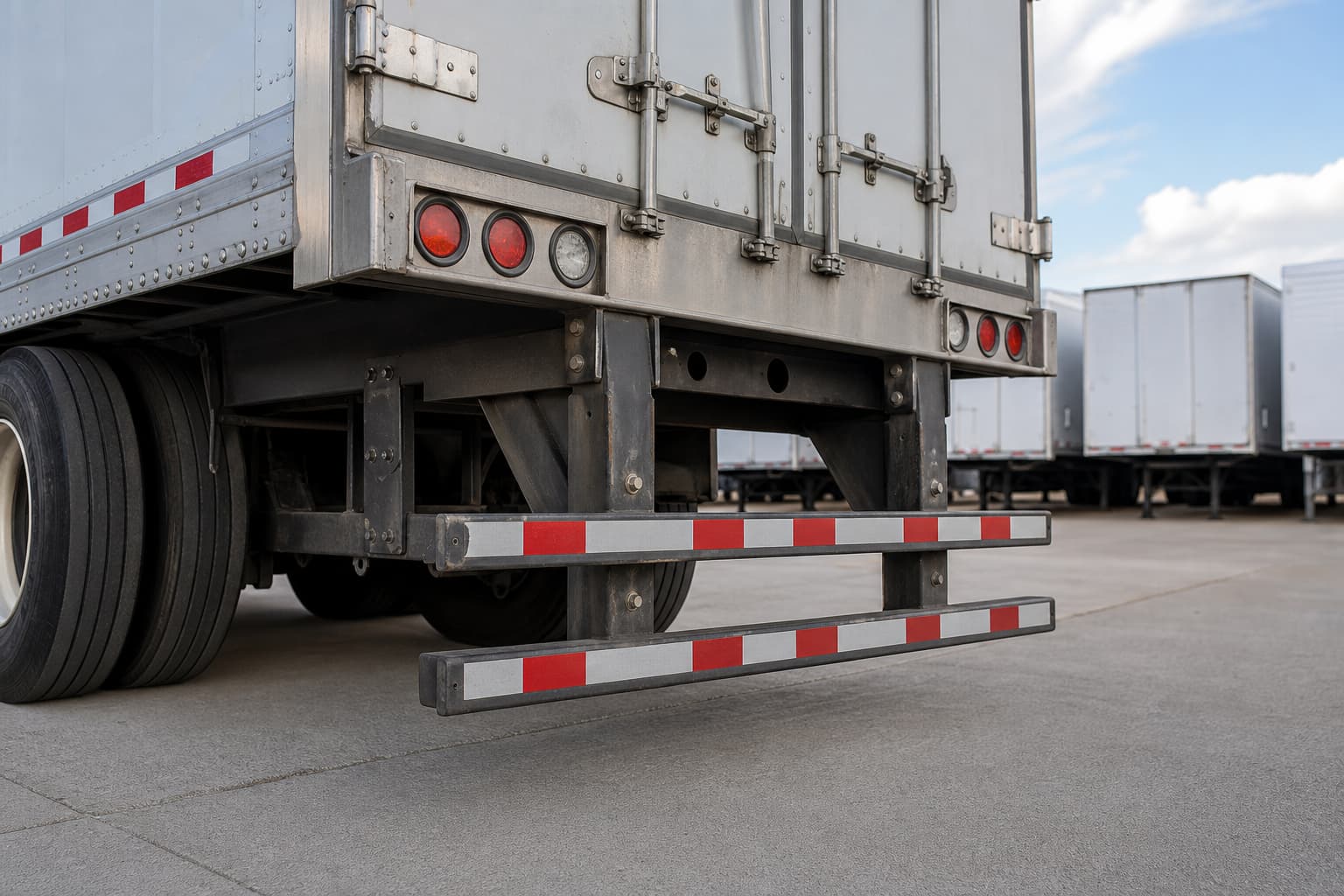
Federal law requires many trailers and semitrailers to have rear impact guards. Under 49 C.F.R. § 393.86[1], many trailers and semitrailers with a gross vehicle weight rating of 10,000 pounds or more, manufactured on or after January 26, 1998, must be equipped with rear impact guards meeting applicable federal safety standards.[1]
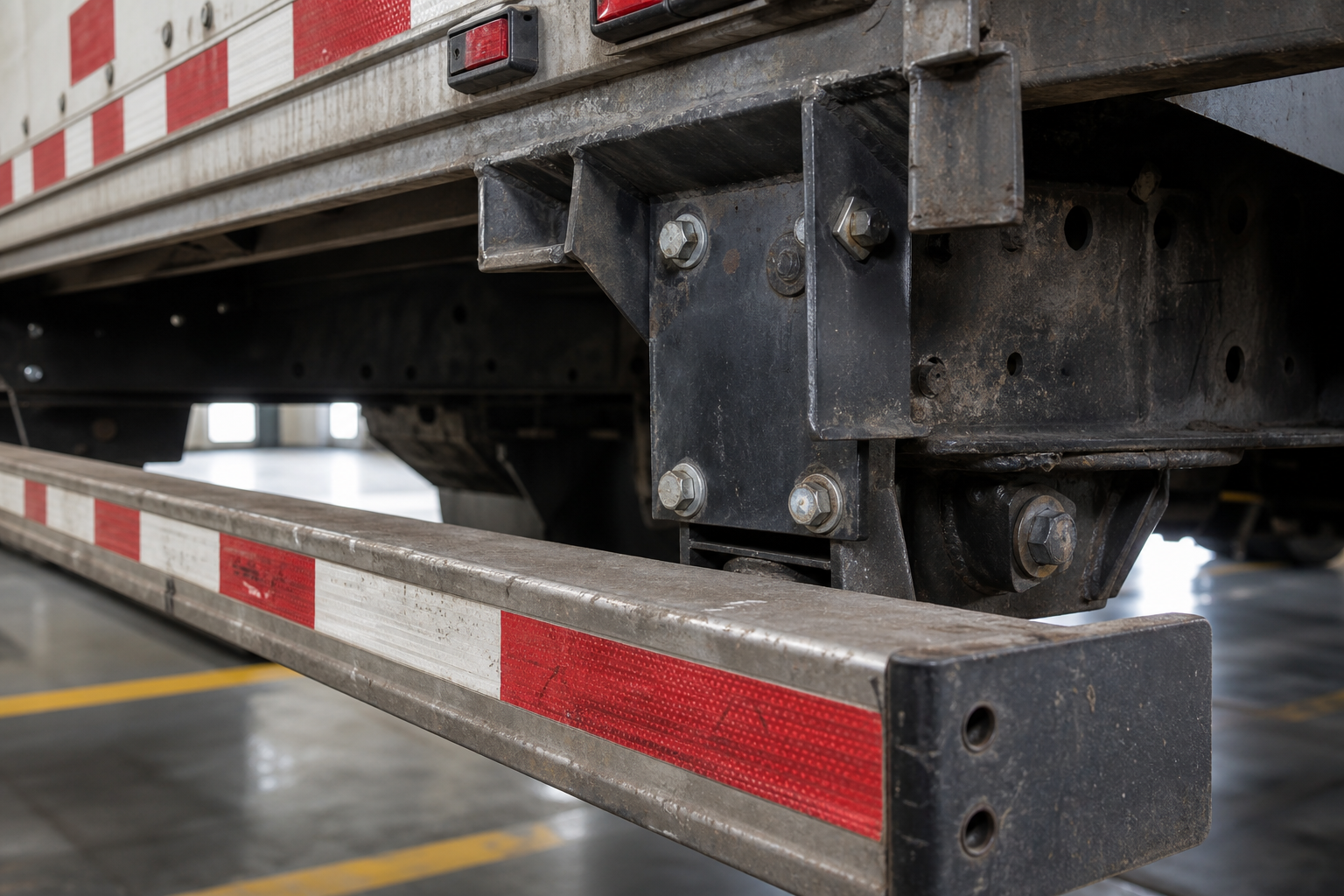
The same rule includes important placement requirements. For example, the horizontal member of the guard generally must extend close to the side extremities of the vehicle, and the vertical distance between the bottom edge of the horizontal member and the ground must not exceed 560 mm, or 22 inches, at any point across the full width of the member.[1]
Those details matter in a legal claim. A guard that is missing, bent, too high, too narrow, pushed too far forward, poorly attached, corroded, damaged from a prior incident, or not properly maintained may fail to perform as intended.
Federal standards explain the purpose of rear impact protection
Federal Motor Vehicle Safety Standard No. 223 covers rear impact guards, and FMVSS No. 224 covers rear impact protection. 49 C.F.R. § 571.223[2] states that the purpose of the rear impact guard standard is to reduce deaths and serious injuries when light duty vehicles collide with the rear end of trailers and semitrailers.[2] 49 C.F.R. § 571.224[3] similarly states that the rear impact protection standard is intended to reduce deaths and serious injuries when light duty vehicles impact the rear of covered trailers and semitrailers.[3]
NHTSA has also explained that underride crashes are often deadly and occur when the front end of a vehicle crashes into the back of a larger vehicle and slides under it.[4] In 2022, NHTSA finalized a rule updating rear underride protection standards and announced other underride-related safety actions, including research and data-collection efforts.[4]
For an injured person’s case, these standards do not automatically answer liability. But they provide a framework for asking whether the trailer, guard, company inspections, maintenance, and crash evidence were consistent with safety requirements.
Rear underride vs. side underride
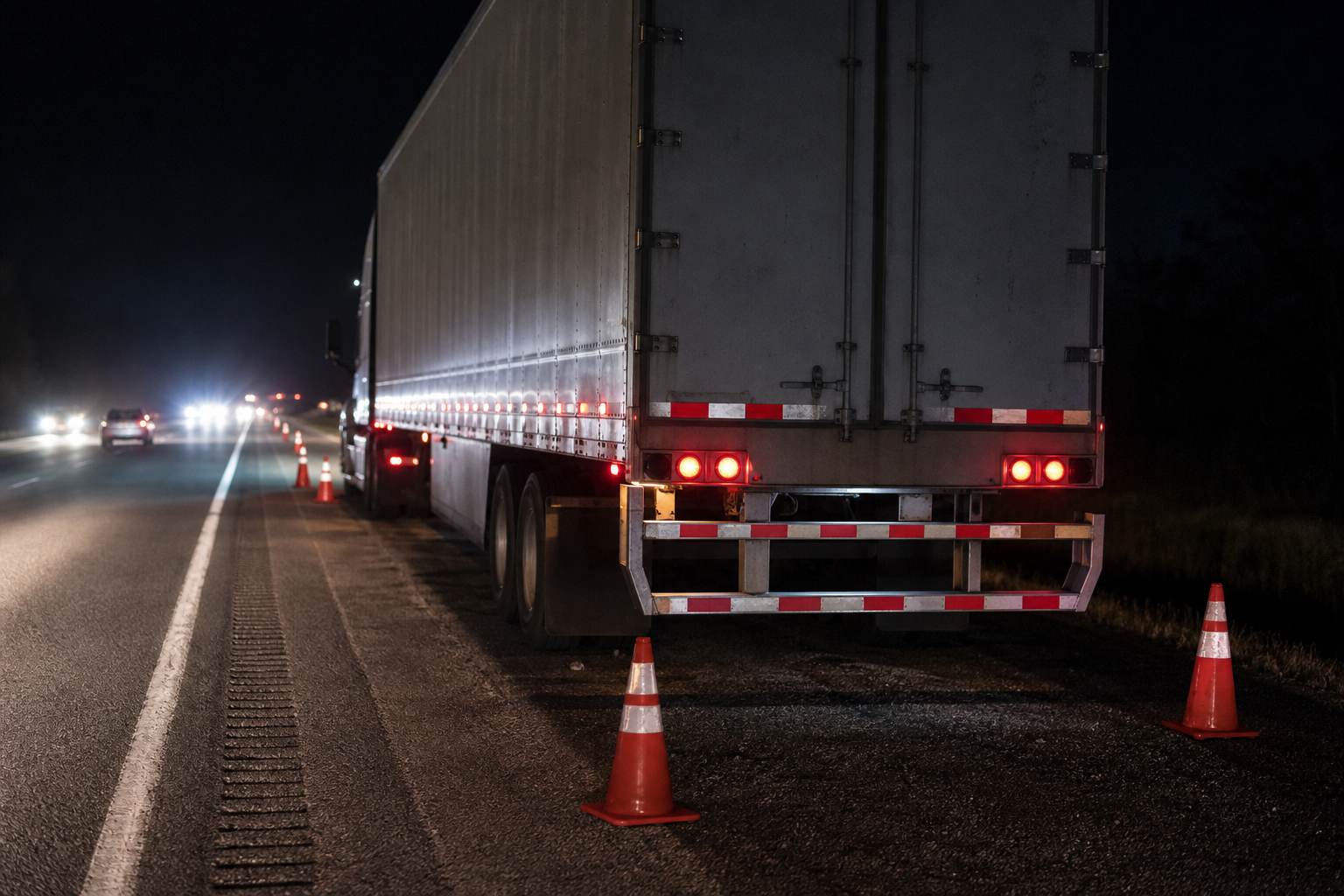
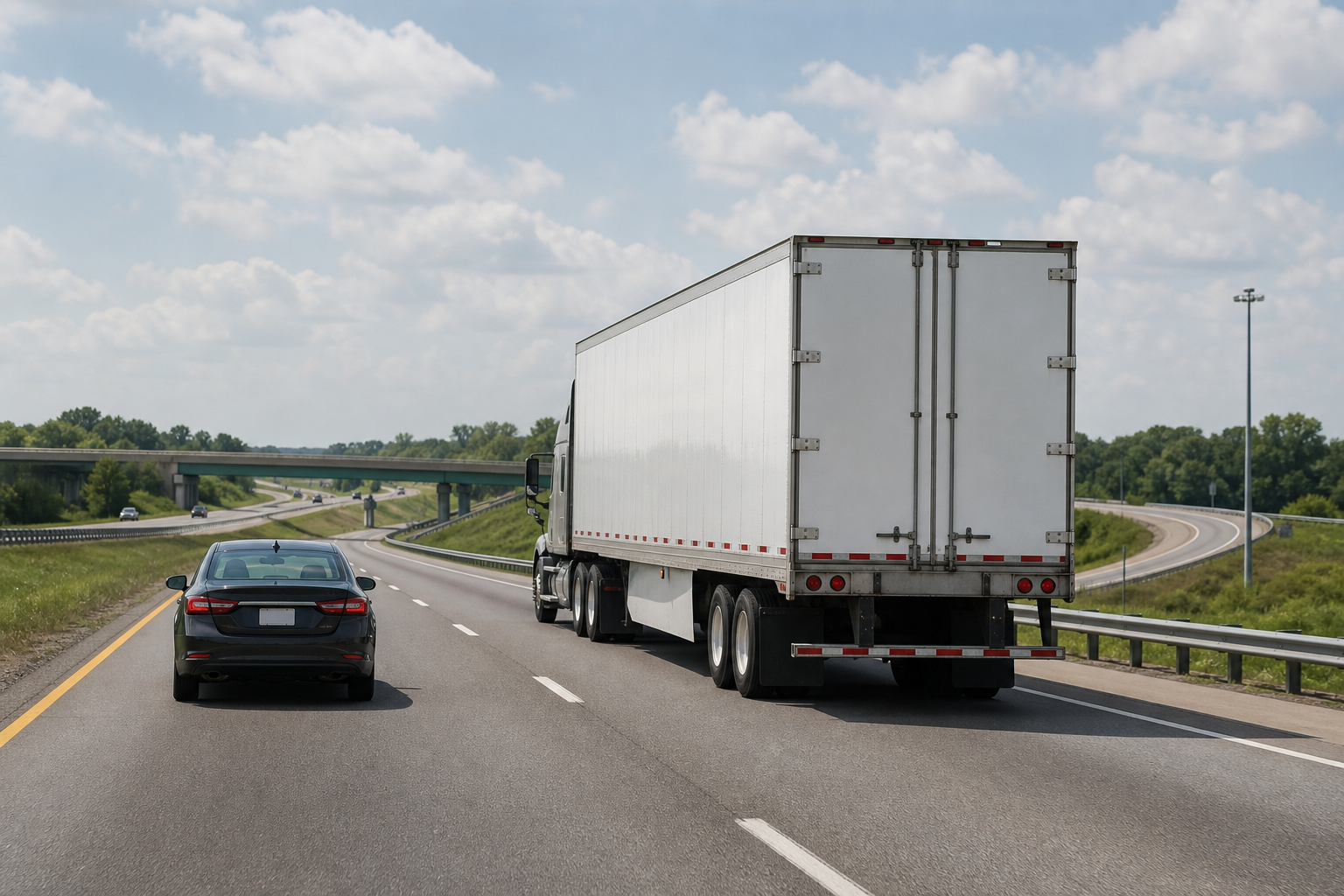
Rear underride usually happens when a passenger vehicle strikes the back of a truck or trailer. It may involve a stopped truck, slow-moving trailer, sudden braking, poor visibility, inadequate lighting, missing reflective tape, an unsafe lane stop, or a rear guard that fails.
Side underride can occur when a passenger vehicle slides beneath the side of a trailer. These crashes may involve lane changes, wide turns, a truck crossing traffic, a jackknifed trailer, a trailer blocking lanes at night, or a disabled truck across the roadway. Side underride issues are especially important because side protection is not the same as rear impact guard protection.
Both types of crashes require careful investigation of truck movement, visibility, lighting, roadway conditions, driver conduct, company policies, and vehicle condition.
Who may be responsible for an underride crash?
Responsibility depends on why the crash happened and why the injuries were so severe. Possible responsible parties may include:
- The truck driver: if the driver stopped unsafely, failed to use hazard signals, made an unsafe lane change, drove fatigued, failed to inspect the trailer, or violated safety rules.
- The trucking company: if it failed to train, supervise, inspect, maintain, or enforce safety practices.
- The trailer owner or leasing company: if the trailer or guard was defective, damaged, poorly maintained, or not compliant.
- A maintenance contractor or repair shop: if inspection or repair work missed dangerous guard, lighting, reflective tape, brake, or trailer defects.
- A manufacturer: if a rear impact guard, trailer component, lighting system, or related product was defectively designed or manufactured.
- A shipper, loader, or broker: if loading, scheduling, routing, or operational decisions contributed to the crash or unsafe trailer position.
Many underride cases overlap with broader trucking liability issues. For the full responsibility framework, read Who Is Legally Responsible in an Indiana Truck Accident?
Evidence that should be preserved quickly
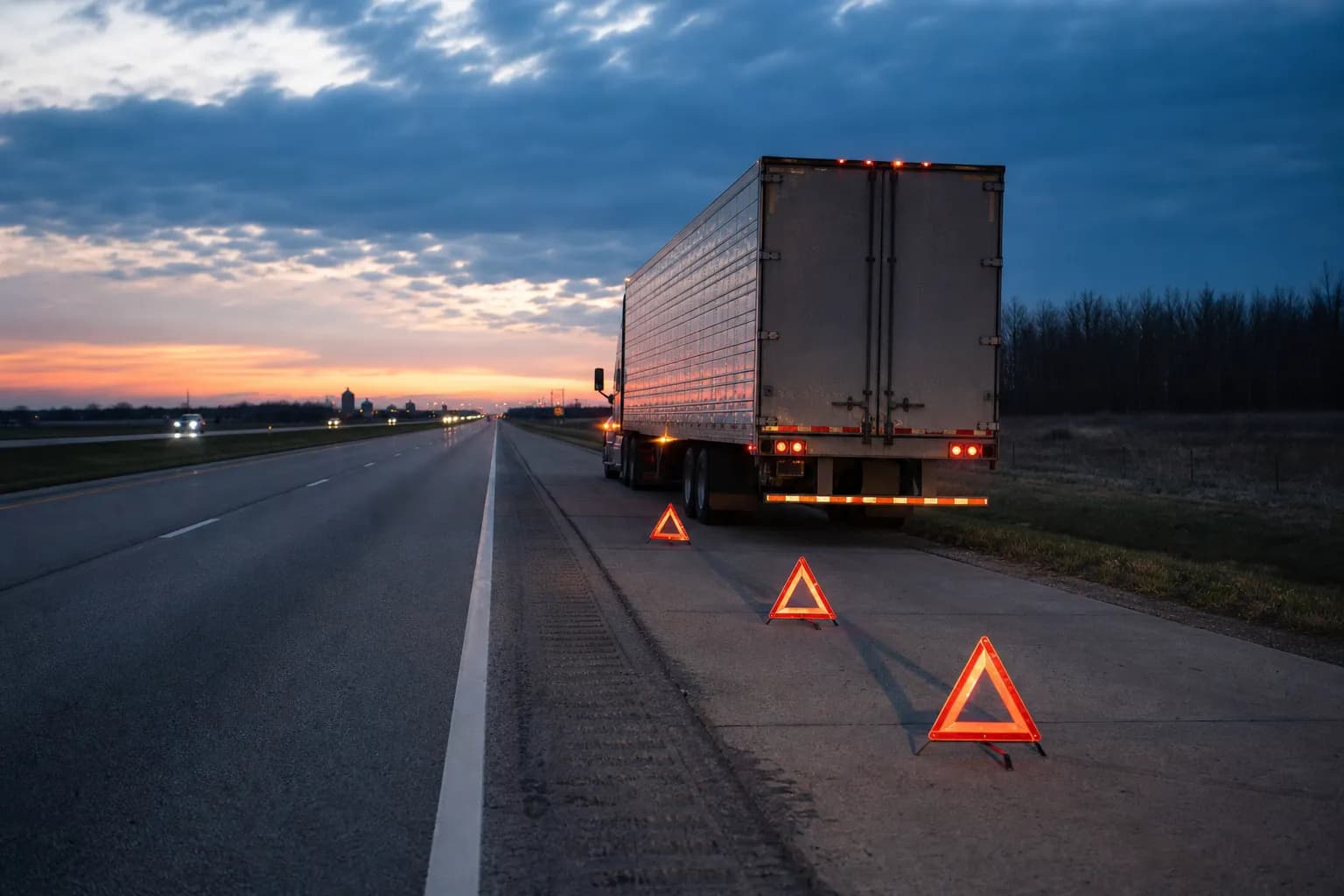
Underride evidence can change fast. A trailer may be repaired, a guard may be replaced, reflective tape may be changed, electronic data may be overwritten, and the truck may return to service. A preservation demand should be sent as soon as possible.
Important evidence may include:
- The tractor, trailer, rear impact guard, underride guard components, mounting brackets, bolts, welds, and related hardware.
- Photos, scene measurements, crash reconstruction data, and roadway evidence.
- Lighting, reflective tape, conspicuity markings, hazard lights, brake lights, and turn signals.
- Inspection, maintenance, repair, and prior-damage records for the trailer and guard.
- Driver vehicle inspection reports and annual inspection records.
- ECM, ELD, GPS, dashcam, fleet telematics, and dispatch data.
- Police reports, witness statements, 911 calls, tow records, and roadway cleanup records.
- Company policies for stopping, breakdowns, warning devices, inspections, and trailer maintenance.
- Trailer ownership, leasing, manufacturer, and repair history.

Why the police report may not be enough
A police report may document the vehicles, drivers, roadway, and initial fault observations. But it usually does not fully analyze rear guard compliance, guard strength, prior damage, trailer maintenance history, fleet inspection practices, conspicuity markings, electronic data, or whether the truck should have been stopped where it was.
That matters because trucking companies and insurers may try to frame an underride crash as simply the smaller vehicle rear-ending the trailer. Sometimes that is incomplete. If the trailer was disabled without proper warnings, stopped in a dangerous location, missing required lighting, poorly marked, or equipped with a damaged guard, the legal analysis can change.
If the insurer blames the injured person, Indiana comparative fault rules may become important. DLO’s guide on what happens if the police report says you are partly at fault in Indiana explains why the first fault narrative is not always the final word.
How underride issues connect to other truck-crash topics
Underride crashes often overlap with other truck accident evidence issues:
- Fatigue: A tired truck driver may stop unsafely, drift, make a poor lane change, or fail to notice hazards. See Hours-of-Service Violations and Fatigued Truck Driving in Indiana.
- Maintenance: Guard condition, trailer lighting, reflective tape, brakes, tires, and prior damage can all matter. See Why Truck Maintenance Logs Matter After an Indiana Semi-Truck Crash.
- Training: Drivers need training on breakdowns, warning devices, trailer inspections, visibility, and safe stopping. See Negligent Hiring and Training in Indiana Truck Accident Cases.
- Cargo and trailer configuration: Load, trailer type, and equipment can affect how a crash occurs. See Improper Cargo Loading and Lost-Load Truck Accidents in Indiana.
What to do after an underride truck crash in Indiana
- Get emergency medical care and follow recommended treatment.
- If safe, preserve photos of the truck, trailer, rear guard, lighting, reflective tape, roadway, vehicle damage, and debris.
- Get witness names and contact information.
- Do not assume a simple rear-end label tells the whole story.
- Do not give a recorded statement to the trucking company’s insurer without legal advice.
- Keep the damaged vehicle, repair documents, medical records, bills, wage records, and insurance letters.
- Contact a truck accident lawyer quickly so preservation letters can be sent before the truck, trailer, guard, and electronic evidence are changed.
How long do you have to act?
Indiana’s general personal injury statute of limitations is often two years under Indiana Code § 34-11-2-4[4].[6] But an underride case should be investigated much sooner. The trailer may be repaired, the guard may be replaced, electronic data may be overwritten, and physical evidence may disappear.
If a government vehicle or public entity is involved, shorter notice rules may apply. Early investigation is especially important in catastrophic injury and wrongful death cases.
Talk to a Fort Wayne truck accident lawyer
If you or someone you love was seriously injured in an underride truck crash, the investigation needs to move quickly. Rear guard condition, trailer visibility, electronic data, maintenance records, company policies, and crash reconstruction may all matter.
Delventhal Law Office helps injured people in Fort Wayne and throughout Indiana after serious semi-truck and commercial vehicle crashes. Call (260) 484-6655 or contact us online for a free consultation.
There is no fee unless we recover for you.
Frequently asked questions
What is an underride truck accident?
An underride truck accident happens when a passenger vehicle slides under the rear or side of a large truck or trailer. These crashes are dangerous because the trailer can intrude into the smaller vehicle’s passenger compartment.
Are rear underride guards required on semi-trailers?
Many trailers and semitrailers with a gross vehicle weight rating of 10,000 pounds or more must have rear impact guards that meet federal requirements. The exact rule depends on the vehicle, manufacture date, trailer type, and exemptions.
Who can be liable for an underride crash in Indiana?
Potentially responsible parties may include the truck driver, trucking company, trailer owner, leasing company, maintenance contractor, repair shop, manufacturer, shipper, loader, broker, or more than one of them.
What evidence matters in an underride case?
Important evidence may include the truck, trailer, guard, lighting, reflective tape, inspection records, maintenance records, repair history, ECM/ELD/GPS data, dashcam footage, witness statements, scene photos, and crash reconstruction evidence.
Can a case still exist if the passenger car rear-ended the trailer?
Yes, depending on the facts. The investigation should ask why the crash happened, whether the trailer was visible, whether the truck was stopped or positioned safely, whether the guard complied with applicable requirements, and whether company conduct contributed to the crash or injury severity.
Sources and further reading
[1] Electronic Code of Federal Regulations: 49 C.F.R. § 393.86, Rear impact guards and rear end protection[1]
[2] Electronic Code of Federal Regulations: 49 C.F.R. § 571.223, Standard No. 223; Rear impact guards[2]
[3] Electronic Code of Federal Regulations: 49 C.F.R. § 571.224, Standard No. 224; Rear impact protection[3]
[4] National Highway Traffic Safety Administration: NHTSA announces underride protection actions and rear underride final rule[5]
[5] Insurance Institute for Highway Safety: Truck underride guard ratings and underride protection research[6]
[6] Indiana General Assembly: Indiana Code § 34-11-2-4, injury to person or character[4]