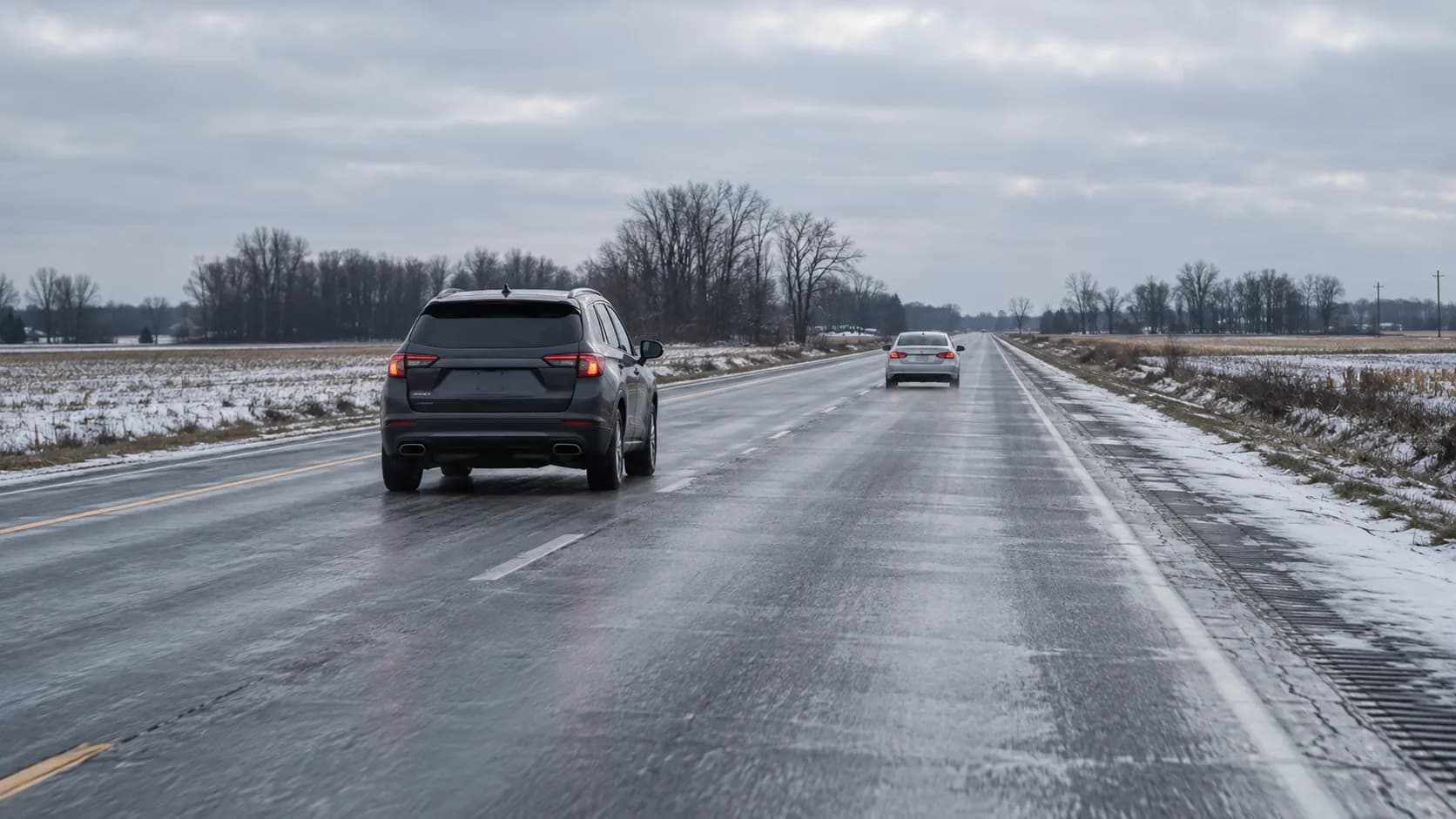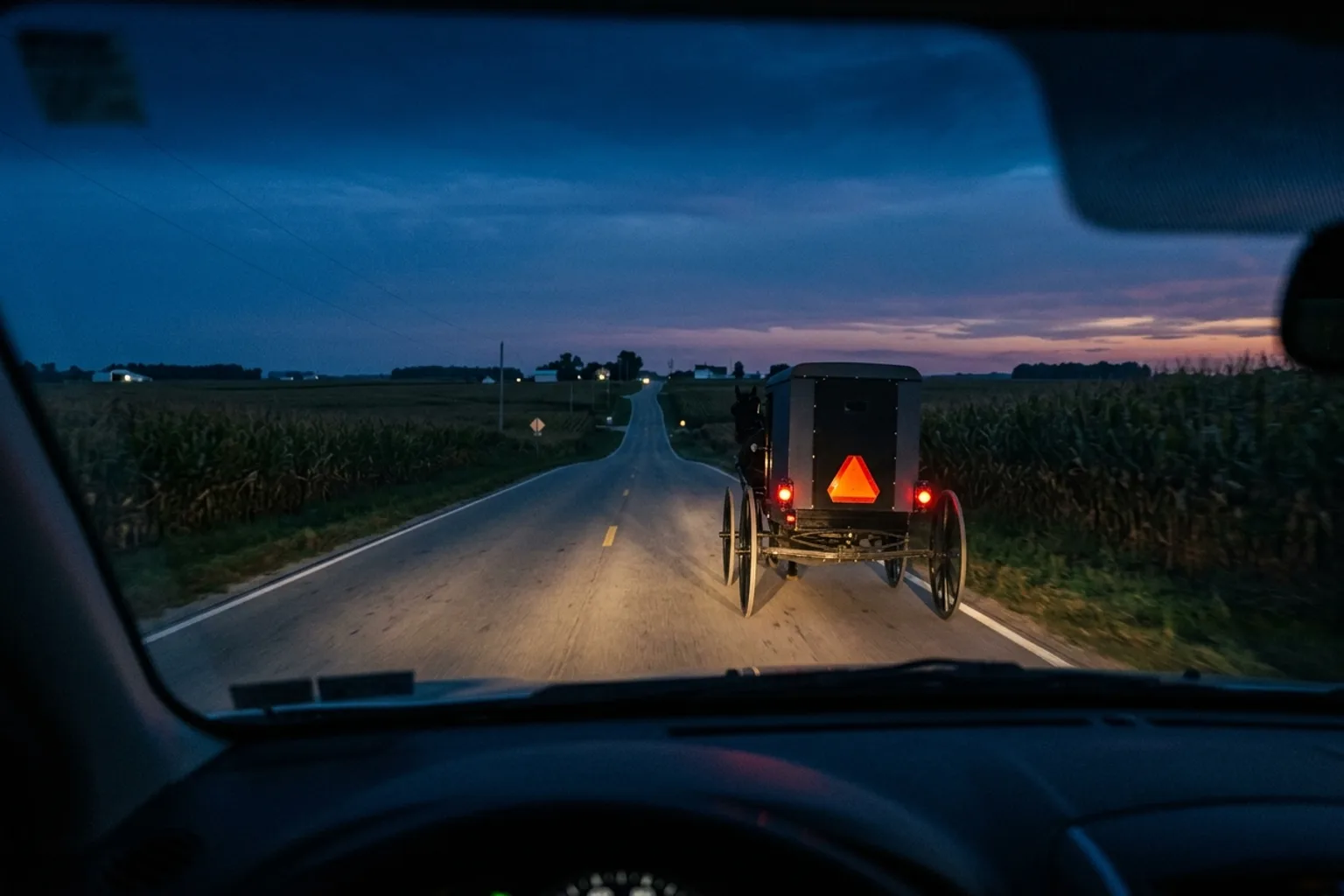
Northeast Indiana has one of the larger Amish and Old Order communities in the state, so horse-and-buggy traffic is a daily reality on county roads in Allen, DeKalb, Noble, and Adams counties. When a car or truck collides with a horse or a buggy, the motorist is often seriously hurt too, and is left wondering who is responsible and who pays. Delventhal Law Office represents the drivers of cars and trucks in these collisions.
Key takeaways
- In Indiana you generally have two years to file a personal-injury lawsuit after a crash (IC 34-11-2-4[1]).
- Fault can be shared. You can still recover if you are 50% or less at fault, but nothing if you are 51% or more (IC 34-51-2-6[2]).
- A buggy has the same road rights and duties as a car (IC 9-21-1-10[3]), and must display an SMV emblem (IC 9-21-9-2[4]) plus a red or amber flashing lamp whenever headlights are required (IC 9-21-9-4[5]).
- The animal's owner can be responsible when a horse was loose or a buggy was unlit or unmarked.
- Every driver in a crash must stop, exchange information, help anyone injured, and make sure police are notified (IC 9-26-1-1.1[6]).
- If the animal owner or buggy has no applicable insurance, your own uninsured/underinsured motorist coverage may apply.
Who is at fault when a car hits a horse or buggy?
There is a common assumption that the driver of the car is automatically at fault for hitting something slower. That is not how Indiana law works. Fault turns on reasonable care by everyone involved. A driver must keep a proper lookout and control their speed for the conditions, but the buggy driver has duties too, and the animal's owner has a separate duty to keep the animal off the roadway. When a buggy travels at night without lights or the required emblem, or a horse is loose through an open gate, fault may rest largely or entirely with the animal's side. The same reasonable-care analysis our Fort Wayne car accident lawyer page describes for collisions between vehicles applies here.
Indiana uses modified comparative fault. Your recovery is reduced in proportion to your own share of fault (IC 34-51-2-5[7]), and you are barred completely only if your fault is greater than everyone else's combined, meaning more than 50% (IC 34-51-2-6[7]). In practice, an adjuster or jury weighs your speed, headlights, and attention against the buggy's visibility and position and the owner's control of the animal. See our guides to Indiana's 51% fault rule and what it means that Indiana is an at-fault state.
Do buggies have to follow the same traffic laws?
Yes. A person who rides an animal or drives an animal-drawn vehicle on a roadway has the rights and duties of any other driver, except for rules that by their nature cannot apply (IC 9-21-1-10[8]). A buggy driver must obey signals, keep right, signal turns, and yield just like anyone else. If the buggy pulled out from a stop sign, drifted left of center on a hill, or turned across your lane without warning, those violations count against the buggy in the fault analysis, exactly as they would against a car.
Extra caution around animals is wise, but the legal starting point is that both vehicles owed each other the ordinary rules of the road.
What equipment must a buggy carry, and how does missing equipment change fault?
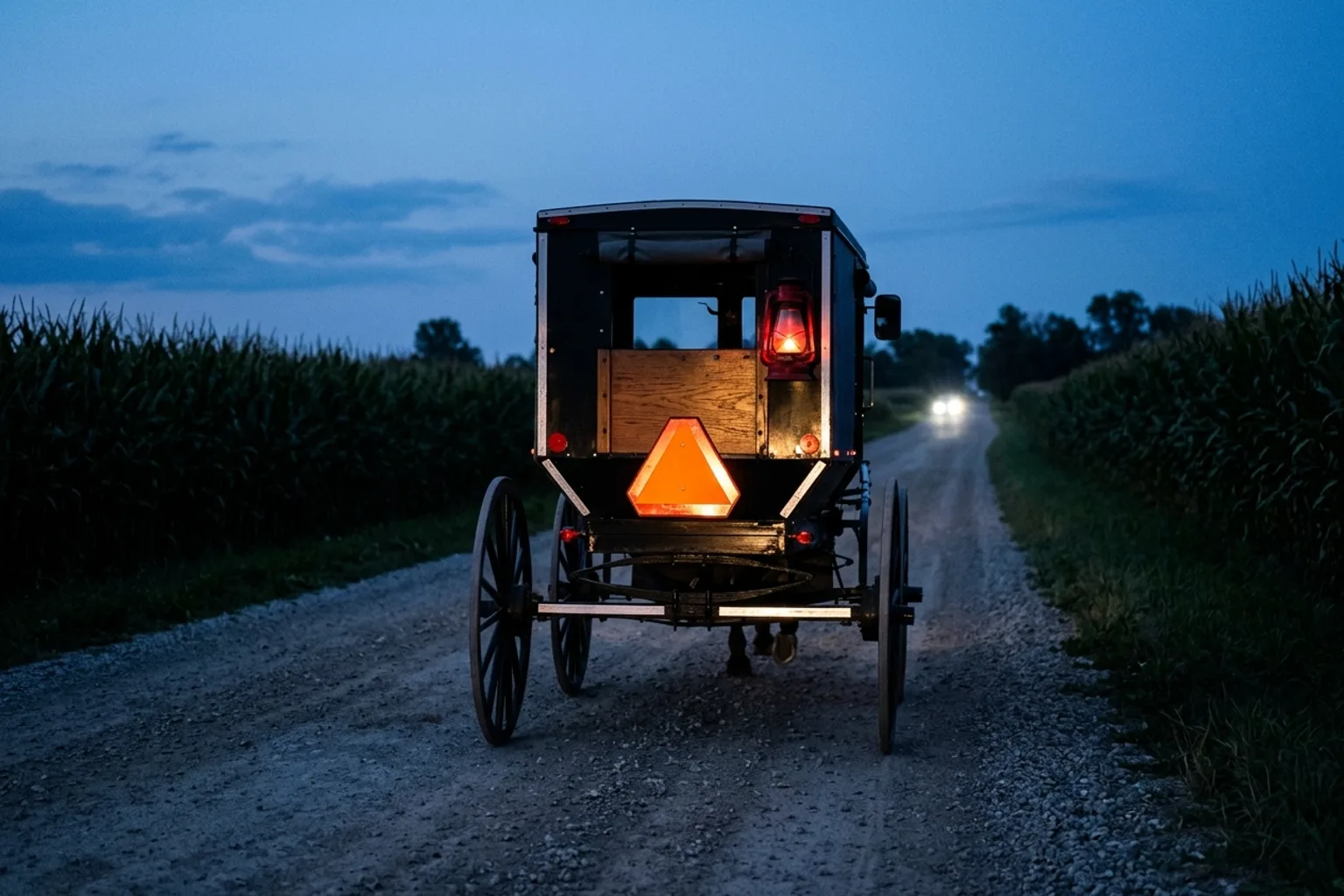
Indiana's slow-moving-vehicle chapter applies to animal-drawn vehicles not ordinarily driven faster than 25 mph (IC 9-21-9-1[9]). Two pieces of equipment are required, and their condition is often the most important evidence in a buggy-collision case.
The SMV emblem. On any highway open to traffic, the buggy must display the triangular slow-moving-vehicle emblem, mounted near the center of mass, two to ten feet off the ground, and entirely visible from the rear, day or night (IC 9-21-9-2[9]). A faded triangle, or one blocked by a load, does not satisfy the statute.
A flashing lamp after dark. Whenever conditions require lighted lamps, the buggy must also display a red or amber flashing lamp, mounted low and visible from at least 500 feet to the rear (IC 9-21-9-4[10]). Violating the chapter is a Class C infraction (IC 9-21-9-7[10]).
| Equipment | What Indiana requires | If it was missing or defective |
|---|---|---|
| SMV triangle emblem | Required on any highway; near center of mass, 2–10 feet high, entirely visible from the rear day or night (IC 9-21-9-2[4]) | Strong evidence of buggy-side negligence; can shift the fault split toward the buggy |
| Red or amber flashing lamp | Required whenever lighted lamps are required; visible 500 feet to the rear (IC 9-21-9-4[5]) | Central in dusk and nighttime crashes, where seeing the buggy in time is the disputed fact |
| Red flags | Permitted, not required (IC 9-21-9-6[12]) | Their absence alone does not show negligence |
| Any violation of the chapter | Class C infraction (IC 9-21-9-7[13]) | Does not decide a civil case by itself, but is evidence a jury can weigh in assigning fault |
This is why photographs of the back of the buggy, taken before it is moved or repaired, are so valuable. It is the same visibility problem we see in crashes with farm tractors and other slow farm equipment.
When is the animal's owner or handler responsible?
- Loose horse on the road. If a horse is on the roadway because it was not properly fenced, secured, or supervised, the owner may be negligent. These cases often turn on how the animal got out, so the fence line, the gate, and past escapes all become evidence.
- Unlit or unmarked buggy. Missing lamps or SMV emblem after dark, as covered above.
- Loss of control of the animal. A horse that bolts into traffic because it was startled or mishandled.
- Driving against the rules of the road. Wrong side, failure to yield, ignoring signals.
In a loose-animal case, act quickly. Fences and gates get repaired within days, and once that happens the strongest proof of how the horse escaped can be gone. An attorney can send a preservation letter early.
What should you do in the first 30 minutes after hitting a buggy?
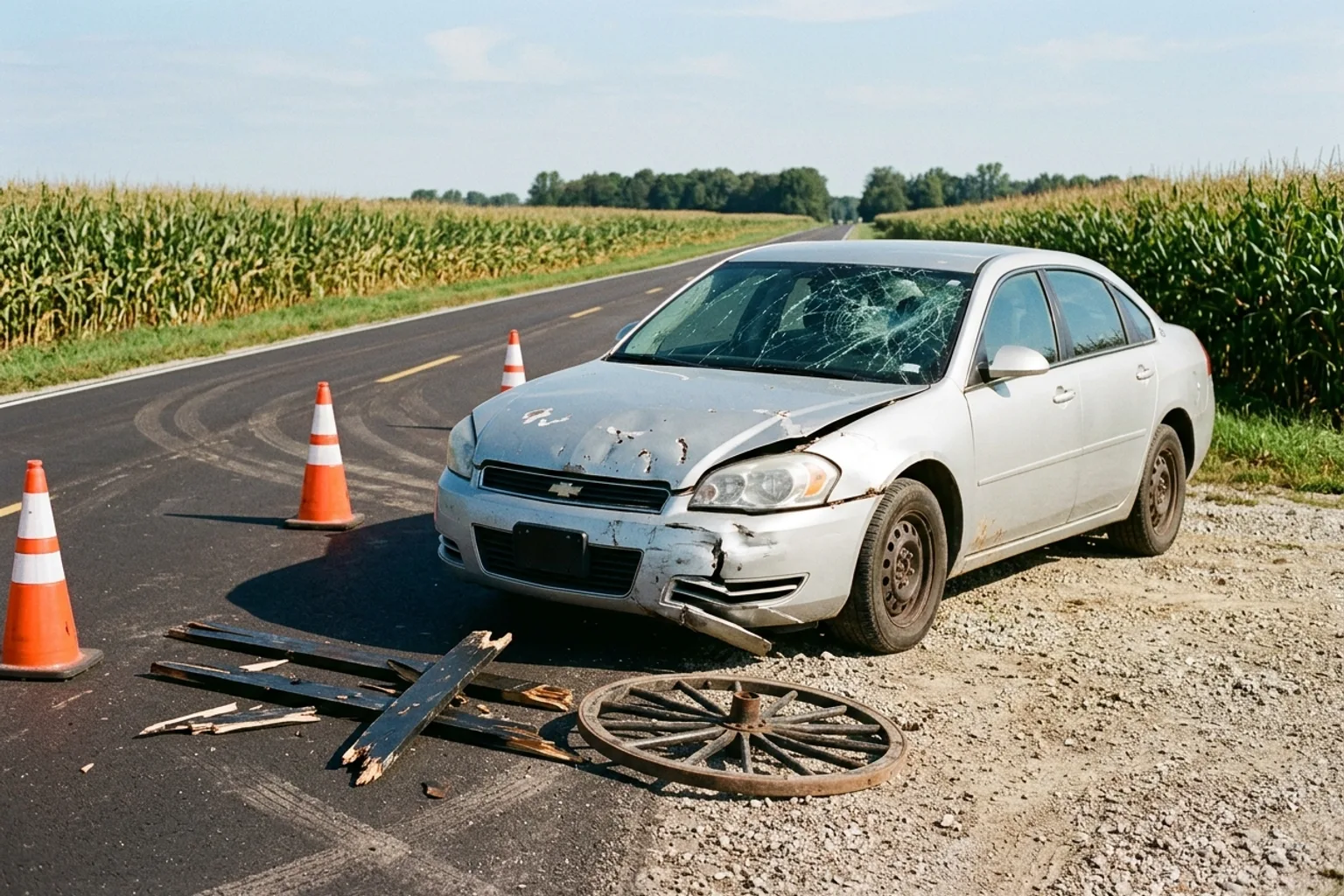
Indiana law requires a driver involved in a crash to stop at or near the scene, exchange information, provide reasonable assistance to anyone injured, and make sure the crash is reported to police or 911 when someone is hurt (IC 9-26-1-1.1[14]). Knowingly failing to do so is the crime of leaving the scene, so treat these steps as mandatory even if the buggy occupants say they are fine and want to handle it privately.
- Stop and get safe. If no one is hurt or trapped, Indiana directs you to move a drivable vehicle off the traveled lane (IC 9-26-1-1.2[15]); if anyone is injured, leave the vehicles where they are.
- Call 911. Tell the dispatcher a horse is involved; a frightened or injured animal on the roadway is its own hazard.
- Do not approach the horse. Let the buggy driver or responders handle the animal.
- Exchange information. Get the buggy driver's name and address, and the horse owner's if that is a different person.
- Photograph before anything moves. The back of the buggy (emblem, lamps, reflective tape), the lighting, the road, skid marks, debris, the animal, and your vehicle.
- Get witnesses. Names and phone numbers of anyone who stopped.
- Say little about fault. Cooperate with the officer, but do not apologize or speculate.
What should you do in the days after the crash?
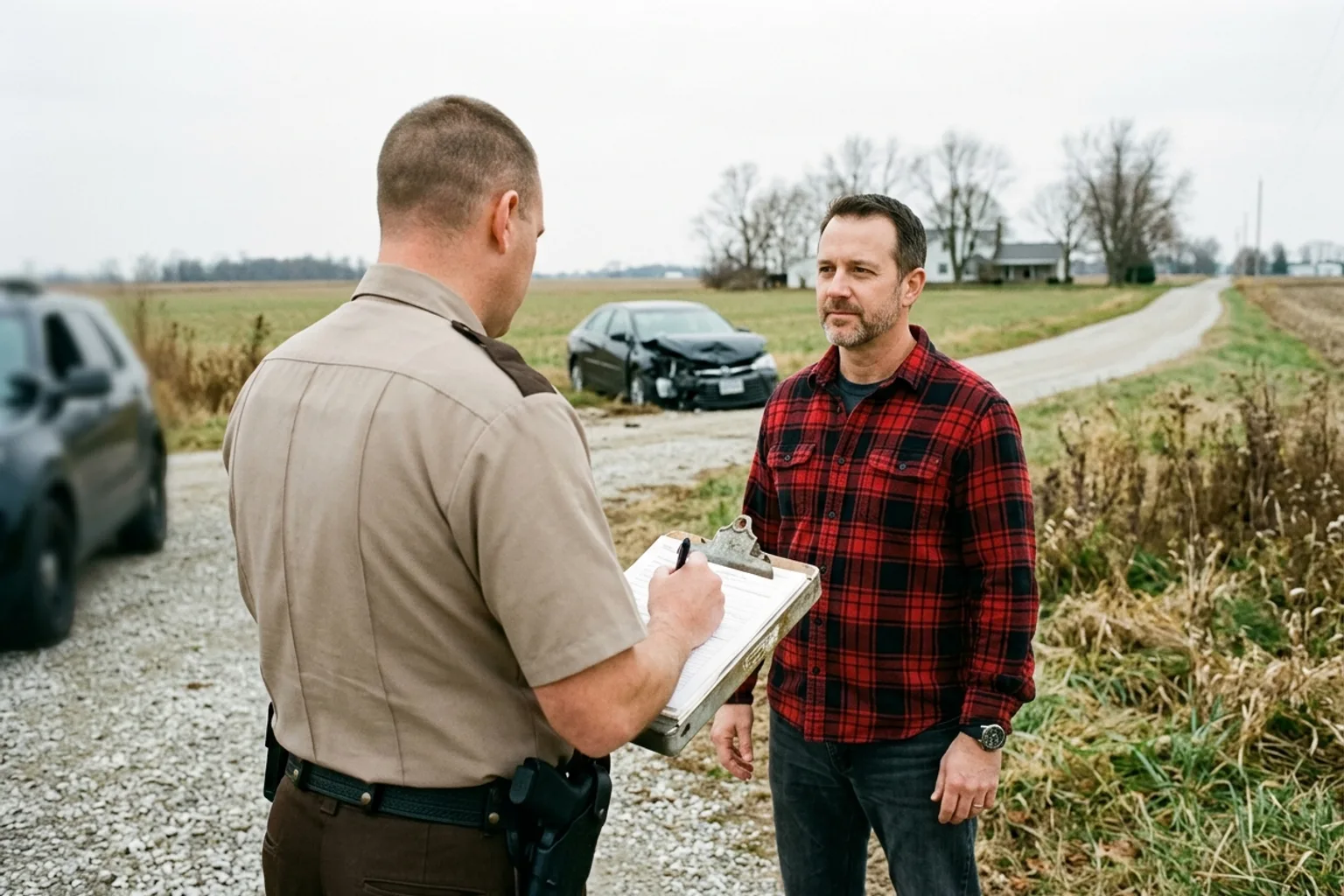
Get medical attention promptly, even if you felt only shaken at the scene. Neck, back, and head symptoms often surface a day or two later, and a prompt exam connects your injuries to the crash in the medical record.
Then gather the paper. The officer's crash report will identify the parties and often note the buggy's emblem and lighting; our guide explains how to obtain the Indiana crash report. Keep your photos in original form, save any dashcam footage before it overwrites, and start a folder for bills, estimates, and missed-work records. For a fuller checklist, see what evidence helps prove an Indiana car accident claim.
What can the driver recover?
As the driver, you may be able to recover for medical bills, lost wages, pain and suffering, and vehicle damage, reduced by any share of fault assigned to you. Striking a large animal at highway speed can cause severe injuries and can total a vehicle. In a total loss the dispute often becomes the fair market value of your car, so keep maintenance records and pre-crash photos if you have them.
How does the insurance claim actually work for the driver?

Buggy cases rarely follow the normal two-adjusters script, because the buggy side usually has no auto policy. Indiana's financial-responsibility minimums, currently $25,000 per person and $50,000 per crash for bodily injury and $25,000 for property damage (IC 9-25-4-5[16]), apply to motor vehicles, and a horse-drawn buggy is not one, so its driver is generally not required to carry that coverage. Many buggy owners carry only a farm or homeowner's policy that may or may not respond.
That changes the order of operations for you as the driver:
- Report the crash to your own insurer promptly. Late notice can jeopardize coverage; reporting is not accepting blame.
- Identify every policy on the other side. A farm or homeowner's liability policy held by the animal's owner is often the real source of recovery in a loose-horse case. An attorney can demand disclosure.
- Use your own first-party coverages while liability is sorted out. Collision coverage can repair or total your vehicle now, subject to your deductible, and medical-payments coverage can bridge early bills. If the responsible party is uncollectible, your uninsured/underinsured motorist (UM/UIM) coverage may be the claim that matters most, though whether it reaches a non-motor-vehicle collision depends on your policy's exact language.
- Expect a subrogation phase. If your insurer pays under collision and the buggy side is found at fault, your insurer may pursue reimbursement, and your deductible can come back to you.
- Be careful with recorded statements. You owe your own insurer cooperation, but you do not have to give the other side's insurer a recorded statement, and early statements about speed and visibility are often used to inflate your fault share.
How long do you have to file a claim?
In Indiana you generally have two years from the date of the crash to file a personal-injury lawsuit (IC 34-11-2-4[1]). Some situations change the clock, but waiting risks your claim and the evidence. Talk with an attorney well before the deadline so proof, such as the buggy's lighting and emblem and the fence line, can be preserved.
How can drivers avoid buggy collisions in the first place?
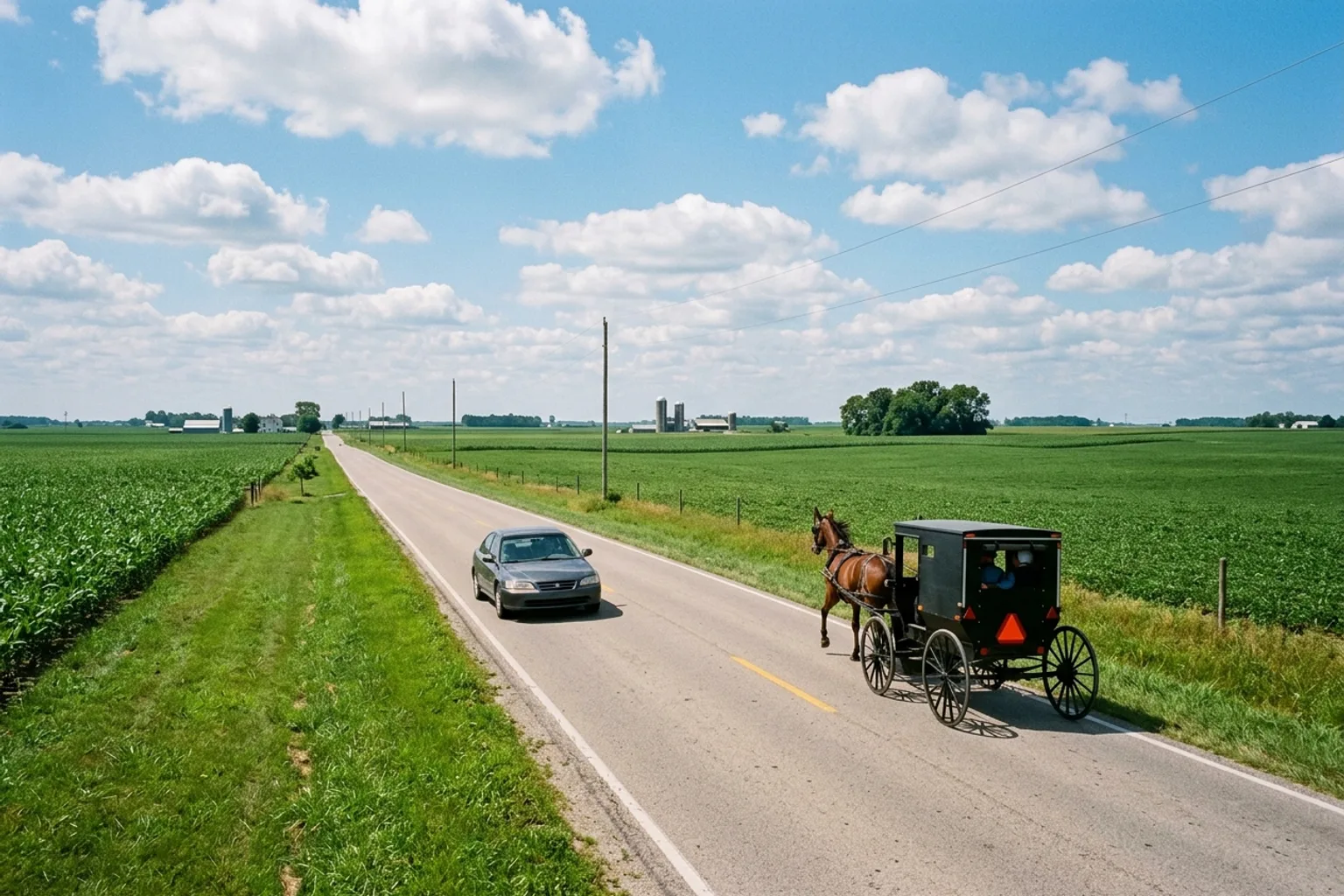
A buggy moves at only a few miles per hour, so a car doing 55 closes the gap far faster than most drivers expect; local guidance such as the Elkhart County Sheriff's buggy manual urges motorists to begin slowing as soon as a buggy comes into view, especially at dusk and over hills. Pass only where you can see clearly ahead, give the horse a wide berth, and avoid honking or accelerating hard beside the animal. A driver who can show this kind of care also makes a much stronger comparative-fault case.
Frequently asked questions
Am I automatically at fault for hitting a horse or buggy?
No. Indiana decides fault by reasonable care on all sides, and fault can rest with the animal's owner or buggy driver.
What if the buggy had no lights or emblem?
That can be strong evidence of negligence, because Indiana requires the slow-moving-vehicle emblem (IC 9-21-9-2[4]) and a red or amber flashing lamp when lighted lamps are required (IC 9-21-9-4[5]).
Do I have to stop and call the police if I hit a buggy?
Yes. Indiana requires you to stop, exchange information, help anyone injured, and make sure police or 911 are notified when someone is hurt (IC 9-26-1-1.1[6]). Knowingly failing to do so is a crime.
The horse was loose. Can the owner be liable?
Often yes, if the animal got onto the road through the owner's negligence, such as a failed fence or an open gate.
The buggy owner has no insurance. Can I still recover?
Possibly, through the animal owner's farm or homeowner's liability policy, or through your own UM/UIM and collision coverage, depending on the policy language.
How long do I have to file in Indiana?
Generally two years from the crash (IC 34-11-2-4[1]), though some situations change that deadline.
If you were hurt or your vehicle was damaged in a collision with a horse or a buggy near Fort Wayne, a free consultation can help you understand your options. Delventhal Law Office can review what happened, explain the deadlines that may apply, and help you decide the next step. Learn more about our horse and buggy accident representation or contact our Fort Wayne office.
Sources and further reading
- Indiana Code 34-11-2-4[1], personal-injury statute of limitations. Justia[17].
- Indiana Code 34-51-2-5[18] and 34-51-2-6, comparative fault. Indiana General Assembly, 2026 code[7].
- Indiana Code 9-21-1-10[3], rights and duties of a person driving an animal-drawn vehicle. Indiana General Assembly, 2026 code[8]; see also FindLaw[19].
- Indiana Code 9-21-9-1[20] through 9-21-9-7, slow-moving-vehicle emblem and flashing lamp. Indiana General Assembly, 2026 code[9]; see also FindLaw[21].
- Indiana Code 9-26-1-1.1[6] and 9-26-1-1.2, duties of a driver involved in an accident. Indiana General Assembly, 2026 code[14].
- Indiana Code 9-25-4-5[22], minimum motor-vehicle financial responsibility. Indiana General Assembly, 2026 code[16].
- Elkhart County Sheriff, Horse & Buggy Driver's Manual. Elkhart County Sheriff[23].
Disclaimer: This article is general information about Indiana law and is not legal advice. Reading it does not create an attorney-client relationship, and neither does contacting us. If you do contact us about a possible claim, Indiana Rule of Professional Conduct 1.18 requires us to keep what you tell us confidential whether or not we take the case — but please do not send documents or detailed facts until we have agreed in writing to represent you. Every case is different; deadlines and outcomes depend on the specific facts.
Sources
- IC 34-11-2-4 (iga.in.gov) ↩
- IC 34-51-2-6 (iga.in.gov) ↩
- IC 9-21-1-10 (iga.in.gov) ↩
- IC 9-21-9-2 (iga.in.gov) ↩
- IC 9-21-9-4 (iga.in.gov) ↩
- IC 9-26-1-1.1 (iga.in.gov) ↩
- IC 34-51-2-5 (iga.in.gov) ↩
- IC 9-21-1-10 (iga.in.gov) ↩
- IC 9-21-9-1 (iga.in.gov) ↩
- IC 9-21-9-4 (iga.in.gov) ↩
- IC 9-21-9 (iga.in.gov) ↩
- IC 9-21-9-6 (iga.in.gov) ↩
- IC 9-21-9-7 (iga.in.gov) ↩
- IC 9-26-1-1.1 (iga.in.gov) ↩
- IC 9-26-1-1.2 (iga.in.gov) ↩
- IC 9-25-4-5 (iga.in.gov) ↩
- Justia (law.justia.com) ↩
- Indiana Code 34-51-2-5 (iga.in.gov) ↩
- FindLaw (codes.findlaw.com) ↩
- Indiana Code 9-21-9-1 (iga.in.gov) ↩
- FindLaw (codes.findlaw.com) ↩
- Indiana Code 9-25-4-5 (iga.in.gov) ↩
- Elkhart County Sheriff (sheriff.elkhartcounty.com) ↩