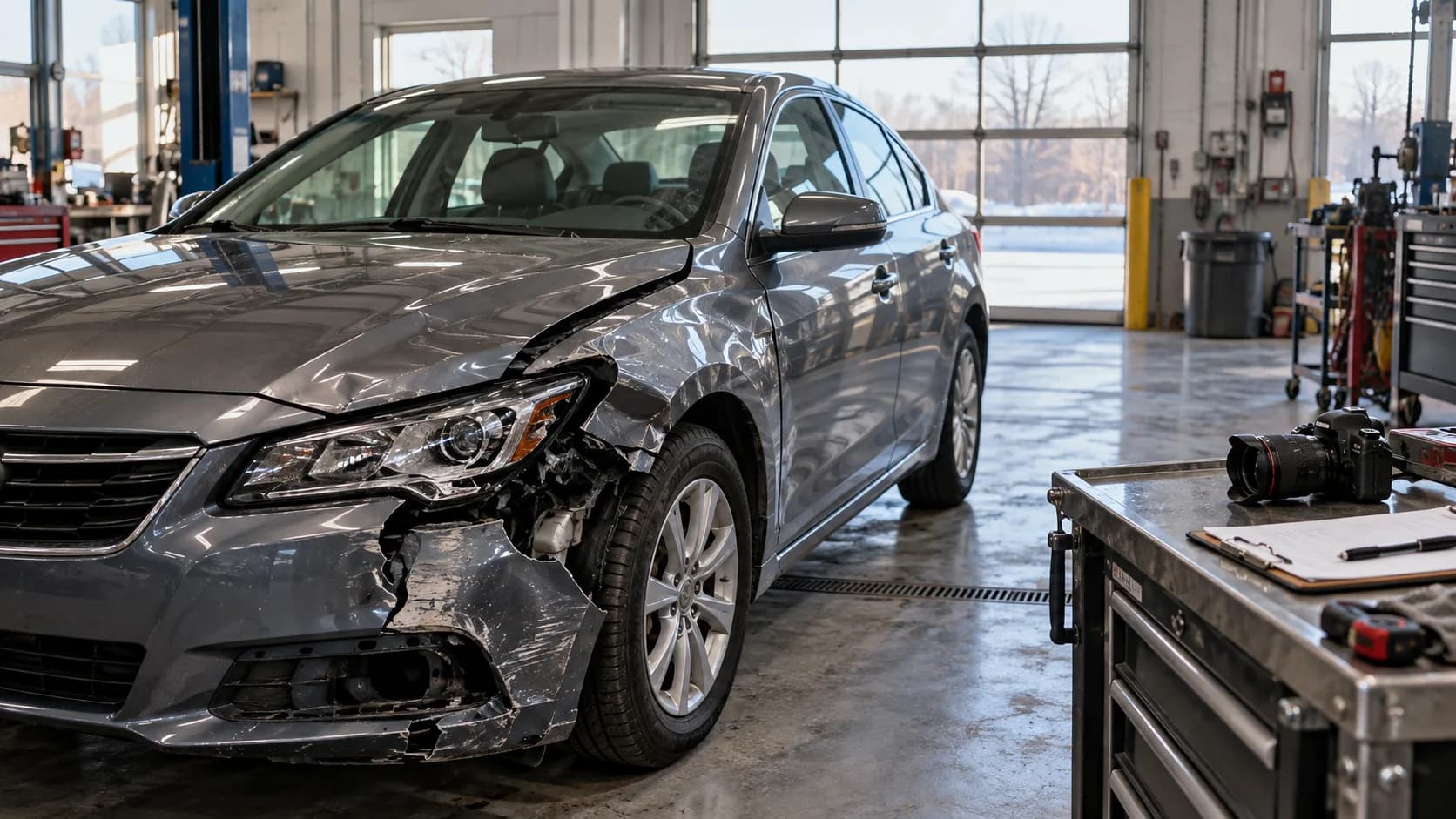
If you need the vehicle for work, school, or family responsibilities, preserving evidence does not necessarily mean leaving it unrepaired indefinitely. A practical approach is to record its post-crash condition carefully and raise any inspection questions before that condition changes.
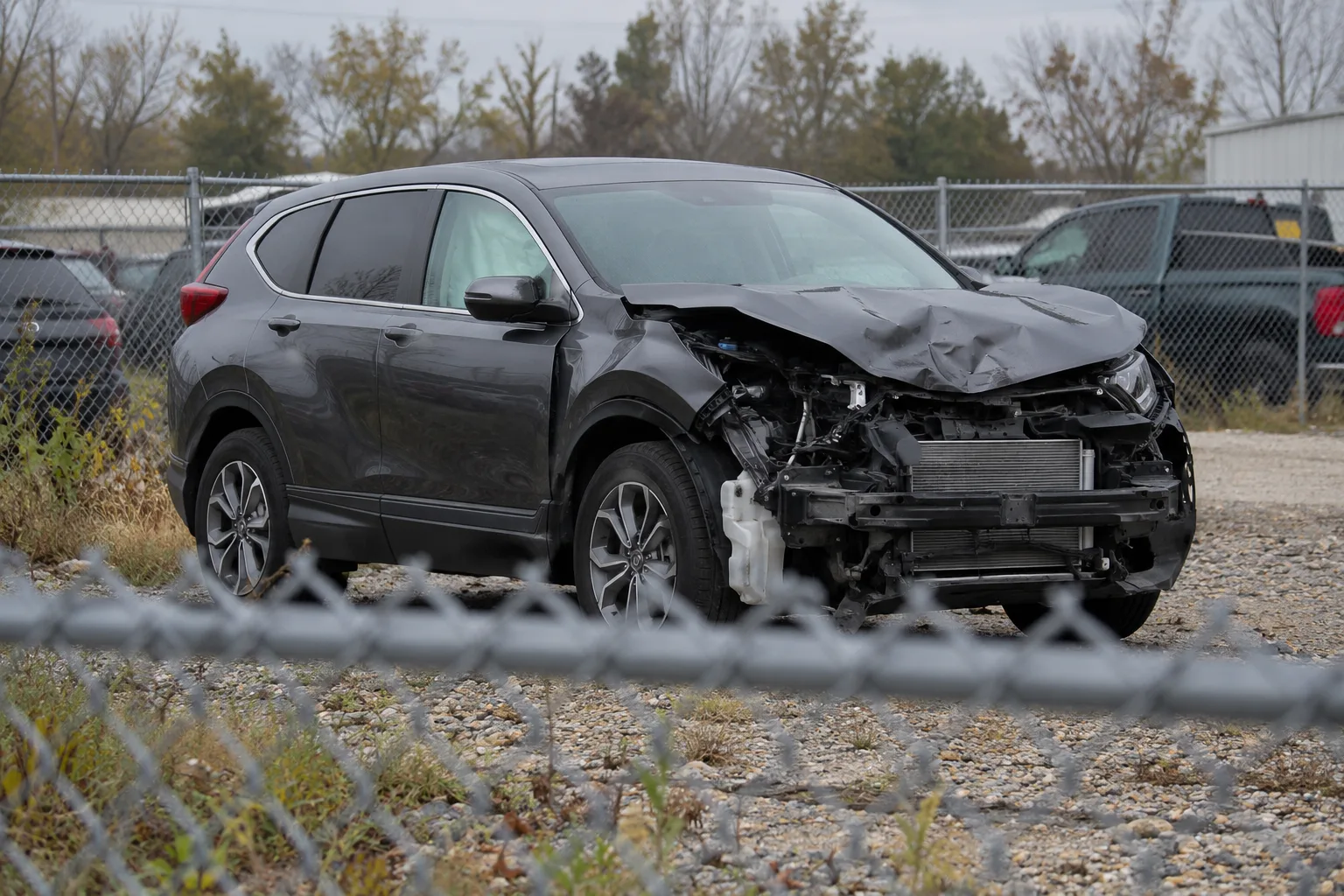
- Take wide, medium, and close photographs before repair work begins.
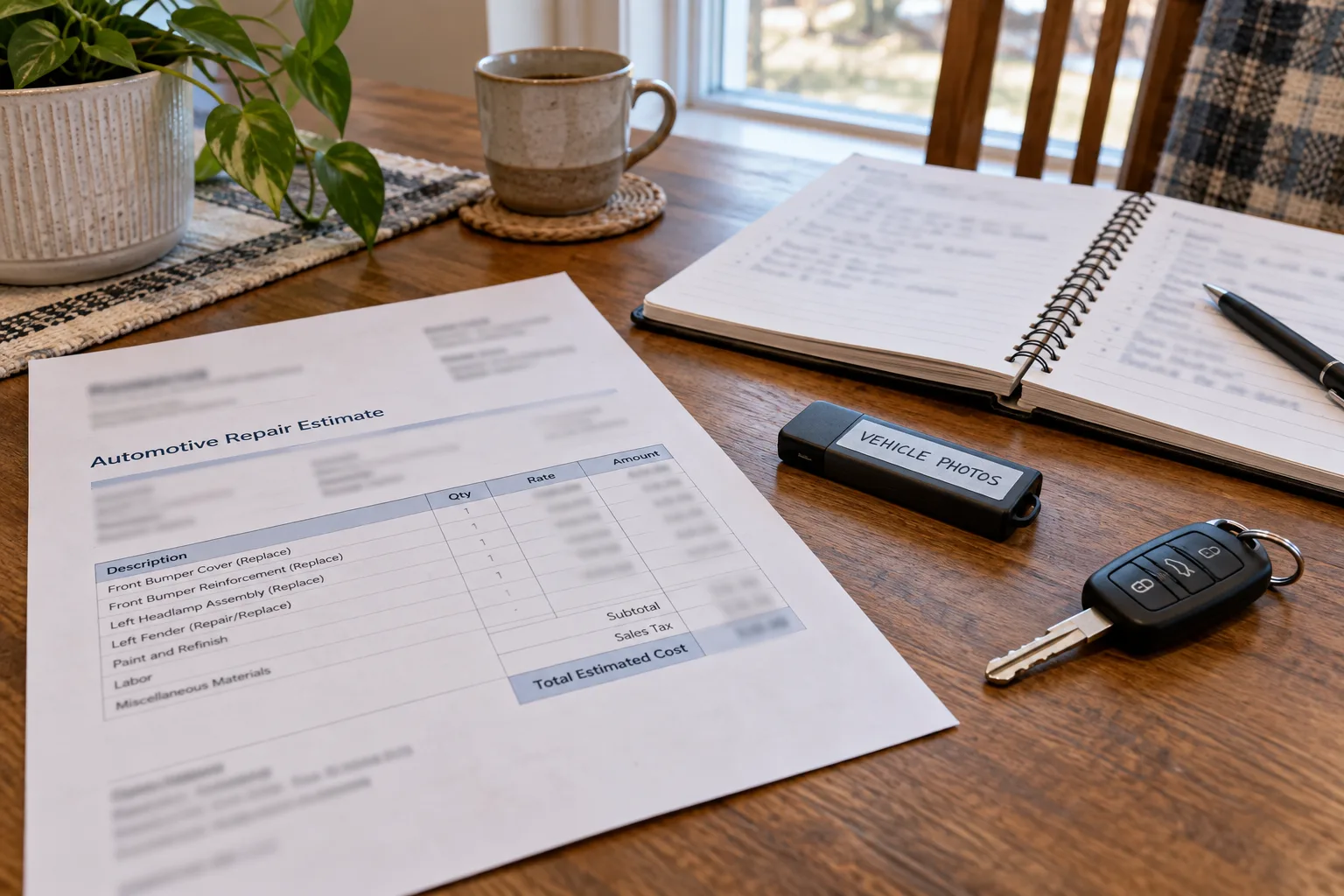
- Keep the original estimate, supplements, invoices, scans, alignment reports, and parts list.
- Tell the shop in writing not to discard potentially important parts until you receive further instructions.
- Ask promptly whether the vehicle’s event data recorder should be downloaded.
- Keep your own photographs rather than relying only on photographs someone else took.
How repairs can change crash evidence
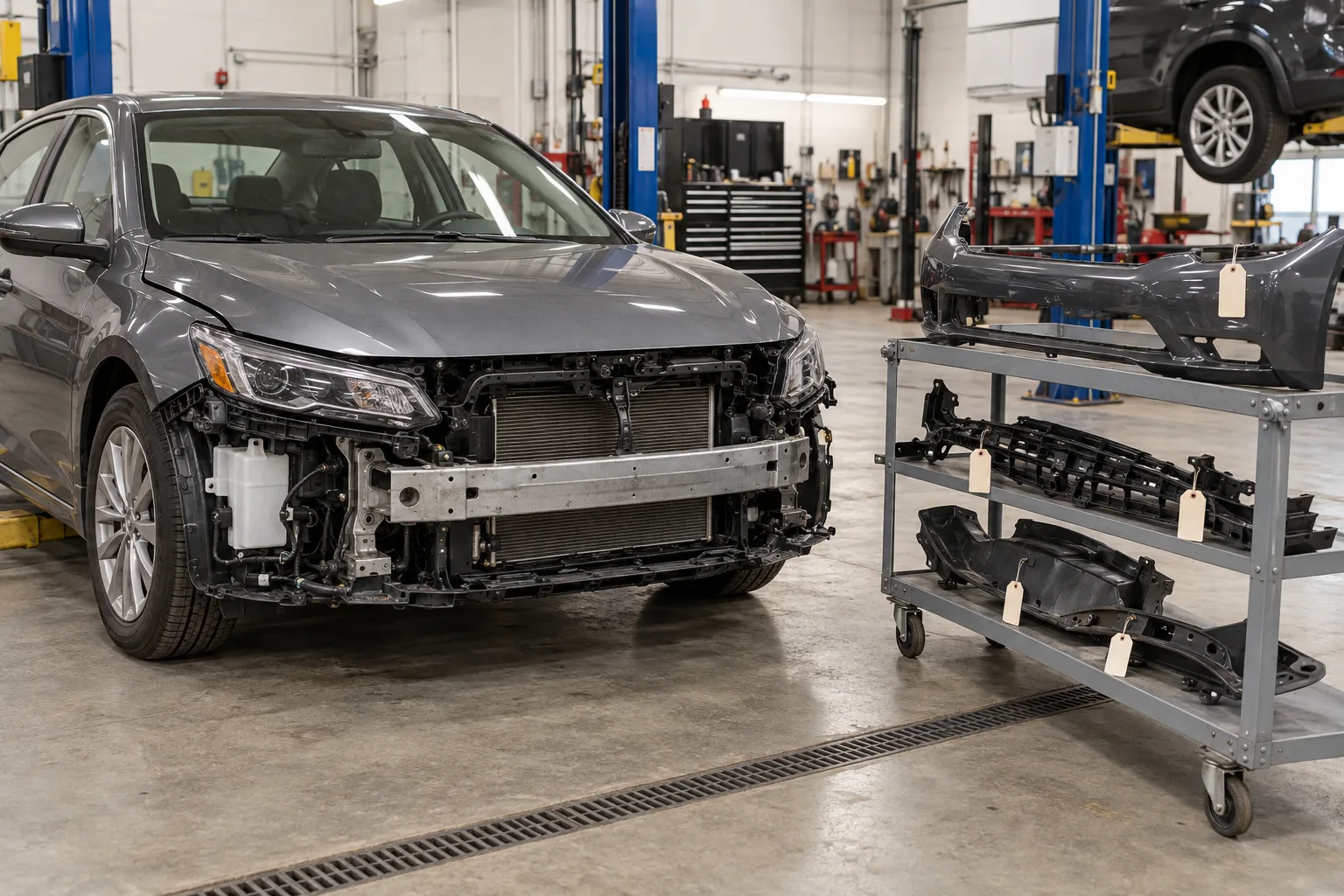
Body work often means straightening, replacing, or repainting damaged areas, and a replaced part may be thrown away once the job is done. After that happens, the vehicle’s post-crash condition may be shown mainly through photographs and paperwork.
The Indiana State Police crime-scene investigation manual says photographs provide a permanent record and document the locations of evidence within the context of a scene, and it directs crime-scene investigators to photograph a scene’s initial condition as found before examining the scene or collecting evidence. That manual governs police crime-scene work, not private injury claims, but the same habit is a sensible one here: photograph the unchanged condition first.
Damage patterns are not the only consideration. Under the federal event data recorder regulation, 49 CFR Part 563[1], an event data recorder (EDR) is a device or function in a vehicle that records dynamic time-series data during the period just before a crash event or during a crash event, intended for retrieval after the crash. The owner’s-manual statement required by that regulation explains that special equipment and access to the vehicle or the EDR are needed to read EDR data. For that practical reason, it is worth raising the EDR question before the vehicle is repaired, sold, or salvaged.
The regulation also requires the memory for an air bag deployment event to be locked against future overwriting, while for other events it lets a manufacturer, when no empty memory buffer is available, either overwrite earlier event data that did not involve an air bag deployment or not record the new event.
For a deeper explanation of vehicle data, see Delventhal Law Office’s guide to preserving passenger-vehicle EDR evidence.
Evidence to preserve before repairs
The table below lists items people commonly try to preserve before repairs. It is a practical checklist, not a list of legal requirements.
| Item | What to preserve | Why it may matter |
|---|---|---|
| Vehicle condition | Full exterior, all four corners, interior, undercarriage if safely accessible, odometer, and VIN | Shows how the vehicle looked before parts were removed or surfaces were repaired. |
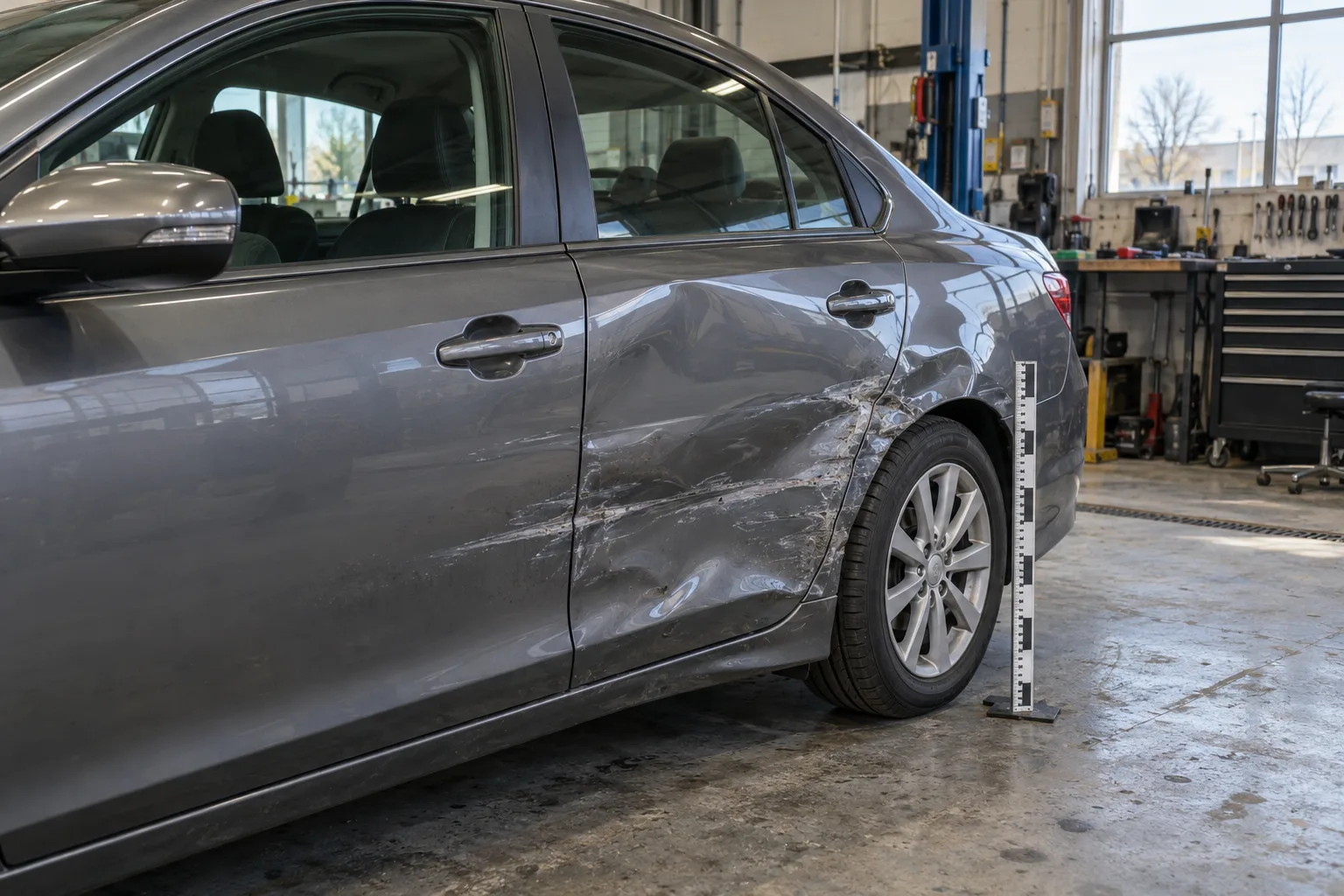
| Specific damage | Close photographs with and without a size reference | Shows detail and size that wide photographs may not capture. |
| Removed components | Ask the shop to identify and temporarily hold potentially important damaged parts | Keeps the part available if someone later wants to examine it. |
| Repair documentation | Initial estimate, every supplement, invoice, scan, measurement, alignment report, and calibration record | Shows what the shop reported finding and doing. |
| Electronic information | Ask whether an EDR download or other vehicle-data preservation is appropriate before repair, sale, or disposal | Reading EDR data requires special equipment and access to the vehicle or the EDR. |
The Indiana Department of Insurance advises consumers, if possible, to take photographs or video of damage before making temporary repairs and to keep damaged personal property for the adjuster to inspect. You can review the agency’s complete insurance claim tips[2].
A practical preservation plan
1. Document before authorizing work
Walk around the vehicle in daylight if it is safe to do so. Take overlapping photographs from different distances, then record the passenger compartment, deployed air bags and seat belts, broken components, tires, lights, glass, and anything loose inside. Keep the original files rather than relying only on compressed copies sent by text message.
The Indiana State Police manual calls for general overall and medium-range orientation photographs, with close-up photographs when appropriate, and says technical photographs are to be taken with and without a measuring scale. Borrowing that approach, a ruler or tape measure in some of your close photographs can help show the size of the damage.
2. Identify who controls the vehicle
Write down the tow yard or shop name, street address, phone number, claim number, storage location, and the person who can authorize access. Ask whether storage charges are adding up and whether the vehicle is scheduled to move, be repaired, be sold, or be destroyed.
Delventhal Law Office’s guide to towing, storage, retrieval, and evidence preservation explains the related practical issues in more detail.
3. Send clear written instructions
A short email can identify the vehicle and ask for advance notice before repair, teardown, sale, transfer, salvage, or disposal. Ask the recipient to keep photographs, estimates, supplements, scan results, measurements, removed parts, and communications about the damage.
4. Coordinate any needed inspection
Indiana Trial Rule 34 allows a party to a lawsuit to serve a request on another party to inspect and copy, test, or sample designated tangible things in that party’s possession, custody, or control. Under the rule’s timing provision, the request may be served on the plaintiff after the action begins and on any other party with or after service of the summons and complaint. The rule also sets out a procedure for directing a request to a non-party through a subpoena.
Those procedures work within a filed case. If no lawsuit has been filed, a practical step is to ask whoever holds the vehicle, in writing, to allow an inspection and to give advance notice before anything about it changes. You can read the current text of Indiana Trial Rule 34[3]. When fault is disputed, a commercial vehicle is involved, or a mechanical defect is suspected, consider getting case-specific legal guidance before approving work.
5. Keep a complete file
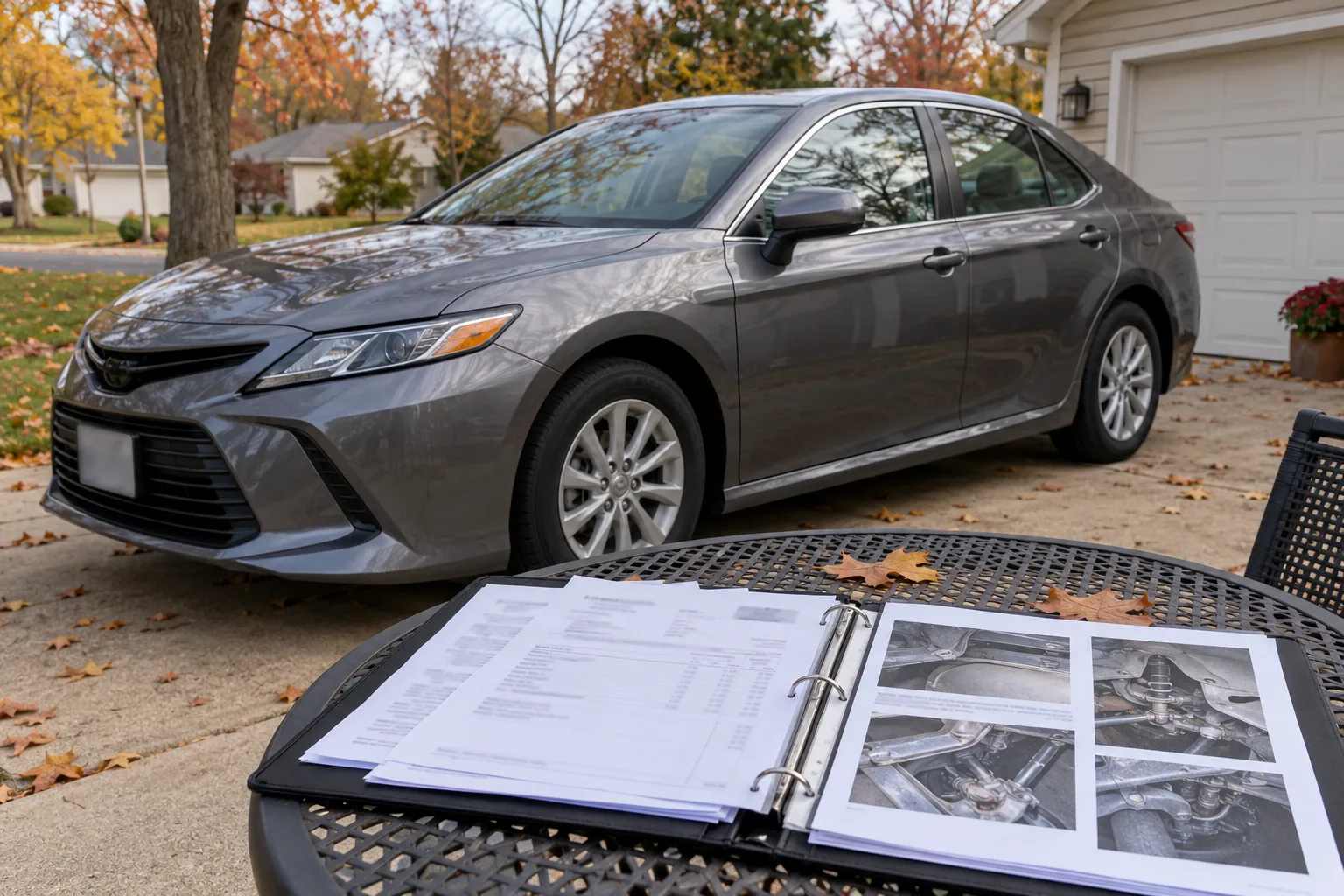
Save correspondence, photographs, videos, estimates, repair supplements, invoices, payment records, rental records, and the final itemized bill. The Indiana Department of Insurance recommends keeping all receipts and keeping copies and records of all correspondence with your insurance company. If the shop issues supplemental estimates, keep each version so the changes are easy to follow.
These records fit into the broader evidence plan described in what evidence can help prove an Indiana car accident claim.
What if the vehicle is already repaired?
Do not assume the evidence problem is beyond repair. Gather what still exists:
- Your original photographs and videos.
- Police photographs and body-camera or scene video, if available through the appropriate process.
- Any appraisal photographs and estimate the adjuster prepared, if you can get copies.
- The shop’s intake photographs, teardown photographs, scan reports, measurements, supplements, invoices, and parts records.
- Tow-yard photographs, auction photographs, and salvage records.
- Dashcam footage and nearby surveillance video that has not been overwritten. Our guide on whether dashcam footage can help prove an Indiana car accident claim covers that source in more detail.
When you ask for copies of photographs or video, request the original digital files where possible rather than screenshots or compressed versions.
Does repair work automatically harm an Indiana injury claim?
Indiana courts describe spoliation as the destruction, material alteration, or concealment of evidence that a party has a duty to preserve for pending or reasonably foreseeable litigation. In a March 2026 published decision, Pandel Ludwig v. Flaherty & Collins, Inc.[4], the Indiana Court of Appeals explained that a duty to preserve evidence arises when a party knew, or at the very least should have known, that litigation was possible. The same decision explained that courts deciding whether to sanction spoliation consider the degree of culpability of the party who lost or destroyed the evidence and the degree of actual prejudice to the other party, and that trial courts have broad discretion to fashion a remedy that may or may not include an adverse inference instruction. The court also noted that the Indiana Supreme Court has treated as an open question whether mere negligence is enough to justify an adverse inference instruction.
In other words, whether a repair has any legal consequence depends on the facts, so the safer course is still to document first, communicate clearly, and preserve what is reasonably important. If another vehicle, a defective component, a commercial truck, or a government-owned vehicle may need inspection, the preservation plan should address that item too.
It may also help to keep your photographs, medical bills, wage records, and policy information together in one place. Delventhal Law Office’s Fort Wayne car-accident settlement calculator is an educational tool for arranging those factors, not a prediction of a case result.
Frequently Asked Questions
Can I repair my car before the insurance adjuster sees it?
The Indiana Department of Insurance tells consumers not to make permanent repairs before the insurance company’s inspection, because an insurance company may deny a claim if permanent repairs are made before the damage is inspected. The same guidance notes that auto and homeowners policies might require you to make temporary repairs to protect your property from further damage. If you cannot wait for transportation or safety reasons, a practical step is to tell the adjuster in writing, document the vehicle thoroughly, and ask when the inspection can happen.
Should I ask the repair shop to save damaged parts?
Asking the shop to hold a part can make sense when the component may help explain the impact, air bag or seat belt performance, visibility, or a suspected mechanical failure. Put the request in writing, identify which parts matter, and ask whether the shop charges for storing them.
Are the insurance company’s photographs enough?
Photographs taken by an adjuster may not include every view, measurement, or detail you later want, so it is sensible to create and keep your own photographs and records as well.
Does every car have useful black-box data?
The federal EDR regulation applies to covered light vehicles manufactured on or after September 1, 2012, only if they are equipped with an event data recorder. The owner’s-manual statement that regulation requires says EDR data are recorded only if a non-trivial crash situation occurs, so whether useful data exists depends on the vehicle and the event.
Is it too late if my vehicle has already been fixed?
A finished repair does not erase every record: photographs, estimates, supplements, scan reports, alignment measurements, invoices, parts records, and images taken by others may still help show the vehicle’s condition and the work performed.
Sources
- Indiana Department of Insurance — Insurance Claim Tips[2] (accessed September 30, 2026).
- Indiana State Police Forensic Services Division — Crime Scene Investigation Procedures Manual[5], version dated January 1, 2026, section 4 (accessed September 30, 2026).
- Electronic Code of Federal Regulations — 49 CFR Part 563, Event Data Recorders[1], sections 563.3, 563.5, 563.9, and 563.11 (accessed September 30, 2026).
- Indiana Judicial Branch — Indiana Rules of Trial Procedure, Rule 34[3] (accessed September 30, 2026).
- Indiana Court of Appeals — Pandel Ludwig v. Flaherty & Collins, Inc.[4], No. 25A-CT-941, March 16, 2026 (accessed September 30, 2026).
If repair work has started or your vehicle may soon be moved, sold, or destroyed, you can contact Delventhal Law Office to talk through the records you have and the questions they raise. You can also learn more about our car accident practice.
This article is general information about Indiana law and is not legal advice. Reading it does not create an attorney-client relationship, and neither does contacting us.