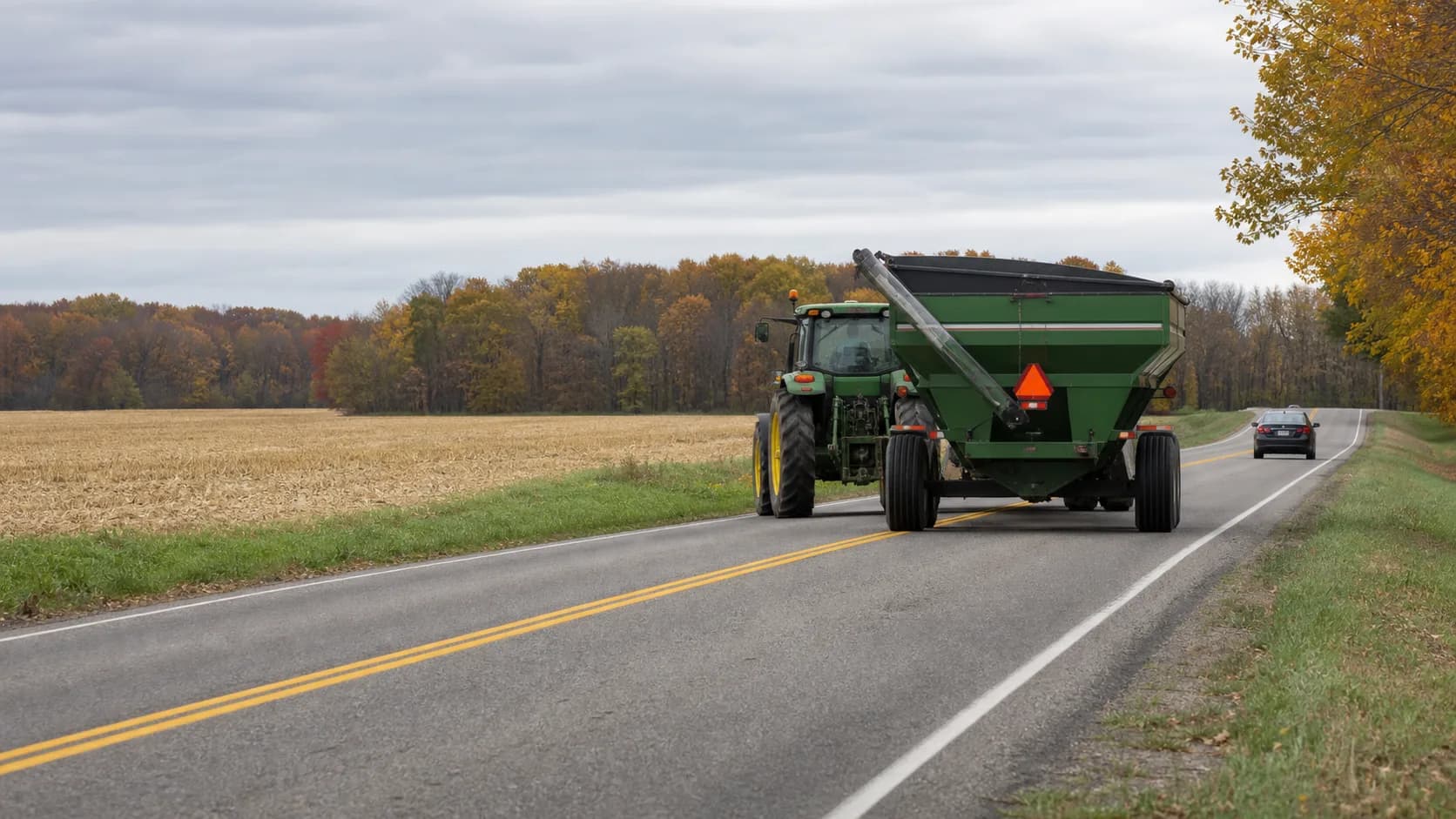
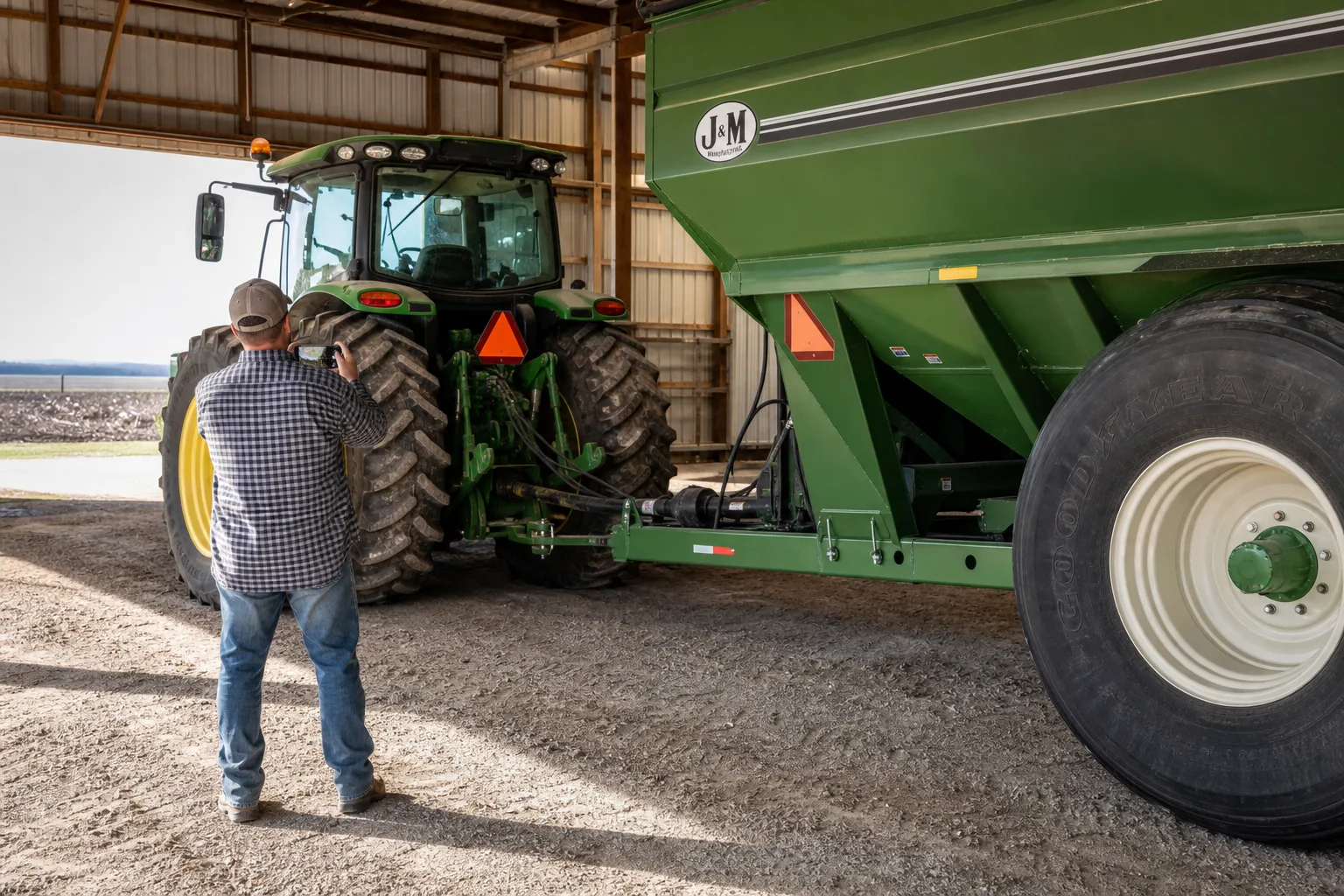
Farm machinery is part of everyday traffic on rural roads around Allen County and northeast Indiana. A driver may encounter a tractor leaving a field, a combine occupying much of a narrow road, or a tractor pulling grain wagons between farms.
These crashes are not automatically the farmer’s fault or the motorist’s fault. The evidence must show what each operator did before impact. If you need broader guidance about the claims process, start with Delventhal Law Office’s Fort Wayne car accident resource.
Key takeaways
- Indiana’s slow-moving-vehicle chapter applies to pulled, towed, self-propelled, or animal-drawn vehicles that ordinarily do not travel faster than 25 miles per hour.
- A qualifying slow-moving vehicle operated on a highway open to traffic must display the prescribed triangular emblem so it is visible from the rear.
- Required lighting, passing decisions, wide turns, sight distance, and roadway position can all affect a fault investigation.
- Under Indiana’s Comparative Fault Act, a claimant’s share of fault can reduce damages, and a share greater than 50% can bar recovery.
- Farm tractors, farm wagons, and implements of agriculture are not registered through the same farm-vehicle process used for qualifying farm trucks, trailers, and semitractors.
- Read the policies and endorsements instead of making assumptions from the equipment or its license plate.
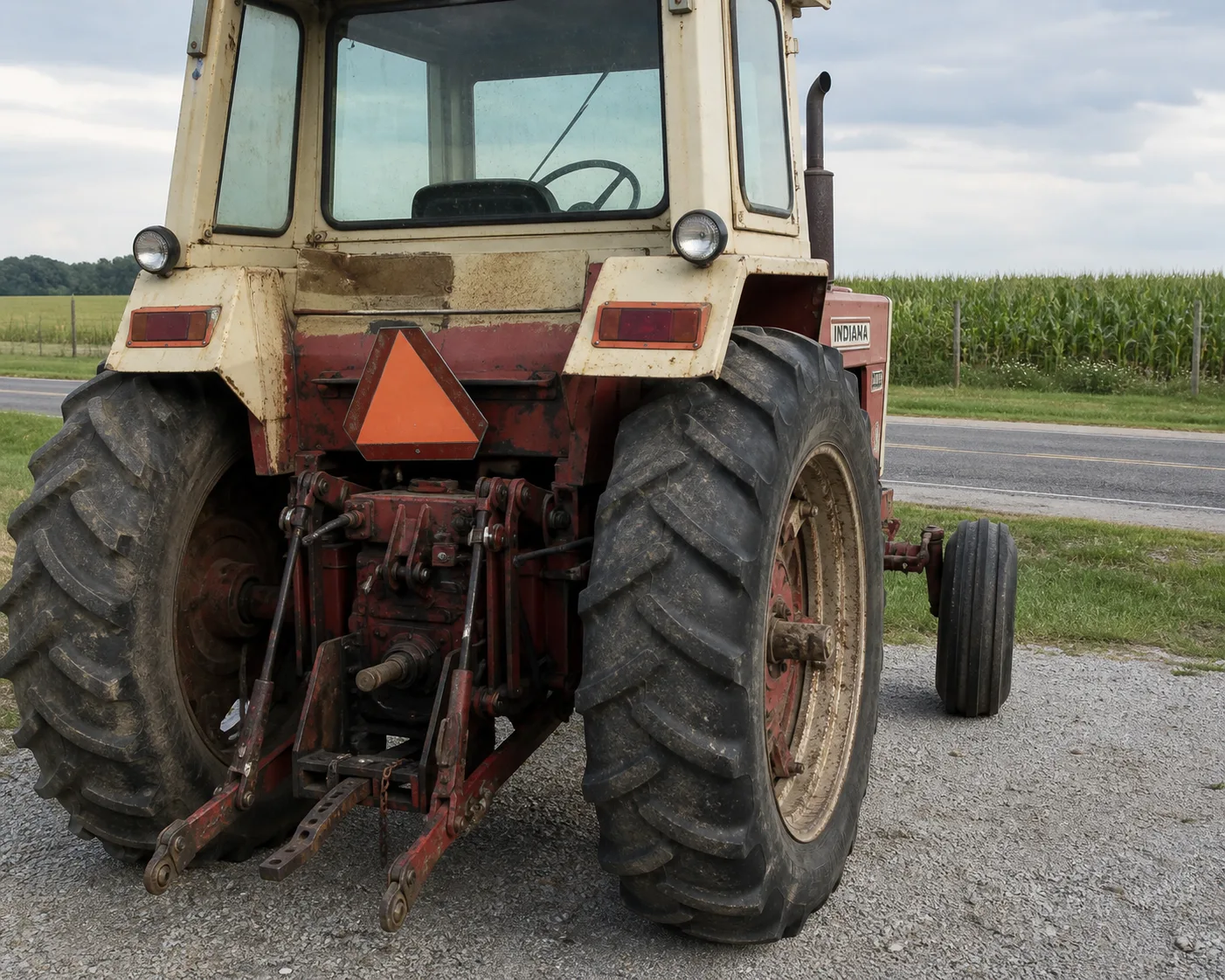
What Indiana road rules apply to farm machinery?
Indiana Code 9-21-9-1[1] applies the slow-moving-vehicle chapter to vehicles described by their ordinary operating speed, not merely their farm use. Under Indiana Code 9-21-9-2[2], a covered vehicle traveling on a highway open to vehicular traffic must carry a triangular slow-moving-vehicle emblem mounted so it is visible from the rear.
The Indiana State Police harvest-driving guidance[3] says farm-equipment lighting should work properly and remain highly visible. It also reminds drivers that wide machinery may need extra roadway space and may move toward one side before making a wide turn.
A slow-moving-vehicle emblem is important evidence, but its presence does not decide fault by itself. Likewise, a missing, obscured, or poorly positioned emblem may matter only if the evidence connects that condition to the collision.
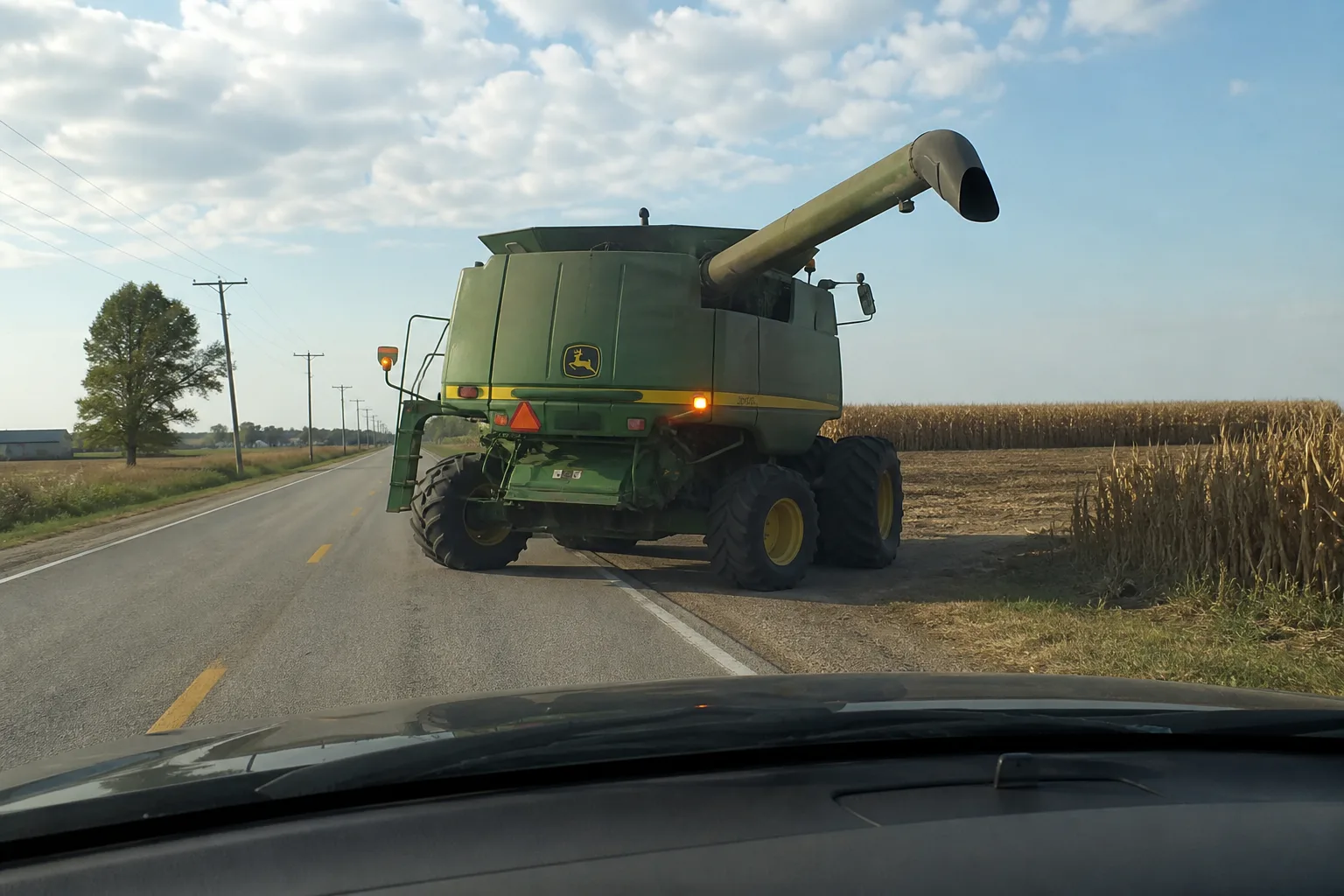
How is fault evaluated after a tractor or combine crash?
Indiana’s Comparative Fault Act generally asks the factfinder to allocate fault among the people or entities whose conduct contributed to the loss. Indiana Code 34-51-2-5[4] addresses proportional reduction of damages, while Indiana Code 34-51-2-6[5] addresses the bar when a claimant’s fault is greater than 50%. The Act contains definitions, exceptions, and rules that may change the analysis for particular defendants or claims.
The practical question is whether each operator used reasonable care under the circumstances. For farm equipment, the investigation may focus on signals, turns, visibility equipment, and roadway position. For the approaching motorist, it may focus on speed, following distance, lookout, and the available distance before a passing maneuver.
The Indiana State Police advises motorists not to assume that machinery moving toward the right is inviting a pass because the operator may be preparing for a wide left turn. It also advises drivers to confirm that the road is wide enough and that sufficient distance is available before passing.
| Crash pattern | Questions the evidence should answer |
|---|---|
| Rear impact | Could the approaching driver see the machinery, emblem, lamps, and traffic ahead in time to slow? |
| Passing collision | Was passing permitted and reasonably safe, and was the machinery preparing to turn or avoid a roadside obstruction? |
| Wide-turn collision | What signals were given, where was each vehicle positioned, and did either operator misread the other’s movement? |
| Wagon or load incident | How were the wagon, hitch, safety equipment, and load configured immediately before the incident? |
For more detail about photographs, witnesses, video, and vehicle records, review evidence that can help prove an Indiana accident claim.
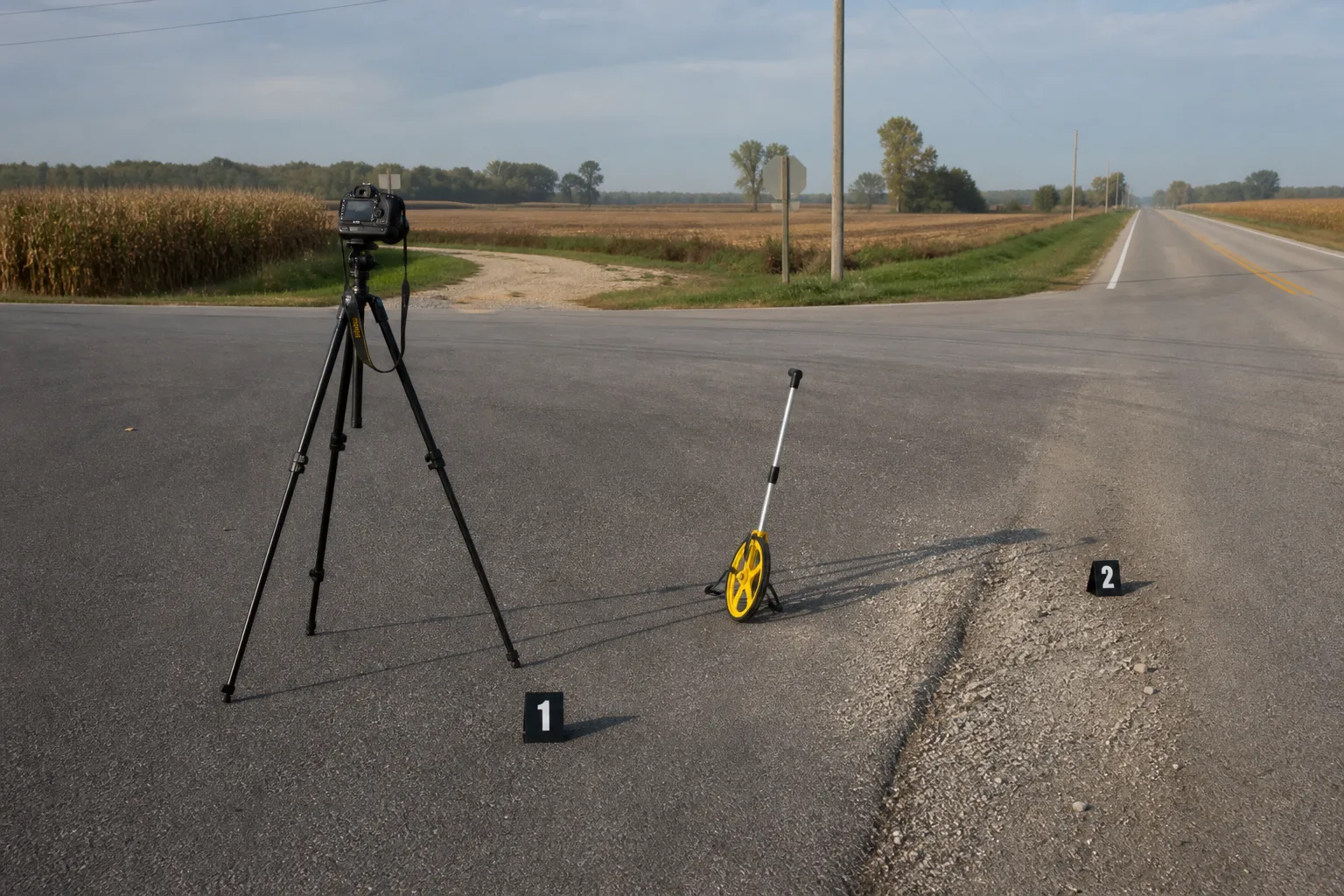
What evidence should be preserved?
Document the machinery, road, and vehicles before they are repaired, moved, unloaded, or returned to service.
- Photograph the entire tractor, combine, wagon, hitch, load, emblem, reflectors, lamps, signals, tires, and damaged areas.
- Record lane width, shoulders, curves, hills, driveways, field entrances, signs, markings, debris, and final resting positions.
- Save original dash-camera files and ask nearby homes or businesses whether they have relevant video.
- Identify witnesses and record where each witness was positioned.
- Ask the investigating agency how to request the crash report, dispatch records, photographs, and available body-camera material; some requested material may not be available.
- Preserve maintenance, inspection, ownership, operator, route, work-purpose, and insurance records associated with the equipment.
Do not rely only on close-up damage photographs. Wide views can explain sight distance, available passing space, and how much of the roadway the equipment occupied.
Does the equipment need a farm license plate?
The term “farm vehicle” does not include every machine used in agriculture. The Indiana BMV’s farm-vehicle guidance[6] says qualifying farm trucks, farm trailers, and farm semitractors use its farm-registration system, while farm tractors, farm wagons, and implements of agriculture may not be registered through that system.
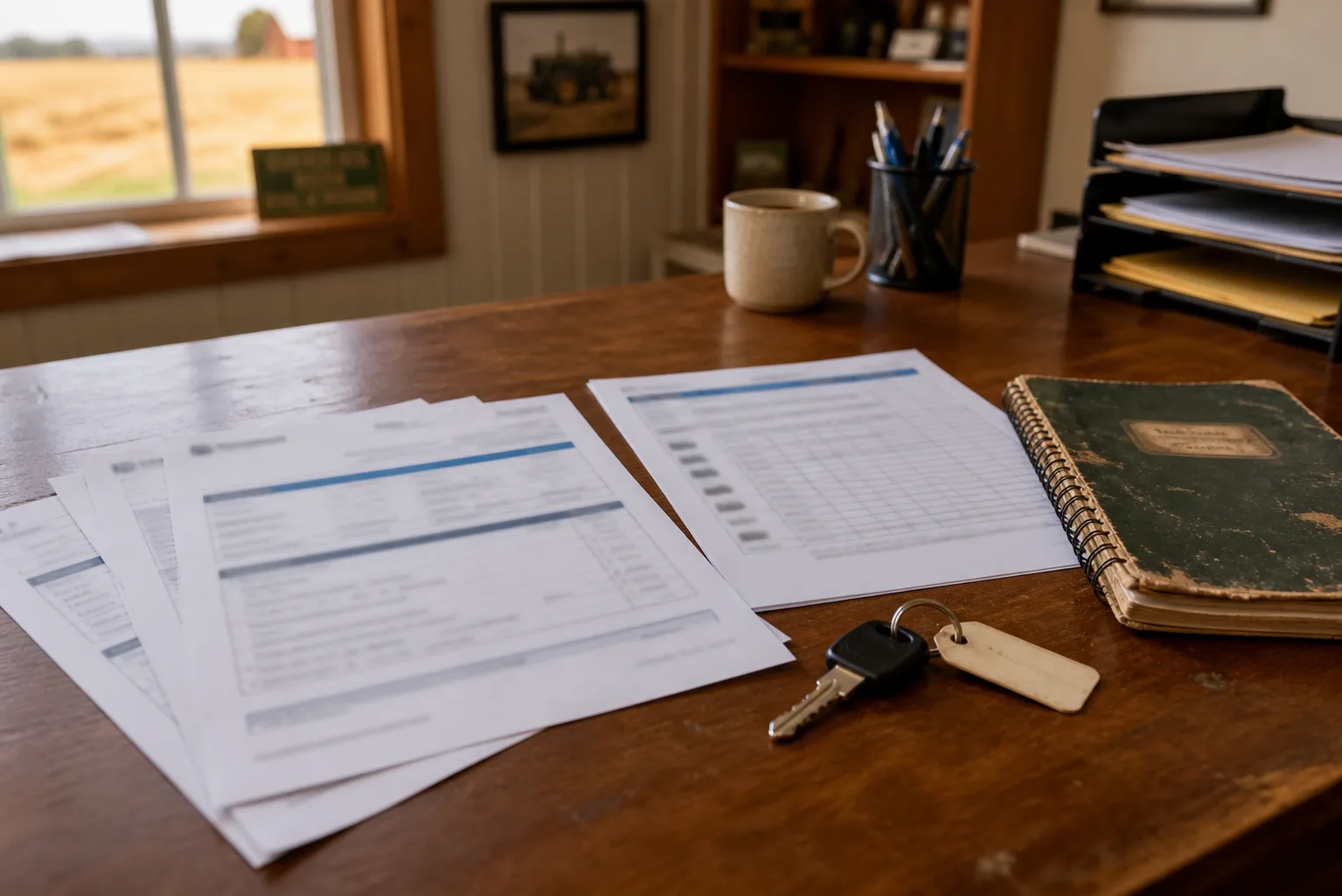
How should the policies be reviewed?
The label on the machine does not answer the policy question. The declarations, definitions, insured-person provisions, listed equipment, exclusions, endorsements, and facts surrounding the trip all need review.
The Indiana Department of Insurance[7] states that the usual farm operation is not eligible for homeowners insurance and that the insurance industry developed a similar protective program for farm owners. That does not answer whether a particular crash falls within a policy. The relevant policies, listed vehicles or equipment, insured parties, exclusions, endorsements, and use at the time of the crash must be reviewed.
If a carrier disputes the claim, ask it to identify the specific policy language at issue. The Indiana Department of Insurance’s claim guidance[8] recommends prompt notice, complete information, and retained copies of communications.
An educational estimate cannot identify every policy, but the Fort Wayne car-accident settlement calculator can help you organize bills, wage information, fault questions, and insurance factors without promising a result.
What should you do after an Indiana farm-equipment crash?
- Move away from traffic and unstable machinery if you can do so safely.
- Call 911 and give the crash location.
- Exchange identifying and insurance information without arguing about fault.
- Photograph the complete scene before conditions change, if it is safe to do so.
- Preserve clothing, damaged personal property, video, receipts, and written communications.
- Notify the appropriate carrier promptly and keep a log of every conversation.
- Ask for a written explanation tied to the policy if payment is denied or limited.
Prompt reporting can help preserve the claim record. You can also read how carriers evaluate responsibility after an Indiana crash.
Frequently Asked Questions
Is the farm-equipment operator automatically responsible?
No. Fault depends on the conduct that contributed to the collision, including visibility, speed, following distance, signals, turns, passing, and roadway position.
Does a tractor always need a slow-moving-vehicle emblem?
Indiana’s slow-moving-vehicle chapter requires the emblem when a covered vehicle—one that ordinarily does not travel faster than 25 miles per hour—is moved, operated, or driven on a highway open to vehicular traffic.
Can I pass when a tractor moves toward the shoulder?
Do not assume that movement toward the shoulder is permission to pass. Indiana State Police warns that wide equipment may move right before turning left, and a driver should confirm the operator’s intentions and adequate passing distance.
Are farm tractors and farm wagons registered like farm trucks?
No. The Indiana BMV distinguishes registrable farm trucks, trailers, and semitractors from farm tractors, farm wagons, and implements of agriculture, which may not be registered through that farm-vehicle system.
Will a normal auto policy cover a farm-machinery crash?
Not necessarily. The equipment’s appearance does not answer the policy question. Review the listed vehicles or equipment, insured parties, exclusions, endorsements, and use at the time of the crash.
If you were hurt in a crash involving farm machinery and are unsure how to identify the responsible parties or insurance policies, Delventhal Law Office can review the available information and explain possible next steps during a free consultation.
This article offers general information only; it is not legal advice and is not an agreement for representation.
Sources
- Indiana Code 9-21-9-1 (iga.in.gov) ↩
- Indiana Code 9-21-9-2 (iga.in.gov) ↩
- Indiana State Police harvest-driving guidance (in.gov) ↩
- Indiana Code 34-51-2-5 (iga.in.gov) ↩
- Indiana Code 34-51-2-6 (iga.in.gov) ↩
- Indiana BMV’s farm-vehicle guidance (in.gov) ↩
- Indiana Department of Insurance (in.gov) ↩
- claim guidance (in.gov) ↩