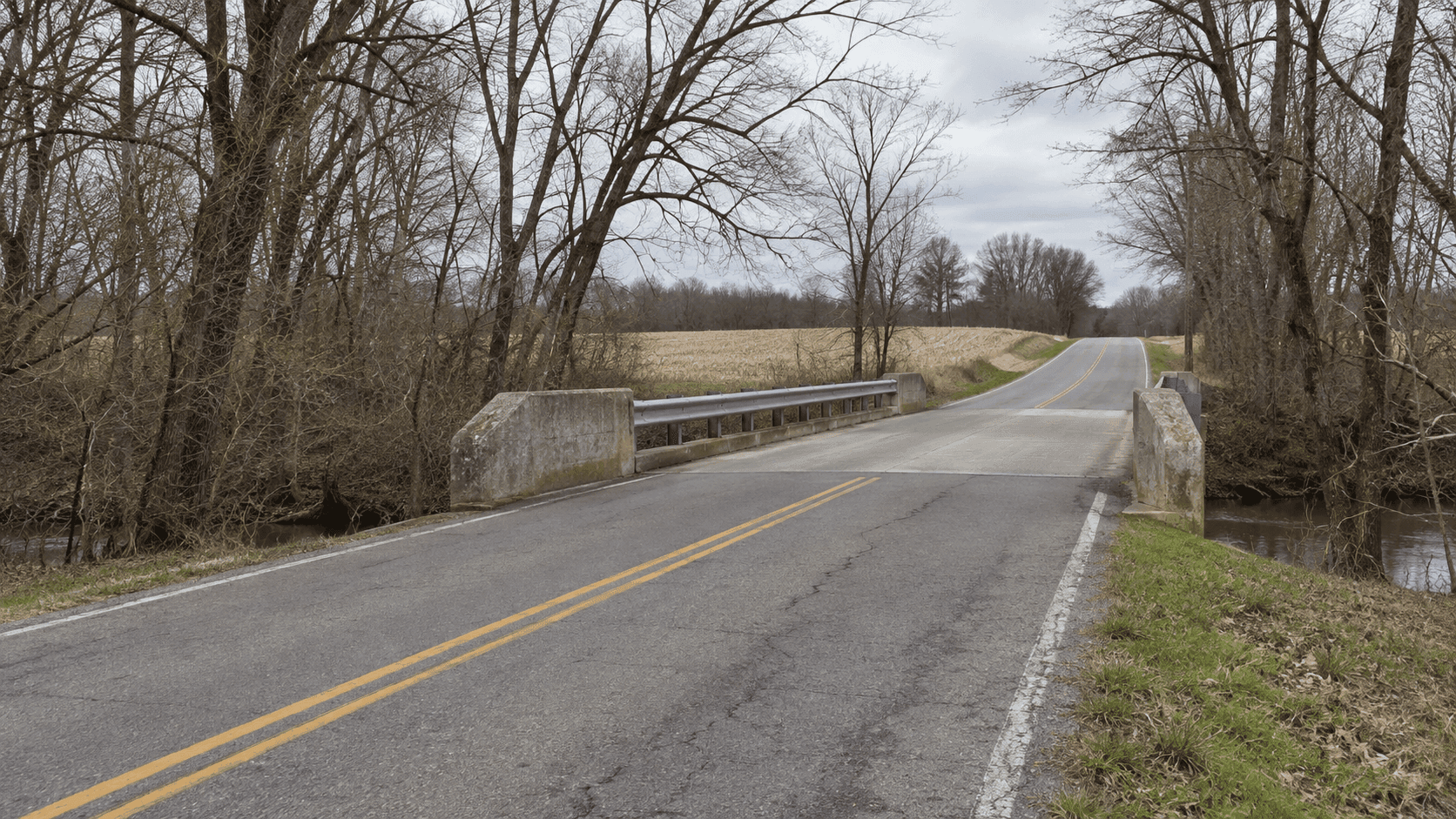
A driver died after a single-vehicle crash into a bridge on Arba Pike, just north of Inke Road near Richmond, according to WISH-TV's report[1], which cited the Wayne County Sheriff's Office. WISH-TV published the report on Saturday, Nov. 21, 2026, and said the crash happened shortly after 12:30 p.m.
WISH-TV reported that the southbound vehicle crossed the centerline and struck the concrete end of the bridge head-on. The driver, an Ohio woman, was pronounced dead at Reid Health at 2:02 p.m. She reportedly told deputies that she believed she had fallen asleep while driving. An autopsy was scheduled.
No other vehicles were reported to be involved. The Wayne County Sheriff's Office investigation remains ongoing. The Wayne County Coroner's Office, Fountain City Fire Department, and Reid Health EMS also responded, according to WISH-TV.

What This Crash Tells Drivers on Arba Pike
Arba Pike is a rural county road north of Richmond. Like many rural Indiana roads, it has narrow bridges with concrete ends close to the travel lanes. Investigators have not released findings beyond what the driver told deputies, so it is important not to treat a preliminary account as a final conclusion.
Drowsiness can occur at any time of day. If you feel tired, stop somewhere safe and rest. As you approach a narrow rural bridge, reduce your speed as conditions require and remain centered in your lane. Bridge ends and guardrail approaches can leave little room to correct after a vehicle drifts across a line.
Older drivers and anyone taking medication that may cause drowsiness should speak with a doctor about safe driving times. More general information is available in the firm's guide to drowsy driving and knowing when to pull over.

What Should Accident Victims Do Next?
If you are hurt in an Indiana crash, get appropriate medical care and ask the responding agency for the crash report number. Keep photographs, medical records, insurance letters, and other documents together. The firm's guide to what to do after an Indiana traffic accident explains several practical early steps.
You should also preserve information that may explain what happened. Photographs, witness information, vehicle records, and camera footage can matter, and some evidence can be lost or overwritten quickly. A separate guide explains what evidence may help support an Indiana car accident claim.
Insurance companies may aggressively defend a claim or ask for a recorded statement before you understand the consequences. You can talk with a lawyer before giving such a statement.

Why Location Matters in Indiana Injury Claims
The crash location affects which agency prepares the report and which county court may hear a case. This crash happened in Wayne County, and the Wayne County Sheriff's Office responded. An investigating agency's crash report is not a final determination of civil liability.
Questions about road design or maintenance can arise in crashes on county roads and bridges. No source has suggested that a road problem contributed to this crash. In general, however, a claim involving a city, county, town, or another political subdivision requires written notice within 180 days under IC 34-13-3-8[2].
Indiana applies modified comparative fault under IC 34-51-2-6[3]. An injured person whose fault is greater than 50 percent recovers nothing; otherwise, recovery is reduced by that person's percentage of fault. Most Indiana personal injury and wrongful death claims must be filed within two years under IC 34-11-2-4[4].
How Delventhal Law Office Can Help
Delventhal Law Office, LLC is a Fort Wayne personal injury law firm founded by attorney Chad E. Delventhal in 2009. The firm helps people understand crash reports, insurance questions, evidence, and filing deadlines after carelessness or recklessness causes harm. Insurance and fault disputes can become hotly contested, and no lawyer can promise a particular outcome.
If you have questions about an Indiana road crash, you can consult a Fort Wayne car accident attorney or request a free case evaluation.
This post is based on public reporting, the investigation may be ongoing, and nothing here is legal advice or creates an attorney-client relationship.