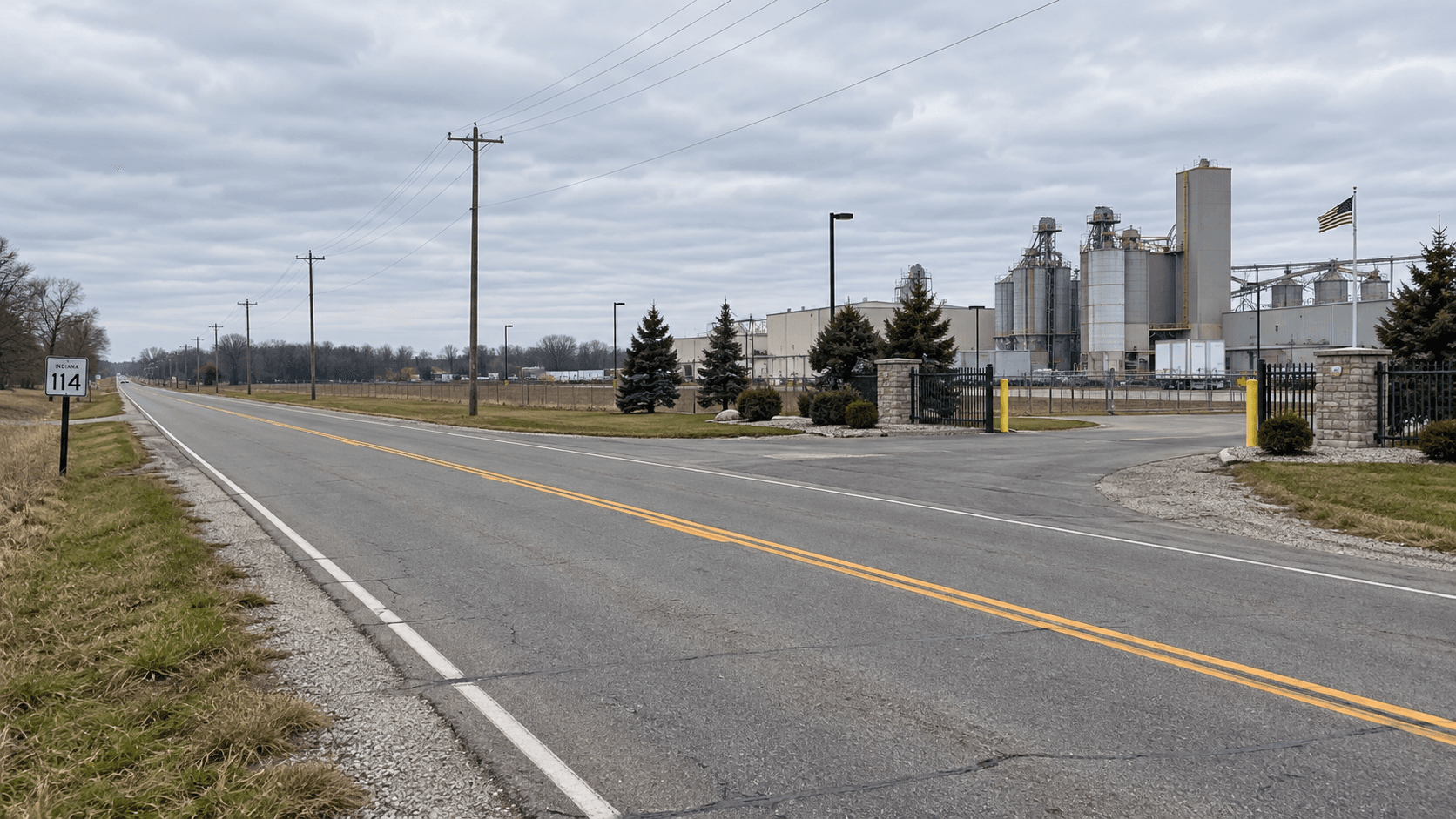
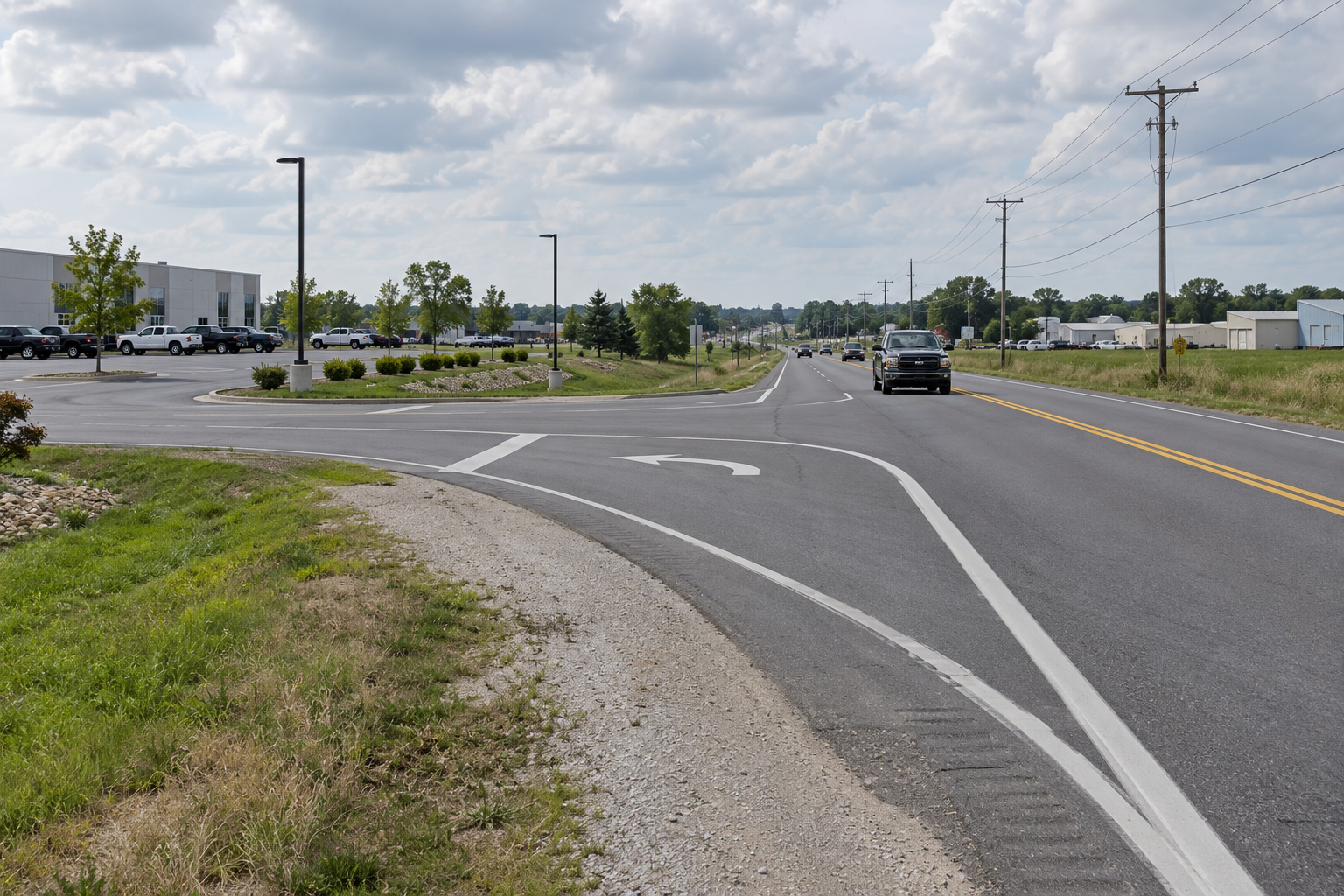
A westbound semi turning left into the IBEC entrance on State Road 114 east of Rensselaer collided with an eastbound SUV on Tuesday morning, seriously injuring the SUV's driver and a young child riding with her. This account comes from the Country Herald's report[1], which cited information from the Jasper County Sheriff's Department.
Because a child was hurt, this article does not name or identify anyone in the SUV. It provides a general explanation of how left-turn crashes involving commercial trucks work under Indiana law.
What was reported about the crash
The Country Herald reported that the crash happened at about 7:37 a.m. on Tuesday, September 29, 2026. A 2020 Volvo semi tractor pulling an empty trailer was traveling west on SR 114 and turning left, to the south, into the IBEC entrance. It crossed the eastbound lane and collided with an eastbound 2016 Ford Escape. According to the report, an agricultural services company based in Logansport owned the semi.
The SUV's driver and her daughter, who was in a car seat, suffered multiple significant injuries. Jasper County EMS took them to Franciscan Health Crown Point. The semi driver told investigators he did not see the approaching SUV. The semi driver and a passenger in the semi were checked at the scene. No citation has been reported.
The Jasper County Sheriff's Department led the response. The Indiana State Police assisted, and the Rensselaer Volunteer Fire Department and INDOT also responded. SR 114 was closed for several hours. The reporting does not describe the weather, road conditions, or speed. The investigation is ongoing, and no official fault determination has been published.
What this crash tells drivers near plant and farm entrances
Rural state highways in northwest Indiana carry commuters and heavy trucks serving grain facilities, ethanol plants, and farm operations. Fall harvest can increase truck traffic. Facility entrances may be ordinary driveways along a two-lane highway, without a turn lane or signal, and a truck entering one may need to cross an opposing traffic lane.
A left turn across oncoming traffic requires careful judgment. A tractor-trailer needs more time than a passenger car to clear the opposing lane, and the driver may have blind areas at certain angles. An oncoming driver may also expect a waiting truck to remain stopped until the lane is clear.
Truck drivers should not begin a turn across a highway lane until they have confirmed that the lane will remain clear for the time the entire rig needs to cross it. Other drivers should watch for slowing or stopped trucks near plant and field entrances and be prepared for a truck to begin turning.
What injured people can do next
If you are hurt in a commercial-truck crash, get medical care and continue with recommended treatment. Medical records document the injuries and the care you received.
Get the crash report number from the investigating agency. You can also review how to obtain an Indiana crash report. A police report can record vehicle information, travel directions, and statements, but it is not a final determination of civil liability.
Identify the truck's owner and operator. A commercial crash may involve the driver, the company that owns the truck, the driver's employer, or another business connected to the trip. A Fort Wayne truck accident attorney can review which people, businesses, and insurance policies may be involved.
Evidence such as vehicle data, driver logs, inspection records, dispatch records, photographs, and video can be lost or overwritten. A timely written preservation request may help keep that material available. The firm's guide to evidence after an Indiana crash explains why early documentation matters.
Be careful with early insurance calls. A commercial carrier's insurer may contact you or your family soon after a crash. You can decline to give the other party's insurer a recorded statement until you understand the request and your situation.
Why the location and Indiana law matter
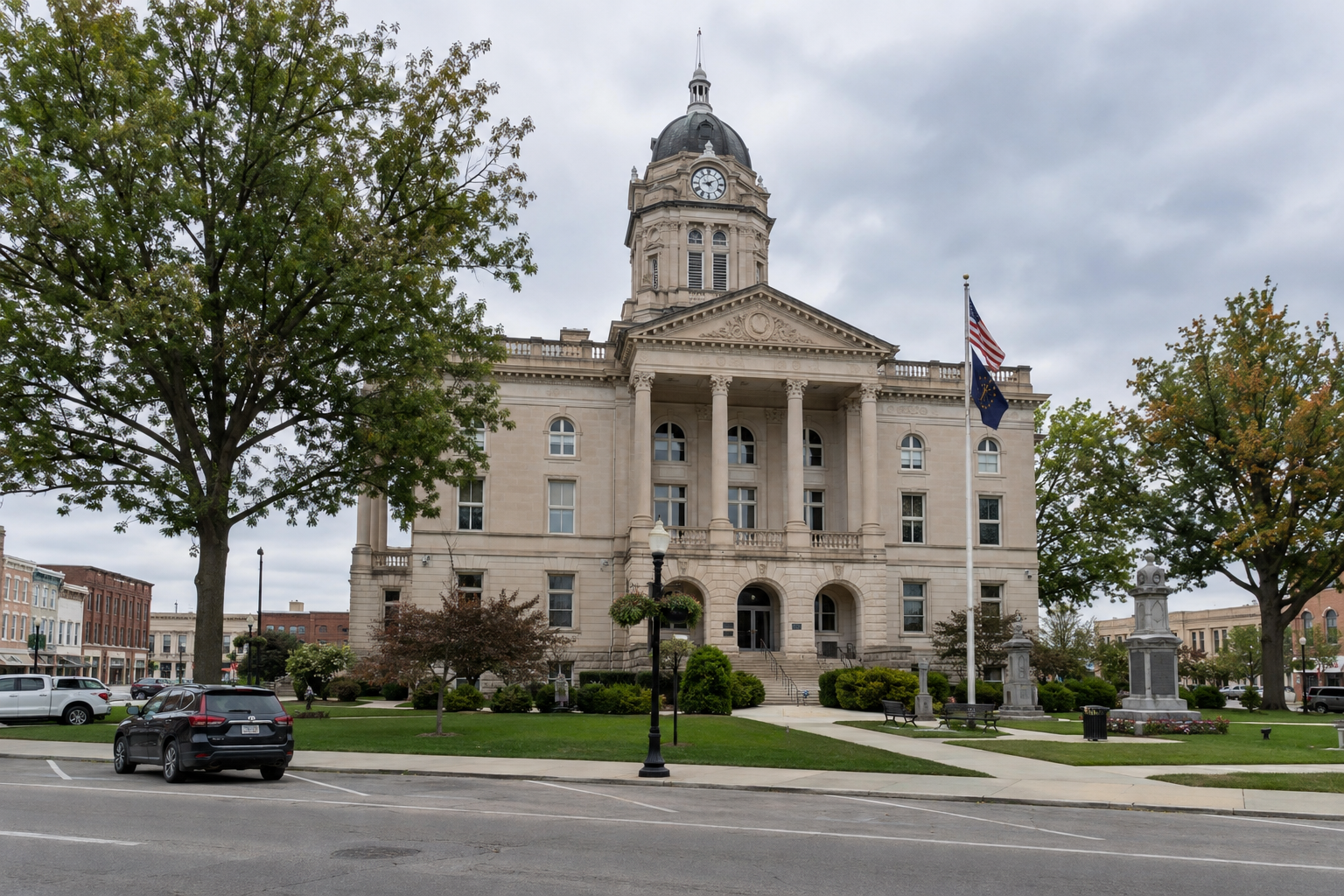
This crash happened on SR 114 east of Rensselaer in Jasper County, where the Jasper County Sheriff's Department led the investigation. The investigating agency holds the crash report, and the treating hospital holds the initial medical records.
When a business owns a truck, Indiana law may hold an employer responsible for an employee's carelessness while acting within the scope of the job. Separate claims may involve a company's hiring, training, or supervision. Whether any of those rules applies here depends on facts that the public reporting does not settle.
Indiana Code 34-51-2-6[2] reduces an injured person's recovery by that person's percentage of fault and bars recovery when that person's fault is greater than 50 percent. Insurers may examine the conduct of every driver, including the driver who had the right of way. You can read more about Indiana's comparative-fault rule.
Most Indiana personal injury claims must be filed within two years under Indiana Code 34-11-2-4[3]. Indiana Code 34-11-6-1[4] generally tolls the limitations period for a person under a legal disability, including a minor, until the disability is removed. That rule does not prevent evidence from disappearing, and a parent's related claims may follow a different timeline.
Nothing in the reporting suggests that a government entity or road condition contributed to this crash. As a general rule, a claim against the State of Indiana requires written notice within 270 days under Indiana Code 34-13-3-6[5].
How Delventhal Law Office can help
Delventhal Law Office, LLC is a Fort Wayne personal injury law firm founded by attorney Chad E. Delventhal in 2009. The firm handles Indiana claims involving semi trucks and other commercial vehicles, including matters for clients in Jasper County.
Chad Delventhal can obtain records, send preservation requests, examine the businesses and insurance policies connected to a truck, and explain the deadlines that may apply when a child is injured. Insurance companies and commercial defendants may aggressively defend these claims, so careful preparation matters. The firm offers a free case evaluation, although no outcome can be promised.
This post is based on public reporting, the investigation may be ongoing, and nothing here is legal advice or creates an attorney-client relationship.