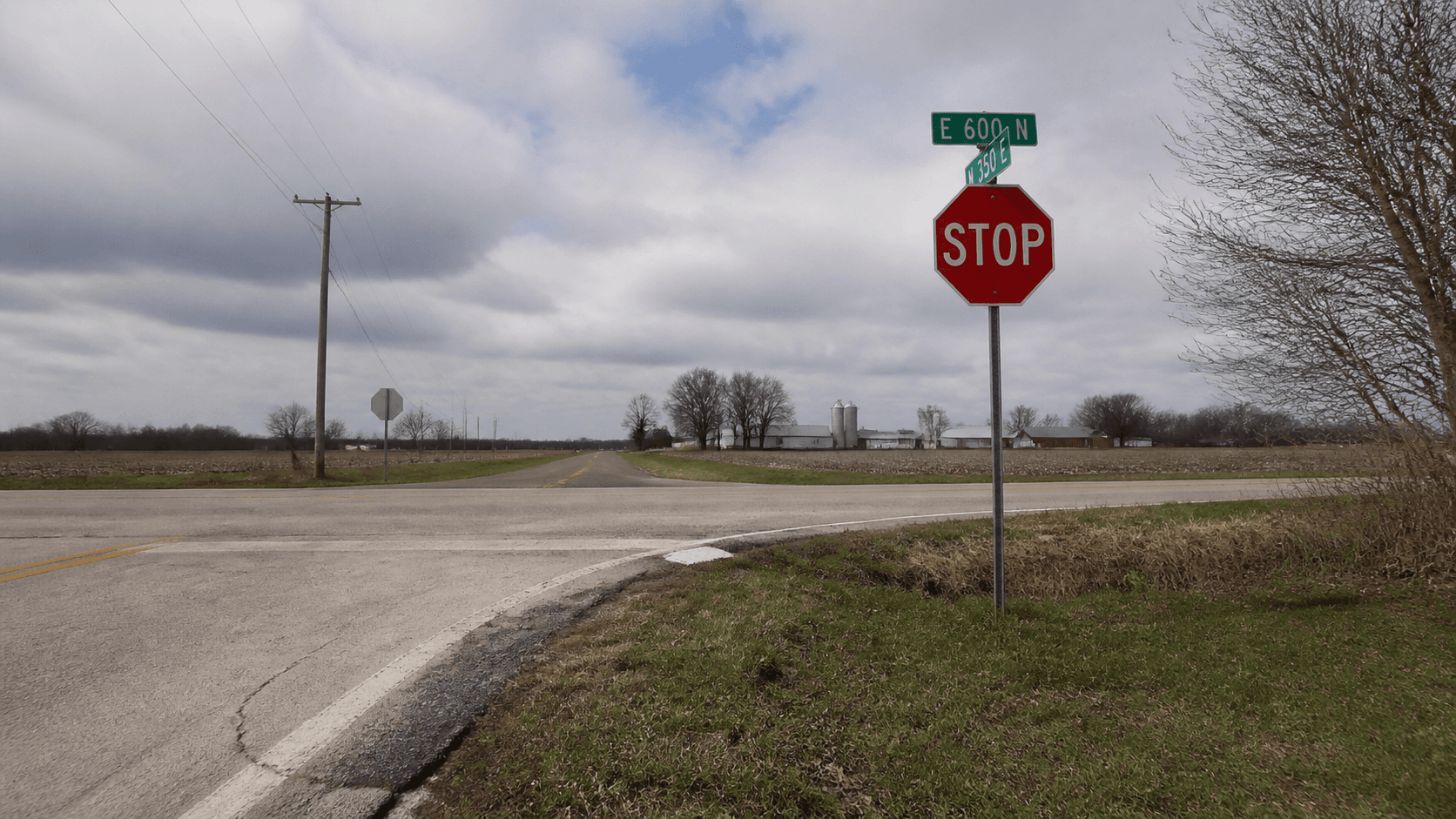
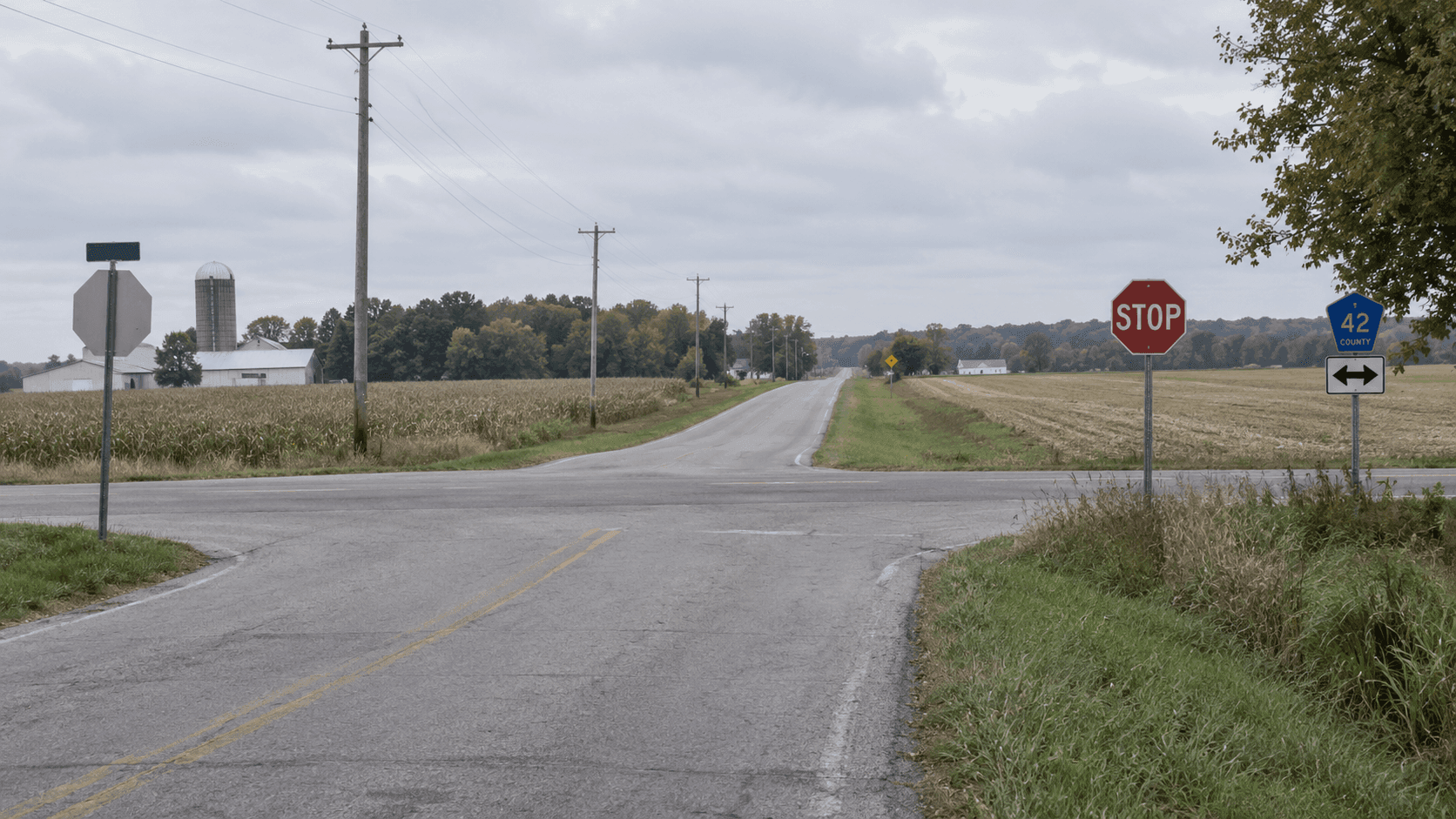
Three people were injured and taken to IU Arnett Hospital after a two-vehicle crash at County Road 600 South and County Road 300 West in White County, near Reynolds, on Monday, September 21, 2026. WLFI reported on the White County crash[1] on September 23. The investigation is ongoing.
What WLFI reported about the crash
According to WLFI, White County Sheriff’s deputies said a Subaru driven by Kaliegh Payne of Reynolds stopped at the intersection and then entered the path of an eastbound Chevrolet Silverado driven by Justin Bowman of Wolcott. The Silverado struck the Subaru. The Subaru spun, and the Silverado overturned into a ditch.
WLFI reported that emergency medical services responded and that three injured people were transported to IU Arnett Hospital. The report did not describe their specific injuries or provide ages for the drivers or anyone else who was injured.
No citations or arrests have been reported. WLFI did not report the crash time, weather, road conditions, the Subaru’s direction of travel, or the number of people in each vehicle.
Steps injured people can take
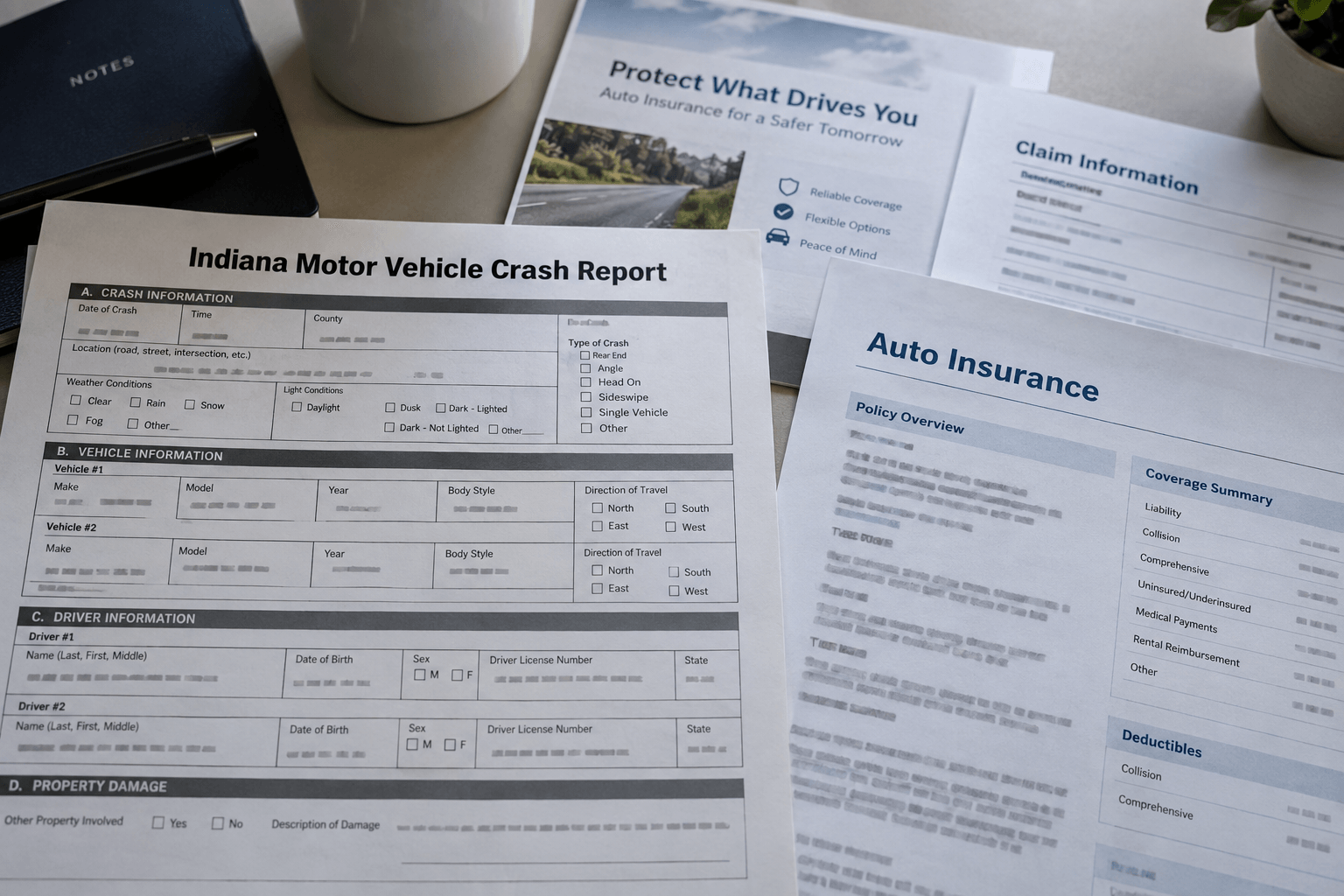
An intersection crash may look straightforward at first, but fault and insurance coverage can become hotly contested. You can start by obtaining the investigating agency’s crash report. The report may contain information that helps identify the drivers, insurers, witnesses, and the investigating officers’ initial account, but it is not a final determination of civil liability. This guide explains how to obtain an Indiana crash report.
You should also keep accurate medical records and follow the instructions provided by your medical professionals. The draft reports only that three people were injured and taken to a hospital, so the nature and extent of their injuries remain unknown. Medical records can document what care you received and connect later treatment to the collision.
Each injured person may have a separate claim. When several people are hurt in one crash, available liability insurance may have to cover multiple claims. Before signing a release, it can be important to identify every potentially applicable policy, including possible uninsured or underinsured motorist coverage. You can read more about how several auto policies may apply.
An insurer may request a recorded statement while it is investigating fault. You should understand who is requesting the statement, why it is being requested, and what your own policy requires before answering detailed questions. Insurance companies may use inconsistencies to dispute a claim or assign part of the fault to an injured person.
The vehicles and their electronic data may also contain evidence about the collision. Evidence can be lost when a vehicle is repaired, transferred, or salvaged, so a timely preservation request may matter. The firm’s guide to passenger-vehicle event data explains why early preservation can be important.
How Indiana fault and insurance rules may apply
Indiana’s Comparative Fault Act, Ind. Code 34-51-2-6, governs how responsibility is divided in many vehicle crashes. An injured person whose own fault is greater than 50 percent recovers nothing. Otherwise, any recovery is reduced by that person’s percentage of fault. A deputy’s initial description and any citation can be evidence, but neither automatically decides civil fault. This overview of Indiana’s 51 percent fault rule provides more context.
Nothing in WLFI’s account suggests that a roadway or traffic-control problem contributed to this crash. If later evidence did identify possible responsibility by a county or another political subdivision, the Indiana Tort Claims Act could require written notice within 180 days under Ind. Code 34-13-3-8. A claim against the State requires notice within 270 days under Ind. Code 34-13-3-6. Government claims are governed by different fault rules, and missed notice deadlines can prevent a claim.
Indiana requires minimum auto liability coverage of $25,000 per person and $50,000 per accident for bodily injury, plus $25,000 for property damage, under Ind. Code 9-25-4-5. When three people are injured, the per-accident limit may have to be divided among several claims. Indiana insurers must offer uninsured and underinsured motorist coverage under Ind. Code 27-7-5-2, although whether that coverage applies depends on the policy and the facts.
Most Indiana personal injury claims must be filed within two years of the injury under Ind. Code 34-11-2-4. The limitations period does not begin to run for a person under a legal disability, including a minor, until the disability is removed under Ind. Code 34-11-6-1. Different deadlines may apply to a parent’s own claim for a child’s medical expenses.
How Delventhal Law Office can help
Delventhal Law Office, LLC is a Fort Wayne personal injury law firm founded by attorney Chad E. Delventhal in 2009. The firm can review an intersection crash, obtain available records, identify insurance coverage, preserve vehicle evidence, and explain how Indiana’s comparative fault and filing rules may affect your situation. Insurance companies may aggressively defend disputed right-of-way claims, so careful preparation matters.
If you were injured because of someone else’s carelessness, you can request a free case evaluation. A consultation gives you an opportunity to discuss the facts and available insurance without assuming that an early police account has settled every issue.
This post is based on public reporting, the investigation may be ongoing, and nothing here is legal advice or creates an attorney-client relationship.