We previously wrote about this crash, but two facts in that account were wrong. The La Porte County Sheriff's Office release republished by WKVI[1] corrects the date of the crash and the condition of the stopped truck's driver. The corrected date moves every potentially applicable legal deadline one day earlier.
What Happened, Corrected
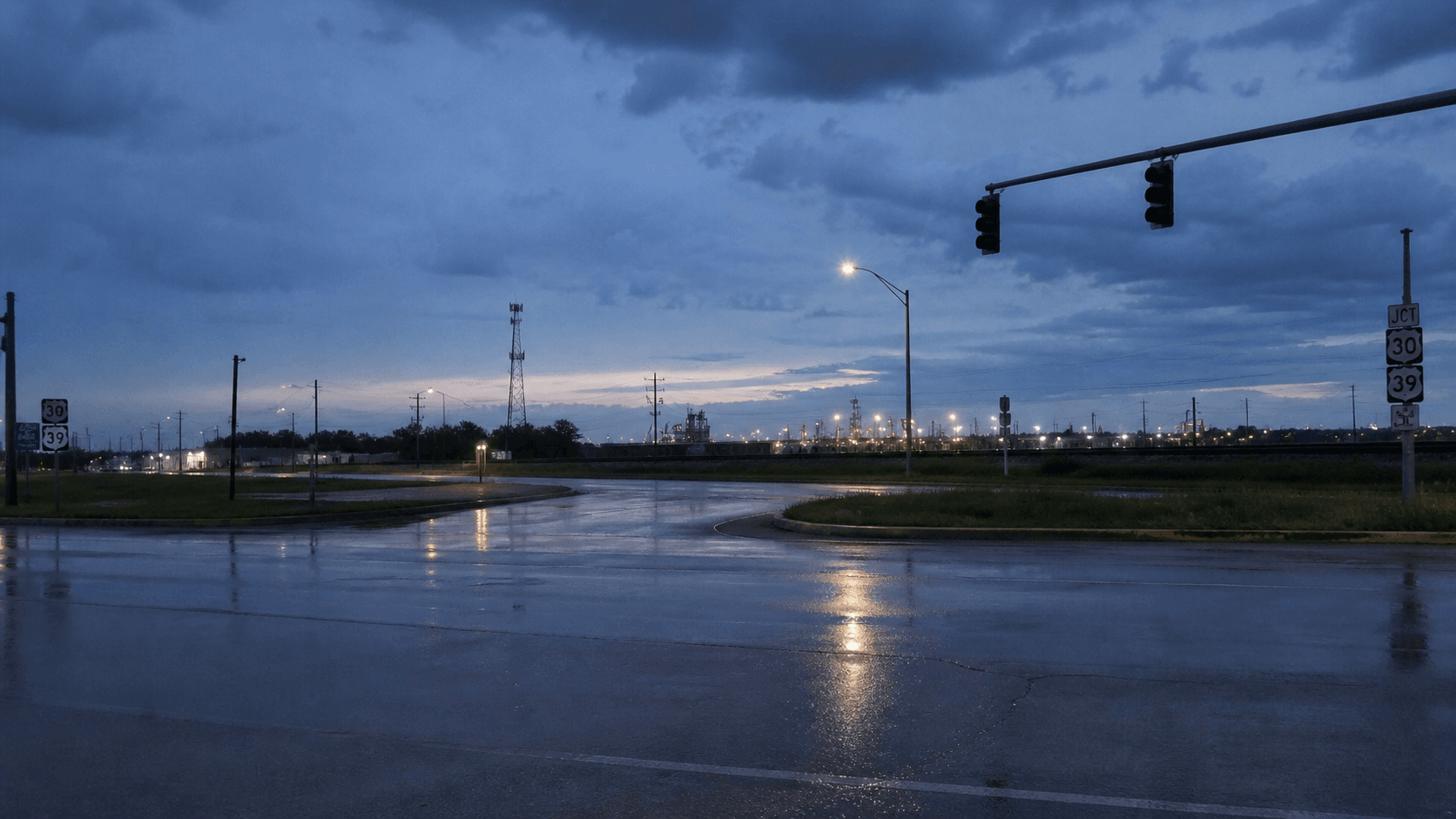
According to the sheriff's release, the crash occurred at 10:17 p.m. on Wednesday, August 12, 2026, on eastbound U.S. 30 at State Road 39 in rural LaPorte County, near Westville.
A driver had stopped a semi tractor-trailer at the intersection because the traffic control device was not operating. A second semi traveling east failed to slow and struck the rear of the stopped truck. The driver of the striking truck was pronounced dead at the scene. The driver of the stopped truck was not injured.
A La Porte County Sheriff's deputy is investigating. The Indiana Department of Homeland Security classified the death as weather-related, and the reported signal outage was attributed to the severe storm event that moved through northern Indiana beginning around August 11.
Three points correct the earlier account. First, the crash happened on August 12, not August 13. Second, the stopped truck's driver was uninjured. Third, the non-operating signal information now comes from the sheriff's release and was reported as corroborated by 95.3 MNC and WSBT. Specific incident pages for those two outlets could not be verified, so they are not linked here.
What Should Accident Victims Do Next?
Confirm the date first. A one-day error can matter when a possible government claim has a notice period measured in months. Confirm the date through the investigating agency and obtain the official report. This guide explains how to obtain an Indiana crash report.
Preserve commercial-truck evidence immediately. Written preservation demands should cover engine control module data, electronic logging records, fleet camera video, telematics, dispatch records, inspection documents, and maintenance records. Some records can be overwritten or lost after a tractor is repaired, released, or scrapped. Learn more about preserving truck black box and ECM evidence.
Identify who owned and maintained the signal. Do not assume that the road designation answers this question. The responsible party could be a state agency, a local government, or a contractor working under an agreement. That answer may determine which notice period applies and where notice must be sent.
Request outage and restoration records. Signal maintenance logs, work orders, trouble tickets, utility records, and temporary traffic-control records may show when the signal stopped operating, when notice was received, and what response followed.
Address government notice early. If the maintaining entity is unclear, a lawyer may evaluate whether notices should be sent to more than one potentially responsible entity. Sending notice to the wrong entity may not preserve a claim against the correct one. A general explanation of these requirements appears in the guide to an Indiana government tort claim notice.
Why Location Matters in Indiana Injury Claims
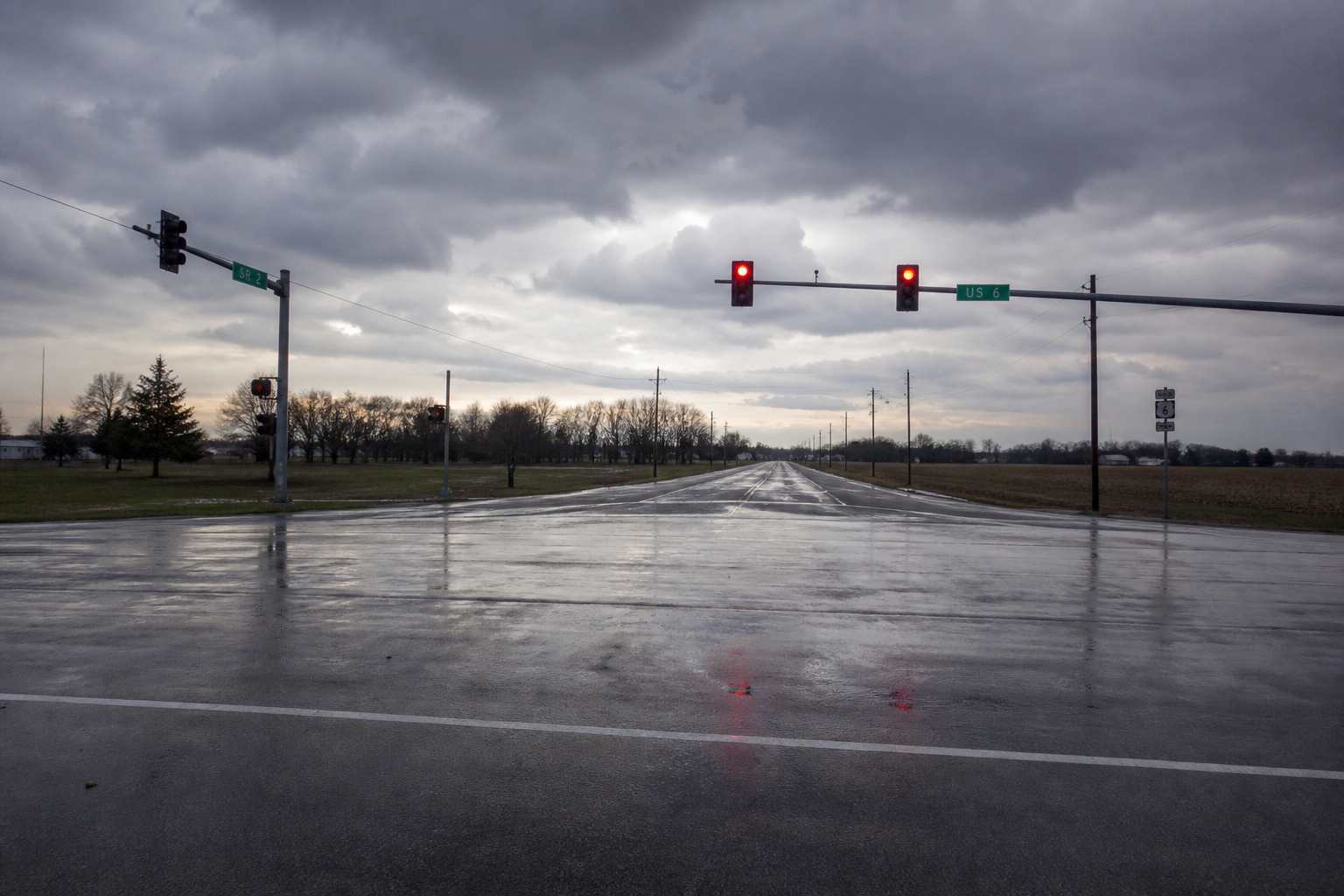
U.S. 30 is a major freight corridor through northern Indiana. This collision occurred at a signalized intersection with State Road 39, at night, after the signal reportedly stopped operating. Under Indiana law, drivers are to treat a non-operating traffic signal as a four-way stop.
The entity responsible for the signal may determine which Indiana Tort Claims Act notice period applies. The draft identifies a 180-day period for a claim against a political subdivision, such as a county, city, or town. Starting from August 12, 2026, that date is approximately February 8, 2027. It identifies a 270-day period for a state-agency claim, which would be approximately May 9, 2027.
Those notice periods are separate from the two-year wrongful death limitation period identified in the draft, which would run approximately to August 12, 2028. These dates are illustrative calendar calculations, not conclusions about the deadline in a particular case. Waiting for the investigation to end could allow a shorter government notice period to expire.
Different fault rules may also apply. The draft explains that Indiana's Comparative Fault Act governs claims against private motor carriers. A claimant's recovery may be reduced according to assigned fault and barred if that fault exceeds 50 percent. For a claim against a governmental defendant, the draft states that common-law contributory negligence applies, meaning any negligence attributed to the injured person can bar recovery.
Because the driver who died was driving the striking truck, contributory negligence presents a serious issue in any potential road-authority claim. It does not establish the final allocation of fault. The investigation may still need to address the signal outage, each driver's actions, carrier records, and the responsibilities of any entity maintaining the intersection.
The involvement of two commercial carriers creates additional questions about employer responsibility, hours of service, vehicle inspection, maintenance, and available insurance. An experienced Fort Wayne truck accident attorney can review those separate layers without assuming that one fact decides the entire case.
How Delventhal Law Office Can Help
If your family lost someone or you were seriously injured in a commercial-truck crash involving a dark or malfunctioning signal, early investigation can protect evidence and identify the correct notice recipients. Delventhal Law Office helps Indiana families investigate truck crashes, preserve ECM, ELD, camera, and dispatch data, obtain signal and restoration records, evaluate potential government notice requirements, and pursue available wrongful death claims.
You can request a free case evaluation to discuss the facts, the correct date of loss, and the deadlines that may apply. Insurance carriers and government defendants may aggressively defend fault and notice issues, so careful preparation matters from the beginning.
This post is based on public reporting, the investigation may be ongoing, and nothing here is legal advice or creates an attorney-client relationship.