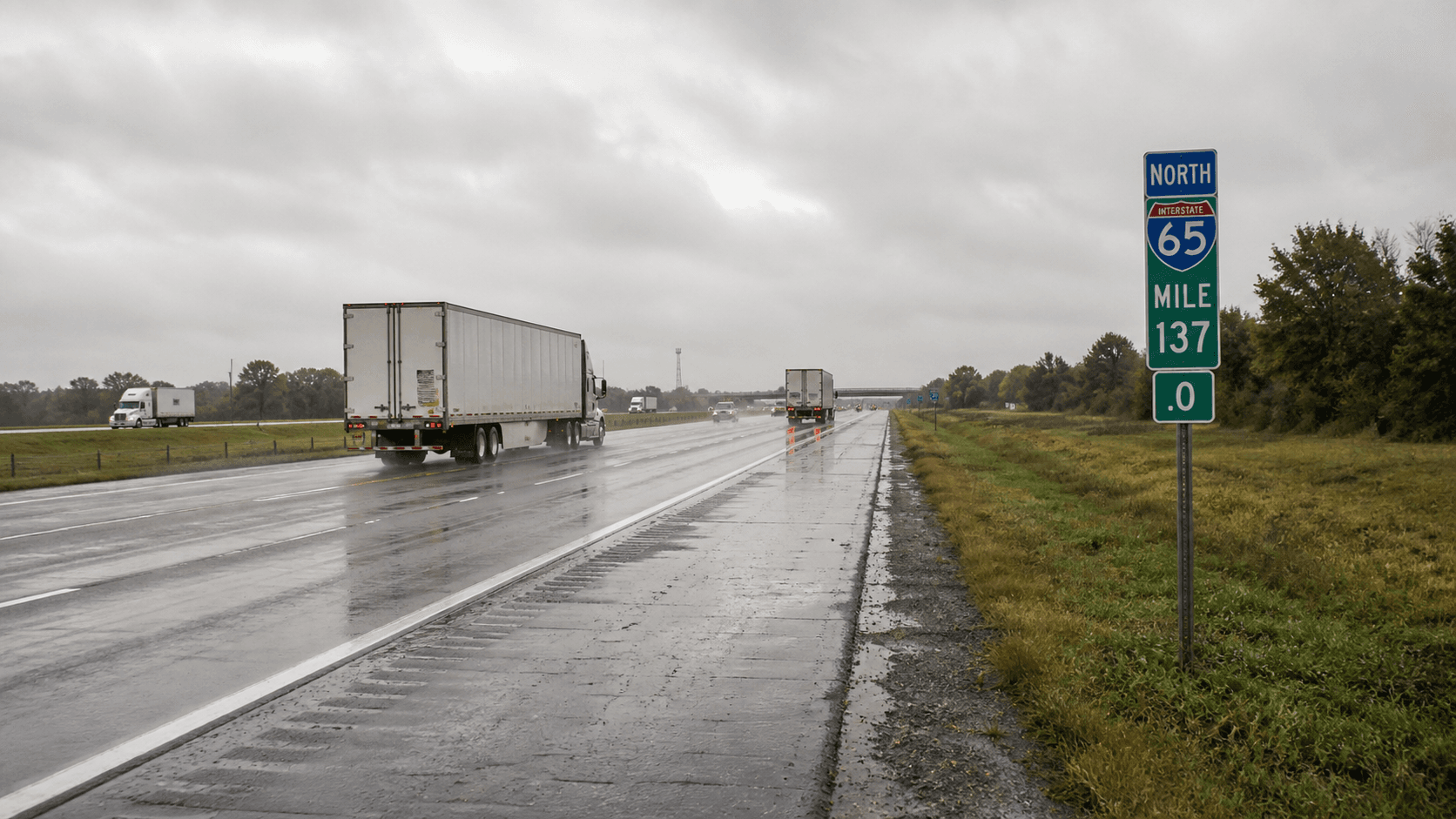
A collision between a passenger vehicle and a semi on Interstate 65 in Boone County left one driver critically injured on the afternoon of Wednesday, August 12, 2026. Early reports pointed to weather as a likely factor. Adverse weather does not automatically excuse a crash. The evidence may still show that a driver failed to reduce speed, increase following distance, or otherwise respond reasonably to the conditions.
What happened
According to WTHR[1] and reporting from WLFI[2], WIBC[3], and FOX59[4], the vehicles collided just before 2:30 p.m. on northbound I-65 near mile marker 137. The location is close to the Boone-Clinton county line.
Responders found the passenger-vehicle driver unresponsive and trapped. After being extricated, that driver was taken to an Indianapolis hospital in critical condition. The semi driver was reported uninjured, and part of the interstate was closed during the emergency response.
Investigators indicated that weather likely contributed. Fault had not been assigned in the cited reporting, and no names had been released. Weather may be part of the explanation, but the available facts do not support a legal conclusion about who or what was responsible.
What injured people and their families should do next
A crash that leaves someone critically injured and trapped is first a medical emergency. When a commercial truck is involved, however, evidence can begin disappearing while a family is focused on hospital care. An experienced Fort Wayne truck accident attorney can explain which records may exist and how they may be preserved.
Commercial trucks may carry engine-control data, electronic logging records, and onboard-camera footage. Those records can help show speed, braking, following distance, and driving time, but some information may be overwritten or lost. A preservation request can be important when the injured person cannot act personally.
It is also important to identify the motor carrier, not only the driver. The carrier and its insurer may hold records concerning the truck's operation, maintenance, and insurance coverage. The guide to truck black-box and ECM evidence explains why prompt preservation matters.
Families should note which agency is investigating, learn how to obtain the completed crash report, and identify any traffic or business cameras that may have recorded the roadway or weather conditions. They should also be cautious about recorded statements. A trucking insurer may contact you quickly, before the truck's data and all available policies are understood.

Why the Boone County location matters
This collision occurred on northbound I-65 near mile marker 137, an interstate commercial corridor. That setting can affect the investigation and the evidence needed to understand what reasonable driving required at the time.
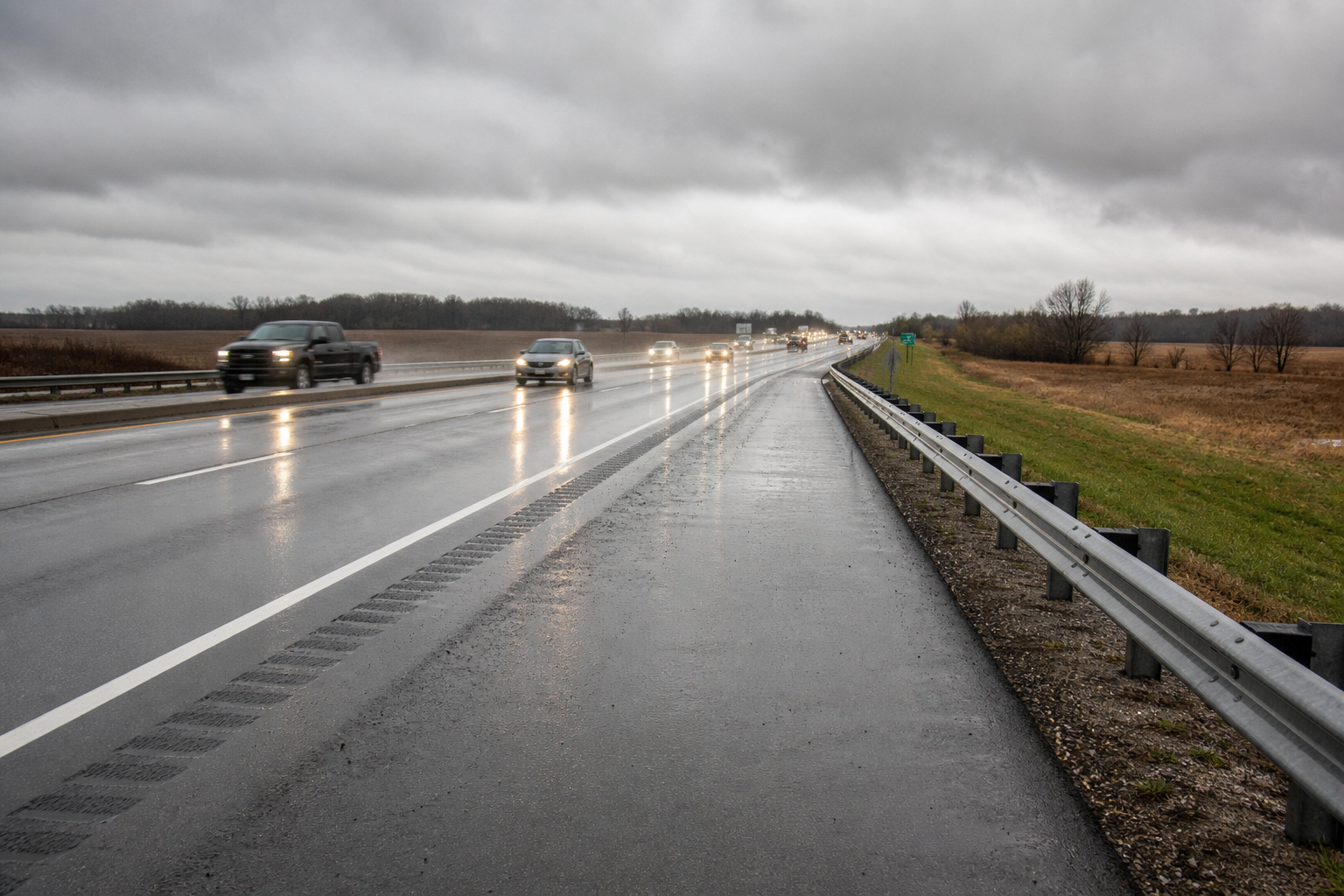
On a high-speed interstate in wet or storm-affected conditions, the question is not simply whether bad weather existed. Investigators may examine whether each driver reduced speed, increased following distance, and maintained control. A heavily loaded truck also needs substantially more stopping distance than a passenger car. The firm's guide to why truck accident claims are different discusses the additional evidence and parties these cases may involve.
The calendar matters as well. Indiana's general deadline for filing a personal-injury claim is two years from the injury date, even if an investigation remains open. The practical window for preserving electronic truck evidence may be much shorter. More information about timing is available in the guide to Indiana accident claim deadlines.
How Delventhal Law Office can help
If you or a loved one was seriously hurt in a semi or commercial-vehicle crash, the trucking company and its insurer may aggressively defend the claim. Delventhal Law Office helps injured people and their families across Indiana investigate what happened, preserve electronic and other perishable evidence, identify potentially responsible parties, and understand available insurance coverage.
You can request a free case evaluation to discuss the facts, the evidence that may need protection, and your options under Indiana law.
This post is based on public reporting, the investigation may be ongoing, and nothing here is legal advice or creates an attorney-client relationship.