
After a crash involving an unlisted teen driver, obtain the complete policy before accepting a coverage decision. The declarations page alone may not contain every relevant definition, condition, or endorsement.
Key takeaways
- Indiana Code 27-1-13-7[1](b)(3) requires a policy issued or delivered in Indiana to a vehicle owner to insure the owner against liability for damages caused by the negligent operation of the vehicle by any person legally using or operating it with the owner’s express or implied permission.
- Being unlisted is different from being expressly excluded, and Indiana Code 27-1-13-7[1](d) expressly addresses named driver exclusions in commercial motor vehicle policies.
- Indiana’s statutory minimum liability limits are $25,000 for bodily injury to one person, $50,000 for bodily injury to two or more people in one accident, and $25,000 for property damage.
- Uninsured- or underinsured-motorist coverage may become relevant when liability insurance is unavailable or insufficient, but coverage depends on Indiana law and the applicable policy.
- Indiana generally has a two-year limitations period for an action involving injury to a person, although another rule may apply in a particular case.
Not listed versus expressly excluded
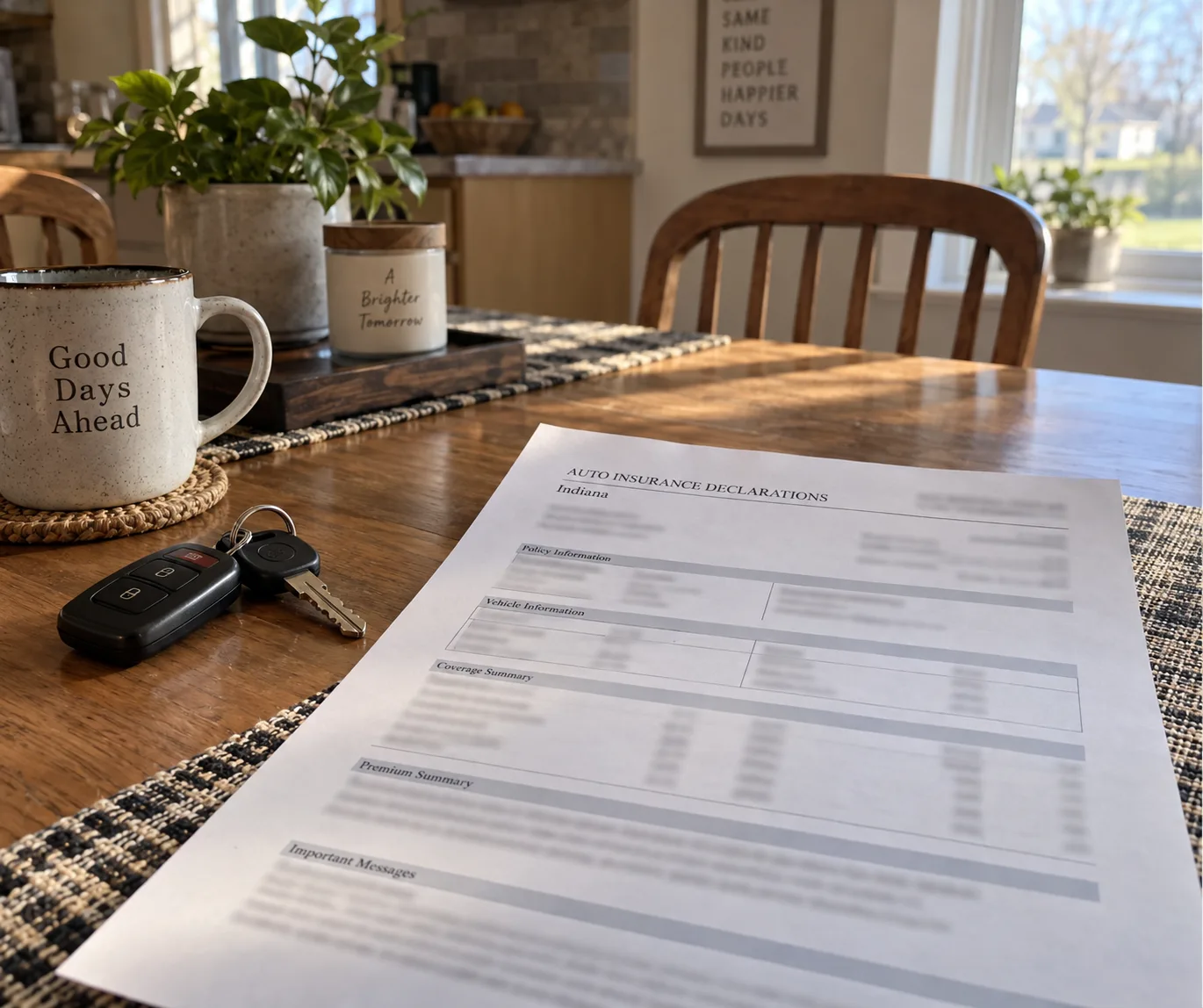
An unlisted driver is a person whose name does not appear on the policy’s driver list or declarations. An excluded driver is a person whom an endorsement or another policy provision purports to remove from coverage.
Those are different coverage questions. If the insurer says the teen was excluded, request the complete policy, declarations, endorsements, application, renewal documents, and written coverage decision. Delventhal’s guide to named-driver exclusions after an Indiana crash explains why the actual documents matter.
A driver’s absence from the declarations page, standing alone, does not resolve whether Indiana’s required permissive-use coverage applies. The starting point is Indiana Code 27-1-13-7[2], followed by a review of the complete contract and the facts surrounding the vehicle’s use.
Two parts of that statute matter here. Subsection (d) says the section does not prohibit an insurer from making a named driver exclusion available in a commercial motor vehicle policy; the statute speaks to that setting expressly and does not itself resolve how an exclusion written into a personal policy is treated. Subsection (e) says a policy issued in violation of the section is still valid but is deemed to include the provisions the section requires, and that where a policy provision conflicts with a required provision, the statute governs the rights of the insurer, the policyholder, and the injured person.

Start with the vehicle owner’s policy
Indiana Code 27-1-13-7[1](b)(3) provides that if a policy is issued or delivered in Indiana to the owner of a motor vehicle, it must contain a provision insuring the owner against liability for damages for death or injury to person or property resulting from negligence in the operation of the motor vehicle, in the business of the owner or otherwise, by any person legally using or operating the motor vehicle with the permission, expressed or implied, of the owner.
Read closely, the required provision protects the owner against liability arising from a permissive user’s negligence. Whether a particular insurer also owes a defense or indemnity to the teen depends on the policy’s own definition of an insured, the endorsements, and the facts. Indiana Code 27-1-13-7[1](c) separately allows one spouse to be excluded by written consent from coverage under a jointly owned vehicle’s policy.
That rule is why the vehicle owner’s policy is an important starting point when a teen borrowed a family car. It does not mean every unlisted teen is covered in every situation; the policy, endorsements, permission facts, and statutory exceptions still require review.
The liability analysis is separate from deciding which policy applies. Delventhal’s Fort Wayne car-accident guide discusses the broader claim process, while the article about adult-signer liability for an Indiana teen driver addresses a distinct potential source of responsibility. Under Indiana Code 9-24-9-4[3], an adult who signs a minor’s application for a permit or driver’s license agrees to be jointly and severally liable for injury or damage the minor causes by operating a motor vehicle, and that liability ends when the minor turns eighteen or when the signer files a verified written request with the bureau to expire the permit or license.
Why permission matters
Indiana’s owner-policy statute turns on permission, expressed or implied. Express permission may involve a direct instruction allowing the teen to drive, while implied permission is often disputed and evaluated from the surrounding facts, which is why the records that show how the vehicle was used are worth gathering early.
Evidence relevant to permission may include:
- Who controlled the keys.
- Whether the teen had used the vehicle before.
- Messages about the particular trip.
- Household driving rules.
- Statements from the owner, teen, or witnesses.
Because the statutory provision turns on permission, keep the original messages and records that show how the vehicle came to be used, rather than edited copies or summaries.

Which insurance may pay?
More than one policy may need to be examined. The following table is an investigation guide, not a prediction that a particular policy must pay.
| Possible source | What to examine | Coverage question |
|---|---|---|
| Family vehicle policy | Ownership, permission, policy dates, exclusions, endorsements, and liability limits | Does the owner’s policy cover the teen’s use of this vehicle? |
| Teen’s separate auto policy | Named insured, covered vehicles, definitions, and other-insurance provisions | Does another policy provide applicable coverage? |
| Injured person’s UM/UIM coverage | Declarations, written rejection documents, definitions, limits, and notice provisions | Does the injured person have applicable uninsured- or underinsured-motorist coverage? |
| Medical-payments coverage | Declarations, covered-person definitions, limits, and claim requirements | Does applicable MedPay coverage address covered medical expenses? |
Indiana’s statutory minimum liability limits are $25,000 for bodily injury to one person, $50,000 for bodily injury to two or more people in one accident, and $25,000 for property damage. The current amounts appear in Indiana Code 9-25-4-5[4].
Those figures are minimum required limits, not a valuation of an injury claim and not proof of the limits on a particular policy.
Indiana Code 27-7-5-2[5] requires an insurer to make uninsured- and underinsured-motorist coverage available in an automobile liability policy delivered or issued for delivery in Indiana, in limits at least equal to the policy’s bodily injury liability limits, unless the insured rejects those coverages in writing. The statute also provides that underinsured motorist coverage must be made available in limits of not less than $50,000 and may not be sold in a lesser amount. Whether the coverage applies after a particular teen-driver crash depends on the available liability coverage, the statute, and the policy language.
You can review the statute at Indiana Code 27-7-5-2[6]. Delventhal’s guide to Indiana crashes involving an uninsured driver identifies additional coverage records worth gathering.
Documents to collect after the crash
Organize these materials before memories fade or electronic records disappear:
- The complete policy that was in effect on the crash date.
- Every declarations page and endorsement.
- The application, renewal questionnaires, and communications concerning household drivers.
- The vehicle’s title and registration.
- Messages or other evidence concerning permission for the trip.
- The insurer’s reservation-of-rights, coverage, or denial letters.
- The injured person’s auto policies and UM/UIM selection or rejection documents.
- Crash photographs, witness information, medical bills, wage records, and repair documents.
The Indiana Department of Insurance Consumer Services Division[7] accepts insurance questions and complaints from consumers. That is a separate process from a lawsuit: the Department describes its consumer complaint service, and Indiana Code 34-11-2-4[8] sets the limitations period, so neither one stands in for the other.
The Fort Wayne car-accident settlement calculator can help organize categories of loss, but it cannot decide coverage or predict a result.

Keep the legal deadline separate from the coverage investigation
Indiana Code 34-11-2-4[8] generally provides a two-year limitations period for an action involving injury to a person. Exceptions or different rules may apply, so the deadline should be evaluated from the facts rather than assumed.
You can read the current text of Indiana Code 34-11-2-4[9]. The statute sets the period and does not make it depend on how a coverage investigation is progressing, so treat the filing deadline and the insurer’s review as separate tracks and confirm the applicable date rather than assuming it.
Frequently Asked Questions
Does “unlisted” automatically mean “uninsured”?
No. Indiana Code 27-1-13-7[1](b)(3) requires an owner’s policy issued or delivered in Indiana to insure the owner against liability arising from negligent operation by a person legally using the vehicle with the owner’s express or implied permission, and a policy issued without that provision is deemed to include it.
What if the insurer says the teen was excluded?
Request the complete policy and the specific exclusion or endorsement on which the insurer relies. Being omitted from a driver list is not the same as being expressly excluded by policy language. Indiana Code 27-1-13-7[1](d) addresses named driver exclusions in commercial motor vehicle policies; whether a particular exclusion in a personal policy applies is a question of the policy language and the facts.
What if the teen took the vehicle without permission?
Permission can materially affect coverage because the provision Indiana Code 27-1-13-7[1](b)(3) requires applies to a person legally using or operating the vehicle with the owner’s permission, expressed or implied. Whether permission existed is a fact question decided from the records and testimony.
Can the injured person’s UM or UIM coverage apply?
Possibly. Indiana Code 27-7-5-2[5] governs required offers of uninsured- and underinsured-motorist coverage, written rejection, and related coverage rules, but application to a crash depends on the facts and policy language.
How long do you have to file an Indiana personal-injury lawsuit?
Indiana generally provides a two-year limitations period for an action involving injury to a person, although exceptions or other rules may change the deadline.

If an unlisted teen was involved in your Indiana crash and the coverage picture remains unclear, Delventhal Law Office can review the available policies, coverage letters, and crash records and explain the options that may apply. Request a free consultation.
This article provides general information, not legal advice, and reading it does not establish representation by Delventhal Law Office. The photographs are original illustrative scenes, not records of an actual crash. Legal sources were checked September 20, 2026.
Sources
- Indiana Code 27-1-13-7 (iga.in.gov) ↩
- Indiana Code 27-1-13-7 (iga.in.gov) ↩
- Indiana Code 9-24-9-4 (iga.in.gov) ↩
- Indiana Code 9-25-4-5 (iga.in.gov) ↩
- Indiana Code 27-7-5-2 (iga.in.gov) ↩
- Indiana Code 27-7-5-2 (iga.in.gov) ↩
- Indiana Department of Insurance Consumer Services Division (in.gov) ↩
- Indiana Code 34-11-2-4 (iga.in.gov) ↩
- Indiana Code 34-11-2-4 (iga.in.gov) ↩