
After a crash involving a driver younger than 18, the signed application can help identify the person who made the BMV agreement. This guide explains the narrow rule, the official records that bear on it, and practical ways to organize crash information without assuming facts that the records do not establish.
Key takeaways
- The Indiana rule concerns the adult who signed the minor’s application.
- Under the statute, the adult’s responsibility arises only if the minor is liable in damages for injury or damage caused by operating a motor vehicle.
- The BMV says the agreement ends when the minor turns 18 or the adult signer dies.
- The BMV says a signer may file a written request to cancel the minor’s permit or license and be relieved from liability.
How the Indiana rule works
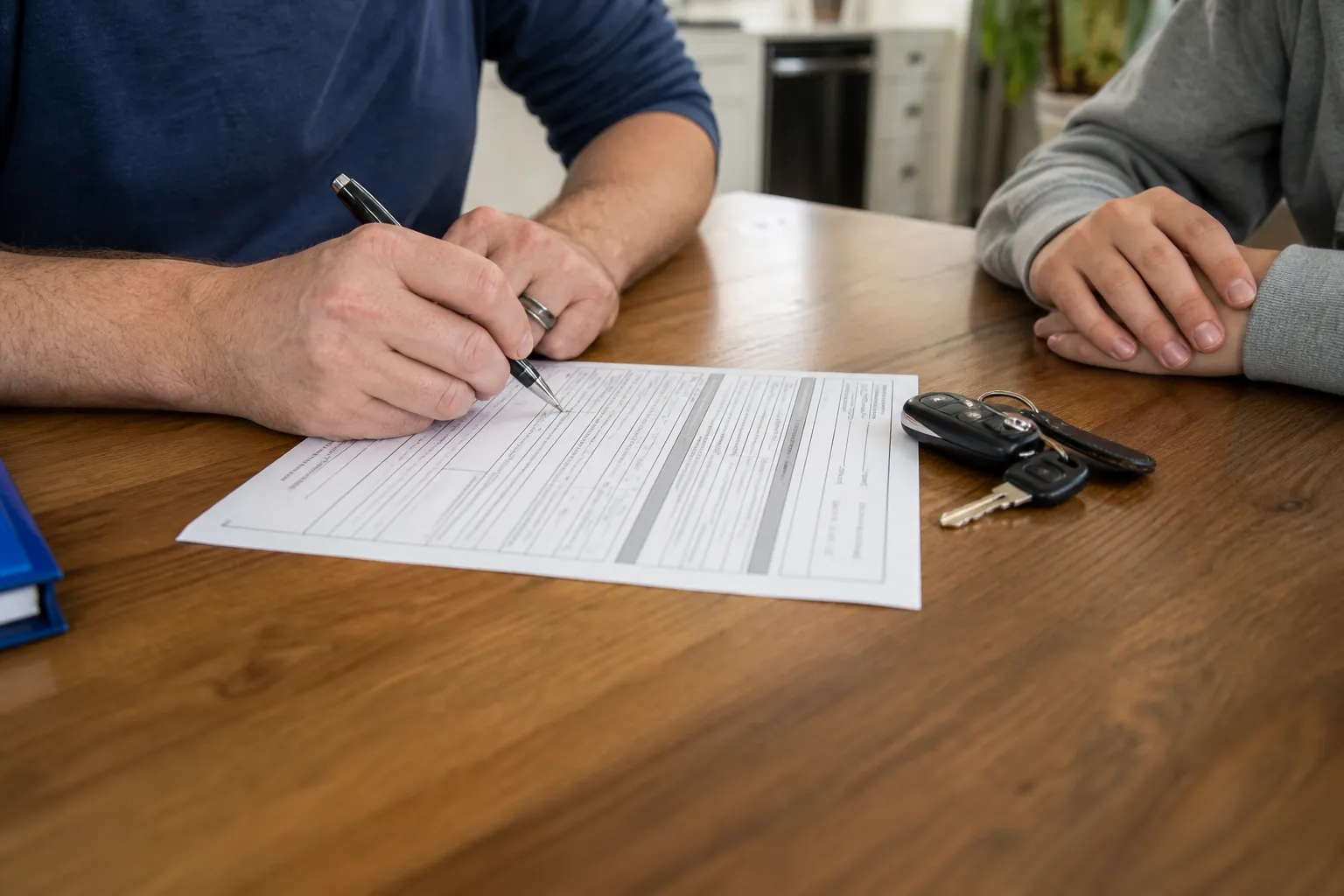
Indiana Code 9-24-9-4[2] ties the adult signer’s responsibility to injury or damage caused by the minor’s operation of a motor vehicle and to the minor being liable in damages.
Indiana Code 9-24-9-4[1] uses the phrase “jointly and severally responsible.”
For a broader explanation of collision documentation, see Delventhal Law Office’s Fort Wayne car accident guide and its checklist of evidence that can help document an Indiana car accident claim.
Who may sign the application?
For an applicant younger than 18, the Indiana BMV’s Agreement of Financial Liability page[3] lists, in order of preference, a custodial parent or designee, a noncustodial parent or designee, a guardian having custody, or another adult willing to assume the obligation when the listed parent or guardian is unavailable.
That official list makes the signed application more useful than an assumption based only on a surname, household address, or vehicle title. The application identifies its signer.
A practical records table
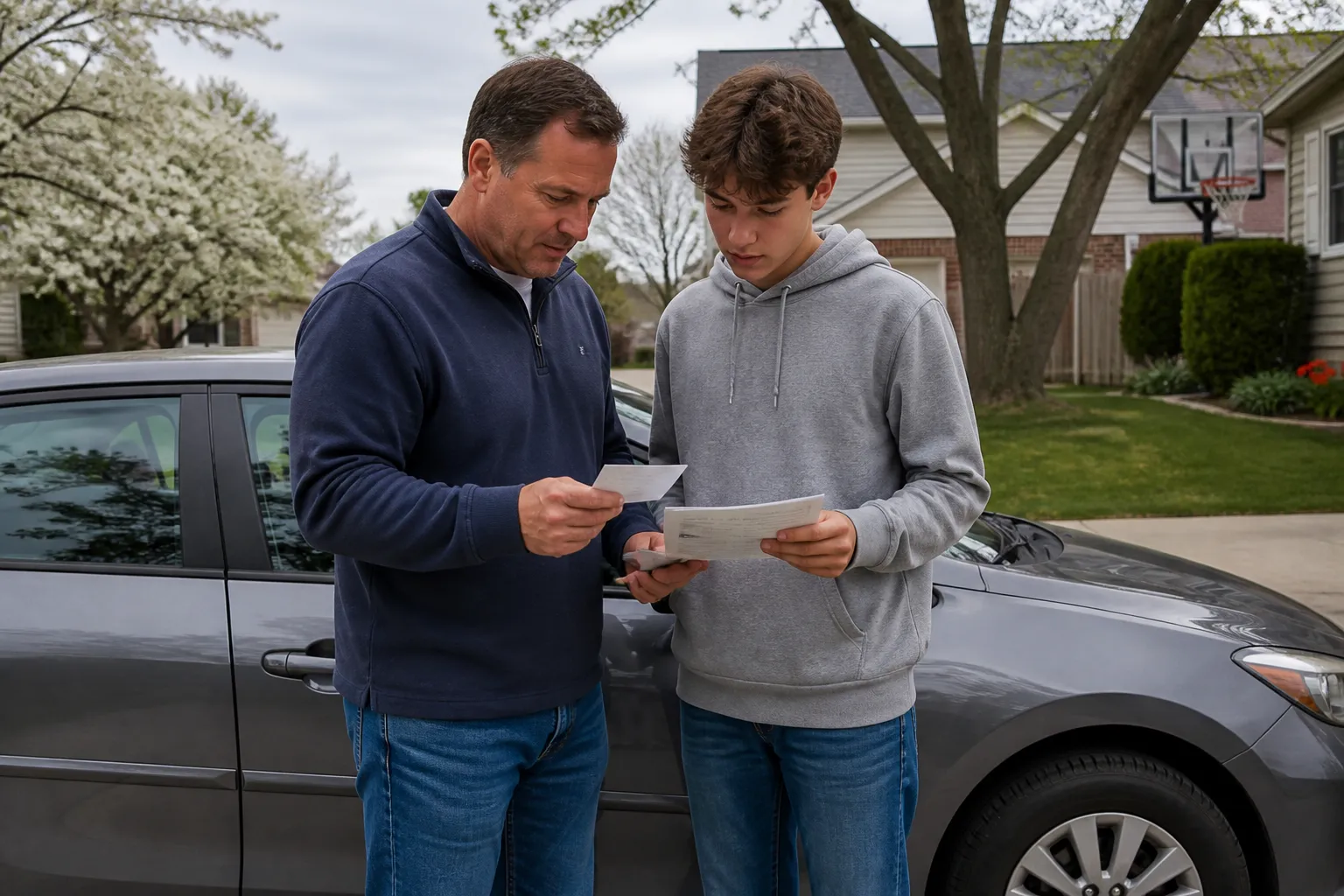
The table organizes the records by question.
| Question | Records to look for | What the records can show |
|---|---|---|
| How old was the driver? | Driver credential, verified date of birth, and crash date | Whether the driver was still a minor on the crash date |
| Who signed? | Signed permit or license application and BMV correspondence | The identity of the person who made the agreement |
| Was there a cancellation? | Written request, BMV confirmation, and credential history | Whether official records document a cancellation |
| What happened? | Photographs, video, witness information, crash report, and vehicle information | A factual account that can be compared across sources |
| What policies exist? | Policy cards, declarations pages, policy forms, and company correspondence | Which documents and named parties should be reviewed |
| What losses are documented? | Bills, receipts, repair records, wage records, and a dated event log | An organized record of claimed losses and supporting documents |
Keep complete copies and note the source and date of each item. Avoid editing original photographs or discarding envelopes and attachments that provide context.
Records about the signer, vehicle, and policies
The signed application, vehicle title, and policy forms answer different questions. Review each set on its own.
The BMV’s current proof-of-financial-responsibility page[4] lists minimum liability coverage of $25,000 for bodily injury to or death of one person, $50,000 for bodily injury to or death of two or more people in one accident, and $25,000 for property damage in one accident.
A particular policy may show different limits. Read the policy forms and company correspondence before drawing conclusions.
If the available records raise an uninsured-driver question, the firm’s guide to Indiana crashes involving an uninsured driver provides additional background.
You can use the Fort Wayne car-accident settlement calculator to organize medical bills, lost income, and other information. The calculator is an educational worksheet, not a prediction.
What information to preserve after the crash
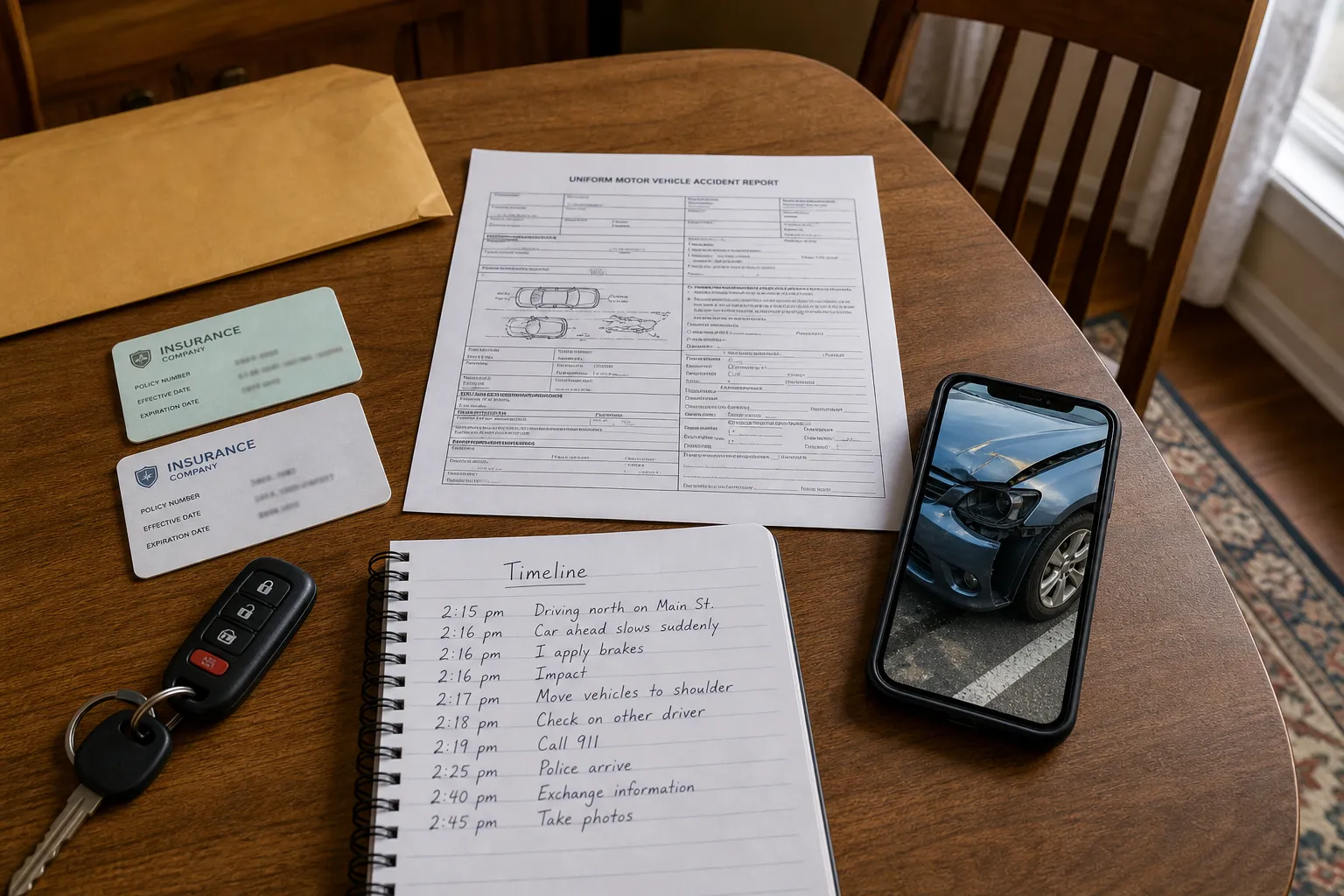
- Save photographs, video, witness names, the incident number, towing information, and repair records.
- Record the teen driver’s full name and the vehicle owner’s name without assuming either identifies the application signer.
- Keep insurance cards, declarations pages, policy copies, letters, envelopes, email headers, and attachments together.
- Retain complete copies of bills, receipts, work records, and other documents connected to the event.
- Make a dated list of missing records, including the signed application and any BMV cancellation correspondence.
A crash report may help identify people and vehicles, while the signed application addresses who made the agreement. Use each record as one part of the file.
Our first-hours evidence guide for Fort Wayne crashes offers a longer organization checklist.
When does the agreement end?
The BMV states that the agreement terminates[3] when the minor driver turns 18 or when the adult signer dies.
The BMV also states that the signer may submit a written request to cancel the minor’s learner’s permit or driver’s license and will be relieved from liability when the credential is canceled.
Compare the crash date with the driver’s birth date and any BMV cancellation record. This article makes no claim about a cancellation request’s effect beyond the BMV’s quoted rule.

Indiana’s general filing period
Indiana Code 34-11-2-4[5] states that an action for injury to person or character and an action for injury to personal property must generally be commenced within two years after the cause of action accrues.
This is the general statutory text. A case-specific date should be evaluated from the complete facts.
For more context, see the firm’s guide to time limits after an Indiana accident.
Frequently asked questions
Does every parent sign?
No. Indiana Code 9-24-9-4[1] applies to an adult who signs the minor’s application.
Must the signer own the car?
No. Indiana Code 9-24-9-4[1] describes the adult who signs the application and does not state that the signer must hold title to the vehicle.
What does the BMV say about age 18?
The BMV says the agreement terminates when the minor driver turns 18.
What does the BMV say about cancellation?
The BMV says the adult signer may submit a written request to cancel the minor’s learner’s permit or driver’s license and be relieved from liability.
Does finding a signed application ensure payment?
No. The statute identifies a form of responsibility; it does not establish that any particular amount will be paid.
Official sources
- Indiana Code Title 9, Article 24, Chapter 9 — Indiana General Assembly[6] — checked August 12, 2026.
- Agreement of Financial Responsibility — Indiana Bureau of Motor Vehicles[3] — checked August 12, 2026.
- Proof of Financial Responsibility — Indiana Bureau of Motor Vehicles[4] — checked August 12, 2026.
- Indiana Code 34-11-2-4 — Indiana General Assembly[5] — checked August 12, 2026.
If you were injured in a crash involving a driver under 18 and are unsure who signed the application or what records should be reviewed, Delventhal Law Office can discuss the available information through a free consultation.
This article provides general information, not legal advice. Contacting the firm does not by itself create an attorney-client relationship.
Sources
- Indiana Code 9-24-9-4 (iga.in.gov) ↩
- Indiana Code 9-24-9-4 (iga.in.gov) ↩
- Indiana BMV’s Agreement of Financial Liability page (in.gov) ↩
- proof-of-financial-responsibility page (in.gov) ↩
- Indiana Code 34-11-2-4 (iga.in.gov) ↩
- Indiana Code Title 9, Article 24, Chapter 9 — Indiana General Assembly (iga.in.gov) ↩