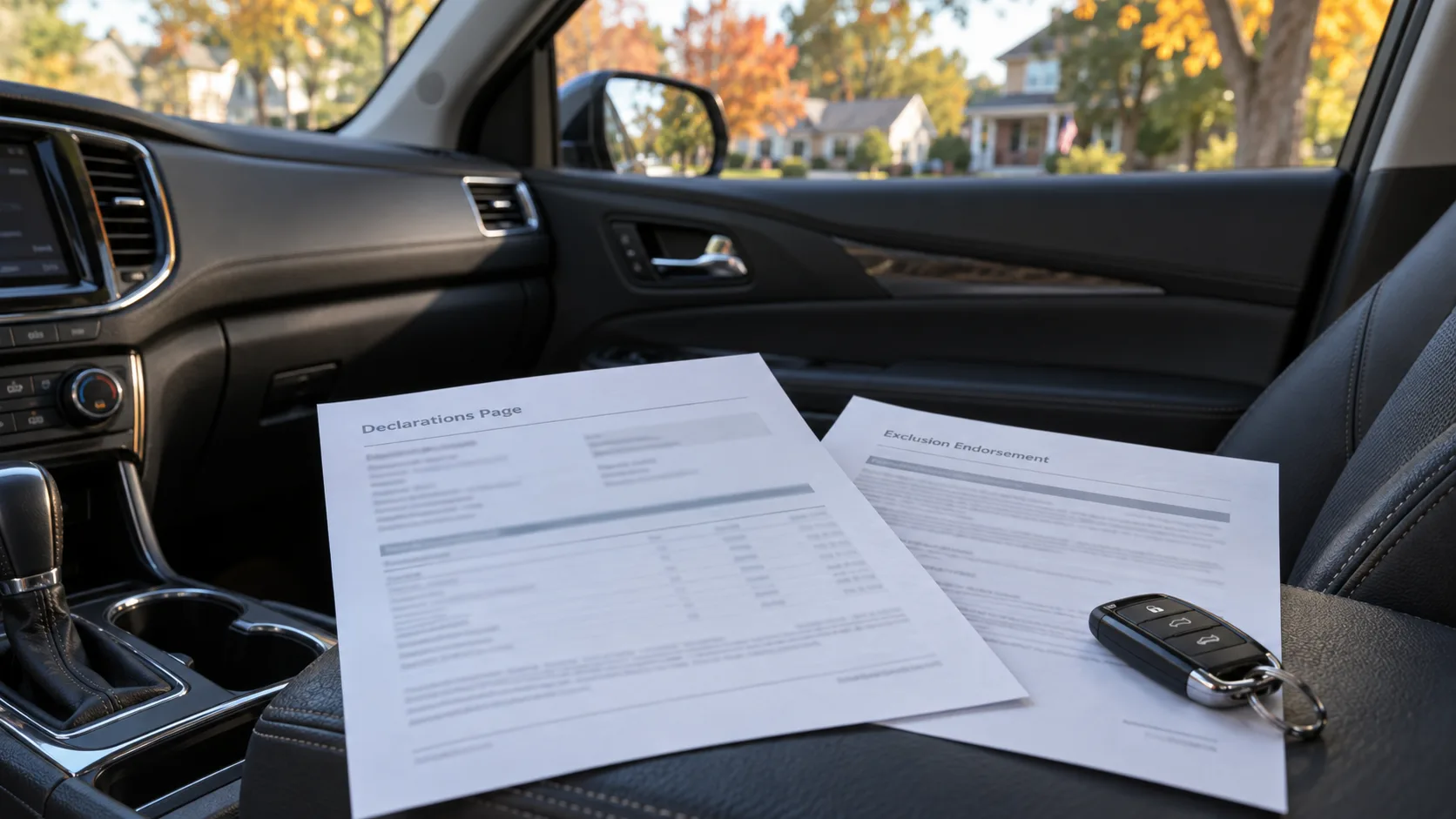
If an insurer denied coverage after a Fort Wayne or Allen County crash because the driver was “excluded,” ask for the denial and the complete policy in writing. A label on a declarations page may not answer every question about the owner’s liability coverage, the driver’s coverage, or coverage available to an injured person.
- A named-driver exclusion identifies a person whom the insurer says is outside some or all policy coverage while driving.
- Indiana Code 27-1-13-7[1] requires an owner’s motor-vehicle liability policy to insure the owner against liability arising from a legally operating permissive driver’s negligence.
- Indiana Code 27-1-13-7[1] expressly allows named-driver exclusions in commercial motor-vehicle policies.
- When spouses jointly own a vehicle, the statute allows either spouse to be excluded with the other spouse’s written consent.
- An injured person should examine every potentially applicable policy rather than treating one exclusion letter as the end of the coverage inquiry.
What is a named-driver exclusion?
A named-driver exclusion is policy language stating that specified coverage does not apply when an identified person operates the insured vehicle. It is different from merely omitting someone from a list of rated or household drivers.
The exact endorsement matters. Read it together with the declarations, definitions, liability section, exclusions, and any amendments. Also identify whether the policy insures a personal vehicle or a commercial vehicle.
What does Indiana law require?
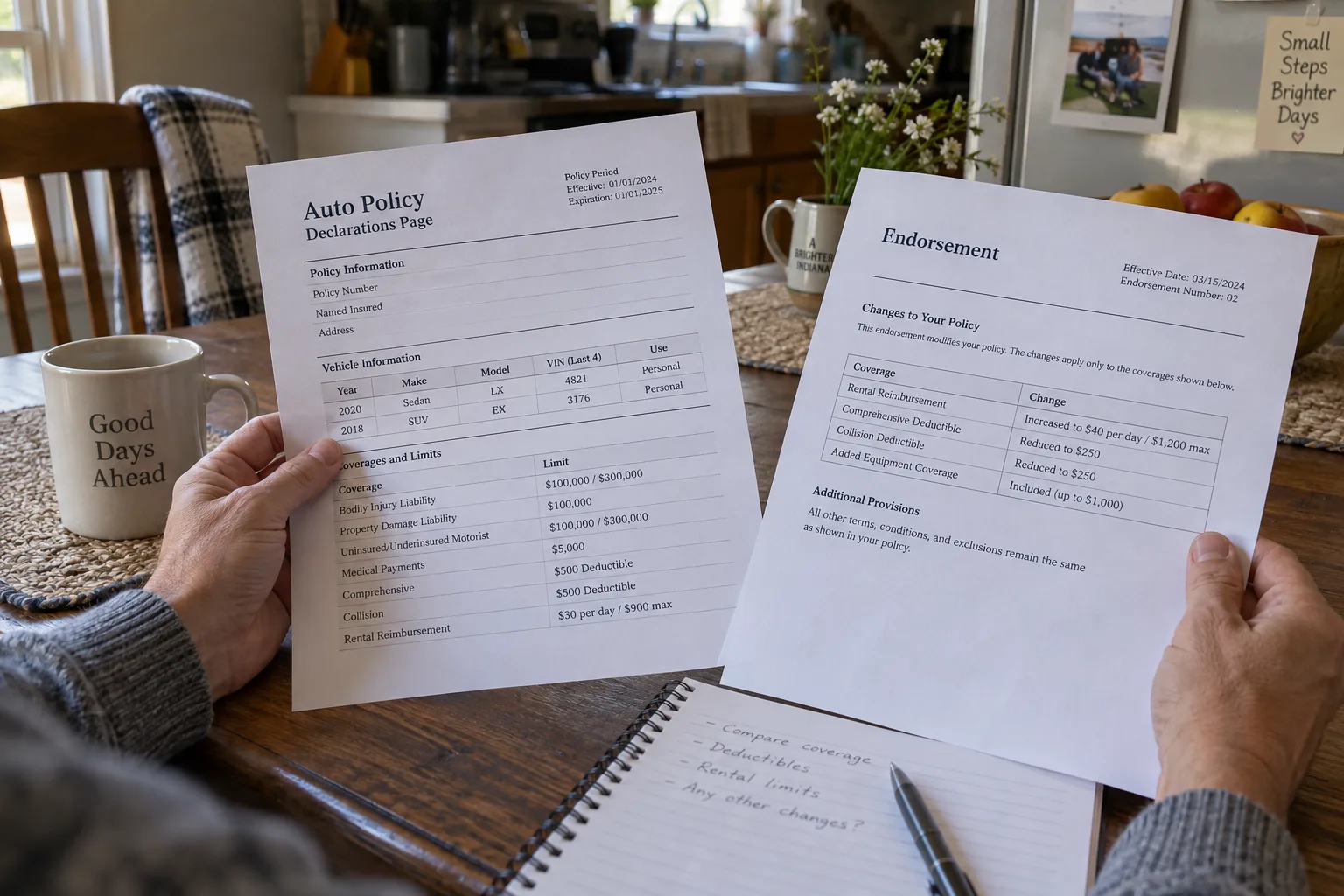
Indiana Code 27-1-13-7[1] requires an owner’s motor-vehicle liability policy to insure the owner against liability for death, bodily injury, or property damage resulting from the negligence of a person who legally uses or operates the vehicle with the owner’s express or implied permission.
The same statute says it does not prohibit an insurer from making a named-driver exclusion available in a commercial motor-vehicle policy. The Indiana Department of Insurance review standards[2] likewise state that named-driver exclusions are allowed in commercial motor-vehicle policies.
Indiana Code 27-1-13-7[1] also provides that, when a husband and wife jointly own a vehicle, either spouse may be excluded with the other spouse’s written consent.
One point is easy to misread. The statute governs what an owner’s policy must cover. It does not itself make an Indiana vehicle owner liable for a permissive driver’s negligence; whether the owner is liable at all is a separate question answered by other law and the facts of the crash.
If policy language conflicts with a provision required by Indiana Code 27-1-13-7[1], the statute says the rights and obligations of the insurer, policyholder, and injured people are governed by the required statutory provision.
When might an exclusion be enforced?
| Situation | Why it matters | What to inspect |
|---|---|---|
| A commercial motor-vehicle policy contains a named-driver exclusion. | Indiana Code 27-1-13-7[1] expressly permits insurers to make named-driver exclusions available in commercial motor-vehicle policies. | Review the signed endorsement, covered autos, named insured, and the coverage named in the denial. |
| Spouses jointly own the vehicle and one spouse is excluded. | Indiana Code 27-1-13-7[1] permits this exclusion when the other spouse gives written consent. | Request the written consent and confirm that the vehicle was jointly owned. |
| A personal auto insurer invokes an exclusion against an owner’s liability for a permissive driver. | Indiana law requires the owner’s policy to protect the owner against liability caused by a person legally operating the vehicle with express or implied permission. | Compare the denial with Indiana Code 27-1-13-7[1] and the complete policy. |
| The insurer disputes whether the driver had permission or was legally operating the vehicle. | The statutory owner-liability provision applies to a person legally using or operating the vehicle with the owner’s express or implied permission. | Preserve messages, witness accounts, household-use history, license information, and statements about permission. |
In an official Indiana appellate decision, Safe Auto Insurance Company v. Farm Bureau Insurance Company[3], the court held that the insurer had to cover the vehicle owner’s vicarious liability even though the driver fell within a household or regular-driver exclusion, because the policy incorporated the statute’s required owner-coverage provision.
Two limits on that decision matter here. The exclusion in that case was a household and regular-driver exclusion rather than a named-driver exclusion, and the two are not interchangeable. The crash happened in Michigan, and the owner’s vicarious liability arose under a Michigan statute that makes vehicle owners liable for a permissive user’s negligence. The court noted that the outcome may have been different had the collision occurred in Indiana, and it expressly did not decide that question. An Indiana crash therefore raises a separate question about the owner’s liability that this decision does not answer.
The decision also does not mean an excluded driver receives every benefit under the policy. Indiana’s required provision has been described as securing coverage for the owner’s vicarious liability rather than coverage for the permissive user. A denial must be analyzed by asking whose liability is involved and which coverage is being requested.
What coverage should be reviewed?
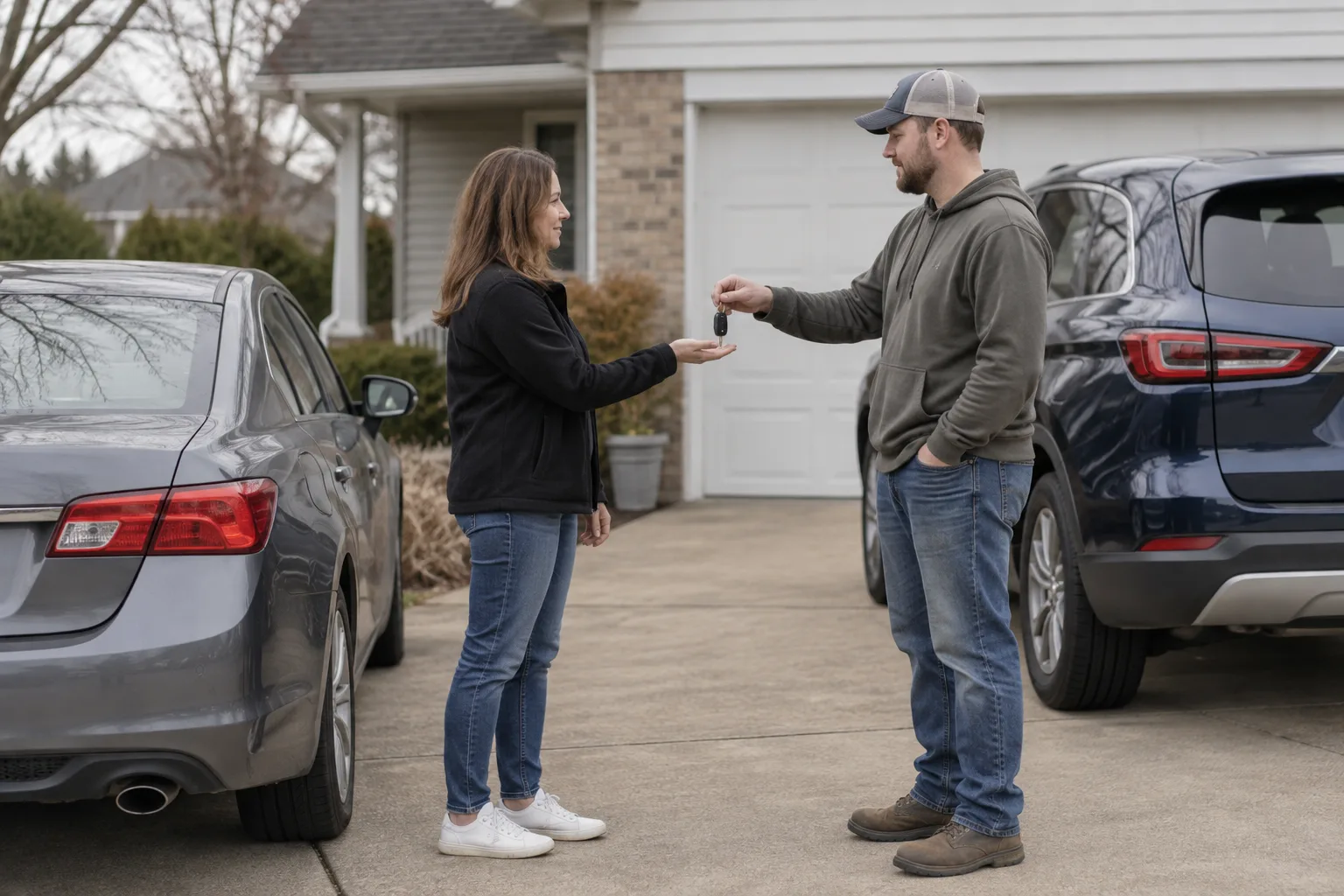
A denial under the vehicle owner’s policy does not identify every possible source of insurance. Depending on the facts and policy language, the review may include:
- The liability coverage on the involved vehicle.
- A separate owner or operator policy issued to the driver.
- Uninsured or underinsured motorist coverage available to an injured person.
- Medical-payments or collision coverage under an applicable policy.
The Indiana Department of Insurance explains that auto policies may include bodily-injury liability, property-damage liability, medical-payments, collision, and comprehensive coverage, with payment governed by the policy’s terms and limits.
If another driver caused the collision and available insurance is disputed, Delventhal Law Office’s guide to accidents involving several possible auto policies explains how to organize the coverage inquiry. You can also review the firm’s Indiana uninsured-driver guide.

What should you do after an exclusion-based denial?
- Request the complete policy. Ask for the declarations, all forms, endorsements, exclusions, and amendments effective on the crash date.
- Request the insurer’s position in writing. Ask it to identify the precise language and facts supporting the denial.
- Preserve proof of permission. Save messages, witness information, keys-access evidence, and prior-use information.
- Identify every policy. Look for policies covering the vehicle, driver, injured occupants, and resident relatives.
- Keep the crash evidence together. Preserve photographs, video, witness contacts, medical records, bills, wage records, and insurer correspondence.
- Do not sign a release you do not understand. A release can affect claims described in its language.
The Indiana Bureau of Motor Vehicles states that, when someone drives another person’s vehicle, the BMV will typically accept the owner’s proof of insurance only if the driver is not excluded from that policy. A BMV proof-of-insurance issue is distinct from deciding all civil coverage obligations after an injury crash.
For a broader evidence plan, see what evidence helps prove an Indiana car-accident claim. If you are estimating how medical expenses, lost income, fault, and coverage may interact, the Fort Wayne car-accident settlement calculator is an educational organizing tool, not a prediction of any result.
How can you question the insurer’s decision?
Start by sending a short written request for the policy and a detailed explanation. Keep the insurer’s response, envelopes, emails, and attachments.
If direct contact does not resolve the issue, the Indiana Department of Insurance accepts consumer complaints[4] involving coverage concerns and claim disputes. The Department asks consumers to include supporting documents such as the declarations page, denial letter, and related correspondence.
The Department can obtain explanations, review information for compliance, and take corrective administrative action when appropriate, but it cannot act as your legal representative or intervene for you in a pending lawsuit.
Because exclusion disputes turn on detailed policy language and the identities of the owner, driver, and claimant, consider having the denial reviewed before assuming no coverage exists. Delventhal Law Office’s Fort Wayne car-accident practice page describes how the firm approaches insurance and evidence issues.

Frequently Asked Questions
Can an Indiana insurer exclude a household driver?
Not every household-driver exclusion is enforceable for every purpose. Indiana Code 27-1-13-7[1] requires an owner’s policy to protect the owner against liability caused by a person who legally operates the vehicle with express or implied permission, while expressly permitting named-driver exclusions in commercial motor-vehicle policies and certain written spousal exclusions for jointly owned vehicles.
Does permission automatically defeat a named-driver exclusion?
No. Permission is important to Indiana’s required owner-liability provision, but the outcome also depends on the policy type, vehicle ownership, whether the driver was legally operating the vehicle, the wording of the exclusion, and whose coverage is at issue.
What if the excluded driver caused the crash?
Request the complete policy and denial, then evaluate the owner’s liability coverage, any separate policy covering the driver, and any uninsured or underinsured motorist coverage available to injured people. One insurer’s denial does not decide the obligations of every other policy.
Can the Indiana Department of Insurance reverse the denial?
The Department may review a complaint, obtain an explanation, and take corrective administrative action when appropriate, but it cannot serve as your lawyer or intervene for you in pending litigation.
Should I accept an adjuster’s statement that there is no coverage?
Ask for the complete policy and a written explanation identifying the exclusion and supporting facts. Coverage should be evaluated from the actual policy documents and Indiana law, not from an oral summary alone.
A measured next step
If you were injured in an Indiana crash and a named-driver exclusion is being used to deny coverage, Delventhal Law Office can review the policy documents, denial, ownership records, permission evidence, and other potentially applicable insurance. A free consultation can help you understand the questions that still need answers without obligating you to proceed.
Sources
- Indiana Code 27-1-13-7, Indiana General Assembly[1]
- Property and Casualty Review Standards, Indiana Department of Insurance[2]
- Safe Auto Insurance Company v. Farm Bureau Insurance Company, Indiana Judiciary[3]
- Consumer Complaints, Indiana Department of Insurance[4]
This article provides general information, not legal advice, and reading it does not establish representation by Delventhal Law Office. The photographs are original illustrative scenes, not records of an actual claim. Legal sources were checked September 19, 2026.