This guide focuses on the signal itself. For the broader claim process, see our Fort Wayne car-accident guide.
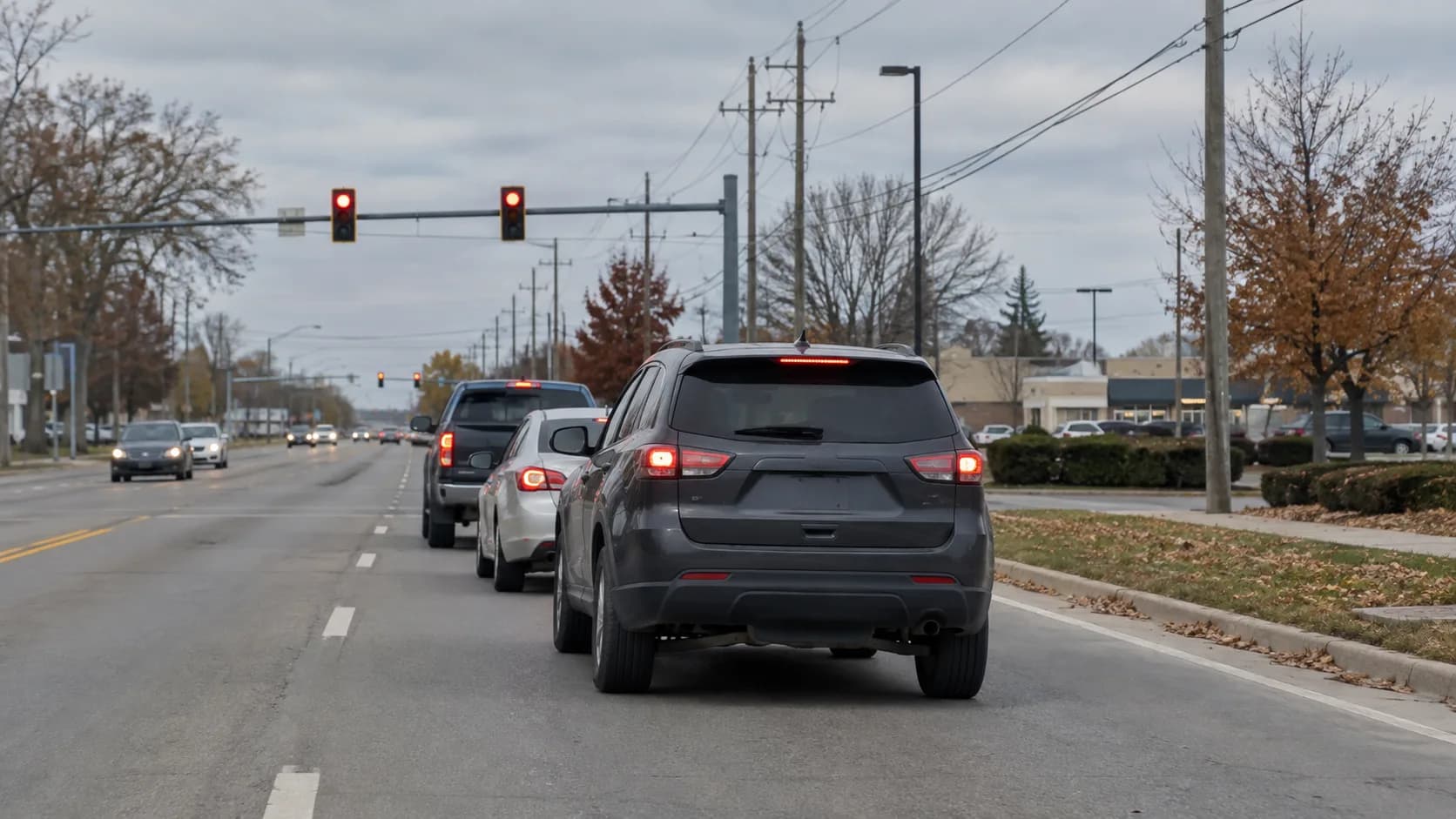
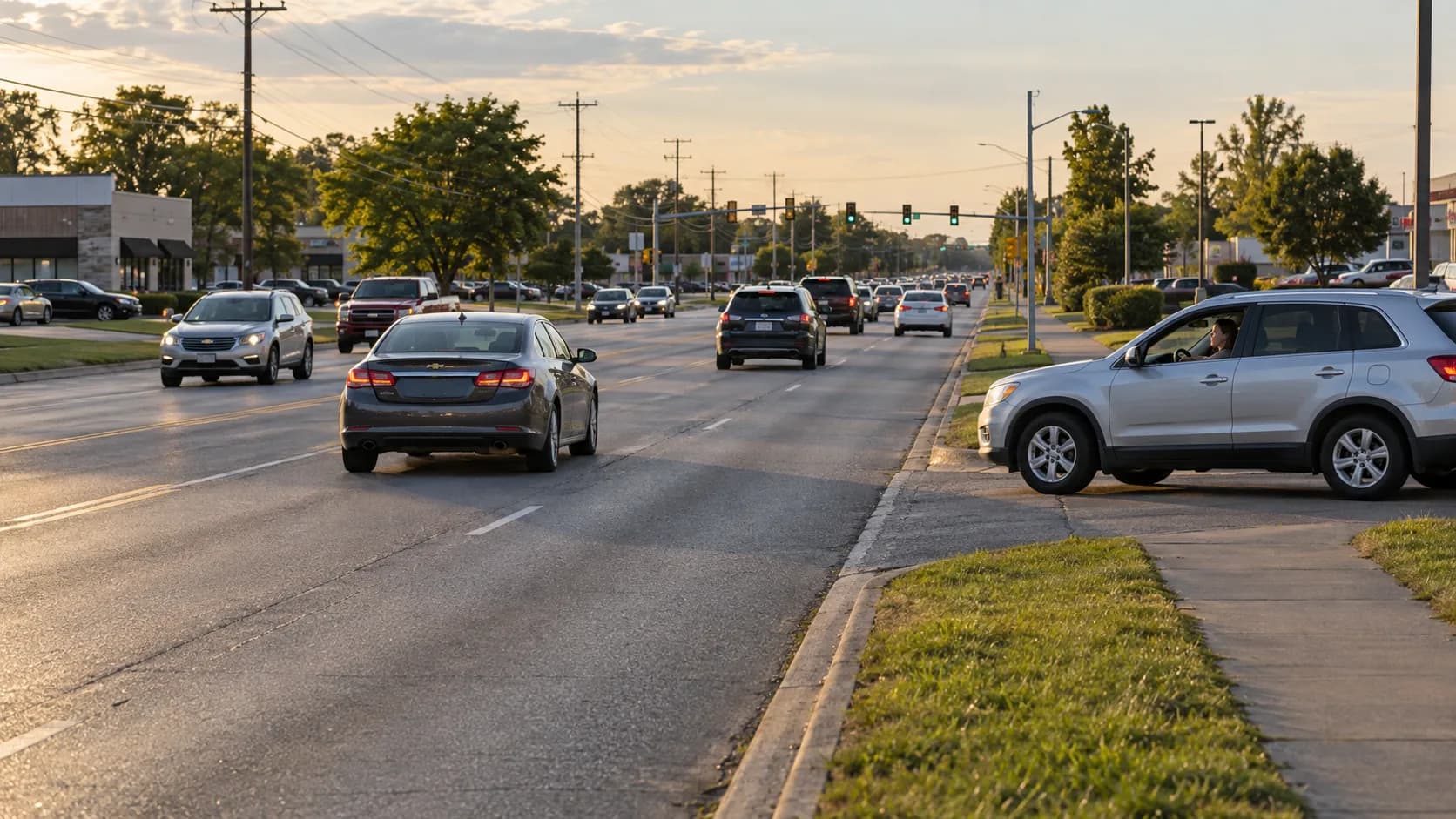
These collisions can happen when one lane stops to leave a gap for a vehicle turning from a driveway, parking lot, or side street. The turning driver moves through the gap and collides with a vehicle in another lane. Sorting out responsibility requires more than asking who waved.
- A courtesy wave usually means “I am yielding my space,” not “every lane is clear.”
- The driver entering traffic must still follow the applicable right-of-way rules.
- A signaling driver can sometimes share responsibility for an “all clear” signal.
- More than one driver can share fault; the applicable rules depend on the claim and defendants.
- Video, witness accounts, vehicle positions, and the signaler’s own words may clarify what the gesture meant.
Indiana right-of-way duties after a wave
There is no automatic Indiana rule making either the waving driver or the signaled driver solely responsible. The analysis starts with the duties that applied to each driver and then asks whether the signaler separately undertook a duty through an “all clear” communication.
Indiana Code 9-21-8-34 (official PDF, page 437)[1] requires a driver about to enter or cross a highway from a private road or driveway to yield to vehicles approaching on the highway. That same page contains section 32: a driver at a stop-sign entrance to a through highway must stop and proceed cautiously, yielding to vehicles not required to stop.
For a left turn within an intersection, Indiana Code 9-21-8-30 (official PDF, page 436)[2] requires yielding to an opposing vehicle within the intersection or close enough to be an immediate hazard. After yielding and giving the required signal, the driver may turn, and approaching opposing drivers must yield to the turning vehicle.
Those duties are not erased by another motorist’s hand gesture. As a practical safety precaution, do not assume that an ambiguous wave confirms hidden lanes are clear.

The Indiana “all clear” decision: Key v. Hamilton
In Key v. Hamilton, the Indiana Court of Appeals distinguished a routine courtesy wave from conduct communicating that an intersection was clear. The signaling driver checked his mirrors, got out of his truck, stood on the doorsill, and looked for approaching traffic before waving. The signaled driver relied on that “all clear” and collided with a third-party motorcyclist. These unusually thorough checking actions—not just the existence of a hand movement—were central to the majority’s analysis.
The court held that the signaling driver owed a duty to the injured motorcyclist under those particular circumstances. It also explained that a commonly used courtesy wave, by itself, is not enough to create that duty. Read the official Key v. Hamilton opinion[3].
The divided court affirmed the judgment. The majority distinguished a duty to the injured third-party motorist from simply yielding one’s own space. A duty alone does not establish the whole claim: negligent conduct and a causal connection to the injury must also be established. The result is fact-specific; a witness should describe the actual conduct rather than assume what any wave meant.
| Conduct | Possible legal significance |
|---|---|
| A driver pauses and casually waves. | An ordinary courtesy wave generally does not create a duty for the signaling driver. |
| A driver thoroughly investigates approaching traffic and communicates an “all clear.” | An Indiana court has held that this conduct can create a duty when the signaled driver reasonably relies on it. |
| A driver enters from a driveway or parking lot. | The entering driver must yield to traffic on the roadway. |
| A driver turns left within an intersection across opposing traffic. | The turning driver must yield to an oncoming vehicle that presents an immediate hazard. |

Facts that can affect responsibility
To organize the evidence for review, reconstruct the exchange rather than rely on the word “wave.” The following are practical questions from this guide, not a legal test:
- Did the signaler merely yield one lane, or point and communicate that every lane was clear?
- Did a large SUV, truck, or bus block the signaled driver’s view?
- Could the signaled driver move forward slowly enough to check the next lane?
- Was the third vehicle visible before the turn began?
- Did the signaler look in a mirror, turn around, or speak to the other driver?
- Did any witness hear words such as “you’re clear” or “go ahead”?
For ordinary negligence claims against private drivers governed by Indiana’s Comparative Fault Act, sections 5–8 of IC 34-51-2 (official PDF, pages 617–618)[4] provide for allocating fault and reducing damages for the claimant’s own fault. A claimant more than 50% at fault is barred from recovery under that system. Fault allocated to a nonparty can also affect the amount recoverable from the named defendants.
This is not the rule for every defendant. IC 34-51-2-1 and -2 (official PDF, page 616)[5] identify exclusions, including tort claims against governmental entities or public employees under the Indiana Tort Claims Act and certain medical-malpractice actions. Do not apply the private-driver percentage rule to a government claim without separate legal review.
In the specific Key case, the jury assigned 45% fault to the signaling driver, 50% to the signaled driver, and 5% to the injured driver. Those percentages describe that case only and do not establish a formula for later crashes.

Evidence to preserve
For a Fort Wayne driveway or side-street collision, make a lane-by-lane record from a safe location. These practical documentation suggestions help separate what a witness saw from what the witness inferred:
- Photos showing every lane, the gap in traffic, sight obstructions, and final vehicle positions
- Dashcam files and nearby business, traffic, or doorbell video
- Names and contact information for the signaling driver and independent witnesses
- The exact gesture, words, mirror checks, head movements, and pointing that witnesses observed
- Vehicle damage, lane markings, driveway locations, signs, and traffic-signal phases
- The crash report number and all insurance information
Preserve original video files rather than only a compressed social-media copy. Our guides explain how dashcam footage can document an Indiana crash and how to locate traffic-camera and business-surveillance video.

Practical next steps after a wave-through collision
These are practical preparation suggestions from this guide, not a substitute for individual advice.
- Move to a safe location when you can do so safely, and contact emergency services when the circumstances require it.
- Identify the driver who waved; that person may otherwise leave before anyone records a name or plate number.
- Describe the gesture precisely. Avoid reducing it to “someone waved me through” if the driver also checked mirrors, pointed toward another lane, or used words.
- Request nearby video promptly and keep the original files.
- When reporting the collision, distinguish what you personally observed from estimates or things you do not know.
- Organize photos, witness information, repair records, and records connected with any claimed injury or loss.
For broader guidance, review the evidence that can help prove an Indiana car-accident claim and Delventhal Law Office’s Fort Wayne car-accident practice page. If you are organizing the financial parts of a claim, the Fort Wayne car-accident settlement calculator provides an educational worksheet.

Frequently Asked Questions
Does a wave transfer the right of way?
No. A wave does not erase the entering driver’s applicable duty to yield. The relevant rule depends on the maneuver: private-driveway entry, a stop-sign intersection, or a left turn within an intersection.
Can the signaling driver be liable?
Sometimes. Under Key v. Hamilton, a signaling driver may owe a duty when the driver thoroughly checks traffic and communicates an “all clear” signal that is reasonably relied upon.
Is a simple courtesy wave negligent?
Not by itself. The Indiana Court of Appeals stated that an ordinary courtesy wave is not sufficient to create a duty for the signaling driver.
Can more than one driver share fault?
Yes, in ordinary private-driver negligence claims governed by Indiana’s Comparative Fault Act. The rules do not apply in the same way to government or public-employee tort claims. The percentages in Key describe that case, not a formula for yours.
Does a witness saying “he waved” prove an all-clear signal?
Not by itself. Record the exact gesture, any spoken words, what traffic the signaler checked, and what the receiving driver could see. Key turned on detailed checking and reasonable reliance, not merely the label “wave.”
If you were hurt in a wave-through collision and the accounts conflict, Chad Delventhal and Delventhal Law Office can review the available evidence and help you understand your options. Request a free case evaluation, and bring the report, witness details, photos, and original video files you have.
This article is general information about Indiana law and is not legal advice. Reading it does not create an attorney-client relationship, and neither does contacting us.
Sources
- Indiana Code 9-21-8-34 (official PDF, page 437) (iga.in.gov) ↩
- Indiana Code 9-21-8-30 (official PDF, page 436) (iga.in.gov) ↩
- Key v. Hamilton opinion (public.courts.in.gov) ↩
- sections 5–8 of IC 34-51-2 (official PDF, pages 617–618) (iga.in.gov) ↩
- IC 34-51-2-1 and -2 (official PDF, page 616) (iga.in.gov) ↩