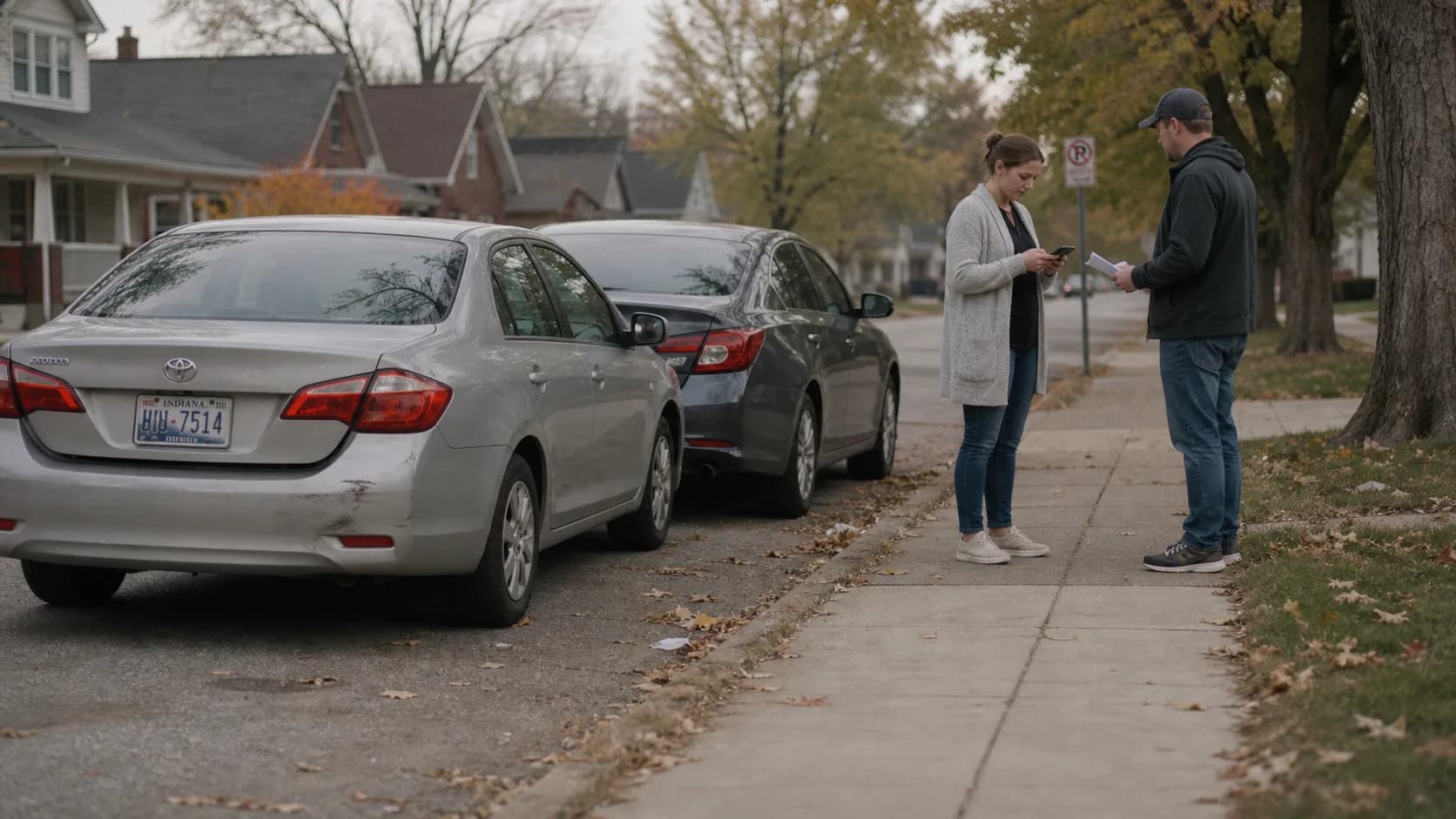
It is a common Fort Wayne scenario: you are hit by someone who was driving a friend's, a relative's, or an employer's vehicle. Now you are wondering whose insurance pays — the driver's, the owner's, or your own. This guide explains how Indiana handles crashes caused by a driver using someone else's car, including permissive use, when the owner's policy is primary, negligent entrustment, excluded drivers, and the coverage disputes that can follow.
Key takeaways
- Indiana law generally requires an owner's auto policy to insure against liability for negligence by anyone legally using the vehicle with the owner's express or implied permission.
- When a permitted driver causes a crash in someone else's car, Indiana treats the owner's policy as primary; the driver's own policy typically applies only after the owner's coverage is exhausted.
- Indiana's minimum liability limits are 25/50/25, which can fall short in a serious crash — making the driver's policy, your own coverage, and other sources important.
- If the owner knowingly let an unfit driver use the car, a separate negligent entrustment claim against the owner may be possible. It is fact-dependent.
- Excluded drivers, non-permissive use, and business-use questions can trigger coverage disputes.
- You generally have two years from the crash to file an injury lawsuit in Indiana.
Whose insurance pays after a borrowed-car crash?
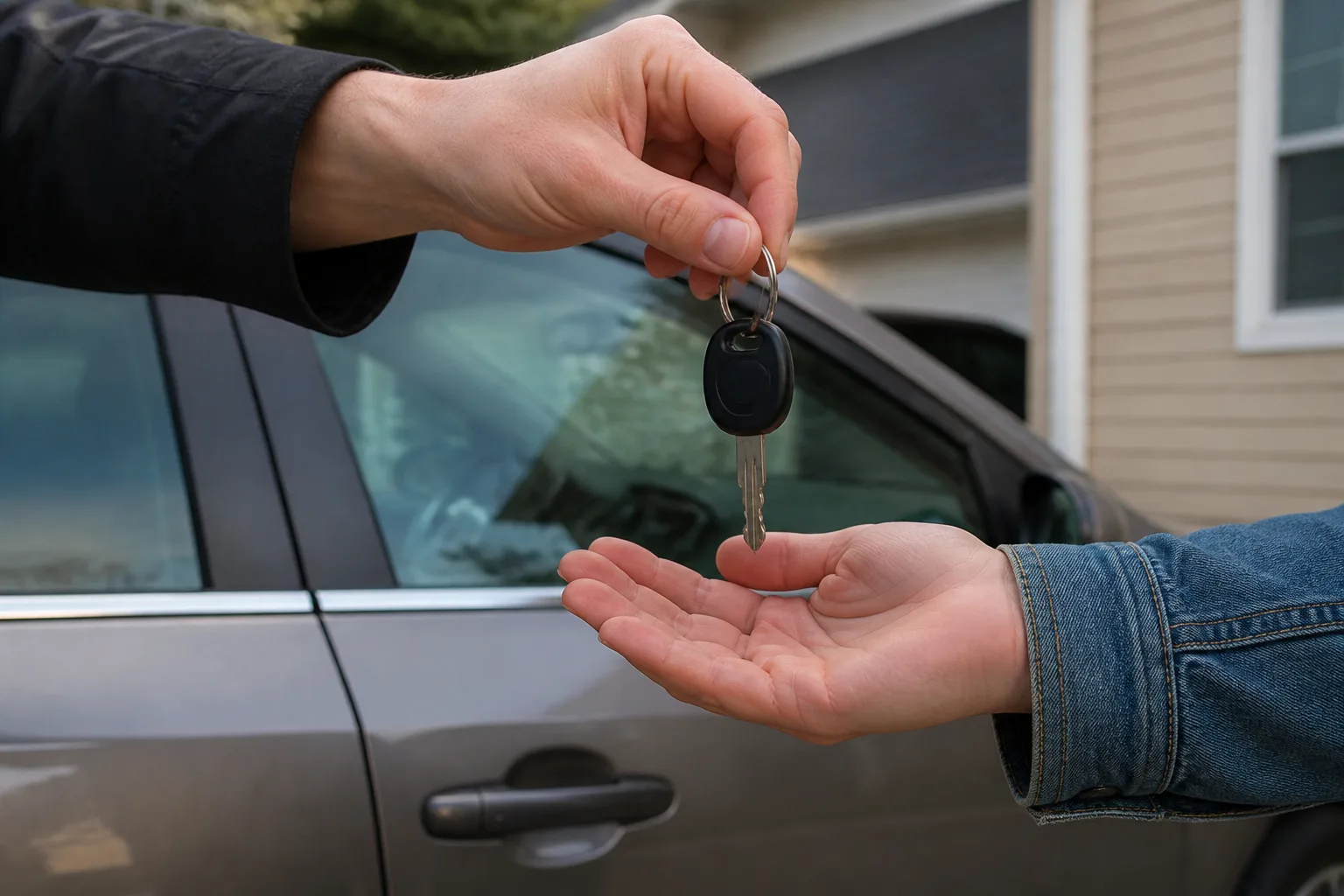
Indiana law starts with the vehicle. Under the Indiana Code, an owner's motor-vehicle liability policy must include a provision insuring the owner against liability for injury caused by negligence in the operation of the vehicle by any person legally using it with the owner's express or implied permission[1]. In plain terms, if the owner said "yes, go ahead and drive my car," the owner's policy is generally supposed to protect people that permitted driver injures.
Indiana also has a chapter titled "Primary Motor Vehicle Insurance Coverage." Under it, when a claim arises from a permitted driver's use of the owner's vehicle, the owner's policy is treated as primary, and the permitted driver generally cannot recover under other available coverage until the owner's policy limits are exhausted first[2]. That is why, in most borrowed-car crashes, your claim starts with the owner's insurer rather than the driver's.
Be careful with the phrase "insurance follows the car." It is a useful rule of thumb, but it is not absolute in Indiana. Whether a specific policy actually pays still depends on the policy wording, whether permission truly existed, how the car was being used, and whether any exclusion applies.
The coverage layers that can apply
Borrowed-car cases often involve more than one policy stacked in a specific order. Here is how the layers typically line up in Indiana.
| Source of coverage | When it usually applies | Order |
|---|---|---|
| Owner's auto liability policy | Driver had the owner's permission; no valid exclusion applies | Primary |
| At-fault driver's own auto policy | Often after the owner's limits are exhausted, if the driver has coverage that extends to non-owned vehicles | Secondary / excess |
| Owner (negligent entrustment claim) | Owner knowingly let an unfit or dangerous driver use the car | Separate claim against the owner |
| Your own UM/UIM coverage | The combined available liability limits are too low or the driver was not covered | After liability coverage |
| Your MedPay | Helps with early medical bills regardless of fault, if you carry it | Alongside other coverage |
Because Indiana only requires minimum liability limits of $25,000 per person, $50,000 per accident, and $25,000 for property damage (25/50/25)[3], the owner's policy alone may not be enough in a serious injury crash. That is when the driver's own policy, negligent entrustment, and your own coverage become important. We walk through low-limit scenarios in our guide on what happens when the other driver only has minimum insurance.

What "permission" means (permissive use)
Permission is the hinge that borrowed-car claims turn on. Indiana law recognizes permission that is express (the owner directly said yes) or implied (permission a reasonable person would infer from the relationship or history — for example, a household member who routinely uses the family car).
Permissive-use disputes tend to focus on questions like:
- Did the owner actually let this person use the car, or was it taken without consent?
- Did the driver go beyond the scope of permission (for example, allowed to run one errand but taking a multi-state trip)?
- Was the driver a household member the policy already expected to be covered?
An insurer that wants to avoid paying may argue there was no permission or that the driver exceeded it. Those arguments are fact-driven, and documentation — texts, statements, the crash report, and household details — often decides them.
Negligent entrustment: a separate claim against the owner
Sometimes the owner is not just the source of insurance — the owner may share fault. Indiana recognizes a common-law claim called negligent entrustment. The idea is that an owner who hands car keys to someone they knew was unfit to drive can be independently responsible for the harm that follows.
Facts that can support a negligent entrustment theory include lending a car to someone the owner knew was intoxicated, known to drive recklessly, or clearly impaired. This is a fact-dependent claim, not an automatic one — owning the car alone does not make an owner liable for a driver's negligence. If you think the owner should have known better, that is worth reviewing carefully with an attorney rather than assuming it applies.
Excluded drivers and coverage gaps
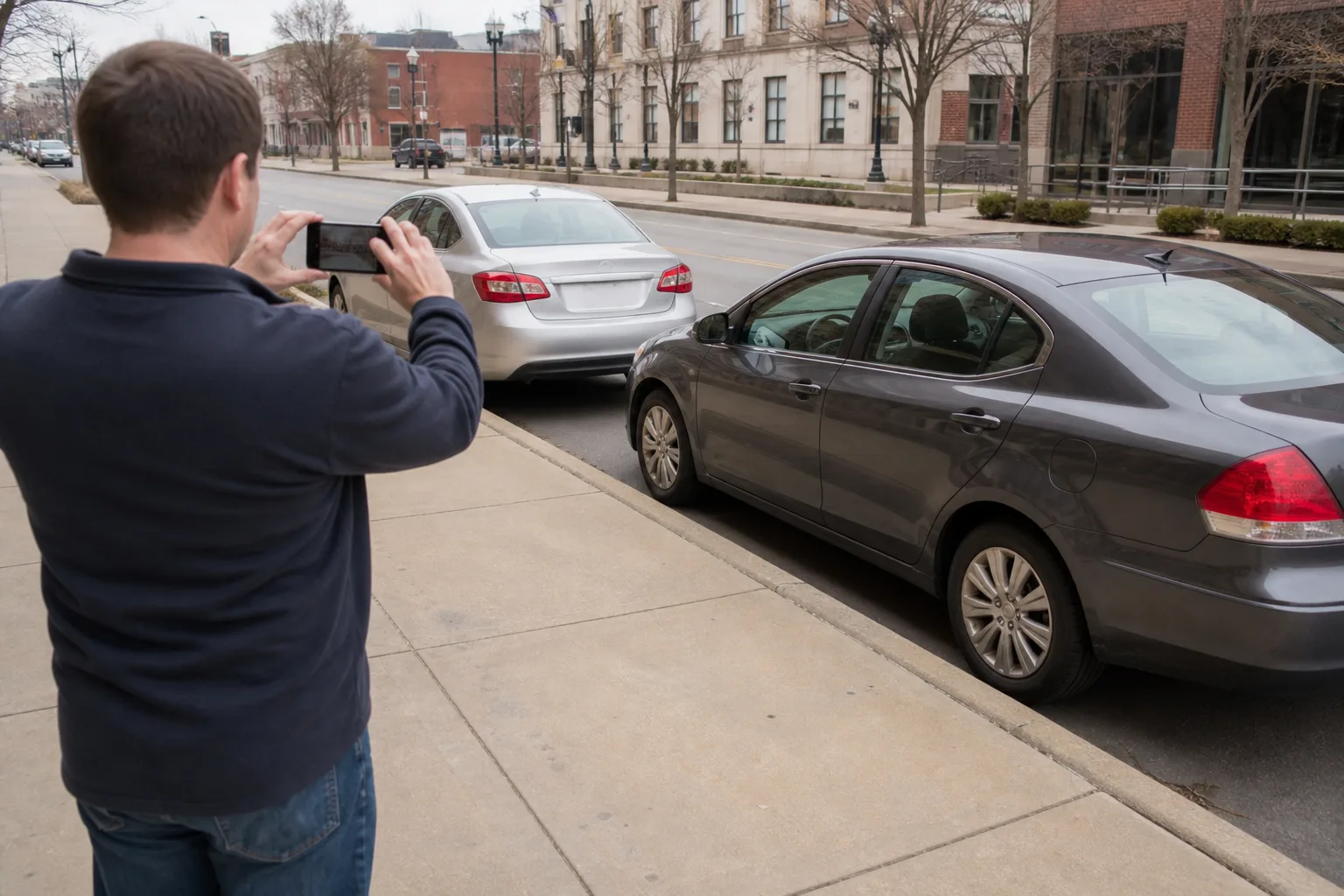
Not every borrowed-car crash lands neatly on the owner's policy. Indiana law lets certain drivers be excluded from coverage in specific situations. For example, the same statute that requires permissive-use coverage also allows a named driver exclusion in a commercial motor vehicle policy, and it lets a jointly-owning spouse be excluded from coverage with the other spouse's written consent[1]. If an excluded driver was behind the wheel, the owner's policy may not respond the way you would expect.
Other common gap situations include:
- Business or "livery" use: Personal policies often exclude certain commercial or delivery uses. If the driver was working, a different set of rules — and possibly an employer's coverage — may apply. See our guide on when the at-fault driver was working at the time of the crash.
- No permission (theft or unauthorized use): If the car was truly taken without consent, the owner's policy may deny coverage.
- Lapsed or minimum-only coverage: The owner may carry only the state minimum, or no valid coverage at all — see what happens when the at-fault driver has no insurance in Indiana.
When the available liability coverage is too thin, your own uninsured/underinsured motorist coverage can become the difference-maker. To understand the minimums that shape these gaps, review Indiana's minimum auto insurance requirements.
What to do after a borrowed-car crash in Fort Wayne
Because these cases can involve two or three insurers, the details you preserve early matter.
- Get the crash report and identify both people: Record the driver and the registered owner. You will likely need to make a claim against the owner's policy.
- Note the relationship: Friend, family member, employer, rental — the relationship affects which policy is primary and whether permission is disputed.
- Get medical care and keep documentation: Bills and records anchor the value of your claim across every policy layer.
- Report to your own insurer too: Your UM/UIM and MedPay may matter, especially with low limits.
- Be careful with recorded statements: Insurers may probe permission and use to reduce or deny coverage.
- Watch the clock: Indiana generally gives you two years from the crash to file a personal injury lawsuit[4]. Shorter notice deadlines can apply if a government vehicle is involved.
You can also organize medical bills, lost wages, and other losses with our Fort Wayne car accident settlement calculator, and read our overview of how Indiana car accident claims work to see where a borrowed-car case fits.
Frequently Asked Questions
Does the owner's insurance or the driver's insurance pay?
In Indiana, the owner's policy is usually primary when a permitted driver causes a crash, and the driver's own policy typically applies only after the owner's limits are exhausted. Which policies respond still depends on permission, exclusions, and the specific policy language.
What if the driver did not have permission to use the car?
If the car was used without the owner's consent, the owner's policy may deny coverage, and you may have to look to the driver's own coverage, your uninsured/underinsured motorist coverage, or other sources. Permission — express or implied — is often the central dispute in these cases.
Can I sue the owner of the car?
Possibly. Beyond being the source of insurance, an owner may be independently liable under a negligent entrustment theory if they knowingly let an unfit driver — such as someone they knew was intoxicated or clearly impaired — use the vehicle. It is a fact-dependent claim, not automatic.
What if the owner's coverage is not enough?
Indiana's minimum limits are 25/50/25, which can be inadequate in a serious crash. You may be able to reach the at-fault driver's own policy, a negligent entrustment claim against the owner, or your own underinsured motorist coverage once the liability limits are exhausted.
How long do I have to file a claim?
Indiana generally gives you two years from the date of the crash to file a personal injury lawsuit. If a government-owned vehicle is involved, a much shorter tort-claim notice deadline can apply, so it is wise to confirm the deadlines early.
Talk with a Fort Wayne car accident attorney
Borrowed-car crashes can involve permission disputes, multiple insurers, and low policy limits all at once. If you were hurt and are not sure whose insurance applies, Delventhal Law Office can review what happened, explain the deadlines that may apply, and help you decide the next step. A free consultation can help you understand your options — you do not have to sort out the insurance layers alone.

This article is general information about Indiana law, not legal advice, and reading it does not create an attorney-client relationship. Coverage in any specific crash depends on the facts and the exact policy language. For advice about your situation, speak with a qualified Indiana attorney.
Sources
- a provision insuring the owner against liability for injury caused by negligence in the operation of the vehicle by any person legally using it with the owner's express or implied permission (iga.in.gov) ↩
- when a claim arises from a permitted driver's use of the owner's vehicle, the owner's policy is treated as primary, and the permitted driver generally cannot recover under other available coverage until the owner's policy limits are exhausted first (iga.in.gov) ↩
- minimum liability limits of $25,000 per person, $50,000 per accident, and $25,000 for property damage (25/50/25) (secure.in.gov) ↩
- two years from the crash to file a personal injury lawsuit (iga.in.gov) ↩