
An unexpected deduction can leave you wondering why the estimate does not cover the repair bill. Start with the disputed line rather than assuming that the word “betterment” settles the question. This guide explains the vocabulary and offers practical review steps; it does not declare every betterment charge valid or invalid.
Our Fort Wayne car accident guide addresses the broader injury-claim process. Delventhal Law Office handles injury cases, not standalone property-damage disputes.
Key takeaways
- Ask what specific improvement the deduction is meant to reflect.
- Keep a betterment adjustment separate from a policy deductible when checking the estimate.
- Indiana’s Department of Insurance advises consumers to request an itemized explanation of a settlement offer.
- Compare the proposed calculation with photographs, measurements, and service records.
- A complaint to the Department is not a substitute for representation in court.
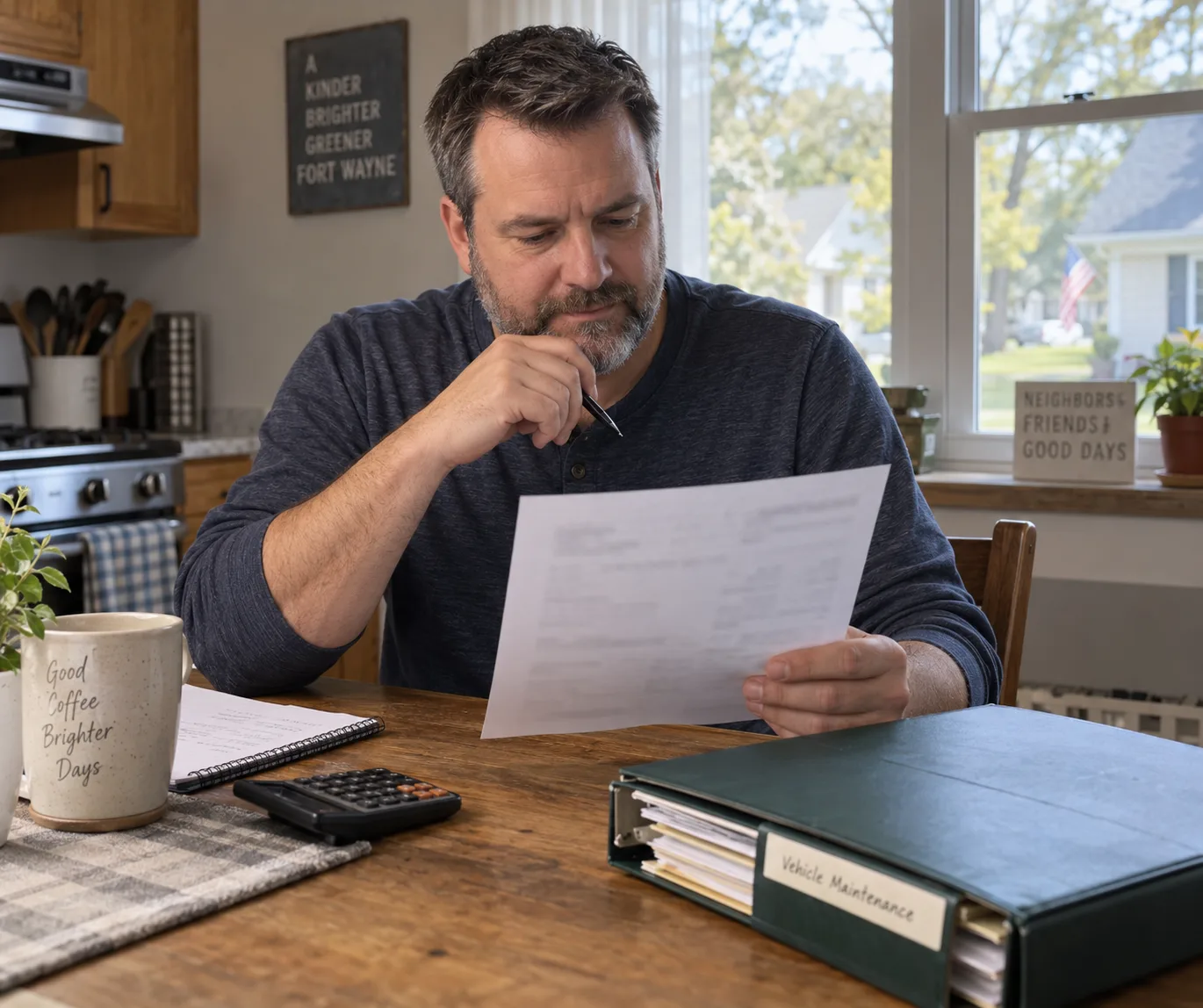
How does a betterment deduction work?
The Utah Insurance Department’s definition of betterment[1] describes the improved condition resulting when damaged original equipment or older parts can only be replaced with new parts, and says an insurer may ask the insured to contribute to the repair cost. That is a useful definition, not authority establishing the legality of a particular Indiana deduction.
Hypothetical example: Imagine a worn tire is damaged in a crash and the proposed replacement is new. The adjuster lists a deduction based on the old tire’s wear. To evaluate that proposal, request the old tread measurement, the replacement specification, and the calculation. This example illustrates the question to investigate, not an approved formula.
For arithmetic only, suppose the estimate uses the following figures:
| Illustrative entry | Amount |
|---|---|
| New tire | $200 |
| Proposed deduction | 25% |
| Deduction calculation | $200 × 25% = $50 |
| Remaining tire amount | $150 |
The arithmetic does not validate the percentage or the charge. Labor, tax, other repair items, and any deductible are outside this example. Ask which amounts the actual worksheet uses before comparing its result with the shop’s bill.
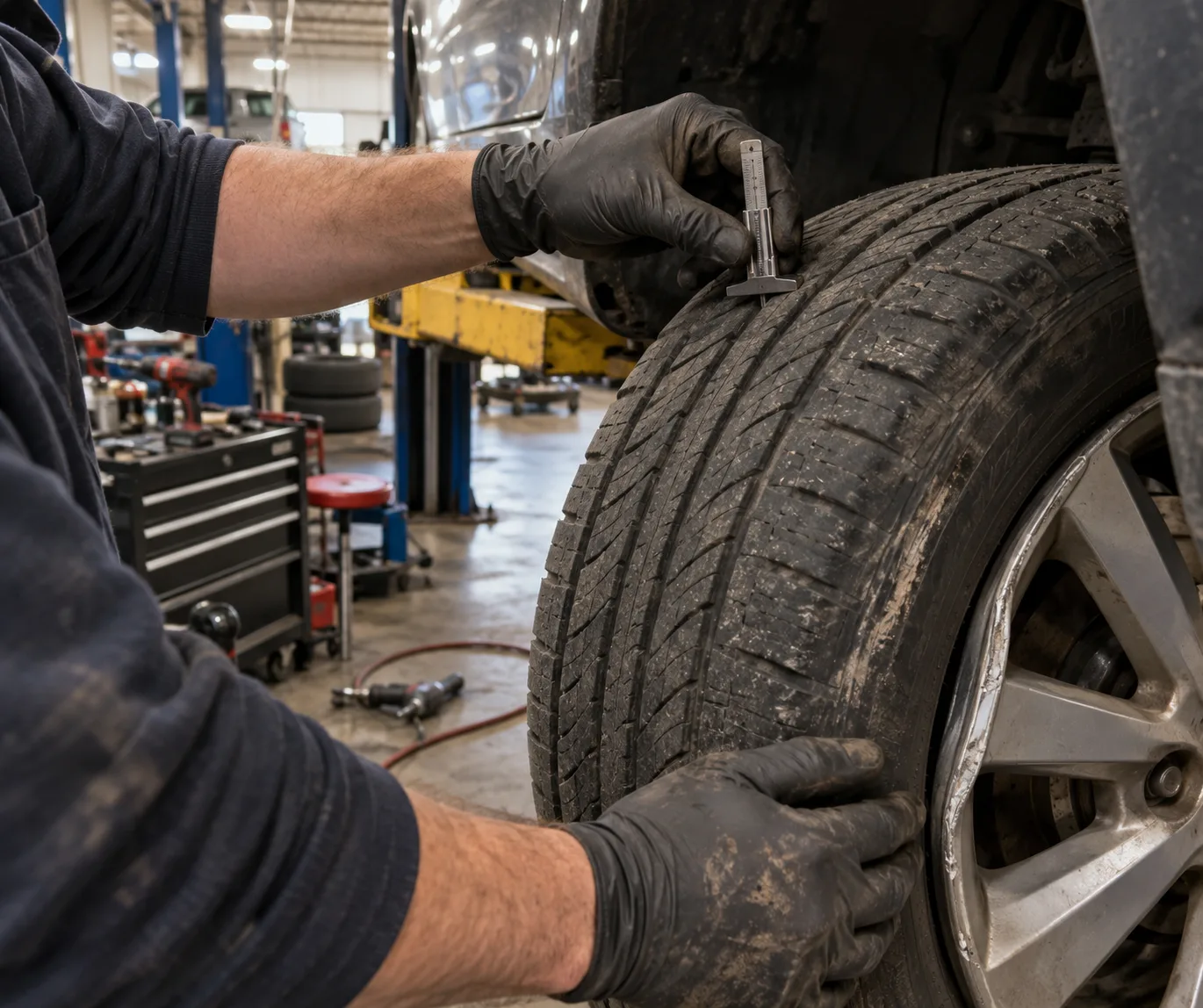
Is the claim under your own policy or against another driver?
The Indiana Department of Insurance’s auto-coverage guide[2] distinguishes collision coverage, which pays for collision or upset damage to your vehicle subject to a deductible, from property-damage liability coverage, which pays up to policy limits for damage the insured car causes to other people’s property.
For a claim under your policy: The Department’s Insurance Claim Tips[3] recommends understanding the contract, its exclusions and deductibles, and asking for the specific policy language involved in a settlement disagreement.
For a claim involving another driver: Ask the adjuster to identify the basis for the deduction on that claim rather than assuming your own contract explains it. Ask what evidence supports the amount and whether the disagreement concerns the part’s condition, the repair method, or a different issue. These are suggested questions, not a statement that the two claim routes have identical rules.
Betterment versus a deductible
The Utah glossary[1] defines a deductible as the amount paid by the insured in a loss before payment is due from the company. Betterment describes an alleged improvement from the repair instead. If both labels appear on your estimate, ask for a separate explanation of each; one does not explain the other.
What do Indiana sources say about explaining a deduction?
Indiana Code 27-4-1-4.5(14)[4] lists as an unfair claim settlement practice the failure to promptly provide a reasonable explanation of the policy basis, in relation to the facts or applicable law, for a claim denial or compromise-settlement offer. The Department’s claim tips[3] separately advises asking for an itemized explanation of the offer.
These sources support asking for an explanation. They do not supply a betterment percentage for every vehicle or decide whether your specific deduction is proper. This article does not apply another state’s glossary or percentage rules as Indiana law.
There is also an important remedy limit: Indiana Code 27-4-1-18[4] says this chapter creates no cause of action other than the commissioner’s enforcement of an order or a person’s appeal of an order. Do not read the claims-practices list as a standalone right to sue under that chapter. Ask qualified counsel about any other legal options for the actual dispute.
How should you review the calculation?
The following is a practical document checklist, not a list of additional legal requirements:
| Item to check | Question to ask | Useful record |
|---|---|---|
| The part | Which component does the deduction apply to? | Part number and estimate |
| Pre-crash condition | What wear or prior damage was actually documented? | Photos, measurements, service invoices |
| Calculation | What percentage, base amount, and arithmetic produced the charge? | Itemized worksheet |
| Reason given | What written explanation supports applying the adjustment here? | Contract and correspondence |
| Repair result | What changed between the original estimate and the final repair? | Shop explanation and supplements |
The Department’s inspection guidance[3] cautions against making permanent repairs before the company inspects the damage and warns that doing so may lead to a claim denial. It also recommends keeping damaged property for inspection, documenting damage when possible, and saving receipts for temporary repairs.
As a practical step, talk with the shop about documenting the old part before disposal. A recent purchase invoice or a dated photograph may help you ask a more specific question about an assumption in the estimate.
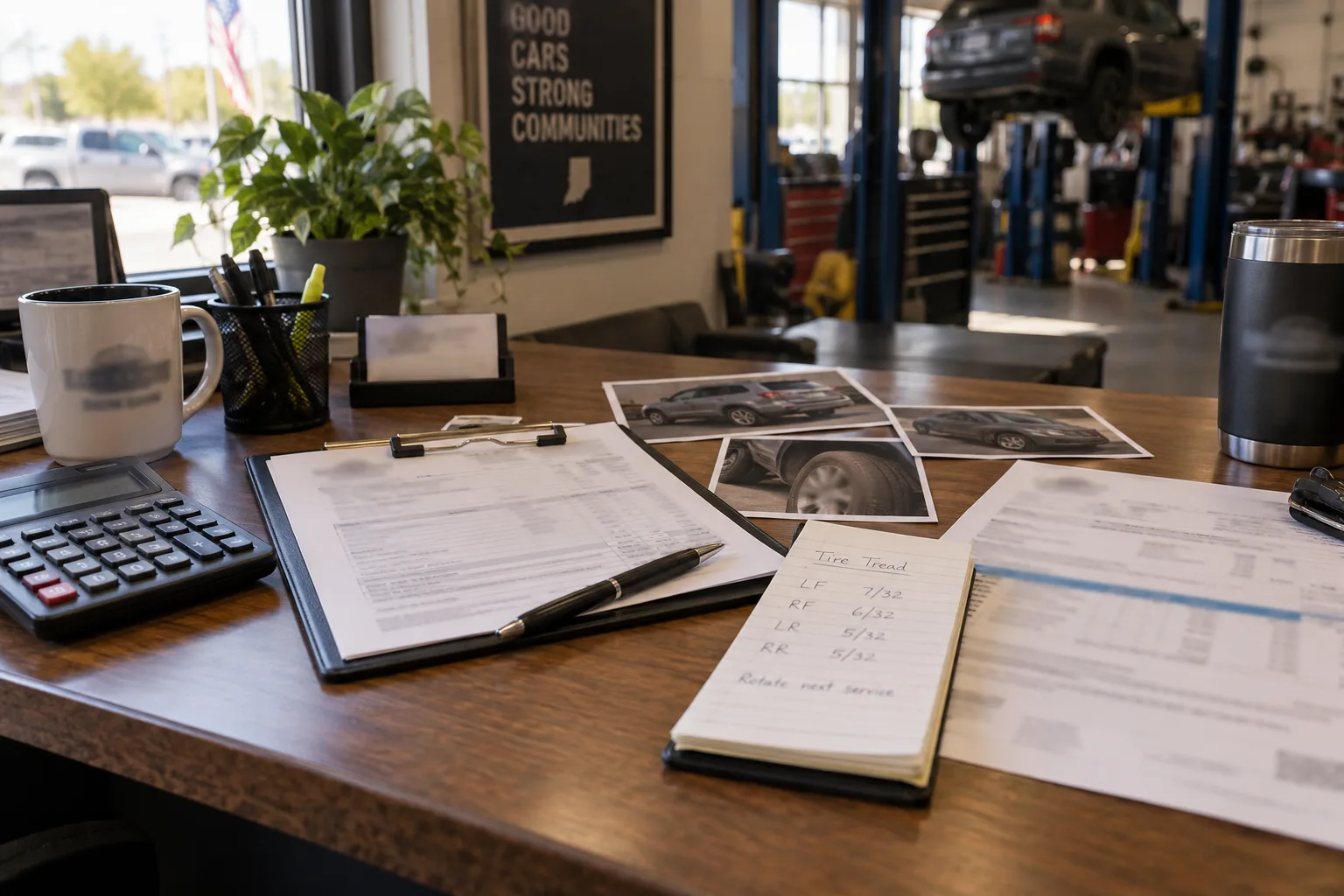
How can you question a betterment deduction?
A concise written request can keep the discussion focused. Consider including the claim number, the disputed line, the records you have, and the particular correction you are requesting. For example:
“Please explain the betterment adjustment on the tire line. What pre-crash measurement or condition evidence supports it? Please show the base amount, percentage, and calculation, and identify the basis for applying the adjustment to this claim. I have attached the purchase invoice and available photographs for your review.”
This is a suggested communication template, not a prescribed legal notice. Keep copies of your correspondence and any revised estimate. For a broader repair disagreement, see our guide to resolving repair-estimate disagreements. A dispute over the selected replacement part may also call for reviewing aftermarket and used repair parts.
The Indiana Department of Insurance complaint process[5] tells consumers to first contact the company, agent, or broker; if the response is unsatisfactory, a complaint may be filed with supporting documentation. Claim disputes and coverage concerns are listed examples. Send copies, not original documents or photographs.
The Department’s explanation of what it can and cannot do[6] says it can obtain explanations and review compliance, but cannot act as your legal representative or intervene in a pending lawsuit for you. Consider counsel who handles property-damage or insurance disputes if you need advice about legal action.
Keep an injury inquiry separate from the estimate dispute
For your own organization, keep the vehicle file separate from records about medical care and missed work. If the vehicle may be a total loss, our Indiana total-loss guide addresses that different question.
If you were also hurt in the crash, you can contact Delventhal Law Office for a free injury-case consultation. We do not take standalone property-damage cases. A dispute only about the repair bill should be directed to an appropriate property-damage lawyer or the Department’s consumer resources.

Frequently Asked Questions
Does a new part automatically establish that the deduction is correct?
The new part alone does not show the old part’s condition, the calculation, or the stated basis for the adjustment. Ask for those details before evaluating the proposal; this article does not declare every charge valid or invalid.
Can I ask for an itemized explanation?
Yes. Indiana’s Department of Insurance advises consumers to ask the claims adjuster for an itemized explanation of the settlement offer.
Is the example percentage an Indiana legal formula?
No. The example only demonstrates arithmetic. The sources discussed here do not establish a universal betterment percentage.
Is betterment the same as a deductible?
No. The Utah glossary describes betterment as an improved condition after replacement and a deductible as the insured’s portion before the company’s payment is due. Ask for separate explanations if both appear.
Will the Department of Insurance represent me in a dispute?
No. The Department says it cannot act as your legal representative or intervene in a pending lawsuit on your behalf. Its consumer complaint process serves a different purpose.
This article is general information about Indiana law and is not legal advice. Reading it does not create an attorney-client relationship, and neither does contacting us.
Sources
- Utah Insurance Department glossary (insurance.utah.gov) ↩
- Indiana Department of Insurance’s auto-coverage guide (in.gov) ↩
- Insurance Claim Tips (in.gov) ↩
- Indiana Code 27-4-1-4.5(14) (iga.in.gov) ↩
- Indiana Department of Insurance complaint process (in.gov) ↩
- explanation of what it can and cannot do (in.gov) ↩