
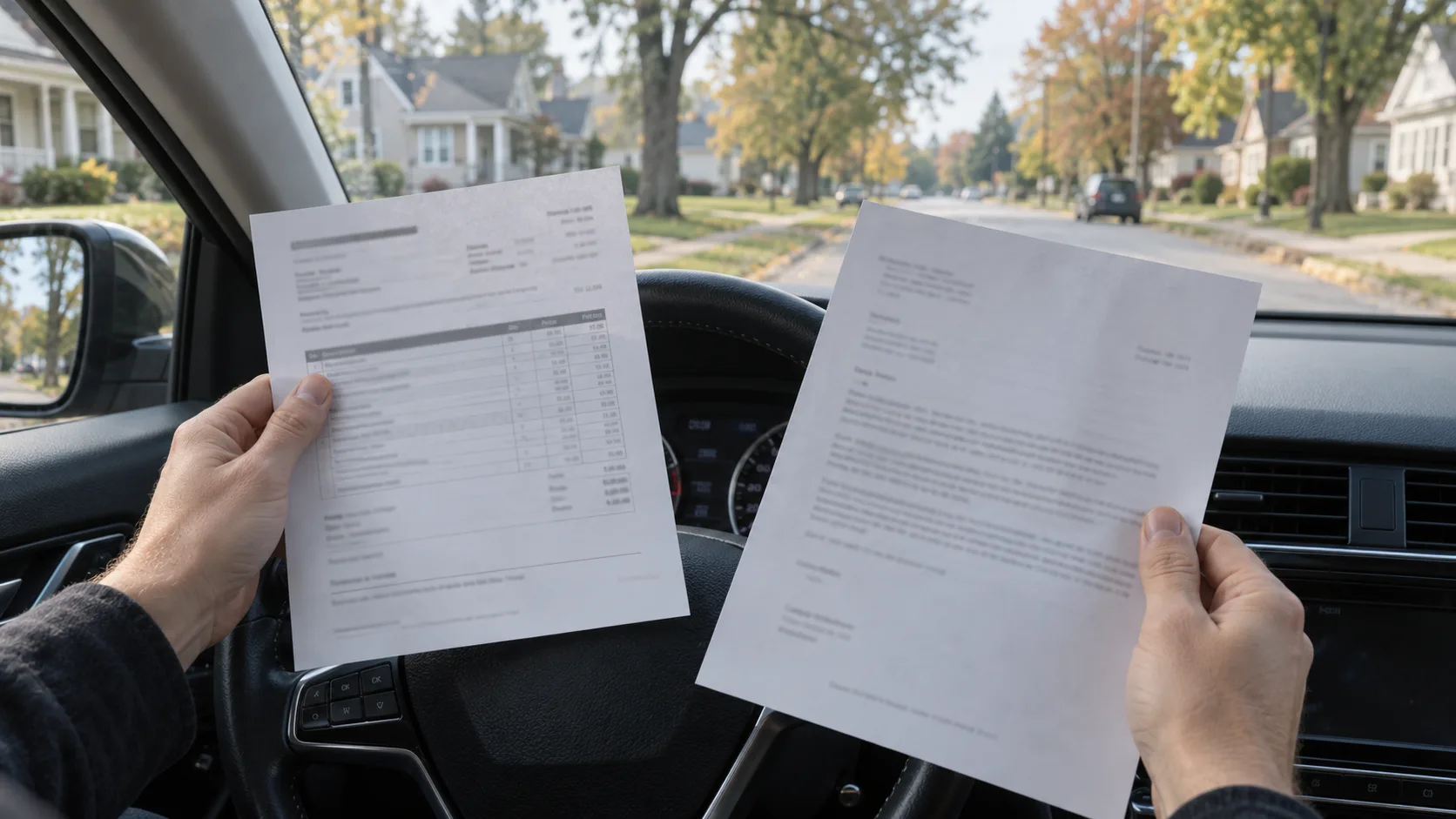
Waiting for a deductible refund after an Indiana crash can strain your budget even after repairs are finished. Ask: has any money been collected, and what happens to my deductible share? This article addresses vehicle-damage deductibles, not medical-bill repayment.
- Separate an advance request from a request to distribute money already collected.
- Ask for the amount collected, refund calculation, and remaining claim status in writing.
- Keep your policy, deductible receipt, claim payment statement, and correspondence together.
- Get advice before signing settlement paperwork if injuries or other losses remain unresolved.
How deductibles and subrogation fit together
The Indiana Department of Insurance’s auto-insurance guide[1] describes collision coverage as subject to a deductible and covering damage caused by collision or upset. Read your declarations page and full policy. What deductible and terms apply?
Subrogation is a different issue: it concerns stepping into another person’s rights to recover a loss. In Holland v. Indiana Farm Bureau Insurance, paragraph 9[2], the Indiana Court of Appeals explains that a subrogated insurer acquires no greater right than the insured possessed. Holland concerned medical-payment subrogation and an attorney’s handling of settlement funds; it does not establish a deadline or advance-payment right for a collision deductible.
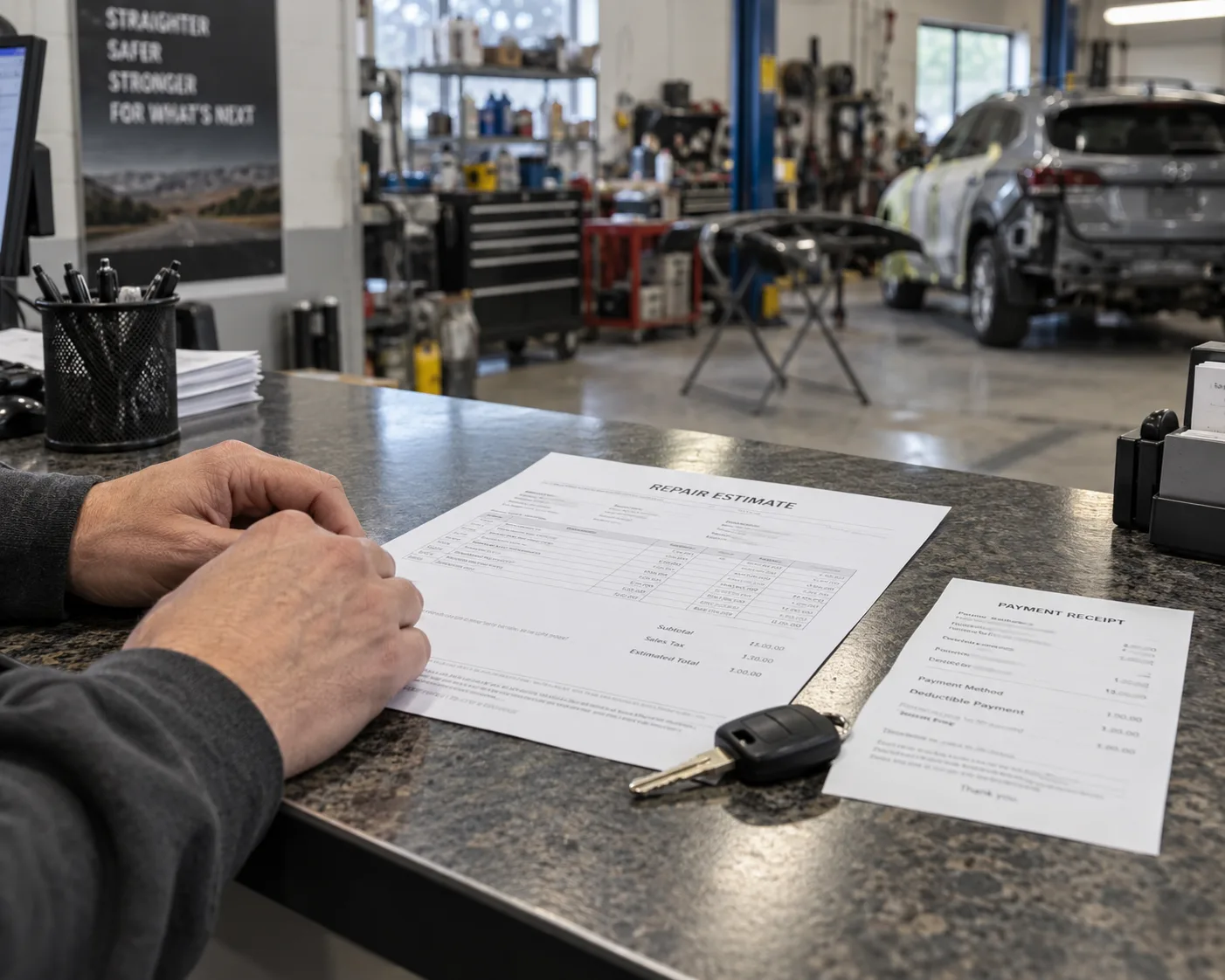
Keep the initial collision payment and the later deductible question separate when reviewing your claim paperwork.
Can a refund arrive before the entire subrogation matter ends?
There are two different requests to discuss with your adjuster:
- A refund from collected funds: has the carrier already collected money, and can any deductible portion be distributed while the file remains open?
- An advance before funds are collected: does your particular carrier offer one under your policy or a written claim-handling arrangement? A request is not a payment commitment.
The 2021 NAIC Market Regulation Handbook, printed page 410 (PDF page 425)[3], hosted by IDOI, tells examiners to check for deductible refunds from subrogation proceeds, prompt refunds after complete recovery, and periodic refunds on no less than a pro-rata basis in long-term cases. It expressly says requirements may vary among states.
That is examination guidance, not an Indiana statute, an insurance policy, or a ruling on your claim. Its discussion of periodic refunds concerns subrogation recoveries; it does not establish a general right to an advance before money is recovered. Whether you can obtain a payment now requires review of your actual policy, claim facts, and applicable law—not just the handbook.

What should you ask the adjuster?
The following are practical questions, not a list of mandatory payments. IDOI’s Insurance Claim Tips[4] separately advises keeping correspondence, documenting conversations, asking about disputed policy language, and requesting an itemized settlement explanation.
| Ask in writing | What the answer clarifies |
|---|---|
| Has any money actually been recovered? If so, how much and when? | Distinguishes an open file with collected funds from one with none yet. |
| Was my deductible included in your recovery request? | Identifies what the carrier is pursuing. |
| Is a deductible refund available now while the file remains open? | Requests a decision about money already collected. |
| If nothing has been recovered, do you offer an advance in my situation? | Separately asks about an advance without assuming entitlement. |
| What policy provision and applicable rule support the amount and timing? | Requests a claim-specific explanation instead of a generic status label. |
| What remains unresolved, and when should I request the next update? | Creates a concrete follow-up plan. |
Sample message: “My collision claim number is [number], and my deductible was [amount]. Has any money been collected, was my deductible included, and is a refund available now? If only part is being returned, please explain the calculation and policy or legal basis. If no money has been collected, is an advance available for this claim?”
Send this to your carrier’s verified claim contact. Save its reply with the declarations page, relevant policy provisions, repair invoice, and deductible payment record. Do not send sensitive claim documents through a public website comment or an unverified email address.
What if the carrier recovers only part of the loss?
Ask: how much was collected, how much was requested, what portion is allocated to the deductible, and what is the basis for any reduction? The NAIC handbook’s proportional-refund discussion is a reason to ask about the calculation, not proof that one formula controls every Indiana claim.
Compare the written calculation with your payment statement and deductible receipt. If an amount is missing or unexplained, ask the adjuster to identify it before accepting the calculation as final.
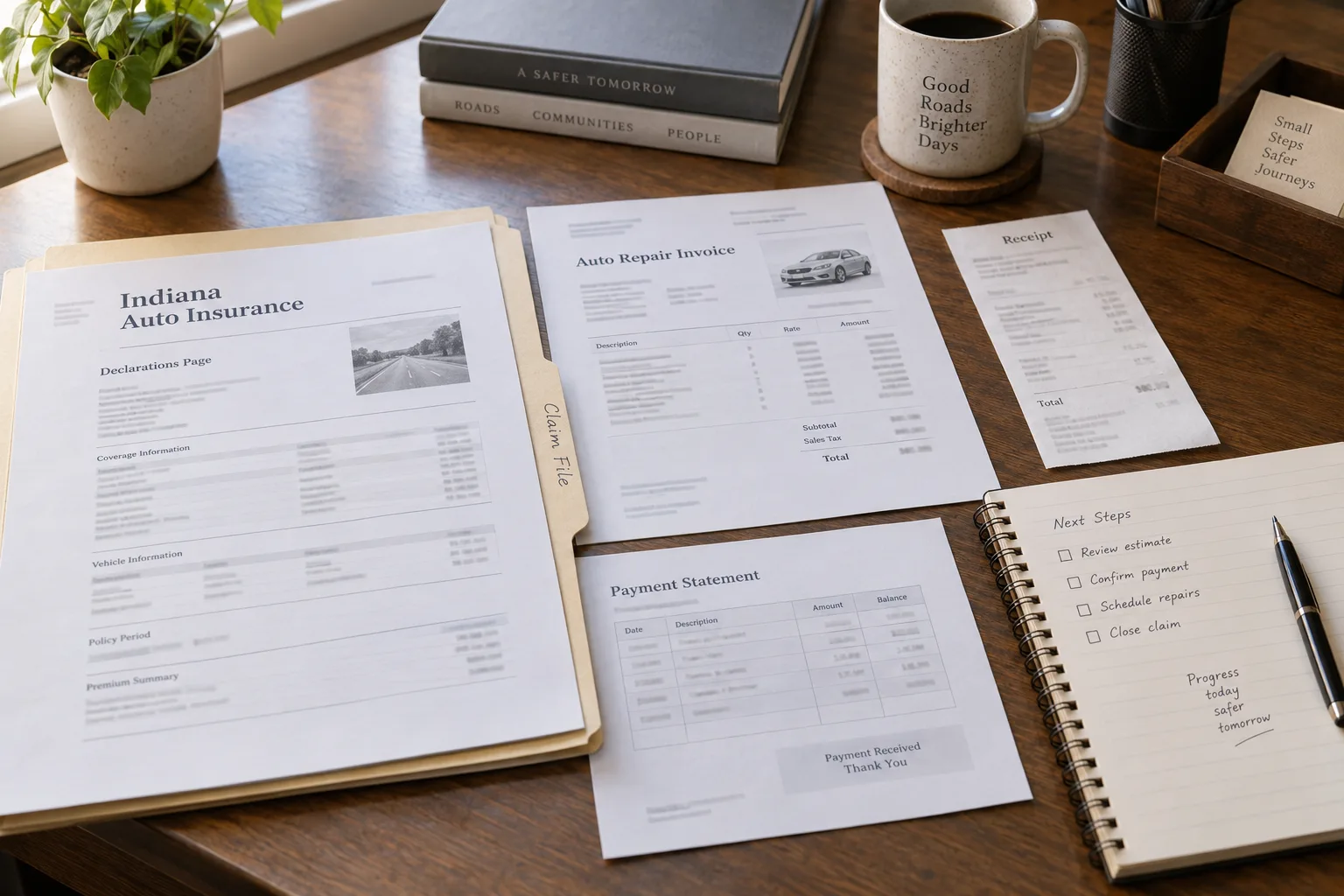
Keep vehicle-damage records separate from medical bills and injury-settlement paperwork. For the separate medical-bill issue, see our health-plan repayment guide. The Indiana car-accident evidence checklist can help you organize the broader crash file.
What if reimbursement is delayed or disputed?
- Request written claim status and an itemized refund explanation.
- Check whether the reply addresses collected funds, a proposed advance, or both.
- Ask a supervisor to review any unanswered question, unexplained reduction, or conflicting statement.
- Keep a dated contact log and copies of the documents you provide.
- If the company’s response does not resolve the issue, consider an IDOI consumer complaint.
IDOI’s consumer complaint instructions[5] say to contact the insurer, agent, or broker first. If the response is unsatisfactory, you may submit a complaint with supporting records. IDOI lists claim disputes and refunds among appropriate complaint subjects and asks for copies, not original documents.
The complaint page also explains that the insurer receives a copy of the complaint and that the complaint becomes a public record. Use the official complaint process and provide the requested supporting information. Filing a complaint is not the same as obtaining a deductible payment.

Frequently Asked Questions
Does using collision coverage eliminate my deductible?
Do not assume so. IDOI describes collision coverage as subject to a deductible. Check the deductible and any applicable endorsements in your actual policy.
Must my carrier advance the deductible before recovering anything?
The sources discussed here do not establish that entitlement. The NAIC handbook addresses refunds from recoveries, not a universal advance requirement. Ask for a decision based on your policy and claim; a contested legal entitlement needs individual review.
Does an open subrogation file mean I should not ask about a refund?
No. Ask whether any money has already been collected and whether a deductible payment can be made from it. The handbook’s discussion of periodic refunds helps frame that question, but it does not settle your Indiana claim.
What if the other driver’s insurer offers to pay me directly?
Before agreeing, ask your own carrier: how would these payment terms affect the open claim? If settlement paperwork is requested or an injury claim remains open, have the documents reviewed before signing. This is a practical precaution, not a conclusion about the legal effect of a particular payment.
Should I sign a release to get my deductible back?
Do not decide from the payment’s label alone. Obtain the complete proposed paperwork and ask an attorney to review it if you have unresolved injuries or other losses. This article does not determine what any particular document would settle.
Where can I get help with a stand-alone deductible dispute?
Start with your carrier’s written explanation and supervisor review. IDOI provides an official consumer complaint process for unresolved insurance issues. Keep your deductible receipt, payment statement, policy, and correspondence available.
If you were also injured in an Indiana crash and deductible questions are part of a broader injury claim, learn about our Fort Wayne car-accident representation or request a free consultation. A stand-alone deductible question can start with your carrier and IDOI.
This article provides general information, not legal advice. Reading it does not create an attorney-client relationship, and neither does contacting us. If you do contact us about a possible claim, Indiana Rule of Professional Conduct 1.18 requires us to keep what you tell us confidential whether or not we take the case — but please do not send documents or detailed facts until we have agreed in writing to represent you.