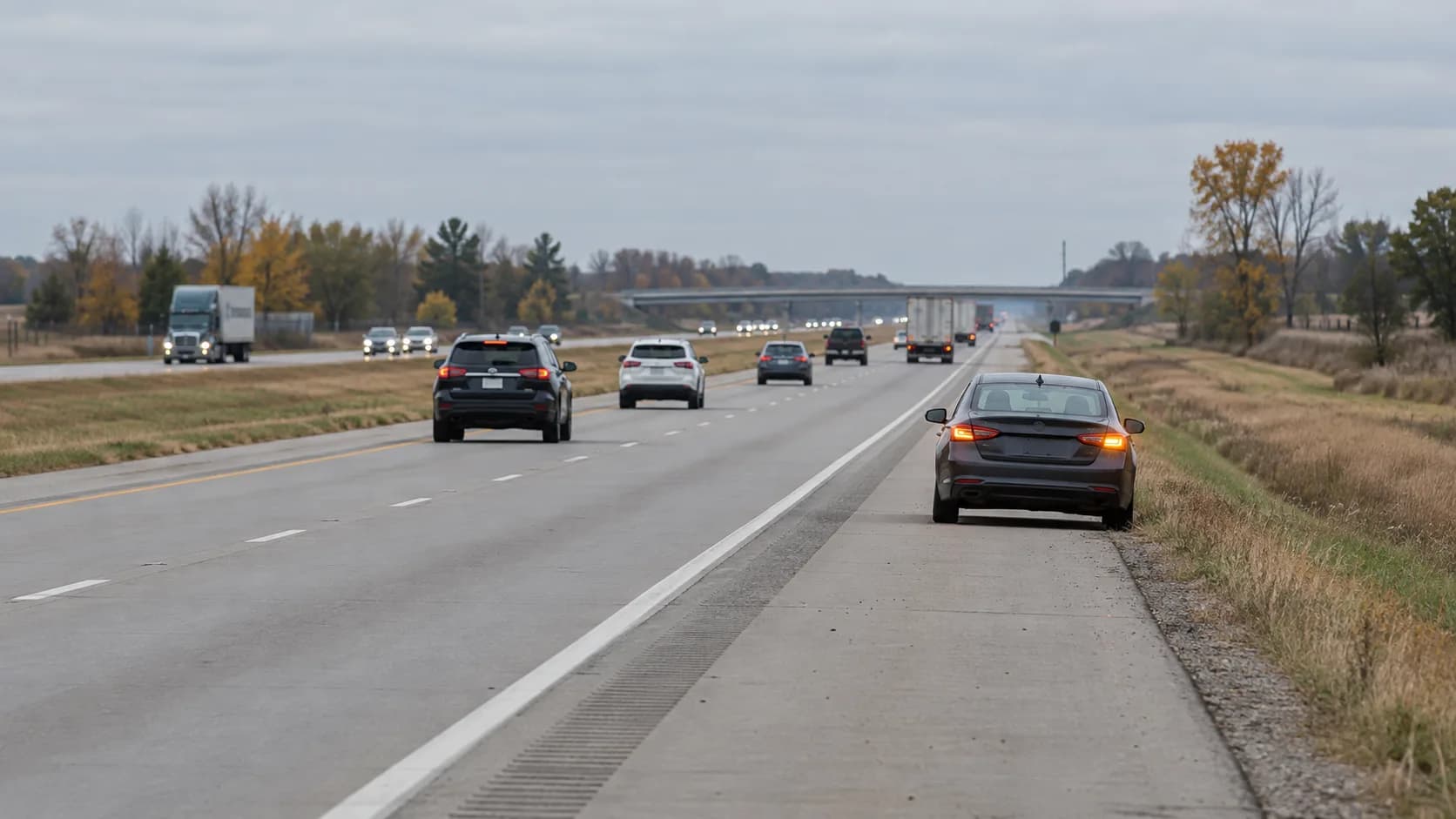

A serious crash can burn through Indiana minimum insurance before the injured person is even done treating. One ER visit, ambulance bill, MRI, injection series, surgery recommendation, missed work, and physical therapy plan can push the claim beyond a $25,000 bodily-injury limit quickly.
That is the problem with minimum coverage. It may satisfy Indiana’s financial-responsibility law, but it may not come close to making an injured person whole. For Fort Wayne and northeast Indiana crash victims, the real question is not just whether the other driver had insurance. It is whether the available insurance is enough.
This guide explains what Indiana minimum limits mean, why serious-injury claims can exceed them, and what Delventhal Law Office looks for when the at-fault driver’s policy is too small. The Indiana car accident settlement calculator can help organize damages factors, but policy limits and available coverage can still control the practical recovery.
Key takeaways

- Indiana minimum auto liability limits are commonly described as 25/50/25.
- A $25,000 per-person bodily-injury limit can be exhausted quickly in a crash involving surgery, fractures, brain injury, disc injury, or long-term treatment.
- Underinsured motorist coverage may apply when the at-fault driver has insurance, but not enough.
- Do not sign a liability-limits release until your own UIM carrier has been notified and policy requirements are reviewed.
- More than one policy may apply: vehicle owner, household, employer, rideshare/delivery, umbrella, MedPay, health insurance, or UIM.
- The goal is to identify all available coverage before the claim is boxed into the smallest policy.
What are Indiana minimum auto insurance limits?
Indiana’s minimum financial-responsibility limits are often summarized as 25/50/25. In practical terms, that means:
| Coverage | Minimum amount | What it means |
|---|---|---|
| Bodily injury to one person | $25,000 | The most the at-fault driver’s liability policy may pay to one injured person |
| Bodily injury to two or more people | $50,000 per crash | The total bodily-injury pool when multiple people are hurt |
| Property damage | $25,000 | The limit for vehicle and other property damage caused in the crash |
Those figures come from Indiana’s financial responsibility law, including IC § 9-25-4-5[1]. Indiana also addresses uninsured and underinsured motorist coverage in IC § 27-7-5-2[2].
The legal minimum is not a promise that the coverage is enough. It is just the floor.
Why minimum insurance may not be enough after a serious crash

A $25,000 bodily-injury limit sounds meaningful until real medical bills start arriving. Serious crash cases often involve several categories of loss at the same time:
- ambulance, ER, imaging, orthopedic, neurology, pain-management, therapy, or surgical bills;
- future treatment recommendations;
- missed wages and reduced earning capacity;
- mileage, prescriptions, braces, assistive devices, and other out-of-pocket costs;
- pain, loss of mobility, sleep disruption, anxiety, and daily-life limitations;
- permanent impairment, scarring, or long-term restrictions.
When one person needs surgery, a minimum bodily-injury policy may be gone before the full damages picture is known. When multiple people are hurt in the same crash, the $50,000 per-crash limit may have to be divided among all injured claimants.
What is an underinsured motorist claim?
An underinsured motorist claim, often called a UIM claim, may apply when the at-fault driver has liability insurance but the limits are too small for the injury claim. In that situation, your own policy may provide additional coverage up to the available UIM limit, depending on the policy language, the facts, and Indiana law.
This is different from an uninsured motorist claim. Uninsured coverage is generally for a driver with no valid insurance or certain hit-and-run situations. Underinsured coverage is for the driver who has insurance, just not enough.
The distinction matters because UIM claims often require careful timing. If the at-fault insurer offers its full policy limits, you may need to notify your own UIM carrier before signing the release. Signing the wrong release too early can create avoidable coverage fights.
Do not rush to accept the policy limits

When an adjuster says, “We are offering the policy limits,” that can sound like the end of the case. Sometimes it is only the beginning of the coverage analysis.
Before accepting a limits offer, confirm:
- the exact bodily-injury limits and whether the offer is per-person or split among multiple claimants;
- whether the vehicle owner has a separate policy;
- whether the driver was working, delivering, ridesharing, or driving a company vehicle;
- whether an umbrella or excess policy exists;
- whether your own UIM coverage applies;
- whether MedPay, health insurance, Medicare, Medicaid, ERISA, or medical liens must be repaid;
- whether the release could waive claims against parties you still need to pursue.
A policy-limits offer is not automatically a fair settlement. It is the maximum that one policy is volunteering to pay. The injury may be worth more, and another coverage layer may exist.
What other insurance might apply?
Minimum-limits cases reward careful coverage work. Delventhal Law Office looks beyond the obvious policy because serious injuries need every lawful recovery source identified.
| Potential coverage | Why it matters |
|---|---|
| At-fault driver liability | The first layer, but often too small in minimum-limits cases |
| Vehicle owner policy | May apply if the driver borrowed a vehicle |
| Employer/commercial policy | May apply if the driver was working or driving for a business |
| Rideshare/delivery coverage | May apply depending on app status and trip stage |
| Umbrella or excess coverage | May provide additional limits above auto liability |
| Your UIM coverage | May provide additional recovery when the at-fault limits are too low |
| MedPay | May help pay medical bills while the injury claim is pending |
| Health insurance | Can reduce bill pressure, though reimbursement/subrogation may follow |

How medical bills and liens affect a minimum-limits settlement

The gross settlement is not the same as the money the injured person keeps. Medical providers, health insurers, Medicare, Medicaid, workers’ compensation carriers, ERISA plans, and other lienholders may claim repayment from the settlement.
This is one reason minimum-limits cases require discipline. If a $25,000 policy is offered and medical liens already exceed that amount, the negotiation is not just with the liability carrier. It may also involve lien reductions, health-insurance reimbursement rules, medical-provider balances, and UIM timing.
A rushed settlement can leave the injured person with unpaid bills and no remaining claim. A careful settlement strategy tries to maximize total recovery and reduce repayment claims where the law and lien documents allow it.

What if multiple people were injured?
Minimum limits become even tighter when more than one person is hurt. A $50,000 per-crash bodily-injury limit may have to cover two, three, or four injured people. If one person has catastrophic injuries and another has moderate injuries, the carrier may ask everyone to divide a limited fund.
That creates difficult questions about priority, proof, medical severity, liens, and whether additional coverage exists. Passengers should not assume they have no claim because the driver was a friend or family member. The practical issue is often insurance coverage, not personal blame.
How Delventhal Law Office handles minimum-limits cases
When minimum insurance may be involved, the job of a Fort Wayne car accident lawyer is to build the damages proof and coverage picture at the same time. That usually means:
- ordering the police report and crash evidence;
- confirming the at-fault limits in writing;
- checking whether the driver, owner, employer, or another party has additional coverage;
- reviewing your own declarations page and UIM language;
- tracking all medical bills, liens, EOBs, and treatment recommendations;
- documenting lost wages, restrictions, and future medical needs;
- protecting UIM rights before any liability release is signed.
The earlier this starts, the better. Coverage mistakes are easier to prevent than undo.
Frequently Asked Questions
Is Indiana minimum insurance enough for a car accident?
Sometimes, for a minor crash with limited treatment. But for surgery, fractures, head injuries, disc injuries, long-term therapy, or multiple injured people, minimum limits may be far too low.
What does 25/50/25 mean in Indiana?
It generally means $25,000 bodily injury per person, $50,000 bodily injury per crash, and $25,000 property damage. The exact available coverage must be confirmed from the policy and carrier.
Can I still recover more than the at-fault driver’s policy limits?
Possibly. Additional recovery may come from UIM coverage, an owner policy, employer/commercial coverage, umbrella coverage, or another responsible party. The answer depends on the facts and policies.
Should I accept a policy-limits offer?
Not until the full coverage picture, liens, medical prognosis, and UIM requirements are reviewed. A policy-limits offer from one carrier may still leave other coverage available.
What if my own insurer says there is no UIM coverage?
Ask for the declarations page, full policy, and any written rejection or selection forms. Coverage questions can be technical, and a quick verbal answer from an adjuster is not always the final word.
Bottom line
Indiana minimum insurance may be legal, but it may not be enough after a serious crash. If the at-fault driver only has minimum limits, do not treat the first policy-limits offer as the end of the case. Identify every available policy, protect UIM rights, organize the medical proof, and deal with liens before signing a release.
If you were seriously injured in Fort Wayne or anywhere in Indiana and the at-fault driver may have minimum insurance, call (260) 484-6655 or start with the free case evaluation form. Delventhal Law Office can review the crash facts, coverage, liens, and deadlines before the claim is limited by someone else’s policy.
Need help with an underinsured motorist issue? Our Fort Wayne underinsured and uninsured accident attorneys can review the policies and explain the next step.