
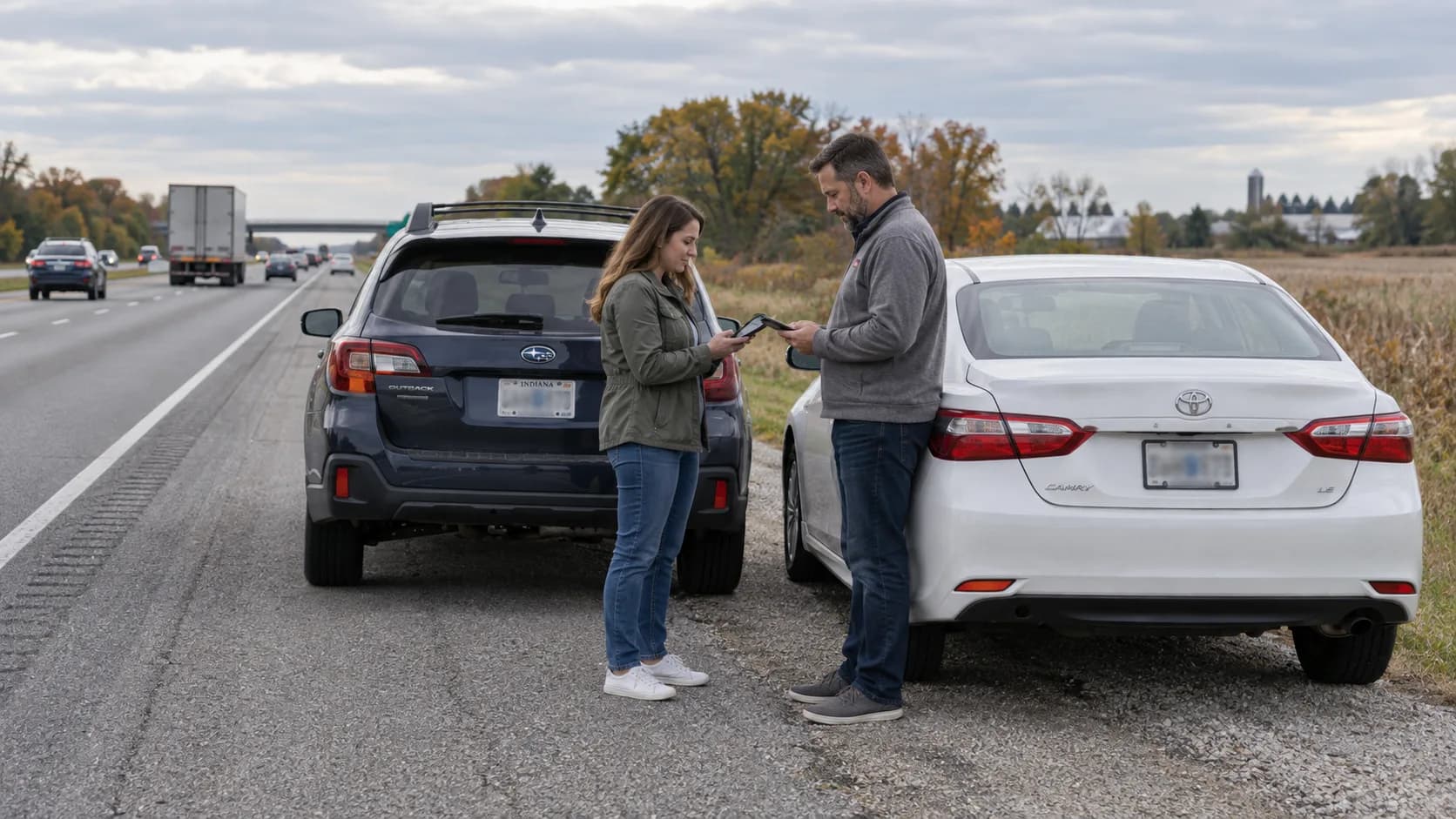
After a collision near Fort Wayne, learning that the other driver lives in Ohio, Michigan, or farther away can make an already difficult situation feel more complicated. Start by separating three tasks: identifying the people involved, organizing the insurance claim, and determining where any lawsuit belongs. This guide focuses on those cross-state questions; our Fort Wayne car accident page covers the broader injury-claim process.
Key takeaways
- An Indiana crash can provide a basis to pursue an out-of-state driver in Indiana under Trial Rule 4.4.
- The crash county is one preferred venue under Trial Rule 75(A)(3); it is not necessarily the only available county.
- Keep the driver’s address, vehicle-owner information, and insurance contacts distinct in your file.
- Ask for the policy language behind a policy terms decision instead of assuming an answer from the license plate.
- Have filing filing dates reviewed individually. The general two-year Indiana injury rule is not a filing date calculation for every case.
Can you sue an out-of-state driver in Indiana?
Potentially, yes. Trial Rule 4.4(A)(2)[1] addresses actions arising from a nonresident’s act or omission in Indiana that causes injury or property damage. The rule also recognizes constitutional limits on jurisdiction. It provides a starting point for reviewing an Indiana collision, not a prediction about the court that will ultimately hear a particular case.
Jurisdiction, venue, and service are different
| Court question and rule to review |
|---|
| Jurisdiction Can the court exercise authority over this defendant? Trial Rule 4.4 identifies acts that can support Indiana jurisdiction over a nonresident. |
| Venue Which county is an appropriate place to file? Trial Rule 75(A)(3)[2] lists the county where a motor-vehicle collision occurred as a preferred venue for a claim involving related injuries. Other preferred-venue provisions may also apply. |
| Service How does the defendant receive formal notice? Trial Rule 4.4(B) identifies service methods through other trial rules, including specified procedures involving the Secretary of State. Sending an adjuster a claim letter is not the service procedure described in that rule. |
Hypothetical example: An Ohio resident is involved in an injury collision in Allen County. The Indiana conduct is relevant to jurisdiction under Rule 4.4, and the crash location is relevant to preferred venue under Rule 75. Those are separate reasons to investigate an Indiana filing; neither establishes responsibility or insurance policy terms.
Rule 4.4(C) also allows the court to consider whether litigation should be held elsewhere, including convenience to parties and witnesses. Avoid assuming either “the driver left, so Indiana cannot hear it” or “the crash happened here, so every legal issue is settled.” Ask counsel to review the parties, forum, service, and applicable law together.
What information matters when the driver lives elsewhere?
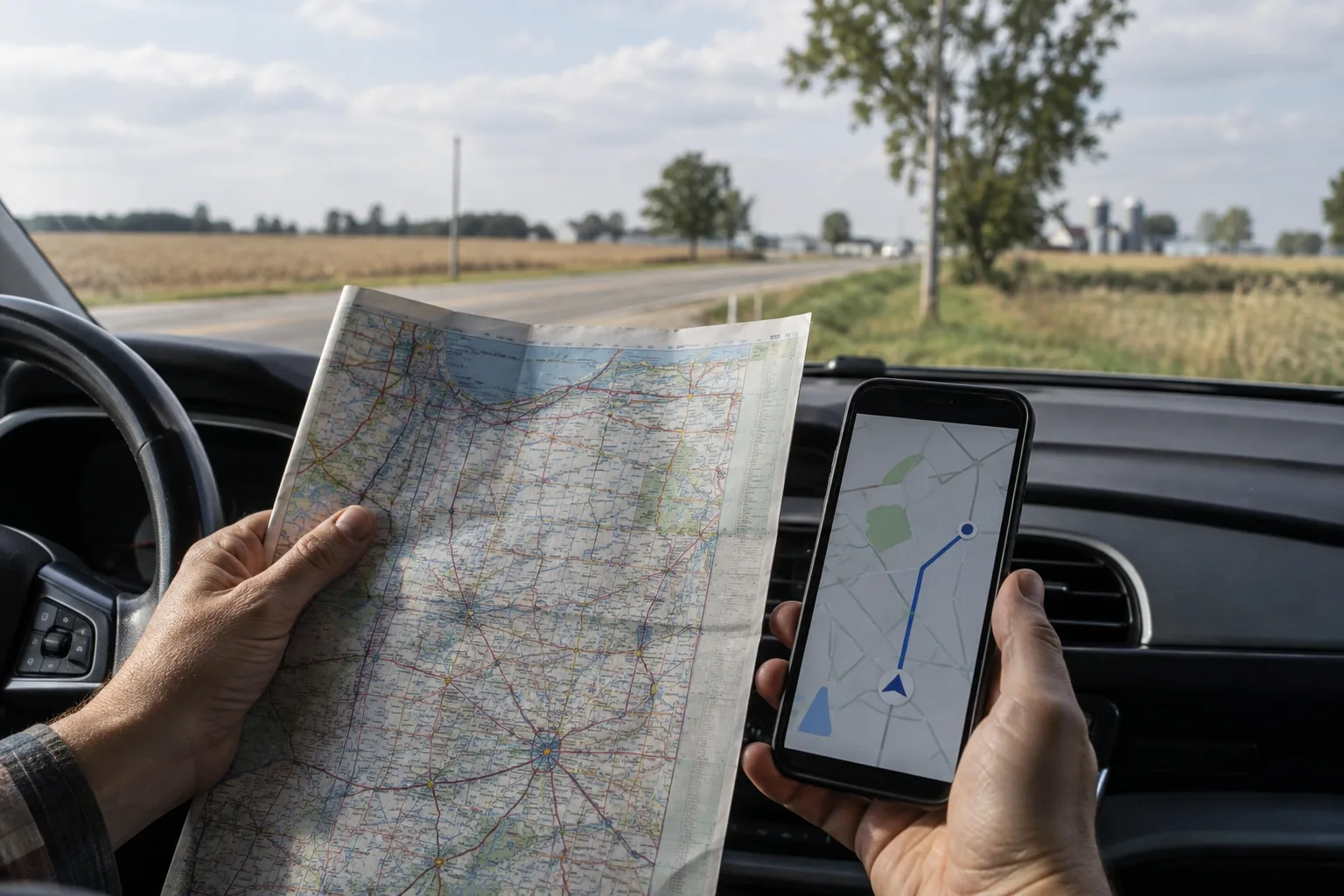
The following is a practical organization checklist, not a list of mandatory items. Collect what you can safely and lawfully, and mark unknown information as unknown.
- Driver: name, contact information, and the address recorded in the information exchanged or the crash report.
- Vehicle: plate number and state, vehicle description, and registered owner if known. Keep the owner and driver as separate entries when they differ.
- Carrier: the company on the insurance card, policy number if provided, claim number, adjuster, and contact information.
- Location: the road, intersection or mile marker, city, county, date, and approximate time. For an interstate crash, do not rely only on the nearest exit name when recording the location.
- Follow-up: a record of returned mail, corrected addresses, unanswered calls, or a change in adjuster.
For a report already completed by law enforcement, the Indiana State Police crash-report page[3] directs members of the public to BuyCrash. Save the report number and responding agency in your packet. A report is useful to review for identifying information; questions about using a particular report or statement in court belong in an individual review.

What should you ask the carrier about a cross-state claim?
The Indiana Department of Insurance’s claim tips[4] explain that a policy is a contract, recommend understanding policy terms and exclusions, and advise prompt claim reporting. The department also recommends keeping correspondence and a record of telephone conversations.
Use these practical questions to organize a conversation. They are questions to investigate—not promises that a particular policy will pay:
- Who is handling the claim, and what claim number should appear on correspondence?
- Which person and vehicle are being evaluated under the policy?
- Is the company still investigating policy terms, accepting it, or denying it?
- If the collision being in Indiana affects the company’s position, what policy provision or endorsement is it relying on?
- What documents are being requested, why are they needed, and where should they be sent?
- Is the adjuster discussing vehicle damage, bodily injury, or both?
For a denial under your policy, IDOI recommends obtaining a written explanation identifying the reason and specific policy language. Preserve that letter for legal review. Do not use a verbal statement about “out-of-state policy terms” as a substitute for the written explanation.
For your own policy, ask which policy termss you purchased and what reporting or cooperation requirements apply. IDOI’s auto-insurance overview[5] distinguishes responsibility, collision, and medical-payments policy terms. This guide does not decide which state’s policy rules apply to a particular crash. If insurance is missing or inadequate, our uninsured-driver guide addresses that separate question.
Does an out-of-state driver change the filing filing date?
Indiana Code 34-11-2-4(a)[6] generally requires an action for injury to a person or personal property to be commenced within two years after the cause of action accrues. This is a rule about commencing an action—not simply obtaining a claim number from an carrier.
Do not use that general rule to calculate your final date without reviewing the facts. For example, Indiana Code 34-11-6-1[7] addresses legal disability when the cause of action accrues. A case-specific review must address the applicable claim, accrual date, and any exceptions. The driver’s home address alone is not a sufficient filing date analysis.
As a preparation step, record the crash date, the injured person’s age, any government involvement, any existing lawsuit, and every letter that states a filing date. Bring those materials to counsel promptly. Questions involving a public entity should also be reviewed with the separate government tort-claim notice requirements in mind; this article does not provide a notice-filing date calculation.

Build one packet for the cross-state issues
A practical packet can keep a driver’s residence from becoming confused with the vehicle’s registration state or the carrier’s mailing address. These are suggested organizational steps, not a mandatory list.
- Identity sheet
- List the driver, owner, known addresses, plate state, report number, and the source of each detail. Flag disagreements between the report and correspondence.
- Insurance log
- List each company contacted, the policy or claim number, the adjuster, the date, what was requested, and what remains unanswered.
- Original records
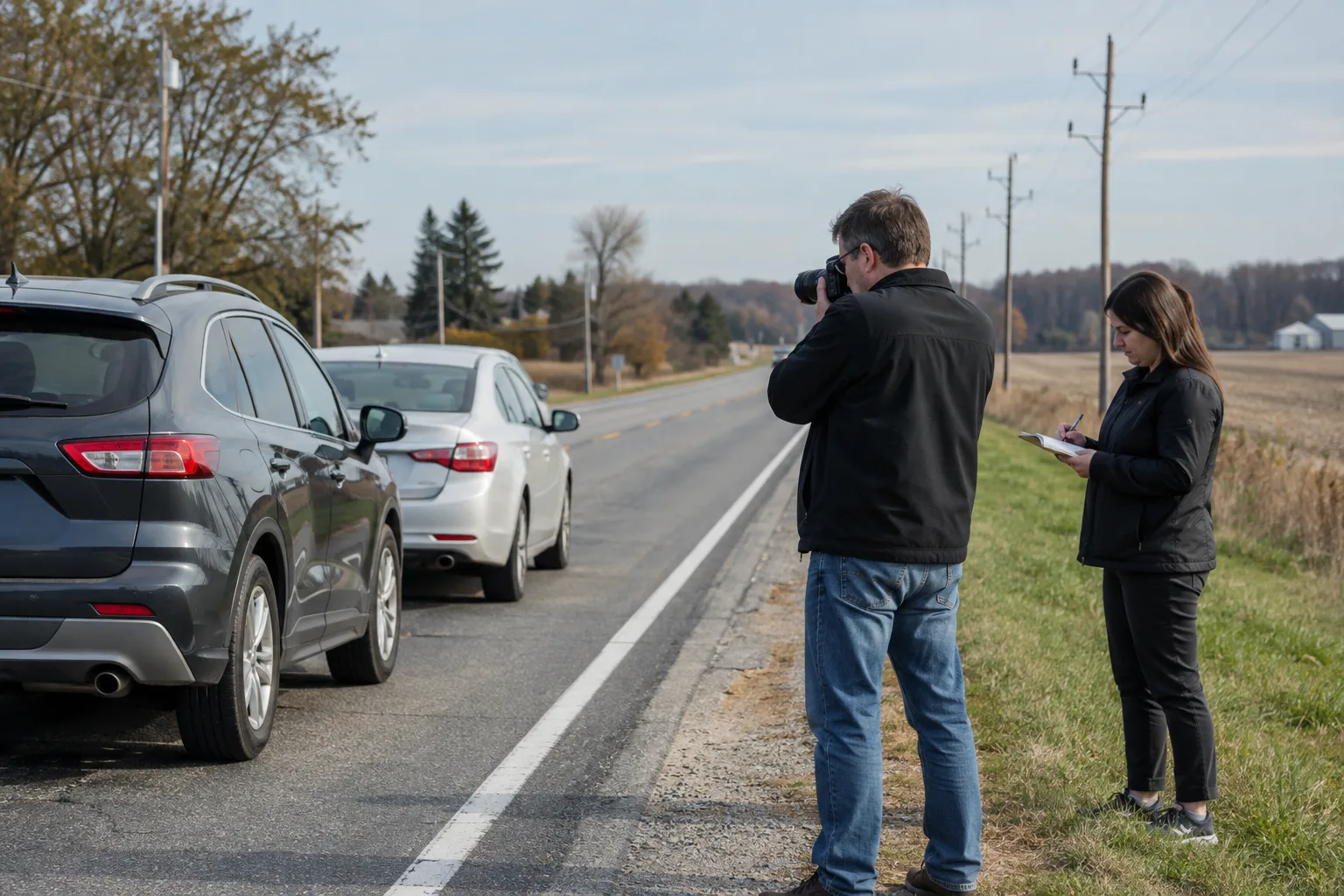
- Keep the original photographs, video, correspondence, repair estimates, bills, and wage records available. Store a separate working copy for notes rather than writing over an original.
- Questions for counsel
- Ask which parties should be investigated, whether Indiana is an appropriate forum, which county has preferred venue, what service will require, and which filing dates need attention.
For broader scene documentation, use our Indiana car-accident evidence guide. The additional job here is to keep interstate contact, location, and claim-handling information organized.
Frequently asked questions
Must I sue in the driver’s home state?
Not necessarily. Trial Rule 4.4(A)(2) provides a potential Indiana jurisdictional basis for injury or property damage caused by an act or omission in Indiana. The court, parties, service, and venue still require individual review.
Can an Allen County crash be filed in Allen County?
Trial Rule 75(A)(3) recognizes the crash county as a preferred venue for claims involving injuries related to a motor-vehicle collision. That supports considering Allen County for an Allen County crash, but does not mean it is the only possible venue or decide every jurisdictional issue.
Does the other driver’s license plate tell me the available insurance limits?
Use the plate to help identify the vehicle, not as your policy terms answer. As a practical next step, ask the carrier to identify its policy terms position and the policy language it relies on. Have disputed interstate policy terms questions reviewed rather than assuming either state’s limits automatically control.
What if the owner and driver live in different states?
Keep separate entries for each person and preserve the identifying and insurance information available for each. Ask counsel which parties and policies need investigation; an address difference alone does not establish someone’s responsibility.
What if the driver has already left Indiana?
Rule 4.4 expressly addresses nonresidents and residents who have left Indiana. Preserve the best available address and let counsel evaluate jurisdiction and service. Do not assume that departure ends the claim.
Preparing for a consultation
Bring the crash report, driver and owner details, insurance correspondence, available photographs, and your questions about filing and service. Explain any uncertainty about an address, policy, or filing date. You can contact Delventhal Law Office to discuss the situation or learn about attorney Chad Delventhal.
This article is general information about Indiana law and is not legal advice. Reading it does not create an attorney-client relationship, and neither does contacting us.
Sources
- Indiana Trial Rule 4.4(A)(2) (rules.incourts.gov) ↩
- Trial Rule 75(A)(3) (rules.incourts.gov) ↩
- Indiana State Police crash-report page (in.gov) ↩
- Indiana Department of Insurance’s claim tips (in.gov) ↩
- auto-insurance overview (in.gov) ↩
- Indiana Code 34-11-2-4(a) (iga.in.gov) ↩
- Indiana Code 34-11-6-1 (iga.in.gov) ↩