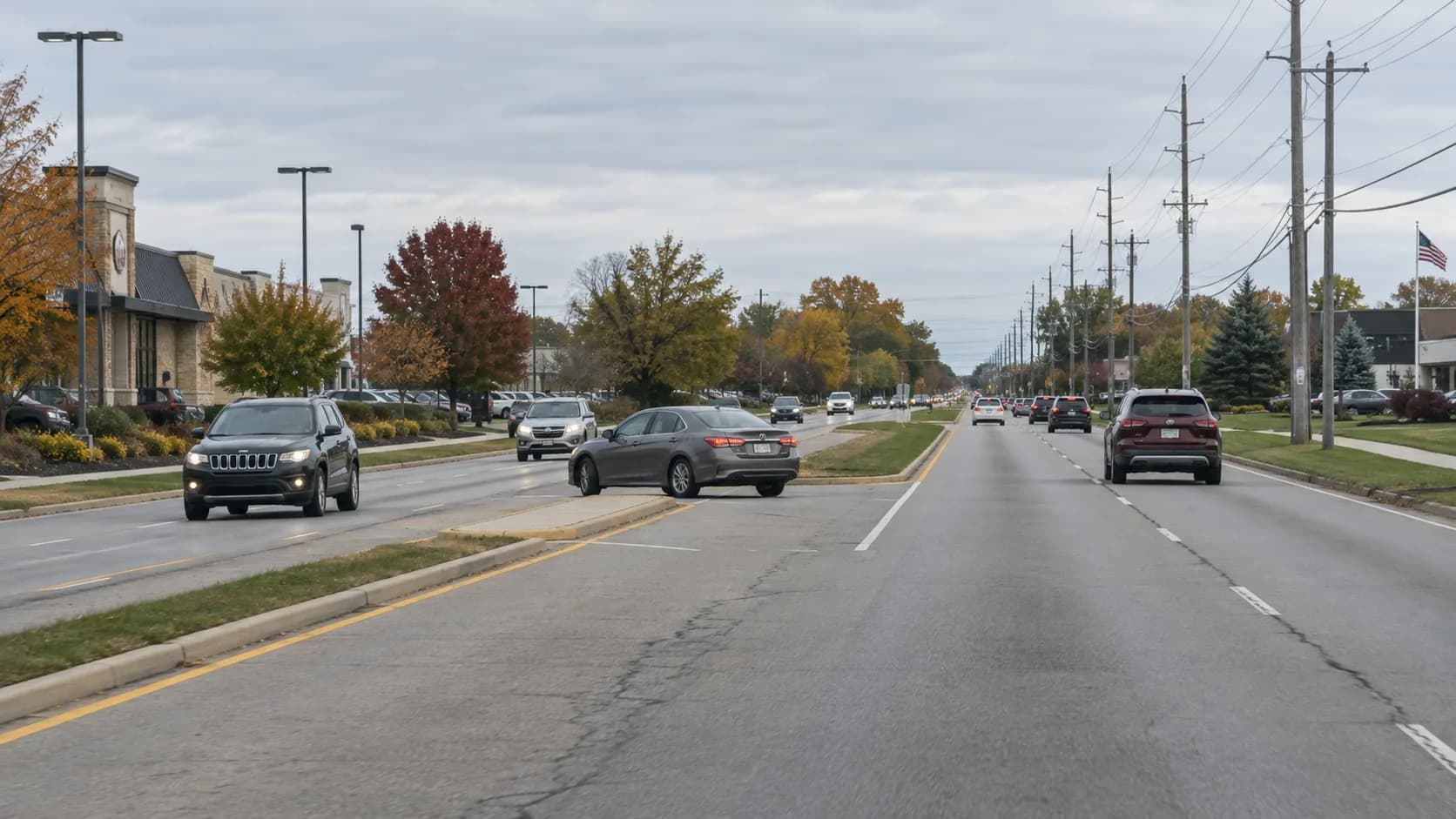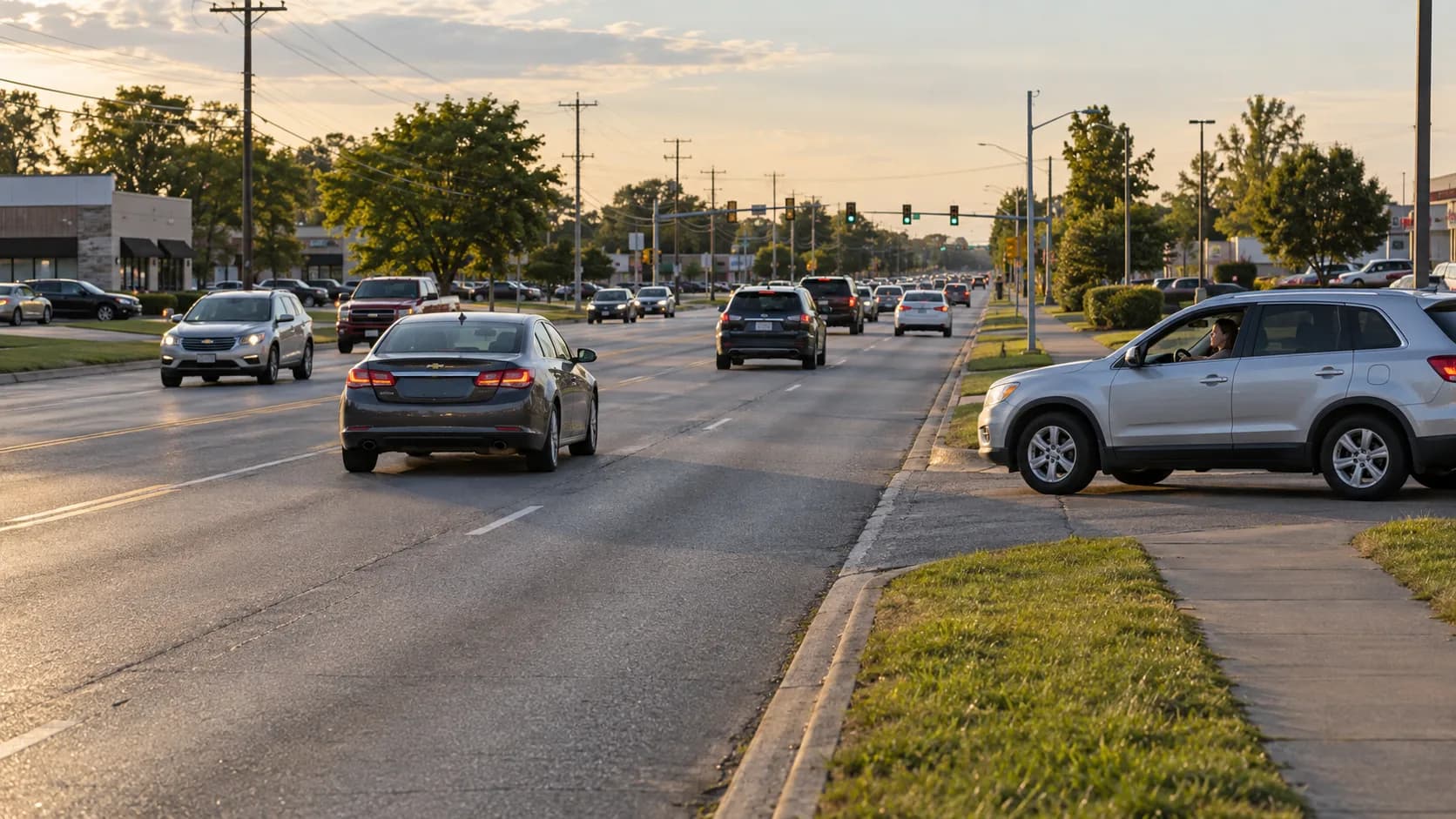
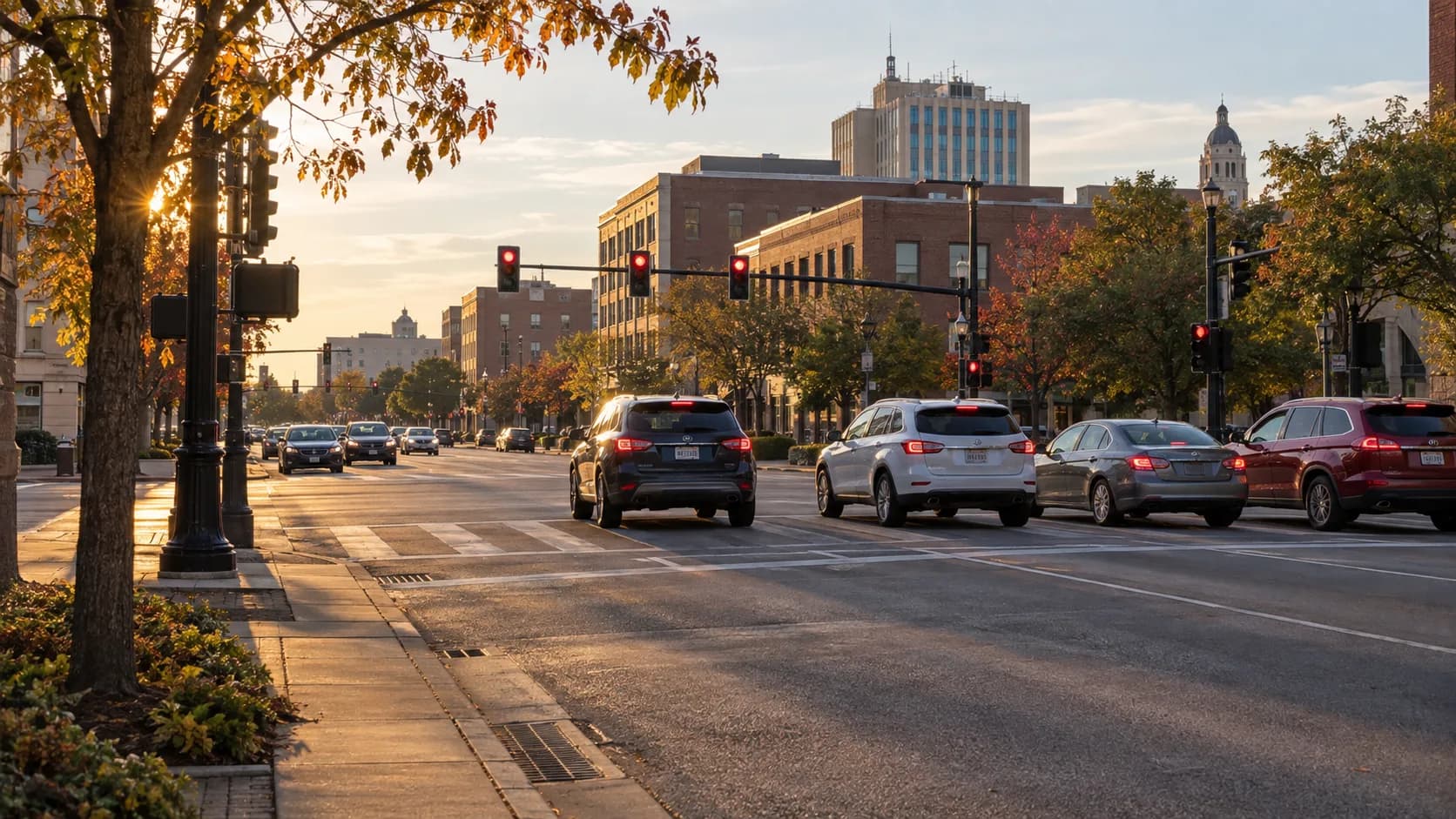
If another driver entered a Fort Wayne intersection against a red light or stop sign, focus first on safety and then on preserving neutral evidence. Signal timing, nearby video, vehicle damage, witness accounts, and electronic records may help reconstruct what happened.
Key takeaways
- A driver facing a steady red signal generally must stop before the marked stop line, before the crosswalk if there is no line, or before entering the intersection if there is neither.
- At a stop-sign-controlled entrance to a through highway, the driver must stop, proceed cautiously, and yield to vehicles that are not required to stop.
- For ordinary private-driver negligence claims governed by Indiana’s Comparative Fault Act, claimant fault reduces damages and fault greater than 50% bars recovery. Government tort claims are excluded from that chapter.
- An Indiana action for injury to a person generally must be commenced within two years after the cause of action accrues, although a different rule may apply in some circumstances.

What does Indiana law require at red lights and stop signs?
Indiana Code 9-21-3-7(b)(3) (official PDF, page 400)[1] requires traffic facing a steady circular red or red arrow signal to stop at a clearly marked stop line. If there is no line, stop before entering the near-side crosswalk; if there is no crosswalk, stop before entering the intersection. The rule requires remaining stopped until an indication to proceed, subject to the statute’s specified exceptions.
Under the same section, a driver may cautiously turn right on red after a complete stop unless a sign prohibits the turn. The driver must yield to pedestrians lawfully within the adjacent crosswalk and to other traffic using the intersection. The section also permits a limited left turn from the left lane or designated left-turn lane of a one-way street into another one-way street with traffic; that is not permission for a left turn on red from an ordinary two-way road.
For a stop-sign-controlled entrance to a through highway, IC 9-21-8-32 (official PDF, page 437)[2] requires stopping and then proceeding cautiously, yielding to vehicles that are not required to stop. The preceding section, IC 9-21-8-31[3], requires yielding to vehicles already in the intersection or approaching on the through highway closely enough to be an immediate hazard. Stopping and yielding are separate steps.
Practical observation note: Record whether the driver went straight or turned, which lane the driver used, and any posted turn restriction. A photograph showing a red lamp without the lane and movement context leaves important questions unanswered.

How does shared fault affect a private-driver injury claim?
For ordinary negligence claims against private drivers governed by Indiana’s Comparative Fault Act, IC 34-51-2-5 through -8 (official PDF, pages 617–618)[4] provide the calculation. Section 5 reduces compensatory damages proportionately for the claimant’s fault; section 6 addresses the recovery bar, and sections 7 and 8 expressly direct a defense verdict when claimant fault exceeds 50%. Allocation to nonparties can also affect recovery from the named defendants.
IC 34-51-2-1 and -2 (official PDF, page 616)[5] identify exclusions, including tort claims against governmental entities or public employees under the Indiana Tort Claims Act and certain medical-malpractice claims. Do not apply the private-driver percentage rule to a government claim without separate legal review.
For example, a dispute may involve whether one vehicle entered on red, whether another driver was speeding, whether sight lines were obstructed, or whether a turning driver failed to yield. The available evidence—not an assumption based only on the crash location—should guide the investigation. Delventhal Law Office’s guide to fault in Indiana intersection collisions explains how those pieces can fit together.
Evidence that can clarify an intersection crash
Our practical preparation checklist: Use this table to organize questions, not as a statement of legal evidence requirements. Preserve what you already have, and do not put yourself in danger to collect anything from the roadway.
| Evidence | What to preserve or request | Question it may help answer |
|---|---|---|
| Scene photographs | Signal heads, stop signs, lane markings, sight lines, debris, skid marks, and final vehicle positions | What each driver could see and where the impact occurred |
| Video | Original dashcam file and requests to nearby businesses or residences | Which signal face controlled each lane and when each vehicle entered; preserve footage before and after impact |
| Witness information | Names, contact details, location, and the witness’s own words | Which signal the witness actually saw, from what position, and whether their view was obstructed |
| Vehicle evidence | Damage photographs, repair estimates, and inspection records | Impact direction and areas of contact |
| Official records | Crash report number, officer information, dispatch records, and available signal records | What was documented near the time; ask whether signal records exist rather than assuming a traffic camera recorded video |
Keep original files rather than relying only on screenshots or compressed copies. If a business or homeowner may have recorded the intersection, identify the camera and send a focused preservation request promptly. The firm’s guides to preserving dashcam footage and finding traffic, business, and doorbell video offer more detailed checklists.

What should you do after a red-light or stop-sign crash?
The Indiana Driver’s Manual, chapter 8 (printed page 58)[6] says to stop immediately or as close to the scene as possible and remain at the scene. Its vehicle-movement guidance expressly says not to move the vehicle when the crash involves hazardous materials or results in injury, death, or entrapment. Call 911 if emergency assistance is needed and follow responder instructions.
The manual describes giving your name, address and vehicle registration number, showing your driver’s license, notifying law enforcement as soon as possible for an injury or death, and providing reasonable assistance as directed by law enforcement, medical personnel or a 911 operator.
Practical recordkeeping suggestions after immediate safety needs:
- Exchange insurance contact information for claim handling.
- Photograph traffic controls and damage only from safe positions; do not enter traffic or interfere with responders.
- Ask witnesses what they personally observed and save their contact details.
- Keep original video, the crash-report number, towing papers, medical records and insurance correspondence in a private folder.
- Check your policy’s reporting instructions. Distinguish facts you know from estimates.
A signal-observation worksheet for your consultation
Write the Fort Wayne or Allen County road names, nearest cross street, date, approximate time and direction of travel. For each vehicle, note its lane and whether it went straight, turned right or turned left. Sketch which signal face you could actually see and any “No Turn on Red” sign. For a stop sign, note which approaches were controlled and which traffic did not have to stop.
Use three columns: what I saw; what someone else reported; what remains unknown. “My light was green when I looked up” is different from observing the other driver’s signal at entry. Label a later photograph with its real date and any changed conditions. Preserve the unedited video before writing a timing estimate; do not recreate the collision or stand in traffic to make measurements.
For a broader checklist, see the firm’s guide to steps after an Indiana car accident. If you are organizing the financial side of a claim, the Fort Wayne car-accident settlement calculator can help you list bills, wage loss, fault issues, and available insurance without predicting an outcome.
How long do you have to bring an Indiana injury case?
Indiana Code 34-11-2-4[7] generally requires an action for injury to a person to be commenced within two years after the cause of action accrues.
Government claims can involve separate, earlier notice requirements under IC 34-13-3-6 and -8 (official PDF, pages 108–109)[8]. Have counsel check the applicable parties, accrual, exceptions and notice requirements; this summary does not resolve your individual situation.

Frequently Asked Questions
What should I bring to a consultation if no citation was issued?
Bring the crash-report number, original photographs and video, witness contacts, and your own notes about the signal and vehicle movements. Tell the attorney whether any citation was issued. These are preparation suggestions, not conclusions about your case.
Can both drivers share fault?
For ordinary private-driver negligence claims covered by Indiana’s Comparative Fault Act, yes: sections 5 through 8 provide for allocation, proportional reduction for claimant fault, and a bar above 50%. The government-claim exclusion discussed above is important; the same calculation does not govern every claim.
Can you turn right on red in Indiana?
Indiana law generally permits a right turn on red after the required stop unless a sign prohibits it, but the driver must yield to pedestrians lawfully within the adjacent crosswalk and to other traffic using the intersection.
What if the other driver denies running the light or stop sign?
Preserve photographs, original video, witness contact information, vehicle records, and the crash-report number. A careful timeline can help compare the competing accounts without assuming that either statement is conclusive.
What is the filing deadline for an Indiana injury lawsuit?
An Indiana action for injury to a person generally must be commenced within two years after the cause of action accrues, but exceptions or earlier requirements may apply.

If you were hurt in an Indiana intersection crash and want help organizing the evidence and understanding your options, Delventhal Law Office’s Fort Wayne car-accident practice offers free consultations so you can understand your options. Learn about attorney Chad Delventhal or request a consultation.
This article is general information about Indiana law and is not legal advice. Reading it does not create an attorney-client relationship, and contacting us alone does not create that relationship. Please do not post private medical or claim details in public comments.
Sources
- Indiana Code 9-21-3-7(b)(3) (official PDF, page 400) (iga.in.gov) ↩
- IC 9-21-8-32 (official PDF, page 437) (iga.in.gov) ↩
- IC 9-21-8-31 (iga.in.gov) ↩
- IC 34-51-2-5 through -8 (official PDF, pages 617–618) (iga.in.gov) ↩
- IC 34-51-2-1 and -2 (official PDF, page 616) (iga.in.gov) ↩
- Indiana Driver’s Manual, chapter 8 (printed page 58) (in.gov) ↩
- Indiana Code 34-11-2-4 (iga.in.gov) ↩
- IC 34-13-3-6 and -8 (official PDF, pages 108–109) (iga.in.gov) ↩