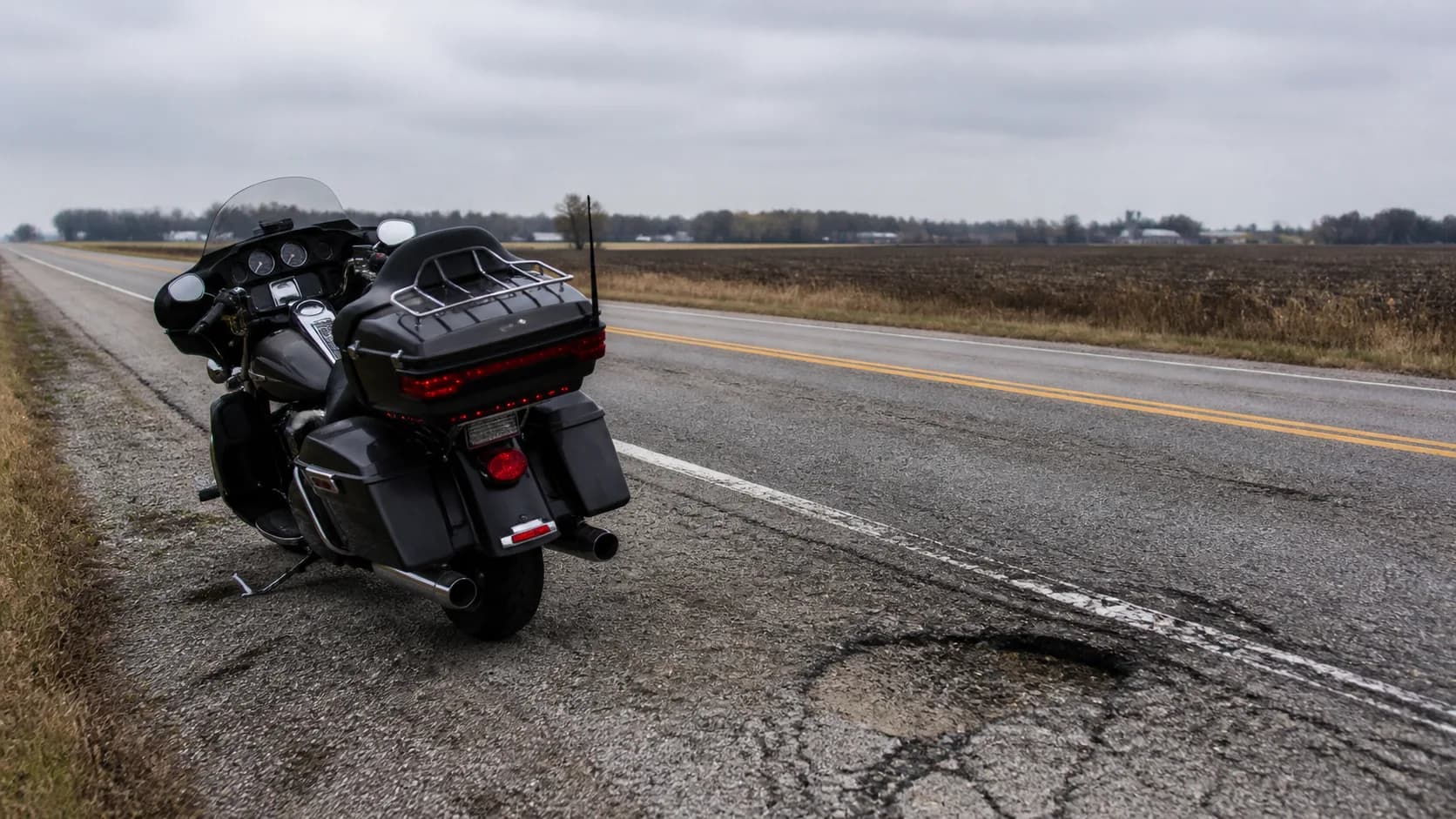
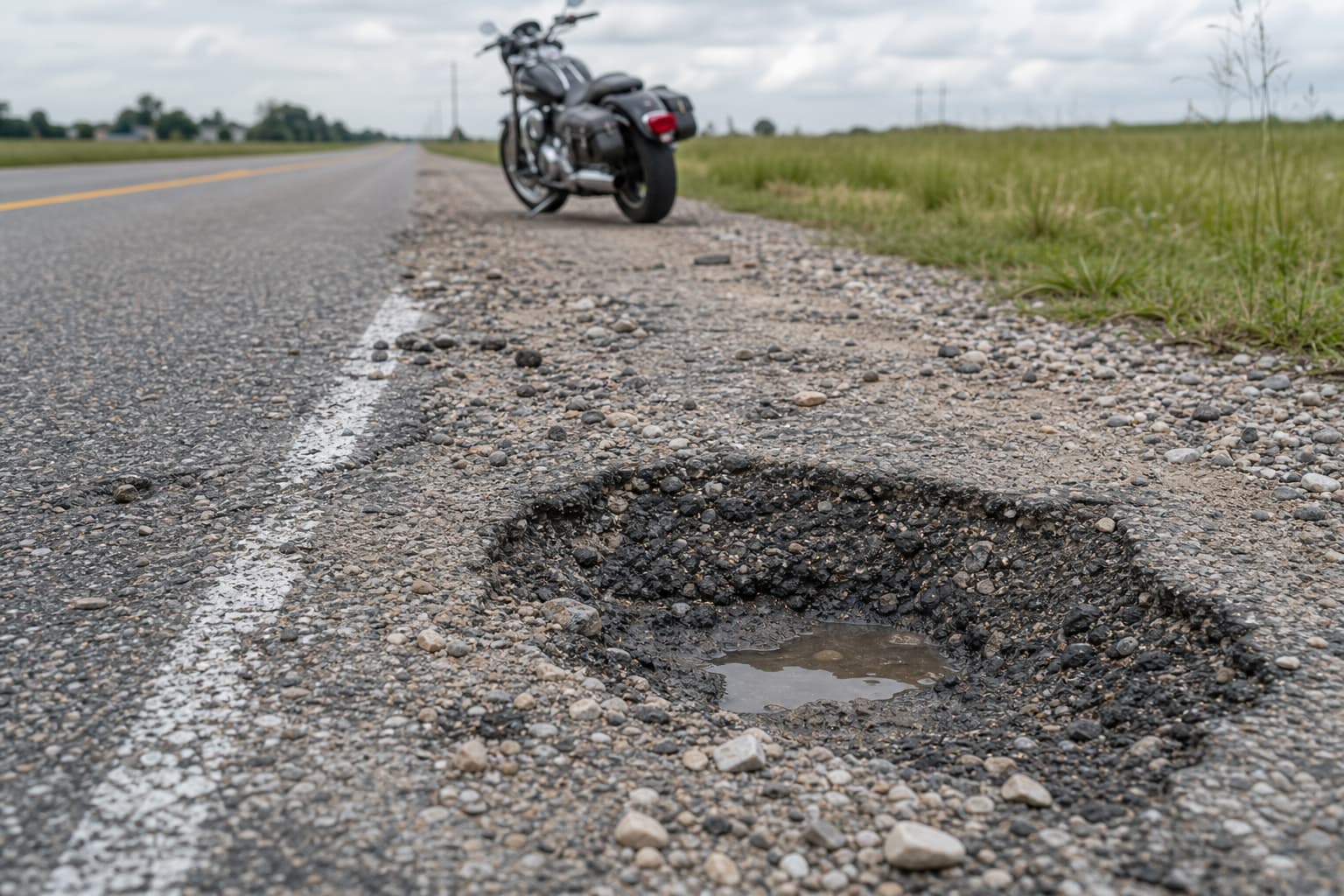
For a motorcycle rider, the road surface matters. A pothole is not just an inconvenience. Loose gravel is not just messy. An uneven pavement seam, missing warning sign, debris field, or construction drop-off can cause a rider to lose traction, wobble, swerve, or go down before there is time to recover.
Road-hazard motorcycle cases are different from typical car accident claims because there may not be another driver to blame. The investigation may need to look at a city, county, the State of Indiana, a road contractor, a utility crew, a property owner, or another party that created or failed to fix a dangerous condition.
Delventhal Law Office helps injured riders in Fort Wayne and throughout Indiana investigate serious motorcycle crashes and preserve evidence before road conditions change. If you were hurt, visit our Fort Wayne motorcycle accident attorney page or call (260) 484-6655 for a free consultation.
Key takeaways
- Road hazards that are minor for cars can be severe for motorcycles.
- Potholes, gravel, debris, uneven pavement, bad drainage, and construction zones can all cause loss of control.
- Evidence should be preserved quickly because hazards can be repaired, swept, covered, or changed.
- Potentially responsible parties may include government entities, contractors, utility companies, property owners, or other drivers.
- Claims involving government entities can involve special notice rules and shorter deadlines, so early attorney review matters.
Why road hazards are so dangerous for motorcycle riders
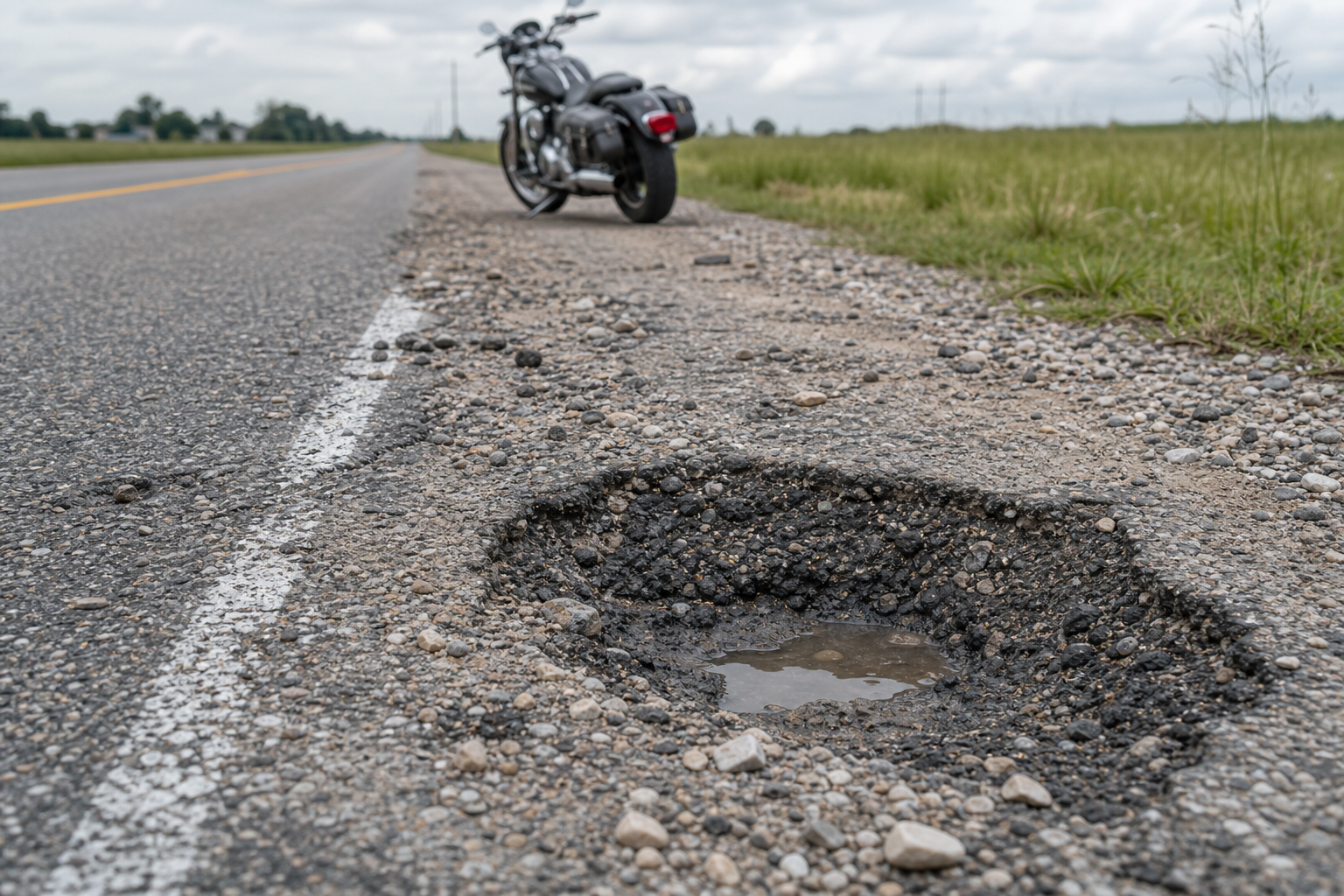
Motorcycles depend on balance, traction, and predictable road surfaces. A car has four tires and a protective frame. A motorcycle has two smaller contact patches and no surrounding shell. When the road surface suddenly changes, a rider may have only a fraction of a second to react.
The National Highway Traffic Safety Administration notes that motorcycling requires balance, coordination, and good judgment, and that motorcyclists face far greater fatality and injury risk per vehicle mile traveled than passenger-car occupants.[1] Road hazards make those risks worse because they can affect steering, braking, lean angle, and traction all at once.
Common road hazards that cause motorcycle crashes
Road-hazard motorcycle crashes can involve many different conditions, including:
- Potholes: deep holes, broken asphalt, and cratered pavement can cause a front wheel to drop, deflect, or lose stability.
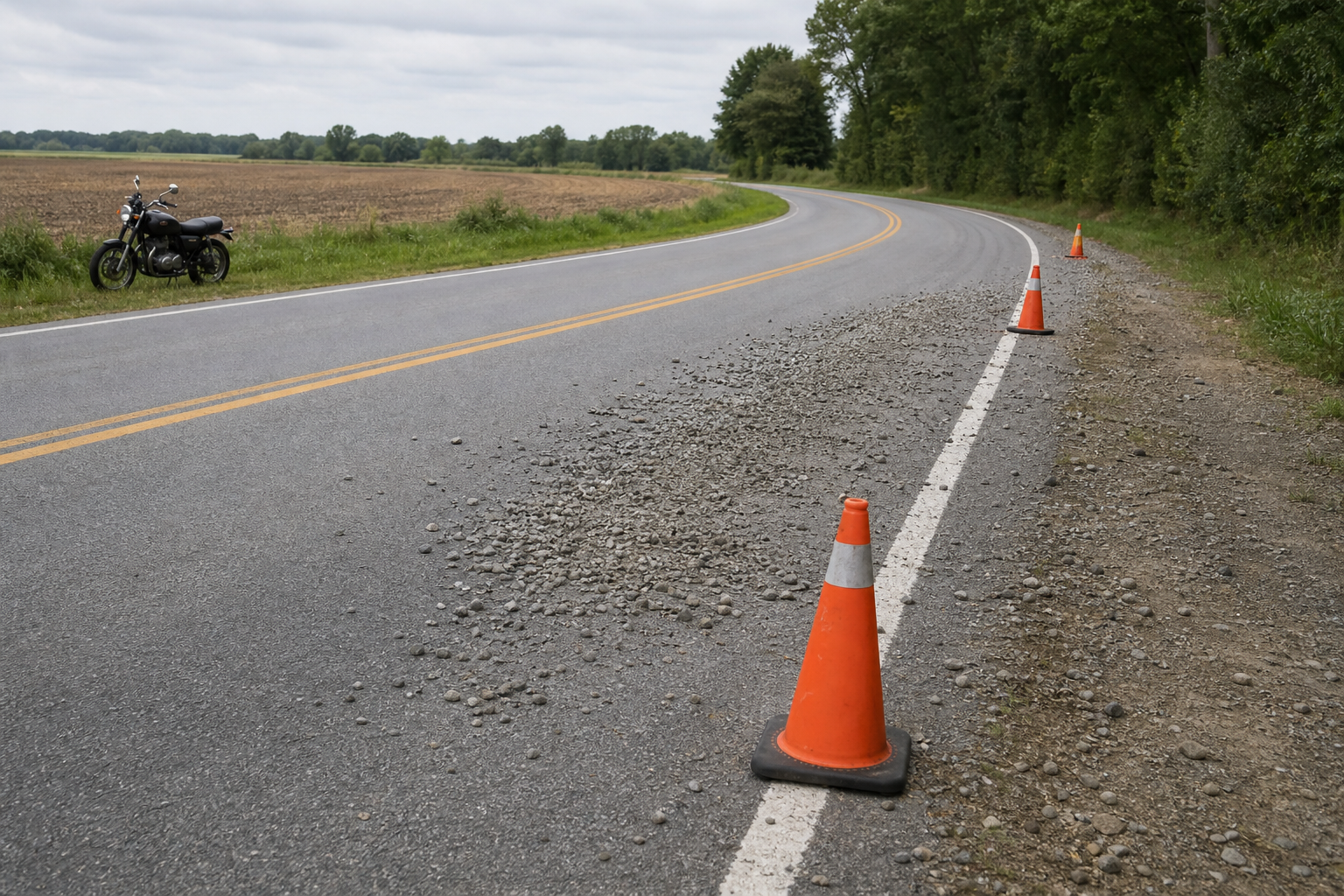
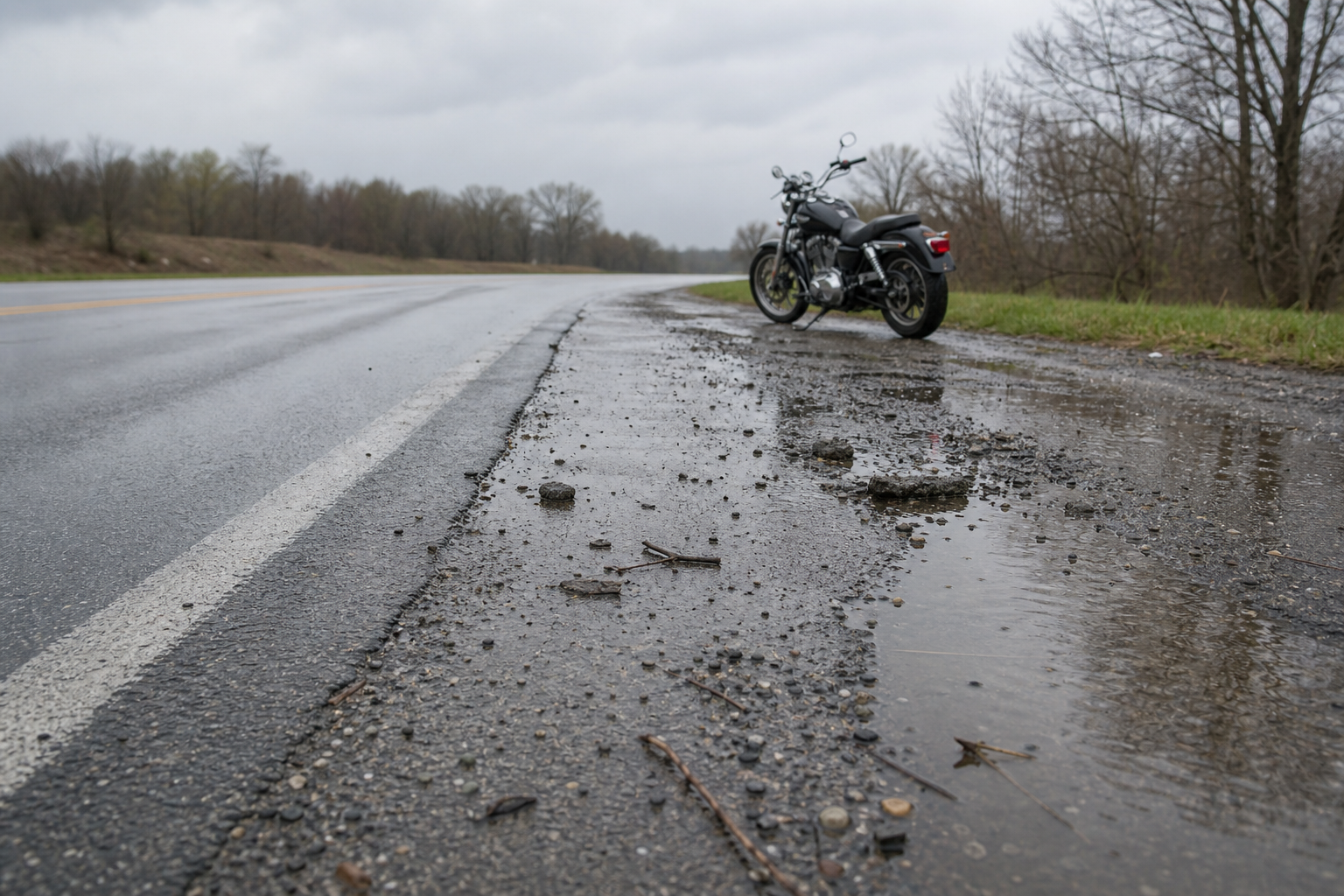
- Loose gravel: gravel on curves, intersections, shoulders, or construction zones can reduce traction and cause sliding.
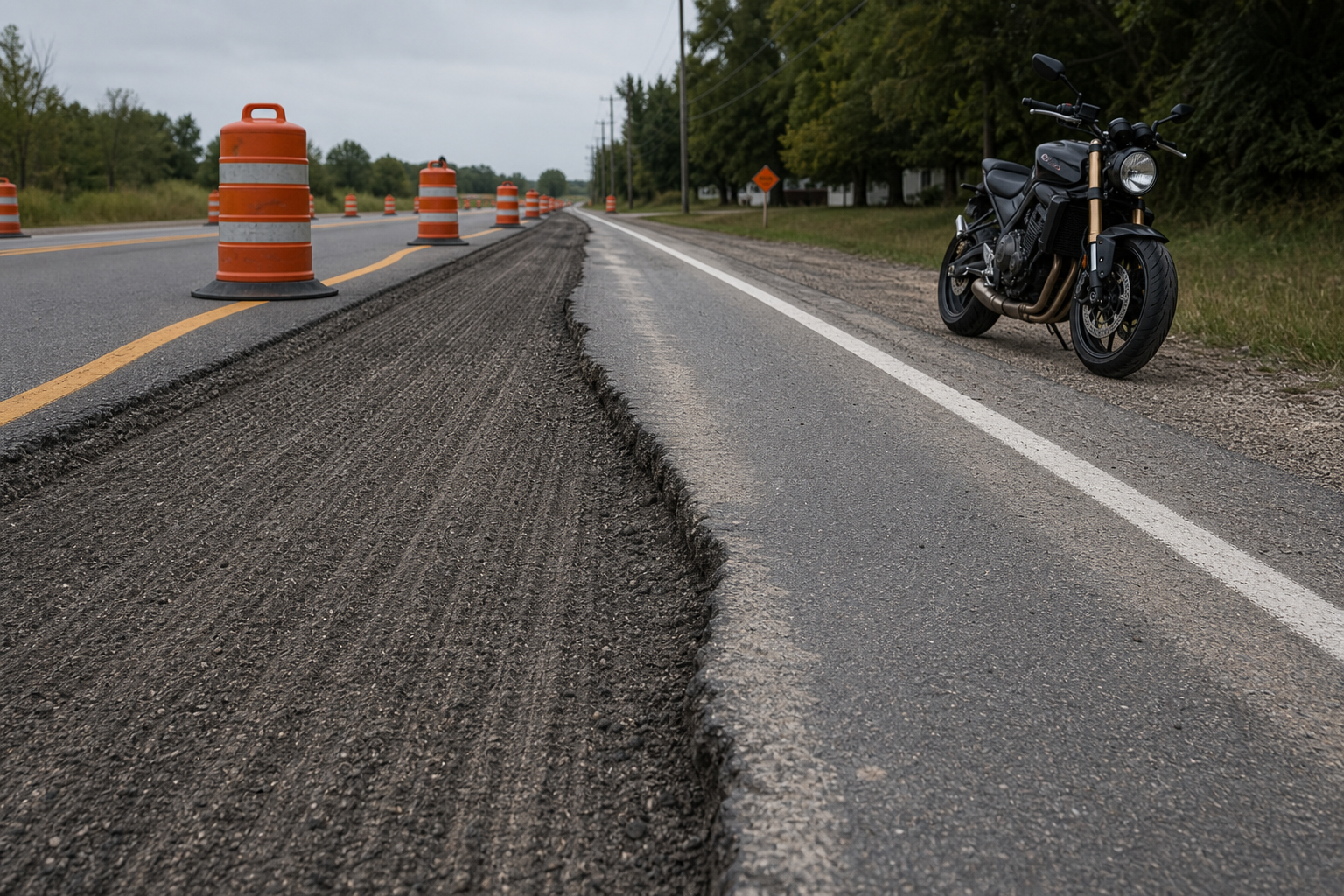
- Uneven pavement: raised seams, edge drops, milled surfaces, and pavement transitions can pull a motorcycle off line.
- Road debris: branches, cargo, metal, tire pieces, trash, or construction materials can force sudden evasive action.
- Standing water: poor drainage, puddles, and hidden potholes can cause hydroplaning or conceal surface defects.
- Railroad crossings: angled tracks, rough crossings, missing panels, and wet rails can be especially dangerous.
- Construction zones: barrels, temporary lanes, poor signage, abrupt drop-offs, loose stone, and unmarked hazards can create serious risk.
Construction zones can be especially risky
Construction zones are not automatically unsafe, but they can create hazards riders do not expect. A lane may shift suddenly. Pavement may be milled. A shoulder may drop off. Gravel may spill into the lane. Barrels or signs may be misplaced. A temporary traffic pattern may be unclear.
In a construction-zone motorcycle crash, the investigation may need to look at:
- Traffic-control plans.
- Warning signs and barrel placement.
- Whether the hazard was marked.
- Contractor duties and inspection records.
- Daily work logs.
- Whether the condition violated the project plan or safety standards.
- Photos or video from before and after the crash.
Who may be responsible for a road-hazard motorcycle crash?
Responsibility depends on who controlled, created, maintained, or had notice of the dangerous condition. Potentially responsible parties may include:
- A city, county, or the State of Indiana responsible for maintaining the roadway.
- A road construction contractor or subcontractor.
- A utility company that left a trench, patch, plate, or debris hazard.
- A property owner or business whose driveway, drainage, or debris created the condition.
- A driver or trucking company that spilled cargo, gravel, oil, or debris.
- A maintenance contractor responsible for sweeping, signage, drainage, or repairs.
The hard part is often proving notice and causation. Did the responsible party know about the hazard? Should it have known? Was there time to fix it or warn riders? Did the hazard actually cause the crash? Those questions require evidence.
Government road-hazard claims may have special deadlines
If the claim may involve a city, county, or the State of Indiana, special rules may apply. The Indiana Tort Claims Act is found at Indiana Code chapter 34-13-3.[2] Claims involving government entities can require formal notice much sooner than an ordinary personal injury lawsuit deadline.
That is one reason road-hazard motorcycle cases should be reviewed quickly. Waiting can risk losing evidence and missing notice requirements. The responsible road agency or contractor may also repair the hazard before anyone documents its size, location, and appearance.
Evidence that helps prove a road hazard caused the crash
Important evidence may include:
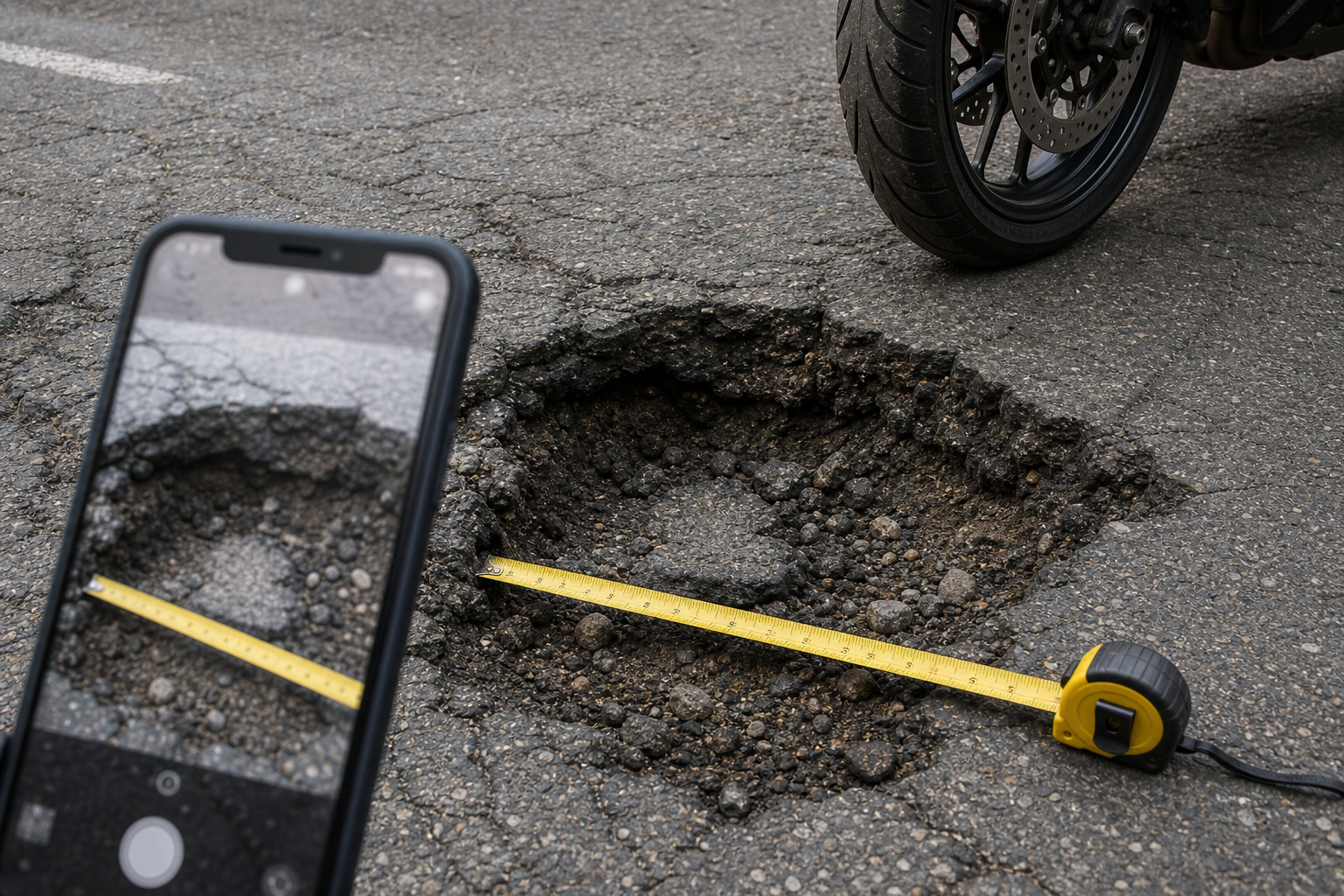
- Photos and video of the hazard from multiple angles.
- Measurements of pothole depth, width, lane position, and distance from landmarks.
- Exact location, direction of travel, lane, shoulder, mile marker, intersection, or GPS coordinates.
- Police report and crash-scene diagrams.
- Witness statements from riders, drivers, nearby residents, or business employees.
- Prior complaints, 311/maintenance reports, INDOT reports, or repair requests.
- Construction plans, inspection logs, traffic-control plans, and contractor records.
- Motorcycle damage, tire/rim damage, suspension damage, helmet and gear damage.
- Medical records connecting injuries to the crash mechanism.
- Weather, lighting, drainage, and visibility information.
What if no other vehicle hit the motorcycle?
Many road-hazard motorcycle crashes are single-vehicle crashes. That does not mean the rider is automatically at fault. A single-vehicle crash can still involve negligence by a road agency, contractor, property owner, utility crew, or another driver who created the hazard and left the scene.
Insurance companies may still argue the rider was speeding, inattentive, inexperienced, or should have avoided the hazard. Those arguments should be tested against the roadway evidence, visibility, warning signs, hazard size, lane position, and whether a reasonable rider could have avoided the danger.
For related rider-blame issues, see When Cars Fail to Yield, Motorcyclists Suffer the Consequences in Indiana and Why Intersection Crashes Are So Deadly for Motorcycle Riders in Indiana.
Comparative fault in Indiana road-hazard motorcycle cases
Indiana comparative fault can affect road-hazard claims. Under Indiana Code chapter 34-51-2, fault can reduce recovery, and in many ordinary negligence cases a claimant found more than 50% at fault may be barred from recovery.[3]
In a motorcycle road-hazard case, fault arguments may focus on speed, lookout, lane position, weather, lighting, rider experience, or whether the hazard was open and obvious. The response depends on evidence: how dangerous the condition was, whether warning signs existed, whether the hazard was foreseeable, and whether the responsible party had notice.
What to do after a motorcycle crash caused by a road hazard
- Call 911 and get medical help.
- Photograph the hazard, roadway, motorcycle, debris, signs, lighting, lane markings, and surroundings if safe.
- Measure the pothole, drop-off, or pavement defect if it can be done safely.
- Write down the exact location, direction of travel, lane, and nearby landmarks.
- Get witness names and phone numbers.
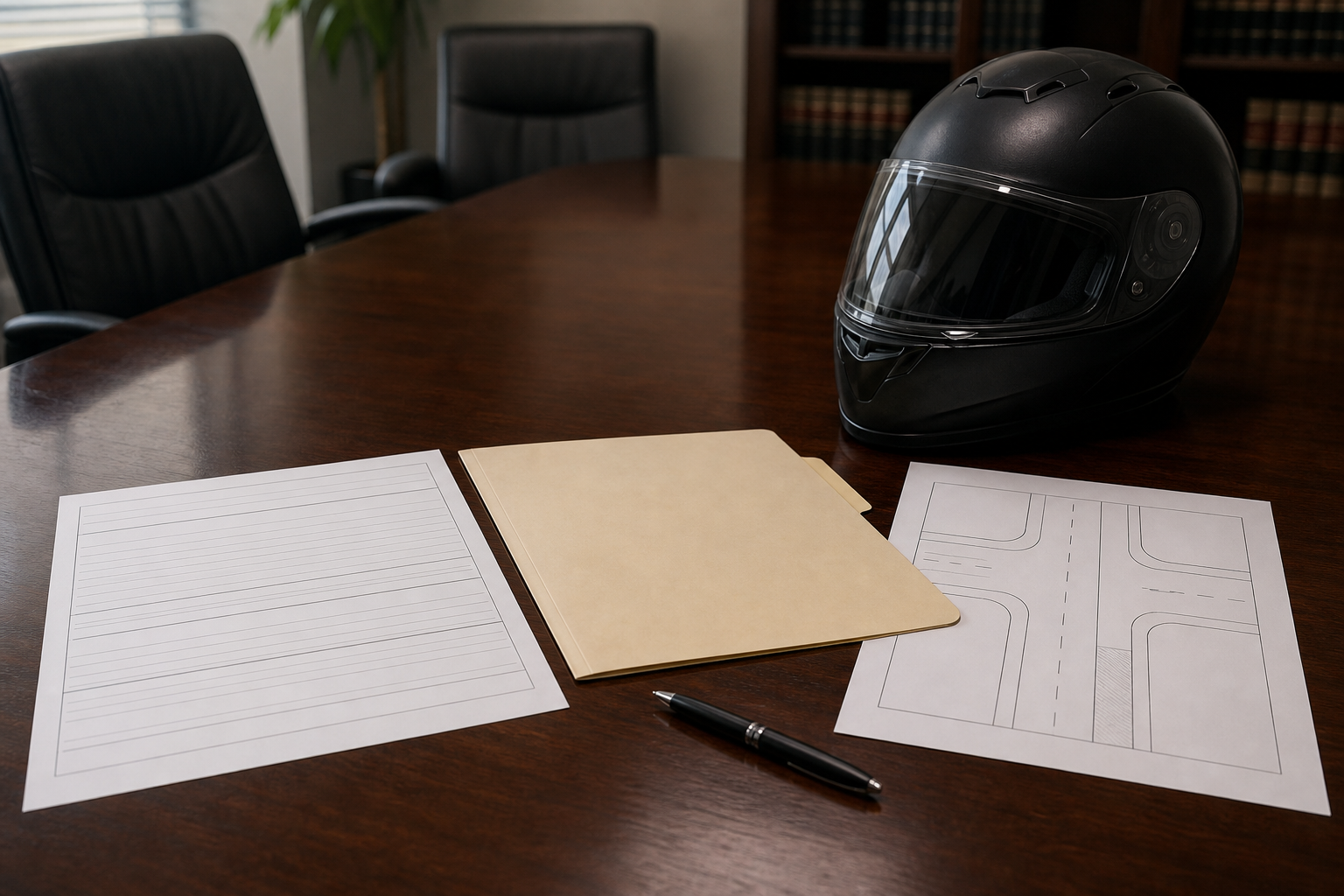
- Preserve the motorcycle, helmet, gear, damaged parts, towing records, and repair estimates.
- Do not assume a single-vehicle crash means there is no claim.
- Contact a motorcycle accident lawyer quickly if a government entity, contractor, or road-maintenance issue may be involved.
If a government body or employee may be involved, review our Indiana government tort claim notice guide, because notice deadlines can be much shorter than the ordinary injury filing period.
Fort Wayne and northeast Indiana practical note
In Fort Wayne and northeast Indiana, motorcycle road hazards may appear on city streets, county roads, state highways, construction zones, rural curves, railroad crossings, and commercial entrances. Potholes, freeze-thaw pavement damage, gravel washout, drainage problems, and construction transitions can be especially important after winter, heavy rain, or road work.
If the crash happened on I-69, I-469, US-30, Coliseum Boulevard, Lima Road, Coldwater Road, Illinois Road, Jefferson Boulevard, Dupont Road, State Boulevard, or a county road, identifying who controlled that road segment can be an early priority.
Talk to a Fort Wayne motorcycle accident attorney
If a pothole, gravel, debris, construction zone, drainage problem, or other road hazard caused your motorcycle crash, Delventhal Law Office can help investigate the roadway condition, identify potentially responsible parties, and preserve evidence.
Call (260) 484-6655 or contact us online for a free consultation. There is no fee unless we recover for you.
Frequently asked questions
Can I have a motorcycle accident claim if a pothole caused the crash?
Possibly. The claim depends on who controlled the road, whether the hazard was dangerous, whether the responsible party knew or should have known about it, and whether the pothole caused the crash.
Who is responsible for gravel or debris on the road?
It depends. Responsibility may fall on a road agency, contractor, property owner, utility company, trucking company, or another party that created or failed to address the hazard.
What if my crash was a single-motorcycle crash?
A single-vehicle motorcycle crash does not automatically mean the rider is at fault. Road conditions, construction defects, debris, drainage problems, or negligent maintenance may still be involved.
Why do road-hazard motorcycle cases need fast investigation?
Hazards can be repaired, swept, covered, or changed quickly. Government notice deadlines may also apply. Photos, measurements, witnesses, and maintenance records should be pursued early.
Should I preserve my motorcycle and gear?
Yes. The motorcycle, damaged parts, tires, rims, helmet, clothing, and gear may help show how the hazard caused the crash and the forces involved.
Sources and authority
- Motorcyclist Safety, National Highway Traffic Safety Administration, motorcycle risk and safety discussion, https://www.nhtsa.gov/road-safety/motorcycles[1].
- Indiana Tort Claims Act, Indiana Code chapter 34-13-3, Indiana General Assembly, https://iga.in.gov/laws/2024/ic/titles/34#34-13-3[2].
- Indiana Comparative Fault Act, Indiana Code chapter 34-51-2, Indiana General Assembly, https://iga.in.gov/laws/2024/ic/titles/34#34-51-2[3].
This article is general information for Indiana readers, not legal advice for a specific case. Reading it does not create an attorney-client relationship, and neither does contacting us. If you do contact us about a possible claim, Indiana Rule of Professional Conduct 1.18 requires us to keep what you tell us confidential whether or not we take the case — but please do not send documents or detailed facts until we have agreed in writing to represent you.