

Government-owned vehicles, poorly maintained roads, dangerous public buildings, and city or county employees cause serious injuries in Fort Wayne and across northeast Indiana every year. When that happens, injured people often assume the government "can't be sued." That is not true — but the rules really are different, and the timelines are much shorter than a normal car accident or slip-and-fall claim. This guide explains, in plain language, when you can bring a claim against a public entity in Indiana, the notice deadlines that trip people up, the immunities that can block a claim, and the practical steps that protect your rights.
Key takeaways
- You can sue the government, but only after giving proper notice. The Indiana Tort Claims Act (ITCA) controls claims against state and local government.
- Two notice deadlines matter most: 180 days for a city, county, town, school corporation, or other political subdivision; 270 days for a state agency.
- The two-year lawsuit deadline still applies on top of the notice requirement — they are separate steps.
- Some government conduct is immune, including certain discretionary policy decisions and a temporary road condition caused by weather.
- Damages are capped at $700,000 per person and $5,000,000 per occurrence, and punitive damages are not available against a governmental entity.
- Evidence disappears fast. Because the notice window is short, documenting the scene, injuries, and the responsible entity early is critical.
Can you actually sue a government in Indiana?
In most injury situations, yes. Indiana law allows people to bring tort claims against government bodies through a specific statute — the Indiana Tort Claims Act (Indiana Code 34-13-3)[1]. That means a city, county, town, public school corporation, public transit agency, state agency, or their employees can be held responsible when negligence causes injury — for example, a Citilink bus crash, a collision with a county road-maintenance truck, or a fall inside a public building.
The important distinction is between two categories of defendants:
- Political subdivisions — cities, towns, counties, townships, public school corporations, and local agencies like a city utility or a county highway department.
- The State of Indiana — state agencies such as the Indiana Department of Transportation (INDOT), a state university, or a state hospital.
Which category applies changes your deadline and where you send notice. If you are not sure whether the entity that hurt you is a city, county, or state body, that question should be answered quickly, because the clock is already running. A Fort Wayne personal injury attorney can help identify the correct defendant and the applicable deadline.
The tort claim notice deadline is the biggest trap
The single most important thing to understand is that you generally cannot go straight to court against a government entity. You first have to file a written notice of tort claim. Miss that step and your case can be barred no matter how clear the government's fault is.
For a claim against a city, county, town, school district, or other political subdivision, Indiana Code 34-13-3-8[1] requires notice within 180 days after the loss. For a claim against the State of Indiana, Indiana Code 34-13-3-6[1] requires notice to the Attorney General or the state agency involved within 270 days. The notice itself has content rules — it must describe, in a short and plain statement, the circumstances of the loss, the extent of the injury, the amount of damages, and your contact information.
| Who caused the injury | Notice deadline | Where notice goes | Statute |
|---|---|---|---|
| City, county, town, township, public school corporation, local agency (political subdivision) | 180 days after the loss | The governing body of that entity (and the risk management commission, where applicable) | IC 34-13-3-8[2] |
| State of Indiana / state agency (e.g., INDOT, a state university) | 270 days after the loss | Indiana Attorney General or the state agency involved | IC 34-13-3-6[3] |
| Lawsuit filing deadline (all injury claims) | 2 years after the injury | The appropriate Indiana court | IC 34-11-2-4[4] |
Notice and the lawsuit deadline are two different requirements. Even after you properly file notice, any lawsuit still has to be started within the general two-year personal injury statute of limitations (Indiana Code 34-11-2-4)[5]. For a deeper look at how these overlap, see our guides on what a government tort claim notice is in Indiana and how long you have to file a claim in Indiana.

Common ways cities, counties, and the state cause injuries
Government injury claims usually fall into a few recurring categories:
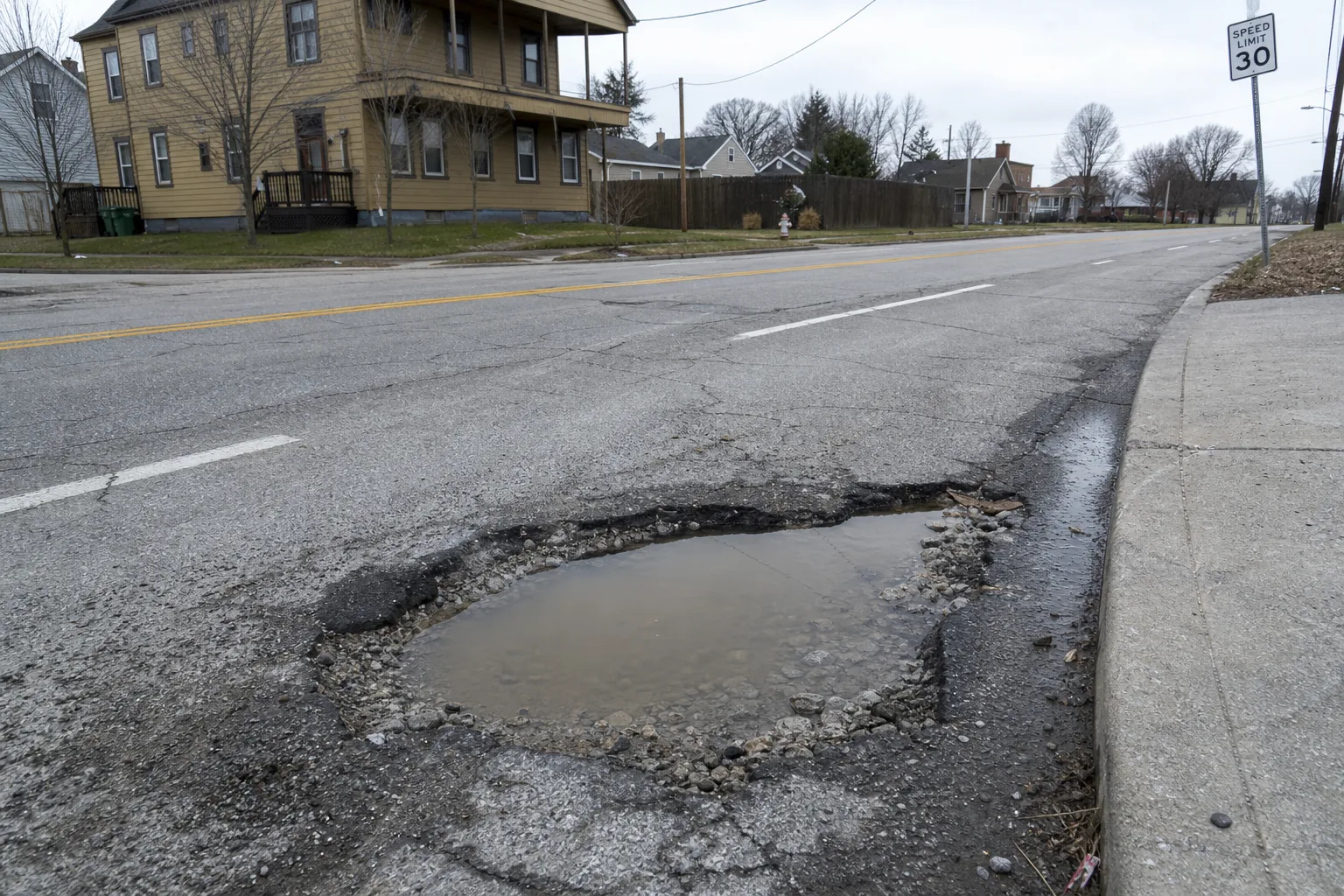
- Dangerous or defective roads. Deep potholes, missing signs, broken traffic signals, standing water from failed drainage, or negligent construction-zone setups can point to a city, county, or state road authority. Whether INDOT or a local highway department is responsible depends on which entity controls that stretch of road — and, as explained below, some road conditions are immune. See our overview of hazardous roadway accident claims.
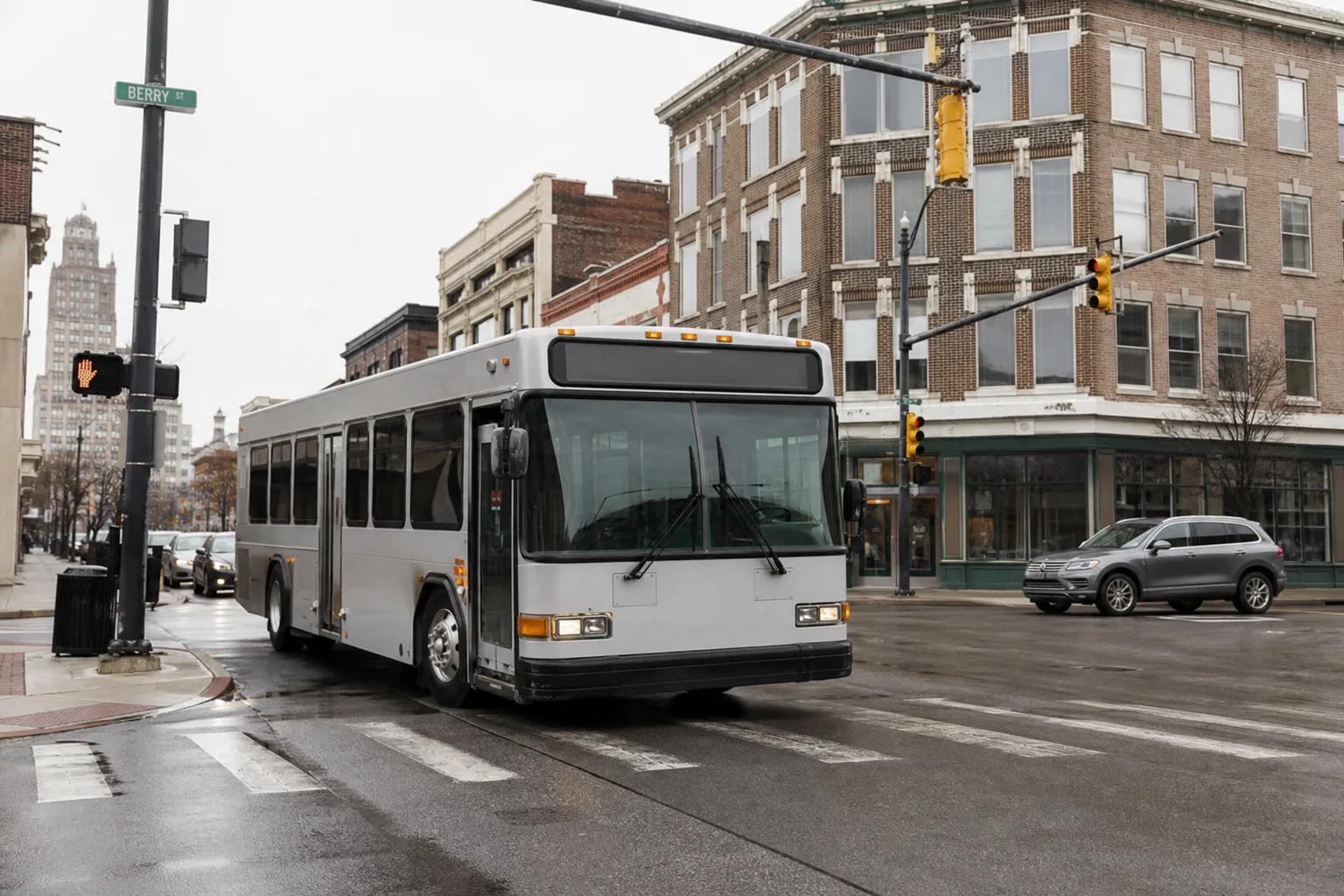
- Government vehicle crashes. Collisions with a Citilink or school bus, a police or fire vehicle, a snowplow, a garbage truck, or a county work truck. If a public transit or school bus is involved, review our Fort Wayne bus accident guidance and what to do after a school bus accident in Indiana.
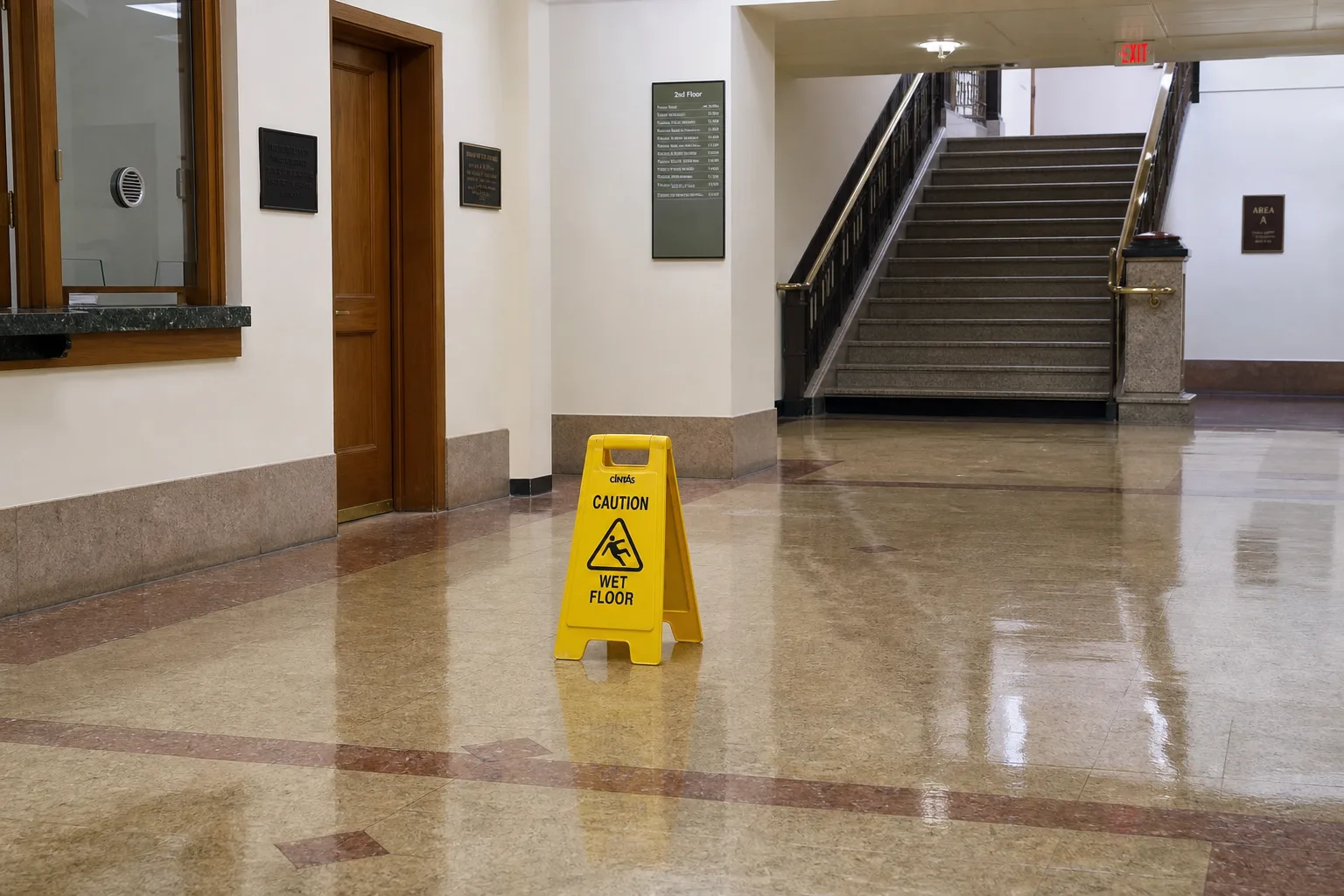
- Premises injuries on public property. Falls inside a courthouse, library, public school, city park building, or government office may be premises liability claims against the entity that owns and maintains the property. Our Fort Wayne premises liability page explains how visitor status and notice work.
In each of these, proving negligence looks similar to an ordinary injury case — you still show duty, breach, causation, and damages — but the government defendant adds the notice, immunity, and cap layers on top.
When the government is immune from suit
Not every injury involving a government entity leads to a payable claim. The Indiana Tort Claims Act lists situations where a governmental entity or its employee is not liable. Under Indiana Code 34-13-3-3[1], immunity can apply to things like:
- A temporary condition of a public road caused by weather (for example, ice or snow that has not been there long enough to act on).
- The performance of a discretionary function — a genuine policy-level judgment call, as opposed to routine maintenance.
- The condition of an unpaved road, trail, or footpath providing access to a recreation or scenic area.
- Certain acts related to the design of a highway, subject to time limits described in agency guidance such as INDOT's summary of the Indiana Tort Claims Act[6].
Immunity is fact-specific and often disputed. For example, a pothole that a city knew about for months is very different from ice that formed an hour before a crash. Whether immunity applies frequently turns on records — inspection logs, work orders, complaint histories, and weather data — which is one more reason to preserve evidence early. Because immunity is a high-stakes legal question, it is one to review with counsel rather than assume.
Damage caps and no punitive damages
Even when a government claim succeeds, Indiana limits what you can recover. Under Indiana Code 34-13-3-4[1], the combined liability of all governmental entities and employees is capped at $700,000 for injury to or death of one person in a single occurrence (for causes of action that accrue on or after January 1, 2008), and $5,000,000 total for all people injured in that occurrence. That same statute prohibits punitive damages against a governmental entity.
These caps matter when injuries are severe. In a catastrophic case, the cap may be lower than the true value of the harm, which makes it important to investigate whether any non-government party (such as a private contractor, another driver, or a product manufacturer) also shares fault and is not subject to the cap. If you want to organize your medical bills, lost wages, and other losses while you sort out who is responsible, our Fort Wayne car accident settlement calculator can help you think through the pieces.
Evidence and next steps after a government injury
Because the notice window can be as short as 180 days, the practical work should start right away. Prompt medical care also protects your health and creates the documentation that connects your injuries to what happened — delayed pain and injuries like concussions are common, so a medical evaluation matters even if you feel "okay" at first.
Practical steps that help protect a government claim:
- Get medical care promptly and keep every record, bill, and discharge instruction.
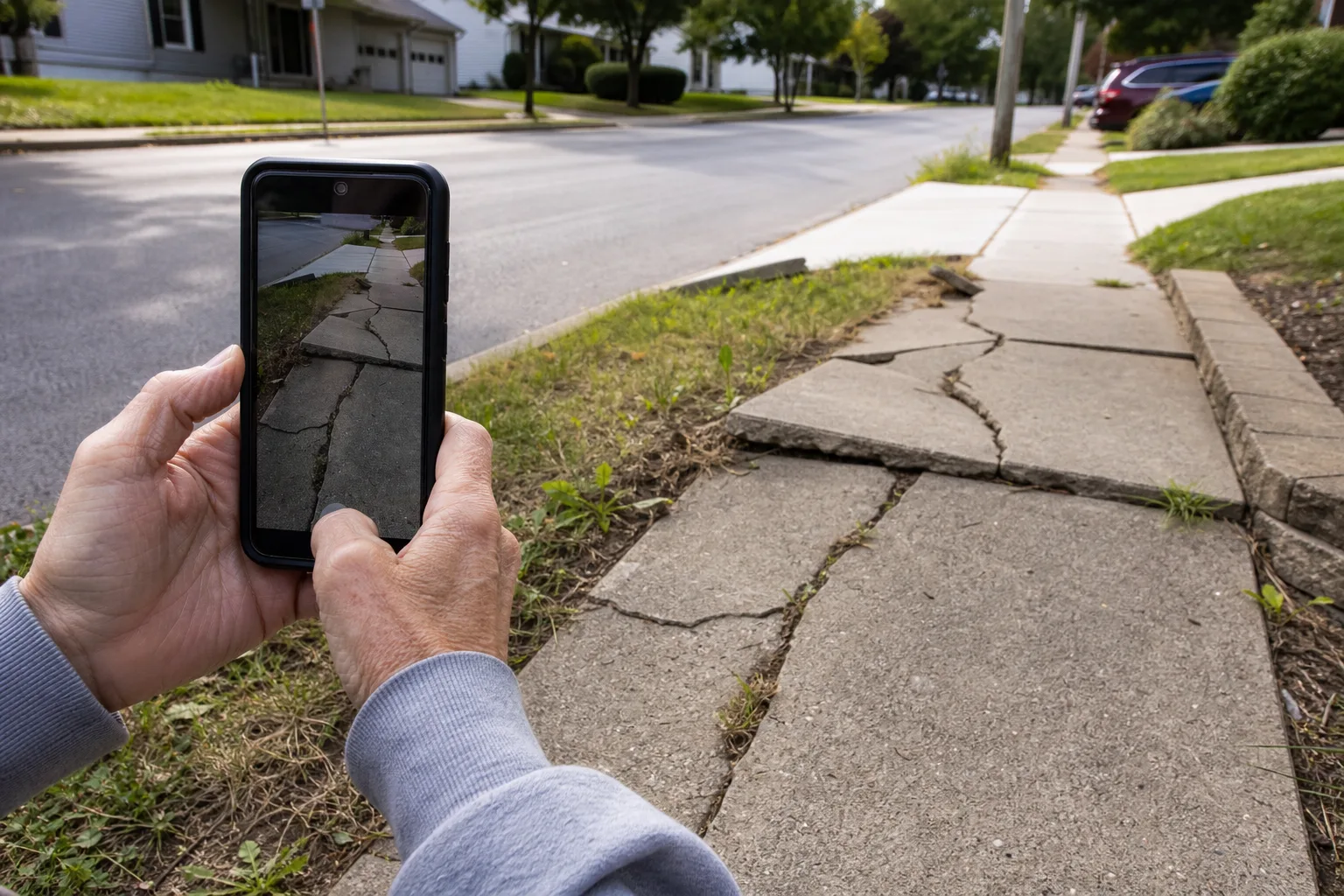
- Photograph the scene and the hazard — the pothole, missing sign, broken signal, wet floor, or vehicle — before it is repaired or cleaned up.
- Identify the responsible entity (city, county, town, school corporation, or state agency) as early as possible so you send notice to the right place.
- Get the crash or incident report and the names of any witnesses and government employees involved.
- Note repairs. If a hazard is fixed shortly after your injury, record when — it can show the condition existed and was known.
- Calendar the deadline and confirm it with counsel; the 180-day or 270-day notice date is easy to miss.
To understand how these claims fit into the broader injury process, our overview of what a personal injury case is in Indiana is a helpful starting point.
Frequently asked questions
Do I always have to file a tort claim notice before suing the government?
In most tort cases against an Indiana government entity, yes. The notice requirement is how the Tort Claims Act works, and failing to give proper, timely notice can bar the claim. There are limited exceptions and doctrines that sometimes apply, but you should not assume one covers you — confirm the deadline early.
What happens if I miss the 180-day or 270-day deadline?
Missing the notice deadline can result in the claim being dismissed even if the government was clearly at fault. Some narrow arguments (such as substantial compliance or disability) occasionally preserve a late claim, but they are uncertain and fact-specific. The safest approach is to treat the deadline as firm and act well before it.
How much can I recover against a government in Indiana?
Damages are capped at $700,000 per person and $5,000,000 per occurrence for causes of action accruing on or after January 1, 2008, and punitive damages are not allowed against a governmental entity. If a non-government party also caused the injury, that party may not be subject to the cap.
I was hurt in a Citilink or school bus crash — is that a government claim?
Often yes, because public transit agencies and public school corporations are governmental entities subject to the Tort Claims Act. That usually means the 180-day political-subdivision notice deadline applies, so acting quickly is important.
Can I sue over a pothole or bad road?
Sometimes. It depends on which entity controls the road, whether the government knew or should have known about the hazard, and whether an immunity (such as a temporary weather condition) applies. These claims turn heavily on records and evidence, so preserving proof early is key.
Talk with an attorney about your situation
Claims against a city, county, or the State of Indiana move on a shorter clock than ordinary injury cases, and one missed step can end an otherwise strong claim. If you were hurt and a government vehicle, road, or property may be involved, a free consultation with Delventhal Law Office can help you understand the deadlines that may apply and decide the next step. You do not have to figure out the tort claim process alone.
This article is general information about Indiana law, not legal advice, and reading it does not create an attorney-client relationship. Deadlines and outcomes depend on the specific facts of your situation. For advice about your case, speak with a qualified Indiana attorney.