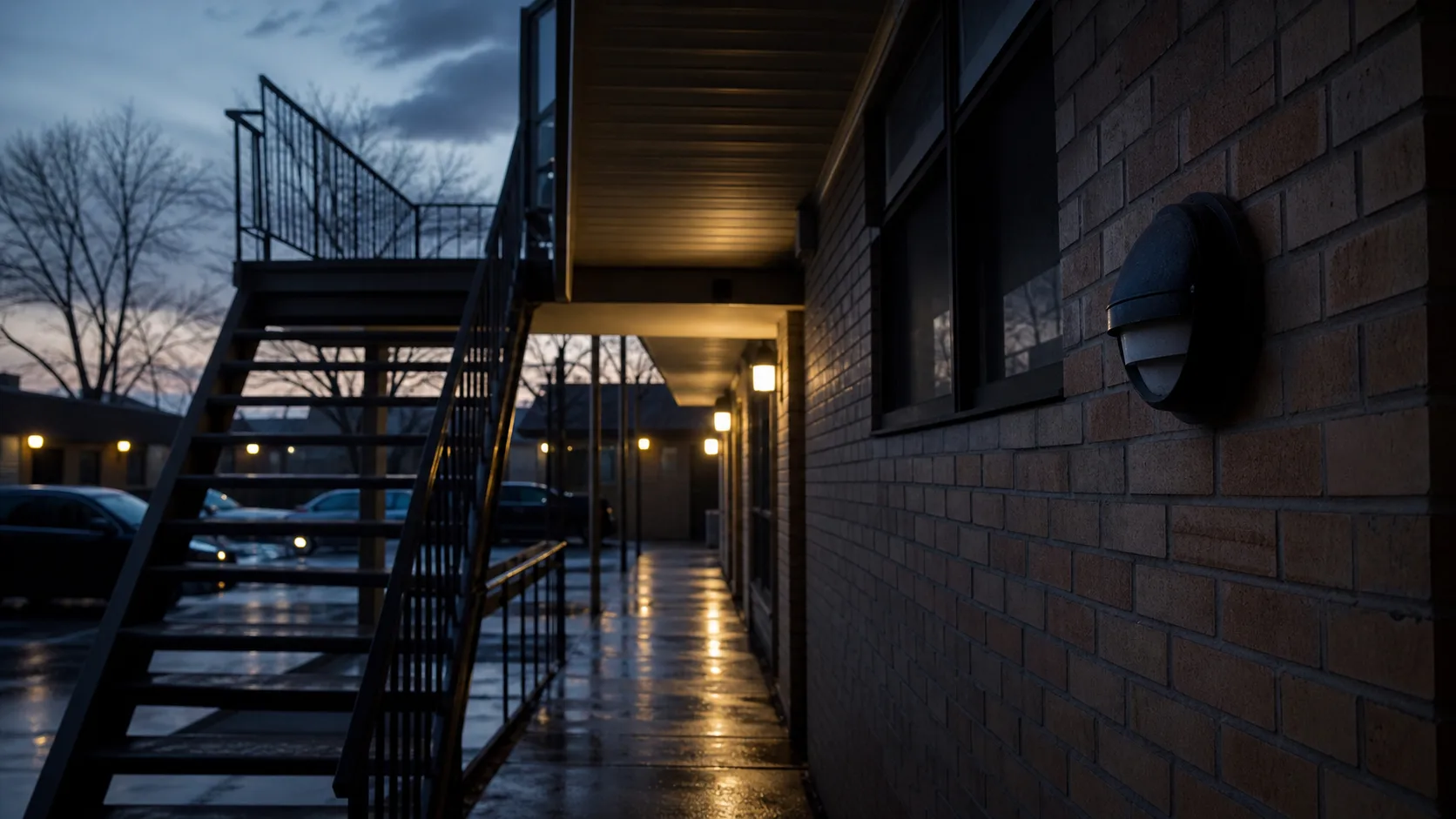
You step into a stairwell, a parking lot, or the back hallway of an apartment building, and the light is dim or burned out. You cannot see the broken step, the curb, the spilled liquid, or the raised edge of a mat until it is too late. When that happens in Fort Wayne or anywhere in Indiana, a natural question follows: is the property owner responsible because I couldn't see?
Lighting cases are often misunderstood. Bad lighting by itself rarely wins a claim. What usually matters is how the darkness combined with a hidden hazard — and whether the owner had a fair chance to catch and correct the problem. This guide explains how Indiana premises-liability law treats poor-lighting falls, how to separate the lighting from the underlying danger, and exactly what evidence tends to make or break these claims.
Key takeaways
- Poor lighting is usually treated as one condition of the property, not an automatic basis for liability. You still have to connect it to a hazard and to your fall.
- Indiana ties an owner's duty to your status on the land — invitee, licensee, or trespasser — and business customers and paying tenants' guests generally get the highest level of care.
- You typically must prove the owner had actual or constructive notice of the danger (including a lighting problem that existed long enough to be discovered).
- Causation is the heart of a lighting case: would adequate light have let a reasonable person see and avoid the hazard?
- Indiana's comparative-fault rule can reduce or bar recovery if your own fault is more than 50%.
- Evidence disappears fast — burned-out bulbs get replaced, timers get reset, and lighting looks different by daylight. Same-night photos and quick preservation matter.
- Most Indiana injury lawsuits carry a two-year deadline, and claims involving government-owned property have much shorter notice deadlines.
The core rule: lighting is evidence, not automatic liability
The practical rule: in Indiana, inadequate lighting is generally treated as one condition of the property that can help prove a claim — but it is rarely the whole claim. Courts do not hold property owners responsible simply because a space was dark. They ask whether the darkness hid a genuine hazard, whether the owner had a duty to you, whether the owner knew or should have known about the problem, and whether better lighting would have prevented the fall.
Think of it as two linked questions. First, what hurt you — a broken step, a curb, a pothole, a cord, a spill, an unmarked drop-off? Second, why couldn't you see it — because the area was too dark to reveal a danger a reasonable person would otherwise have avoided? A strong lighting case usually answers both. A weak one treats "it was dark" as if that alone proves fault.
How Indiana premises liability works
Indiana premises-liability claims are a specific kind of negligence claim, so they follow the familiar building blocks of duty, breach, causation, and damages. If you want the general framework, our explainer on the four proofs of negligence under Indiana law walks through each element. You can use our Indiana car accident settlement calculator to organize the factors that may affect a claim’s value; it is an educational tool, not a promise of any result.
What makes premises cases different is that the duty owed depends on why you were on the property. Indiana sorts lawful and unlawful visitors into categories — invitee, licensee, and trespasser — and the Indiana Supreme Court has held that social guests are treated as invitees entitled to reasonable care. We cover the distinctions in detail in our guide to invitee, licensee, and trespasser status in Indiana.
For an invitee — a store customer, a paying tenant, a delivery worker, most social guests — Indiana follows the standard drawn from the Restatement (Second) of Torts § 343. A property possessor can be liable for harm from a condition on the land only if the possessor:
- knows about the condition, or by exercising reasonable care would discover it, and should realize it involves an unreasonable risk of harm to invitees;
- should expect that invitees will not discover or realize the danger, or will fail to protect themselves against it; and
- fails to exercise reasonable care to protect invitees against the danger.
All three parts must be met. Poor lighting can be relevant to each: a burned-out fixture the owner should have caught (first element), a hazard a person cannot reasonably see in the dark (second element), and a failure to replace bulbs, add lighting, or warn (third element). Indiana courts continue to apply this three-part § 343 test in modern Court of Appeals of Indiana premises-liability decisions[1].
Poor lighting vs. the underlying hazard
This is where lighting claims are won or lost, and where generic "bad lighting" articles fall short. There are really two theories, and it helps to know which one fits your facts.
Theory 1 — the lighting hid a separate hazard. Here, the danger is something concrete (a cracked step, a hose, a curb stop, a spill), and the darkness is what kept you from seeing and avoiding it. Your case then depends heavily on proving both the hazard and that adequate light would have revealed it.
Theory 2 — the darkness itself was the hazard. Sometimes the lack of light is the dangerous condition — for example, an unlit stairway or a parking structure where a reasonable person cannot judge steps, drop-offs, or level changes at all. These cases can be harder because the defense will argue that a person who cannot see should slow down or find another route.
Either way, causation is the pivot point. You are effectively asking whether a reasonable person, with proper lighting, would have seen the hazard and avoided the fall. If the hazard would have been just as invisible in good light — or if you would have stepped there regardless — the lighting argument weakens. That is why the details of the fixture, the hazard, and your line of sight matter so much.
Notice: did the owner know or should they have known?
Indiana does not make property owners insurers of everyone's safety. An owner is generally liable only when they had actual notice (they actually knew about the danger) or constructive notice (the condition existed long enough that a reasonable inspection should have caught it). Our Fort Wayne premises-liability page explains how this notice requirement shapes almost every fall claim.
Lighting problems often live in the constructive-notice zone. A single bulb that failed minutes before you arrived is different from a fixture that has been dark for weeks, a light on a broken timer, or a stairwell that was designed without adequate illumination. Evidence such as maintenance logs, prior tenant or customer complaints, repair tickets, and how long the outage lasted can turn "we didn't know" into "you should have known."
Where lighting falls happen in Fort Wayne
Poor-lighting falls tend to cluster in predictable places around Allen County. Recognizing the setting helps you know what evidence to look for:
- Storefront entrances and vestibules — burned-out entry lights combined with mats, thresholds, or level changes.
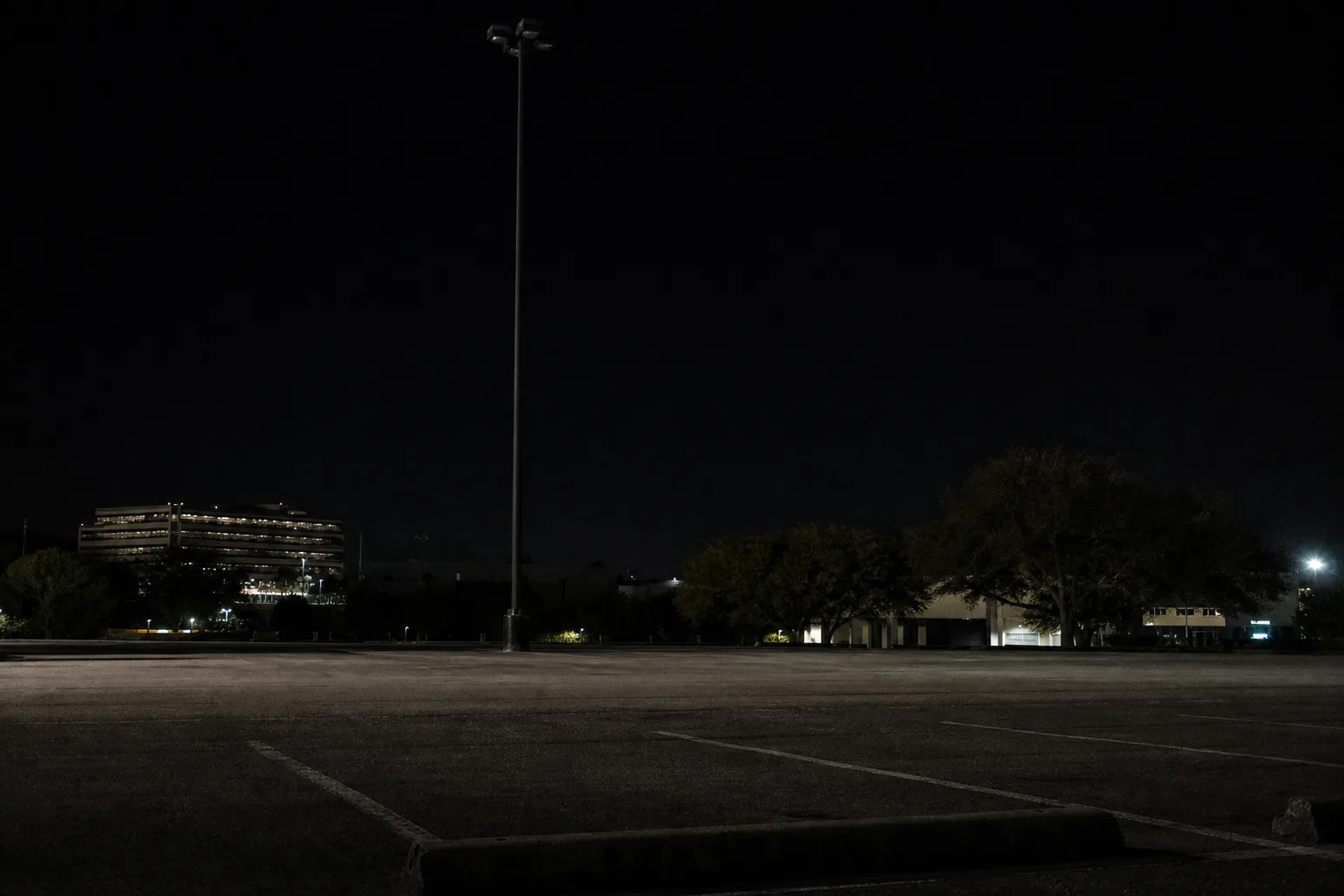
- Parking lots and garages — dead pole lights over curb stops, wheel stops, potholes, and unmarked medians, especially after early winter sunsets.
- Apartment common areas — shared hallways, laundry rooms, and exterior walkways where landlords control the lighting and maintenance.
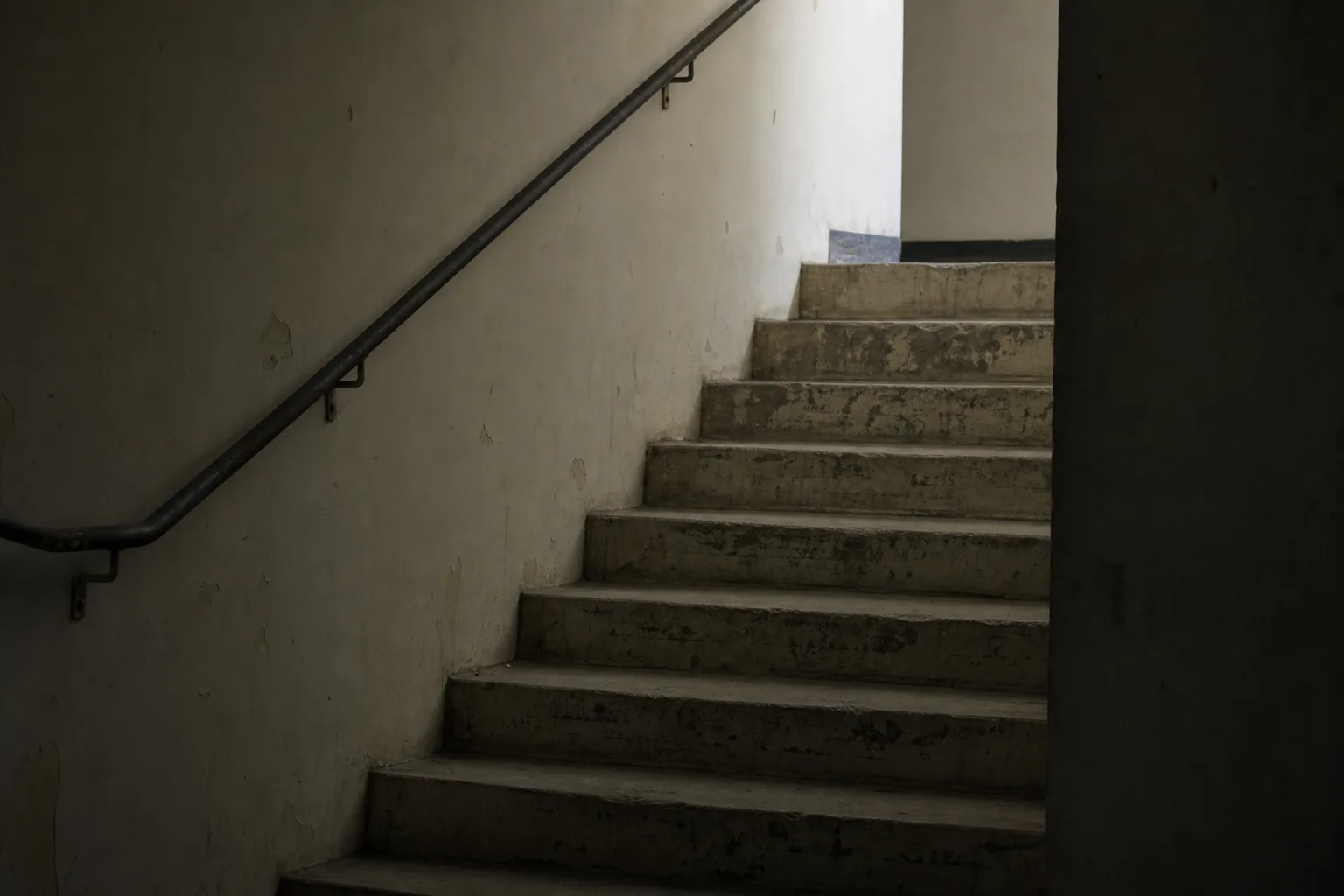
- Stairways — interior and exterior stairs where a missing fixture hides a worn tread, loose handrail, or uneven riser.
- Restaurants and bars — intentionally dim spaces where steps, ramps, or patio edges are hard to judge.
Many of these are classic slip-, trip-, and fall settings. If your fall involved a walking-surface hazard as well as darkness, our Fort Wayne slip, trip, and fall page covers how those claims come together.
What you have to prove (proof matrix)
Use this matrix to see how a poor-lighting claim is built. Each element needs its own proof — a strong case ties them together.
| What you must show | Why it matters | Evidence that helps |
|---|---|---|
| You were a lawful visitor (usually an invitee) | Sets the level of care the owner owed you | Receipt, lease, appointment, invitation, security footage of entry |
| A hazard existed (or the darkness itself was unreasonably dangerous) | Darkness alone is rarely enough | Photos of the step/curb/spill, measurements, incident report |
| The lighting was inadequate | Connects the darkness to your inability to see | Same-night photos, fixture/bulb condition, light-level readings |
| Owner had actual or constructive notice | Owner is not liable for what they could not reasonably know | Maintenance logs, repair tickets, prior complaints, outage duration |
| The lighting caused the fall | Would proper light have prevented it? | Witness accounts, scene reconstruction, your account of line of sight |
| You were hurt and incurred damages | No recovery without a compensable injury | Medical records, bills, wage loss, imaging |
Evidence and preservation timeline
Lighting evidence is unusually perishable. A landlord can replace a bulb the next morning; a business can reset a photocell or timer; and by daylight the whole scene photographs differently. Moving quickly protects the proof.
| When | What to do |
|---|---|
| Immediately | Report the fall to the manager, landlord, or staff and ask for a written incident report. Get medical care. |
| Same night / same conditions | Photograph and video the scene in the actual lighting, showing the dark fixture, the hazard, and how little you could see. Capture the time of day. |
| Within 24-72 hours | Identify witnesses and get names and phone numbers; note nearby businesses or cameras. Preservation of video matters early. |
| Within days | Send or ask counsel to send a preservation letter for surveillance footage, maintenance logs, and repair records before they are overwritten or discarded. |
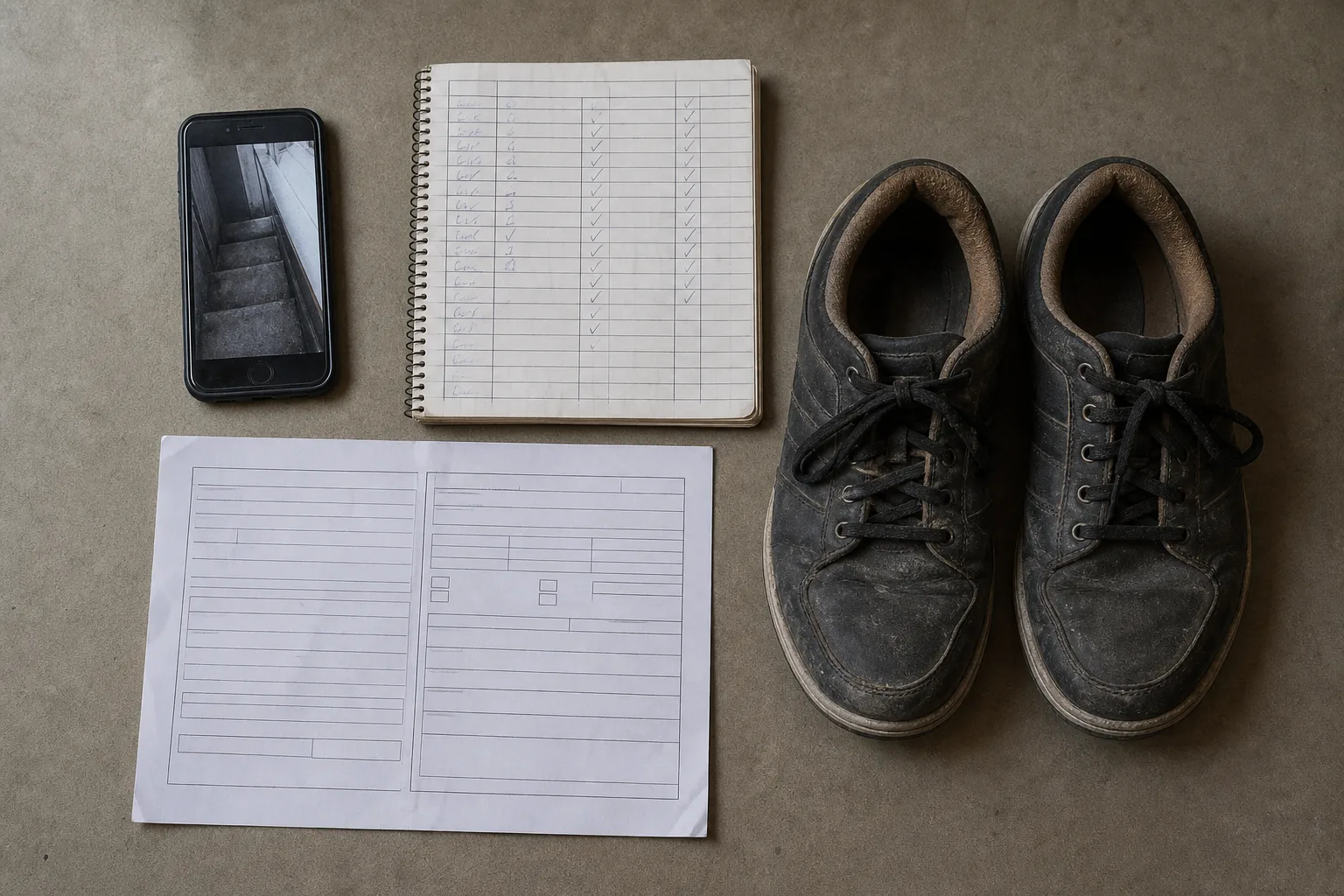
| Ongoing | Keep receipts, the shoes and clothing you wore, and a symptom journal. Return to document lighting again if conditions are disputed. |
Independent witnesses often make the difference in a "he said, she said" lighting dispute. Our guide on how witness statements help establish fault in Indiana explains what details to capture before memories fade.
How to photograph a poor-lighting scene
Photos are the single most valuable evidence in a lighting case, and they are easy to get wrong. A few practical tips:
- Shoot in the same lighting. Return at the same time of day and the same conditions. A daytime photo of a nighttime fall proves almost nothing.
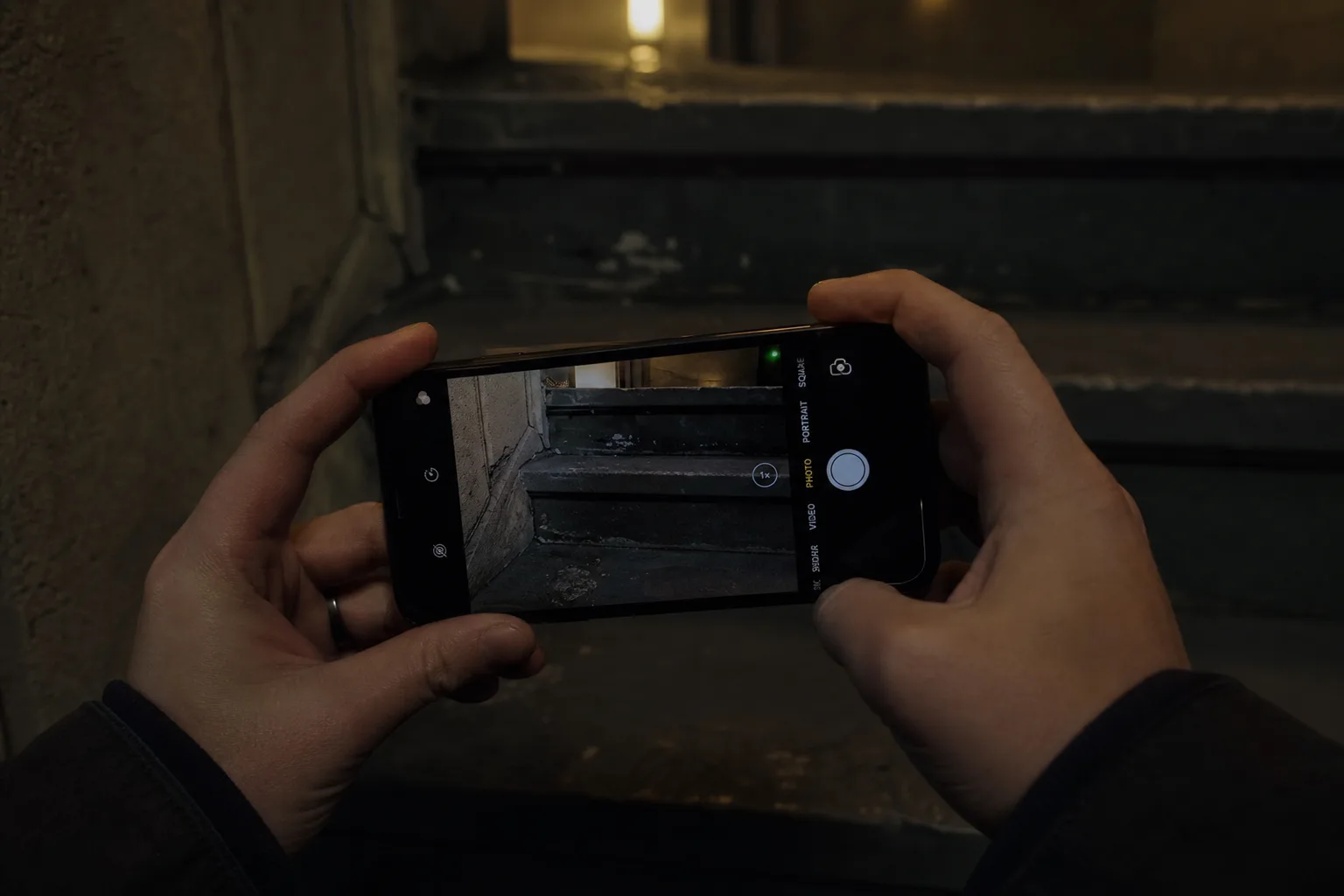
- Do not "brighten" the scene. Turn off your camera's flash and any HDR/night mode that artificially lightens the image, because the defense will argue your photo misrepresents how dark it really was. If you use flash to show the hazard clearly, also take a no-flash photo to show the actual darkness.
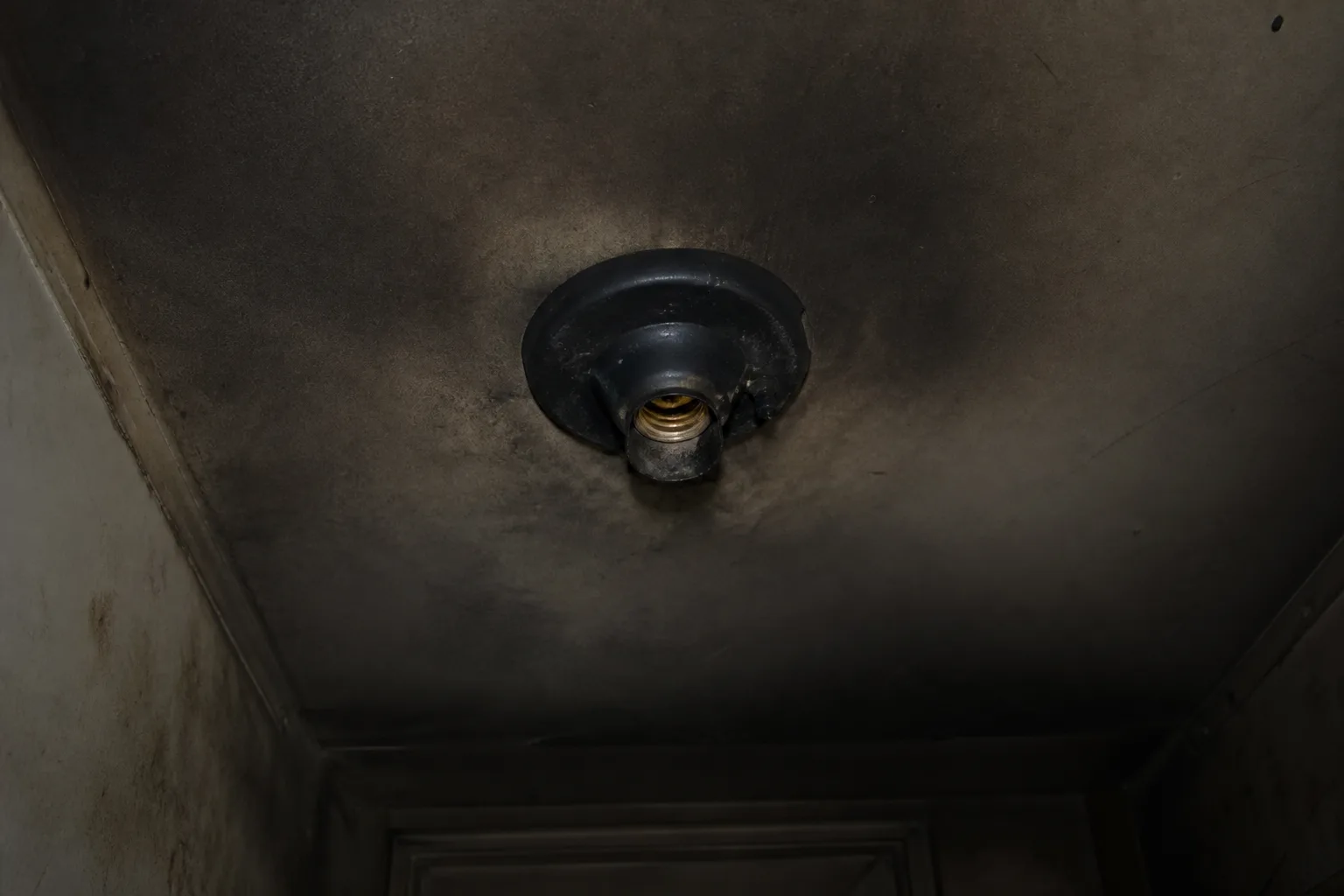
- Show the fixture. Photograph the dark or missing light itself — a burned-out bulb, an empty socket, a covered fixture, or an unlit pole.
- Show scale and the hazard. Place a common object or measure next to the step, curb, or spill so its size and the level change are clear.
- Capture context. Wide shots that show the path you took, plus the timestamp, help prove line of sight and timing.
How insurers defend lighting claims
Expect the property's insurer to push several familiar arguments. Knowing them in advance helps you preserve the right evidence:
- Open and obvious. Indiana recognizes that owners are generally not liable for dangers that are open and obvious to a reasonable person. The insurer may argue the hazard — or the darkness itself — was obvious and you should have avoided it.
- No notice. "The bulb had just gone out" or "no one reported it" is a common defense aimed at the notice element.
- Claimant distraction. That you were on your phone, carrying items, or not watching where you walked.
- Weak or misleading photos. That your images used flash or night mode, or were taken at a different time, so they don't show the real conditions.
- Changed conditions. That the lighting was fine, pointing to a repair or a working fixture documented after the fall.
- The lighting didn't cause it. That you tripped over something you would have hit regardless, so darkness is irrelevant.
Some of these overlap with warning-sign disputes. If a "caution" or "watch your step" sign was posted, our article on whether you can still recover when there was a warning sign in Indiana explains how warnings and adequacy interact.
Comparative fault and your share of blame
Indiana uses a modified comparative-fault system under the Indiana Comparative Fault Act (IC 34-51-2)[2]. Your own fault reduces your recovery in proportion to your share, and if a jury finds your fault is greater than 50%, you are barred from recovering at all. For example, if your damages are $100,000 and you are found 20% at fault, your recovery is reduced to $80,000; at 51% fault, it drops to zero.
In lighting cases, comparative fault often centers on whether you should have slowed down, used a handrail, used your phone's flashlight, or taken a lit path. That does not mean you are automatically at fault for walking in a dark area you were invited to use. We break down the mechanics in our guide to Indiana's 51% fault rule, which applies to premises cases as well as crashes.
Deadlines that can end your claim
Deadlines are unforgiving, and they differ sharply depending on who owns the property.
| Situation | General deadline | Notes |
|---|---|---|
| Private property (store, apartment, business) | Two years to file suit | Indiana's general personal-injury statute of limitations (IC 34-11-2-4[3]) |
| City or county property (political subdivision) | 180-day tort claim notice | Written notice required before suit; separate from the two-year deadline |
| State-owned property or agency | 270-day tort claim notice | Applies to state agencies such as INDOT-controlled areas |
A fall in a poorly lit government building, public garage, or public housing common area can trigger these much shorter notice windows. Our overview of the Indiana government tort claim notice explains the traps that bar otherwise-valid claims.
Documenting your injuries
Falls in the dark commonly involve stairs and hard surfaces, and the resulting injuries range from sprains and fractures to head and back injuries. From a claim standpoint, the goal is to document — not diagnose. Prompt medical care creates a record that connects your injury to the fall, and consistent follow-up avoids the "gap in treatment" argument insurers use. Keep copies of emergency records, imaging, follow-up notes, and bills, and describe symptoms accurately to your providers. This article is general information about the legal process, not medical advice; your treatment decisions belong to you and your doctors.
Frequently asked questions
Is "it was too dark" enough to win my case?
Usually not by itself. Indiana courts look at whether the darkness hid a real hazard, whether the owner knew or should have known, and whether better lighting would have prevented the fall. Darkness is powerful evidence when it is tied to a concrete hazard and to the causation question.
My landlord let a common-area light stay burned out. Are they responsible?
Possibly. Landlords generally control and must maintain common areas such as shared hallways, stairwells, and exterior walkways. If a light was out long enough that a reasonable inspection should have caught it, that supports constructive notice — a key element of the claim.
Do lighting codes or OSHA standards prove the owner was negligent?
Not automatically, but they can help. Federal workplace rules, for example, require under OSHA standard 29 CFR 1910.37[4] that exit routes be adequately lit so an employee with normal vision can see along the route. Building and safety standards can be evidence of what "reasonable" lighting looks like, though Indiana negligence still turns on the § 343 duty, notice, and causation.
I already took photos with my flash on. Did I ruin my case?
No. Flash photos still document the hazard and the failed fixture. The concern is that flash and night mode make a scene look brighter than it was, so it helps to also capture no-flash images and to return in the same conditions. Save every original file with its metadata.
What if I was partly at fault for not watching my step?
Under Indiana's comparative-fault rule, being partly at fault reduces your recovery but does not necessarily end your claim unless your share is more than 50%. Being invited into a dark area you were expected to use is different from ignoring an obvious, well-lit danger.
How long do I have to act?
Most Indiana injury lawsuits must be filed within two years. If a government entity owns the property, a written tort claim notice is due much sooner — commonly 180 days for city or county property and 270 days for state property. Because evidence also disappears quickly, it is wise not to wait.
If you were hurt in a dark stairway, lot, or walkway
You do not have to sort out visitor status, notice, and causation on your own. If poor lighting hid a hazard that caused your fall in Fort Wayne or anywhere in Indiana, Delventhal Law Office can review what happened, explain the deadlines that may apply, and help you decide the next step. A free consultation can help you understand your options before evidence is lost or a deadline passes.
This article is general information about Indiana law and is not legal advice. Reading it does not create an attorney-client relationship. Every fall is fact-specific; for advice about your situation, speak with a qualified Indiana attorney.