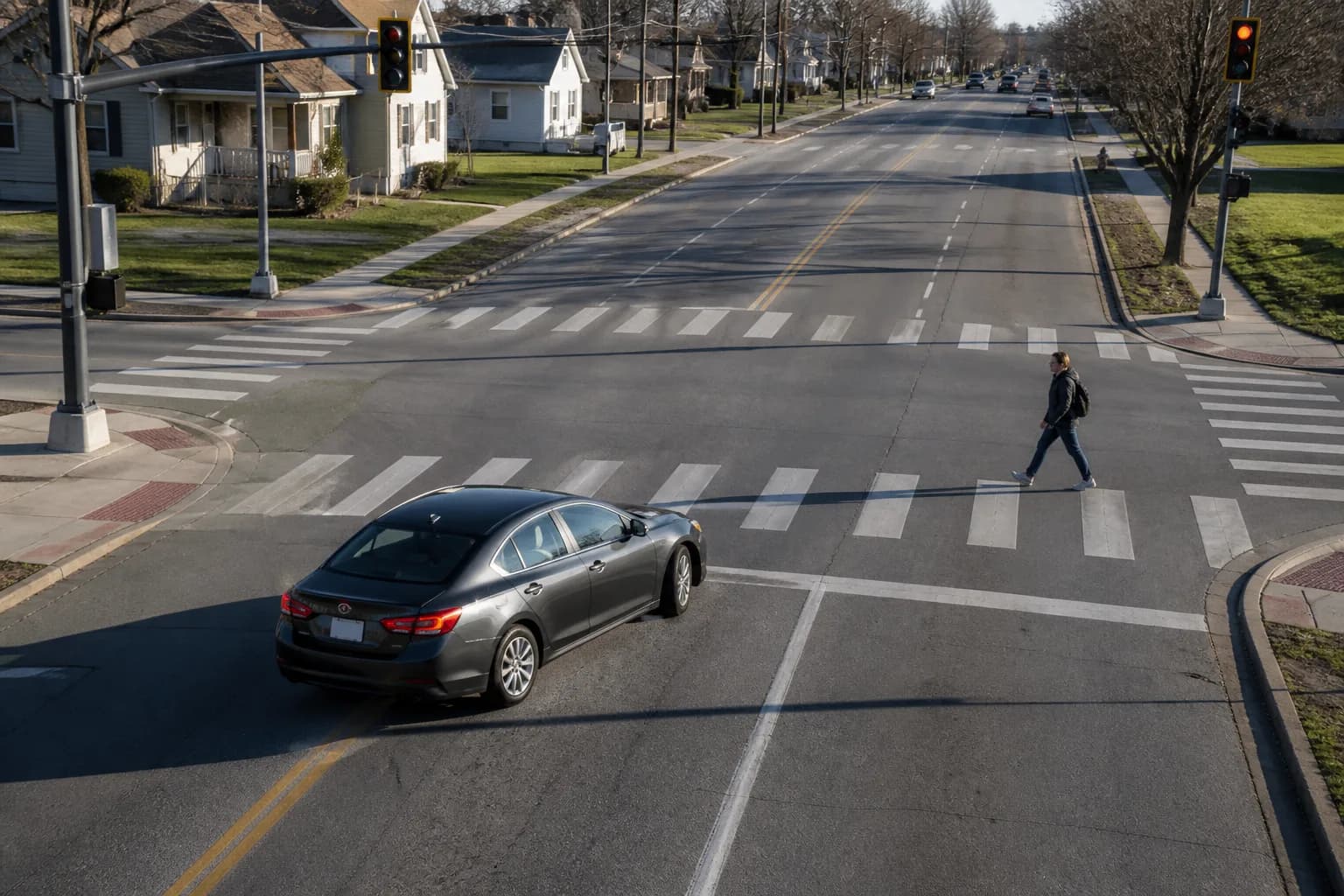
After a left-turn pedestrian crash, the central question is often not simply whether the driver says, “I never saw you.” The better question is what the driver could have seen while approaching, waiting, beginning the turn, and crossing the pedestrian’s path.
This evidence-first guide explains how that question may be investigated at Fort Wayne and northeast Indiana intersections. For broader help after a pedestrian collision, see Delventhal Law Office’s Fort Wayne pedestrian accident guide.
Key takeaways
- A statement that a pedestrian was “not visible” can be compared with the available signal, scene, video, and witness information.
- Indiana law requires a driver to yield to a pedestrian proceeding on a walk indication and requires pedestrians to follow applicable pedestrian-control signals.
- A pedestrian may not suddenly enter the path of a vehicle that is so close as to create an immediate hazard.
- Indiana’s comparative-fault statutes address allocation of fault among people whose conduct contributed to a loss.
- Federal safety guidance says drivers should slow down and be prepared to stop when turning into a crosswalk.
The real question is the driver’s changing view
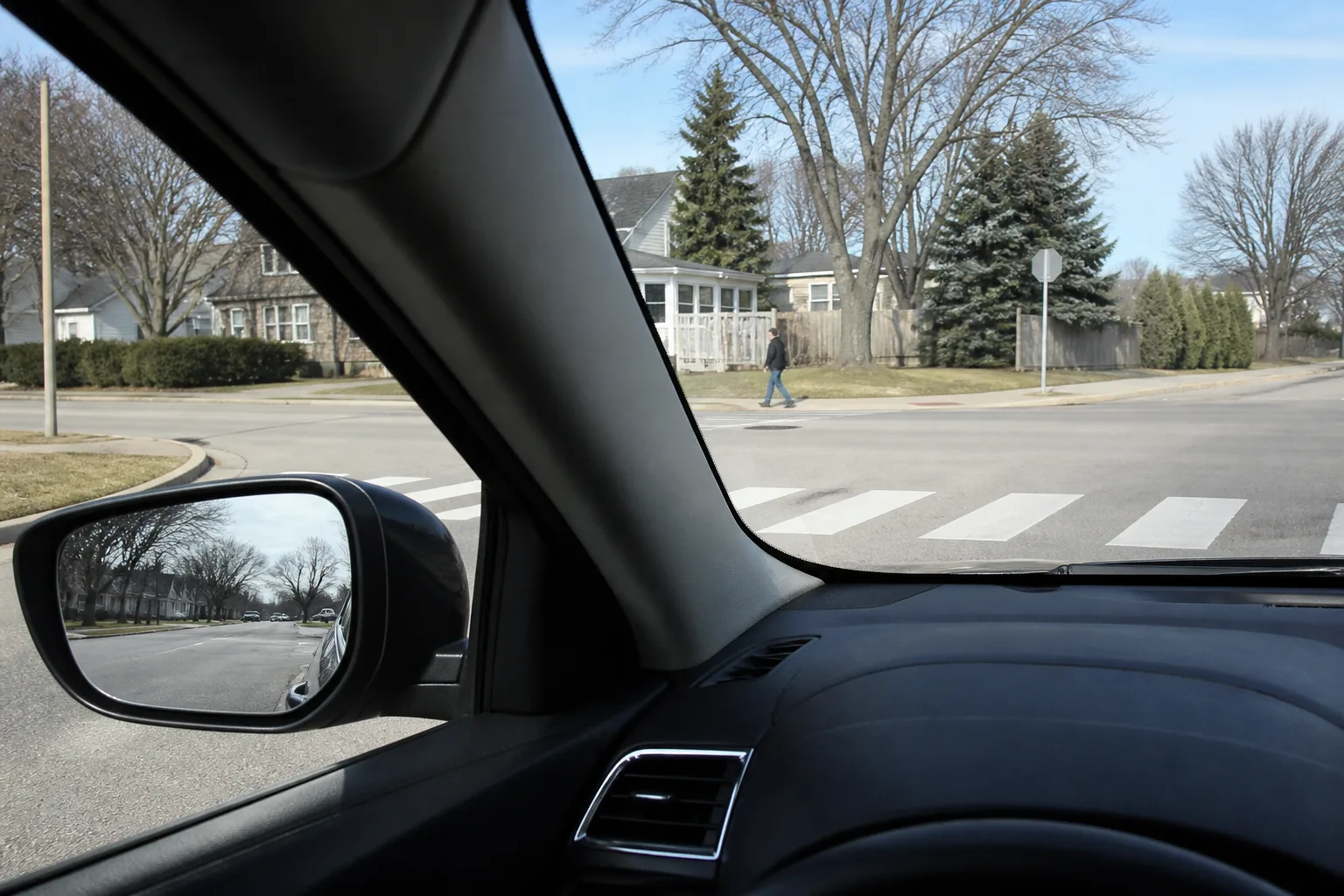
A left-turning driver’s view is not one frozen picture. The useful investigation follows the vehicle from its approach to the point of impact and asks what occupied the driver’s attention and field of view at each point.
Important questions include:
- Where was the driver stopped before turning?
- Was opposing traffic blocking part of the crosswalk?
- Did the driver move forward, pause, or complete the turn continuously?
- Where was the pedestrian when the vehicle began moving?
- Did the windshield pillar, mirror, another vehicle, a sign, or roadside object temporarily align with the pedestrian?
- How did the view change as the steering angle changed?
As a practical documentation exercise, note where a claimed temporary obstruction was located and how the view changed as the vehicle moved. NHTSA tells drivers to look for pedestrians, minimize blind spots, and use extra caution at night or in bad weather.
How Indiana law frames the intersection
Under Indiana Code 9-21-17-2[1], a pedestrian facing a flashing or steady walk indication may proceed in the signal’s direction, and a driver must yield the right-of-way to that pedestrian.
The same statute says a pedestrian generally may not begin crossing on a steady “don’t walk” indication. For a flashing “don’t walk” indication, the statute includes rules for a pedestrian already crossing and a countdown-signal exception when the pedestrian can reach a sidewalk or safety island before the steady indication.
Indiana Code 9-21-17-3[2] separately requires pedestrians to obey an official traffic-control device specifically applicable to them unless a police officer directs otherwise.
Indiana Code 9-21-17-5[3] says a pedestrian may not suddenly leave a curb or other place of safety and enter the path of a vehicle that is so close as to constitute an immediate hazard.
Indiana Code 9-21-8-24[4] requires a driver to make a turn only when the movement can be made with reasonable safety and to give the required signal.
These provisions address signal indications, pedestrian movement, and turning. Applying them, including Indiana’s comparative-fault rules, to a particular collision requires the complete facts.
The relevant provisions appear in the 2026 Indiana Code, Title 9[5]. A related Delventhal guide explains more generally what evidence helps prove an Indiana collision claim.
Evidence-source guide
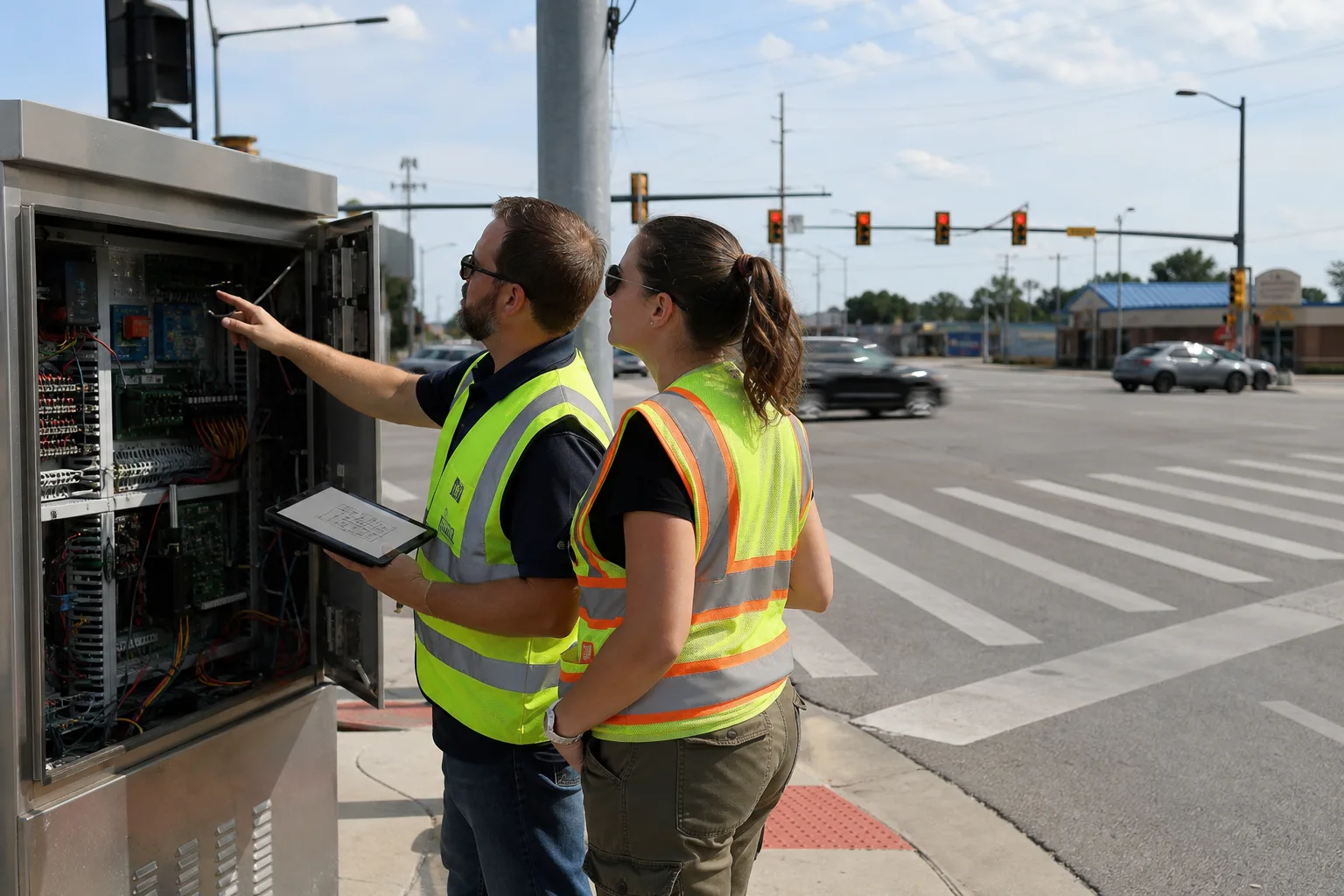
| Evidence source | What to request or document | Question it helps investigate |
|---|---|---|
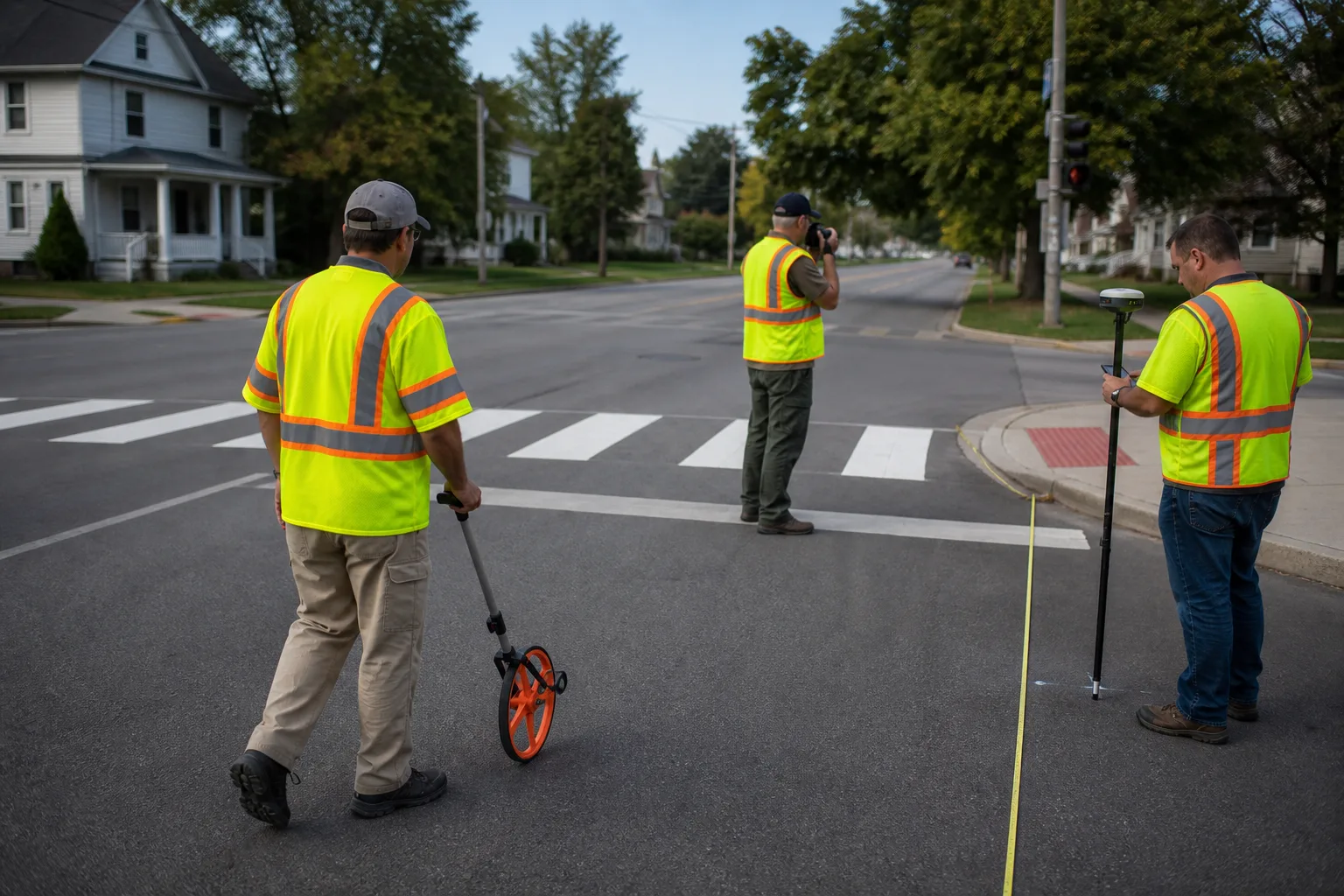
| Intersection photographs | Each approach, curb corners, crosswalk markings, signal heads, signs, vegetation, and streetlights | What physical features affected the available view? |
| Surveillance or traffic video | Original file, full time range, camera location, and retention information | When did each person enter the camera’s view? |
| Signal records | Timing plan, phase sequence, pedestrian intervals, maintenance records, and reported malfunctions | Which movements were displayed at relevant times? |
| Vehicle inspection | Seat position, mirrors, windshield condition, pillar geometry, damage, lamps, and stored data availability | What could be evaluated from the actual vehicle? |
| Scene measurements | Lane widths, stop-line location, crosswalk dimensions, sight distances, grades, and object positions | Can the positions be recreated consistently? |
| Witness information | Exact location, direction faced, obstructions, lighting, and uninterrupted observations | What could that witness actually observe? |
| Contemporaneous records | Dispatch audio, crash report, photographs, clothing, footwear, phone data, and receipts showing timing | Which details can be anchored close to the event? |
Reconstructing the driver’s view path
One practical way to organize the available material is by stages: approach, stop or rolling approach, initial steering movement, crosswalk entry, and impact or evasive movement. This checklist is a documentation suggestion, not a method attributed to a federal agency.
Vehicle geometry and seating position
Photograph the actual vehicle before repair or disposal when possible. Record the driver’s seat adjustment, steering-wheel position, mirror settings, windshield condition, and objects inside the cabin. Photographs should show the driver’s viewpoint as well as exterior reference points; a photograph taken from the center of the passenger compartment does not reproduce the driver’s eye position.
Opposing traffic and moving obstructions
A driver waiting to turn left may be looking through or around opposing vehicles. Document the type, lane, and approximate position of any vehicle that may have blocked part of the crosswalk. Video may show how a moving obstruction and the positions of people or vehicles changed over time.
Witness vantage points
Ask each witness to identify where they stood or sat, which direction they faced, and whether another object interrupted the view. A confident witness may still have observed the event from an angle that differs materially from the driver’s viewpoint.
Signal timing, lighting, and contrast
As a practical documentation suggestion, make distinct notes for the vehicle signal and pedestrian indication. If signal operation is disputed, the responsible road agency may be able to identify records for the intersection.
A leading pedestrian interval[6] gives pedestrians an opportunity to enter the crosswalk three to seven seconds before vehicles receive a green indication.
FHWA says this timing can increase pedestrian visibility, reduce pedestrian-vehicle conflicts, and increase the likelihood that motorists yield.
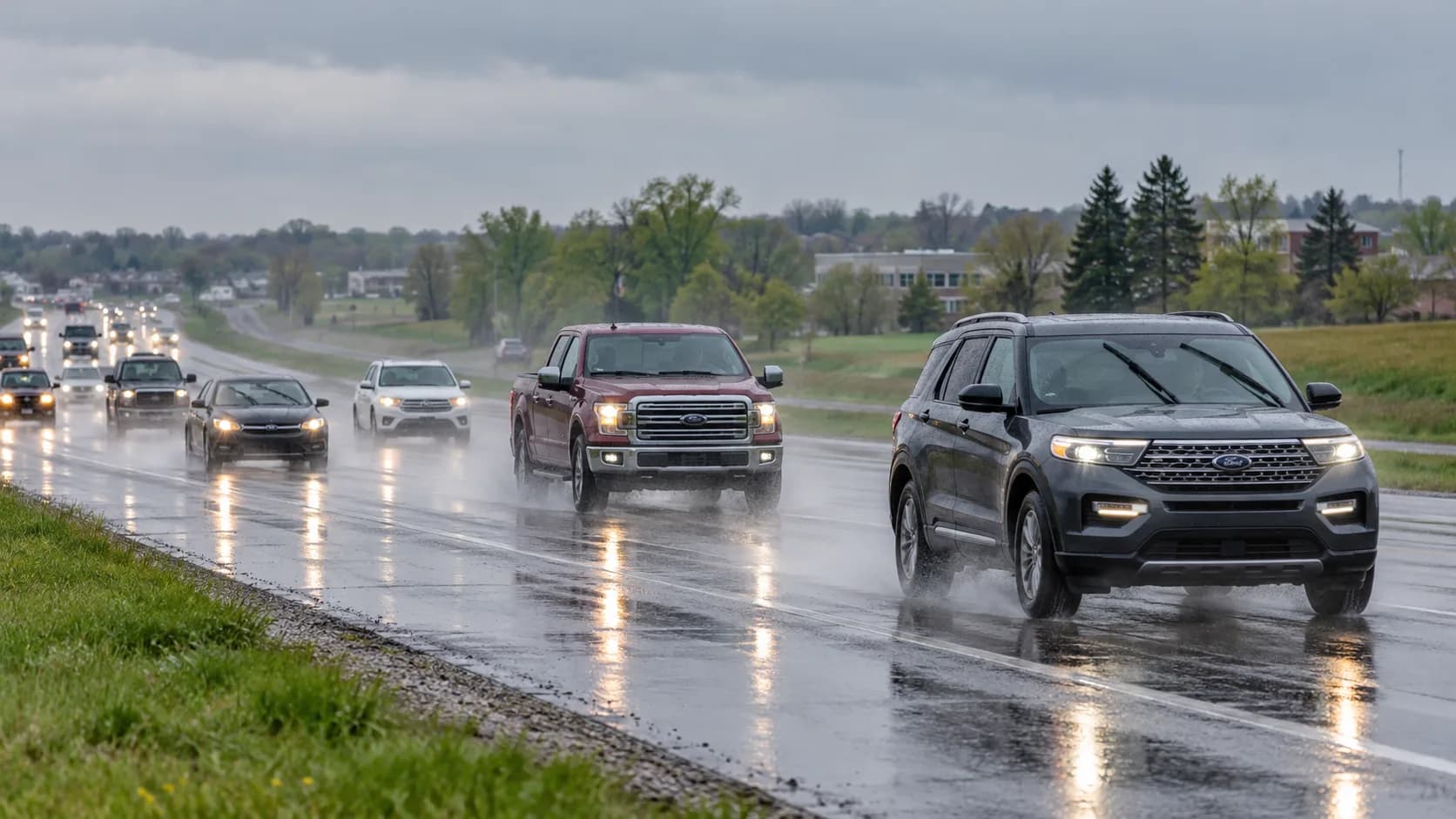
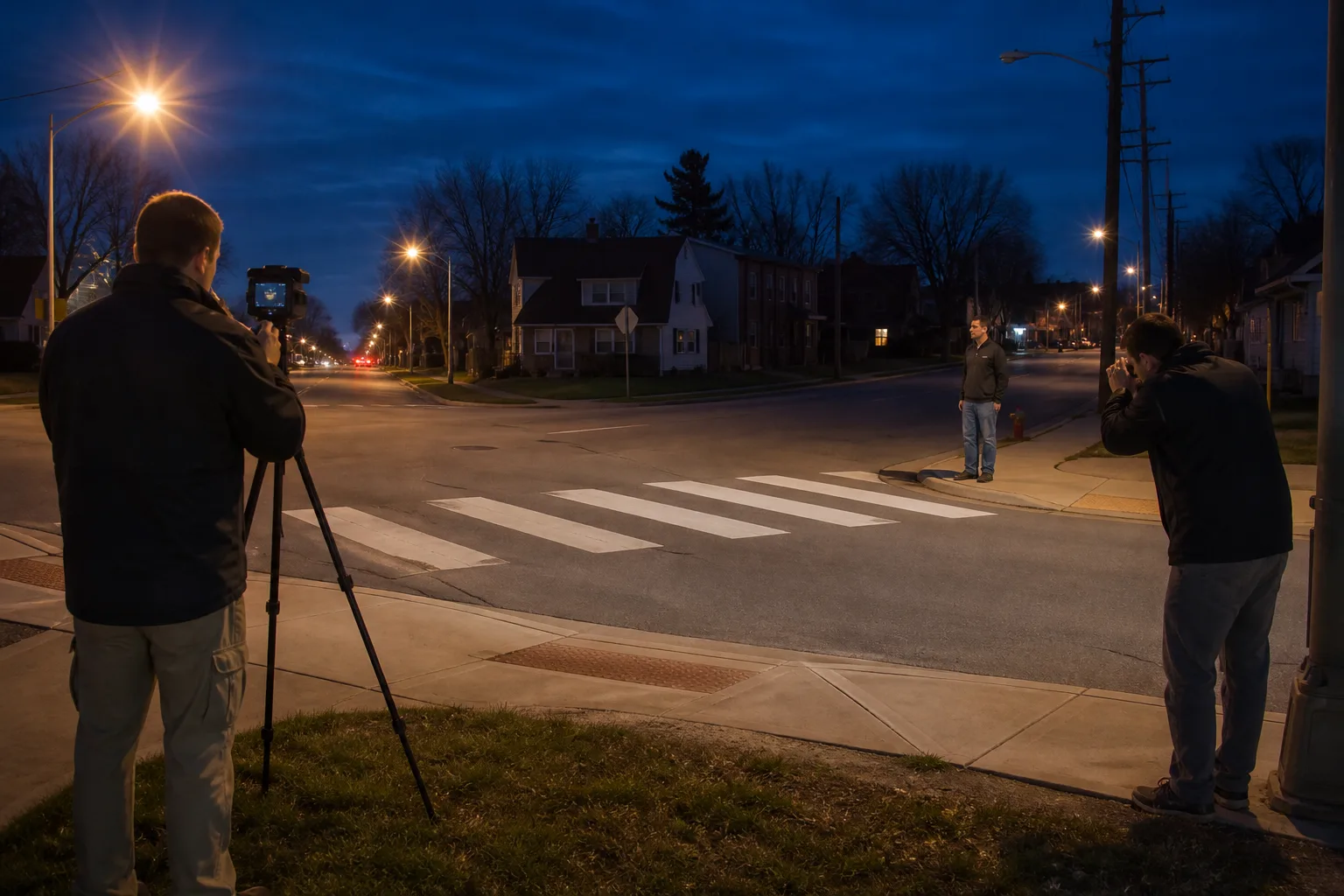
For an organized scene record, photographs can note streetlights, illuminated signs, shadows, glare sources, weather, and the pedestrian’s contrast with the background. NHTSA advises drivers that pedestrians can be harder to see at night or in bad weather.
Return visits should be made from a safe location and under lawful conditions. Similar clock time does not guarantee identical traffic, weather, foliage, lighting, or vehicle positions, so record the differences rather than presenting a reenactment as exact.
Use video and measurements carefully
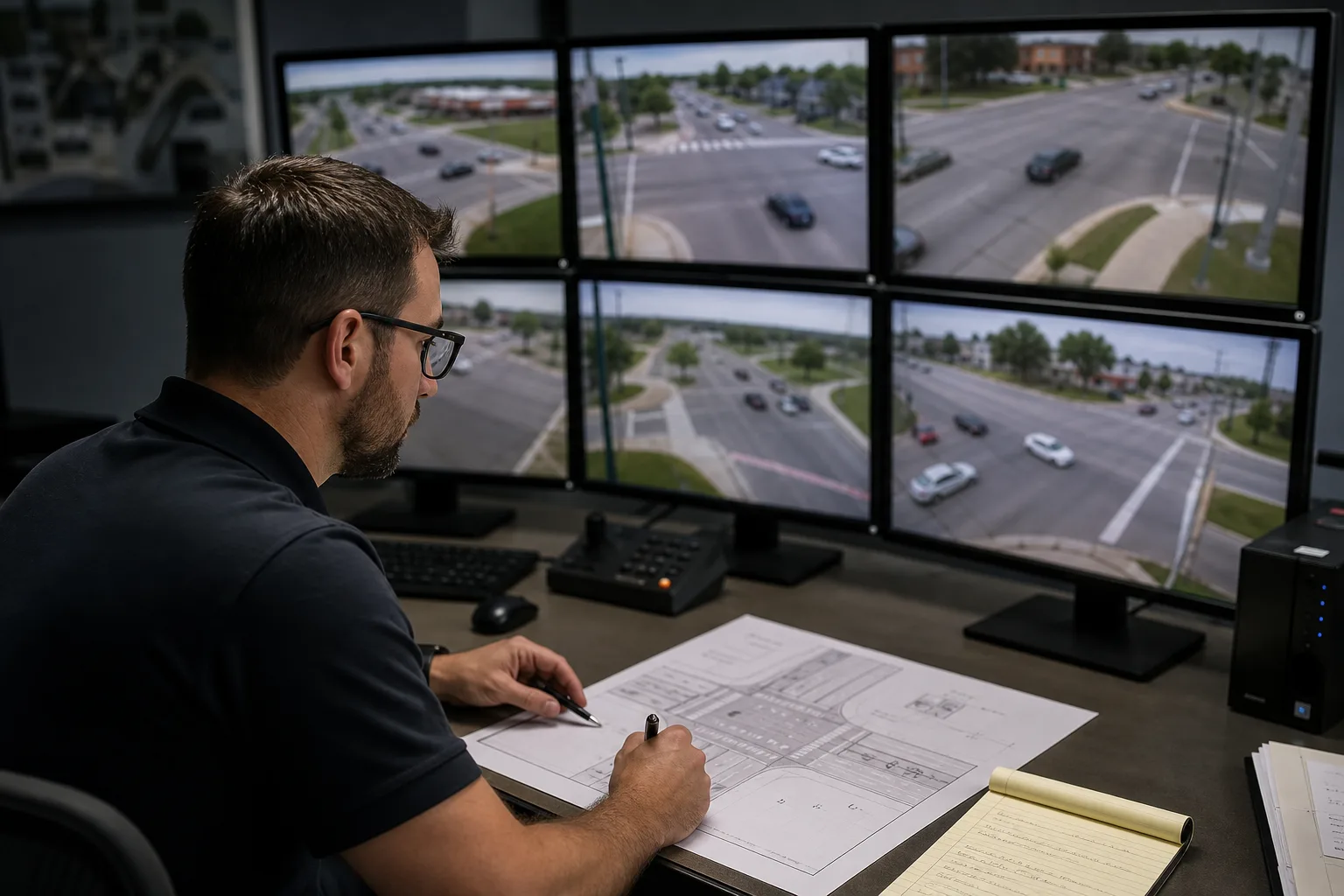
As general file-organization guidance, keep any original video you receive in addition to later copies. In your notes, identify the camera location, direction, and displayed time.
When organizing footage, note fixed scene features such as lane markings, poles, curb edges, and crosswalk lines, and distinguish observations from assumptions. A qualified professional can address technical interpretation when it matters.
Scene photographs are stronger when they include scale and context. Start with wide views showing the entire approach, then add intermediate and detail views. Preserve the unedited files and their metadata.
Visibility evidence and Indiana comparative fault
Indiana’s Comparative Fault Act generally reduces a claimant’s recovery according to the claimant’s percentage of fault and bars recovery when the claimant’s fault is greater than the fault of all persons whose fault contributed to the loss.
For a jury case governed by Indiana Code 34-51-2-7[7], a claimant found more than 50% at fault does not recover; when the claimant’s fault is not greater than 50%, the statutory verdict process accounts for the assigned percentages.
The current statutory framework appears in the 2026 Indiana Code, Title 34[8]. Delventhal Law Office also has a focused guide to Indiana’s comparative-fault rule.
Common allegations include that the pedestrian crossed outside the crosswalk, entered against the signal, wore low-contrast clothing, looked at a phone, or appeared from behind an obstruction. Driver-focused questions may include speed, scanning, turn path, attention, yielding, window condition, lighting use, and whether the driver continued through an incomplete view.
The response should be evidence, not assumption. Keep information about both participants’ actions, and distinguish safety recommendations from the statutory rules discussed above.
What to preserve after a left-turn pedestrian crash
- Save every original photograph and video file without cropping or filters.
- Write down the exact intersection, direction of travel, crosswalk used, and your path.
- Identify nearby businesses, residences, buses, and vehicles that may have cameras.
- Ask the video holder whether recordings are routinely retained and how a preservation request can be delivered.
- Keep the clothing, bag, shoes, damaged personal items, and electronic devices in their post-collision condition.
- Record witness names, contact information, locations, and viewing directions.
- Keep correspondence in one folder and label estimates or uncertain recollections as such.
- Ask the responsible road agency for signal timing, maintenance, and malfunction records when signal operation is disputed.
For a broader immediate-action list, read the firm’s collision evidence and safety checklist; many of its preservation steps also apply to pedestrians. If you are organizing the financial side of a broader motor-vehicle injury claim, the Fort Wayne car-accident settlement calculator can help you list bills, wage loss, fault, and insurance factors without predicting a result. If the turning vehicle had automatic emergency braking, our article on AEB data in an Indiana crash claim explains what the system may and may not have recorded, and why pedestrian-detection systems have documented limits during turns and in the dark.
Frequently Asked Questions
Does “I did not see the pedestrian” excuse the driver?
That statement can be compared, as a practical documentation checklist, with the available signal information, turn path, sight-line notes, obstructions, lighting, and video.
Does a walk signal decide the result by itself?
Indiana Code 9-21-17-2[1] requires a driver to yield to a pedestrian proceeding on a walk indication. The allocation rules are discussed in the section above.
Does dark clothing decide the result by itself?
As a practical visibility observation, clothing may be one fact among the available scene, lighting, signal, video, and witness information.
Can intersection signal records help?
Yes. Timing plans, phase sequences, pedestrian intervals, maintenance records, and malfunction reports can help evaluate which signal movements were programmed and whether a reported problem was documented.
What should I do if a nearby business has video?
Identify the camera and request preservation of the original recording, including footage before and after the collision. Keep a record of whom you contacted and when.
What is a leading pedestrian interval?
FHWA defines a leading pedestrian interval as signal timing that lets pedestrians enter the crosswalk three to seven seconds before vehicles receive a green indication.
If you were hurt in a left-turn pedestrian collision and are unsure what evidence still exists, Delventhal Law Office can review the available information, explain the Indiana rules that may apply, and help you decide whether a free case evaluation would be useful.
This article provides general information, not legal advice. An attorney–client relationship is formed only if the firm and client enter an agreement confirmed by the firm, subject to applicable professional duties.
Sources
- Indiana Code 9-21-17-2 (iga.in.gov) ↩
- Indiana Code 9-21-17-3 (iga.in.gov) ↩
- Indiana Code 9-21-17-5 (iga.in.gov) ↩
- Indiana Code 9-21-8-24 (iga.in.gov) ↩
- 2026 Indiana Code, Title 9 (iga.in.gov) ↩
- leading pedestrian interval (highways.dot.gov) ↩
- Indiana Code 34-51-2-7 (iga.in.gov) ↩
- 2026 Indiana Code, Title 34 (iga.in.gov) ↩