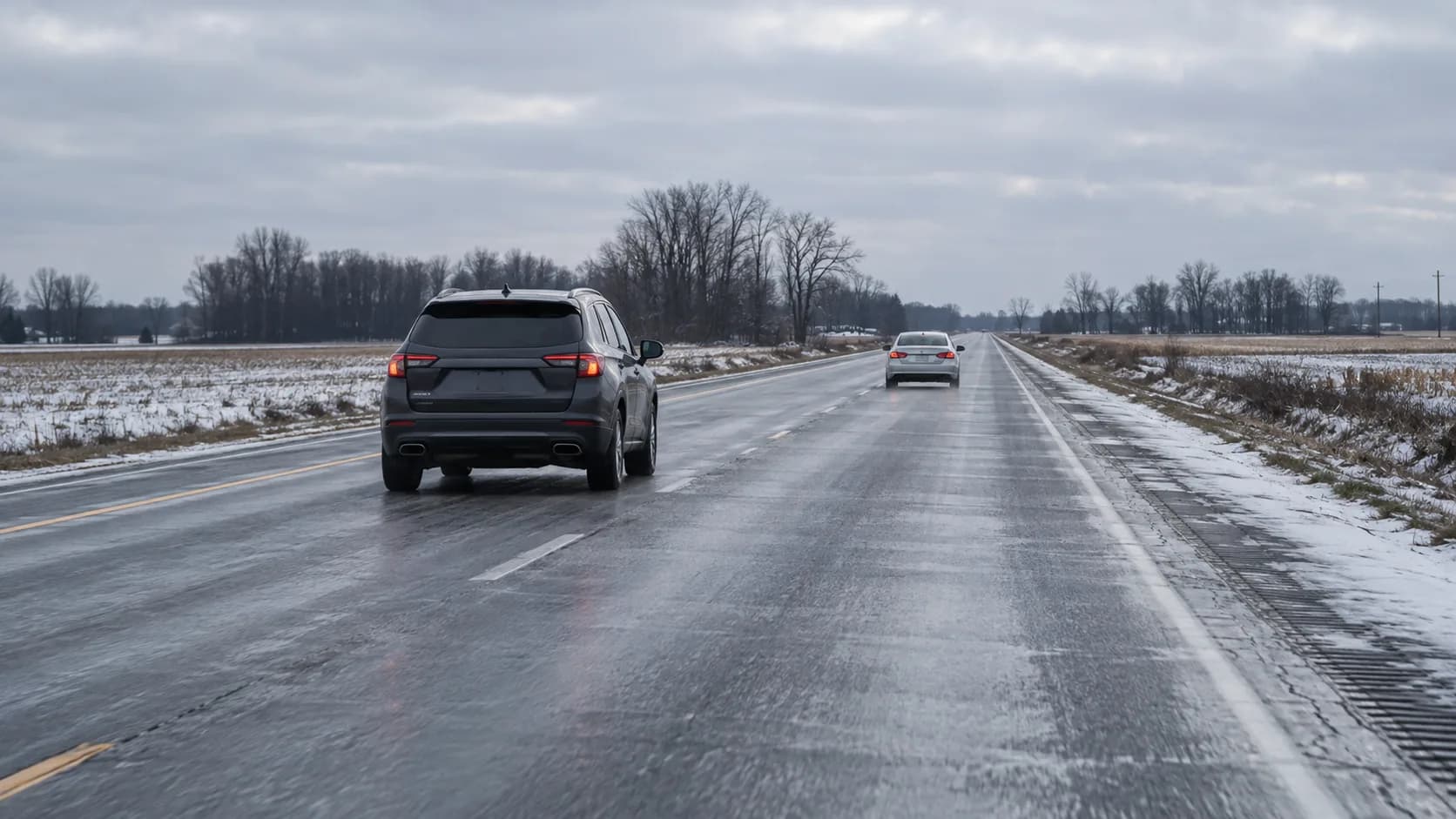
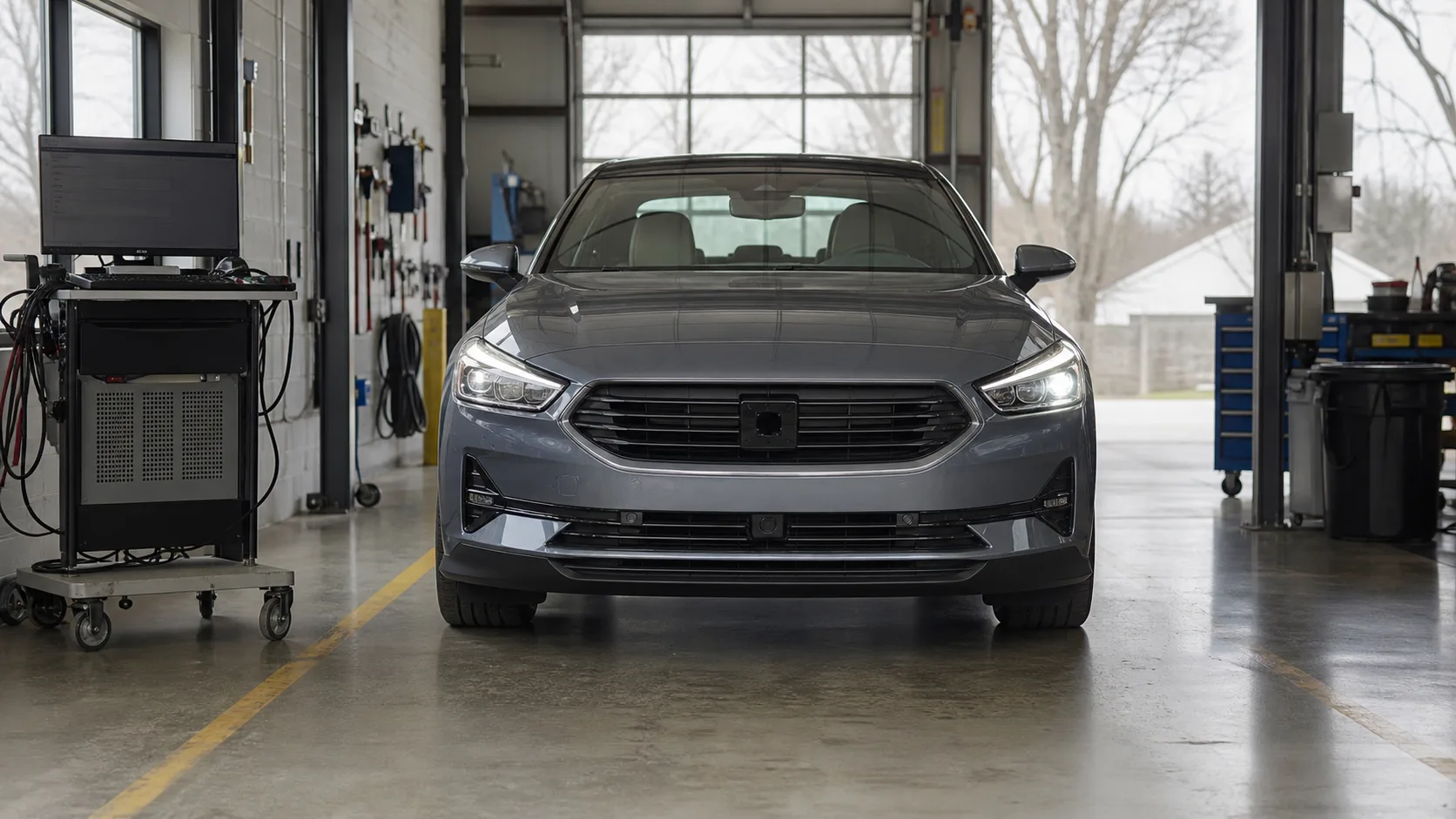
Electronic vehicle information can add context to an Indiana crash investigation. Its meaning depends on the definition of the recorded field, the applicable system, and the event that produced the record. This article explains what the cited federal EDR rule standardizes—and what it does not.
Key takeaways
- NHTSA's AEB description and the federal EDR definition address different functions.
- Part 563 does not list a general AEB warning or intervention field among its standardized EDR elements.
- For covered vehicles equipped with an EDR, federal rules standardize specified crash-related fields; they do not make AEB logs a standard EDR field.
- Original files, vehicle identity, and a documented retrieval method may matter if data is later offered as evidence.
- Organize vehicle information promptly and obtain case-specific legal and technical advice before authorizing an inspection or making decisions about a seriously damaged vehicle.

What does automatic emergency braking do?
NHTSA explains that AEB[1] automatically applies a vehicle's brakes to avoid or mitigate an impending forward crash. NHTSA separately describes forward-collision warning as a warning function that does not itself take action to avoid a crash.
Manufacturers may use different names for driver-assistance features. NHTSA advises owners to consult the vehicle owner's manual to understand the technology in a particular vehicle. A feature name alone therefore does not identify the exact equipment; the owner's manual and vehicle-specific documentation should be checked.

AEB data and EDR data are not the same
An AEB system is designed to detect an imminent forward collision and apply or supplement braking. An EDR, as defined in 49 CFR Part 563[2], records vehicle dynamic time-series data just before or during a crash event for later retrieval; the federal definition excludes audio and video.
Part 563 applies to specified light vehicles manufactured on or after September 1, 2012 if they are equipped with an EDR. It standardizes listed EDR elements and retrieval requirements for covered vehicles; it does not say every vehicle has an EDR, and its required field table does not make AEB warnings, object classifications, camera images, or AEB intervention commands standard EDR elements.
| Source | What it may contribute | Limit to remember |
|---|---|---|
| Part 563 EDR | Specified crash and pre-crash fields, such as indicated speed, accelerator input, service-brake status, delta-V, belt status, and deployment information | Only for an applicable vehicle equipped with an EDR and a qualifying recorded event; some fields are conditional |
| AEB or other driver-assistance system | Information identified in vehicle-specific documentation | Part 563 does not list a standardized general AEB-event field |
| Owner and service records | Vehicle configuration, named features, repairs, and calibration history | These records describe the vehicle and its history, not a Part 563 crash-data field |
| Scene and independent media | Photographs, video, measurements, and witness observations | Each item has its own perspective and foundation requirements |
See our EDR field guide for more detail.
What AEB or driver-assistance data may exist?
Part 563 standardizes specified EDR fields; it does not define what proprietary AEB information a particular manufacturer may retain. Vehicle-specific owner, service, and manufacturer documentation should be checked before anyone assumes an AEB-specific record exists.
The VIN, model year, trim, owner's manual, build information, dashboard photographs, and repair or calibration records can help identify what questions are worth asking. They do not establish that a particular data point exists.
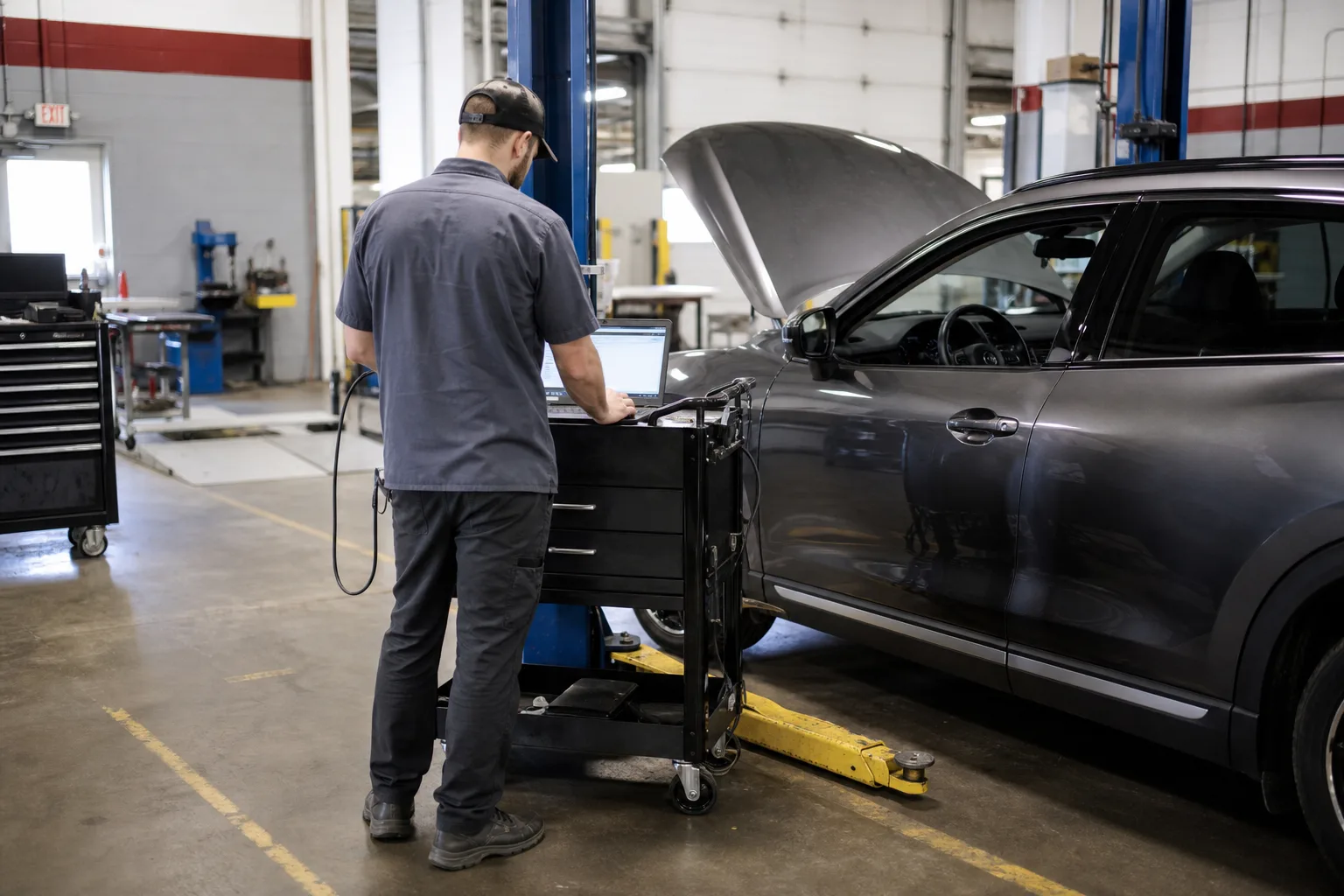
How may electronic data help investigate a crash?
When a supported download exists, recorded values may be compared with other evidence. For example, Part 563 distinguishes service-brake status—the status of a control used to detect whether the brake pedal was pressed—from an AEB command. That distinction matters: a service-brake value should not automatically be described as proof that AEB activated.
Useful, neutral questions include:
- What equipment was installed on this VIN?
- What source produced each value?
- What event caused the record to be captured and saved?
- What time interval, units, definitions, and limitations apply?
- Does the information agree with physical evidence and independent media?
- Can the original output and retrieval process be documented?
This focused inquiry complements the broader evidence discussed in our guide to evidence used in an Indiana car-accident claim and the main Fort Wayne car-accident resource.
Practical organization steps
Without assuming data exists or giving instructions for a particular claim, a vehicle owner can organize information that may help a lawyer or qualified examiner assess the situation:
- Write down the VIN, model year, trim, mileage, key location, and current vehicle location.
- Keep existing photographs of damage, dashboard messages, the windshield, grille, mirrors, and sensor areas.
- Gather the owner's manual, purchase or build information, repair invoices, and calibration records already available to you.
- Keep original dashcam media, app notices, or connected-vehicle messages without editing the only copy.
- Record who currently controls the vehicle and any known repair, sale, or disposal schedule.
Whether an inspection, download, notice, or request is appropriate depends on ownership, control, condition, claim posture, and other facts. Prompt case-specific consultation can help identify reasonable next steps; it cannot guarantee that electronic data exists.

Indiana discovery and authentication rules
Once litigation is pending, Indiana Trial Rule 34[3] permits a party to request electronically stored information and to inspect, copy, test, or sample designated tangible things in another party's possession, custody, or control. Trial Rule 26 defines and limits the scope of discovery. These rules govern litigation discovery; they are not technical authority that AEB data exists, and they do not establish a categorical pre-litigation preservation procedure.
If electronic information is offered as evidence, Indiana Evidence Rule 901(a)[4] requires enough evidence to support a finding that the item is what its proponent claims. The rule states the authentication standard; whether a particular foundation is sufficient depends on the item and the case.
What pedestrian-detecting AEB does and does not show in a pedestrian crash claim
Pedestrian-detecting AEB is a separate question from the vehicle-to-vehicle systems discussed above, and the research on it matters when a driver argues that the car would have stopped if the pedestrian had been visible. An Insurance Institute for Highway Safety study published in Accident Analysis & Prevention in 2022 found that AEB with pedestrian detection[5] was associated with reductions of 25 to 27 percent in pedestrian crash risk and 29 to 30 percent in pedestrian injury crash risk, but it found no evidence that the systems were effective in dark conditions without street lighting, at speed limits of 50 mph or greater, or while the equipped vehicle was turning.
Those three gaps are where many Indiana pedestrian crashes happen: at night, on higher-speed roads, and during turns at intersections. A pedestrian-detection system that did not activate is therefore not proof that the pedestrian could not be seen, and an activation is not proof that the driver reacted in time. The visibility and evidence questions are covered in our guide to left-turn pedestrian crashes in Indiana, and our Fort Wayne pedestrian accident attorney page explains how these claims are built.
What the data cannot answer by itself
The authorities cited here define AEB, standardized EDR fields, litigation discovery, and authentication. They do not decide the ultimate conclusions in a particular crash. Part 563's service-brake field reflects whether the brake-pedal control was pressed; it is not a general AEB-command field.
An absent value must also be read against the exact field definitions and recording conditions. Part 563 includes conditional elements and specified recording intervals, so a reader should not treat a field outside that standardized scope as though the rule required it to be recorded.
Frequently asked questions
Does every car record AEB data?
No. Do not assume the vehicle has AEB or that its system created a retrievable crash record. Check vehicle-specific documentation for the exact VIN and system.
Is AEB data the same as EDR data?
No. AEB is front-crash-prevention technology. An EDR is a crash-data function defined by federal regulation, and the standardized EDR fields do not include a general AEB-event field.
Can a vehicle download prove fault?
A download can report recorded values. Part 563 defines standardized fields, and Evidence Rule 901 addresses authentication; neither authority makes a recorded field a legal-fault determination.
Does EDR service-brake status show that AEB activated?
Not necessarily. Part 563 defines service-brake status by whether the brake-pedal control was pressed; it is not a general AEB-command field.
What information should I gather for a case-specific review?
Useful starting information includes the VIN, model year, trim, vehicle location, dashboard and damage photographs, owner's manual, and available repair or calibration records. Gathering those items does not mean downloadable data exists.
If you were hurt in an Indiana crash and need help deciding whether electronic vehicle information is relevant, you can request a calm, case-specific case evaluation.
This article is general information, not legal advice. Reading it alone does not make Delventhal Law Office your lawyer.