Being hit by a car on a bicycle is different from being in a car crash. There is no airbag, seat belt, steel frame, or bumper between you and the vehicle. Even a low-speed impact can throw a rider onto pavement, into a curb, over the handlebars, or into traffic.
This guide is for injured bicyclists in Fort Wayne and across Indiana who need a practical next-step checklist after a crash with a car, truck, SUV, or commercial vehicle. It supports our main Fort Wayne Bicycle Accident Attorney page by focusing on the first hours and days after the crash — the window when evidence is easiest to lose and insurance mistakes are easiest to make.
Key takeaways
- Call 911 and request medical help. Bicycle crashes can cause concussions, fractures, road rash, shoulder injuries, knee injuries, back and neck injuries, and internal injuries that may not feel obvious right away.
- Make sure the crash is documented. Indiana State Police maintains Indiana vehicle crash reports through BuyCrash, but the report only helps if the crash is reported and investigated.
- Photograph the bike, vehicle, roadway, intersection, traffic controls, debris, skid marks, lights, and visible injuries. Bike damage often tells part of the story.
- Get the driver’s information, but do not argue fault at the scene. Statements made in shock can be misremembered or used against you later.
- Expect insurance fault arguments. The driver’s insurer may ask about where you were riding, lighting, helmet use, signals, visibility, speed, and whether you could have avoided the crash.
- Talk to a lawyer before giving a detailed recorded statement or signing broad releases. Bicycle injury claims can involve auto insurance, MedPay, health insurance, liens, uninsured/underinsured coverage, and comparative fault.
Step 1: Get out of danger and call 911
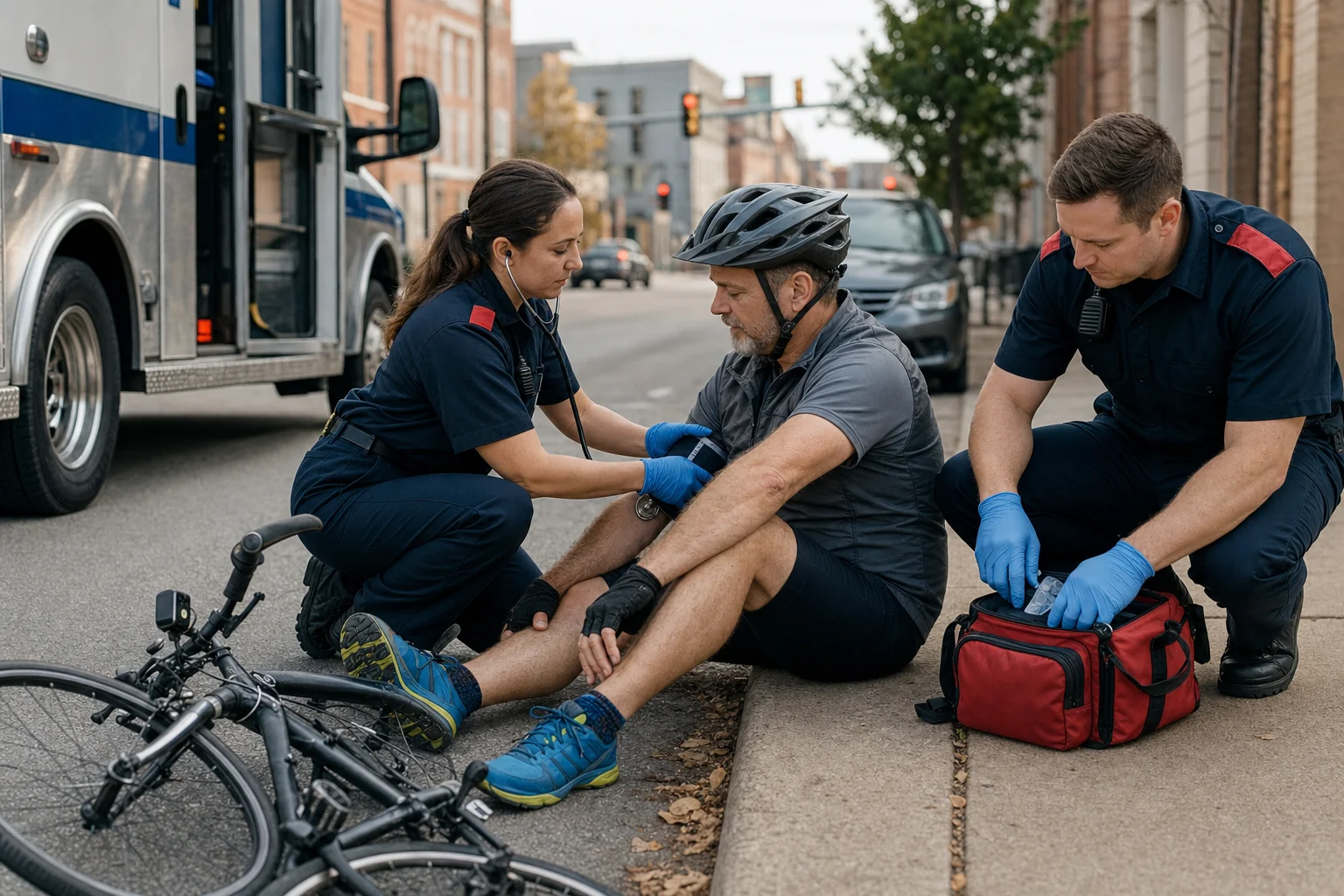
Your first priority is physical safety. If you can move without making injuries worse, get out of active traffic. If you cannot safely move, ask someone else to block traffic, call 911, and wait for emergency responders.
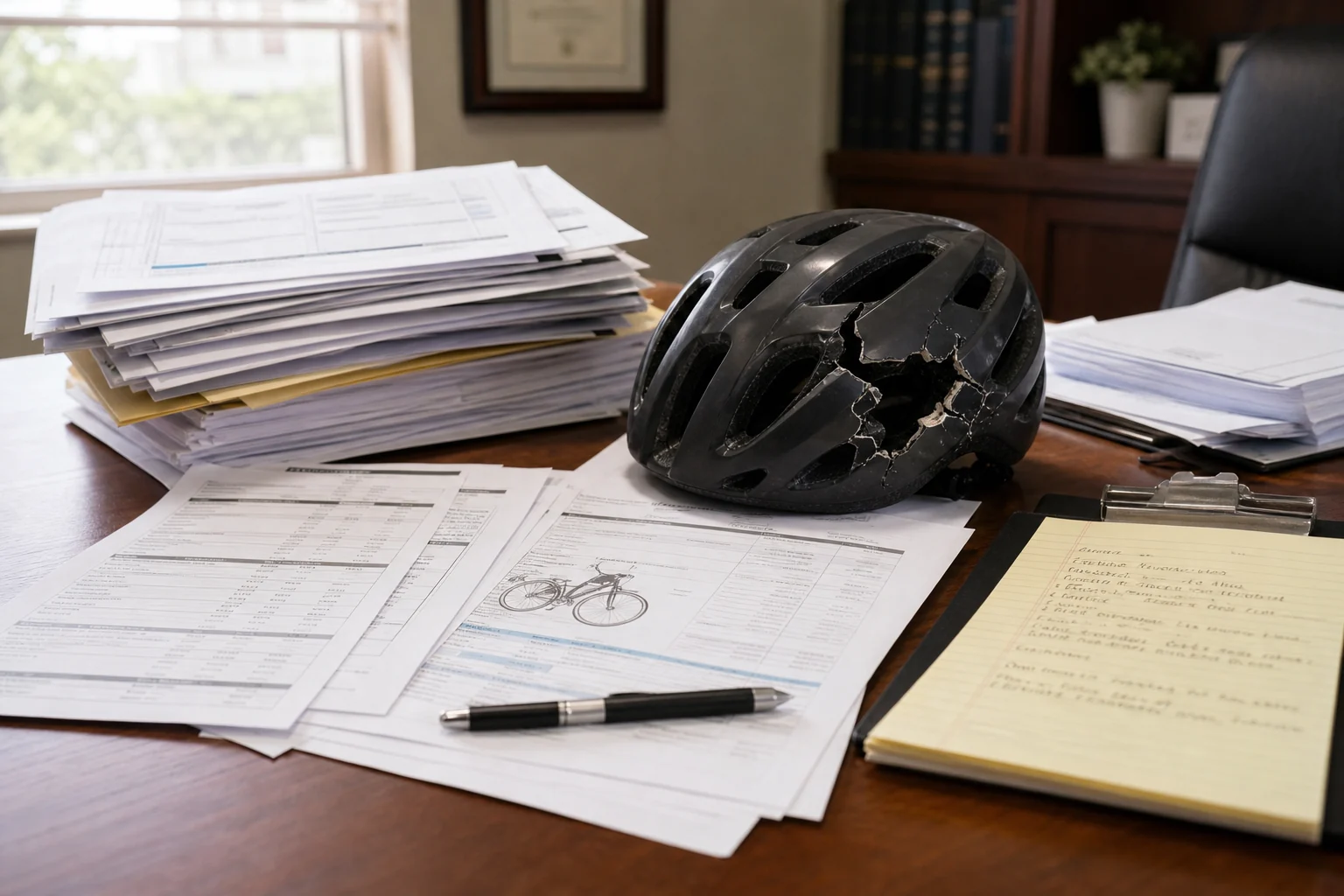
Do not let the driver talk you out of reporting the crash. Bicycle crashes can look “minor” at the scene and become serious later. Adrenaline can hide pain. A cracked helmet, bent wheel, torn clothing, or scraped handlebar may be the first sign that your body absorbed more force than you realize.
Calling 911 also creates a record. The responding officer may document the driver, location, witnesses, vehicle, bike damage, injuries, road layout, and statements. That report can become a key starting point for the insurance claim.
Step 2: Ask for medical care, even if you think you can tough it out
Cyclists often try to stand up, brush themselves off, and prove they are okay. That instinct is understandable, but it can hurt both your health and your claim.
After a bicycle impact, watch for headache, dizziness, confusion, nausea, light sensitivity, neck or back pain, shoulder or wrist pain, numbness, tingling, weakness, abdominal pain, chest pain, memory gaps, worsening swelling, or pain that increases over the next 24 to 72 hours.
NHTSA’s bicycle safety materials emphasize that crashes with cars are among the most serious bicycle collisions and that bicyclists are expected to follow roadway rules when riding on the road. See NHTSA’s bicycle safety guidance[1]. For an injury claim, medical documentation matters because it connects the crash to the injuries and shows whether symptoms improved, worsened, or required follow-up care.
Step 3: Make sure a crash report exists
If police respond, ask how to obtain the report number or where the report can be requested later. Indiana State Police explains that it maintains the central repository of Indiana vehicle crash reports and makes electronic crash reports available through BuyCrash. See the ISP Indiana Vehicle Crash Reports[2] page.
A crash report is not the final word on fault. Reports can contain mistakes, incomplete witness information, or a short narrative that misses important details. But the report usually gives the insurance company a starting record of the date, location, parties, vehicles, and basic crash facts.
If officers do not come to the scene, write down everything you can as soon as possible: time, location, direction of travel, weather, lighting, where the vehicle came from, what the driver said, and whether any nearby homes or businesses may have cameras.
Step 4: Photograph and preserve the evidence before it disappears
Bicycle crash evidence disappears quickly. The bike gets moved. The vehicle leaves. Debris is swept away. Skid marks fade. Video is overwritten. Road rash heals. Clothing gets washed or thrown away.
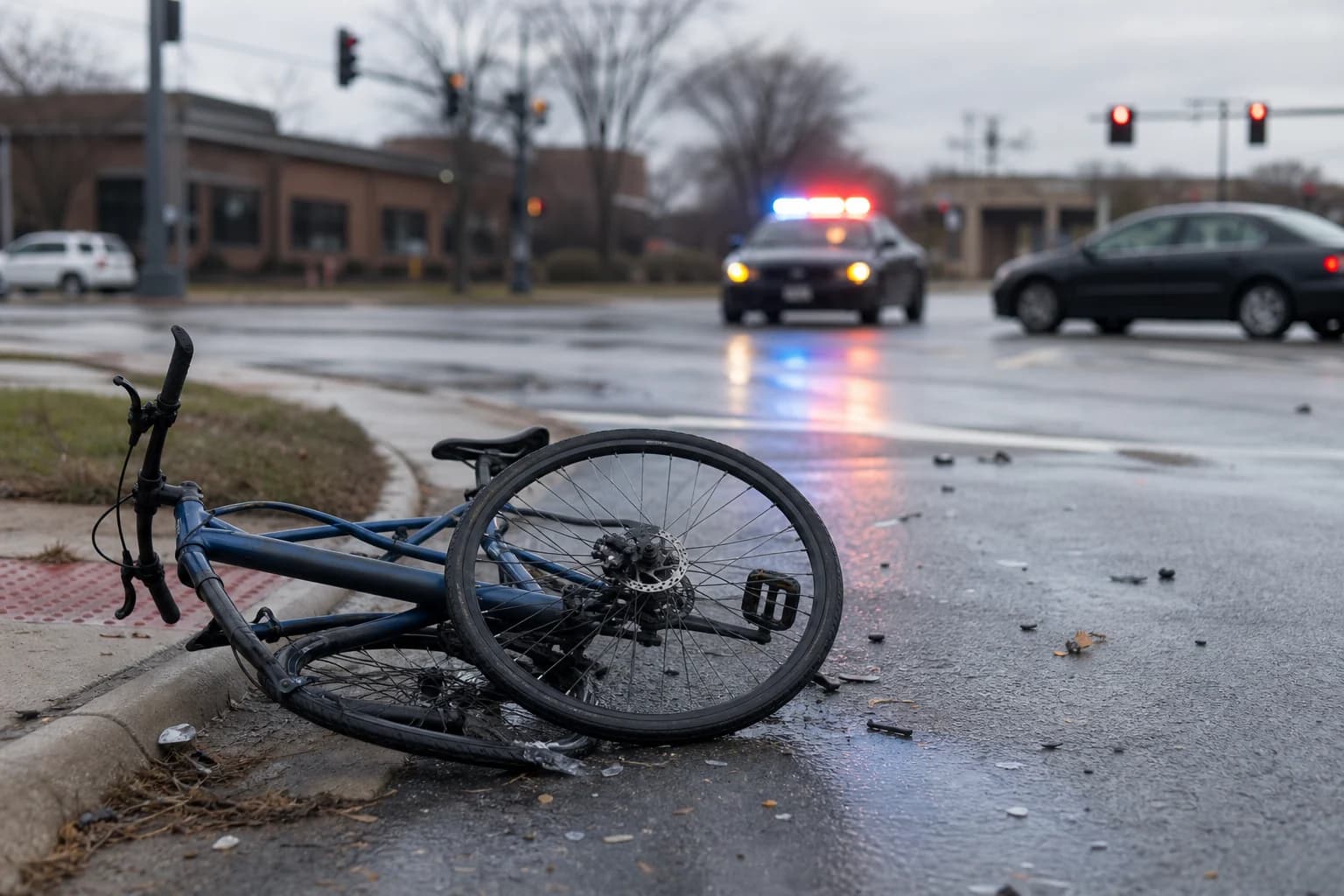
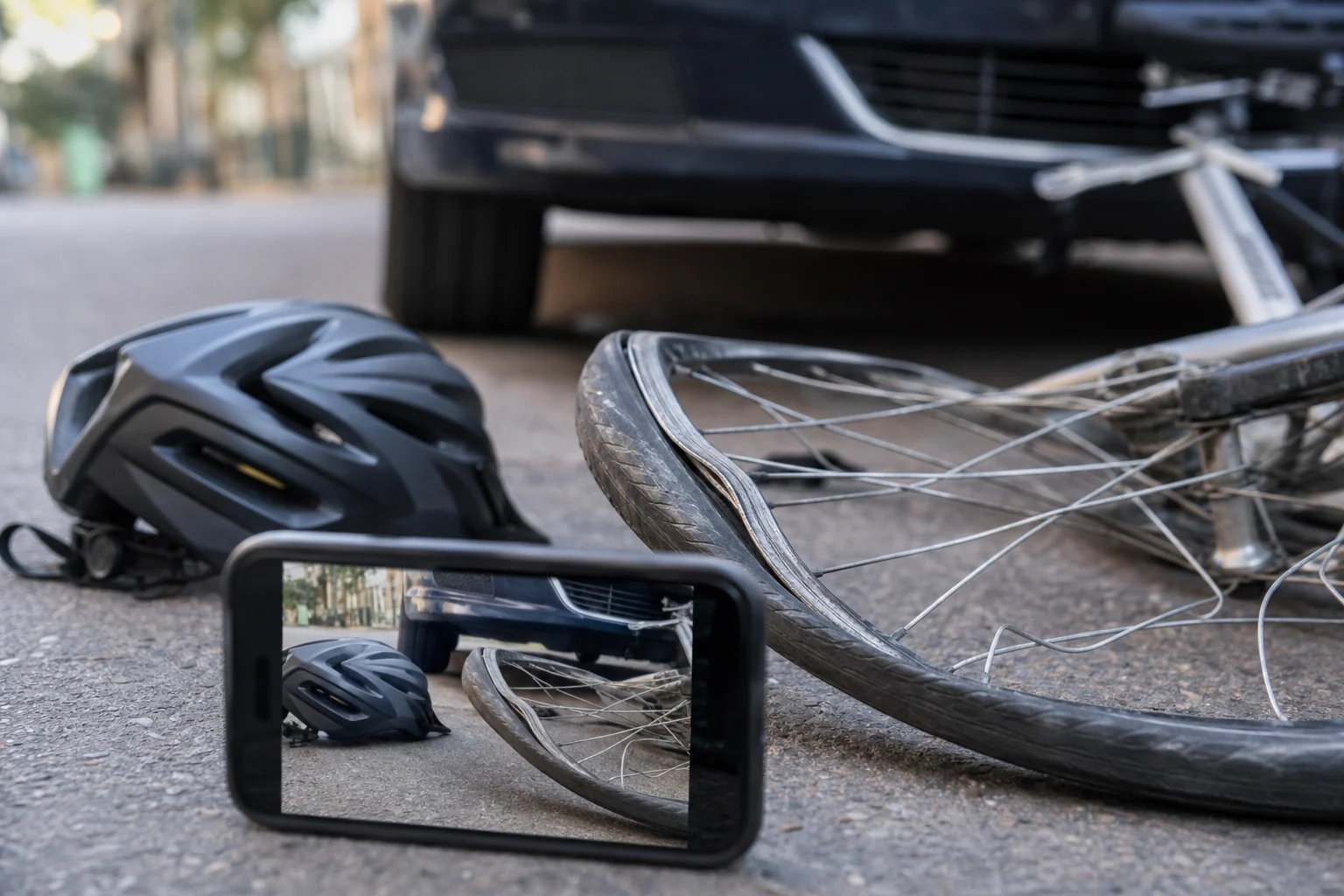
If you or someone with you can do it safely, photograph the bicycle from every angle, vehicle damage, the full intersection or roadway layout, traffic lights, stop signs, lane markings, bike lanes, driveways, crosswalks, sight lines, debris, skid marks, gouges, glass, paint transfer, lighting, weather, construction, parked cars, obstructions, visible injuries, torn clothing, and the driver’s license plate and insurance card if available.
Do not repair or dispose of the bike, helmet, lights, or damaged clothing until you know whether they may be needed as evidence. The bike may help show impact direction, severity, and whether the driver’s version makes sense.
Step 5: Get driver and witness information
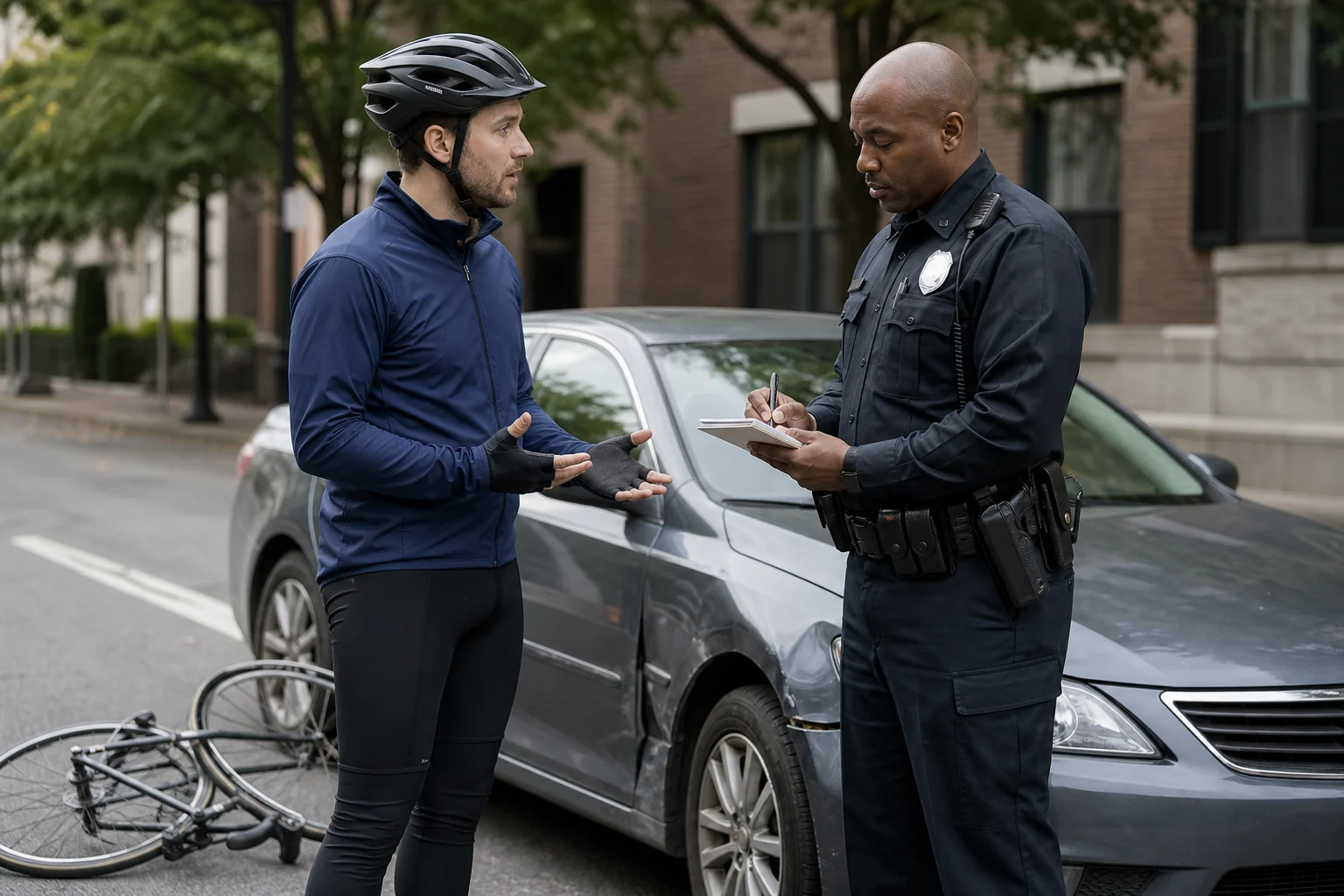
Try to collect the driver’s name, phone number, address, license plate, insurance information, vehicle make and model, visible damage, witness names, witness phone numbers, nearby businesses or homes with cameras, responding officer name, report number, and ambulance or fire department information if EMS responds.
Witnesses matter because drivers and cyclists often remember the same crash very differently. A witness may confirm that the driver turned left across your path, passed too closely, opened a door into your lane, rolled a stop sign, or failed to see you in a bike lane.
For more on fault-specific evidence, see our related article on how Fort Wayne cyclists prove fault when drivers fail to yield. This checklist is broader; that article goes deeper into failure-to-yield proof.
Step 6: Be careful what you say at the scene
You can be polite without accepting blame. In the moments after a crash, people often say things like “I’m okay,” “I didn’t see you either,” or “I’m sorry.” Those words may come from shock, pain, or instinct — not from a careful understanding of what happened.
Avoid arguing with the driver. Avoid guessing. Avoid saying the crash was your fault. Stick to basic facts for the officer and medical providers. If you do not know the answer, say you do not know.
This matters because Indiana uses comparative fault rules in personal injury cases. If an injured person is assigned too much fault, it can reduce or even bar recovery. We explain that broader rule in our article on Indiana’s 51% fault rule.
Step 7: Do not give a detailed recorded statement too early
The driver’s insurance company may call quickly. The adjuster may sound friendly and say they just need “your side of the story.” You may need to report basic information to your own insurer, but you should be cautious about giving a detailed recorded statement to the other driver’s insurer before you understand your injuries, the evidence, and the coverage issues.
Recorded statements can create problems when symptoms worsen after the statement, you minimize pain because you are trying to be tough, you guess about speed or distance, you do not yet know what the police report says, or the adjuster asks questions designed to support comparative fault.
For a deeper explanation, read should you give a recorded statement after an Indiana accident?
Step 8: Track medical bills, missed work, and out-of-pocket losses
Bicycle accident damages are not limited to the bike. Keep records of emergency care, ambulance bills, urgent care, specialists, imaging, therapy, prescriptions, mileage to medical appointments, missed work, damaged bike gear, home help, transportation costs, pain, sleep problems, activity limits, and missed family responsibilities. You can use our Indiana car accident settlement calculator to organize the factors that may affect a claim’s value; it is an educational tool, not a promise of any result.
Medical bills after an Indiana injury crash can involve health insurance, auto insurance, MedPay, hospital liens, reimbursement claims, or uninsured/underinsured coverage. Our guide on who pays medical bills after a car accident in Indiana explains many of those moving parts.
Step 9: Expect the insurance company to investigate the cyclist too
A bicycle claim is not automatically accepted just because the rider was hurt. The insurer may ask whether you were riding with traffic, where you were positioned, whether you used lights or reflectors, whether you signaled, whether you wore a helmet, whether you were distracted, whether the bike was an e-bike, and whether you could have avoided the crash.
Some questions may be legitimate. Others may be blame-shifting. The answer should come from evidence, not assumptions. Indiana law generally gives bicyclists on the roadway rights and duties similar to drivers, but every crash still depends on location, movement, visibility, traffic controls, and witness proof.
If the crash involved an electric bicycle, see our separate article on e-bike accidents in Indiana and Fort Wayne. E-bike cases can raise extra questions about class, speed, location, and insurance coverage.
Step 10: Talk to a bicycle accident lawyer before evidence goes cold
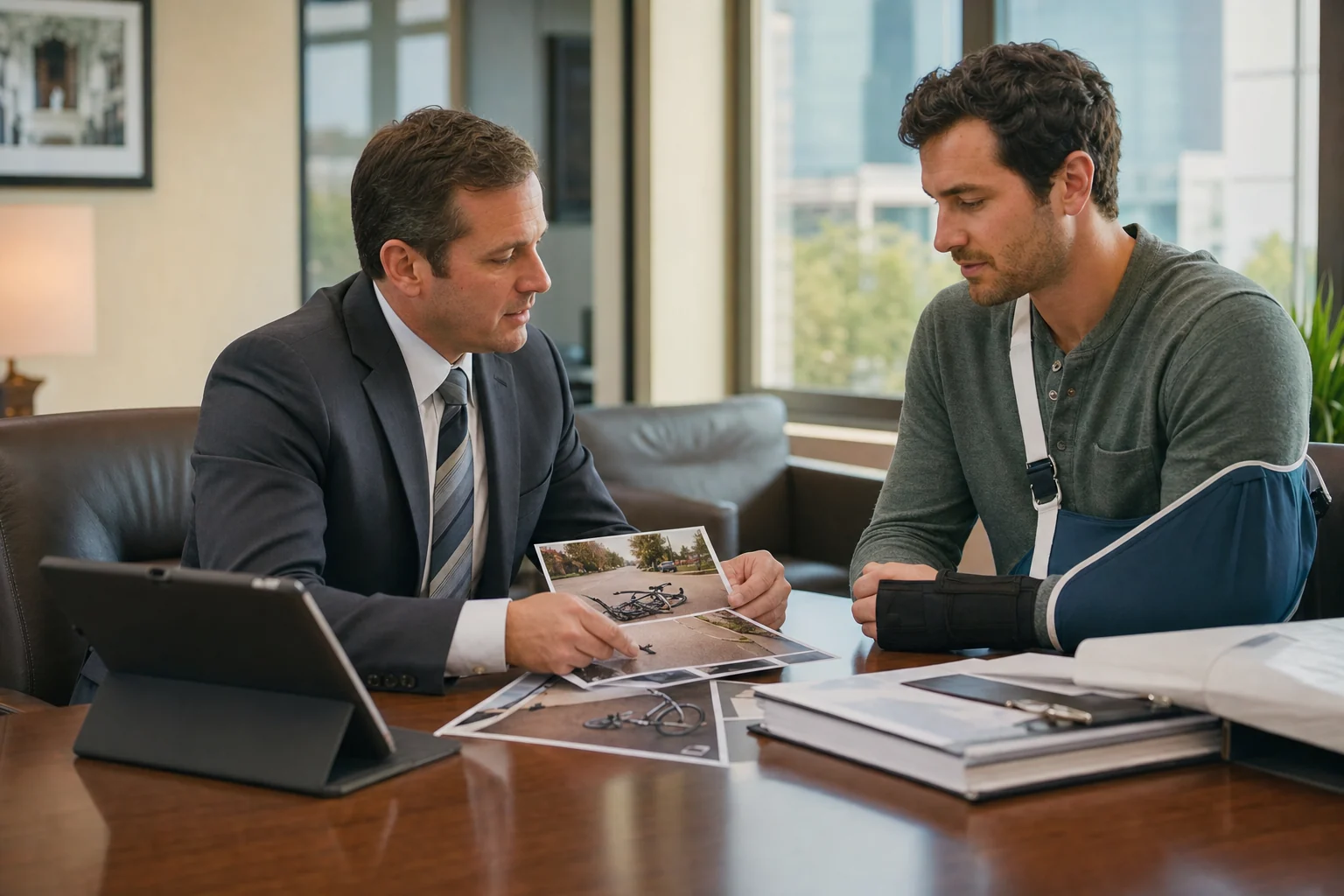
You do not need a lawyer for every scraped knee or damaged bike. But you should consider legal help if you went to the ER, symptoms continue or worsen, you may have a concussion or fracture, the driver denies fault, the report is incomplete, there are no witnesses listed, the driver was uninsured, the insurer asks for a recorded statement or medical release, you missed work, medical bills are arriving, or the insurer is blaming you.
A lawyer can help preserve evidence, request video before it is deleted, review the crash report, identify insurance coverage, deal with liens and medical bills, and push back against unfair cyclist-blame arguments.
Frequently Asked Questions
Should I call police after being hit by a car on a bicycle?
Yes. If a car hits you while you are riding a bicycle, call 911, request medical help if needed, and make sure the crash is documented. The police report can become important for insurance, medical billing, witness information, and fault investigation.
What if I did not feel hurt right away?
Get medical care if symptoms appear or worsen. Bicycle crashes can cause delayed pain, concussions, soft-tissue injuries, back and neck injuries, and internal symptoms. Insurance companies often attack treatment gaps, so documentation matters.
Can I still have a claim if I was not wearing a helmet?
Possibly. Helmet use may become part of the insurance company’s argument, especially in head injury cases, but not wearing a helmet does not automatically prove that you caused the crash. Fault and damages depend on the facts, the injuries, and the evidence.
What if the driver says they did not see me?
“I did not see the cyclist” is not automatically a defense. Drivers still have duties to look, yield when required, maintain a safe lookout, and avoid unsafe turns or passes. Evidence such as camera footage, witness statements, road layout, lighting, bike position, and vehicle damage can help show what should have been seen.
Should I talk to the driver’s insurance company?
Be cautious. You may need to report basic facts, but detailed recorded statements can be risky before you understand the evidence and injuries. Consider speaking with an attorney before giving a recorded statement, signing a medical release, or accepting money.
Talk through your bicycle accident before the evidence disappears
If you were hit by a car while riding a bicycle in Fort Wayne or anywhere in Indiana, the first days matter. The bike, helmet, scene photos, witnesses, crash report, medical records, and insurance communications can all shape the claim.
Delventhal Law Office helps injured cyclists understand fault, insurance coverage, medical bills, and next steps after bicycle crashes. Learn more on our Fort Wayne Bicycle Accident Attorney page or request a free consultation.
This article is general information about Indiana law and is not legal advice. Reading it does not create an attorney-client relationship, and neither does contacting us. If you do contact us about a possible claim, Indiana Rule of Professional Conduct 1.18 requires us to keep what you tell us confidential whether or not we take the case — but please do not send documents or detailed facts until we have agreed in writing to represent you. For advice about your specific situation, speak with a qualified Indiana attorney.