An estimate marked “aftermarket” or “recycled” can be confusing after a Fort Wayne crash. The first questions are whose policy is paying, what kind of part is being replaced, and whether the vehicle falls within the applicable period. This guide addresses that parts-selection question; our Fort Wayne car-accident guide covers the broader injury-claim process.
- The protection is not a blanket OEM-parts right for every driver or every component.
- Start by checking whose policy is paying.
- Return a qualifying parts selection in writing and keep a copy.
- Practical estimate questions are not, by themselves, legal requirements or promises of reimbursement.
Does the choice apply to your own insurer or the other driver's insurer?
Indiana Code 27-4-1.5-3[1] defines an insured as a person entitled to coverage under an insurance policy. In Bulletin 71, section 1(B)[2], IDOI interprets that definition to encompass only named insureds and expressly states that third parties are not insureds for this chapter.
That distinction matters: If you are seeking payment solely from the other driver's liability insurer, do not assume this statute gives you the same written parts-selection right. That does not decide every question about the repair or the value of your loss. It means this particular statutory procedure should not be presented as an automatic right in a third-party claim.
As a practical starting point, ask the adjuster to identify the policy under which the estimate is being handled and your status under that policy. If the policy was issued outside Indiana, obtain advice about which state's law applies rather than relying only on the crash location.
What written choice must a qualifying insured receive?
Under Indiana Code 27-4-1.5-8(a)–(c)[1], an insurer obligated to pay at least part of an exterior repair under its policy may not direct a body shop to repair the vehicle until it presents the insured with the required written notice. The notice must explain the right to approve the body-part type and offer a choice among new manufacturer parts, new nonmanufacturer parts, and used parts. The insurer must give the insured an opportunity to indicate that choice in writing.
Bulletin 71, section 2(C)[2] says insurers should provide notice no later than ten days after receiving the insured’s claim. It interprets a reasonable opportunity to choose as at least twenty days from mailing or delivery of the notice and selection forms. It also prohibits directing or authorizing repairs without approval or waiver within that twenty-day period.
Those timing details come from the department’s bulletin, not from numerical deadlines written into section 8 itself. The bulletin’s sample notice also warns that the insurer may select the part type if no written selection is received by the stated deadline. As a practical step, read your actual notice, send your selection promptly, and retain proof of delivery; do not assume silence preserves an OEM choice.
Which parts are covered: OEM, aftermarket, or used?
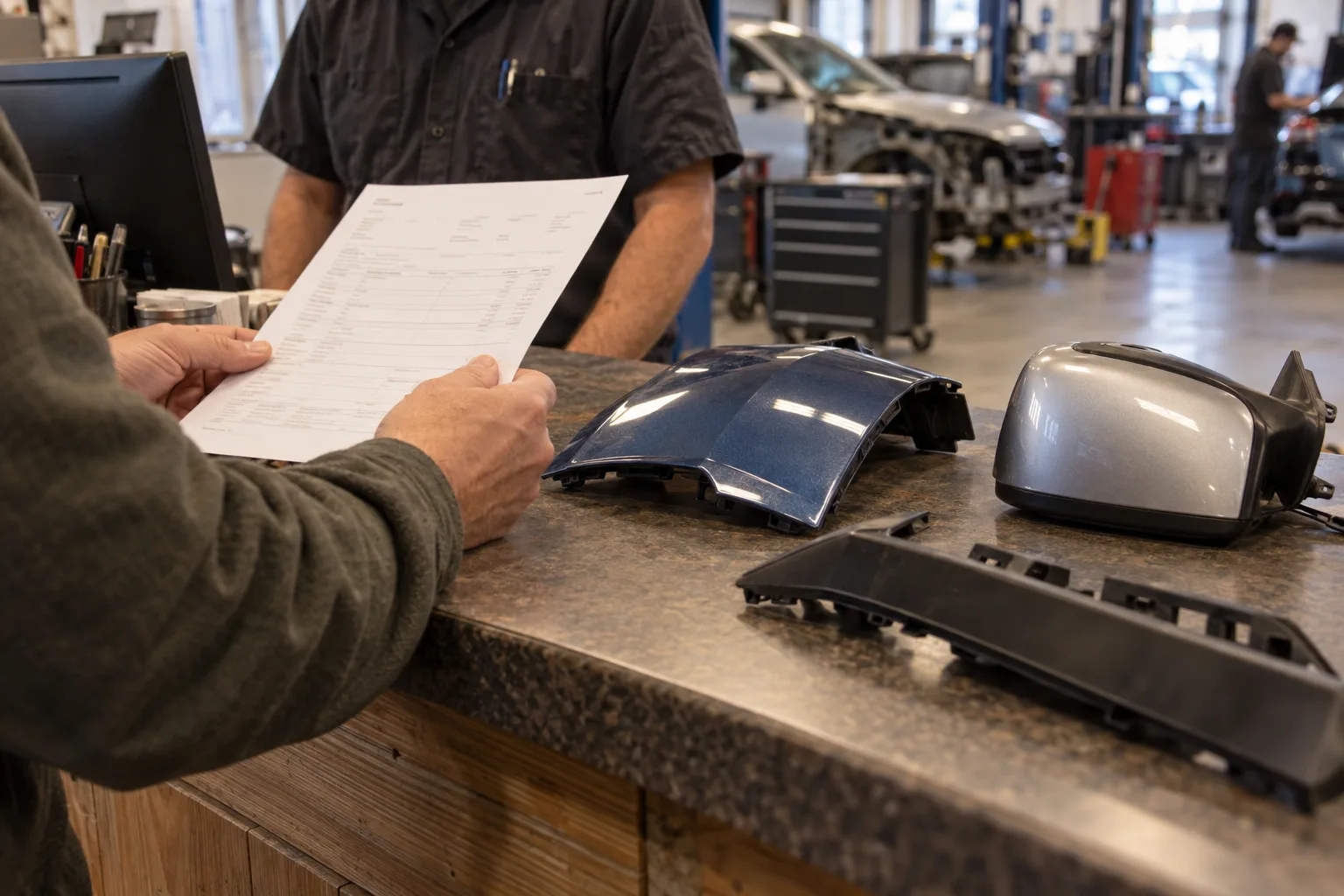
Section 1 of the chapter[1] defines a body part as a replacement for nonmechanical sheet-metal or plastic parts that generally constitute the vehicle’s exterior, including inner and outer body panels. Sections 6 and 7 distinguish new and used body parts by whether they have previously been attached to a motor vehicle.
| Estimate label | Category to clarify | Practical question |
|---|---|---|
| OEM / manufacturer | New body part made by or for the vehicle manufacturer. | Is this the new manufacturer-part option on my selection form? |
| Aftermarket / nonmanufacturer | New body part not made by or for the vehicle manufacturer. | Who makes it, and which exact part is proposed? |
| Used / recycled | Body part previously attached to a motor vehicle. | What is its condition, and what documentation is available? |
| Other or unclear terminology | Do not assume every “alternative” or “remanufactured” label means the same thing. | Which statutory category, if any, does this item fit? |
The new-part manufacturer/nonmanufacturer options come from section 8(b). The questions in the table are practical suggestions, not additional duties imposed by that section. A mechanical component does not become a statutory body part merely because it appears on a collision estimate. Ask the shop to separate disputed body panels from mechanical work, scans, and calibration charges.
How do the model year and five succeeding years fit together?
Section 8(d)[1] says: “This section applies only in the five (5) years after the model year of the motor vehicle.” Bulletin 71, section 1(D)[2] describes the coverage period as the year of manufacture and the five succeeding years, for a total of six years.
Do not replace those formulations with “five years from when I bought the car.” The statute refers to the model year, not your purchase anniversary. The bulletin uses year of manufacture, which may differ from the model year.
Illustration: For a vehicle whose model year and manufacture year are both 2022, the bulletin’s six-year description is 2022 plus 2023 through 2027. This illustrates the year count; it does not resolve a case in which the manufacture year differs, repairs cross a year-end boundary, or other eligibility facts are disputed.
For those situations, gather the model-year and manufacture information, loss date, claim date, and proposed repair date. Ask for a written explanation of the year and event date used in the calculation. The cited texts do not provide a detailed rule resolving every such date conflict, so this article does not invent one. If the age limitation is not met, section 8 does not supply this selection procedure; the particular policy and repair dispute still need evaluation.
A practical checklist for reviewing the parts estimate
Use these practical questions to organize the estimate review:
- Identify the claim: What is the claim number, which company is paying, and whose policy is involved?
- Check the vehicle information: Compare the VIN, model year, manufacture information, and relevant dates with the estimate.
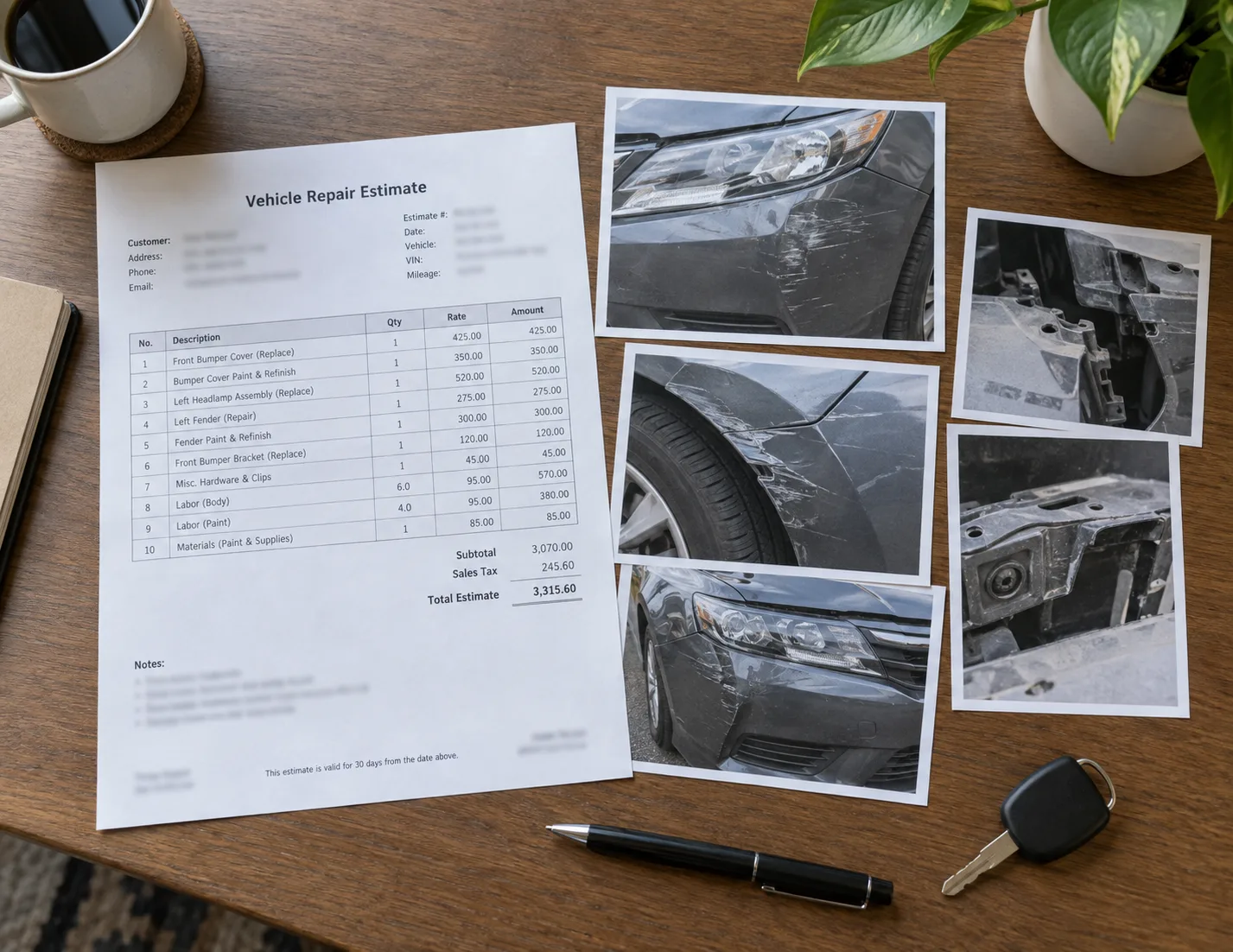
- Identify each disputed item: Ask the shop what the estimate's abbreviation means and whether the item is a body part, a mechanical component, or a labor operation.
- Save the selection paperwork: Do you have the notice, your written choice, any signed forms, and proof of receipt?
- Request an explanation: Ask about fit, condition, availability, warranty terms, and any repair procedure the shop believes matters. These are questions to investigate, not conclusions that a particular part is unsafe.
- Compare charges separately: Which charges involve part type, labor, paint, diagnostic work, or damage found after disassembly? Ask what additional cost, if any, the shop expects you to authorize.
Keep original and revised estimates, photos, messages, and invoices together. For a broader comparison method, see our repair-estimate comparison guide.
What if the insurer does not honor the selection?
Sections 9–12 of Indiana Code 27-4-1.5[1] identify specified failures as unfair claim-settlement practices: directing repairs without the required notice or selection opportunity, directing a different body-part type from the insured’s written selection, and refusing to direct use of or pay for the selected type when the statutory conditions apply.
Do not read that designation as a promise that every disputed charge will be paid. For a practical starting point, assemble the notice, your written choice, and the estimate line at issue. Ask for a written explanation of its position, including any eligibility or policy issue it relies on.
IDOI’s complaint guidance[3] recommends first contacting the insurer, agent, or broker. If the response is unsatisfactory, consumers may submit a complaint with supporting documentation. IDOI asks consumers not to send original documents, photographs, or other evidence.
IDOI’s description of what it can and cannot do[4] says it can obtain explanations and review compliance with statutes, regulations, and policy contracts, but cannot act as your legal representative or intervene in a pending lawsuit on your behalf.

What if you were also injured in the crash?
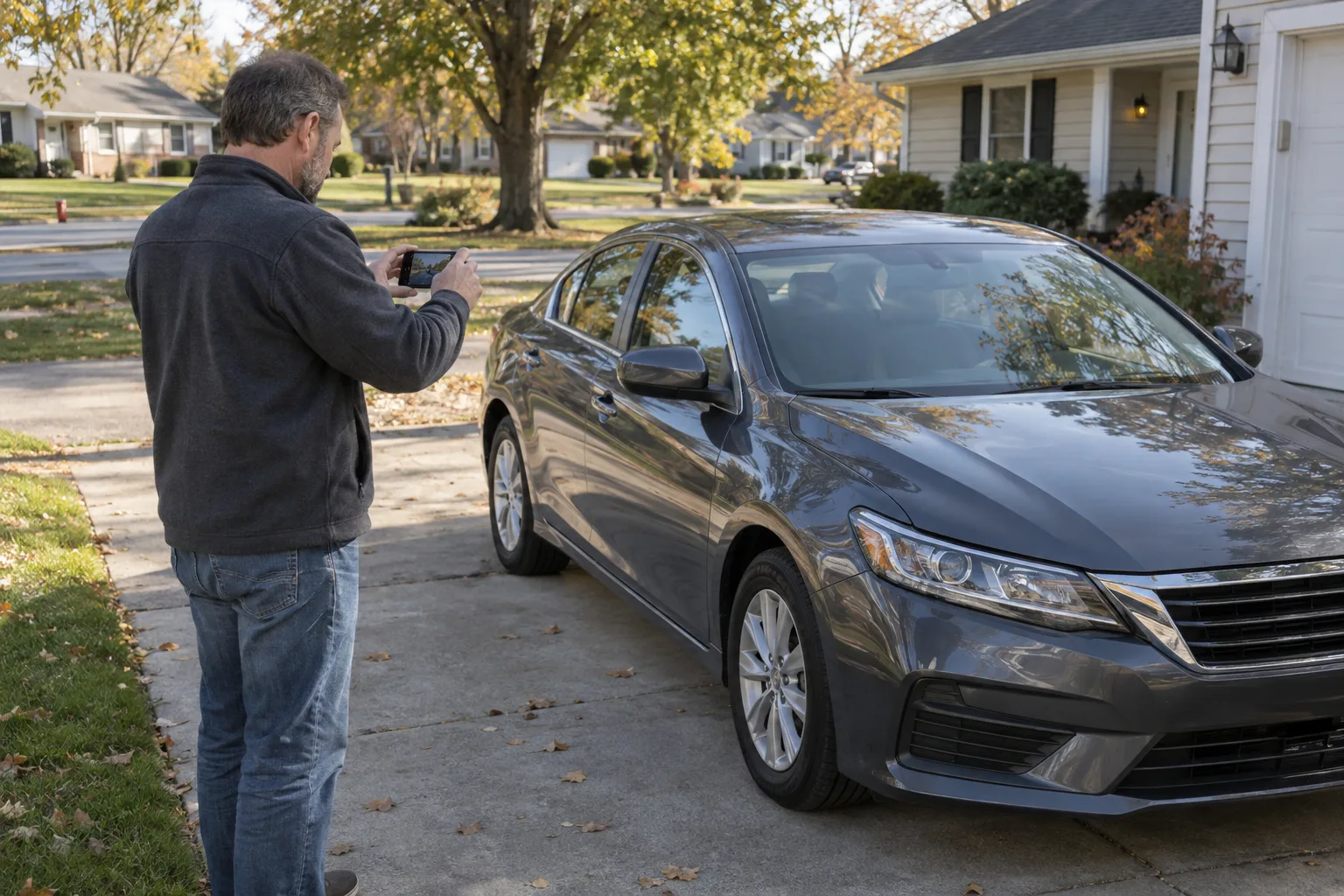
For easier recordkeeping, use different folders for repair paperwork, medical bills, and missed-work information. If vehicle condition may matter to the injury claim, discuss documentation before repairs or disposal. Our guide to repair work and crash-evidence preservation explains questions to consider.
Delventhal Law Office handles injury cases, not property-damage-only claims. If you were hurt, you can request a free consultation about the injury claim. Please distinguish a parts-only inquiry from an injury inquiry.
Frequently Asked Questions
Can my insurer insist on aftermarket body parts?
When the chapter applies, section 8 gives the insured a written selection among new manufacturer, new nonmanufacturer, and used body parts. Sections 11 and 12 address directing a different type or refusing the selected type. Eligibility, vehicle age, and the kind of part must be checked first.
Does the same rule apply to the other driver's insurer?
Not under IDOI’s interpretation in Bulletin 71: the department limits “insured” to named insureds and excludes third-party claimants for this chapter. Other issues in the property-damage claim need their own evaluation.
Does the rule cover every item on my estimate?
No. The chapter defines body parts as specified nonmechanical sheet-metal or plastic replacements, including inner and outer panels. It is not a selection rule for every mechanical component or labor charge.
Is the period five years from my purchase date?
No. Section 8(d) refers to five years after the model year. Bulletin 71 describes the manufacture year plus five succeeding years. Do not substitute the date you bought the vehicle, and obtain a written explanation if manufacture and model years differ.
Can I ignore the selection notice and decide later?
That is risky. Bulletin 71’s sample notice states that the insurer may select the part type if it does not receive a written selection by the stated deadline. Read the notice and retain proof of your response.
Will Delventhal Law Office handle a parts-only dispute?
No. Our practice handles injury claims, not standalone property-damage cases. If you also suffered injuries, contact us about that injury matter.
This article is general information about Indiana law and is not legal advice. Reading it does not create an attorney-client relationship, and neither does contacting us.