
The truck’s make, model, vehicle-identification number, rental use, and authorized drivers help identify the documents that must be reviewed. Review each document together with the collision facts.
- Save the complete rental packet, not only the receipt.
- Request the version of every policy or cardholder guide in effect on the crash date.
- Document the truck, cargo area, damage, scene, and people involved.
- Keep written communications and company positions together.
- Check filing dates promptly instead of relying on a general time period.
Which documents may matter after a rented moving-truck crash?
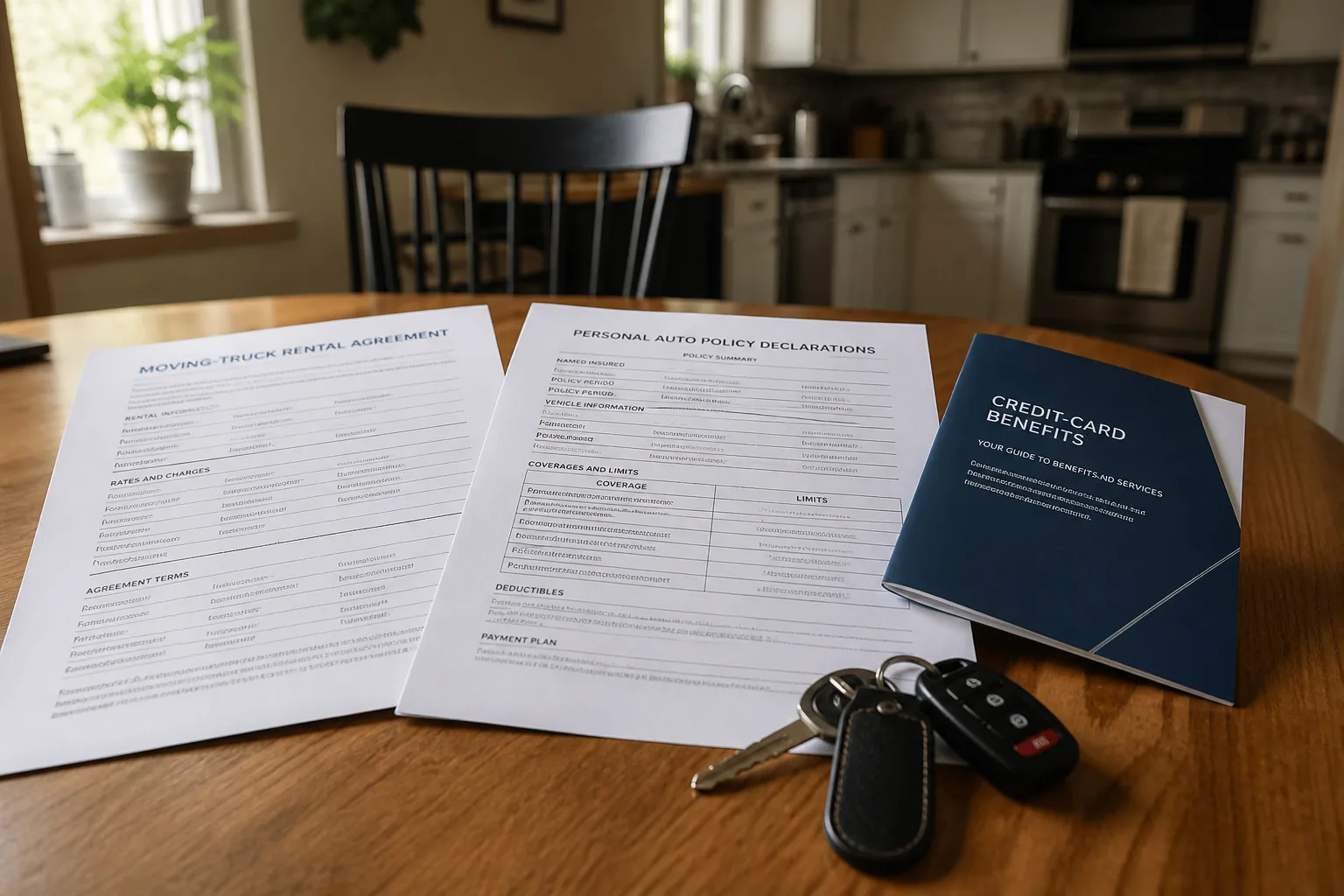
Begin with the actual language that applied on the rental date. The following table is an investigation map, not a promise of payment.
| Document to locate | What to confirm from the document |
|---|---|
| Rental agreement and protection-product terms | The named renter and drivers, the vehicle, selected products, exclusions, reporting terms, and definitions |
| Renter’s auto policy | Whether the definitions and exclusions address this vehicle and this use |
| Cardholder benefit guide | Whether the vehicle type and transaction qualify under the program’s own terms |
| Other driver’s claim information | The driver, owner, carrier, claim number, and written position |
| Any potentially relevant UM/UIM policy | The named insureds, definitions, exclusions, limits, and written rejection documents |
The Federal Trade Commission’s rental-car guidance[1] describes products commonly offered with ordinary rental cars. The page does not establish that a particular product, personal policy, or cardholder program applies to a moving truck.
The FTC states that a collision-damage waiver or loss-damage waiver generally covers damage to the rental vehicle and does not cover personal injuries or damage to personal property. The purchased document remains the source for its terms.
The FTC also notes that some card benefits require use of the card and rejection of the rental company’s collision coverage. That information is a reason to obtain the applicable cardholder guide; it is not proof that a box truck qualifies.
Whose conduct should be investigated?
A driver whose conduct contributed to the collision
Indiana Code § 34-51-2-7[2] directs the jury to determine the percentage of fault of the claimant, defendants, and properly identified nonparties. In an action governed by Indiana Code § 34-51-2-6[3], a claimant is barred from recovery when the claimant’s fault is greater than the fault of all persons whose fault is at issue.
That rule makes the crash evidence important. Driver statements, scene photographs, video, witness accounts, vehicle damage, and the investigating officer’s materials may help show how the collision occurred. For a broader checklist, see what evidence helps prove an Indiana car-accident claim.
The rental company
Under 49 U.S.C. § 30106[4], a qualifying rental-vehicle owner is not liable under state law merely because it owns the vehicle when the owner is engaged in renting vehicles and there is no negligence or criminal wrongdoing by the owner or an affiliate.
The same federal section preserves liability based on the rental owner’s own negligence or criminal wrongdoing. Whether evidence supports such a theory must be evaluated from the specific facts; ownership alone is not enough.
Other people or businesses
Do not assign responsibility from a logo or assumption. Preserve facts about every driver, vehicle owner, person who loaded the cargo, and entity that possessed or worked on the truck. A theory should be pursued only when evidence connects that person or entity to what happened.
What evidence should you preserve?
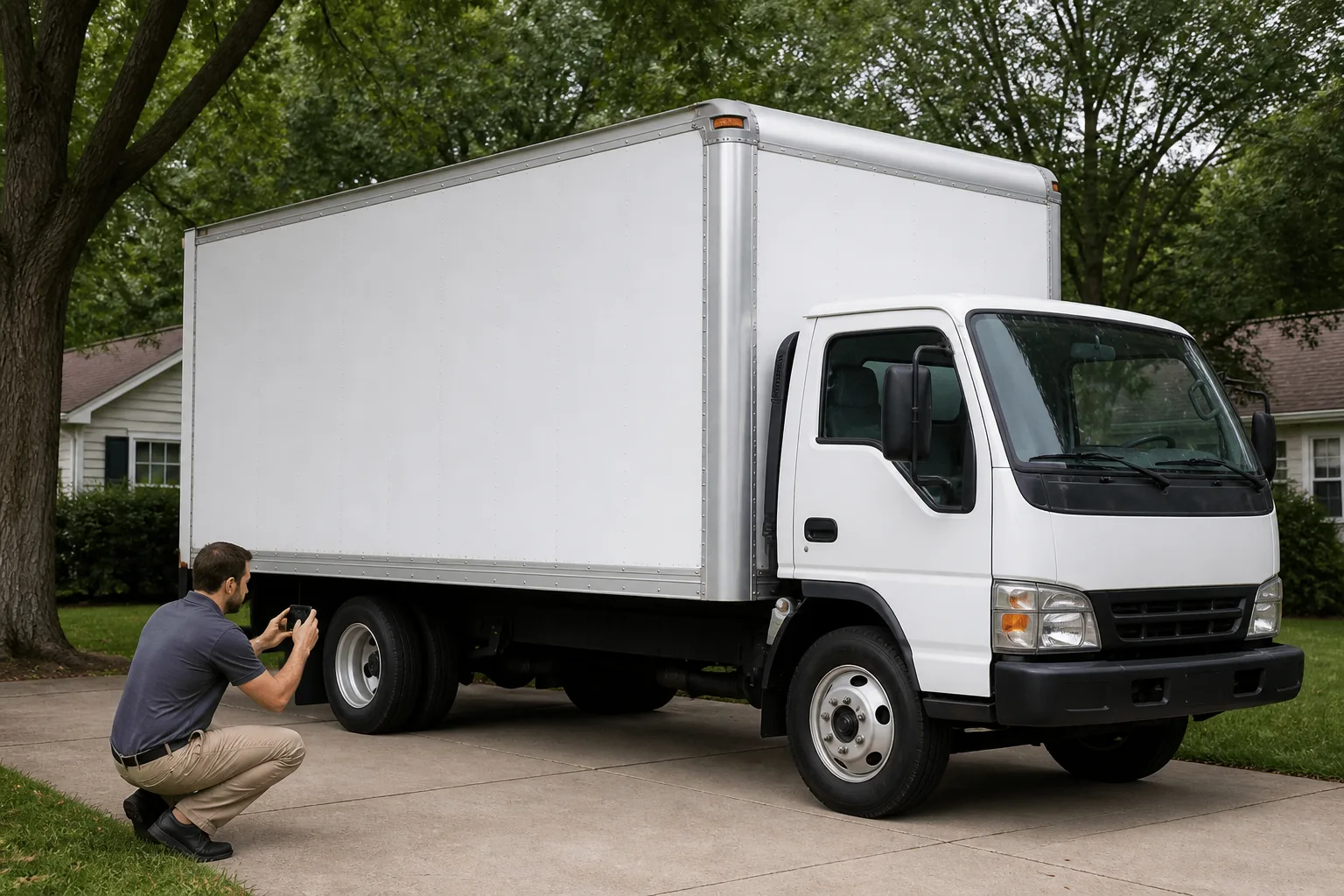
A moving-truck matter may involve documents and physical evidence that do not exist in a typical passenger-car crash. Useful items can include:
- The signed rental agreement, all pages of the rental packet, and every selected or declined product.
- The exact policy forms, endorsements, declarations, and cardholder guides effective on the crash date.
- Photographs of the vehicle-identification number, unit number, dashboard, mirrors, tires, cargo area, exterior, and damage.
- Loading photographs, receipts, weight information, and the names of people who loaded or secured the cargo.
- Messages with the rental company, adjusters, witnesses, and other drivers.
- The crash report information, photographs, video, medical documents, expense records, and work-loss records.
If a mechanical condition or loading problem may be relevant, promptly send a written preservation request identifying the truck and the materials that should be retained. Do not alter or dispose of relevant items while a dispute is reasonably anticipated.

How do injury and passenger claims work?
The Indiana Department of Insurance[5] describes bodily-injury liability as coverage for injuries the insured causes to someone else, up to the applicable limit. It describes medical-payments coverage as payment for covered medical bills for the insured and usually passengers, subject to the applicable limit.
Those general descriptions do not decide which agreement or policy applies to a moving-truck occupant. Identify the allegedly responsible people first, then obtain the actual documents and written positions rather than assuming a result.
Indiana Code § 27-7-5-2[6] generally requires uninsured- and underinsured-motorist coverage in an automobile liability or motor-vehicle liability policy delivered or issued for delivery in Indiana unless the coverage is rejected in writing. That section does not by itself establish that a particular person or rented moving truck falls within a policy’s definitions.
For more background, read Delventhal’s guide to Indiana crashes involving an uninsured driver. Questions about health concerns should be directed to an appropriate health professional. The CDC’s concussion guidance[7] lists danger signs that call for emergency help and explains that some symptoms may appear hours or days later.
Organize bills, appointment records, work-loss documents, and daily-impact notes in one place. Delventhal’s car-accident settlement calculator is an educational organizing tool, not a valuation or outcome prediction.

What should you do next?
- Move to safety and request emergency help when the situation calls for it.
- Obtain the investigating agency’s report or incident information.
- Follow the rental agreement’s notice procedure and keep proof of the notice.
- Provide the make, model, vehicle-identification number, and names when reporting the event.
- Request written positions that quote the document language being applied.
- Preserve the truck-related documents and physical evidence before they disappear.
- Identify important dates early.
Indiana Code § 34-11-2-4[8] generally requires an action for injury to a person or damage to personal property to be commenced within two years after the cause of action accrues. Different rules may affect a particular matter, so do not wait until the end of that period to investigate.
If an Indiana-regulated company does not resolve a concern after direct contact, the Indiana Department of Insurance complaint page[9] explains its consumer complaint process.
For an ordinary passenger-car rental, see what happens after a rental-car accident in Indiana. If the truck was being used for business, Delventhal’s commercial-vehicle accident guide may identify additional factual questions.

Frequently Asked Questions
Does my personal auto policy cover a rented moving truck?
That cannot be determined from general consumer guidance alone. Review the policy definitions and exclusions against the exact truck, driver, and use, then request a written position.
What does a collision-damage product address?
The FTC says a collision- or loss-damage waiver generally addresses damage to the rental vehicle, not personal injuries or personal-property damage. The purchased product’s own terms control its scope.
What should I check in a cardholder program?
Obtain the cardholder guide effective on the rental date and check its vehicle definitions, exclusions, payment requirements, and procedure.
Does ownership alone make the rental company answer for a loss?
No. When 49 U.S.C. § 30106 applies, ownership alone does not create liability, but the federal section does not eliminate a theory based on the rental owner’s own negligence or criminal wrongdoing.
What does Indiana’s UM/UIM law say?
Indiana Code § 27-7-5-2[10] generally requires UM/UIM protection unless it is rejected in writing. The applicable document language and facts still determine whether a person and event fall within a particular policy.
How long do I have to bring an Indiana injury claim?
Indiana Code § 34-11-2-4[11] generally provides two years for an action involving injury to a person or damage to personal property. A different rule may apply, so the specific filing date should be checked promptly.
Source notes
- Federal Trade Commission — Renting a Car; authority: Federal Trade Commission; accessed August 20, 2026; URL:
https://consumer.ftc.gov/articles/renting-car - Indiana Code § 34-51-2-6[3] — claimant fault bar; authority: Indiana General Assembly; accessed August 20, 2026; URL:
https://iga.in.gov/laws/2026/ic/titles/34/articles/51/chapters/2/sections/34-51-2-6 - Indiana Code § 34-51-2-7[2] — allocation of fault; authority: Indiana General Assembly; accessed August 20, 2026; URL:
https://iga.in.gov/laws/2026/ic/titles/34/articles/51/chapters/2/sections/34-51-2-7 - 49 U.S.C. § 30106 — rented vehicle owner responsibility; authority: Office of the Law Revision Counsel, U.S. House of Representatives; accessed August 20, 2026; URL:
https://uscode.house.gov/view.xhtml?req=granuleid%3AUSC-prelim-title49-section30106&num=0&edition=prelim - Indiana Department of Insurance — Auto Insurance; authority: Indiana Department of Insurance; accessed August 20, 2026; URL:
https://www.in.gov/idoi/consumer-services/types-of-insurance/auto-insurance/ - Indiana Code § 27-7-5-2[10] — uninsured and underinsured motorist protection; authority: Indiana General Assembly; accessed August 20, 2026; URL:
https://iga.in.gov/laws/2026/ic/titles/27/articles/7/chapters/5/sections/27-7-5-2 - Indiana Code § 34-11-2-4[11] — injury and property filing period; authority: Indiana General Assembly; accessed August 20, 2026; URL:
https://iga.in.gov/laws/2026/ic/titles/34/articles/11/chapters/2/sections/34-11-2-4 - Signs and Symptoms of Concussion; authority: Centers for Disease Control and Prevention; accessed August 20, 2026; URL:
https://www.cdc.gov/traumatic-brain-injury/signs-symptoms/index.html
If you were hurt in a rented moving-truck crash, Delventhal Law Office’s Indiana car-accident lawyers can review the documents and facts and explain the available next steps.
This article is general information, not legal advice. The firm accepts a matter only after both sides sign an engagement letter.
Sources
- Federal Trade Commission’s rental-car guidance (consumer.ftc.gov) ↩
- Indiana Code § 34-51-2-7 (iga.in.gov) ↩
- Indiana Code § 34-51-2-6 (iga.in.gov) ↩
- 49 U.S.C. § 30106 (uscode.house.gov) ↩
- Indiana Department of Insurance (in.gov) ↩
- Indiana Code § 27-7-5-2 (iga.in.gov) ↩
- CDC’s concussion guidance (cdc.gov) ↩
- Indiana Code § 34-11-2-4 (iga.in.gov) ↩
- Indiana Department of Insurance complaint page (in.gov) ↩
- Indiana Code § 27-7-5-2 (iga.in.gov) ↩
- Indiana Code § 34-11-2-4 (iga.in.gov) ↩