Renting a car in Fort Wayne or picking one up at Fort Wayne International Airport feels routine — until you are rear-ended on Coliseum Boulevard or someone runs a red light and hits you at an intersection. A rental-car crash raises all the usual Indiana injury questions plus a second set of questions about the rental contract, damage to the car, and who is responsible for the days the vehicle is out of service. This guide walks through both, in plain language, with the Indiana rules that actually apply.
Key takeaways
- The crash-scene basics are the same whether you are driving your own car or a rental: get safe, call police, document the scene, and get checked out medically.
- Indiana is an at-fault, comparative-fault state. Fault — not the fact that you were in a rental — usually decides who pays for injuries and vehicle damage.
- Coverage comes in layers. Bodily-injury liability, damage to the rental car, loss-of-use/administrative charges, your personal auto policy, counter-purchased products, and credit-card benefits can each play a different role.
- A collision damage waiver (CDW/LDW) is not liability insurance. It addresses damage to the rental car; it does not pay for your injuries.
- Read the rental agreement. Authorized-driver rules, permitted-use terms, and prompt-reporting requirements can affect coverage.
- Deadlines matter. Indiana's injury lawsuit deadline is generally two years, and a crash involving a government vehicle can trigger much shorter notice deadlines.
What to do first at the scene of a rental-car crash
The first minutes after a crash are about safety and preserving facts, not sorting out insurance. Do these things in order:
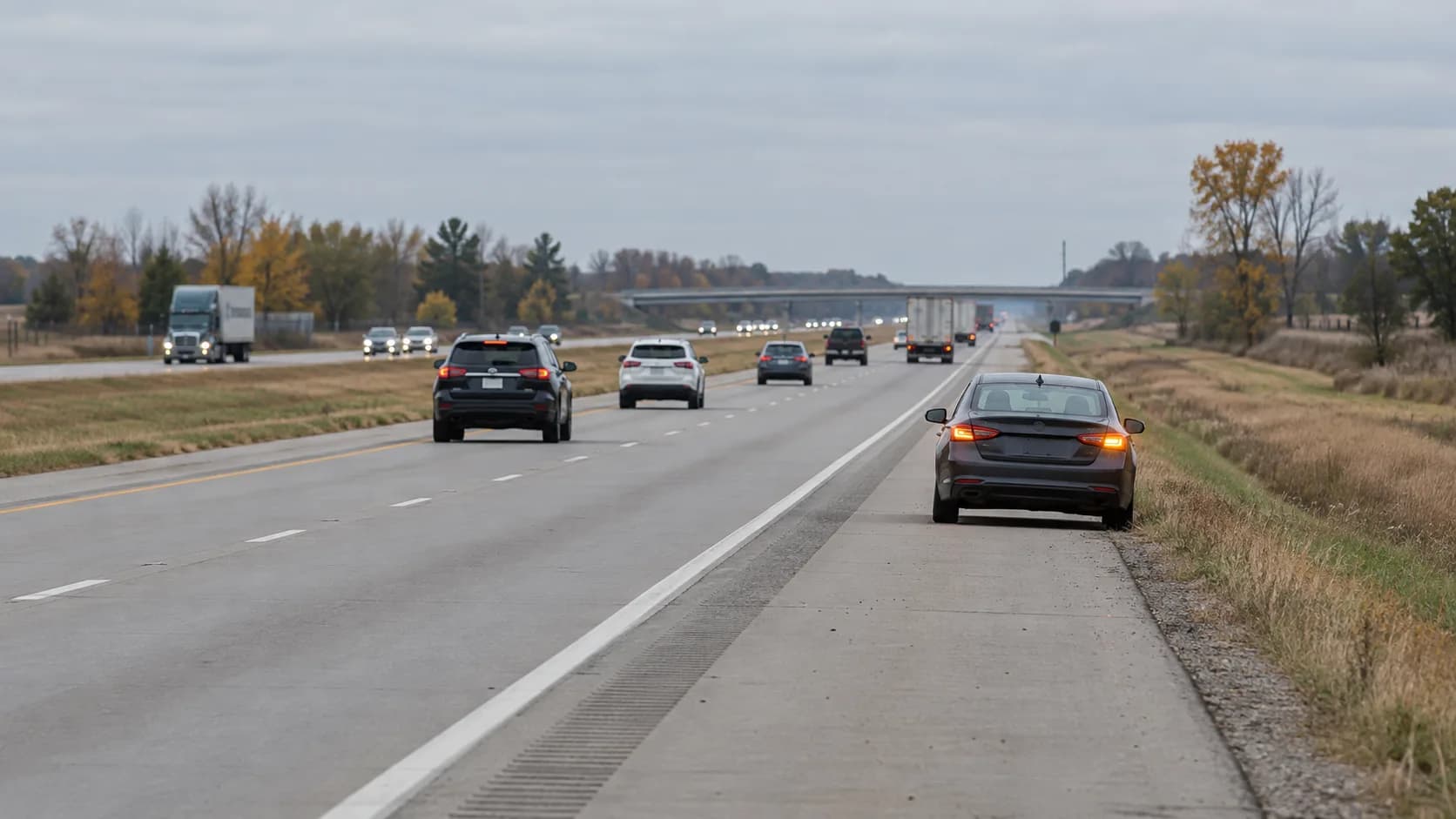
- Check for injuries and get to safety. Move out of traffic if you safely can, and turn on hazard lights.
- Call 911. Under Indiana Code § 9-26-1-1.1[1], a driver involved in a crash must stop, give reasonable assistance, and report a crash that involves injury, death, or property damage — so getting law enforcement involved is both smart and, in many cases, required.
- Exchange information. Get the other driver's name, contact information, license, plate, and insurance details, and give yours.
- Document everything. Photograph all vehicles, the rental's damage, the scene, road and weather conditions, and any visible injuries. Get the names and numbers of witnesses.
- Get the crash report information. Ask the responding officer how and where to obtain the Indiana crash report.
- Get medical care promptly. Some injuries — whiplash, concussions, soft-tissue injuries — do not fully show up for hours or days.
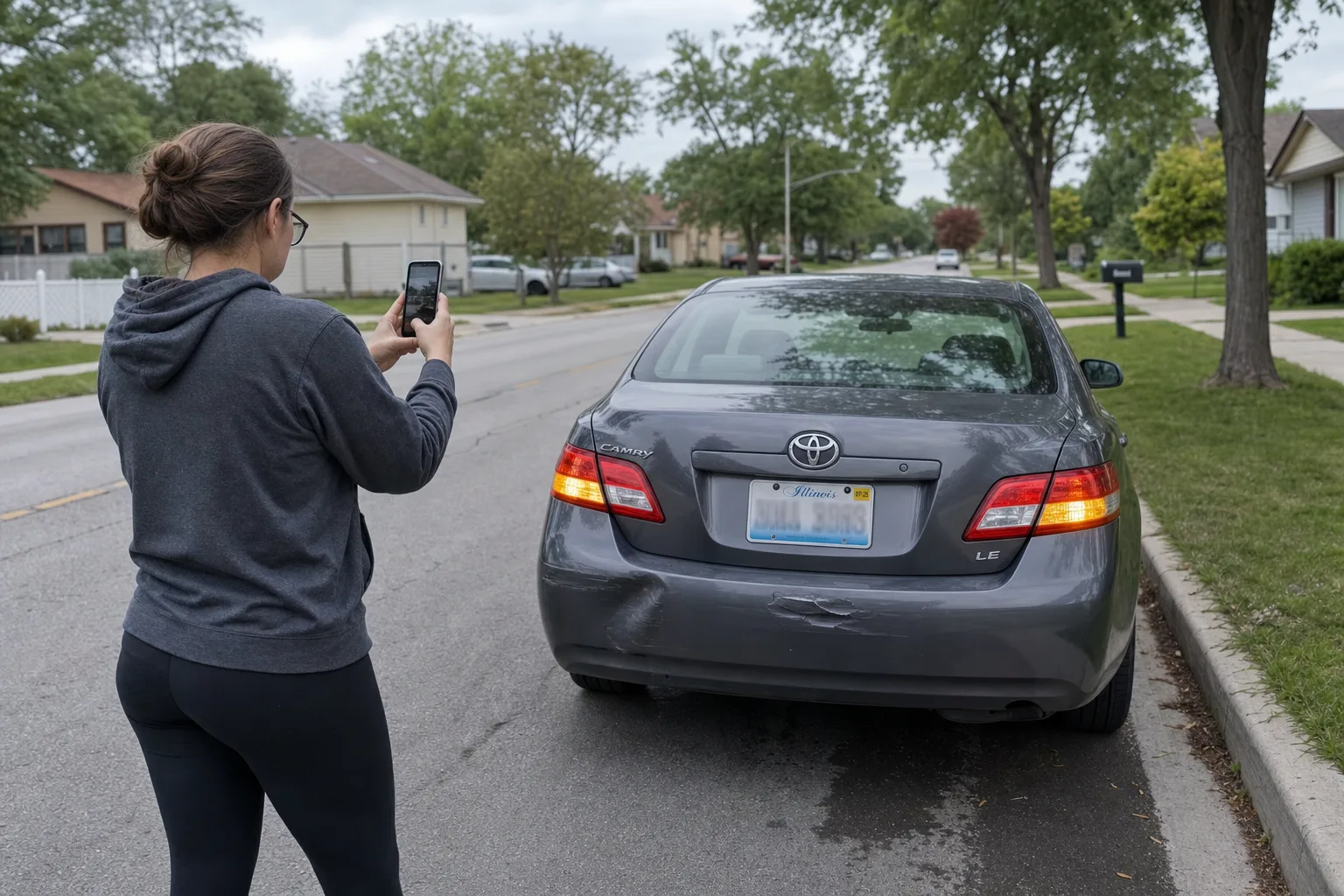
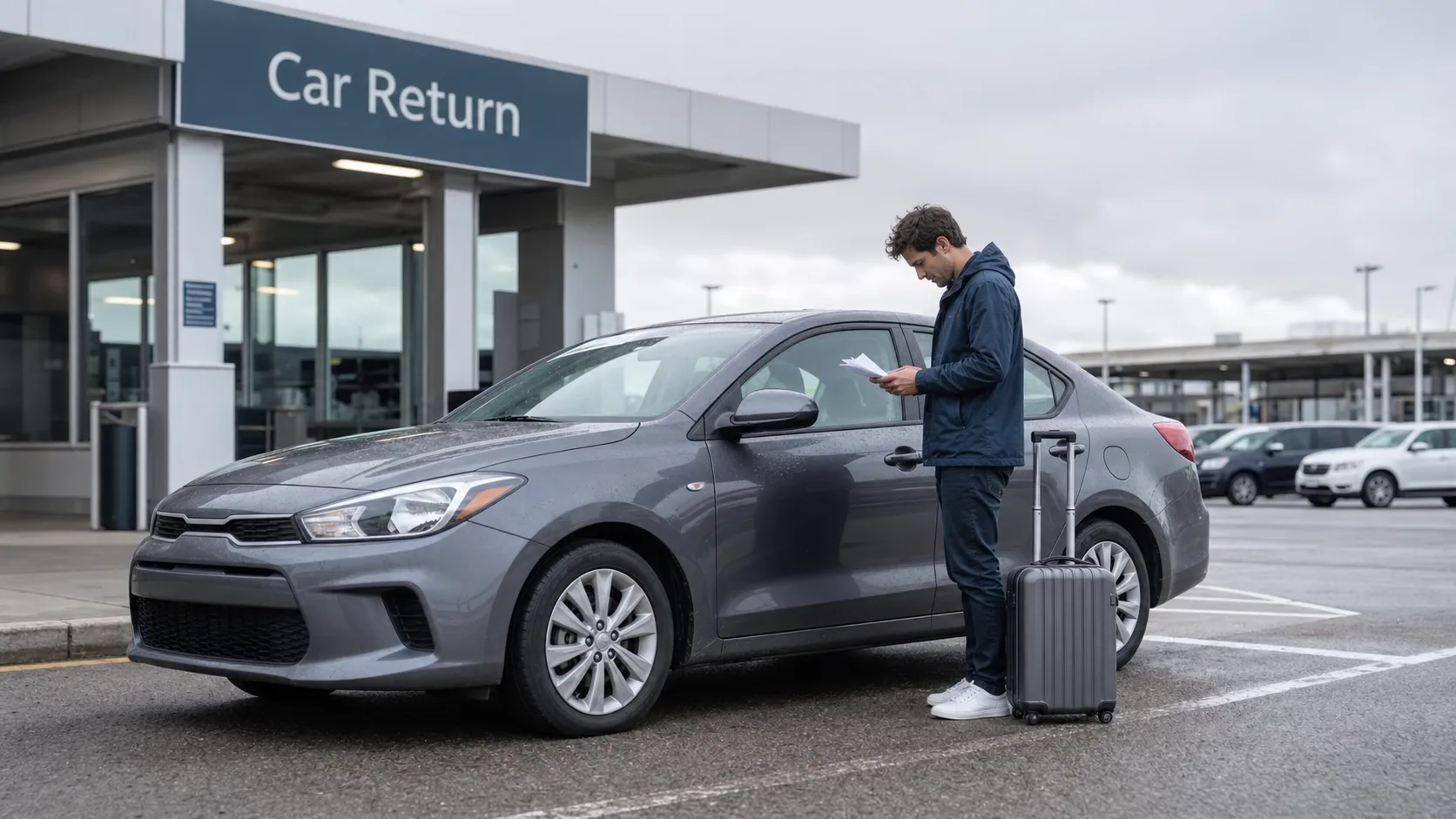
One extra step is unique to rentals: call the rental company as soon as it is safe. Most rental agreements require prompt notice of any accident, and the company will tell you where to return or tow the vehicle and what paperwork it needs. Keep a copy of the rental agreement, your receipt, and any accident form the company gives you.
Fault decides most of it — and Indiana is a comparative-fault state
Being in a rental does not change the core question after most Indiana crashes: who was at fault? Indiana uses a modified comparative-fault system. Your recovery is reduced by your share of fault, and if you are found more than 50% at fault, you generally recover nothing from the other driver. That "51% bar" is set by the Indiana Comparative Fault Act at Indiana Code § 34-51-2-6[2].
This is why the scene documentation above matters so much. In a rental, you may be a visitor from out of town, unfamiliar with the roads, and the other driver's insurer may lean on that to shift blame. Solid photos, witness information, and the police report help keep fault where it belongs. If an insurer already claims you were partly to blame, our explainer on Indiana's 51% fault rule and how it affects a car accident claim breaks down how those percentages work.
The coverage layers: who pays for what
This is where rental crashes get confusing, because several different sources of money can apply — and they cover different things. Think of it as layers, not a single policy.
| Coverage layer | What it generally addresses | Where it usually comes from |
|---|---|---|
| Bodily-injury liability | Injuries to other people when a driver is at fault | The at-fault driver's auto liability policy (yours, the other driver's, or a policy that follows the rental) |
| Damage to the rental vehicle | Repair or replacement of the rental car itself | A collision damage waiver (CDW/LDW) bought at the counter, your own collision coverage, or a credit-card benefit |
| Loss of use & administrative fees | Lost rental income while the car is repaired, plus towing, storage, and admin charges the contract allows | CDW/LDW terms, your policy, or a credit-card benefit — coverage varies widely |
| Your medical bills | Your own injury treatment costs | MedPay (if you have it), health insurance, and ultimately the at-fault driver's liability coverage |
| Uninsured/underinsured motorist (UM/UIM) | Your injuries when the at-fault driver has no or too little insurance | Your personal auto policy (UM/UIM often follows you into a rental) |
Two points cause most of the confusion:
- Your personal auto insurance often "follows" you into a rental. Many personal policies extend your existing liability and collision coverage to a rental car you are driving temporarily — but not always, and not for every use. Check your policy or ask your agent.
- A damage waiver is not the same as liability insurance. The Federal Trade Commission's guidance on renting a car[3] explains that a collision damage waiver addresses damage to the rental car and will not pay for injuries to you or damage to your personal property.
Collision damage waivers and counter products, explained
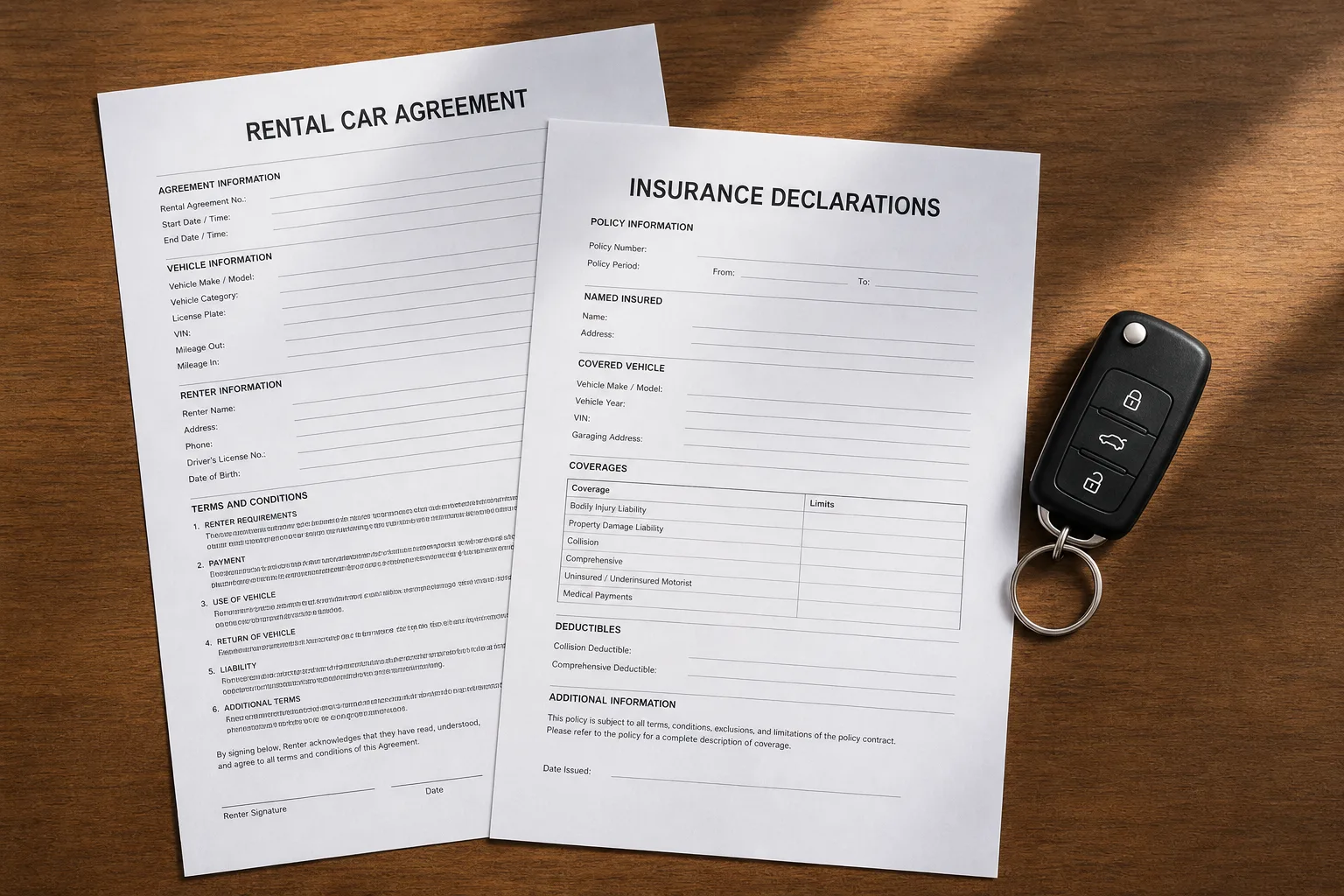
When you picked up the rental, the counter agent probably offered several add-ons. Knowing what each one does helps after a crash:
- Collision Damage Waiver (CDW) / Loss Damage Waiver (LDW). Technically not "insurance" — it is the rental company agreeing not to charge you for damage to (or theft of) the car, subject to conditions. Per the FTC, many credit cards also offer a similar benefit when you pay with the card, but you usually must decline the rental company's own waiver to be eligible.
- Supplemental liability. Adds bodily-injury and property-damage liability protection above the rental's base level, for injuries you cause to others.
- Personal accident / personal effects coverage. Addresses your own injuries or stolen belongings — often duplicating health or homeowners coverage you already have.
Read the fine print. Waivers and card benefits typically contain exclusions — for example, unauthorized drivers, off-road use, driving under the influence, or failing to report the accident promptly. Those exclusions are exactly what insurers and rental companies look at first.
Credit-card rental benefits
Many credit cards offer rental-car collision benefits, but they come with strict conditions: you generally must pay for the entire rental with that card, decline the rental company's CDW/LDW, and be the primary renter. Most card benefits are secondary — meaning they kick in after your personal auto insurance — and most cover damage to the rental car, not liability for injuries to other people. Because terms vary by card, call the number on the back of your card and ask for the benefits administrator before assuming you are covered.

Common rental-crash scenarios in Indiana
How the layers apply depends on who was at fault and who was hurt. A few typical situations:
- Another driver hit you. Their liability coverage is generally the primary source for your injuries and, often, the damage to the rental. You may still need to notify the rental company and front some charges while fault is sorted out.
- You were at fault. Liability coverage (yours, a supplemental policy, or one that follows the rental) addresses the other party's injuries and property. Damage to the rental itself falls to your CDW/LDW, your collision coverage, or a card benefit.
- The other driver had no insurance or fled. Your own UM/UIM coverage may apply — and it often follows you into a rental. Our guide on what happens when the at-fault driver has no insurance in Indiana explains those options.
- A government vehicle was involved (for example, a city or transit vehicle). Special, much shorter notice deadlines apply under the Indiana Tort Claims Act.
Indiana law also requires drivers to carry at least the state minimum liability coverage — $25,000 for injury or death of one person, $50,000 per accident, and $25,000 for property damage, according to the Indiana BMV's proof of financial responsibility page[4]. Minimum limits can fall far short in a serious crash, which is one reason UM/UIM coverage matters. If you are unsure who ultimately pays your treatment costs, see who pays medical bills after a car accident in Indiana. You can use our Indiana car accident settlement calculator to organize the factors that may affect a claim’s value; it is an educational tool, not a promise of any result.
Evidence and documents to gather
Rental crashes generate two paper trails — the injury claim and the rental contract. Keep both organized.
| Category | What to save |
|---|---|
| Crash proof | Photos/video of all vehicles and the scene, the Indiana crash report number, witness names and numbers |
| Rental documents | Rental agreement, pickup receipt, list of counter add-ons you accepted or declined, any accident/incident form |
| Insurance | Your declarations page, the other driver's insurance information, and your credit-card benefits terms if you paid by card |
| Medical | ER and follow-up records, imaging, referrals, and all bills and out-of-pocket receipts |
| Charges | Every invoice the rental company sends — repair, loss of use, towing, storage, administrative fees |
| Communications | Notes on calls with the rental company and insurers, including dates, names, and what was said |

Be careful about giving a recorded statement before you understand your coverage and injuries. You can share basic facts, but a detailed recorded statement can be used against you later. Our article on whether you should give a recorded statement after an Indiana car accident explains the risks and how to protect your claim.
The deadlines that can quietly end a claim
Two very different clocks run after a rental crash:
- Rental-contract notice. Most agreements require you to report the accident to the company promptly. Late notice can jeopardize a waiver or benefit.
- Legal deadlines. In Indiana, the general deadline to file a personal-injury lawsuit is two years from the date of the crash under Indiana Code § 34-11-2-4[5]. If a government vehicle or entity is involved, you may have as little as 180 days (against a city, county, or other political subdivision) or 270 days (against the State) to file a tort claim notice under the Indiana Tort Claims Act — far shorter than two years.
Because insurers sometimes stretch out "we're still investigating," it is easy to let time slip. For a fuller breakdown, see how long you have to file a claim after an Indiana accident. If your crash happened locally, our checklist on what to do after an injury accident in Allen County walks through the next steps.

Common mistakes that hurt rental-crash claims
- Assuming the CDW covers your injuries. It does not — it addresses damage to the car.
- Skipping the police report. A documented, investigated crash is far easier to prove later.
- Letting an unauthorized driver take the wheel. If someone not listed on the agreement was driving, coverage can be denied.
- Delaying medical care. Gaps in treatment give insurers a reason to argue you were not really hurt.
- Not reading the rental agreement. Permitted-use, authorized-driver, and reporting terms all affect coverage.
- Guessing about coverage. Call your auto insurer and, if you paid by card, the card's benefits administrator, before you assume anything.
How Delventhal Law Office can help
Rental crashes stack a contract dispute on top of an injury claim, and the two do not always point in the same direction. A Fort Wayne car accident attorney can help you sort out which coverage layer applies to which loss, deal with the rental company's charges, and keep the injury claim on track. If you want to understand the broader process first, our overview of how our Fort Wayne accident attorney handles Indiana crash claims is a good starting point.
Frequently Asked Questions
Does my own car insurance cover a rental car in Indiana?
Often, yes. Many personal auto policies extend your existing liability and collision coverage to a rental car you drive temporarily, but coverage is not universal and can exclude certain uses. Check your declarations page or call your agent before you rent.
Is a collision damage waiver the same as insurance?
No. A collision damage waiver (CDW/LDW) is the rental company agreeing not to charge you for damage to the car, subject to conditions. As the FTC explains, it does not pay for injuries to you or damage to your personal property, so it is not a substitute for liability or health coverage.
What if the other driver was at fault while I was in a rental?
Fault still drives the claim. The at-fault driver's liability insurance is generally the primary source for your injuries and often for the rental's damage. You may still need to notify the rental company and document the loss while fault is resolved.
Do I have to pay the rental company for "loss of use"?
Rental agreements often let the company charge for the days a damaged car is out of service, plus towing, storage, and administrative fees. Whether those charges are covered depends on your waiver, your auto policy, and any credit-card benefit — which is why saving every invoice matters.
How long do I have to file a claim after a rental-car crash in Indiana?
The general deadline to file an Indiana personal-injury lawsuit is two years from the crash. If a government vehicle or entity is involved, a much shorter tort claim notice deadline — 180 days against a political subdivision or 270 days against the State — may apply. The rental contract also usually requires prompt notice to the company.
Does my credit card cover a rental car accident?
Sometimes, but with strict conditions. Card benefits usually require paying for the full rental with that card, declining the rental company's own waiver, and being the primary renter. Most card benefits are secondary and cover damage to the rental car, not injuries to other people. Call your card's benefits administrator to confirm.
Talk with an attorney about your situation
If you were hurt in a rental-car crash and are not sure which coverage applies or what to do next, a free consultation can help you understand your options. Delventhal Law Office can review what happened, explain the deadlines that may apply, help you deal with the rental company's charges, and help you decide the next step. You do not have to untangle the insurance layers alone — contact Delventhal Law Office to talk it through.
This article is general information about Indiana law and is not legal advice. Reading it does not create an attorney-client relationship. Insurance coverage depends on your specific policies and rental agreement; for advice about your situation, speak with a qualified attorney.