
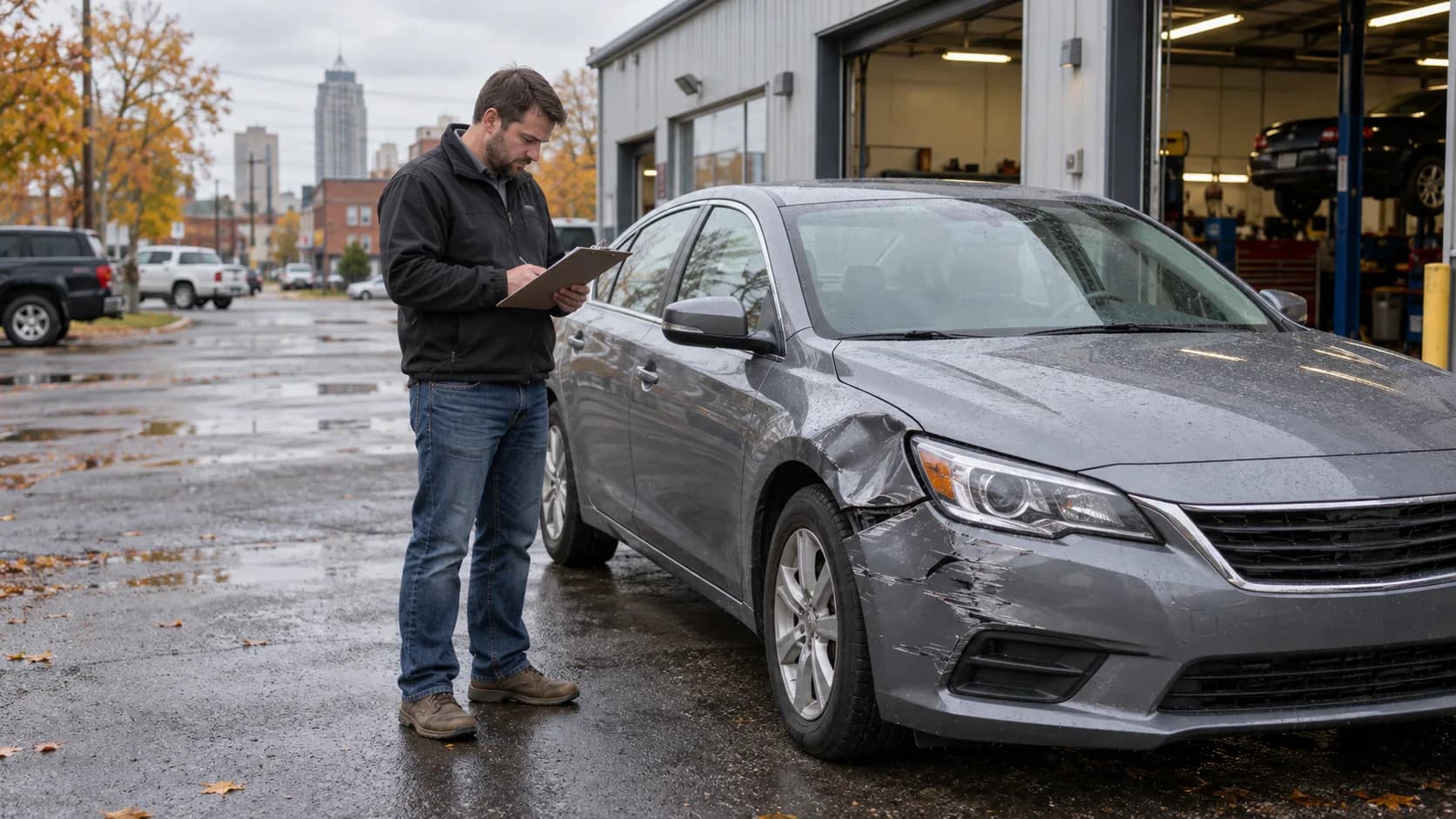
When your vehicle is unavailable after a Fort Wayne or northeast Indiana crash, you may borrow a relative’s car, arrange rides, work from home, or simply go without transportation. In one Indiana case, the owner of a damaged car used a borrowed substitute vehicle instead of renting one, and loss-of-use damages were still allowed.
- Indiana courts have allowed loss-of-use damages without a paid rental-car receipt.
- A federal court applying Indiana law explained that rental value is often the measure, but not the only one.
- For a destroyed vehicle, an Indiana appeals court measured loss of use by the time needed to obtain a replacement.
- Dated rental quotes, repair records, photographs, and written messages with the claim handler are practical records to keep.
- Indiana Code 34-11-2-4[1] requires an action for injury to personal property to be commenced within two years after the cause of action accrues.
The Indiana rule
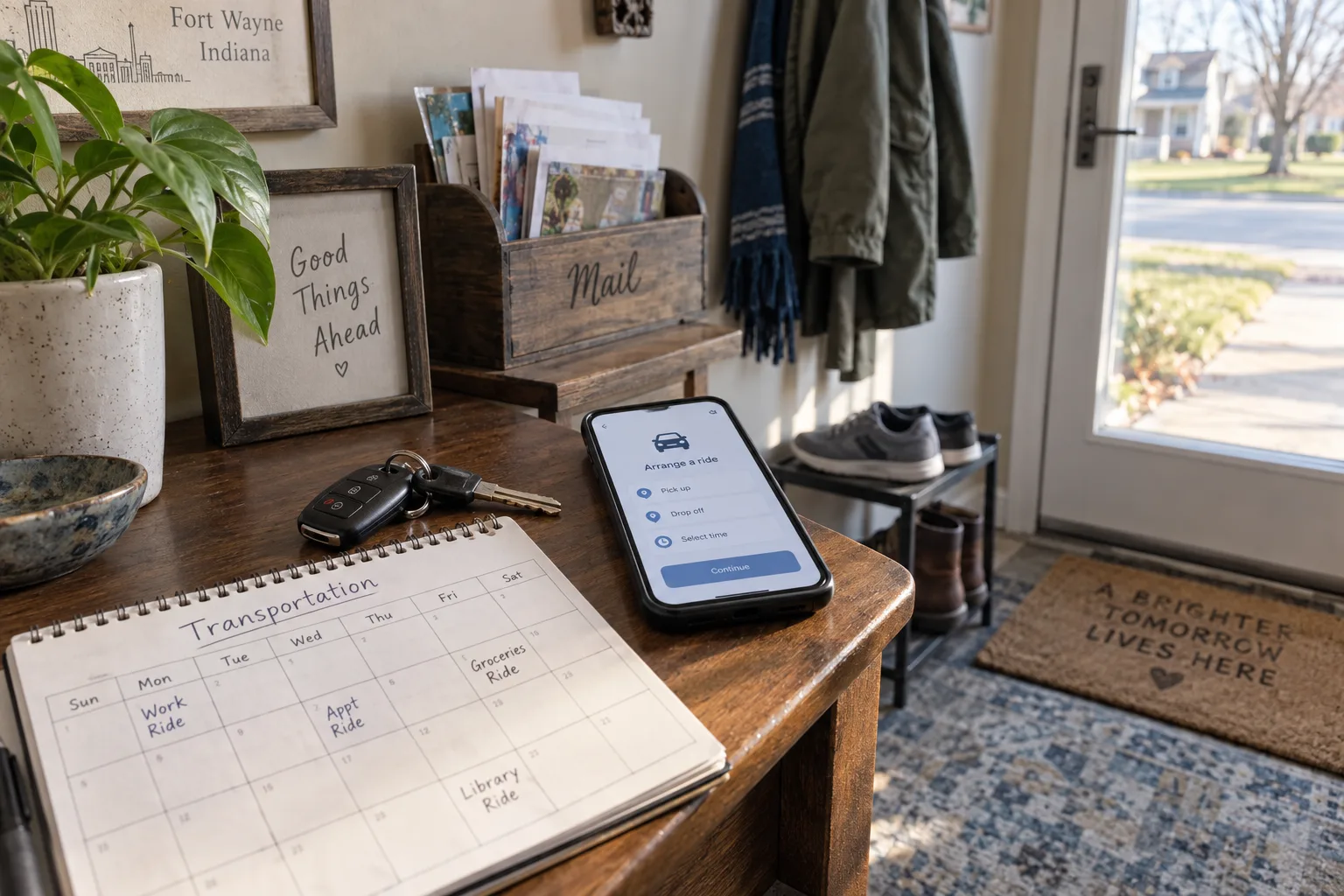
Under Indiana law, when personal property is damaged, an award based on the reasonable value of the temporary loss of use of the property is proper. In Hamacher v. Decker Livestock, Inc., the Indiana Court of Appeals affirmed loss-of-use damages for a damaged car even though the owner did not rent a replacement and instead borrowed a vehicle from his wife.
The Court of Appeals opinion[2] is available online. A later federal court applying Indiana law described the same rule and cited Hamacher; you can read that court’s discussion in the official federal court opinion[3].
Loss of use is a separate question from rental reimbursement under your own auto policy. The Indiana Department of Insurance lists car rental among the other auto coverages that may be available, so the policy language matters when you seek payment from your own carrier.
If the other driver is to blame, the vehicle-damage claim is often presented to that driver’s auto carrier. The Indiana Department of Insurance explains that property damage liability coverage pays, up to the limits of the policy, for damage to other people’s property caused by the insured’s car. Whether a particular company will pay a loss-of-use amount, and how much, depends on the facts. The related Indiana rental-car and loss-of-use guide explains the broader property-damage process.
How to prove the loss without a rental receipt
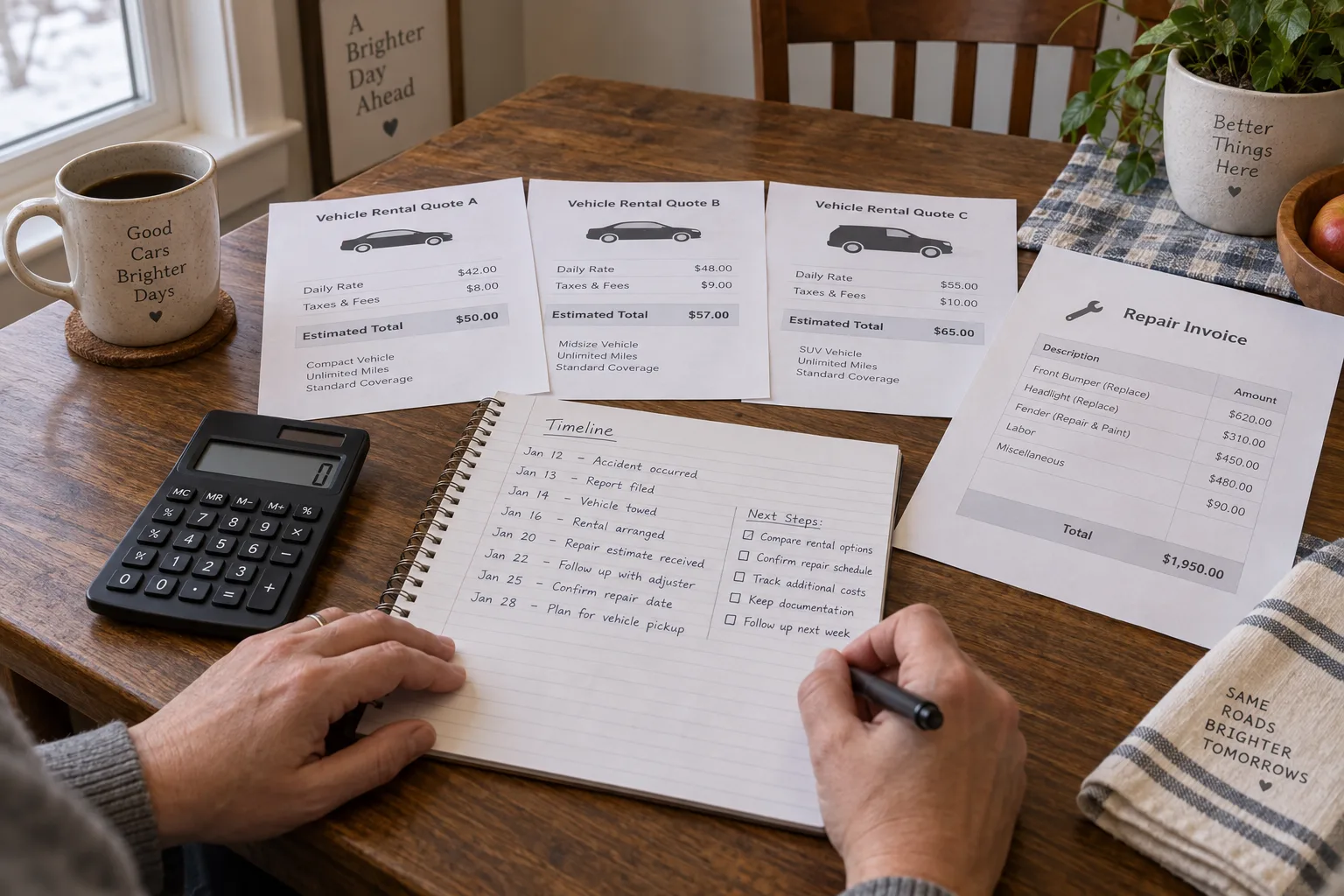
A rental receipt is not the only way to show rental value; dated quotes for a comparable vehicle can help show what renting one would have cost. Since Indiana law often looks to reasonable rental value in the market area, local rental prices for a comparable vehicle are useful evidence.
As a practical matter, organize records as they are created rather than relying on a later estimate:
- Written daily or weekly quotes for a vehicle comparable in size and function to yours.
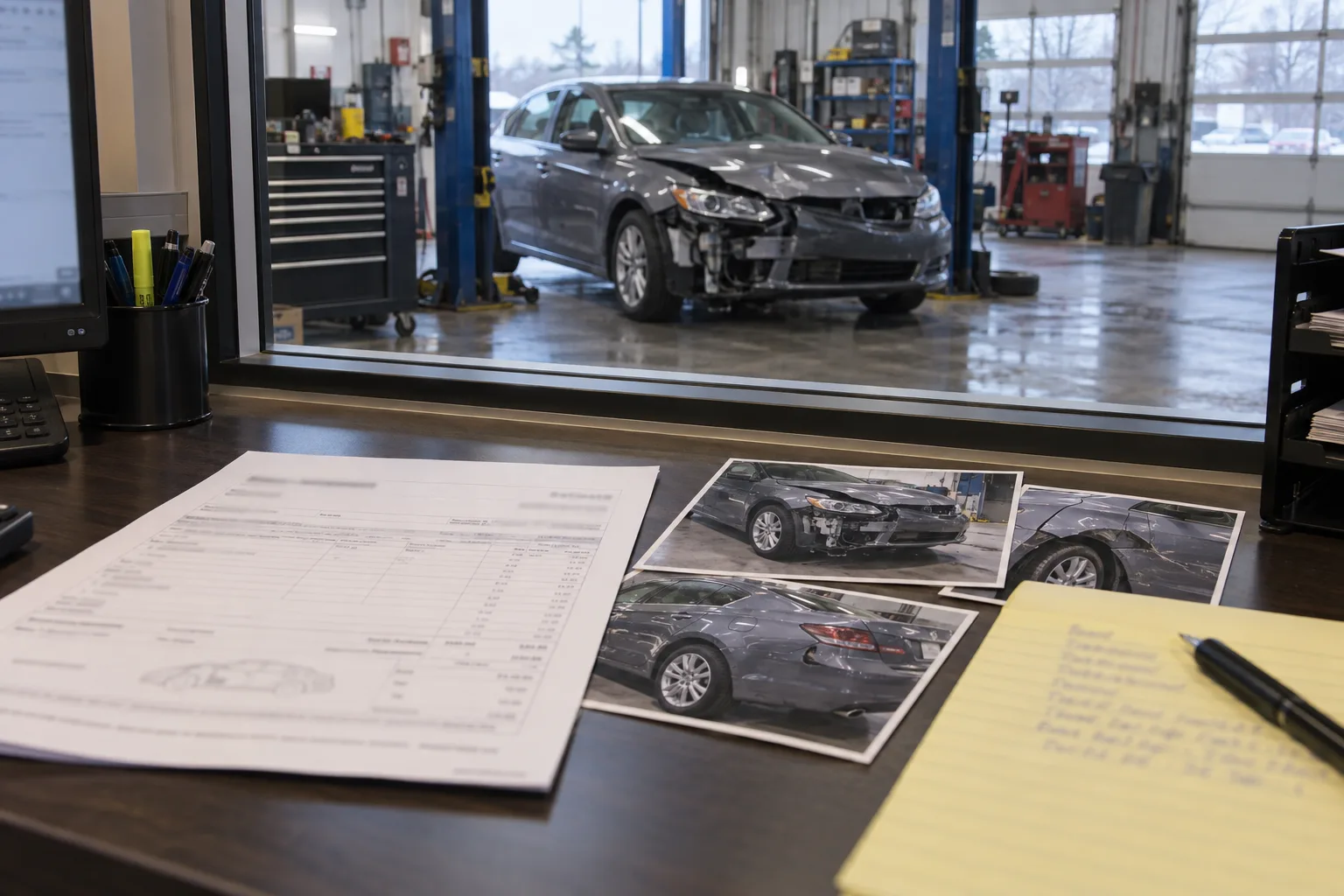
- The repair estimate, work authorization, parts-delay messages, and final invoice showing when the vehicle entered and left the shop.
- Photographs showing the damage or why the vehicle could not reasonably be used.
- A dated log identifying when you borrowed a car, arranged rides, used public transportation, or missed planned trips.
- Emails and claim-portal messages showing when you asked for loss-of-use payment and what answer you received.
The Indiana Department of Insurance suggests taking photographs or video of damage, keeping copies of all correspondence with your insurance company, writing down the date, name, and substance of phone and in-person contacts, and asking the claims adjuster for an itemized explanation of a settlement offer. Its official insurance claim tips[4] provide a useful recordkeeping framework.
You can also review the evidence that helps support an Indiana car-accident claim and the guide to towing, storage, and vehicle preservation.

Focus on the period of lost use
For a destroyed vehicle, the Indiana Court of Appeals in New York Central Railroad Co. v. Churchill affirmed a loss-of-use award based on reasonable rental value for the time needed to obtain a replacement, even though the owner did not actually obtain one.
Expect questions about any stretch of time the records do not explain. A practical timeline shows what happened on each meaningful date: inspection, estimate approval, parts ordering, supplemental estimate, repair completion, total-loss decision, and replacement efforts. Ask the repair shop to identify delays in writing and save the messages as they arrive.
| Timeline record | What it helps explain |
|---|---|
| Crash and claim-report dates | When the loss and claim process began |
| Inspection and estimate dates | When damage could be evaluated |
| Repair authorization and parts messages | Why the vehicle remained unavailable |
| Completion or total-loss notice | When the repair phase ended or replacement became the issue |
| Comparable rental quotes | The market evidence offered for fair rental value |
If your vehicle was declared a total loss, see the Indiana total-loss guide for the broader vehicle-value questions.
A practical way to organize the calculation
A simple presentation identifies the supported daily rental value, the number of days claimed, and the total requested. It should also point out taxes, optional products, unusually expensive vehicle classes, or other items that could distort a comparison.
| Calculation item | Record to attach |
|---|---|
| Comparable vehicle class | Your vehicle details and rental-company descriptions |
| Daily market value | Multiple dated local quotes |
| Number of days claimed | Repair or replacement timeline |
| Requested loss-of-use amount | Daily value multiplied by supported days |
In the federal case, the court refused to base loss-of-use damages on long-term rental charges that were not fairly comparable to the short period actually at issue. This calculation organizes your evidence; it does not mean every figure or day claimed will be accepted.
How to present the request and respond to a dispute
A practical approach is a short written request that states the dates the vehicle was unavailable, describes the comparable vehicle class, shows the calculation, and attaches the supporting records. If any part is rejected, ask the claims adjuster for an itemized explanation, as the Indiana Department of Insurance suggests for settlement offers.
Before filing a complaint, the Indiana Department of Insurance says you should first contact the insurance company, agent, or broker to try to resolve the issue. If that does not resolve it, the Department accepts complaints involving claim disputes and coverage concerns, and asks for supporting documents such as correspondence and claim denial letters. Its official consumer complaint page[5] explains the process.
The Department’s complaint page describes an insurance-department investigation in which the insurance company responds in writing to the Department; it does not describe a complaint as a court filing or say that a complaint pauses any lawsuit deadline. Separately, Indiana Code 34-11-2-4[1] gives two years after the cause of action accrues to commence an action for injury to personal property; review the current text on the Indiana General Assembly website[1]. Other time limits may apply depending on who was involved, so it is wise to confirm the timing for your situation with a lawyer rather than waiting on a complaint outcome.
For a broader review of property damage and injury issues, see the firm’s Fort Wayne car-accident resource.

Frequently Asked Questions
Can I claim loss of use if I borrowed a family member’s car?
A federal court applying Indiana law said loss-of-use damages may be awarded even when the owner does not rent a replacement or substitutes other property in the owner’s possession, and it described Hamacher as a case where the owner borrowed his wife’s car.
Can I claim loss of use if friends drove me around?
Indiana cases have allowed loss-of-use damages without a paid replacement rental, although the cases discussed here did not involve rides from friends, so expect questions about how the value of the lost use is measured and how long the vehicle was unavailable.
Is loss of use the same as rental-reimbursement coverage?
Rental coverage is one of the other auto coverages the Indiana Department of Insurance says may be available. What it pays is set by your policy. Loss of use, by contrast, is an element of damages for the temporary loss of use of damaged property.
What if my vehicle was totaled?
In a case involving a destroyed tractor-trailer unit, the Indiana Court of Appeals affirmed a loss-of-use award based on reasonable rental value for the time needed to obtain a replacement. Whether and how that applies to a totaled passenger vehicle depends on the facts.
How long do I have to bring an Indiana property-damage action?
Indiana Code 34-11-2-4[1] says an action for injury to personal property must be commenced within two years after the cause of action accrues. A dispute with your own auto carrier under your policy may involve different terms, so review the policy and ask a lawyer if timing is a concern.
What should I do if the claim handler rejects the request?
As a practical step, ask for the decision and the calculation in writing and compare the response with your evidence and your policy. The Indiana Department of Insurance says to first contact the insurance company, agent, or broker to try to resolve the issue before filing a complaint with the Department.
Sources
- Hamacher v. Decker Livestock, Inc.[2], 536 N.E.2d 304, Indiana Court of Appeals decision (1989), loss of use without a rental; unofficial copy hosted by CourtListener; accessed September 30, 2026.
- MCI, LLC v. Patriot Engineering & Environmental, Inc.[3], U.S. District Court for the Southern District of Indiana (2007), govinfo.gov, discussing Indiana loss-of-use law, Hamacher, and Churchill; accessed September 30, 2026.
- Indiana Code 34-11-2-4[1], Indiana General Assembly, limitation period for injury to personal property; accessed September 30, 2026.
- Insurance Claim Tips[4], Indiana Department of Insurance, claim documentation and settlement explanations; accessed September 30, 2026.
- Consumer Complaints[5], Indiana Department of Insurance, complaint process and supporting documents; accessed September 30, 2026.
- Auto Insurance[6], Indiana Department of Insurance, auto coverage types; accessed September 30, 2026.
If you were hurt in an Indiana crash and property-damage questions are part of what you are sorting out, a free consultation with Delventhal Law Office can help you understand your options.
This article is general information about Indiana law and is not legal advice. Reading it does not create an attorney-client relationship, and neither does contacting us.