
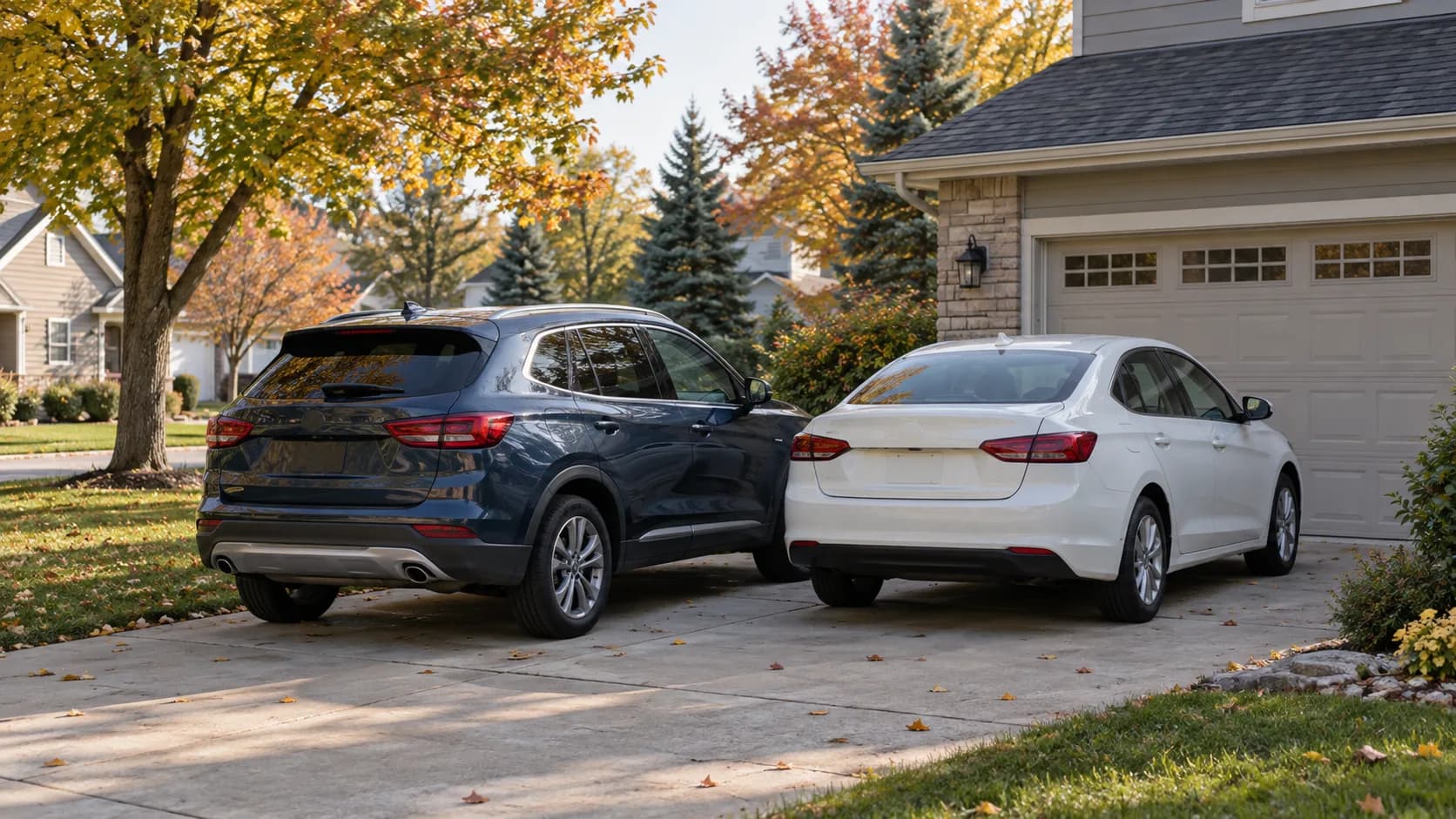
If you were hurt by an uninsured or underinsured driver in Fort Wayne or elsewhere in Indiana, one declarations page rarely tells the whole story. The policy on the car you occupied, your own policy, and a policy issued to a household member may each name you as an insured person, and each may contain its own limits, other-insurance clause, offset clause, and anti-stacking clause.
This article explains what stacking means, what Indiana law allows insurers to do about it, why the Indiana Supreme Court has read these clauses so closely, and what to gather before an adjuster tells you that only one policy applies.
Key takeaways
- Indiana Code 27-7-5-5[1](a) allows an uninsured or underinsured motorist policy to cap all insurers’ combined liability from one accident at the highest limit under any one applicable policy.
- An anti-stacking clause only works if its wording is clear; in Wagner v. Yates the Indiana Supreme Court found the insurer’s clause ambiguous and construed it against the insurer.
- In Glover v. Allstate the Court held that the policy’s anti-stacking clause did not limit an insured’s ability to recover under multiple underinsured motorist policies, and that the offset clause reduced the limit only by payments made on behalf of the people directly liable.
- Who counts as an insured person, which vehicle was occupied, and how each policy describes itself can change the outcome as much as the anti-stacking wording itself.
- Get every potentially applicable policy in full, with endorsements, before you accept any insurer’s coverage position.
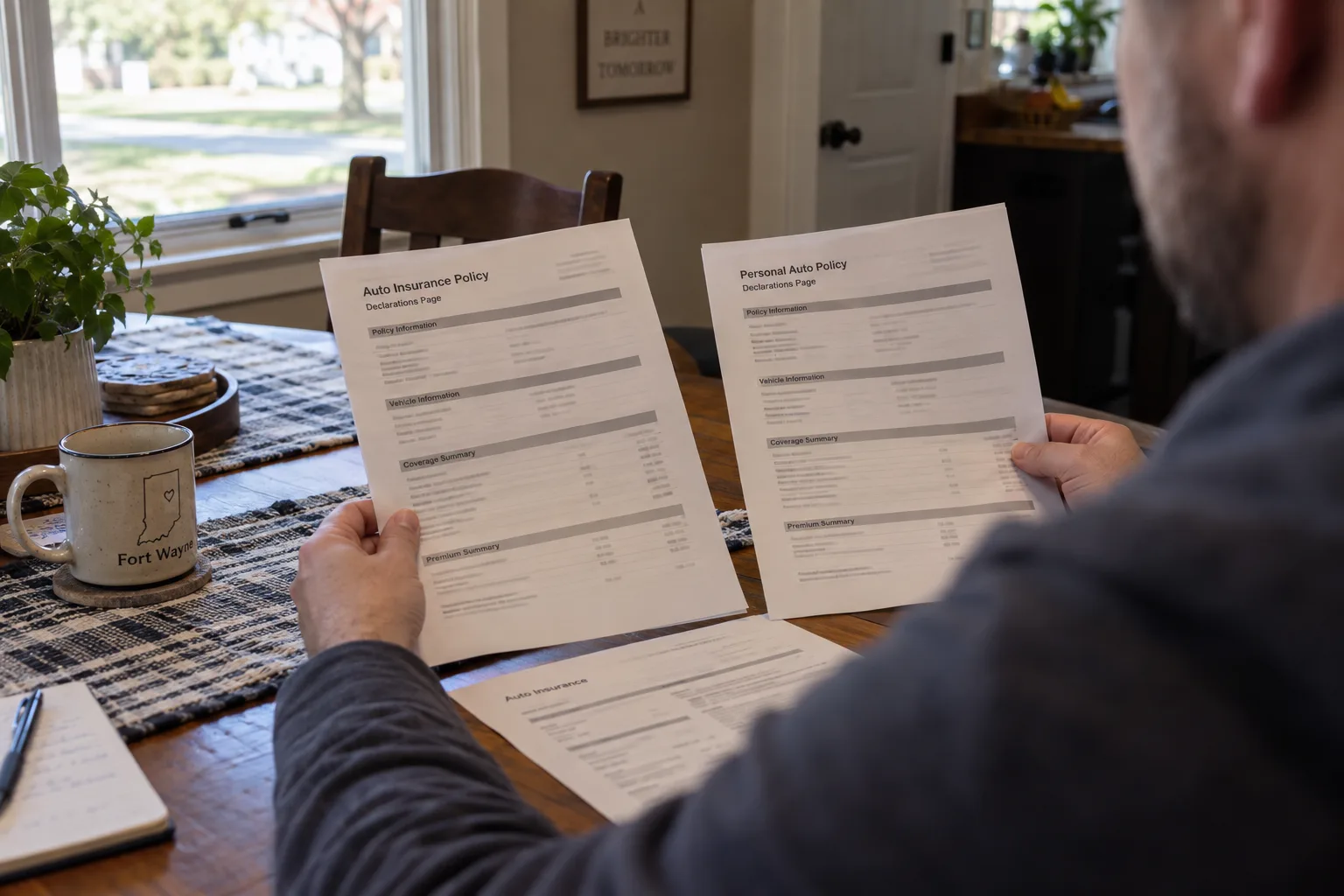
What does “stacking” UM/UIM coverage mean?
In Wagner v. Yates, the Indiana Supreme Court described stacking as the situation in which more than one policy applies to a loss, so the insured may recover under all of the applicable policies, up to the total damages. The Court also explained that because insurance exists to indemnify, a double recovery is not allowed even when several policies apply, and that anti-stacking clauses limit coverage when coverage under another policy is available.
A passenger, for example, may qualify as an insured under the policy covering the car and under a parent’s or spouse’s policy that defines resident relatives as insured persons. That alone does not mean the two limits can be added together. Each policy’s insured-person definition, other-insurance clause, offset clause, and anti-stacking clause has to be read with the others.
Indiana Code 27-7-5-4[2] defines an uninsured motor vehicle as one without liability insurance or otherwise out of compliance with Indiana’s financial responsibility law, and an underinsured motor vehicle as an insured vehicle whose available bodily-injury liability limits are less than the limits of the injured person’s own underinsured motorist coverage at the time of the accident. Our guides to claims against an uninsured Indiana driver and to when underinsured motorist coverage applies in Indiana cover those definitions in more detail.
What does Indiana law allow?
Indiana Code 27-7-5-5(a)[3] says that a policy or endorsement providing uninsured or underinsured motorist coverage may provide that the total limit of all insurers’ liability arising out of any one accident shall not exceed the highest limits under any one policy applicable to the loss, but in no event may coverage be less than the minimum set by Indiana Code 9-25-4-5[4].
The same statute does two other things that matter in a multi-policy claim. Subsection (b) says that when the coverage is written for more than one vehicle under a single policy, it applies only to the vehicles for which a specific uninsured or underinsured motorist premium was charged. Subsection (c) sets the maximum payable for bodily injury at the lesser of two figures: the per-person uninsured or underinsured limit minus the amounts paid by or for anyone liable for the injury, or the insured’s total damages minus those same payments.
Subject to the exemptions the statute lists, Indiana Code 27-7-5-2[5] requires an insurer to make uninsured and underinsured motorist coverage available in each automobile liability policy delivered in Indiana, in limits at least equal to the policy’s bodily-injury liability limits, unless the insured has rejected the coverage in writing, and it requires underinsured motorist coverage to be made available in limits of not less than $50,000. If the paperwork you receive does not show a written rejection, ask for it; our guide to Indiana UM/UIM coverage waivers explains what a valid rejection looks like.

What has the Indiana Supreme Court said?
In Wagner v. Yates[6] (2009), the insurer argued that its anti-stacking and set-off provisions left it with no exposure. The Court noted that an insurer is not required to copy the statute’s wording, but held that the policy language before it was ambiguous on the stacking question, construed the ambiguity strictly against the insurer, and reversed the judgment for the insurer.
In Glover v. Allstate Property & Casualty Insurance Co.[7] (2020), an estate had already collected $75,000 from the two at-fault drivers’ insurers and $25,000 in underinsured motorist benefits from each of two other policies, then sought $25,000 more under the decedent’s parents’ policy. The Court held that she was an insured person as a resident relative, that the policy’s anti-stacking provision did not limit an insured’s ability to recover under multiple underinsured motorist policies, and that the offset provision reduced the limit only by the payments made on behalf of the people directly liable for the injury, which was $75,000 on that record.
Those two decisions explain why “more than one policy may apply” and “the limits can be added together” are different questions. A clause that clearly caps combined limits can be enforced under the statute; a clause that is unclear, or that addresses a different situation than the one in front of the adjuster, may not do what the insurer says it does.

Why does the exact policy language matter?
An insurer’s coverage position usually rests on several provisions working together, not on one paragraph labeled “anti-stacking.” The table below lists the questions each provision has to answer before anyone can say how many policies respond.
| Provision | Question it must answer | Why it matters |
|---|---|---|
| Insured-person definition | Do you qualify under the occupied vehicle’s policy, your own policy, or a resident-relative provision? | Only a person who meets a policy’s definition of an insured can claim its UM/UIM coverage; Glover turned first on whether the decedent was a resident relative. |
| Other-insurance clause | Does the policy call itself primary, excess, or contingent when other coverage exists? | It can set the order in which applicable policies pay. |
| Anti-stacking clause | Does it clearly say that combined limits under all applicable policies will not exceed the highest single limit? | Indiana Code 27-7-5-5[1](a) permits such a cap, but Wagner shows that unclear wording is construed against the insurer. |
| Offset clause | Which payments does the policy subtract from its limit? | Indiana Code 27-7-5-5[1](c) measures the maximum payment against amounts paid by or for the liable parties; Glover limited Allstate’s offset to the $75,000 paid on behalf of the at-fault drivers. |
| Premium and vehicle schedule | Was a UM/UIM premium charged for the vehicle involved? | Under Indiana Code 27-7-5-5[1](b), multi-vehicle coverage applies only to vehicles for which that premium was charged. |
Because each of these provisions is contract language, the analysis has to start with the actual words in effect on the date of the crash. Amendatory endorsements can change a definition or an offset clause after the original policy was issued.

How should you review possible UM/UIM coverage?
Start with documents rather than assumptions. Work through this list before you accept any statement that only one policy applies:
- Get the complete policy for the vehicle you occupied. Ask for the full policy in effect on the accident date, with the declarations page and every endorsement, not just an insurance card.
- Get your own complete auto policy and any umbrella policy. Personal umbrella policies sometimes include, and sometimes expressly exclude, uninsured and underinsured motorist coverage.
- Collect the policies of household members. If a parent, spouse, or other relative in your household has a policy, its insured-person definition may include you.
- Confirm the UM/UIM selections. Look for the coverage limits actually chosen and for any written rejection, since Indiana Code 27-7-5-2[5] requires the coverage to be offered unless it is rejected in writing.
- Gather the liability side. Keep the at-fault driver’s liability limits, the settlement offers, and records of every payment made by or for the liable parties, because Indiana Code 27-7-5-5[1](c) measures the UM/UIM payment against those amounts.
- Keep every insurer letter. Reservation-of-rights letters, coverage-position letters, and denial letters show exactly which provisions each insurer is relying on.
When several policies may respond, compare the contract terms rather than adding the numbers on the declarations pages. Our guide to crashes where several auto policies may apply walks through the order-of-payment questions in more detail.

What can you do if the insurer says stacking is prohibited?
A denial is a coverage position, not the final word. These steps keep the question on the actual policy language:
- Ask for the position in writing. Request a letter that identifies every definition, limit, other-insurance clause, offset clause, and anti-stacking clause the insurer is relying on, with the policy form and endorsement numbers.
- Compare the quoted language with the certified policy. Read the clauses the insurer quotes against the complete policy and endorsements in effect on the accident date, and check whether the clause addresses the situation you are actually in.
- Check the arithmetic. Confirm which payments the insurer is subtracting and whether they were made by or for a liable party, which is what Indiana Code 27-7-5-5[1](c) and Glover allow.
- Consider a Department of Insurance complaint. The Indiana Department of Insurance[8] accepts consumer complaints about coverage concerns and claim disputes, asks that you first contact the insurance company to try to resolve the issue, and asks for supporting documentation such as the declarations page, letters of claim denial, and other correspondence.
The Department describes its role as investigating the complaint and taking administrative action against the company when appropriate. A complaint is therefore a review of the insurer’s conduct, not a ruling on what the policy language means. If the insurer is simply not paying, our guide to what to do when an Indiana auto insurer will not pay covers the next steps.
Frequently asked questions
Can I add two UIM limits together in Indiana?
Not automatically. Indiana Code 27-7-5-5[1](a) allows a policy to provide that the combined liability of all insurers for one accident will not exceed the highest limit under any one applicable policy. Whether that cap applies to you depends on whether each policy actually covers you and whether its anti-stacking wording is clear enough to be enforced, which is the question the Indiana Supreme Court examined in Wagner v. Yates.
Can I recover from more than one UM/UIM policy?
Possibly. In Glover v. Allstate, the Indiana Supreme Court held that the policy’s anti-stacking provision did not limit the insured’s ability to recover under multiple underinsured motorist policies, and the estate in that case had already been paid under two other UIM policies. The answer for your claim depends on the wording of each policy and on the payments already made on behalf of the liable drivers.
What if the anti-stacking clause is unclear?
Unclear language may not produce the limitation the insurer claims. In Wagner v. Yates the Indiana Supreme Court found the American Family policy ambiguous on the stacking question, applied the rule that ambiguous insurance language is construed strictly against the insurer, and reversed the summary judgment the insurer had won on its anti-stacking and set-off theories.
Does paying UM/UIM premiums on several vehicles mean the limits stack?
Not by itself. Indiana Code 27-7-5-5[1](b) ties multi-vehicle coverage to the vehicles for which a UM/UIM premium was charged, and subsection (a) still permits the policy to cap combined limits at the highest single limit. A charged premium is a condition the statute requires before multi-vehicle coverage applies to a vehicle; it is not, by itself, a reason to add the limits together when a clear anti-stacking clause applies.
Should I sign a release before all possible policies are identified?
Be careful. Indiana Code 27-7-5-6[9] lets an underinsured motorist insurer be subrogated to your claim against the at-fault driver, and it describes a written-notice process for a bona fide settlement offer from that driver: an insurer that receives the notice with a certification of the driver’s liability limits, and does not advance the offered amount within 30 days, loses its subrogation right against that driver. Policies add their own consent-to-settle terms, so identify every policy that may apply and give the required notices before you sign a release.
If you were hurt in an Indiana crash and more than one policy may apply, Delventhal Law Office can read the policies, explain the insurer’s position, and tell you what the wording actually allows in a free consultation. Bring every declarations page, the insurer letters, and the settlement offers you have received.
This article provides general information, not legal advice, and reading it does not establish representation by Delventhal Law Office. The photographs are original illustrative scenes, not records of an actual crash. Legal sources were checked September 18, 2026.
Sources
- Indiana Code 27-7-5-5 (iga.in.gov) ↩
- Indiana Code 27-7-5-4 (iga.in.gov) ↩
- Indiana Code 27-7-5-5(a) (iga.in.gov) ↩
- Indiana Code 9-25-4-5 (iga.in.gov) ↩
- Indiana Code 27-7-5-2 (iga.in.gov) ↩
- Wagner v. Yates (public.courts.in.gov) ↩
- Glover v. Allstate Property & Casualty Insurance Co. (caseclips.courts.in.gov) ↩
- Indiana Department of Insurance (in.gov) ↩
- Indiana Code 27-7-5-6 (iga.in.gov) ↩