
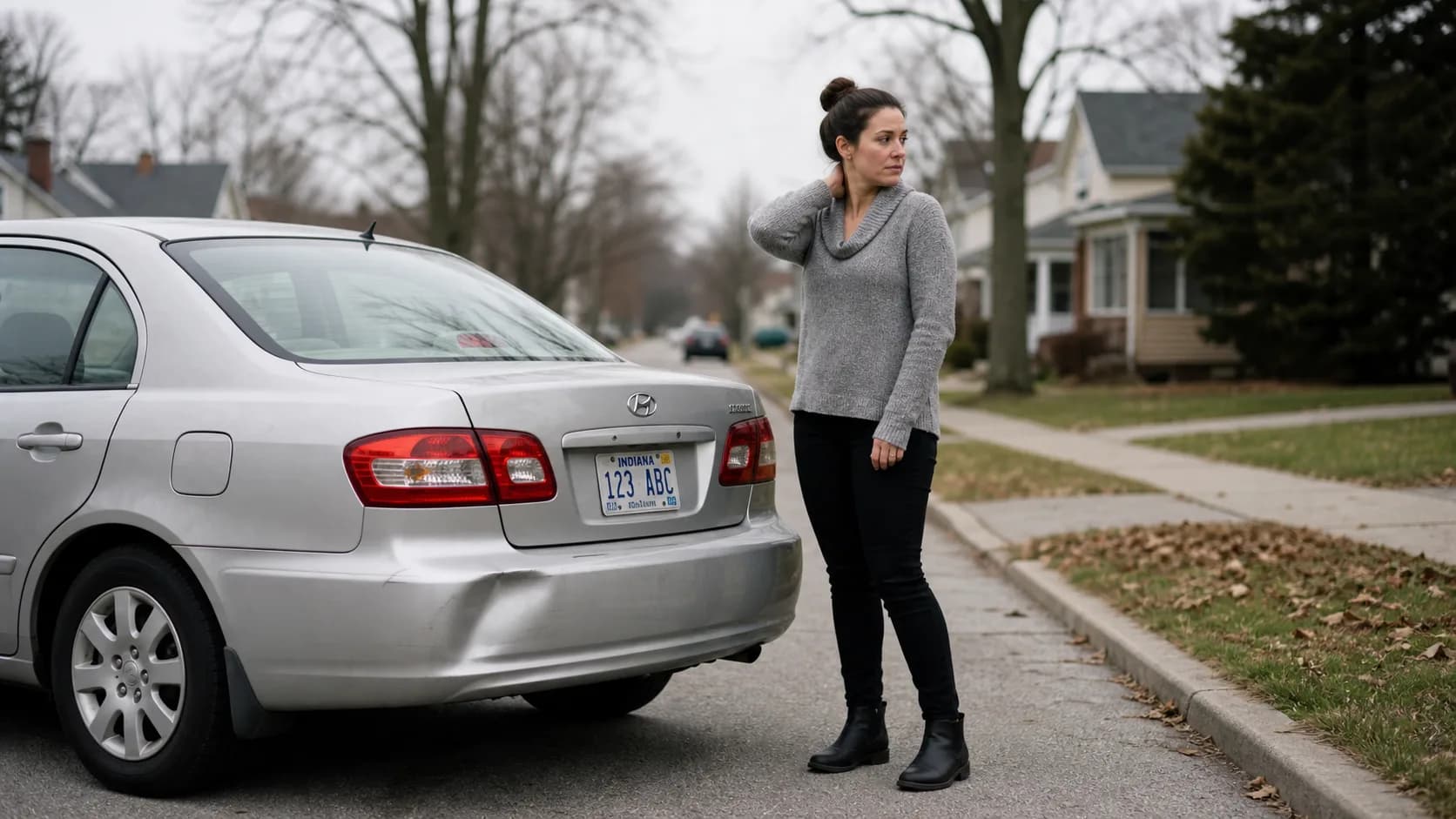
It is one of the most common frustrations after a fender bender: your car has a scuffed bumper, the other driver seems fine, and the insurance adjuster acts like nothing serious could have happened. Meanwhile, your neck is stiff, your head aches, and you cannot sleep. If that sounds familiar, you are not imagining it, and you are not alone.
This guide explains how "minor" crashes cause major injuries, why insurers push back with a "minor impact" defense, and what practical steps protect your health and your Indiana injury claim.
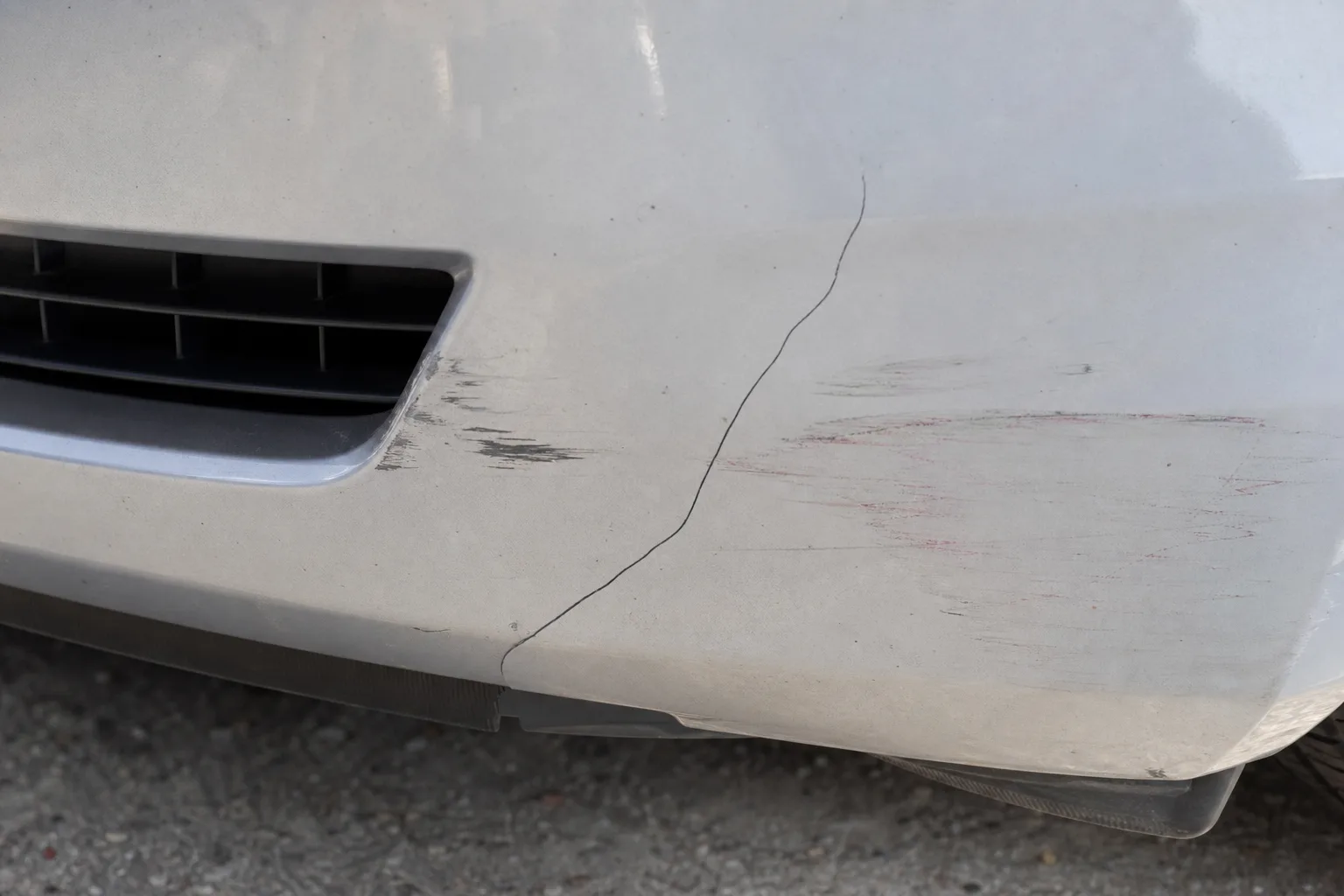
- Low property damage does not equal low injury risk. The forces in even a low-speed collision can strain soft tissue, aggravate spine conditions, and cause a concussion.
- Symptoms are often delayed. Whiplash and concussion signs can appear hours or days later, so feeling "okay" at the scene is not proof you are uninjured.
- Medical documentation is the case. In a small-damage crash, your treatment records — not your bumper — carry the claim.
- Insurers use "minor impact" arguments. Knowing the tactic helps you avoid handing them ammunition.
- Indiana deadlines apply no matter the crash size. The general two-year filing deadline and comparative-fault rules matter even for "small" wrecks.
Why a "minor" crash can cause a major injury
The damage to a vehicle and the damage to a human body are two different measurements. A modern bumper is engineered to absorb and hide impact, sometimes flexing back into shape with little visible sign of the forces that passed through the cabin. Your neck, spine, and brain have no such engineering.
In a rear-end or side impact, your body can be pushed, jerked, and rotated in fractions of a second. That rapid motion is what injures soft tissue — the muscles, tendons, and ligaments that support your neck and back. Research on low-speed rear impacts has documented meaningful muscle response and strain even when collision speeds are low, which is why biomechanical studies of low-speed rear impact[1] continue to take these crashes seriously.
If you have felt strong pain after a crash that barely dented your car, our related read on why low-impact crashes in Indiana can still be serious walks through the same disconnect in more detail.
Common injuries from low-impact crashes

The injuries most often seen after low-property-damage collisions include:
- Whiplash and soft-tissue injuries. Sudden neck movement can strain or tear muscles and ligaments, producing pain, stiffness, headaches, and reduced range of motion. Our guide to whiplash after a car accident in Indiana covers treatment and documentation, and our overview of common soft-tissue injuries explains the categories.
- Concussion and mild traumatic brain injury. You do not have to hit your head or lose consciousness to suffer a concussion. The rapid movement of the brain inside the skull can be enough.
- Back and disc injuries. The same forces that strain the neck can irritate or herniate discs in the lower back.
- Shoulder and knee injuries. Bracing against the wheel or dashboard can injure joints.
- Aggravation of a pre-existing condition. A crash can turn a manageable, quiet condition — such as prior degeneration or an old injury — into a painful, active problem.
Why symptoms are often delayed
One reason people underestimate a "minor" crash is that they feel fine at the scene. Adrenaline and stress can mask pain for hours. Soft-tissue inflammation often builds over a day or two, and brain-injury symptoms can be subtle at first.
This is well documented for head injuries. According to the CDC's guidance on mild TBI and concussion[2], some symptoms appear right away while others may not appear for hours or days after the injury. That delay is exactly why feeling "okay" immediately after a crash is not proof that you escaped injury.

Because timing matters so much, we wrote separate guides on delayed pain after a car accident and concussion symptoms after a Fort Wayne car accident, including why a normal CT scan does not end the conversation.
Aggravation of a pre-existing condition still counts
Many people assume that because they had prior neck or back trouble, a crash "does not count." That is not how Indiana injury law works. If a collision aggravates or worsens a pre-existing condition, that aggravation can be part of your claim. The key is medical evidence showing the change — what your health was like before, and how it changed after.
Our detailed explainer on whether you can recover compensation with a pre-existing condition covers aggravation claims and the reasoning courts apply. You can use our Indiana car accident settlement calculator to organize the factors that may affect a claim’s value; it is an educational tool, not a promise of any result.
How insurers use the "minor impact" defense

Insurance companies know that low-damage photos are persuasive to a jury and cheap to argue. A common tactic is sometimes called MIST — "minor impact, soft tissue." The adjuster points to your intact bumper and argues that a crash that small could not have hurt you, so your treatment must be unnecessary or unrelated.
Here is why that argument is weaker than it sounds: property damage is not a medical diagnosis. Your doctors, not the adjuster, evaluate your injuries. What tends to undercut the "minor impact" defense is a clear, consistent medical record — prompt evaluation, honest symptom reporting, follow-through on treatment, and few unexplained gaps in care.
A few things commonly hand insurers ammunition, so it helps to avoid them:
- Waiting weeks to get checked out. Delay invites the argument that something else caused your pain.
- Gaps in treatment. Missed appointments can be spun as proof you healed. Our guide on why gaps in treatment matter explains this.
- Downplaying symptoms. Saying "I'm fine" to be polite can end up in a recorded statement.
- Giving a recorded statement before you understand your injuries. See our guide on recorded statements after an Indiana car accident.
How to protect your health and your claim
In a low-damage crash, documentation is everything. A practical checklist:
- Get medical care promptly, even if symptoms seem mild, and tell the provider about the crash.
- Follow the treatment plan and keep your appointments.
- Keep a simple symptom journal: dates, pain levels, sleep, missed work, and activities you can no longer do.
- Photograph both vehicles and the scene — even "minor" damage can show angle and force.
- Save the crash report, medical bills, and any out-of-pocket expenses.
- Be careful and factual in any communication with the other driver's insurer.
For a broader view of proof, see our guide on what evidence helps prove an Indiana car accident claim.
Indiana deadlines and fault rules still apply

The size of the crash does not change the legal deadlines. In Indiana, most personal injury claims must generally be filed within two years of the date the injury occurs, under Indiana Code § 34-11-2-4[3]. There are exceptions — for example, claims against a government entity require much faster written notice, and claims involving minors can be treated differently — but two years is the standard rule for typical car accident cases. Our overview of how long you have to file a claim in Indiana goes deeper. If a government body or employee may be involved, review our Indiana government tort claim notice guide, because notice deadlines can be much shorter than the ordinary injury filing period.
Indiana also uses a modified comparative fault system. Under Indiana's Comparative Fault Act (IC 34-51-2)[4], if you are found to be more than 50% at fault, you cannot recover damages; if you are 50% or less at fault, your recovery is reduced by your share of fault. That is why insurers try to shift blame even in small crashes. Our plain-language explainer on Indiana's 51% fault rule breaks it down with examples.
If you want to understand how a case fits together from start to finish, our Fort Wayne car accident attorney page walks through how Indiana claims work.
Frequently Asked Questions
Can a low-speed crash really cause a serious injury?
Yes. Vehicles are built to absorb and hide impact, but your neck, spine, and brain are not. Soft-tissue injuries, concussions, and aggravation of pre-existing conditions are all documented outcomes of low-speed collisions. What matters is your medical evaluation, not the appearance of your bumper.
Do I still have a claim if my car has little or no visible damage?
Possibly. Indiana injury claims are based on your injuries and the other party's fault, not on repair estimates. Low vehicle damage can make an insurer more skeptical, which is exactly why prompt medical care and thorough documentation are so important.
I felt fine at the scene but hurt now. Is that normal?
It is common. Adrenaline can mask pain, soft-tissue inflammation builds over a day or two, and the CDC notes that some concussion symptoms may not appear for hours or days. Get evaluated when new symptoms appear and describe when the crash happened.
What if I had a prior neck or back problem?
A crash that worsens a pre-existing condition can still support a claim in Indiana. The aggravation is what matters, and clear medical records showing the change before and after the crash are key.
How long do I have to act after a minor crash in Indiana?
Most Indiana personal injury claims must generally be filed within two years of the injury under Indiana Code § 34-11-2-4[5], though shorter notice deadlines apply to government claims and other exceptions exist. Because evidence fades quickly, it is wise not to wait until the deadline is near.
If you were hurt in a "minor" crash
A small dent does not mean a small injury. If you were hurt in a low-impact crash in Fort Wayne, Allen County, or anywhere in Indiana and you are not sure what to do next, a free consultation can help you understand your options and the deadlines that may apply. Delventhal Law Office can review what happened, explain how insurers handle "minor impact" cases, and help you decide the next step. You can reach us through our contact page or request a free case evaluation. You do not have to sort out the insurance process alone.
This article is general information about Indiana law and is not legal advice. Reading it does not create an attorney-client relationship. For advice about your specific situation, speak with a qualified attorney.