

Key takeaways
- A normal CT scan does not automatically rule out a concussion.
- Concussion symptoms can affect memory, concentration, sleep, mood, balance, vision, and work ability.
- Delayed symptoms should be documented promptly because insurers look for gaps and inconsistencies.
- The strongest claims connect symptoms to the crash through medical records, follow-up care, restrictions, and witness observations.
- Do not minimize symptoms with providers; report what you are actually experiencing.
You can have a concussion after a car accident even if your CT scan is normal. A concussion is a mild traumatic brain injury caused by a blow, jolt, or rapid movement of the head and brain. Symptoms can affect thinking, memory, sleep, balance, mood, vision, and concentration. Some symptoms appear immediately. Others show up hours or days later.
For an Indiana injury claim, the key is documentation: early medical care, consistent symptom reporting, follow-up treatment, work restrictions, and records that connect the symptoms to the crash.

A normal CT scan may rule out certain emergencies, but it does **not** automatically rule out a concussion.
Why concussion claims are often misunderstood
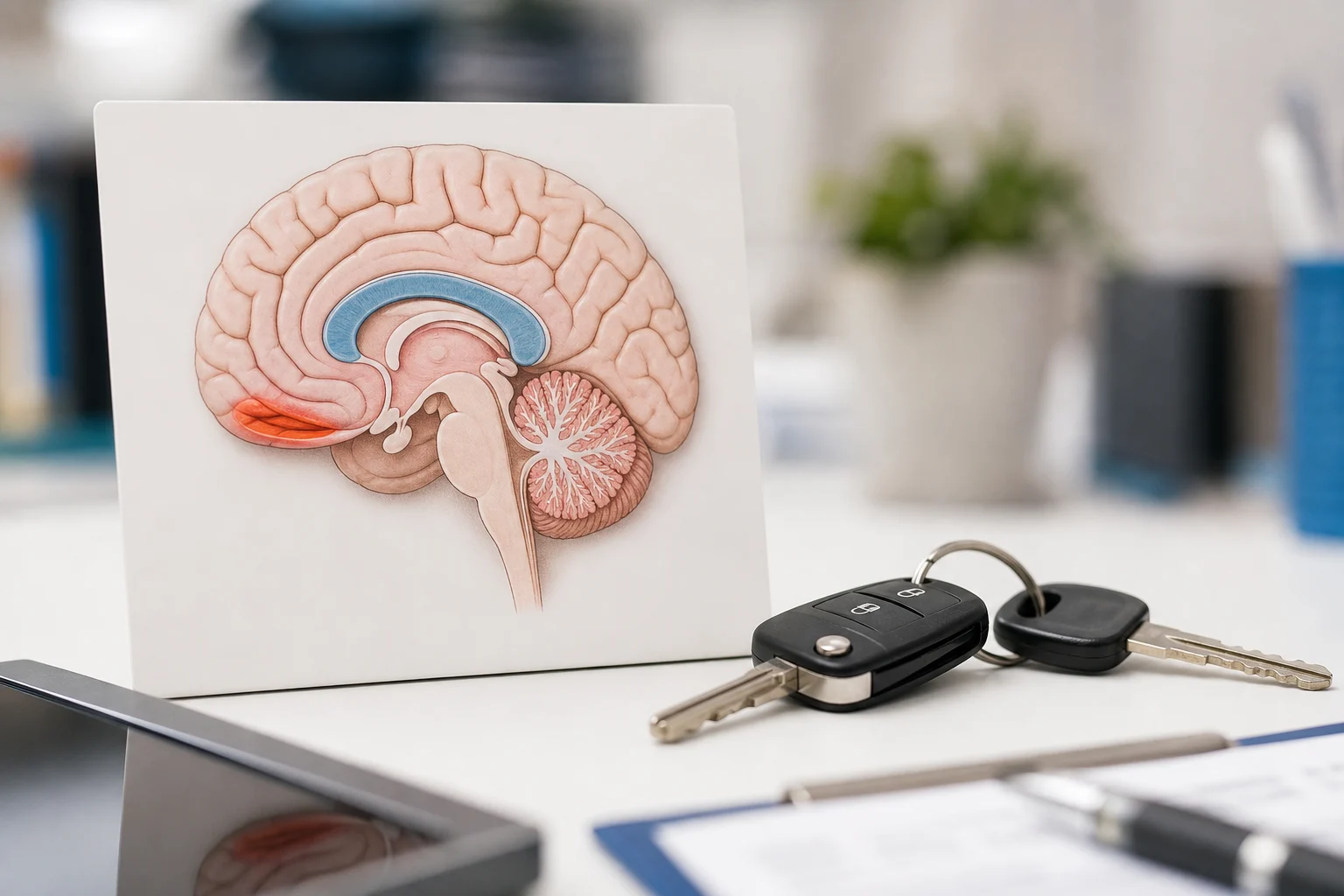
After a serious crash, emergency rooms focus on ruling out life-threatening injuries. That is appropriate. If a patient has head trauma, vomiting, severe headache, loss of consciousness, neurological symptoms, blood thinners, or other risk factors, the ER may order a CT scan to look for bleeding or other acute injury.
But a concussion is not always visible on CT imaging.
The CDC explains that a mild traumatic brain injury or concussion can be caused by a bump, blow, or jolt to the head, or by a hit to the body that causes the head and brain to move quickly back and forth. That movement can cause chemical changes and damage to brain cells.
So when an insurance company says, “The CT was normal,” that may be true — and still incomplete.
A normal CT does not answer whether the person had headaches, dizziness, brain fog, memory problems, light sensitivity, sleep disruption, or difficulty returning to work.
Internal link: Brain injury from a car accident — learn your legal rights
Common concussion symptoms after a car accident
Concussion symptoms vary. Some people never lose consciousness. Some remember the crash clearly. Some do not feel symptoms until later that night or the next morning.
Common symptoms include:
- headache;
- dizziness;
- nausea;
- sensitivity to light or noise;
- blurred vision;
- balance problems;
- trouble concentrating;
- memory problems;
- confusion or feeling “foggy”;
- sleep problems;
- irritability or mood changes;
- fatigue;
- ringing in the ears;
- difficulty reading, using screens, or working under bright lights.
For claim purposes, the symptoms need to be reported to medical providers. If they are not in the record, the insurance company may argue they did not exist.
That is one reason we tell clients to be honest and complete at every appointment. Do not exaggerate. Do not minimize. Tell the provider what you are actually experiencing.
Delayed symptoms are common — but delays create claim problems
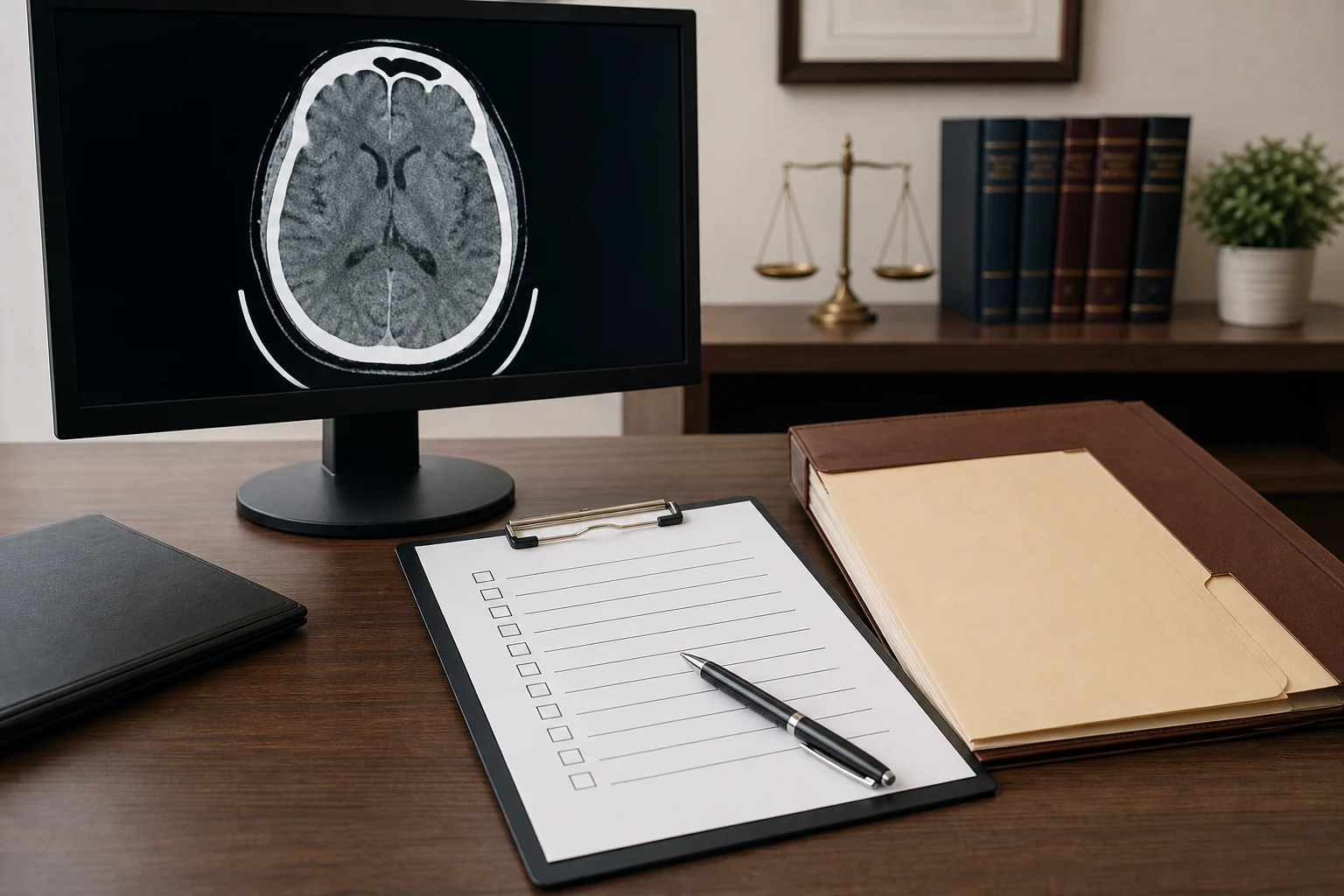
Many injured people leave the scene focused on the obvious injury: neck pain, back pain, shoulder pain, knee pain, or vehicle damage. They may not recognize cognitive symptoms right away.
A person may notice later:
- they cannot follow a conversation;
- they forgot appointments;
- screens make headaches worse;
- they are exhausted after simple tasks;
- they feel unusually emotional or irritable;
- they cannot tolerate noise;
- they struggle at work.
Delayed symptoms can still be real. But the longer the delay before medical documentation, the easier it is for an insurer to dispute causation.
Internal link: Why gaps in treatment matter in an Indiana injury claim
What to do if you suspect a concussion
If you think you may have a concussion after a crash, get medical care. If symptoms are severe or worsening, seek urgent or emergency care.
Important steps:
- Tell the provider there was a crash and describe the mechanism: head impact, whiplash, airbag deployment, loss of consciousness, confusion, or memory gap.
- Report all symptoms, even if they seem embarrassing or hard to describe.
- Ask what warning signs require immediate care.
- Follow discharge instructions.
- Follow up with your primary care doctor or specialist if symptoms continue.
- Avoid activities your provider restricts.
- Keep a symptom journal.
- Tell your lawyer if work, driving, screen use, sleep, or family life is affected.
A concussion claim is often proven through a pattern of records, not a single test.
Why work documentation matters

Concussions can affect work in ways that are not obvious from the outside.
A worker may struggle with:
- computer screens;
- bright lighting;
- noise;
- multitasking;
- memory;
- driving;
- customer interaction;
- machinery;
- deadlines;
- fatigue.
If the injury affects work, the medical record should say so. Work notes, restrictions, missed days, reduced hours, and employer communications can all matter.
This is especially important for people who “look fine.” Brain injuries are often invisible. Insurance companies may use that invisibility against the injured person unless the symptoms are documented.
How insurance companies attack concussion claims
Insurers commonly argue:
- there was no loss of consciousness;
- the CT scan was normal;
- symptoms were not reported at the ER;
- the person continued working;
- the person had headaches before;
- anxiety or stress is causing the symptoms;
- the vehicle damage was not severe enough;
- symptoms are subjective;
- social media shows the person living normally.
Some of those points may matter. None of them automatically ends a claim.
A person can have a concussion without losing consciousness. A normal CT can coexist with real symptoms. A person may try to work because they need a paycheck. Prior headaches do not mean a crash could not worsen or change symptoms.
The answer is careful proof.
What evidence helps prove a concussion claim?
Helpful evidence may include:
- ER records;
- urgent care or primary care notes;
- neurology records;
- therapy records;
- vestibular therapy notes;
- neuropsychological testing when appropriate;
- headache logs;
- medication history;
- work restrictions;
- family observations;
- before-and-after witness statements;
- photos showing vehicle damage or airbag deployment;
- crash report;
- evidence of head strike, broken glasses, helmet damage, or interior vehicle impact.
At Delventhal Law Office, we look for the small details that help explain the injury. A cracked windshield, bent headrest, deployed airbag, broken glasses, or early note about confusion may change how the claim is understood.
We Find What Others Miss.
How concussion symptoms affect case value

A concussion case is not valued only by the diagnosis. It is valued by impact.
Questions that matter include:
- How long did symptoms last?
- Did the person miss work?
- Did symptoms interfere with job performance?
- Was specialist care needed?
- Were there repeated medical visits?
- Were there driving limits or safety concerns?
- Did the person have memory or concentration problems?
- Did symptoms affect parenting, school, hobbies, or daily life?
- Were symptoms permanent or mostly resolved?
- Was there also neck, back, shoulder, or orthopedic injury?
A short-lived concussion with minimal treatment is different from a months-long post-concussion syndrome claim. The records need to show that difference.
Internal link: Who pays medical bills after a car accident in Indiana? You can use our Indiana car accident settlement calculator to organize the factors that may affect a claim’s value; it is an educational tool, not a promise of any result.
Why DLO looks at the whole medical timeline
Concussion symptoms often overlap with other injuries. Neck injuries can cause headaches. Vestibular issues can cause dizziness. Sleep disruption can worsen pain and mood. Anxiety after a crash can intensify symptoms. None of that means the symptoms are fake.
It means the case needs a complete medical timeline.
We review records for:
- first symptom report;
- consistency over time;
- provider referrals;
- medication changes;
- restrictions;
- missed work;
- imaging;
- therapy;
- prior medical history;
- symptom improvement or worsening.
The goal is not to overstate the case. The goal is to tell the truth clearly enough that the insurance company cannot ignore it.
When should you call a lawyer?
Call early if you have concussion symptoms after a crash, especially if:
- symptoms last more than a few days;
- you miss work;
- the insurance company wants a recorded statement;
- the insurer says the CT was normal so there is no brain injury;
- you have prior headaches or prior concussions;
- you are being blamed for the crash;
- you are unsure who pays the bills.
Internal link: Fort Wayne Car Accident Attorney
Delventhal Law Office helps injured people in Fort Wayne and across Indiana document the medical proof, protect the claim, and deal with the insurance company.
If you are dealing with headaches, fogginess, dizziness, memory problems, or other symptoms after a crash, call us. The consultation is free, and there is no fee unless we recover compensation for you.
Frequently Asked Questions

Can I have a concussion if my CT scan was normal?
Yes. CT scans are often used to evaluate acute emergencies such as bleeding, but a concussion may still exist even when CT imaging is normal.
Do I have to lose consciousness to have a concussion?
No. Many concussion patients never lose consciousness. Symptoms such as confusion, headache, dizziness, light sensitivity, memory issues, or brain fog can still matter.
What if symptoms started the next day?
Delayed symptoms can happen. The claim issue is documentation: report symptoms to a healthcare provider as soon as you recognize them and follow up if they continue.
Why does the insurance company focus on the emergency-room record?
The ER record is often the first medical snapshot after a crash. If symptoms are missing, the insurer may argue they developed later for another reason. That does not end the claim, but it makes later documentation important.
When should I call a lawyer after concussion symptoms?
Call early if symptoms persist, you miss work, the adjuster wants a statement, or the insurer says a normal scan means there is no injury.
Related DLO resources
- Fort Wayne Car Accident Attorney
- Brain injury from a car accident
- Types of head injuries from car accidents
- Why gaps in treatment matter
- Who pays medical bills after an Indiana crash
Bottom line
If you were hurt in Indiana and the insurance issues are already getting complicated, Delventhal Law Office can help you protect the claim, document the evidence, and avoid mistakes that give the insurance company leverage. The consultation is free, and there is no fee unless we recover compensation for you.
Sources and further reading
- CDC — About Mild TBI and Concussion[1]
- CDC — Signs and Symptoms of Mild TBI and Concussion[2]
- American College of Emergency Physicians — Mild Traumatic Brain Injury Clinical Policy[3]
- Indiana Code § 34-11-2-4 — Personal injury statute of limitations[4]
- Delventhal Law Office — Fort Wayne Car Accident Attorney