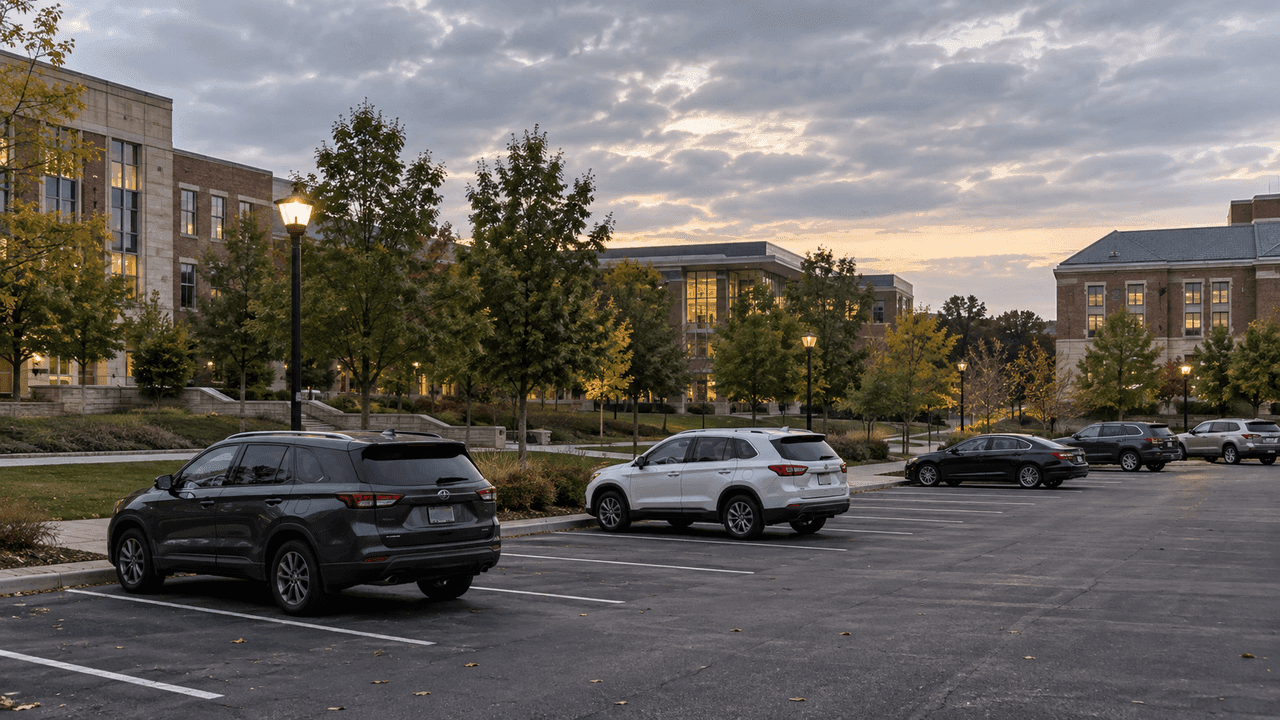
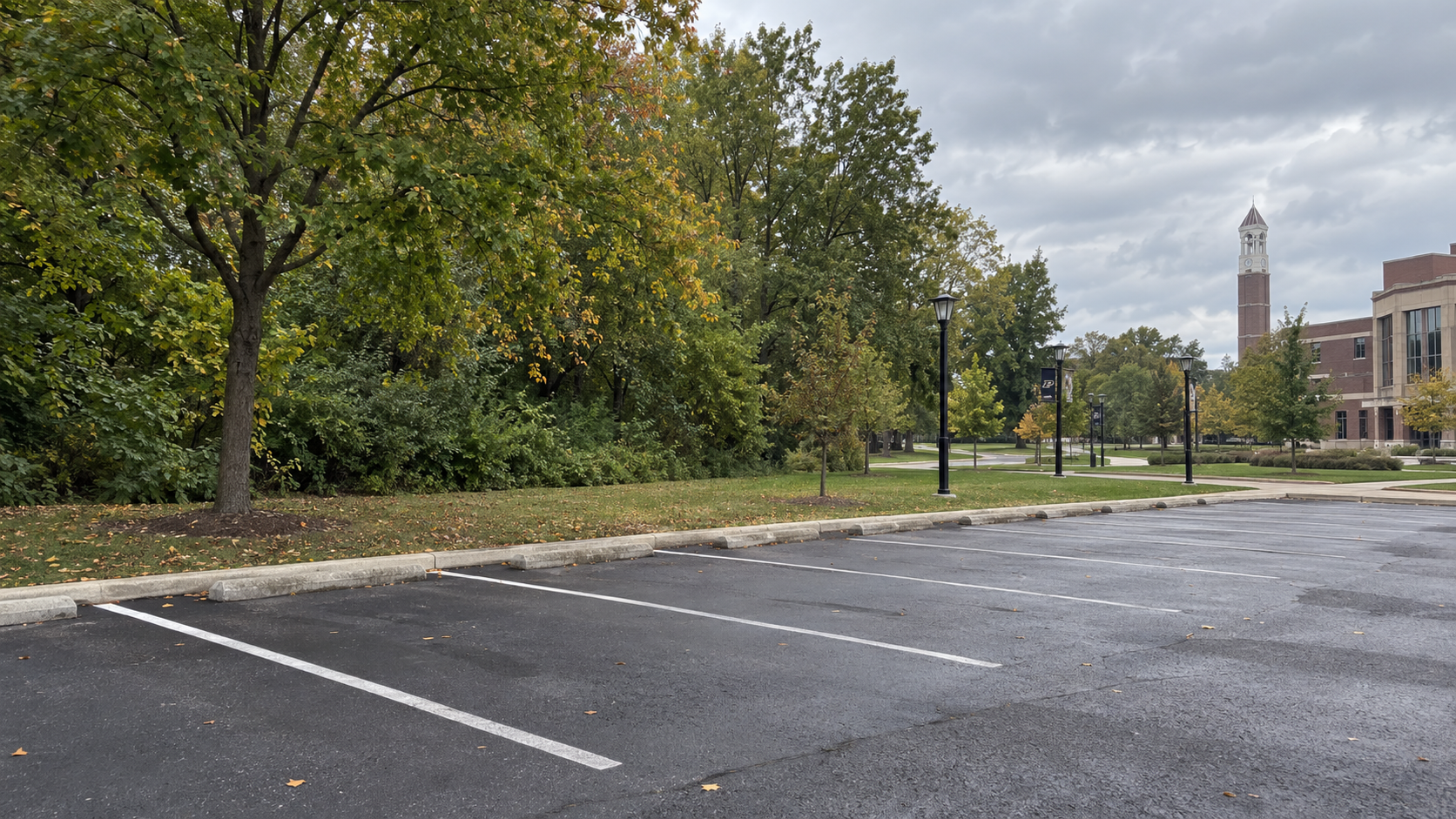
A 34-year-old man was shot once in a parking area at Ivy Tech Community College Lafayette in the 3100 block of South Creasy Lane, and a 19-year-old Lafayette man was arrested, according to Star City TV[1] and the Purdue Exponent[2]. This article explains in general terms how Indiana law treats injuries from violence on someone else's property. It does not suggest that the college or anyone other than the person accused bears responsibility.
What happened
Star City TV and the Purdue Exponent reported that the shooting happened at about 7:08 p.m. on Wednesday, September 23, 2026. A WLFI article published September 24[3] gave the date as September 25, which does not match the other reports or its own publication date.
The man was found in a tree line between two Ivy Tech parking lots and was hospitalized in stable condition, according to the reports. Nearby apartments were locked down.
Lafayette Police arrested the 19-year-old early on Thursday, September 24, on preliminary charges including attempted murder, aggravated battery, battery with a deadly weapon, intimidation with a deadly weapon, and pointing a firearm, according to Star City TV. Those are preliminary charges, and the accused is presumed innocent unless proven guilty in court. Police said the two men knew each other and had argued, and described the shooting as isolated but not random.
What injured people should do next
A shooting is not an accident, but some practical steps after a violent injury are similar. Get medical care and follow it through. Gunshot wounds can involve long recovery, follow-up surgery, and effects that are not obvious at first.
Keep the police report number and the prosecutor's case information. A criminal case is brought by the state to punish a crime. It does not pay the injured person's medical bills or lost income. A civil claim is separate, and it can proceed whether or not a criminal case ends in a conviction. The firm's guide to evidence in an Indiana injury claim explains why records and documentation matter.
Indiana crime victims may have access to victim assistance programs and, in a criminal case, may ask the court for restitution. Those options are separate from a civil claim.
Write down what you remember while it is fresh, including the time, lighting, who was present, and whether any security staff, cameras, or call boxes were nearby. Surveillance video on any property is often overwritten on a short cycle. You can read more about preserving camera and surveillance footage.
Be cautious about assumptions. When the person who caused an injury is known and is being prosecuted, a civil claim is usually directed at that person first. Claims against a property owner are a different and narrower question.

Why location matters in Indiana injury claims
This shooting happened in the 3100 block of South Creasy Lane in Lafayette, in Tippecanoe County, and the Lafayette Police Department is the investigating agency. An Indiana injury action is ordinarily filed in the county where the injury happened or where a defendant resides.
In general, Indiana law can hold a property owner responsible for harm caused by a third person's criminal act only in limited circumstances, mainly where the owner had reason to foresee that kind of harm and failed to take reasonable steps against it. Courts look closely at the specific facts, and a targeted act between people who know each other is often treated differently from a random attack by a stranger. Nothing in the reporting suggests any security failure at this location, and this article does not suggest one. General information about these issues is available in the firm's premises liability guide.
Where a property is owned or operated by a state institution, any claim against that institution falls under the Indiana Tort Claims Act, which requires written notice within 270 days of the loss under Ind. Code 34-13-3-6. A claim against a city, county, or other political subdivision requires notice within 180 days under Ind. Code 34-13-3-8. Those windows are much shorter than the general filing deadline. The firm's explanation of Indiana government tort claim notices provides additional general information.
Comparative fault under Ind. Code 34-51-2-6 can reduce a recovery in proportion to the injured person's share of fault and bars recovery if that share is greater than 50 percent. The general deadline for filing an Indiana personal injury action is two years under Ind. Code 34-11-2-4.
How Delventhal Law Office can help
Delventhal Law Office, LLC is a personal injury law firm in Fort Wayne, Indiana, founded by attorney Chad E. Delventhal in 2009. The firm handles Indiana injury claims, including claims arising from violent injuries. Chad Delventhal can explain the difference between a criminal case and a civil claim, obtain police and court records, send preservation requests for video before it is lost, and explain notice rules that may apply when a public institution is involved.
The office serves clients throughout Indiana, including Tippecanoe County. If you were hurt and want to understand your options, you can request a free case evaluation. No outcome can be promised in any case.
This post is based on public reporting, the investigation may be ongoing, and nothing here is legal advice or creates an attorney-client relationship.