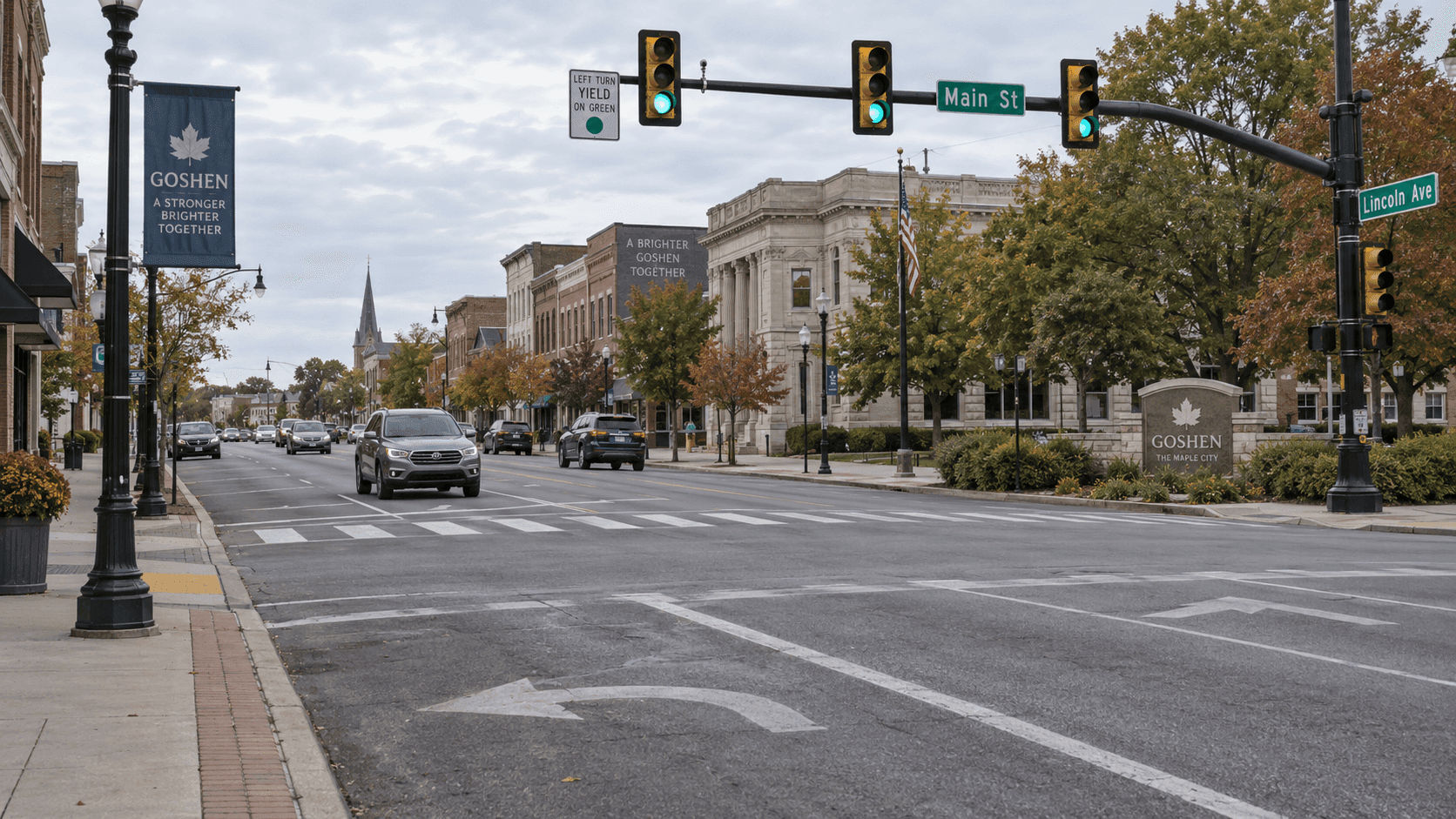
One person was injured in a two-vehicle crash at Washington Street and 3rd Street in Goshen, Elkhart County, at about 12:13 p.m. on Friday, September 18, 2026, according to the Goshen News report[1]. The Goshen Police Department handled the investigation, which is ongoing. This article does not name the drivers and does not suggest that anyone involved has a claim against anyone else.
The Goshen News reported that a 92-year-old Goshen driver was turning left in a 2018 Subaru Forester when the vehicle moved into the path of a 2000 Lincoln Town Car that had a green light. The vehicles collided in daylight, and property damage was reported.
The turning driver was injured and transported to Goshen Hospital. The specific injuries were not described. The other driver was not reported injured. No arrests were made, and no charges have been reported.
What accident victims should do next
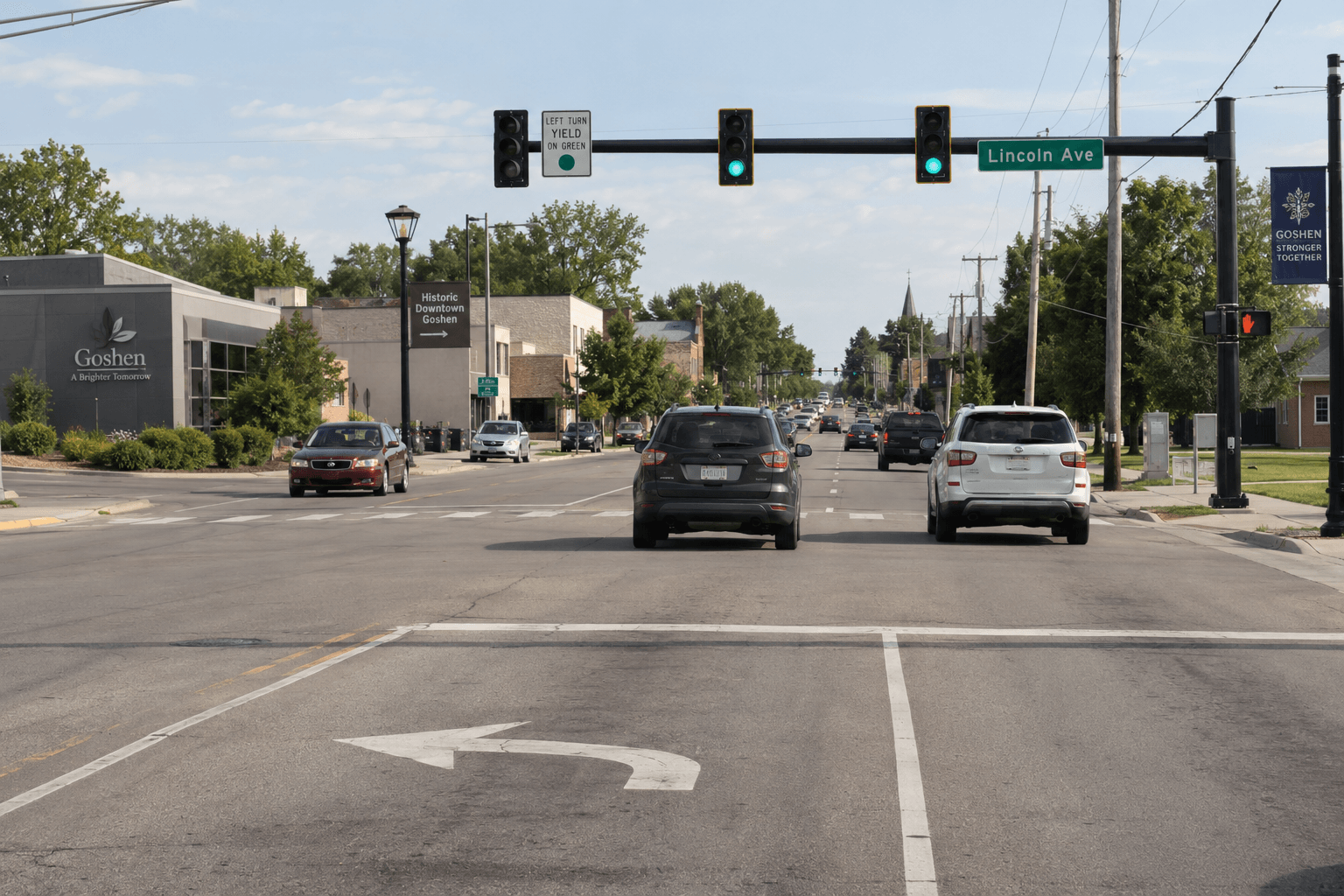
A left turn across oncoming traffic requires a driver to judge speed and distance while watching the signal, crosswalk, and other lanes. If you approach a solid green light to turn left, waiting for a clear gap can reduce the risk of a collision. A driver proceeding through a green light should still watch for vehicles already in the intersection.
If you were hurt in an intersection crash, gather the record early. The police crash report, medical records, photographs, and available camera footage can help clarify what happened. Nearby video may be overwritten quickly, so timely preservation requests matter. You can learn more about evidence that may help explain an Indiana car accident and how to obtain an Indiana crash report.
Why location matters in Indiana injury claims
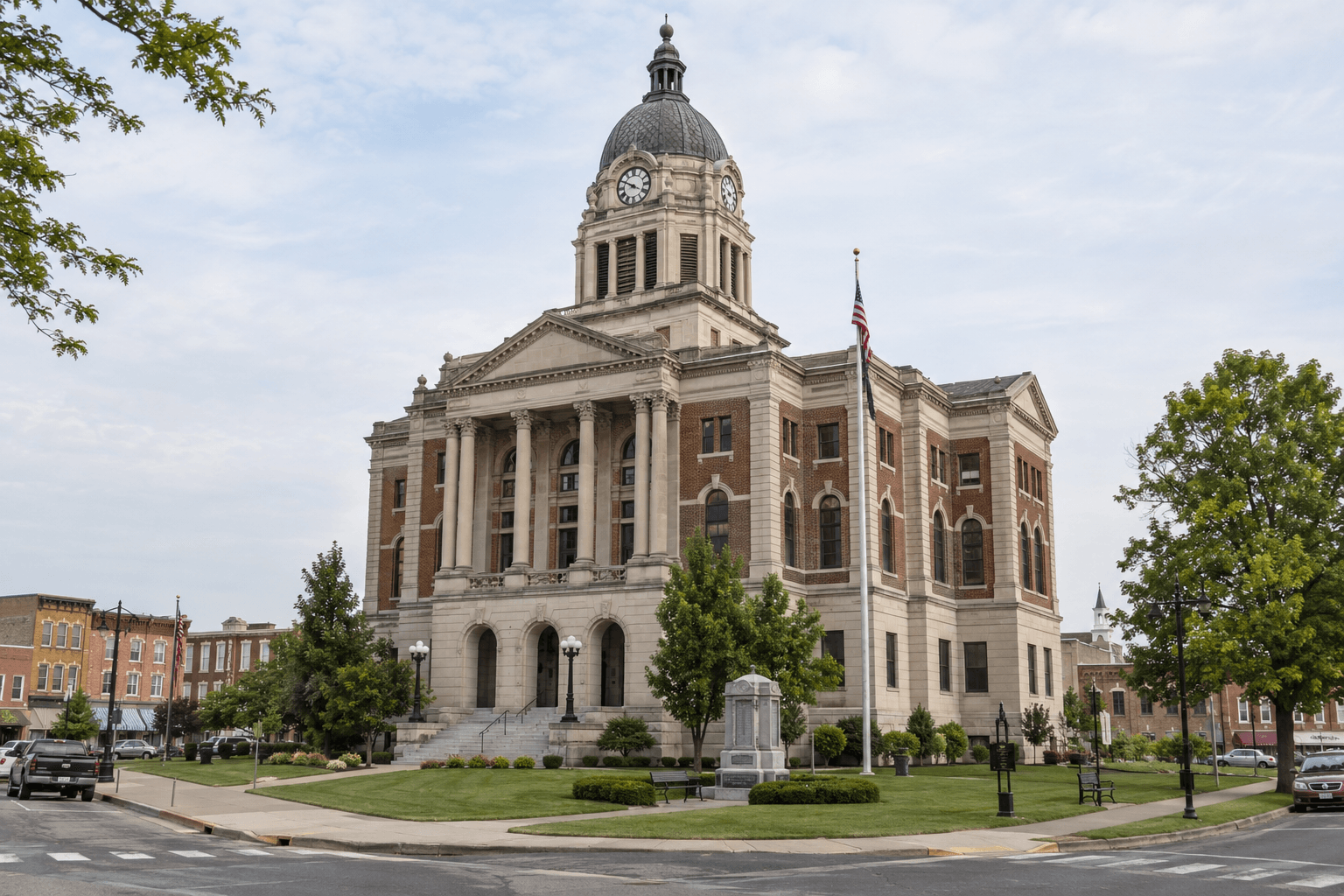
Washington Street and 3rd Street is a city intersection inside Goshen, in Elkhart County, and the Goshen Police Department responded. The reporting does not suggest that the signal, signage, or intersection design contributed to this crash.
If a city, county, or state entity could share responsibility for a different crash, the Indiana Tort Claims Act may require written notice before a lawsuit can be filed. Ind. Code 34-13-3-8 provides a 180-day notice period for a claim against a political subdivision, and Ind. Code 34-13-3-6 provides a 270-day period for a claim against the state. These periods are shorter than the ordinary filing deadline.
Indiana divides responsibility under the Comparative Fault Act, Ind. Code 34-51-2-6. An injured person whose fault is greater than 50 percent recovers nothing; otherwise, recovery is reduced by that person's percentage of fault. Early reports do not determine civil liability. For a fuller explanation, see how fault is evaluated in Indiana intersection collisions.
Indiana requires minimum auto liability coverage of $25,000 per person and $50,000 per accident for bodily injury, plus $25,000 for property damage, under Ind. Code 9-25-4-5. Indiana insurers must offer uninsured and underinsured motorist coverage under Ind. Code 27-7-5-2, and whether it applies depends on the policy and facts.
Most Indiana personal injury claims must be filed within two years of the injury under Ind. Code 34-11-2-4. An open insurance file or ongoing investigation does not preserve a claim. The general rule and important exceptions are explained in this guide to Indiana accident filing deadlines.
How Delventhal Law Office can help
Delventhal Law Office, LLC is a personal injury law firm in Fort Wayne, Indiana, founded by attorney Chad E. Delventhal in 2009. The firm handles car accident claims, including intersection and left-turn collisions where insurers may aggressively defend fault. It can obtain reports, seek preservation of nearby footage, review medical records, identify available insurance coverage, and explain how Indiana fault rules and deadlines may affect your circumstances.
If you were hurt because of another person's carelessness, you can consult a Fort Wayne intersection accident attorney or request a free case evaluation.
This post is based on public reporting, the investigation may be ongoing, and nothing here is legal advice or creates an attorney-client relationship.