What happened
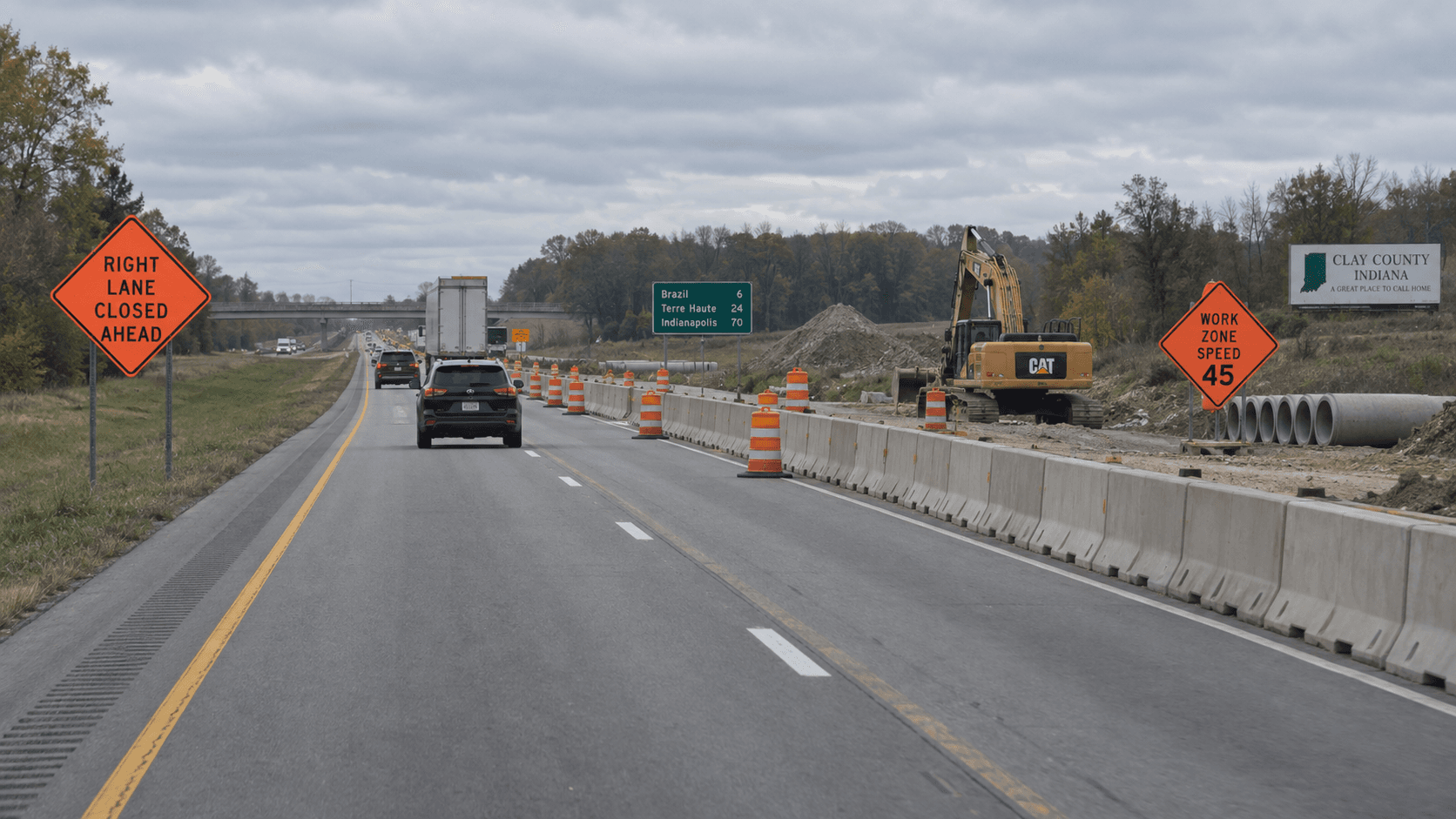
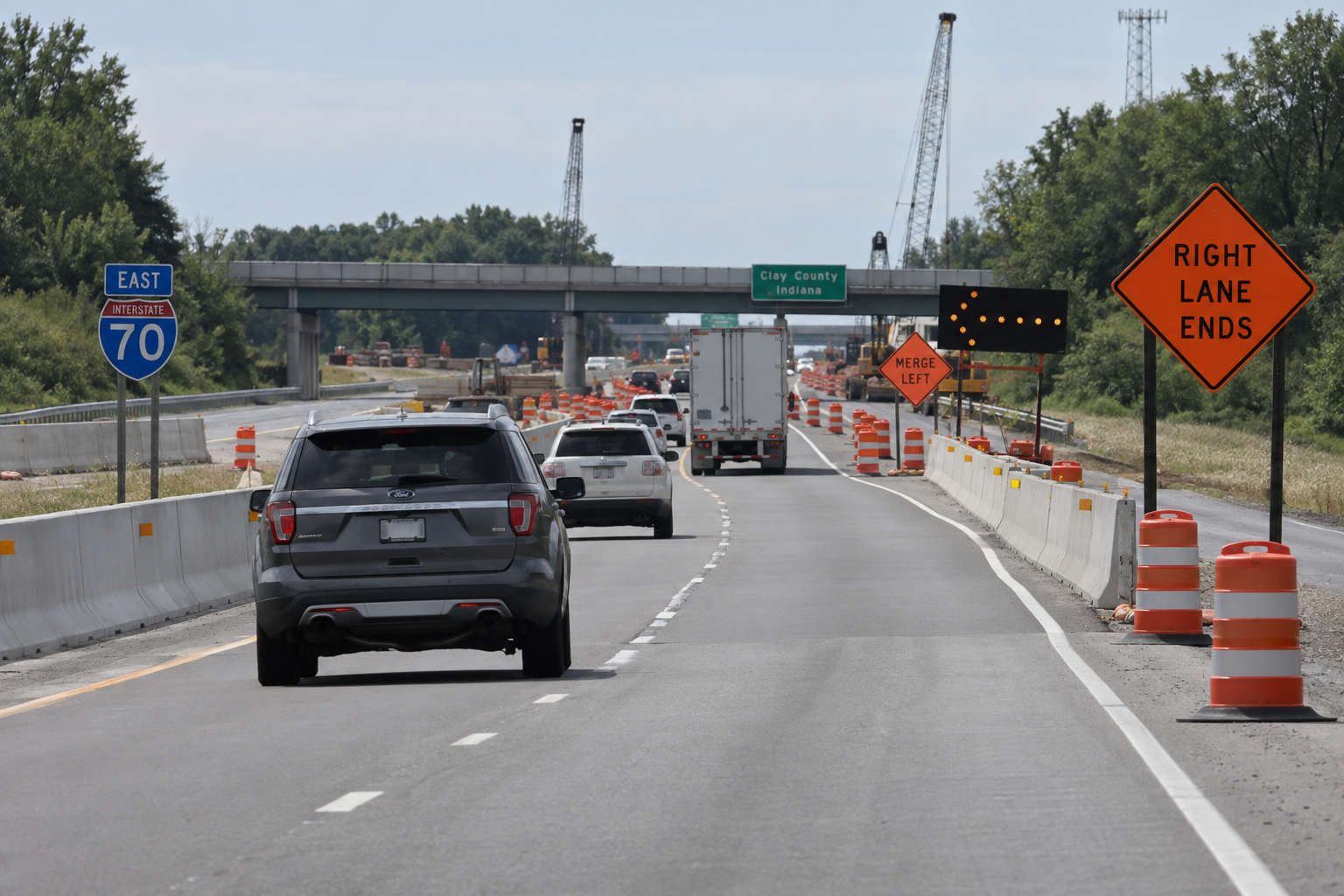
Two semi tractor-trailers collided at about 8 a.m. on Friday, September 11, 2026, on westbound Interstate 70 near mile marker 23, close to the Brazil exit in Clay County. The Terre Haute Tribune-Star[1] reported that traffic was reduced to one lane through an active construction zone. WTHI-10[2] also reported the crash.
According to the Tribune-Star, the lead semi slowed or stopped for the lane restriction. Indiana State Police Sgt. Matt Ames reported that the second westbound semi failed to observe the slowed semi ahead and struck it in the rear.
One driver was transported to a local hospital for minor injuries. The hospital was not named. No arrests or citations were reported, and impairment was not reported by either outlet.
The Clay County Sheriff's Department assisted at the scene, along with the Jackson and Posey Volunteer Fire Departments, STAR Ambulance Service, and Peffley and Hinshaw Wrecker Service. Neither outlet named the drivers or motor carriers involved.
What accident victims should do next
A rear-end collision between commercial trucks in a work zone can involve evidence and parties that are not present in an ordinary two-car crash. If you are hurt in this kind of collision, it is important to identify and preserve the available records promptly. The firm’s guide to why truck accident claims are different explains some of those issues.
Commercial vehicles carry electronic logging devices, and most modern tractors have event data recorders. Those records may contain information about hours of service, speed, braking, and following distance. Data can be overwritten, so a timely preservation request matters. You can read more about preserving truck black box and ECM evidence.
The responsible parties may include a driver, a motor carrier, an insurer, and potentially an entity that owns the trailer or cargo. A work-zone case may also require review of the traffic-control contractor or the Indiana Department of Transportation. The published reports did not name any motor carrier, contractor, trailer owner, or cargo owner.
Traffic-control details also matter. Construction plans, warning signs, lane tapers, and advance notice may help show whether the work zone was properly arranged. Nothing in the published reporting suggests a work-zone defect, so those questions cannot be answered from the news coverage alone.
If you are injured, seek an appropriate medical evaluation and follow the care instructions you receive. Insurers may use interruptions in care to dispute whether an injury was caused by a crash. Commercial carriers may also have rapid-response teams working to protect the carrier’s interests, so be careful with an early request for a statement or release.

Why location matters in an Indiana injury claim
This crash occurred on westbound Interstate 70 near mile marker 23 in Clay County, close to the Brazil exit. An Indiana civil case arising from a crash is ordinarily filed in the county where the crash occurred, although a case involving an out-of-state motor carrier may sometimes be removed to federal court. Indiana State Police investigated, and the Clay County Sheriff's Department assisted.
Most Indiana personal injury actions must be filed within two years under Ind. Code 34-11-2-4. For a September 11, 2026 crash, that deadline falls on or about September 11, 2028. The exact deadline should be reviewed promptly because the facts and parties can affect the analysis.
Indiana’s Comparative Fault Act, Ind. Code 34-51-2-6, assigns percentages of responsibility. An injured person whose own fault is greater than 50 percent recovers nothing. Otherwise, the recovery is reduced by that person’s percentage of fault. A rear-end impact does not eliminate the need to examine evidence from both vehicles, and the defense may argue that the lead vehicle stopped abruptly or was improperly positioned. The guide to Indiana’s comparative fault rule provides additional context.
If a government entity is involved in the design or control of a work zone, the Indiana Tort Claims Act may apply. Notice to a city, county, town, or other political subdivision is generally due within 180 days under Ind. Code 34-13-3-8. Notice to the State is generally due within 270 days under Ind. Code 34-13-3-6. Nothing reported about this crash suggests a work-zone defect, but these shorter periods matter when a government-related claim is being considered.
Indiana’s minimum passenger-vehicle liability limits are $25,000 per person and $50,000 per accident for bodily injury, plus $25,000 for property damage, under Ind. Code 9-25-4-5. Commercial trucks generally carry coverage above those passenger-vehicle minimums. Uninsured and underinsured motorist coverage under Ind. Code 27-7-5-2 may remain relevant when available liability coverage is insufficient.
How Delventhal Law Office can help
Delventhal Law Office represents people hurt by someone else’s carelessness on Indiana roads, including people injured in commercial-truck crashes. Attorney Chad Delventhal can obtain the crash report, send preservation demands for electronic and driver records, identify carriers and potentially involved contractors, and explain how Indiana’s comparative fault rules apply to the available facts.
Delventhal Law Office is a personal injury law firm in Fort Wayne, Indiana, founded by attorney Chad E. Delventhal in 2009. The firm serves communities across Indiana and offers a free case evaluation.
This post is based on public reporting, the investigation may be ongoing, and nothing here is legal advice or creates an attorney-client relationship.