
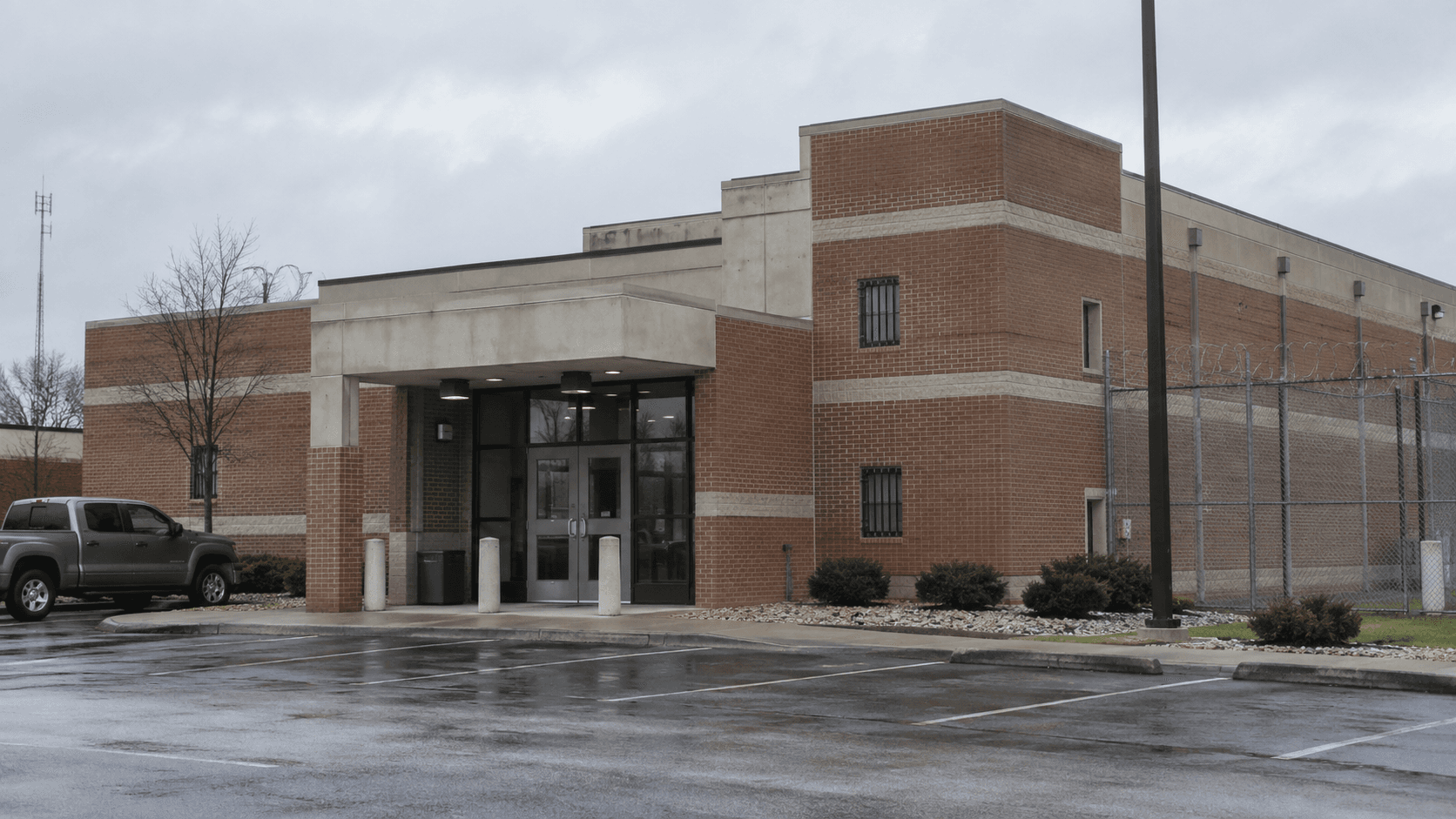
The Jackson County Prosecuting Attorney has announced that her office will not bring criminal charges in connection with the death of a man who was found unresponsive at the Jackson County Jail in Brownstown this summer. The Republic[1] and Tribune-Times[2] reported the announcement on September 10, 2026.
The man was found unresponsive at the jail on Saturday, July 25, 2026, and was airlifted to an Indianapolis hospital, where he died on July 29, 2026, according to WTHR[3] and WRTV[4]. The Jackson County Coroner ruled the manner of death a suicide, according to The Republic's earlier report[5].
Jackson County Prosecuting Attorney Lynsey N. Fleetwood announced on September 10, 2026, that her office reviewed the Indiana State Police investigation, including witness statements, jail and medical records, physical evidence, and forensic findings. The prosecutor found no evidence of criminal wrongdoing by any jail employee, the Jackson County Sheriff's Department, or any other person. The Republic and Tribune-Times reported that investigators said jail personnel responded promptly and made substantial efforts to save the man's life.
The Indiana State Police conducted the investigation. The man was a resident of Crothersville. The public reporting summarized here does not describe how the death occurred. If you are struggling, you can call or text the 988 Suicide and Crisis Lifeline at 988 in the United States.

What families should do next
A prosecutor's decision not to file criminal charges is not a ruling on whether anyone was careless or whether a civil claim exists. A prosecutor must determine whether the evidence proves a crime beyond a reasonable doubt. A civil claim generally asks whether a duty of care was breached and whether that breach caused the loss, using the lower preponderance-of-the-evidence standard. The announcement resolves the criminal charging question, but it does not automatically resolve a civil case.
If your family is evaluating what happened, request relevant records while they still exist. Those records may include jail incident reports, cell-check logs, classification and intake-screening documents, medical records, and the Indiana State Police investigative file. A general guide to preserving evidence explains why prompt action matters, although the records in a custodial-death matter are different from those in a vehicle case.
Pay close attention to government notice requirements. When a potential claim involves a county, sheriff's department, or another political subdivision, Indiana law can require written notice well before a lawsuit is filed. The firm's guide to an Indiana government tort claim notice provides additional context about these shorter deadlines.
An estate may also need to be opened. In Indiana, a wrongful death claim is brought by the estate's personal representative rather than relatives filing in their own names. The criminal investigation and any civil inquiry remain separate, and a prosecutor's announcement does not extend a civil deadline.
You may also ask whether a private medical or mental-health contractor was involved. Many county jails use outside providers, but the reporting does not establish whether any contractor participated in this man's care. That should remain an open question unless the records answer it.

Why location matters in an Indiana claim
This death occurred in custody at the Jackson County Jail in Brownstown, Jackson County, and the Indiana State Police investigated. A civil case arising from these events would ordinarily be filed in the Jackson County courts, or in federal court if federal civil-rights claims were brought with state-law claims.
The Indiana Tort Claims Act sets an important timing rule for matters involving government entities. Written notice of a claim against a city, county, town, or other political subdivision is due within 180 days under Ind. Code 34-13-3-8. Notice of a claim against the State is due within 270 days under Ind. Code 34-13-3-6. For a loss in late July 2026, the 180-day period closes in late January 2027. Missing an applicable notice deadline can prevent a claim from moving forward.
Most Indiana personal injury and wrongful death claims must be filed within two years under Ind. Code 34-11-2-4. Indiana's wrongful death statutes, Ind. Code 34-23-1-1, Ind. Code 34-23-1-2, and Ind. Code 34-23-2-1, address who may bring a claim and what damages may be available. The applicable statute depends on the facts. You can read more about the distinction between a survival action and an Indiana wrongful death claim.
Indiana follows modified comparative fault under Ind. Code 34-51-2-6 in ordinary negligence cases. An injured person whose fault is greater than 50 percent recovers nothing; otherwise, recovery is reduced by that person's percentage of fault. Claims against a government entity are governed by the Indiana Tort Claims Act rather than the Comparative Fault Act, and any fault by the claimant can bar recovery entirely. How these rules apply in a custodial setting is fact-specific and depends on the records.

How Delventhal Law Office can help
Delventhal Law Office, LLC is a personal injury law firm in Fort Wayne, Indiana, founded by attorney Chad E. Delventhal in 2009. The firm can request available jail and investigative records, evaluate whether an Indiana Tort Claims Act notice may be required, help a family understand the estate process, and explain what the law does and does not allow. These matters may be hotly contested, so careful records review and attention to deadlines are important.
If you want a lawyer to review the available information, you can request a free case evaluation or learn more about the firm's wrongful death practice. No lawyer can promise an outcome, but Delventhal Law Office can explain the options in plain language and help you decide what to do next.
This post is based on public reporting, the investigation may be ongoing, and nothing here is legal advice or creates an attorney-client relationship.