What happened
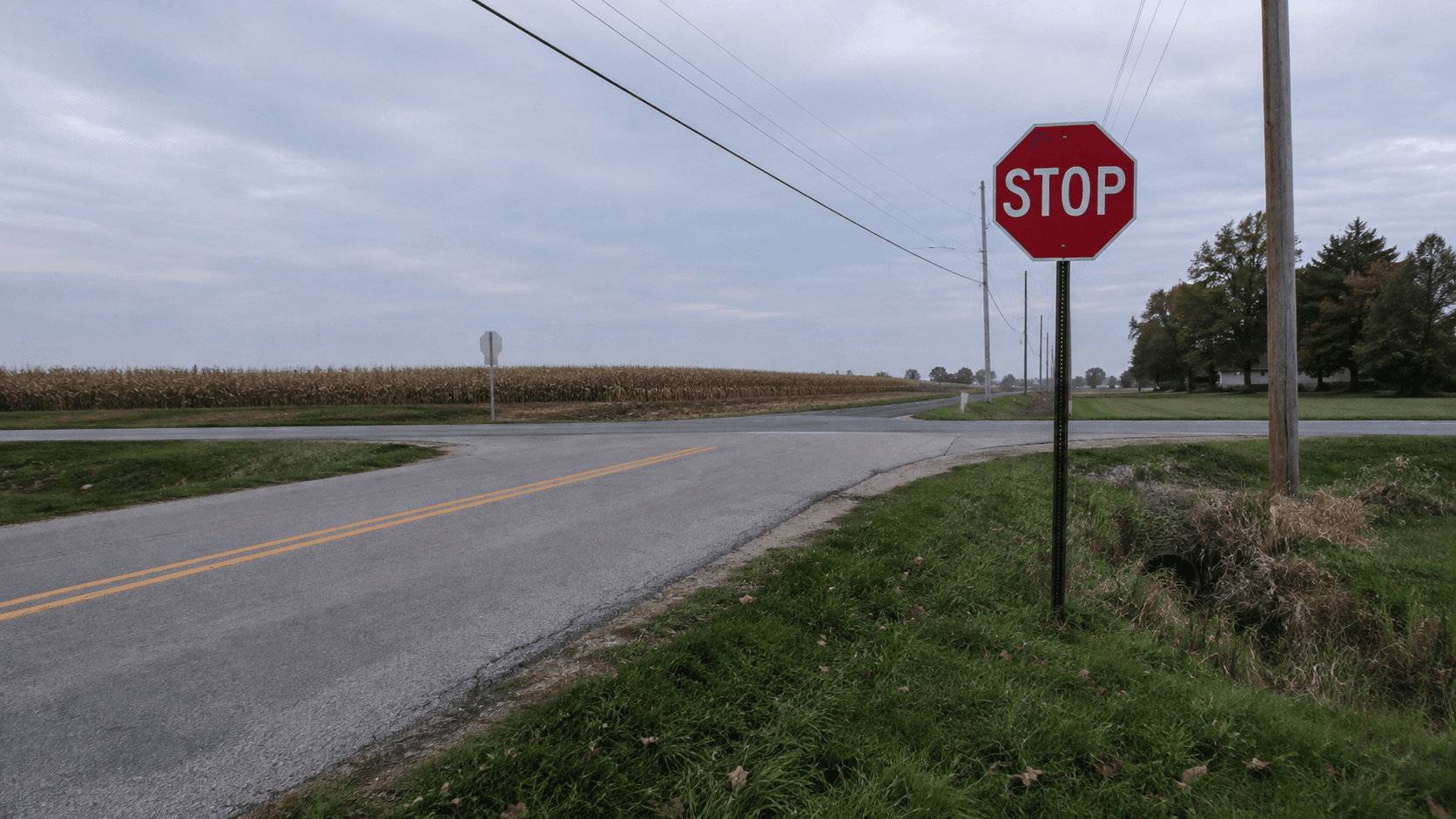
Two drivers were taken to the hospital after a collision at a stop-controlled rural intersection in Elkhart County, The Goshen News reported[1] on September 3, 2026. The investigation status has not been published.
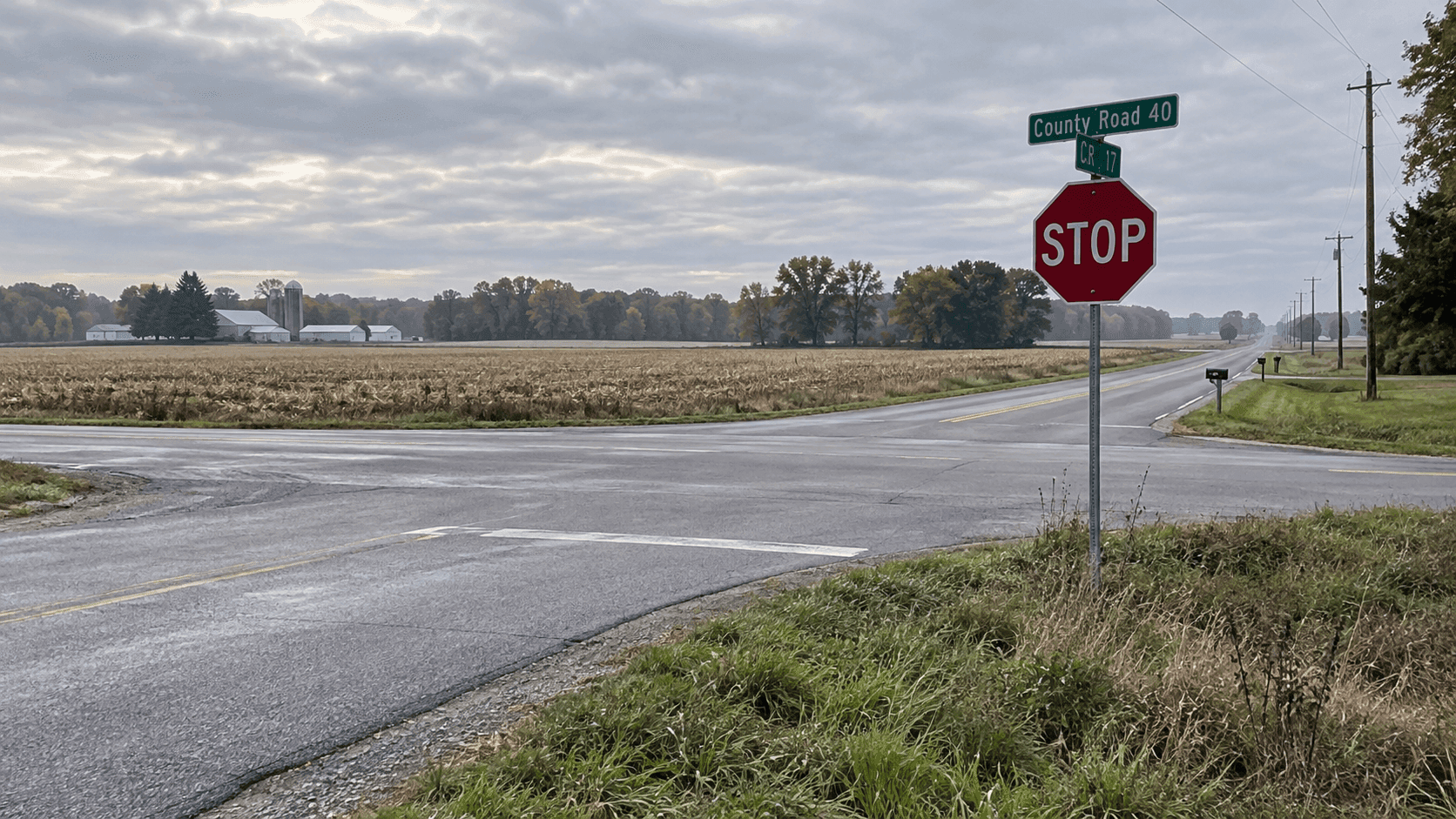
The crash happened at 11:53 p.m. on Wednesday, September 2, 2026, at County Road 4 and County Road 7. Tracy Hill, 39, of Elkhart was eastbound on County Road 4 in a 2017 Hyundai. Harvinder Singh was southbound on County Road 7 in a 2016 Honda.
The Goshen News reported that the Elkhart County Sheriff's Office found that Hill disregarded a stop sign. Investigators further determined that both drivers had disregarded their stop signs. Both vehicles came to rest southeast of the intersection after striking a fence.
Both drivers were transported to Elkhart General Hospital for minor injuries. No citations were reported.
What you should do after a disputed intersection crash
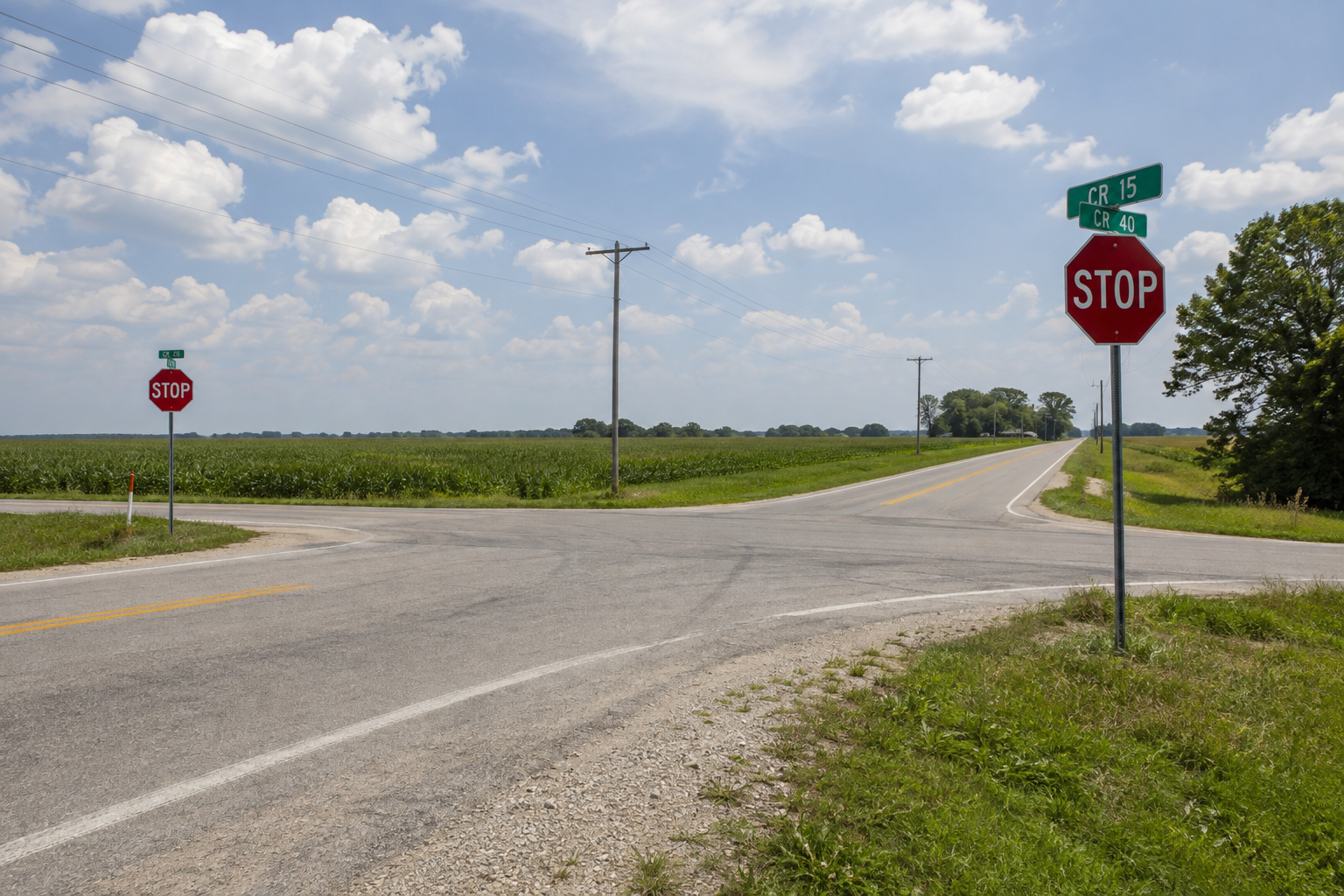
A crash in which investigators find that both drivers made the same mistake can produce a hotly contested insurance claim. Start by requesting the completed crash report from the Elkhart County Sheriff's Office. A police report can help organize the known facts, but it does not determine civil liability. This guide explains how to obtain an Indiana crash report.
Seek appropriate medical care and keep accurate records. The drivers in this collision were reported as having minor injuries, but only a medical professional can evaluate an individual's condition.
Preserve photographs of the intersection approaches, stop signs, sight lines, and any visible obstruction. Identify witnesses and save available video promptly. The firm's guide to evidence in an Indiana car accident claim explains why these records can matter when fault is disputed.
Use care before giving a recorded statement to an insurer. Insurance companies may aggressively defend a claim by assigning a larger share of fault to the injured person. You can review what to consider before providing an insurance recorded statement or medical release.
Why location and shared fault matter
The crash happened at County Road 4 and County Road 7 in Elkhart County, and the Elkhart County Sheriff's Office is the investigating agency. The draft reports that an Indiana civil case would ordinarily be filed in the Elkhart County courts.
Most Indiana personal injury claims must be filed within two years of the injury under Indiana Code 34-11-2-4[2]. Waiting can also make it harder to preserve photographs, video, witness information, and vehicle evidence.
Indiana's comparative fault rule may be central when both drivers are accused of disregarding stop signs. Under Indiana Code 34-51-2-6[3], an injured person whose fault is greater than 50 percent recovers nothing. At 50 percent fault or less, any recovery is reduced by that person's percentage of fault. The difference between 49 percent and 51 percent can therefore change the result, so you should not treat an insurer's initial allocation as the final word. More detail is available in this explanation of Indiana's comparative fault rule.
The struck fence also creates a separate property-damage issue for its owner. That claim remains distinct from either driver's injury claim.
Indiana requires minimum auto liability coverage of $25,000 per person and $50,000 per accident for bodily injury, plus $25,000 for property damage, under Indiana Code 9-25-4-5[4]. Indiana insurers must also offer uninsured and underinsured motorist coverage under Indiana Code 27-7-5-2[5]. The available coverage depends on the policies and facts, especially when both drivers are injured and fault may be shared.
How Delventhal Law Office can help
Delventhal Law Office, LLC is a Fort Wayne personal injury law firm founded by attorney Chad E. Delventhal in 2009. The firm can review a disputed intersection crash, obtain available reports, preserve evidence, examine insurance coverage, and challenge an unsupported fault allocation.
If you were hurt in this crash or a similar collision, you can request a free case evaluation. A Fort Wayne intersection accident attorney can explain how the evidence and Indiana's comparative fault rule may apply to your circumstances.
This post is based on public reporting, the investigation may be ongoing, and nothing here is legal advice or creates an attorney-client relationship.