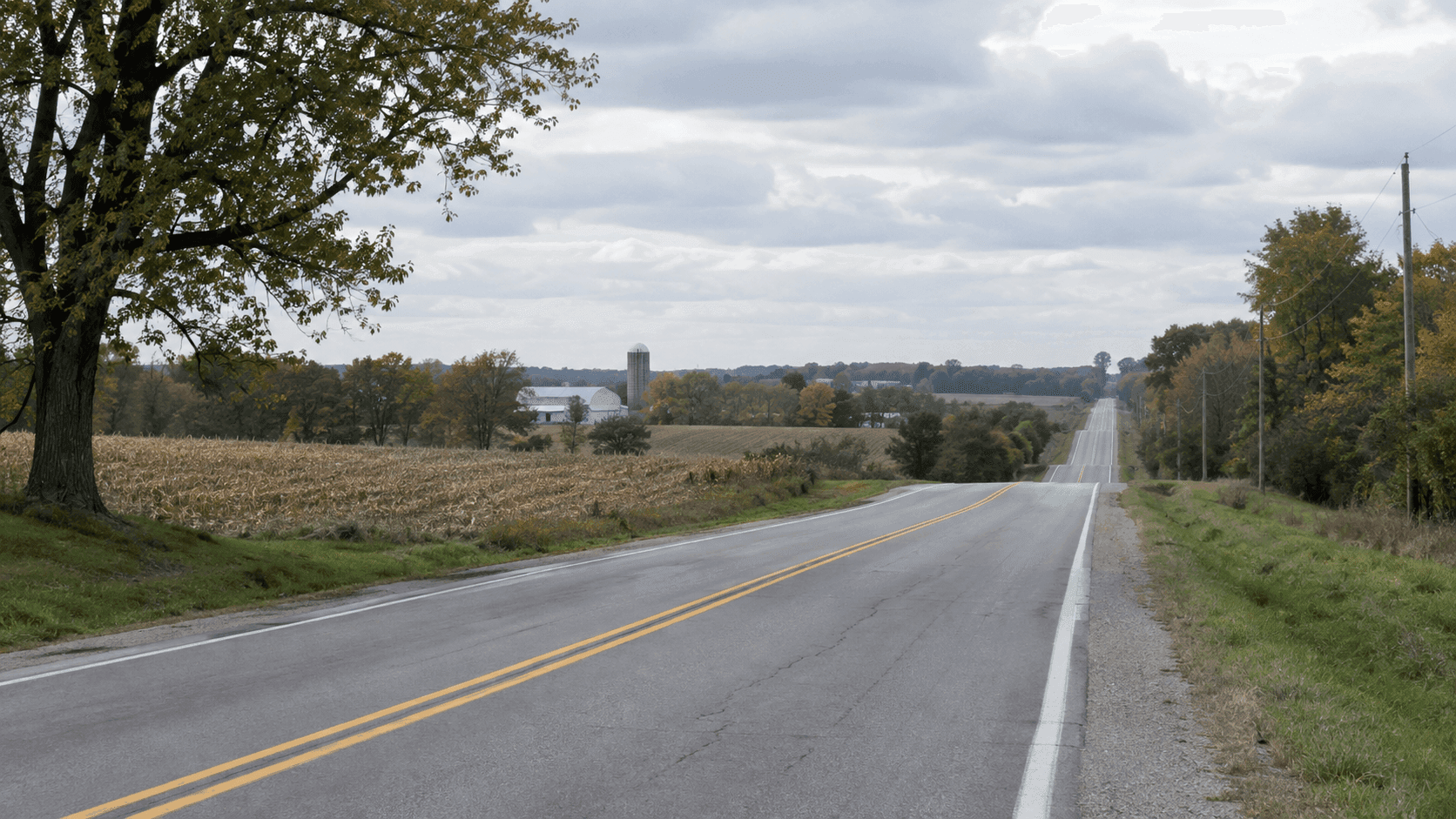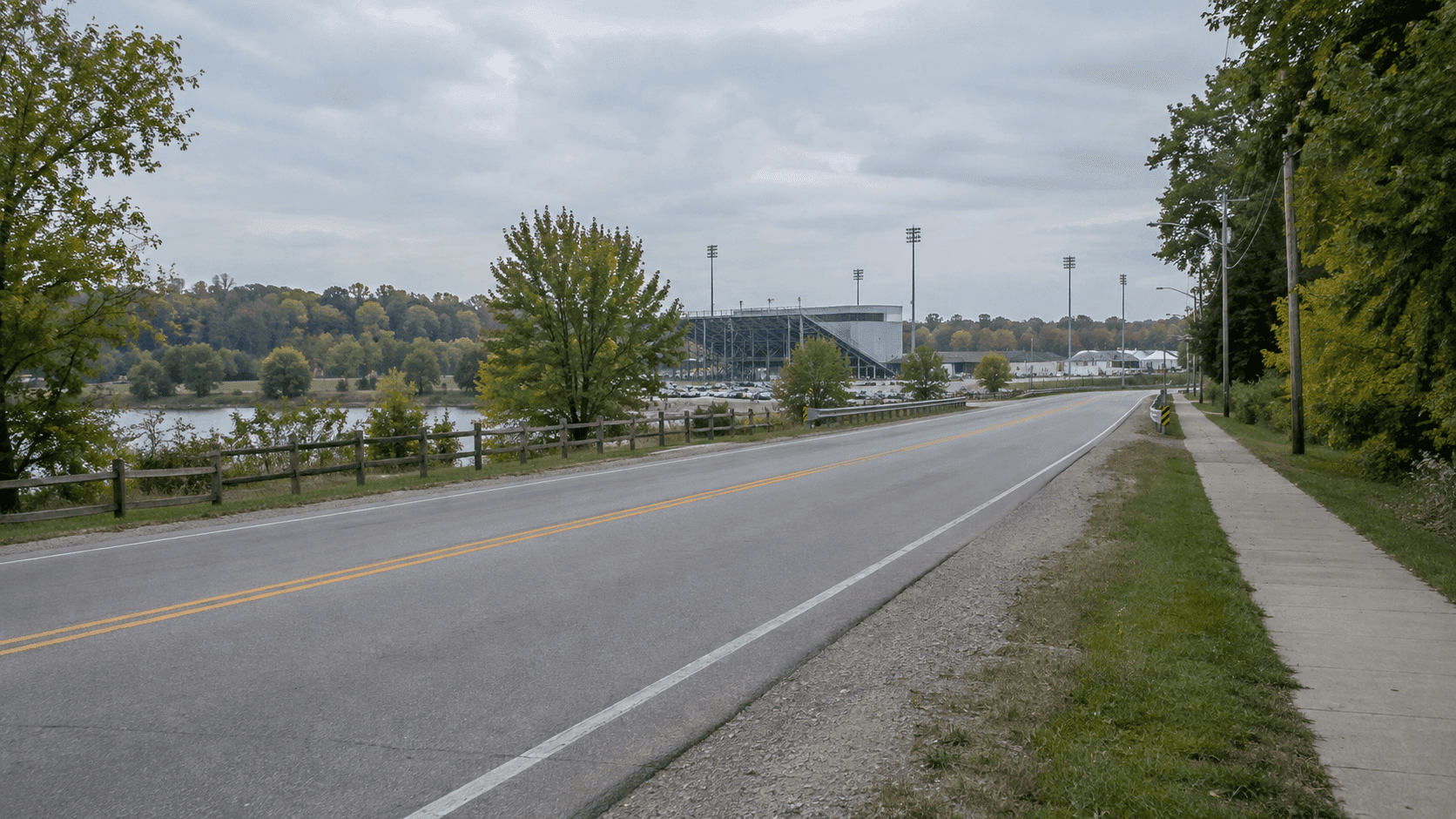
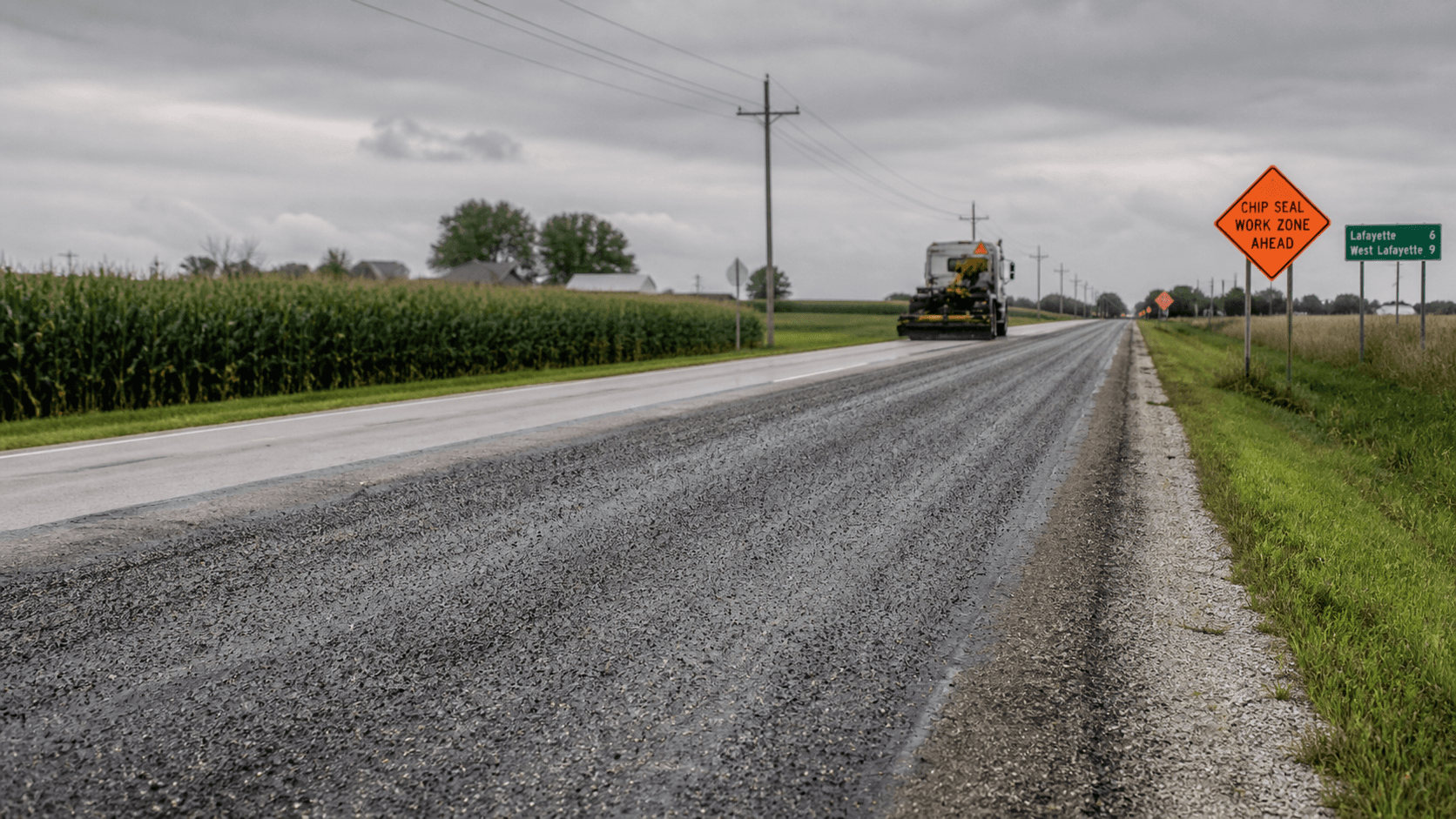
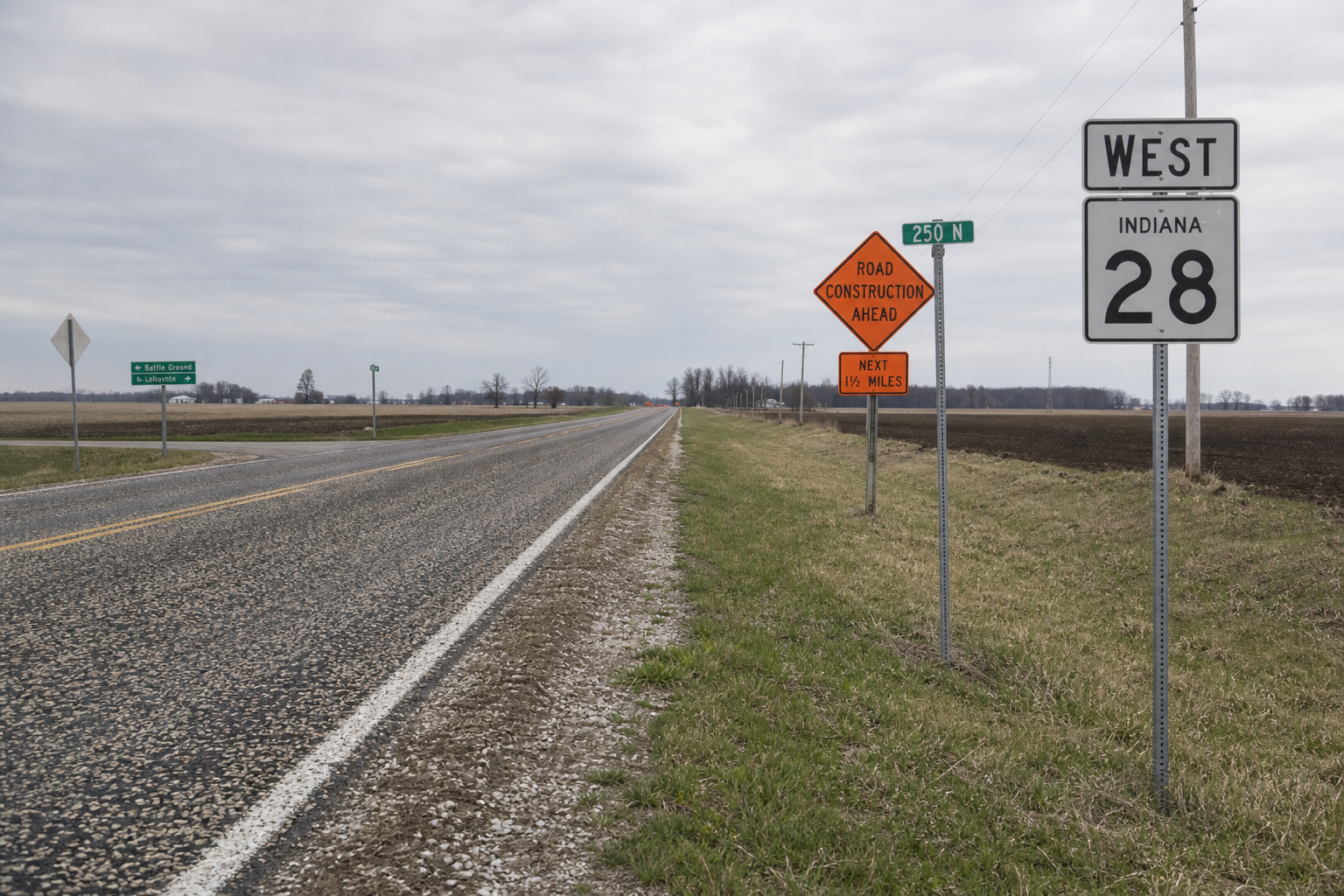
A 58-year-old Lebanon man was seriously injured while riding west on State Road 28 near County Road 125 West in Tippecanoe County on August 25, 2026. He encountered an active INDOT chip-and-seal operation where crews were directing traffic.
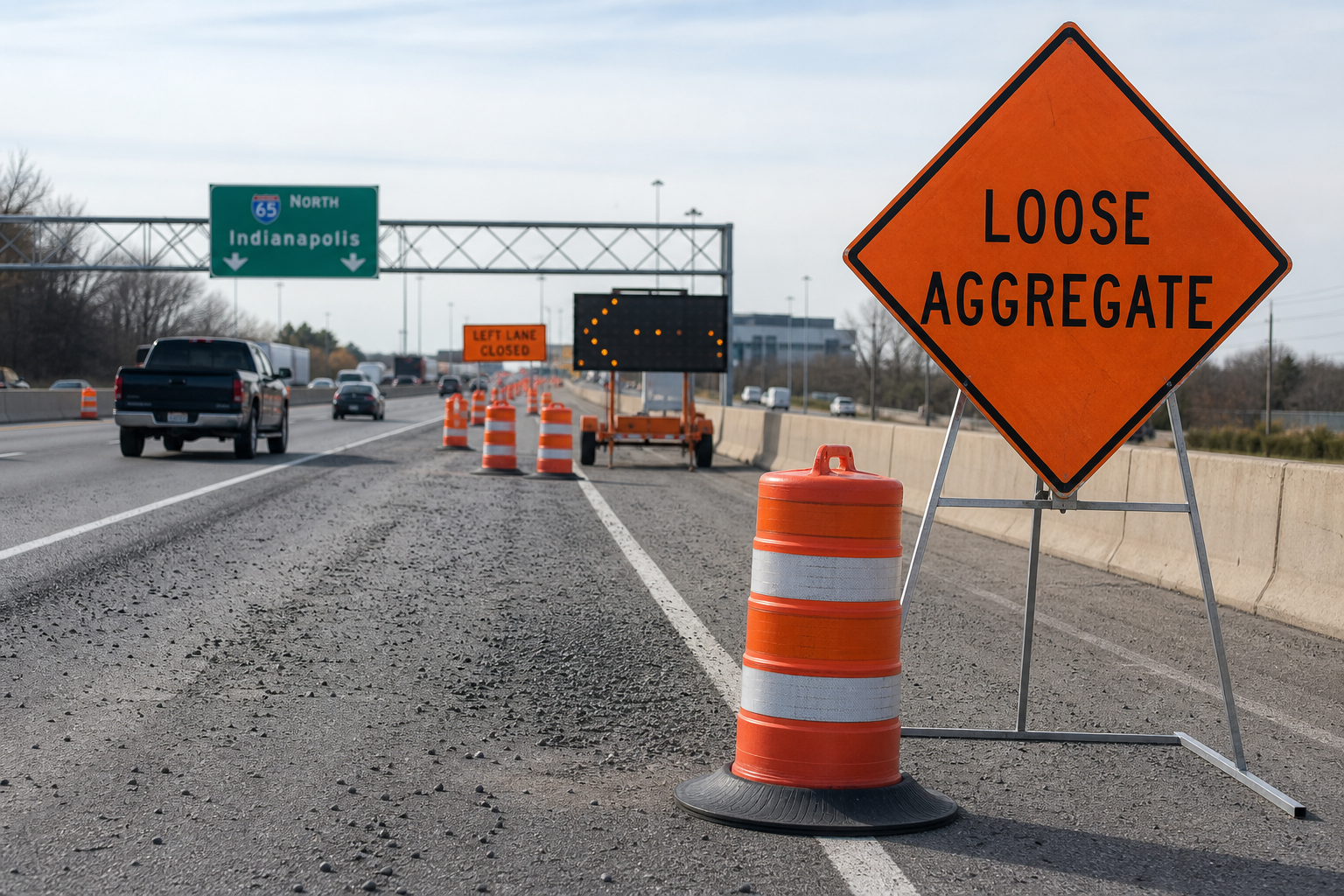
Chip-and-seal is a common highway-maintenance process, but the loose aggregate used during the work can affect a motorcycle differently than a passenger vehicle. That does not establish that the road work caused this crash. It does mean that the roadway surface, warnings, and traffic-control setup are facts that should be documented while the investigation remains open.
What happened
According to WISH-TV’s report[1], which attributed its information to the Tippecanoe County Sheriff’s Office, the crash occurred at about 1:36 p.m. near Lafayette. A witness reported that the westbound rider moved into the eastbound lane near the workers, left the roadway on the left side, and was thrown over the handlebars while attempting to return to the pavement.
The rider was wearing a helmet, but it came off during the crash. He lost consciousness, later regained consciousness, and was flown to an Indianapolis hospital in stable condition. The sheriff’s office investigation remains open. No fault has been assigned, and no citation was reported.
The account leaves an important question unanswered: whether the rider entered the opposing lane on his own or followed directions from a flagger. The available reporting does not answer that question. It also does not connect the chip-and-seal surface, the work-zone design, or any crew direction to the crash.
What you should do after a work-zone motorcycle crash
A temporary work zone can change or disappear within days. If you are able, photograph the signs, advance-warning distances, cones, flagger locations, speed restrictions, lane routing, and loose aggregate. If your injuries prevent you from returning, ask someone you trust to document the area safely. The firm’s evergreen guide explains the broader evidence and notice issues when a road defect or construction condition may have contributed to an Indiana motorcycle crash.
Identify the public agency, contractor, and any traffic-control subcontractor involved. Ask for the maintenance-of-traffic plan, project specifications, work logs, inspection records, and information showing whether the actual setup matched the approved plan. A Fort Wayne motorcycle accident attorney can help send preservation requests before temporary evidence is lost.
Preserve the motorcycle and helmet without repairing, cleaning, or discarding them. If the helmet’s retention system failed, the helmet and chin strap may need to be examined. Their condition should be documented before an insurer or repair facility changes anything.
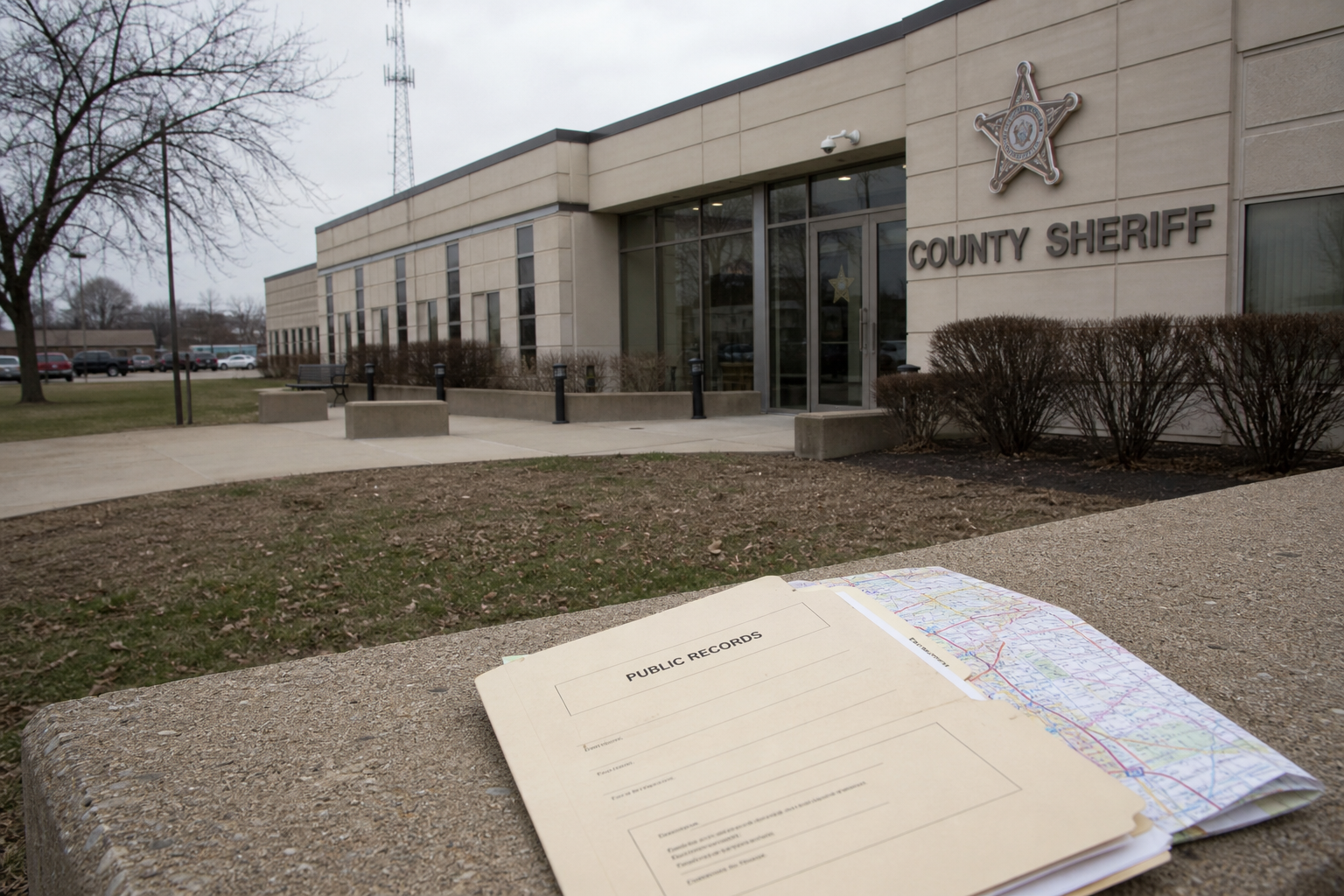
Request the sheriff’s crash report and identify the witness. A short news summary cannot show where the witness was standing, how much of the rider’s approach the witness saw, or whether a flagger gave directions. The firm’s guide to obtaining an Indiana crash report explains how to begin that process.
Loss of consciousness can require careful follow-up even when the initial condition is described as stable. Keep records of symptoms, appointments, treatment, bills, and work limitations. You can also review the firm’s guidance on concussion symptoms after a crash.
Why the location and work-zone control matter
State Road 28 is a state route, so the location points toward INDOT and any contractors working on the project. Responsibility cannot be determined from the road number alone. Records may show which entity controlled the maintenance work, traffic plan, signs, flaggers, and surface cleanup.
Under the Indiana Tort Claims Act, notice of a claim against a political subdivision must generally be provided within 180 days under Ind. Code § 34-13-3-8. Notice of a claim against the State of Indiana or a state agency such as INDOT must generally be provided within 270 days under Ind. Code § 34-13-3-6. These notice periods are different from the ordinary two-year deadline discussed in the draft. When the responsible entity is unclear, the shorter potential deadline should be addressed promptly. The firm’s guide to Indiana government tort claim notices provides additional context.
A private contractor is not necessarily subject to the same government-notice requirement. Identifying every entity involved early helps determine which deadlines and defenses may apply. It also helps preserve records before they are routinely overwritten or discarded.
Indiana’s comparative fault rule also matters. Under Ind. Code § 34-51-2-6, compensation is reduced by the claimant’s percentage of fault, and a claimant more than 50 percent at fault cannot recover. The reported witness account may support a substantial fault argument against the rider, but it is not a final determination. Whether the rider acted independently or followed a flagger’s direction could materially affect that analysis.
How Delventhal Law Office handles these cases
Delventhal Law Office represents injured riders throughout Indiana, including Tippecanoe County. The firm can identify the public agency and contractors, request the traffic-control plan and project records, preserve the motorcycle and helmet, and evaluate which notice periods apply. Insurance companies and government defendants may aggressively defend a claim, especially when an early witness account places responsibility on the rider.
If you were injured in an Indiana work-zone motorcycle crash, you can request a free case evaluation. There is no fee unless the firm recovers for you.
This post is based on public reporting, the investigation may be ongoing, and nothing here is legal advice or creates an attorney-client relationship.
Update: Additional report published, August 27, 2026
WRTV Indianapolis has also reported[2] that the rider was in stable condition after being flown to an Indianapolis hospital. WRTV said the crash remained under investigation.
The original facts above remain accurate based on the available public reporting, and the investigation may still be ongoing.