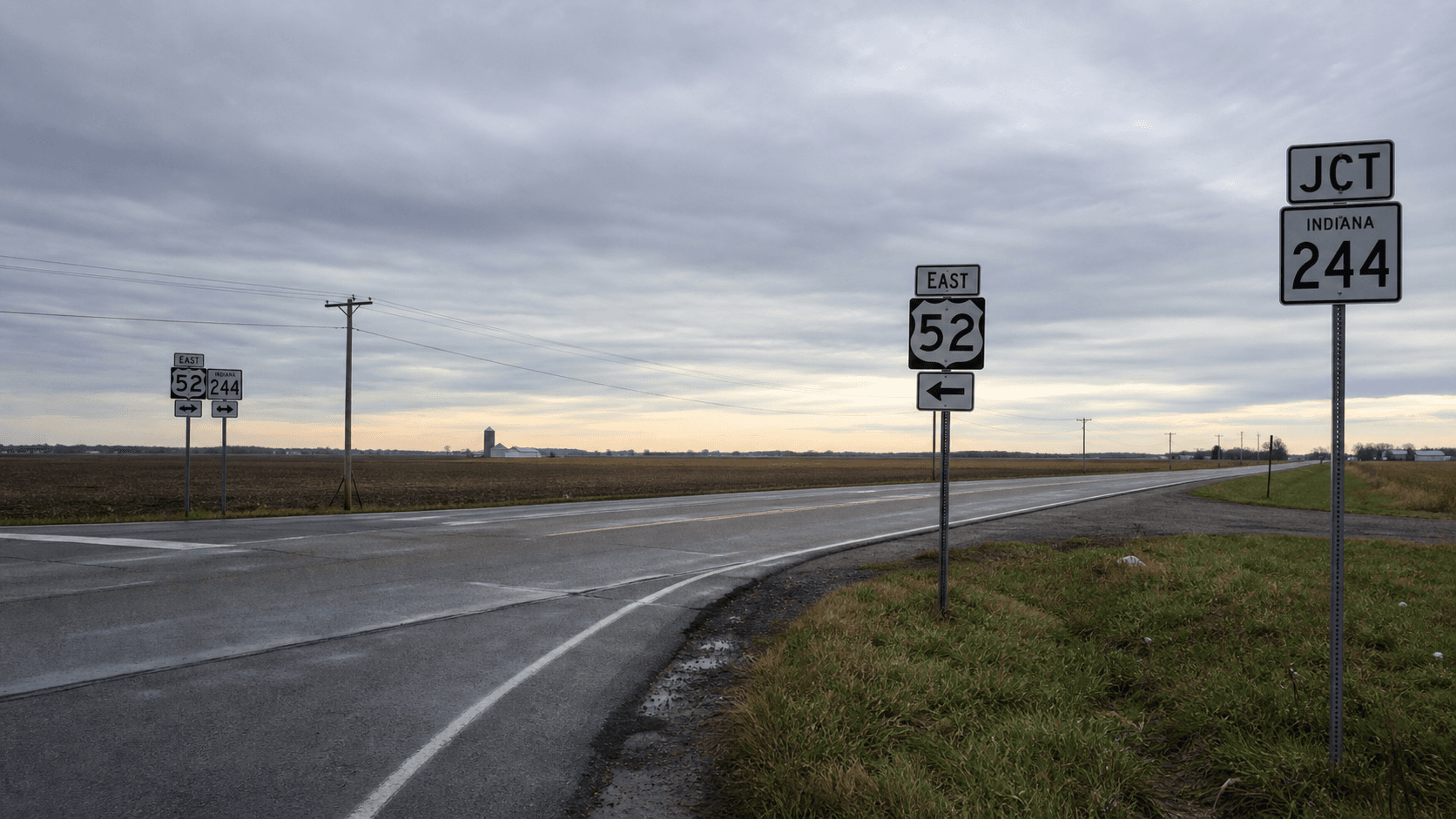
A two-vehicle crash on U.S. 52 near Morristown killed one person on the morning of Tuesday, August 11, 2026. Deputies closed the highway for hours while investigators reconstructed the scene. Here is what the public reporting says, along with general guidance about fatal crashes on rural Indiana highways.
What happened
According to WISH-TV[1], FOX59[2], and WRTV[3], the Shelby County Sheriff's Department was dispatched around 8:28 a.m. to a two-vehicle crash on eastbound U.S. 52 at County Road 500 East, near Morristown. At least one person was killed. Deputies closed all lanes while a crash-reconstruction team documented the scene.
As of the cited reporting, officials had not released the names of those involved while family notification was pending. The cause had not been announced, and the investigation remained open.
No available finding assigns legal responsibility. Any conclusion about fault must wait for the evidence, including the completed investigation, witness accounts, and physical evidence.
What families can do next
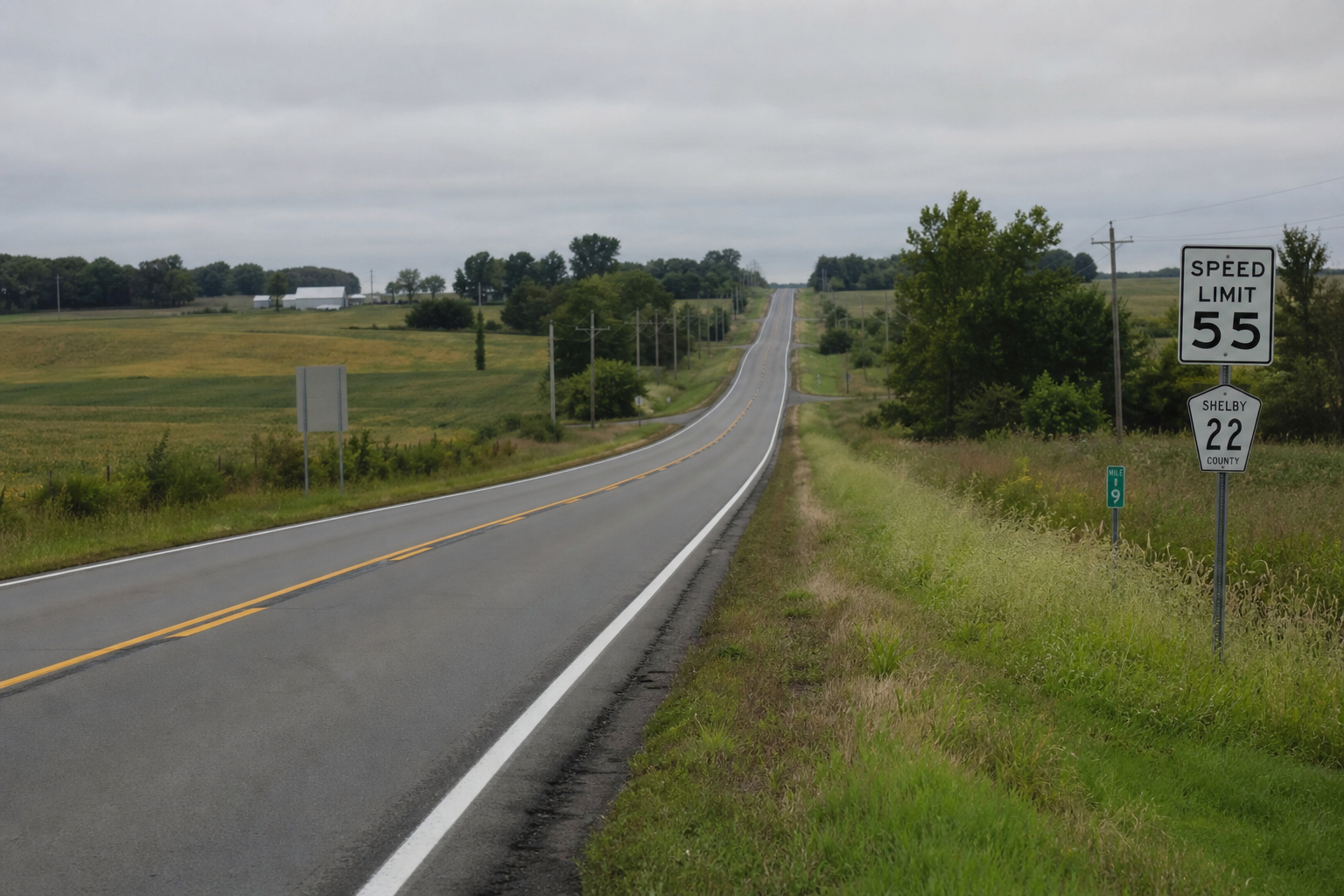
When you lose a family member in a sudden highway crash, questions about what happened and what comes next can be difficult to face while you are grieving. You can let the sheriff's investigation proceed while keeping your own record. Note the investigating agency, ask how to obtain the completed crash report, and identify witnesses or nearby cameras that may have recorded the area. This guide explains how to obtain an Indiana crash report.
Physical evidence can disappear quickly. Vehicle positions, pavement marks, roadway conditions, and each vehicle's mechanical condition may matter. Once the highway is cleared and the vehicles are moved, some details become harder to document. Families may want to request preservation of the vehicles and other evidence while questions remain open. A broader overview of evidence used in Indiana accident claims can help you understand what may be important.
A cause that has not yet been released does not mean no claim exists. Fault in a two-vehicle collision may become clearer only after investigators, witnesses, photographs, and physical evidence are considered together.
Be careful with early insurance conversations. An insurer may request a recorded statement or propose a quick settlement before the full picture is known. You can learn more about responding when an insurance adjuster requests a recorded statement or medical release.
Why the location matters
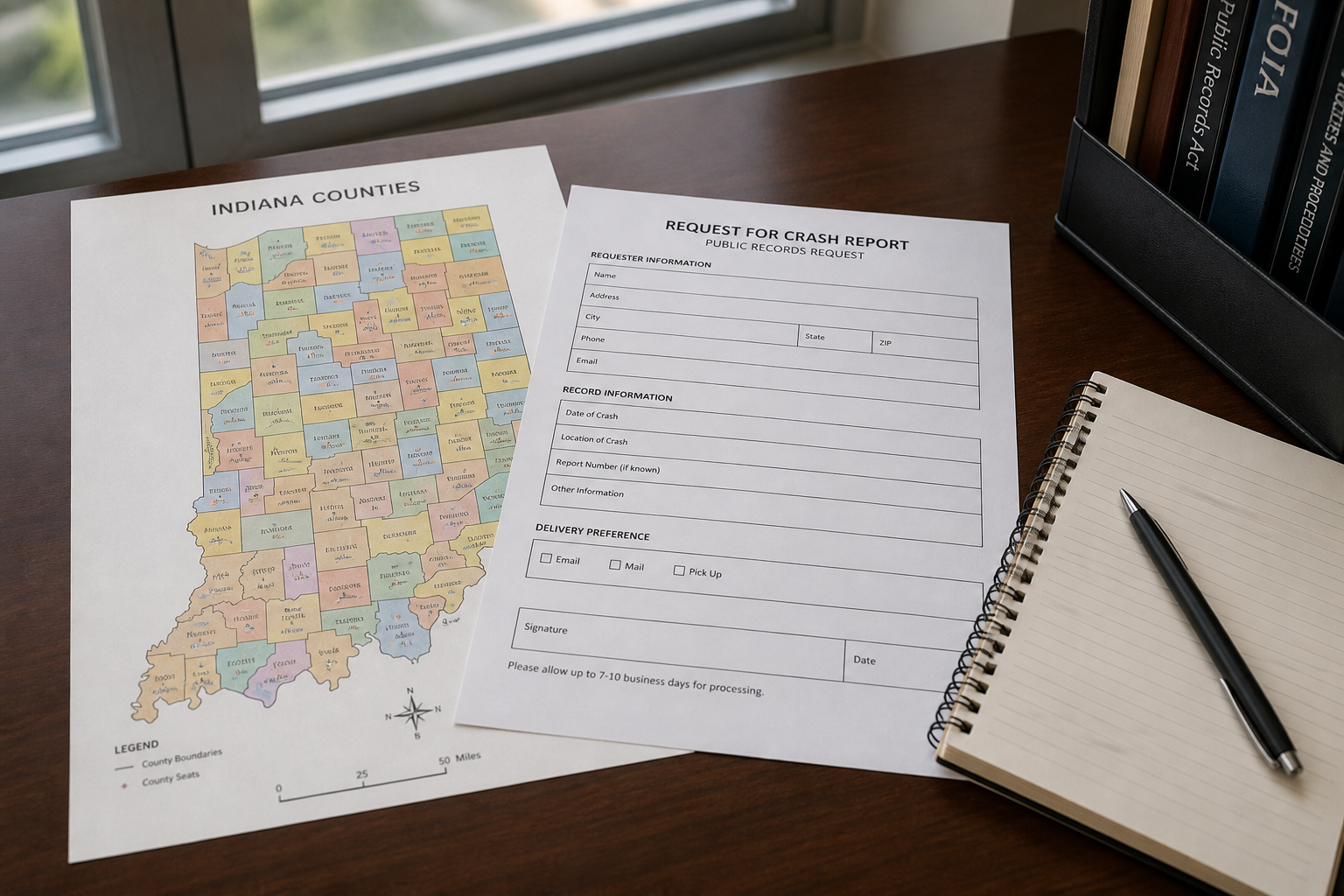
This crash happened on eastbound U.S. 52 at County Road 500 East, a rural highway intersection in Shelby County. That location determines which agency investigates and where relevant records may be kept.
Details tied to the precise location may affect how investigators evaluate the crash. Those details can include sightlines, traffic controls, posted speed, pavement condition, and the presence or absence of turn lanes. Whether any person or entity bears responsibility depends on the specific evidence. No such conclusion has been announced here.
Timing also matters. Indiana's deadline for a wrongful-death claim is generally two years from the date of death, and the deadline for a personal-injury claim is generally two years from the injury date. The applicable deadline can depend on the facts and parties, so families should not assume an open investigation pauses the filing period. This plain-language guide discusses Indiana accident claim deadlines.
How Delventhal Law Office can help
If your family lost someone, or someone you love was hurt, in a highway crash in Shelby County or elsewhere in Indiana, Delventhal Law Office can review how the crash happened, preserve evidence, identify available insurance coverage, and handle communications with insurers. Fatal crash claims can be hotly contested, especially when the cause remains under investigation or an insurer tries to shift responsibility.
Chad Delventhal helps injured people and grieving families understand their options under Indiana law. You can request a free case evaluation to discuss the circumstances calmly and privately.
This post is based on public reporting, the investigation may be ongoing, and nothing here is legal advice or creates an attorney-client relationship.
Update: Injuries and crash sequence reported, August 14, 2026
GIANT fm[4], WTHR[5], and the Greensburg Daily News[6] have reported additional details about the people injured and the preliminary crash sequence. The reports say a passenger car traveling south on County Road 500 East entered U.S. 52 and was struck by a pickup traveling west on U.S. 52.
The car's driver was killed. A passenger in the car was taken to an Indianapolis hospital in critical condition, while the pickup driver was taken to a regional hospital. These reported details show that the collision also involves potential passenger and driver injury claims, but they do not establish legal fault.
The original facts above concerning the fatal collision and resulting highway closure remain accurate. The reported sequence is preliminary, and the investigation may still be ongoing.