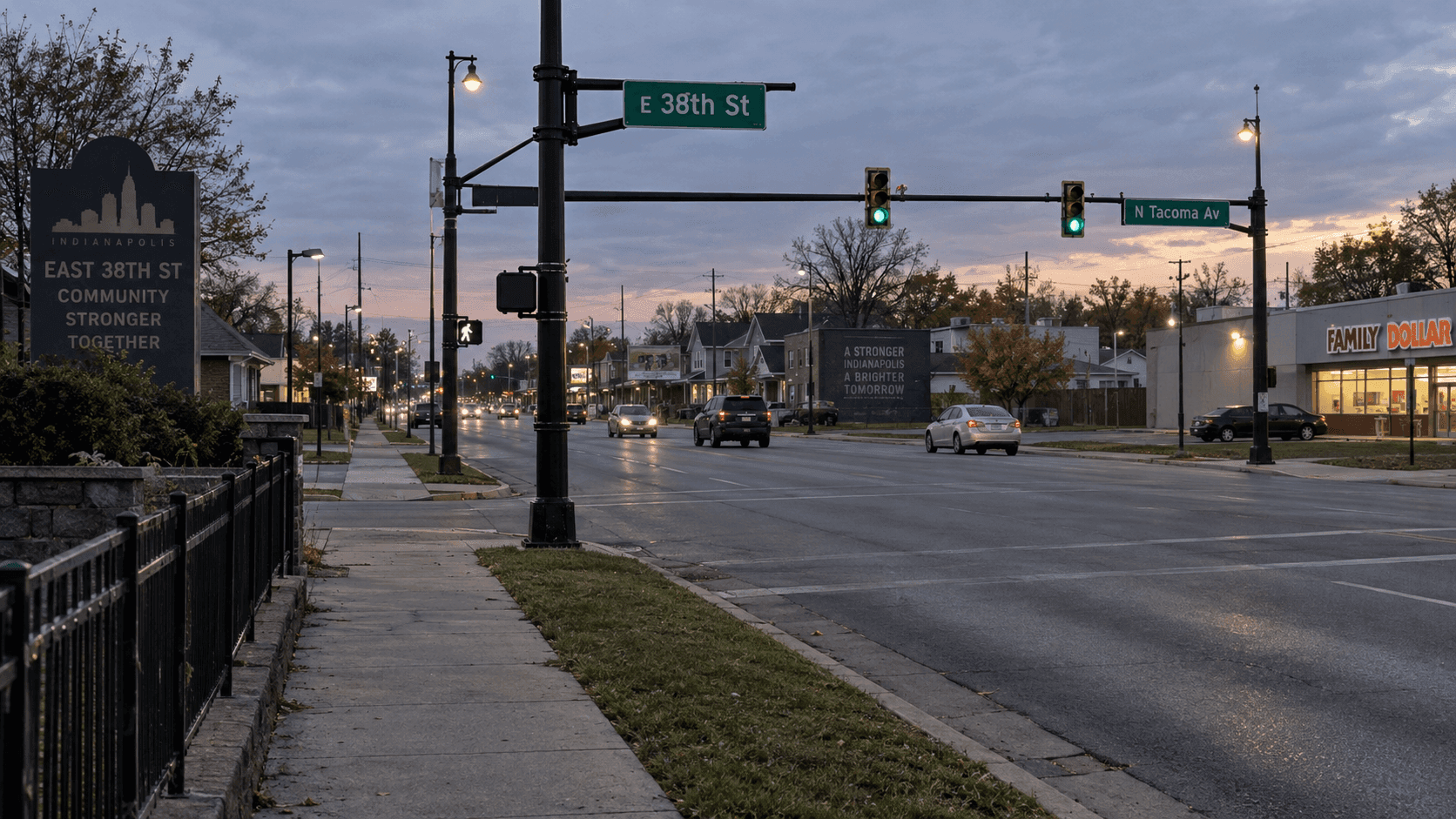
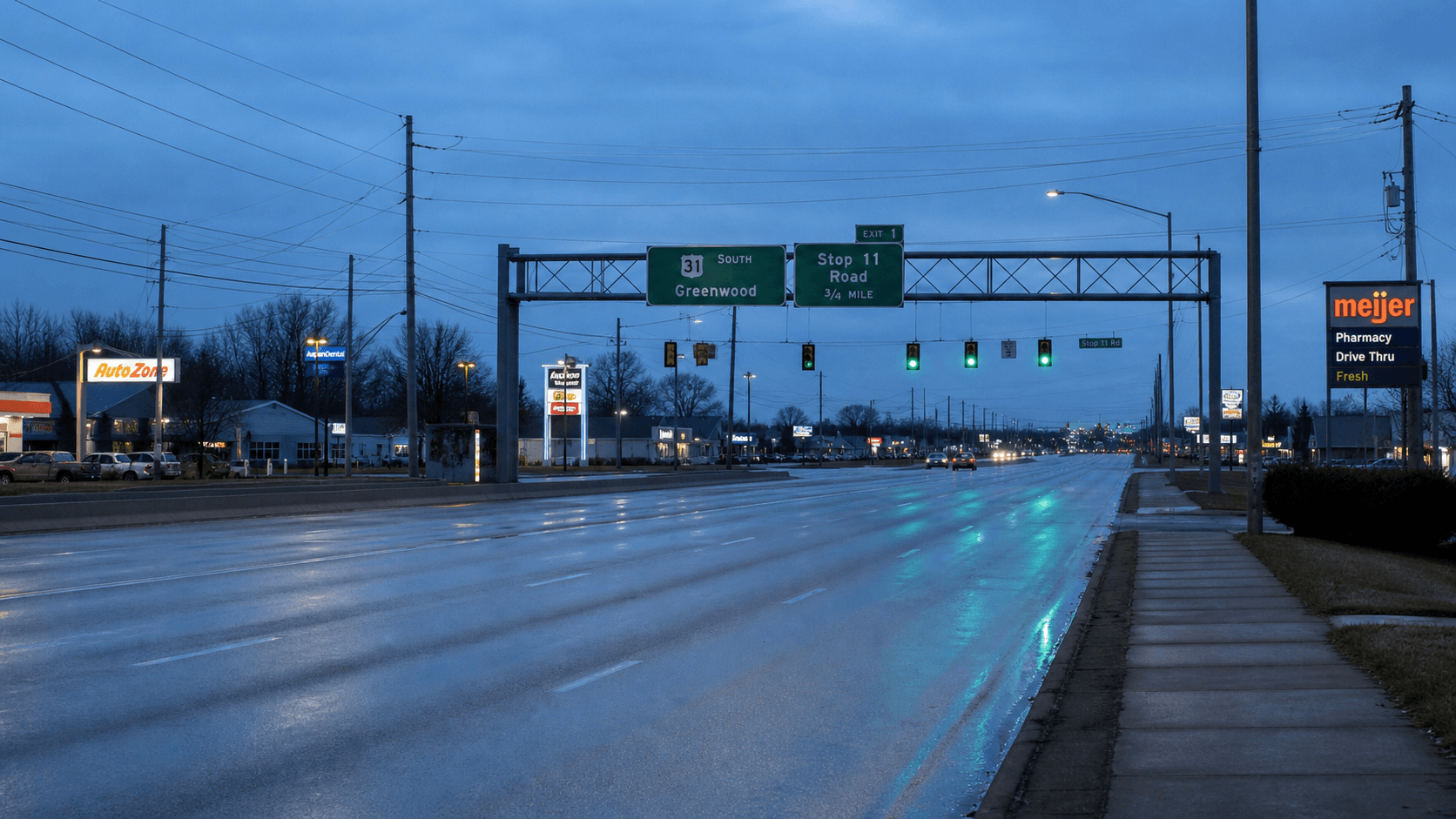
An early-morning crash at U.S. 31 and Stop 11 Road on the south side of Indianapolis left one person dead and another seriously injured. Police arrested a driver on suspicion of impaired driving. The investigation remains open, and an arrest is not a conviction.
What happened
According to WRTV's reporting on the crash[1], the Indianapolis Metropolitan Police Department responded to a two-vehicle collision near U.S. 31 South and Stop 11 Road at approximately 2:30 a.m. on Monday, August 10, 2026. One person was killed. A second person was seriously injured and taken to a hospital.
The crash was first reported to police as a hit-and-run. Police arrested an adult male and indicated that alcohol or impairment was believed to be a factor. Follow-up reporting referenced OWI-related charges. As of the cited coverage, the people involved had not been publicly named.
No case had been resolved in court when the reporting was published. The available information should not be treated as a legal conclusion about fault or criminal responsibility.
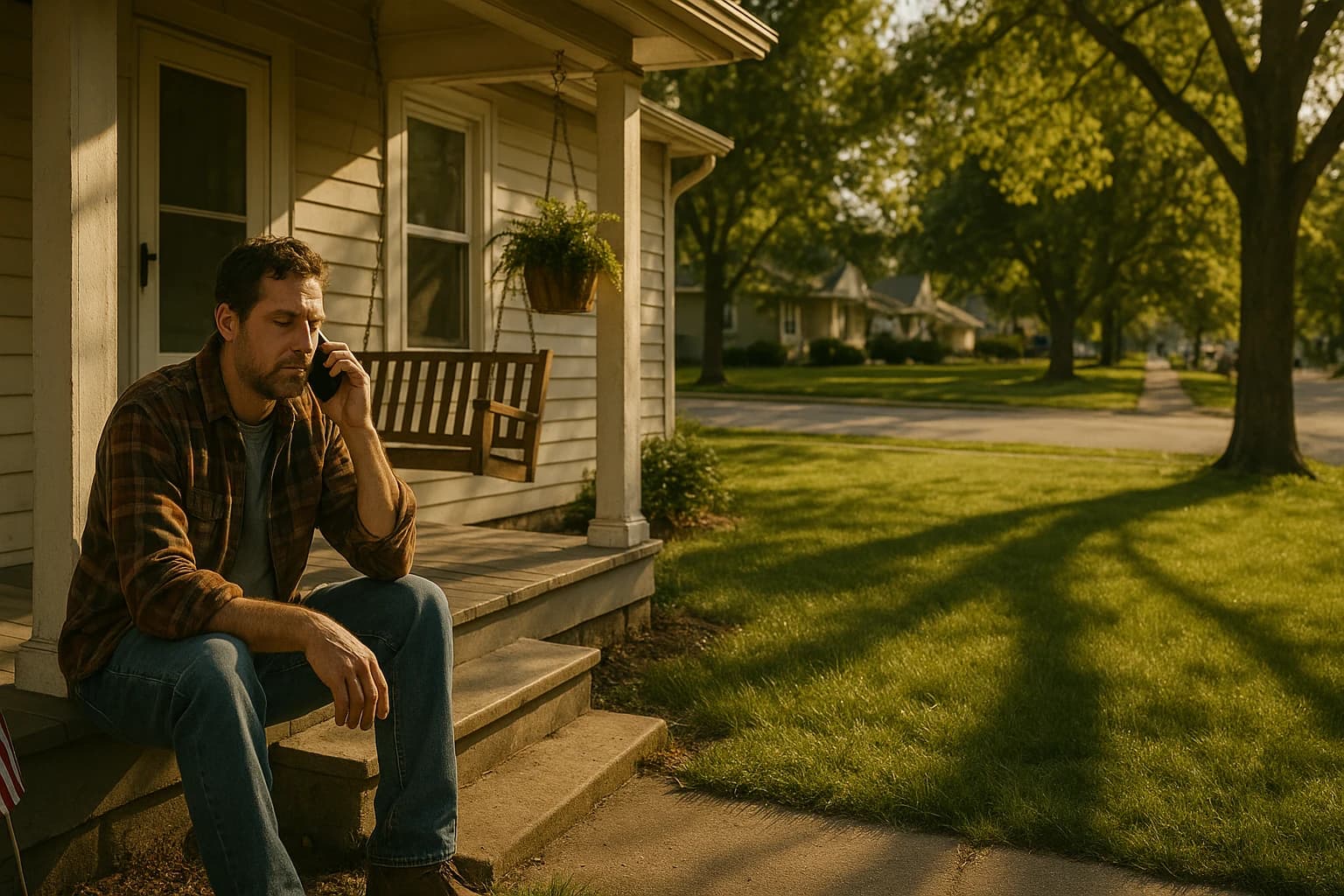
What families should do next
A criminal OWI investigation and a civil wrongful-death claim serve different purposes. The criminal case may address punishment, but it does not by itself compensate a family for its loss. You can keep your own record while the criminal investigation continues, including the investigating agency's information, witness details, and locations of nearby cameras.
You can also learn how to obtain an Indiana crash report and request available toxicology or chemical-test results when they become public. Preserve correspondence, photographs, medical records, funeral expenses, and insurance documents in one secure place.
Physical evidence can change or disappear quickly. Vehicle condition, roadway evidence, lighting, sightlines, and traffic flow may matter when investigators reconstruct a collision. If alcohol is suspected, evidence about where and how the driver obtained alcohol may also become important.

Potential sources of recovery
A civil claim may involve more than the driver's liability policy. If an establishment unlawfully served an obviously intoxicated person before the crash, the facts may support an Indiana dram-shop claim. Whether that type of claim exists depends on evidence about the person's condition, the service of alcohol, and the connection between that service and the collision.
Uninsured or underinsured motorist coverage may also matter if the responsible driver has no insurance or too little coverage. Families can review what happens when a driver has only minimum insurance before accepting a settlement or signing a release.
Insurance companies may contact a family quickly, request a recorded statement, or propose an early settlement. You do not have to resolve a claim before the facts, losses, and available policies are understood. This guide explains concerns that can arise when an insurance adjuster requests a recorded statement or medical release.
Why the location matters
This crash occurred at U.S. 31 and Stop 11 Road on Indianapolis' south side in Marion County. The location affects which agencies investigate, where records are kept, and where a civil case may proceed. The Indianapolis Metropolitan Police Department is investigating, and the Marion County Coroner's Office is involved in identifying the person who died.
The location of any alcohol service may be different from the crash location. That distinction can matter when evaluating a possible dram-shop claim and identifying relevant records, witnesses, and surveillance footage.
Deadlines also continue to run while criminal and crash investigations remain open. The draft reports that Indiana generally allows two years from the date of death for a wrongful-death claim and two years from the date of injury for a personal-injury claim. General information about Indiana accident claim deadlines can help you understand why waiting for the criminal case to end may create problems.
How Delventhal Law Office can help
When your family has lost someone, or someone you love was seriously injured, in a suspected impaired-driving crash in Indiana, questions about accountability and insurance can become hotly contested. Delventhal Law Office helps injured people and grieving families across Indiana preserve evidence, examine available insurance, evaluate possible dram-shop and uninsured or underinsured motorist claims, and respond to insurers that may aggressively defend a claim.
You can speak with Delventhal Law Office through a free case evaluation about the facts and your options under Indiana law.
This post is based on public reporting, the investigation may be ongoing, and nothing here is legal advice or creates an attorney-client relationship.