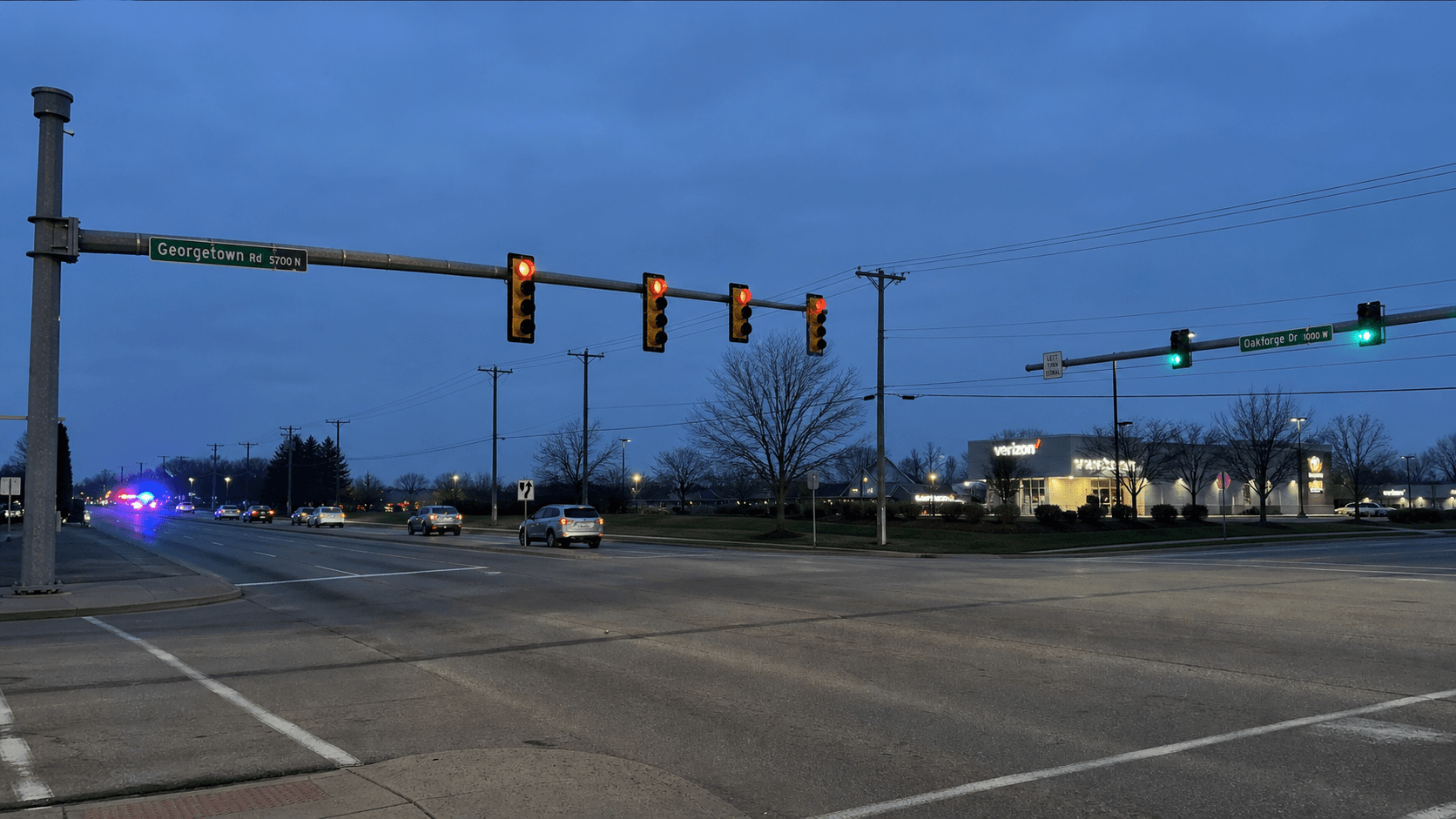
A motorcyclist was killed in a collision with an SUV at Georgetown Road and Oakforge Drive on the northwest side of Indianapolis around 8:30 p.m. on Sunday, August 9, 2026. The SUV driver remained at the scene and was cooperating with investigators.
What happened
WISH-TV reported[1] that the Indianapolis Metropolitan Police Department responded to the intersection after a crash involving a motorcycle and an SUV. The motorcyclist died at the scene. The SUV driver was not hurt, stayed at the scene, and was cooperating with police.
FOX59 also reported[2] that northbound Georgetown Road was closed for an extended period while investigators worked and a detour was advised.
IMPD's Fatal Crash team is investigating. When the reports were published, the motorcyclist's name had not been released, no charges had been announced, and police had not made a cause or fault determination public. Staying at the scene and cooperating with police does not, by itself, decide civil fault.
What families should do next
You can allow the official investigation to proceed while preserving the record independently. Note which agencies responded, ask how to obtain the completed report, and identify witnesses, nearby businesses, or cameras that may have recorded the intersection. This guide explains how to obtain an Indiana crash report.
Physical evidence can disappear quickly. Vehicle positions, damage patterns, scene measurements, skid or gouge marks, sightlines, and available video may help investigators reconstruct what happened. Families may need to act promptly to preserve the motorcycle, the SUV, electronic information, and nearby recordings. The firm's guide to evidence in an Indiana crash claim explains why those details matter.
A two-vehicle collision may involve liability coverage belonging to the surviving driver. If that coverage is unavailable or insufficient, the rider's uninsured or underinsured motorist coverage may also require review. Insurance companies may aggressively defend fault and sometimes rely on unfair assumptions about riders, so you should be cautious about recorded statements, broad medical authorizations, or early settlement offers.
Why the intersection matters
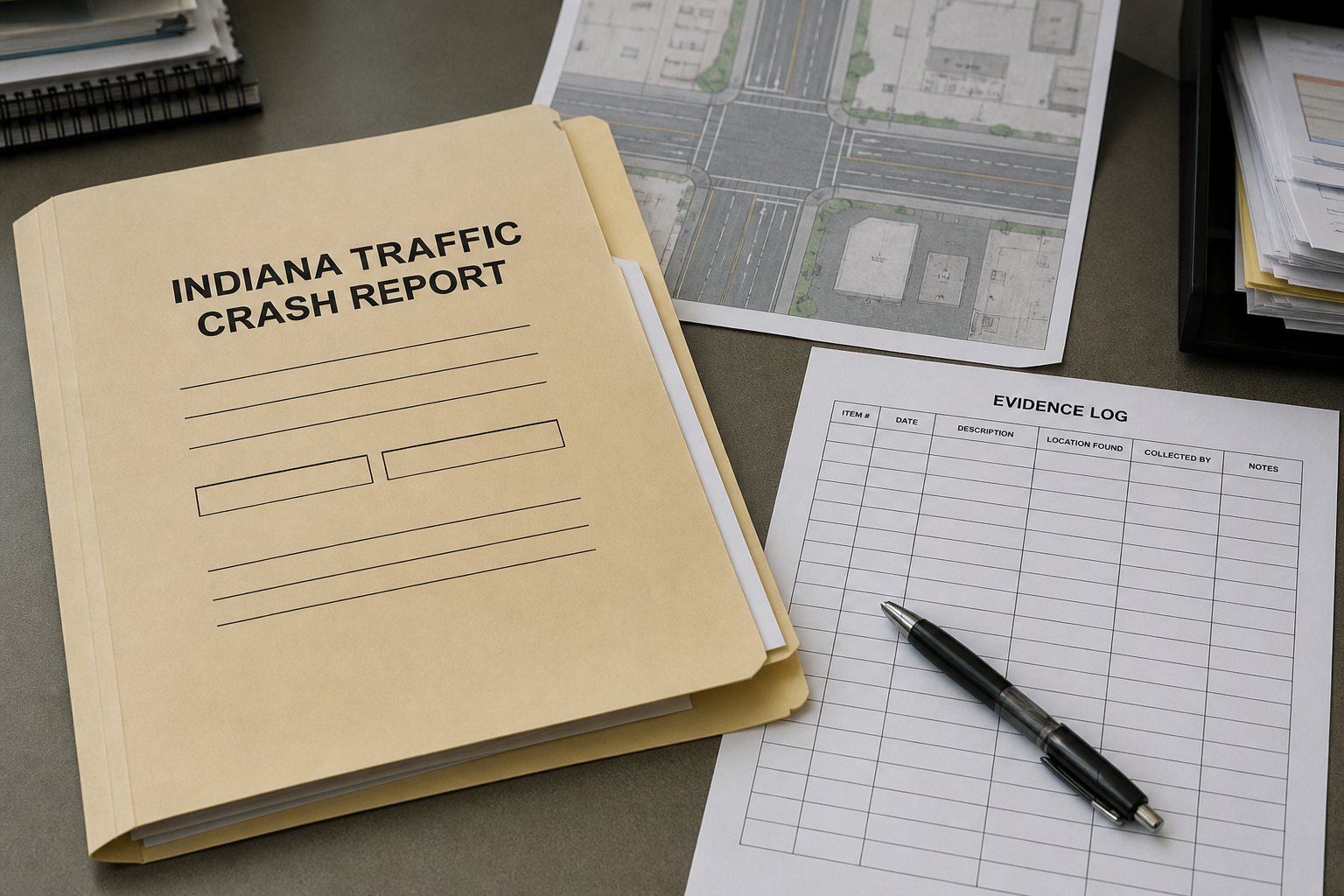
This collision happened at Georgetown Road and Oakforge Drive, an urban Indianapolis intersection. A careful reconstruction may consider right of way, traffic controls, possible turning movements, sightlines, and evening lighting. The draft and cited reports do not establish how the collision occurred, so no conclusion about either driver's actions is appropriate.
Indiana uses a modified comparative fault system. Under Indiana Code 34-51-2-6[3], damages generally are reduced according to a claimant's percentage of fault. A claimant found more than 50 percent at fault generally cannot recover. That makes accurate scene evidence and witness information especially important in a contested motorcycle case. You can read more about Indiana's 51 percent fault rule and how insurers may dispute responsibility.
Because the crash occurred in Indianapolis, IMPD is handling the crash investigation, and the matter is located in Marion County. The place of the collision also determines where important public records are held. A family's options may include an Indiana wrongful-death claim if the evidence ultimately shows that another person's carelessness caused the death.
Indiana Code 34-23-1-1[4] generally requires a wrongful-death action to be filed within two years after the person's death. Other deadlines can be shorter depending on the parties and circumstances. The investigation remaining open does not automatically pause a civil filing deadline.
How Delventhal Law Office can help
If your family has lost a rider in an Indiana collision, Delventhal Law Office can investigate the facts, preserve evidence, review insurance coverage, and explain how comparative fault and wrongful-death law apply. Chad Delventhal represents people throughout Indiana, including Indianapolis, and understands that motorcycle fault disputes can be hotly contested.
You can learn more about working with an Indianapolis motorcycle accident lawyer or request a free case evaluation. A conversation can help your family understand its options without assuming what the ongoing police investigation will find.
This post is based on public reporting, the investigation may be ongoing, and nothing here is legal advice or creates an attorney-client relationship.