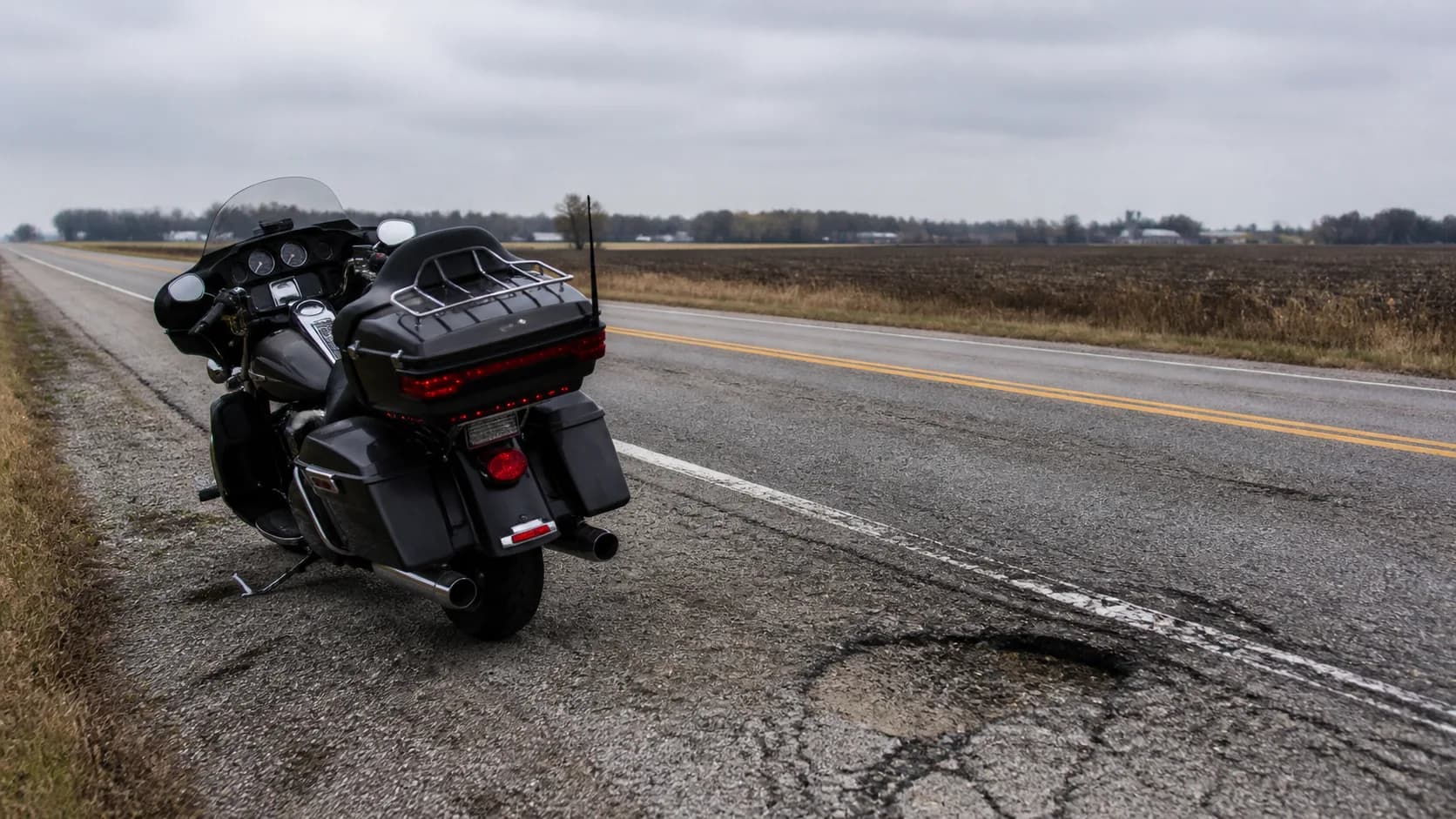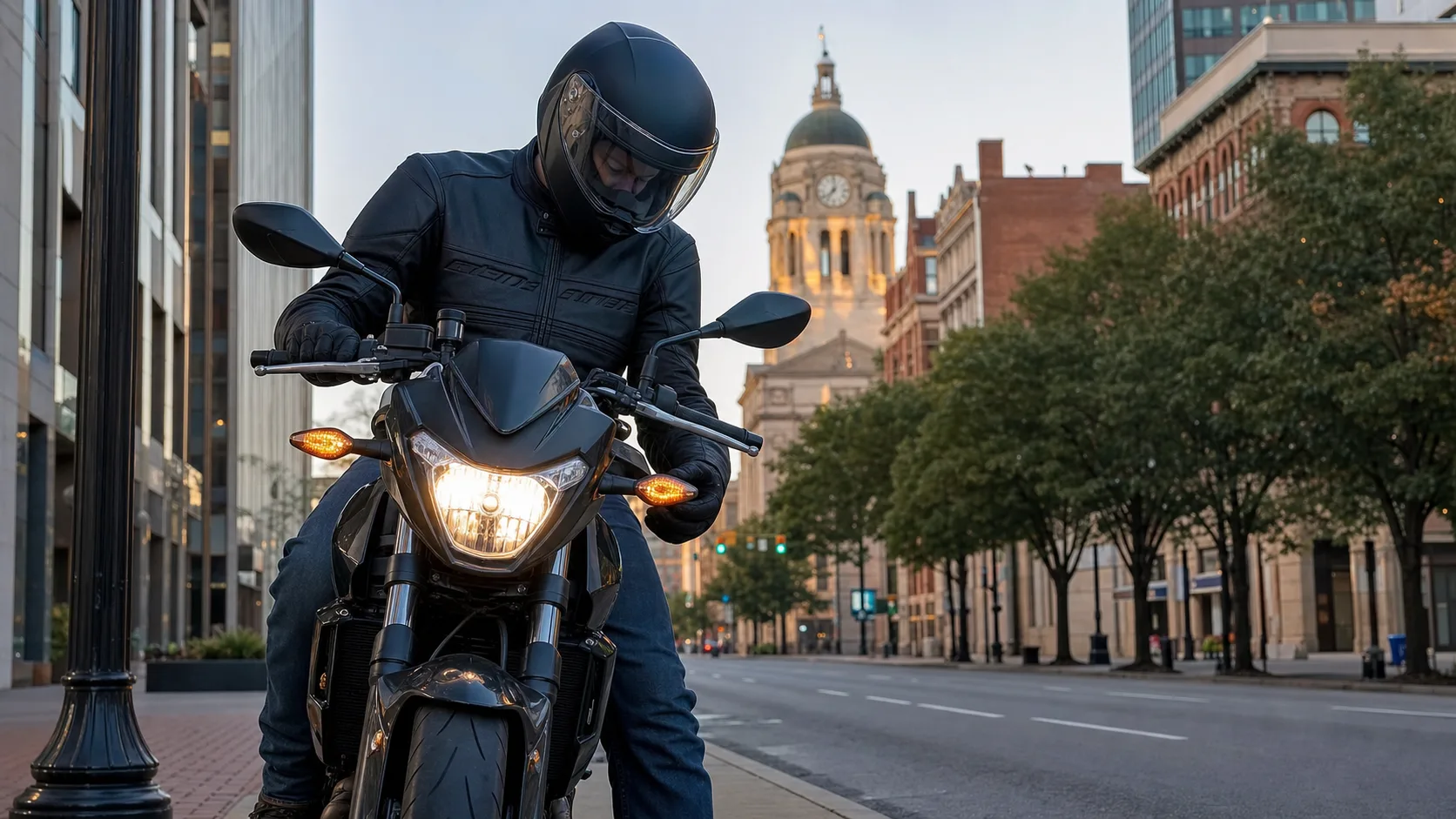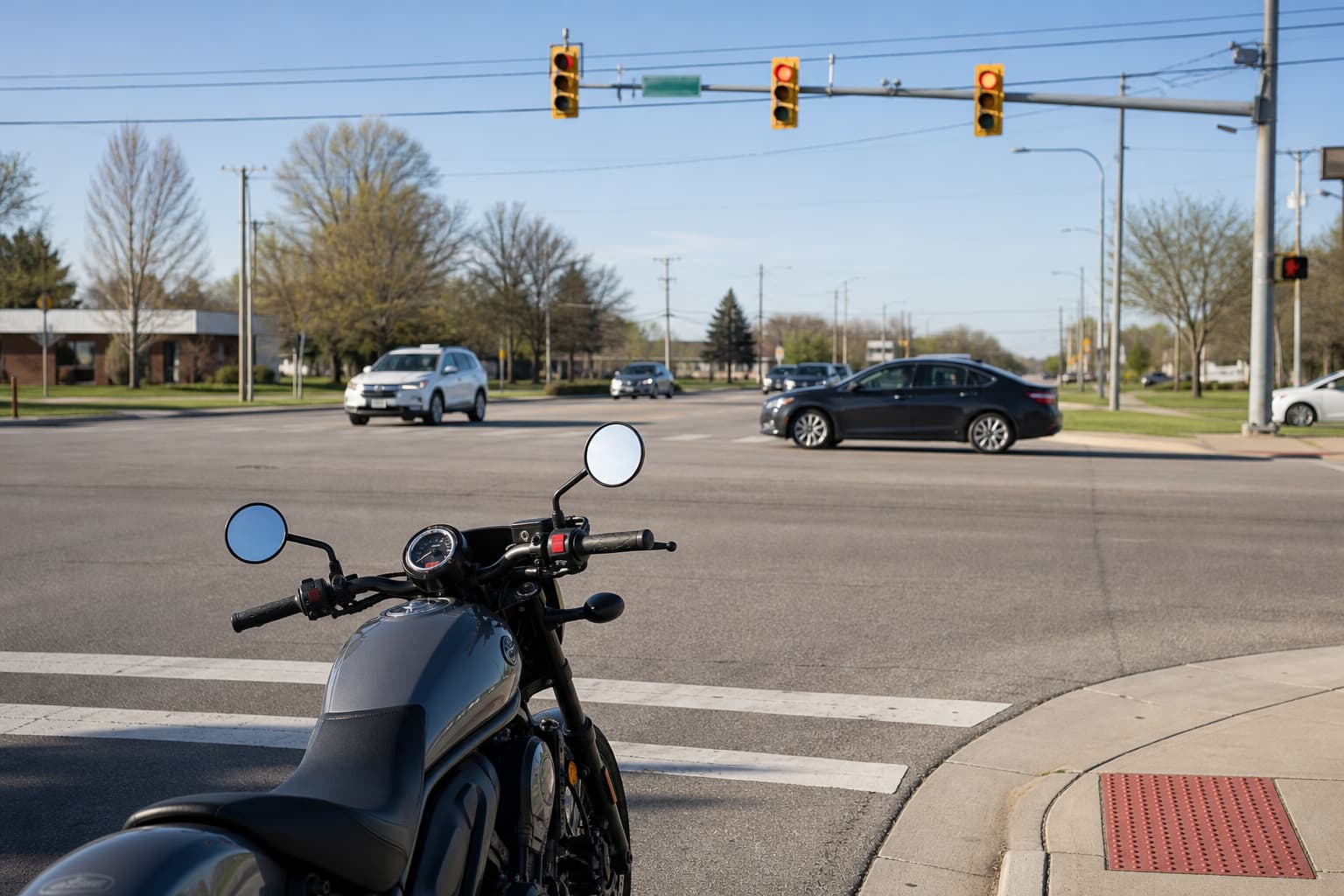
Intersections feel routine until something goes wrong. A driver turns left across traffic. A car rolls through a stop sign. A pickup pulls out from a side street. A driver sees the larger vehicles but misses the motorcycle. In a car, that mistake may cause a fender bender. For a rider, it can cause fractures, surgery, brain injury, spinal trauma, or death.
Delventhal Law Office helps injured motorcyclists in Fort Wayne and throughout Indiana preserve evidence, deal with insurance companies, and prove fault after serious intersection crashes. If you were hurt, visit our Fort Wayne motorcycle accident attorney page or call (260) 484-6655 for a free consultation.
Key takeaways
- Intersections are dangerous for riders because multiple vehicles make conflicting movements at the same time.
- Left turns, side-street pullouts, red-light disputes, right turns, and lane changes are common crash patterns.
- Drivers often say they did not see the motorcycle, but that does not automatically excuse the crash.
- Signal timing, sight lines, lane layout, video, witnesses, and damage patterns can decide fault.
- Insurance companies may still blame the rider for speed, visibility, lane position, or evasive action.
Why intersections are uniquely dangerous for motorcyclists
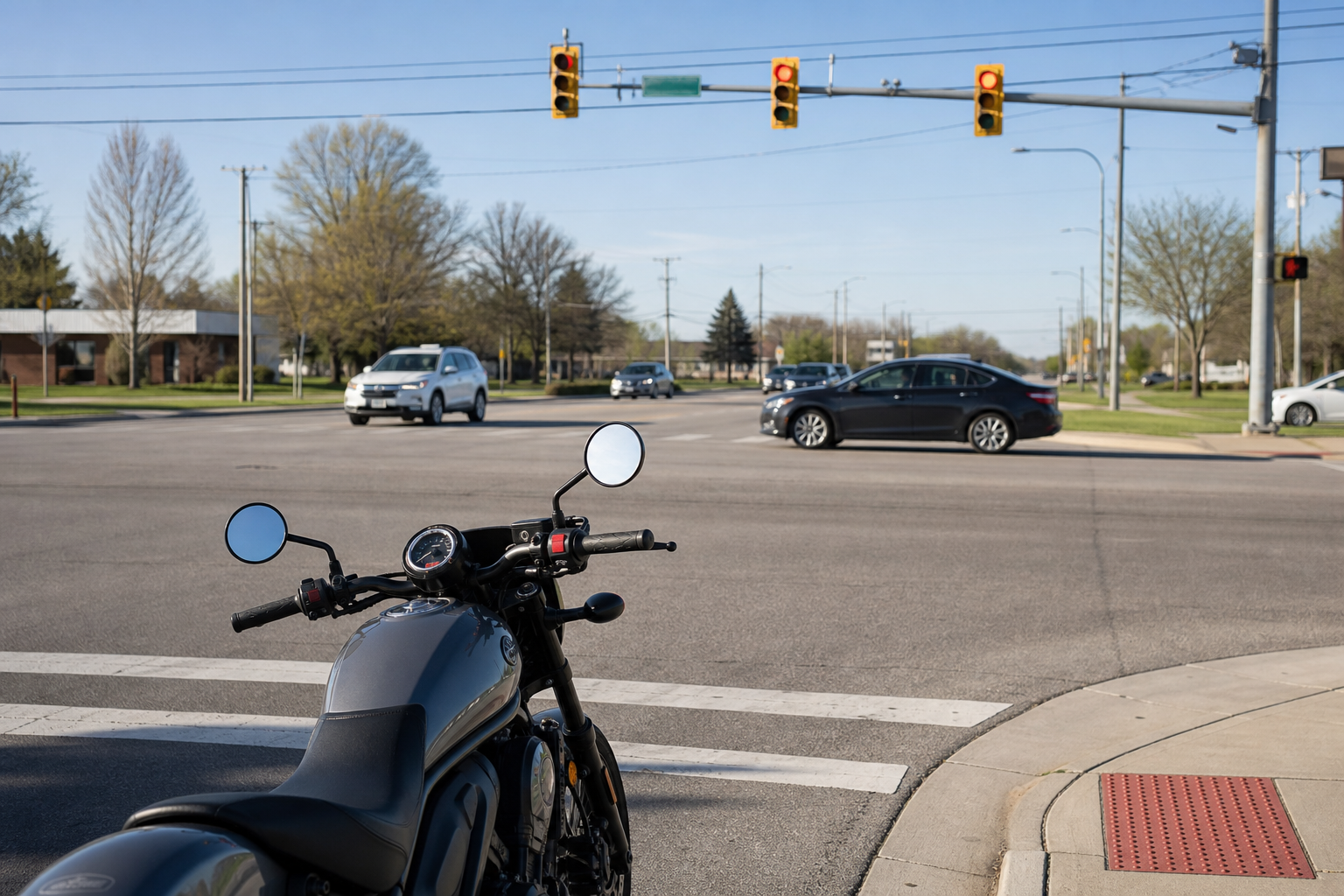
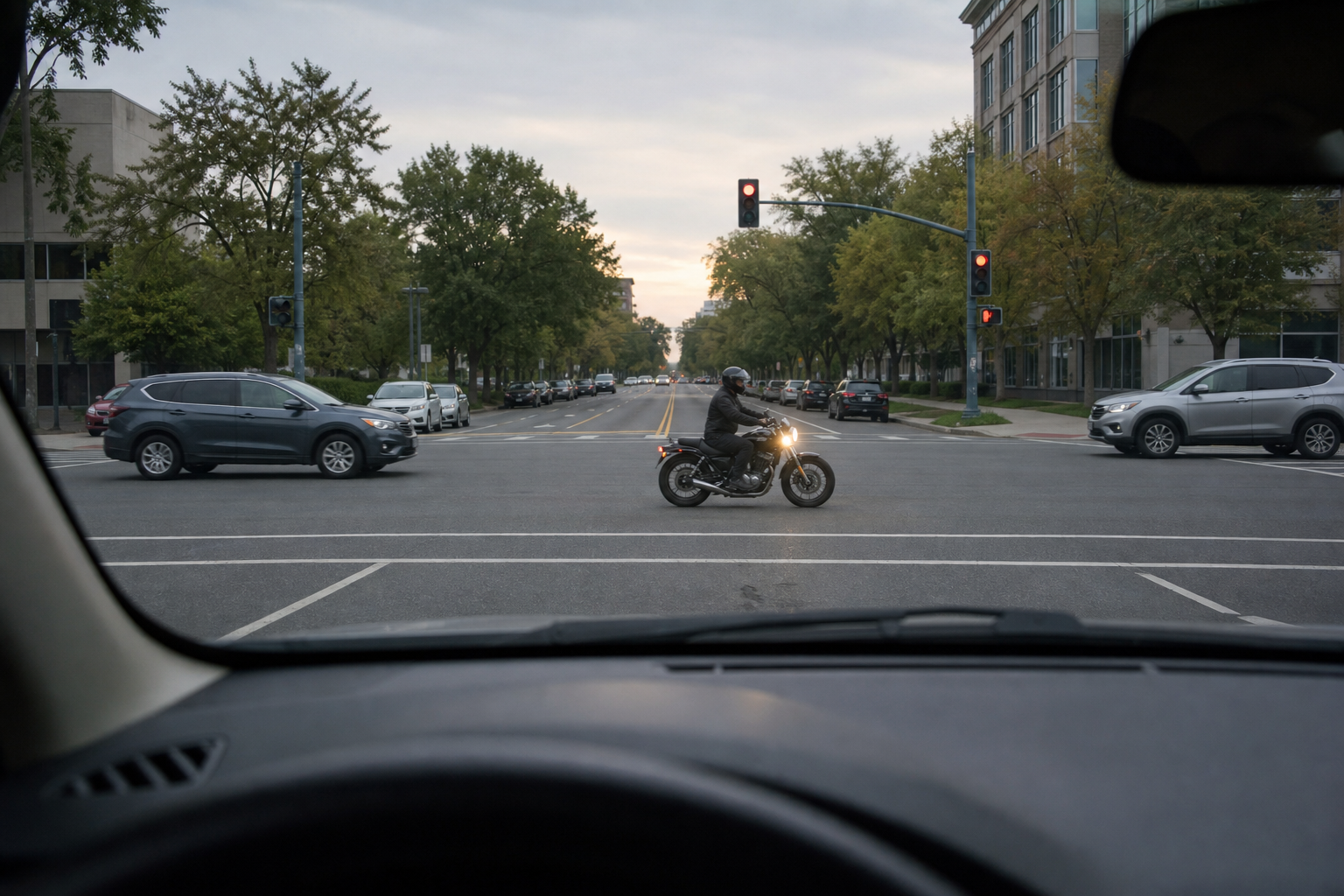
Intersections are conflict points. Vehicles approach from different directions, turn across lanes, merge into traffic, stop, accelerate, and react to traffic signals or signs. A motorcycle can be legally present and still be overlooked by a driver focused on larger vehicles.
The National Highway Traffic Safety Administration emphasizes motorist awareness because drivers need to understand the size and visibility challenges motorcyclists face.[1] That visibility issue becomes especially important at intersections where drivers make fast decisions about gaps, turns, and cross-traffic.
For riders, the danger is not only being hit. It is being hit with no vehicle frame, airbag, or seatbelt. Even a moderate-speed intersection crash can throw a rider onto pavement or into another lane of traffic.
Common Indiana motorcycle intersection crash patterns
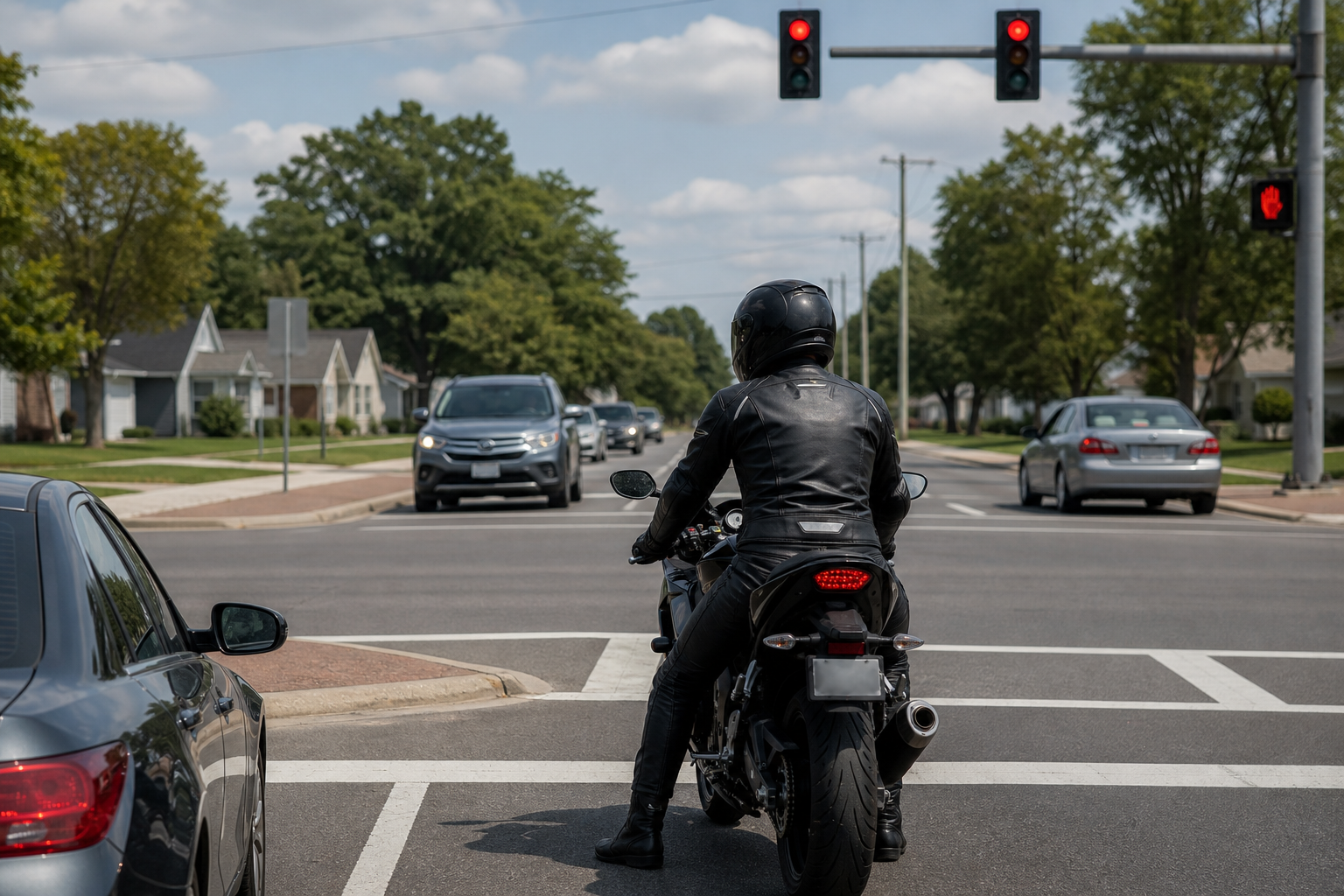
Intersection motorcycle crashes often follow predictable patterns:
- Left-turn conflicts: a driver turns left across the rider’s path.
- Side-street pullouts: a driver enters from a stop sign or side road without yielding.
- Driveway and parking-lot exits: a driver pulls from a business entrance into the motorcycle’s lane.
- Red-light or stale-yellow disputes: each side claims the signal favored them.
- Right-turn conflicts: a driver turns right across the rider’s path or enters traffic too soon.
- Lane-change crashes near intersections: a driver changes lanes to turn or avoid traffic and misses the motorcycle.
- Roundabout crashes: a driver enters, exits, or changes lanes without yielding to the motorcycle.
Delventhal Law has separate focused guides on left-turn motorcycle accidents in Fort Wayne and failure-to-yield crashes involving motorcyclists. This article focuses on the broader intersection danger and the evidence that can prove what happened.
Signal timing and traffic-control evidence can matter
Many intersection disputes are really timing disputes. Was the light green, yellow, or red? Was there a protected left-turn arrow? Was it a flashing yellow arrow? Did the driver enter after the signal changed? Was the motorcycle already in the intersection?
Important traffic-control evidence may include:
- Traffic-signal phase and timing records.
- Turn-arrow sequence.
- Nearby traffic cameras or business video.
- Witness statements about signal color.
- Stop signs, yield signs, lane markings, and pavement arrows.
- Road construction signs or temporary traffic-control devices.
- Intersection design, sight distance, and lane geometry.
Indiana’s right-of-way rules can matter too. For example, Indiana Code § 9-21-8-30[1] addresses left turns and requires yielding to an oncoming vehicle that is in the intersection or so close as to constitute an immediate hazard.[2]
Why drivers miss motorcycles at intersections
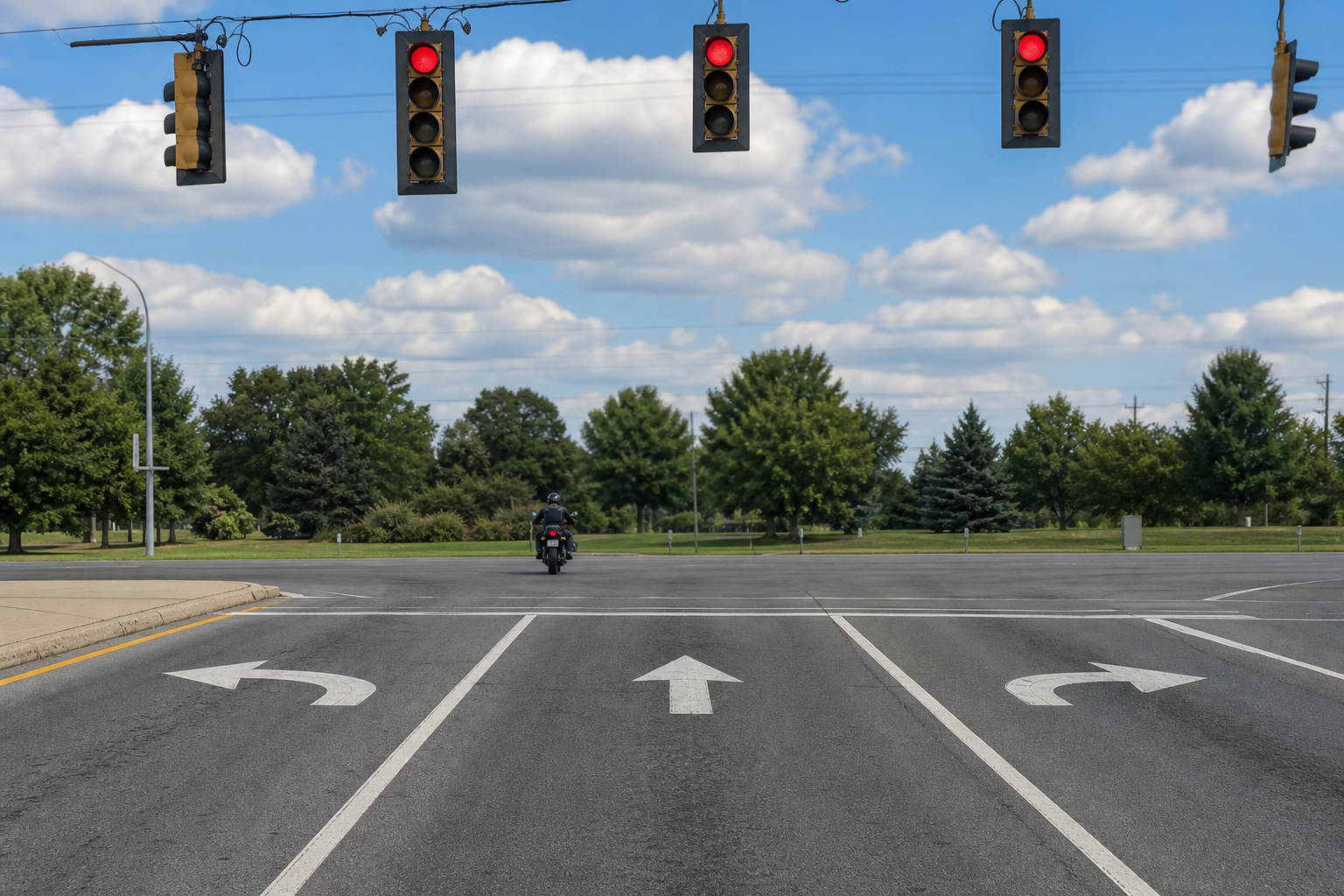
Drivers miss motorcycles for several reasons. A motorcycle has a smaller visual profile than a car or truck. Drivers may focus on larger vehicles. A motorcycle may be hidden briefly behind a vehicle, sign, utility pole, landscaping, glare, rain, or nighttime lighting. A distracted driver may look toward the rider but fail to process what they saw.
Common explanations include:
- “I never saw the motorcycle.”
- “I thought I had enough time.”
- “The motorcycle came out of nowhere.”
- “The light had changed.”
- “I thought the rider was farther away.”
- “Traffic blocked my view.”
Those statements may explain the driver’s perception. They do not automatically prove the rider was at fault. The legal question is whether the driver kept a proper lookout, obeyed traffic controls, and yielded when required.
Physical evidence can show how the crash happened
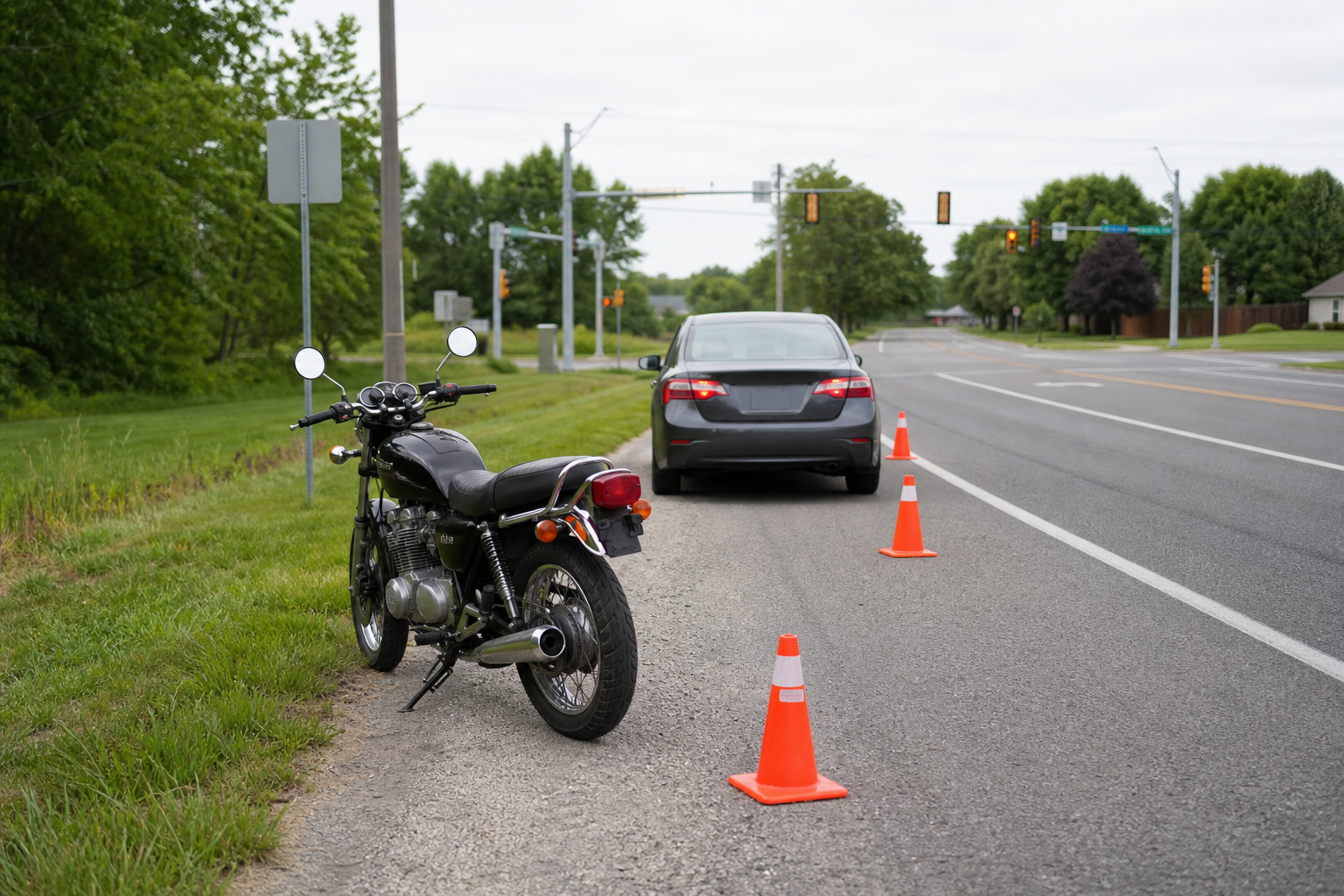
Physical evidence can help test each driver’s story. In an intersection crash, important evidence may include:
- Point of impact on the motorcycle and vehicle.
- Final resting positions.
- Skid marks, tire marks, gouge marks, debris, and fluid trails.
- Airbag deployment and vehicle damage patterns.
- Helmet, clothing, and motorcycle gear damage.
- Dashcam, doorbell, business, or traffic video.
- 911 calls, bodycam footage, and officer diagrams where available.
- Event data recorder information in serious cases.
A police report is important, but it may not include every witness, camera, or physical detail. The best evidence is often preserved early, before vehicles are repaired, video is overwritten, and the scene changes.
Insurance companies may still try to blame the rider
Even when another driver turned, pulled out, or ran a signal, the insurance company may still try to shift fault to the motorcyclist. Common arguments include:
- The rider was speeding.
- The rider should have braked sooner.
- The motorcycle was hard to see.
- The rider changed lanes.
- The rider was inexperienced.
- The rider was not wearing bright clothing.
- The rider was not wearing a helmet.
- The rider could have avoided the collision.
Indiana comparative fault can make those arguments financially important. Under Indiana Code chapter 34-51-2, fault can reduce recovery, and in many ordinary negligence cases a claimant found more than 50% at fault may be barred from recovery.[3]
That is why a rider should not accept an adjuster’s fault percentage without a full evidence review.
Intersection motorcycle injuries are often severe
NHTSA reports that, per vehicle miles traveled in 2024, motorcyclists were almost 27 times more likely than passenger-car occupants to die in a motor vehicle crash and almost five times more likely to be injured.[4] That vulnerability is exactly why intersection crashes are so serious.
Common injuries may include fractures, road rash, scarring, concussions, traumatic brain injuries, spinal injuries, shoulder injuries, knee injuries, internal injuries, surgeries, hardware placement, and long rehabilitation. A serious claim should account for medical bills, future treatment, lost wages, reduced earning capacity, motorcycle damage, pain, limitations, and liens. You can use our Indiana car accident settlement calculator to organize the factors that may affect a claim’s value; it is an educational tool, not a promise of any result.
What to do after an Indiana motorcycle intersection crash
- Call 911 and report injuries.
- Get medical care right away.
- Photograph the intersection, traffic signals, signs, lane markings, vehicles, motorcycle, debris, and gear if safe.
- Get witness names and phone numbers.
- Preserve the motorcycle, helmet, jacket, gloves, boots, and damaged parts.
- Do not assume the crash report contains every fact.
- Do not give a recorded statement to the other driver’s insurer before getting advice.
- Contact a motorcycle accident lawyer quickly so video, signal, and witness evidence can be preserved.

Fort Wayne and northeast Indiana practical note
Fort Wayne intersection motorcycle crashes may involve major corridors, shopping-center entrances, ramps, construction zones, and rural crossings. Evidence may exist at gas stations, restaurants, stores, apartment complexes, schools, churches, businesses, and dashcams in nearby vehicles.
If the crash happened near I-69, I-469, Coliseum Boulevard, Lima Road, Coldwater Road, Illinois Road, Jefferson Boulevard, Clinton Street, State Boulevard, Dupont Road, or a county road intersection, video and witness preservation should happen quickly.
Talk to a Fort Wayne motorcycle accident attorney
If you were injured in an Indiana motorcycle intersection crash, Delventhal Law Office can help investigate fault, preserve evidence, deal with the insurance company, and evaluate available coverage.
Call (260) 484-6655 or contact us online for a free consultation. There is no fee unless we recover for you.
Frequently asked questions
Why are intersection crashes so dangerous for motorcycle riders?
Intersections combine turning vehicles, cross-traffic, signal changes, stop signs, blocked views, and quick driver decisions. Riders have little physical protection when a vehicle enters their path.
What evidence helps prove fault after a motorcycle intersection crash?
Useful evidence may include photos, video, signal timing, witness statements, crash report details, vehicle damage, skid marks, debris, final rest positions, and medical records.
What if the driver says they did not see the motorcycle?
That statement does not automatically excuse the driver. The investigation should ask whether the driver kept a proper lookout, obeyed traffic controls, and yielded when required.
Can the insurance company blame the rider?
Yes. Insurers may argue speed, visibility, lane position, braking, helmet use, or rider experience. Those arguments should be tested against the evidence.
Should I save my helmet and motorcycle gear?
Yes. Helmet, jacket, gloves, boots, clothing, and damaged motorcycle parts may help show impact forces, injury mechanisms, and the seriousness of the crash.
Sources and authority
- Motorcycle Safety: Motorist Awareness, National Highway Traffic Safety Administration, https://www.nhtsa.gov/road-safety/motorcycles[2].
- Indiana Code § 9-21-8-30[1], left-turn right-of-way rule, Indiana General Assembly, https://iga.in.gov/laws/2024/ic/titles/9#9-21-8-30[3].
- Indiana Comparative Fault Act, Indiana Code chapter 34-51-2, Indiana General Assembly, https://iga.in.gov/laws/2024/ic/titles/34#34-51-2[4].
- Motorcyclist Safety, National Highway Traffic Safety Administration, fatality and injury risk by vehicle miles traveled, https://www.nhtsa.gov/road-safety/motorcycles[2].
This article is general information for Indiana readers, not legal advice for a specific case. Reading it does not create an attorney-client relationship, and neither does contacting us. If you do contact us about a possible claim, Indiana Rule of Professional Conduct 1.18 requires us to keep what you tell us confidential whether or not we take the case — but please do not send documents or detailed facts until we have agreed in writing to represent you.