What Happened
A passenger was killed in a single-vehicle crash on East Wyandotte Avenue just south of Leavenworth in Crawford County, Indiana, in the early morning hours of Saturday, August 8, 2026, at about 12:34 a.m. The driver was arrested and preliminarily charged in connection with the crash.
According to reporting from WDRB[1] and WANE 15[2], a vehicle traveling north on East Wyandotte Avenue left the roadway and struck a tree. A passenger in the vehicle was pronounced dead at the scene. The driver was not injured but reportedly showed signs of impairment and was taken to a hospital for a chemical test before being booked into the Crawford County Jail. The driver faces preliminary charges of operating a vehicle while intoxicated causing death and reckless driving.
The Indiana State Police Sellersburg District investigated the crash. Because the charges are preliminary, the driver is presumed innocent unless and until proven guilty. This post is for general educational purposes only. It does not assert a legal conclusion about any person involved.
What Should Accident Victims Do Next?
When a passenger is killed in a crash, often someone riding with a friend or family member, the people left behind are grieving while suddenly facing legal and insurance questions they never expected. When impairment is suspected, a few steps tend to protect a family's options while the investigation is still developing.
Let the official investigation run, but preserve the record independently. A family can note which agencies responded, ask how to obtain the crash report once it is complete, and identify any witnesses or nearby cameras that may have documented what happened. In a single-vehicle crash, the physical evidence at the scene, the roadway, the point of impact, and the vehicle itself, can be especially important, and it can change or disappear quickly. Families who want a fuller sense of what to preserve and when can review this overview of what evidence helps prove an Indiana car accident claim.
Understand that a passenger who died was almost certainly not at fault. Under Indiana law, a passenger who bore no responsibility for how a crash happened is not barred from recovering, and the family of a passenger who is killed may have a wrongful death claim. That is true even when the driver and the passenger were related or close: the legal question is about responsibility for the crash, not about the relationship between the people in the car.
Know that an impaired-driving death can open more than one avenue. A claim may exist against the at-fault driver and that driver's insurance. In some circumstances, Indiana's Dram Shop Act (Indiana Code 7.1-5-10-15.5) can create liability for a bar or other establishment that furnished alcohol to a visibly intoxicated person who then caused harm, if the required elements are met. Families can review how these issues typically unfold in cases when someone is hit by a drunk driver in Indiana, including how the criminal case differs from a civil claim. And when the at-fault driver has little or no insurance, a family's own uninsured or underinsured motorist coverage can matter a great deal, as explained in this guide to what happens if the at-fault driver has no insurance in Indiana.
Be careful with early insurance contact. After a fatal crash, an insurer may reach out quickly. What is said early, before the full picture is known, can shape how a claim is handled later. It is reasonable to get advice before giving a detailed or recorded statement.
Why Location Matters in Indiana Injury Claims
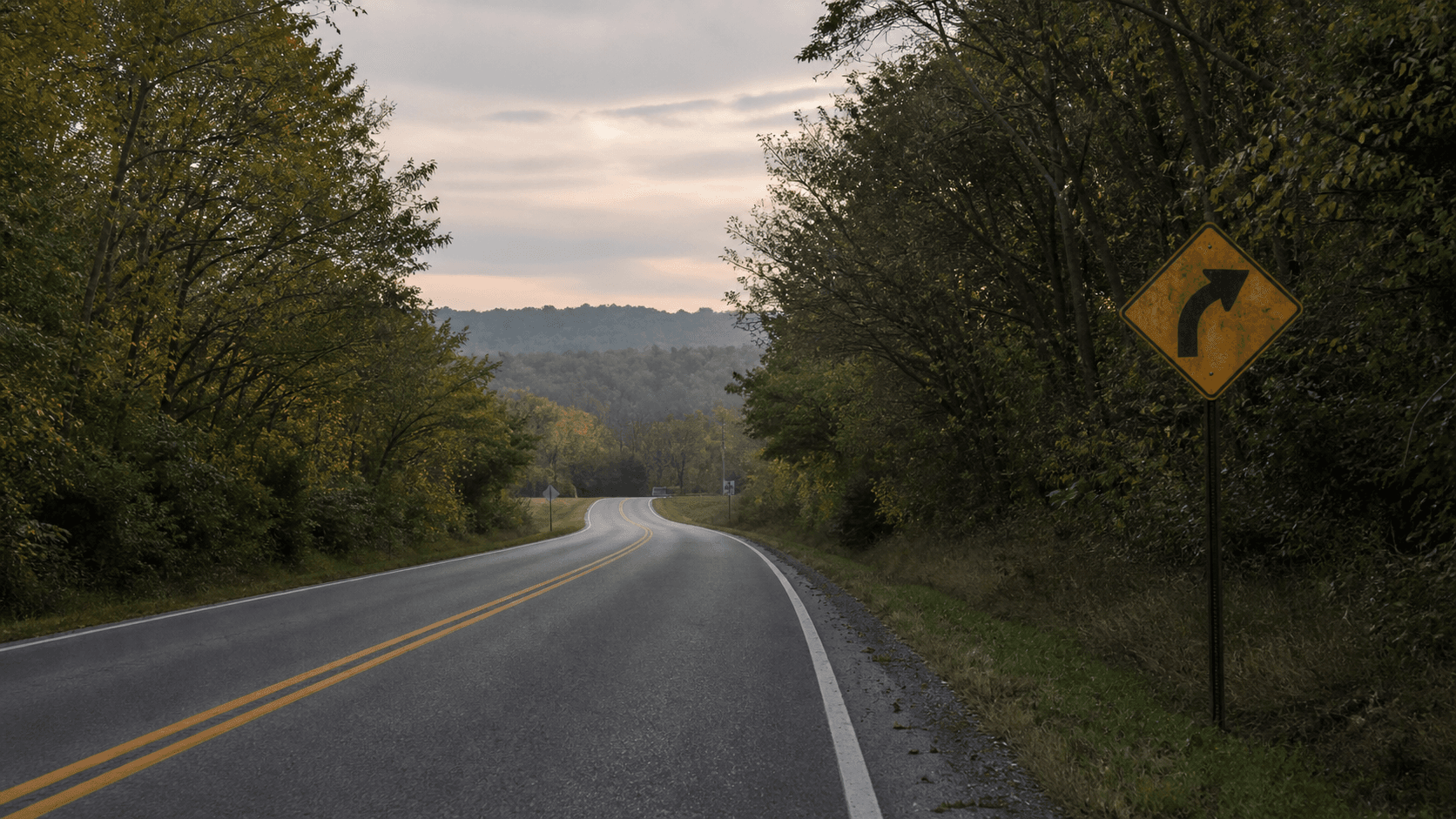
Where a crash happens shapes the claim in ways that are easy to overlook. This collision happened on a rural county road near Leavenworth, in Crawford County, late at night.
That setting carries its own recurring hazards. Rural roads like East Wyandotte Avenue often have narrow lanes, limited lighting, roadside trees and fixed objects close to the pavement, and few or no barriers. When a vehicle leaves the road at night on a route like this, the margin for error is small. The specific features of the location, the curve of the road, the placement of fixed objects, and the lighting, can all matter to how a crash is reconstructed and understood. Rural, unlit roadways carry their own risks, similar to those discussed in this look at how road hazards contribute to Indiana crashes.
Location also determines which agencies investigate and hold the records. A fatal crash on a county road in Crawford County involves the Indiana State Police and the county coroner. Knowing which agency to request records from, and doing so promptly, keeps the paper trail intact while it is still complete. Delventhal Law Office's service area covers communities across Indiana, including rural counties far from Fort Wayne.
Finally, the calendar matters. Indiana's deadline for filing a wrongful-death claim is generally two years from the date of death. That clock starts immediately, even while the criminal case and the crash investigation are still open, which is one reason families are often advised to understand their civil rights early rather than waiting for the criminal process to conclude.
How Delventhal Law Office Can Help
If your family lost someone as a passenger in an impaired-driving crash in Crawford County or anywhere in Indiana, the details of Indiana's wrongful death, comparative fault, and dram shop laws can make an enormous difference in the outcome. Chad Delventhal and the Delventhal Law Office help injured people and grieving families in Fort Wayne and across Indiana understand their rights, preserve the evidence that decides these cases, and deal with insurance companies so families can focus on each other. Contact the firm for a free case evaluation to talk through your situation and your options under Indiana law.
This post is based on public reporting and may be updated as the investigation continues. It is provided for general informational purposes only and is not legal advice. It does not create an attorney-client relationship and does not assign fault to any person involved in the incident described. Every case depends on its own facts.