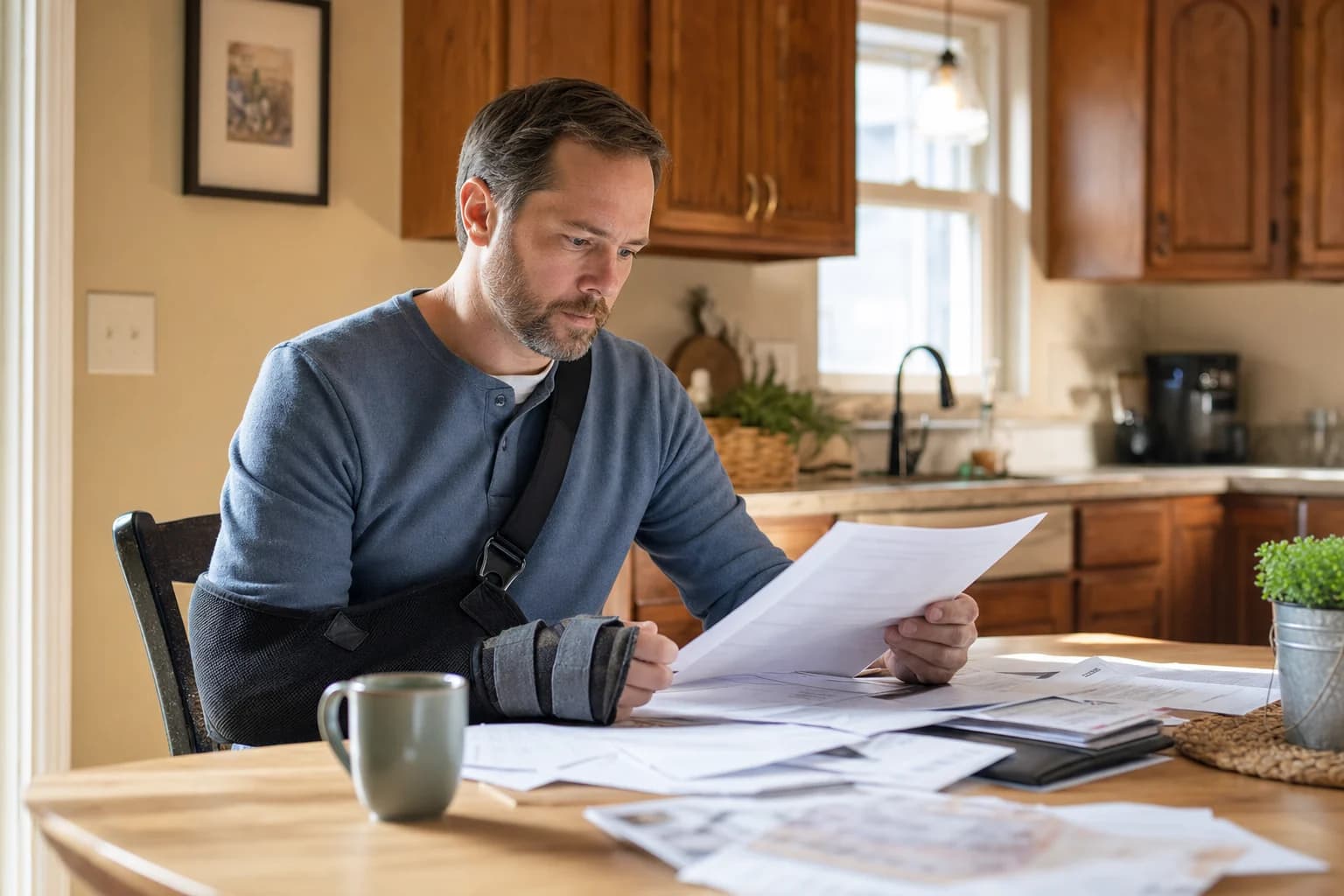

After a crash in Fort Wayne or anywhere in Indiana, two questions usually hit at the same time: Do I call the insurance company now? and Do I need a lawyer first? This guide explains how those two steps actually fit together under Indiana law, when a quick self-handled claim is reasonable, and when a short conversation with an attorney early can keep a fixable situation from becoming a costly one.

Key takeaways
- Reporting a claim and hiring a lawyer are separate decisions. You can notify your own insurer promptly to meet your policy's cooperation requirements while still getting legal advice before the hard steps.
- The risky steps come later: recorded statements, broad medical releases, and settlement offers. Those are the points where early legal advice matters most.
- Indiana gives most injury victims two years to file a lawsuit, but government claims have much shorter notice deadlines — as little as 180 days.
- Indiana's modified comparative fault rule can reduce or erase your recovery if you are found more than 50% at fault, so how blame gets assigned early matters.
- A minor, property-damage-only claim with no injuries is the situation most people can handle on their own.
"File a claim" and "get a lawyer" are two different steps
People often treat these as an either/or choice, but they answer different needs. Filing (or reporting) a claim means notifying an insurance company that a loss happened. Getting a lawyer means having someone advise you and, if you hire them, speak for you in the process.
There are really three insurance interactions after an Indiana crash, and they carry different levels of risk:
- Reporting the accident to your own insurer. Most auto policies require prompt notice and reasonable cooperation. Reporting the event is generally low-risk and is often required to keep coverage such as collision, medical payments (MedPay), or uninsured/underinsured motorist coverage available.
- Dealing with the at-fault driver's insurer. This is where the interests diverge. The other company's adjuster is not neutral, and early requests for recorded statements or signed releases deserve caution.
- Settling the claim. A signed release usually closes the claim for good. This is the step where advice before you sign matters most.
So the practical sequence for most injury cases is: report promptly, get advice early, and slow down before the recorded statement, the release, and the settlement.

When to talk to a lawyer before you do anything else
You do not have to hire anyone to get a first conversation. Many Indiana injury firms, including Delventhal Law Office, offer a free consultation precisely so you can understand your options before you make a move. Consider getting advice first when any of these are true:
- Someone was injured — even injuries that seemed minor at first, like neck, back, or head symptoms that showed up a day or two later.
- Fault is unclear or disputed, or the other driver is blaming you.
- The other driver's adjuster wants a recorded statement or asks you to sign a broad medical authorization.
- A commercial truck, rideshare, or government vehicle was involved (these bring extra parties, coverage layers, and in the government context, short deadlines).
- The insurer made a fast settlement offer before you know the full extent of your injuries.
- The at-fault driver had no insurance or only minimum coverage.
A short conversation early is cheap insurance. It can keep you from saying something in a recorded statement that gets used against you, or signing away claims you did not understand you had. Our guide on whether you should give a recorded statement after an Indiana car accident and the walkthrough of what to do when an adjuster asks for a recorded statement or medical release explain why these two steps deserve the most caution.
When you may be able to handle a claim yourself
Not every accident needs a lawyer. The clearest example is a minor, property-damage-only claim with no injuries — a low-speed parking-lot tap where the other driver's fault is obvious, everyone is fine, and the only issue is repairing or replacing a vehicle. In that situation, working directly with the insurer to get your car fixed is reasonable.
Even then, keep it clean: get the crash documented, photograph the damage, keep repair estimates, and do not guess about injuries you are not sure about. If pain shows up later, remember that Indiana's two-year deadline generally covers both injury and property-damage claims, but the practical value of your case depends on early documentation. Our overview of when you may or may not need an attorney after a Fort Wayne car crash walks through the gray-area cases, and if your vehicle is a total loss, see what happens when your car is totaled in Indiana.

The deadlines that make "wait and see" risky
The biggest reason not to sit on a decision is that Indiana law puts hard time limits on claims, and some of them are surprisingly short.
- Two years for most injury and property-damage lawsuits. Under Indiana Code § 34-11-2-4[1], an action for injury to a person or personal property generally must be filed within two years after the cause of action accrues. Miss it, and the court will usually dismiss the case no matter how strong it was.
- As little as 180 days for claims involving local government. If a city, county, school, or other political subdivision may be responsible (for example, a municipal vehicle or a dangerous public road), Indiana's Tort Claims Act requires written notice within 180 days of the loss. Claims against the State of Indiana require notice within 270 days.
Deadlines are only part of it. Evidence fades fast — surveillance video gets overwritten, skid marks wash away, and memories blur. The first days after a crash are when the most important proof is still available, which is why we wrote about what to preserve in the first 72 hours after a Fort Wayne car accident and what evidence helps prove an Indiana car accident claim.
Why early fault decisions matter in Indiana
Indiana follows a modified comparative fault system. Under Indiana Code § 34-51-2-6[2], a claimant who is found to be more than 50% at fault recovers nothing. If you are 50% or less at fault, your damages are reduced by your share of the blame.
That rule is why what you say early — in a recorded statement, on social media, or to the other driver's adjuster — can matter so much. An insurer that can shift more than half the fault onto you may owe nothing at all. A lawyer's early involvement is often about protecting the fault picture before it hardens. You can read more in our explainer on Indiana's 51% fault rule and what it means for your claim.

What a lawyer actually does that you cannot easily do alone
"An experienced attorney can help" is a vague phrase. Here is what that help usually looks like in an Indiana injury claim:
- Handling insurer communication so you are not the one improvising answers to recorded-statement questions.
- Preserving evidence quickly — sending letters to keep video, vehicle data, and records from being destroyed.
- Sorting out coverage across the at-fault driver, your own MedPay, and uninsured/underinsured motorist policies.
- Documenting damages — medical bills, lost wages, and how the injury affects daily life — so the claim reflects the full loss.
- Managing liens and reimbursement from health insurers, hospitals, Medicare, or Medicaid before you agree to a number.
- Tracking deadlines so the statute of limitations or a tort-claim notice does not quietly expire.
If you decide you want representation, our guides on how to choose a personal injury lawyer in Fort Wayne and the broader work of a Fort Wayne personal injury attorney explain what to look for and what to expect.
A simple decision framework
When you are unsure, this order tends to protect people:
- Get medical care if anyone is hurt, and follow through on treatment.
- Report the accident to your own insurer promptly to satisfy your policy.
- Before giving the other driver's insurer a recorded statement or signing anything, get a free consultation to understand what the offer or request really means.
- Decide whether to keep handling it yourself (often fine for minor property-only claims) or have a lawyer take it over (usually wise when injuries, disputed fault, or government or commercial vehicles are involved).

Frequently asked questions
Can I report the accident to insurance and still hire a lawyer later?
Yes. Reporting the accident to your own insurer to satisfy your policy's notice requirement does not prevent you from getting advice or hiring a lawyer afterward. The step to be careful about is the recorded statement, broad medical release, or settlement with the other driver's insurer — those are best discussed with an attorney first.
Do I need a lawyer for a minor accident with no injuries?
Often, no. A minor, property-damage-only claim where fault is clear and no one is hurt is the situation most people can handle directly with the insurer. If injuries appear later, fault is disputed, or an offer seems low, a free consultation can help you decide whether that changes.
How long do I have to file a claim in Indiana?
Most Indiana injury and property-damage lawsuits must be filed within two years under Indiana Code § 34-11-2-4[1]. Claims involving a local government require written notice within 180 days, and claims against the State of Indiana within 270 days, under the Indiana Tort Claims Act. Because facts can change these deadlines, it is safest to confirm your specific dates with an attorney. You can also read our guide on how long you have to file an auto accident claim in Indiana.
Should I give the other driver's insurer a recorded statement before talking to a lawyer?
You are generally not required to give the at-fault driver's insurer a recorded statement, and it is reasonable to decline until you have advice. What you say can affect the fault analysis under Indiana's comparative fault rule, so this is one of the steps where talking to a lawyer first is most valuable.
Does an early consultation cost anything?
Delventhal Law Office offers a free consultation, and most personal injury representation is handled on a contingency basis, meaning attorney fees come out of a recovery rather than up front. That structure is part of why getting advice early rarely costs you anything to explore.
Getting the next step right
You usually do not have to pick between reporting your claim and getting legal advice — you can do both, in the right order. If you were hurt and are not sure what to do next, a free consultation can help you understand your options before you sign or say anything that is hard to undo. Delventhal Law Office can review what happened, explain the Indiana deadlines that may apply, and help you decide whether this is a claim you can handle yourself or one where representation makes sense. You do not have to figure out the insurance process alone.
This article is general information about Indiana law and is not legal advice. Reading it does not create an attorney-client relationship, and neither does contacting us. If you do contact us about a possible claim, Indiana Rule of Professional Conduct 1.18 requires us to keep what you tell us confidential whether or not we take the case — but please do not send documents or detailed facts until we have agreed in writing to represent you. Deadlines and outcomes depend on the specific facts of your situation, so consult a licensed Indiana attorney about your case.