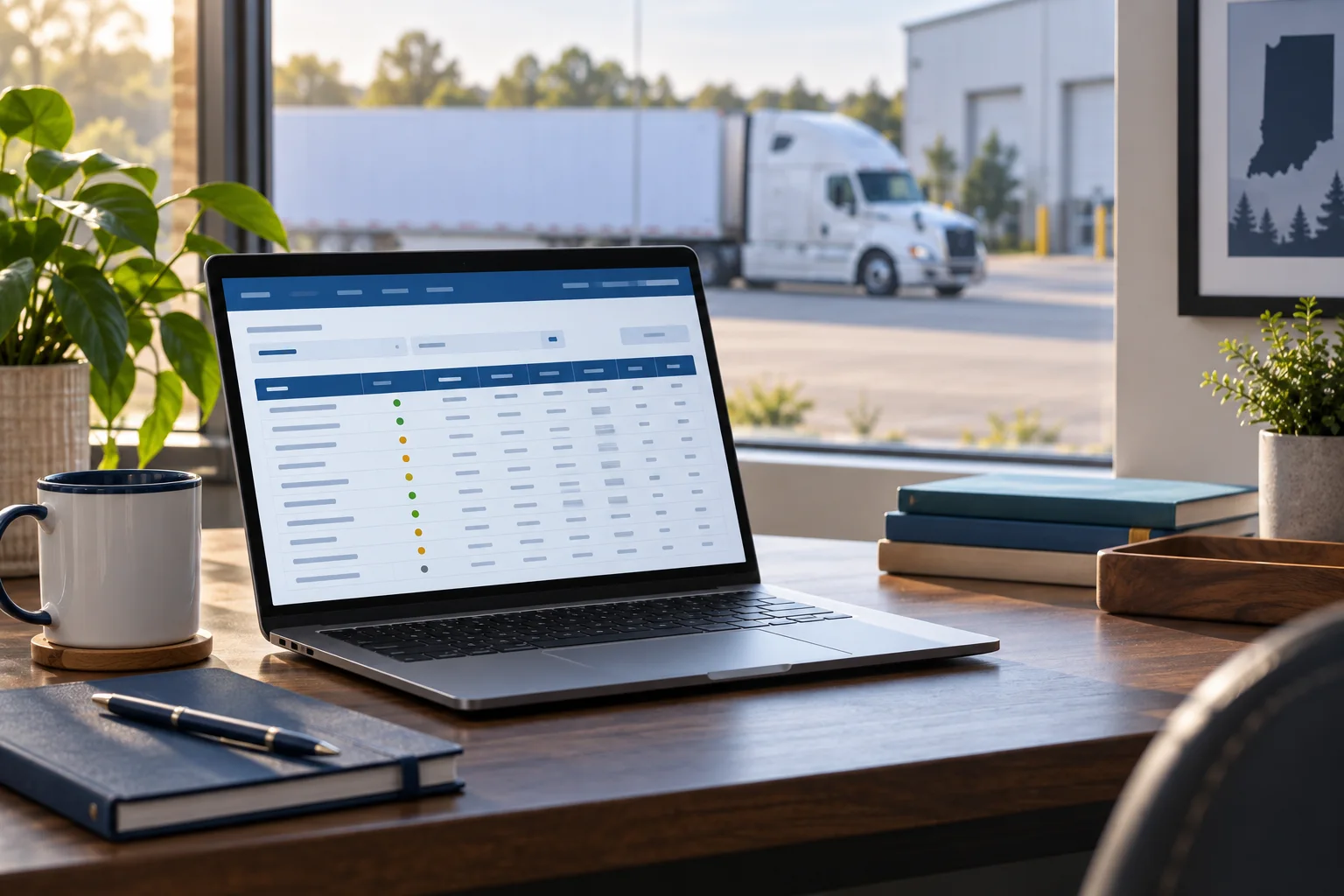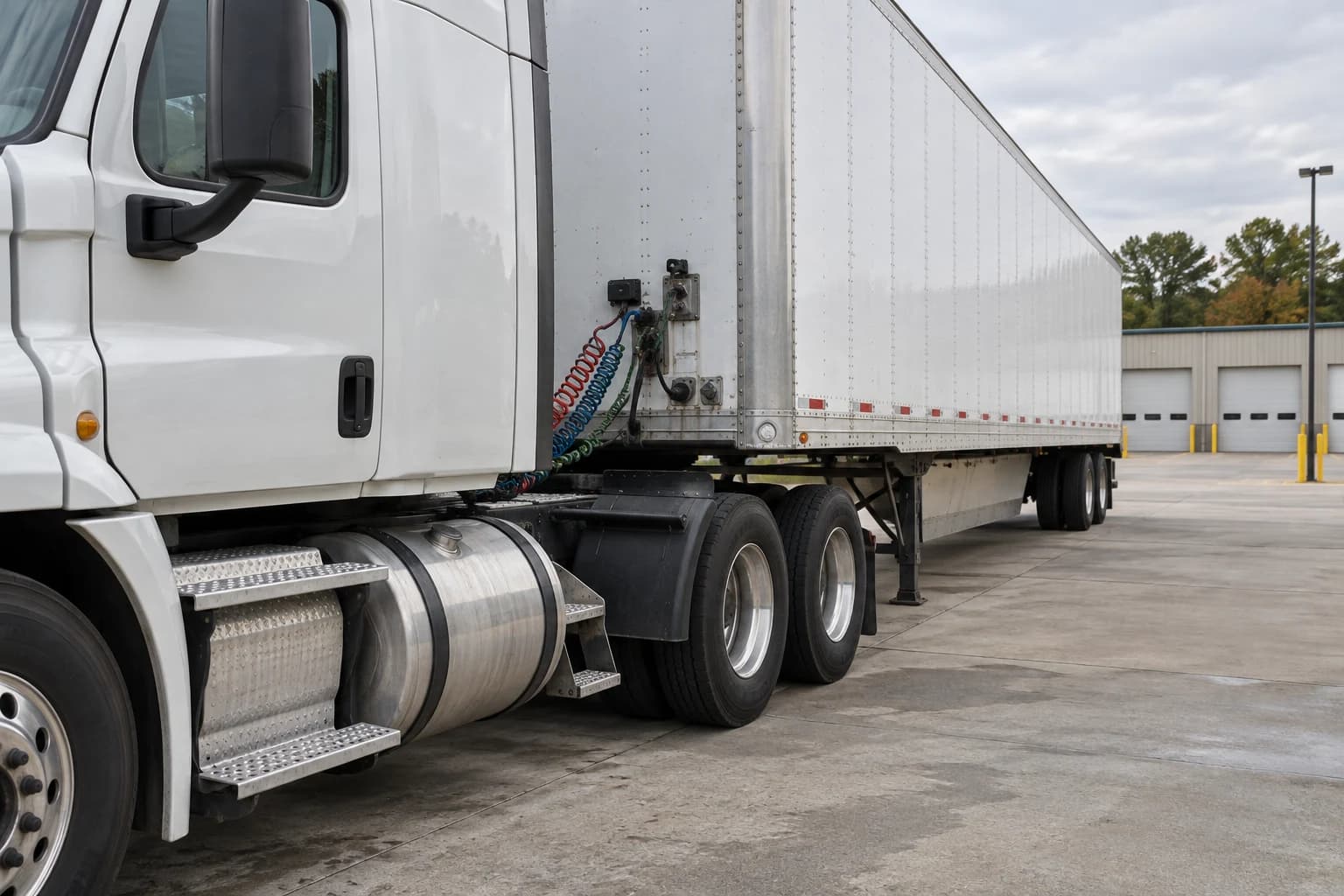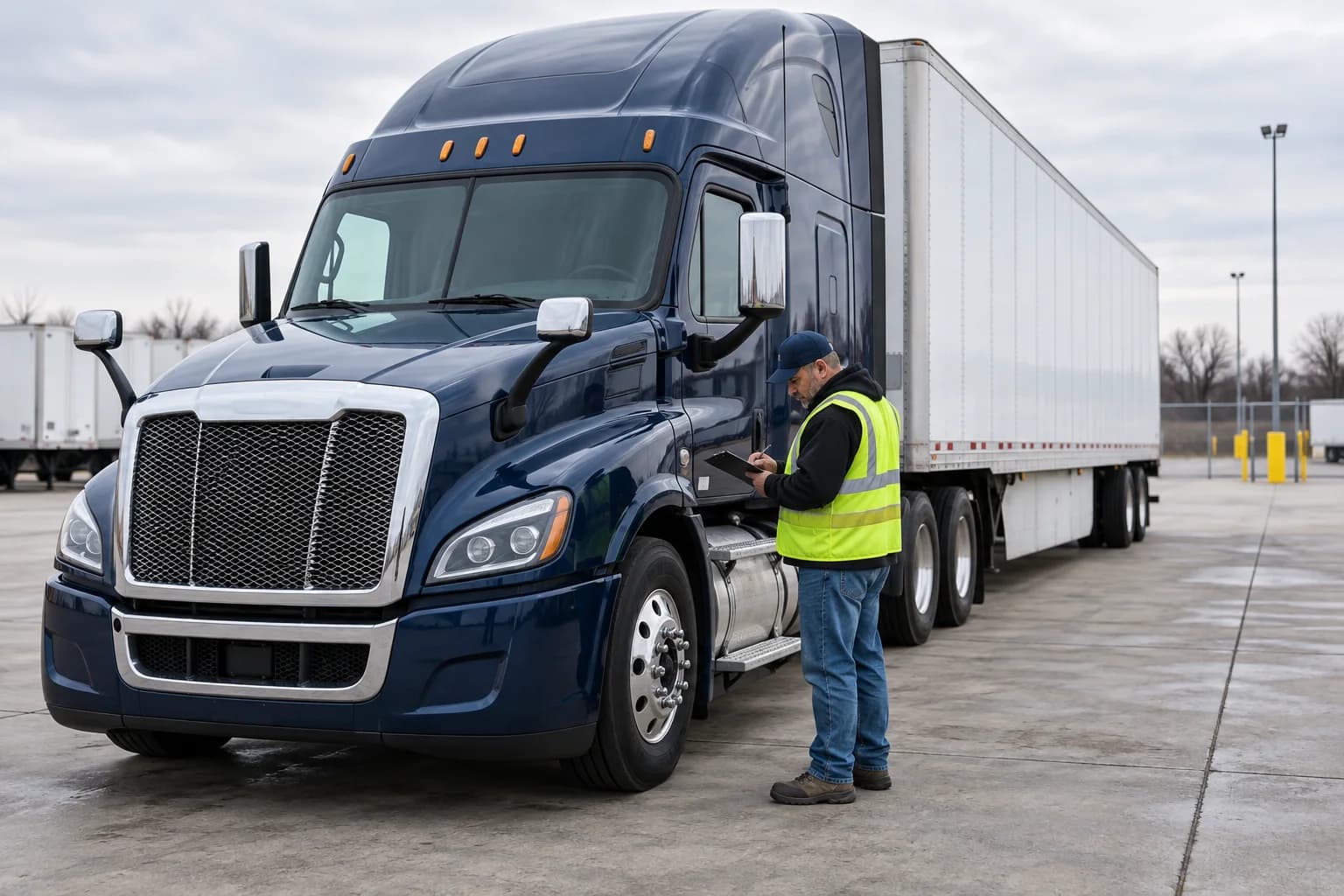
When someone says a truck “passed inspection,” ask for the actual report and what was examined. Start with the vehicle identity, inspection date, scope, observations, and attachments. This guide explains how to organize that information after an Indiana truck crash; it is not a do-it-yourself mechanical inspection.
Key takeaways
- Ask which document you have: the crash report, inspection report, or a later analysis.
- Match the tractor and trailer identifiers before comparing observations.
- Check what the inspector examined and what was not examined.
- Keep the inspector’s words separate from your own questions and assumptions.
- Bring the complete file, including attachments and any later version, to a consultation.
Distinguish the reports
Indiana State Police’s Commercial Vehicle Enforcement Division[2] says it assists in commercial-vehicle crash investigations through post-crash inspections. Its work also includes safety inspections and compliance reviews.
FMCSA’s definitions[1] distinguish a police crash report, which collects crash-scene data, from a post-crash inspection documenting violations and defects. A post-crash investigation collects additional details, while crash reconstruction adds analysis of how and why the crash occurred.
Keep those documents in separately labeled folders. Ask whether the inspection file has its own identifying number and attachments. Do not assume the document titled “crash report” contains every examination of the truck. For the broader representation process, see our Fort Wayne truck-accident page.

Read the report in a useful order
Use this worksheet while reading the actual report. Forms and available attachments vary, so mark a missing item as “not supplied” instead of filling it in from memory. These are practical review questions, not a claim that every form contains every field.
| Look for | Question to ask | What to keep with it |
|---|---|---|
| Report and agency identity | Which agency prepared this document, and is the copy complete? | Report number, inspector information, page count, attachments |
| Vehicle identifiers | Does this entry concern the tractor, trailer, or another vehicle? | VIN, unit number, plate, and existing photographs of identifying marks |
| Inspection date and place | When and where was the observation made relative to the collision? | Crash time, examination time, tow or storage paperwork |
| Inspection scope | Was this driver-only or did it include vehicle components? | Stated inspection level and notes about unavailable checks |
| Individual observations | What exactly does the inspector describe, and for which unit? | The complete entry, reference code, photograph or measurement cited |
| Follow-up material | Does the file include later notes or corrective-action paperwork? | Dated supplements, signed certification, related shop documents |
Copy an unfamiliar code exactly, including the unit number next to it. Ask the preparer or a qualified reviewer to explain the code in the context of the full entry. Do not replace a detailed description with a shorthand label such as “bad brakes” or “truck cleared.”

Check scope and timing
Indiana State Police’s safety-inspection page[3] identifies Level 3 inspections as driver-only inspections. That distinction is a reason to check the report’s scope before assuming it includes a mechanical examination.
Make a short list of the items actually described and a separate list of unanswered questions. A blank field should remain a blank field in your notes. If a page mentions photographs, measurements, or an attached narrative that you do not have, list those items for follow-up.
FMCSA[1] explains that post-crash inspections help identify whether vehicle defects existed before the crash or resulted from it. The timing and explanation of an observation therefore matter, not just whether a damaged part appears in a photograph.
Hypothetical reading example—not a client case: A wheel-area photograph is dated after towing, but the papers provided do not say when the pictured condition first appeared. Record the photograph date, the inspection date, the vehicle identifier, and that unanswered question. Do not supply a before-impact timeline that the documents do not establish.
A report can be compared with earlier shop records and a more complete event analysis. Our maintenance-records guide addresses the truck’s upkeep history; our truck-crash reconstruction guide addresses the broader event analysis. This article stays focused on reading the examination report itself.

Understand out-of-service and follow-up entries
Under 49 CFR 396.9(c)[4], authorized personnel declare a vehicle or intermodal equipment out of service when its mechanical condition or loading would likely cause an accident or breakdown. The rule prohibits operation until the repairs required by the out-of-service notice have been satisfactorily completed, with specified provisions for towing.
Read the actual notice, identify the unit and listed condition, and keep any referenced photographs with it. Ask how the notice relates to the incident under review rather than assigning blame from the label alone.
49 CFR 396.9(d)(3)[4] requires the motor carrier or intermodal equipment provider to certify correction of noted violations within 15 days after inspection. The completed form is returned to the issuing state agency if that agency requests it, and a copy is retained for 12 months from the inspection date.
FMCSA’s 2026 final rule[5] made the state-agency return requirement conditional on the agency requesting the form, effective July 22, 2026.
For your file, ask whether the original report, any signed corrective-action certification, and any related shop paperwork are available. Keep the dates and authors of those documents distinct. These carrier paperwork provisions are not a timetable for you to wait before asking for help with a crash.

Locate the Indiana records
Indiana State Police’s crash-report page[6] identifies ISP as the state’s central crash-report repository and directs members of the public to BuyCrash for electronic vehicle crash reports.
For a separate commercial-vehicle inspection file, identify the agency that performed the inspection and ask specifically about that record and its attachments. Include the incident date, road, county, truck identifiers, and any report numbers already available. For a Fort Wayne-area incident, the exact Allen County location and agency name are more useful than “the truck crash on the interstate.”
The ISP contact page[7] provides a Commercial Vehicle Enforcement contact and a public-records request portal. It also cautions that some records, including investigatory information, are excepted from disclosure.
Use the current agency instructions and keep your request and response together. A records request is not a promise that every item will be supplied. If you are unsure which agency has the file or receive only part of it, bring the correspondence to counsel.
A company-wide website result answers a different question. Our trucking-company safety-record guide covers that separate research task; do not substitute a fleet summary for the inspection of the particular truck.
Build a consultation packet
Put these materials in one organized folder, preserving the original files when available:
- The crash report and its identifying number.
- The complete driver/vehicle examination report, not only the first page.
- Photographs, diagrams, measurements, and narrative attachments referenced in the report.
- Any out-of-service notice, signed corrective-action paperwork, and dated supplements.
- Existing towing or storage paperwork and the truck’s known location.
- A short question list identifying missing pages, unclear codes, conflicting identifiers, and uncertain observation times.
Do not enter a tow yard without permission, move or test the truck, or remove parts. Ask counsel about arranging appropriate access and preserving relevant material. You can seek help before the folder is complete; clearly mark what is still missing.

Frequently Asked Questions
Is the post-crash inspection report the same as the police crash report?
No. FMCSA[1] distinguishes the crash-scene data report from the certified inspector’s driver/vehicle examination report documenting violations and defects. Ask which document you have.
Does a Level 3 inspection include a full mechanical examination?
Indiana State Police[3] identifies Level 3 as a driver-only inspection. Check the actual scope and ask whether a separate vehicle examination was performed.
Does a photograph of damage show when that condition began?
Not by itself. FMCSA[1] describes distinguishing preexisting defects from crash damage as part of the post-crash inspection’s purpose. Keep the photograph’s timing and the inspector’s explanation together.
What if I only received the first page?
Keep that copy, note how you received it, and request the complete report with the attachments it references. List missing items rather than guessing what they say.
Will buying the Indiana crash report answer every inspection question?
Start by identifying the document supplied. Check whether it includes an examination report and attachments; if not, ask the inspecting agency about those separate materials.
What should I bring to a truck-accident consultation?
Bring the records you already have, truck identifiers, photographs, agency correspondence, and a short list of missing items or unclear entries. You do not need to complete your own investigation first.
Delventhal Law Office can help you review the available truck-crash documents and identify questions that need follow-up. Request a free case evaluation.
Sources reviewed October 22, 2026. Images are illustrative, not photographs of an actual crash.
This article is general information about Indiana law and is not legal advice. Reading it does not create an attorney-client relationship, and neither does contacting us.
Sources
- FMCSA (fmcsa.dot.gov) ↩
- Indiana State Police’s Commercial Vehicle Enforcement Division (in.gov) ↩
- Indiana State Police’s safety-inspection page (in.gov) ↩
- 49 CFR 396.9(c) (ecfr.gov) ↩
- FMCSA’s 2026 final rule (federalregister.gov) ↩
- Indiana State Police’s crash-report page (in.gov) ↩
- ISP contact page (in.gov) ↩